
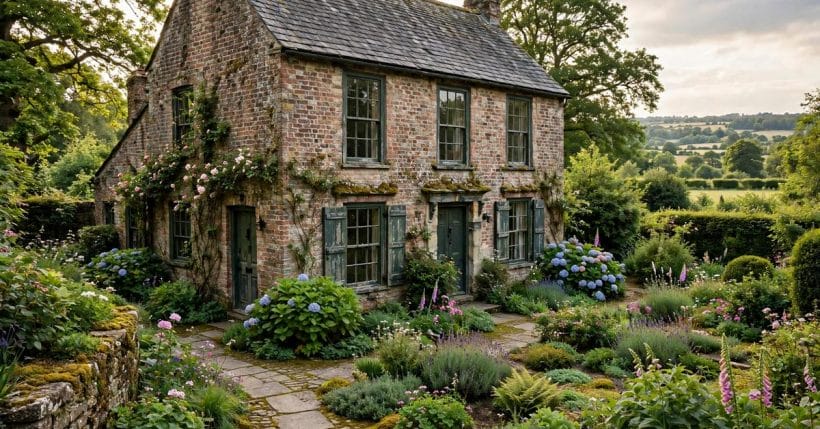
An old house is never just a roof over a household. It carries the habits of the people who built it and the people who lived in it afterwards: the height of its ceilings, the width of its doors, the way its rooms open onto the garden and the way its walls have weathered season after season. Anyone searching for an old house forum is usually looking for the same thing this guide offers, which is practical guidance on living with such a house, keeping its character intact and deciding what to repair, what to change and what to leave alone. The chapters below cover the whole house in turn, from its structure and its systems to its renovation order and its garden care, always in general terms and always with the work that needs a professional framed as professional work.
Start by looking slowly, before spending anything. Walk the house room by room in daylight, then again in the evening, and notice where light falls, where draughts enter, where floors creak and where paint has failed. Those small observations tell you more than any single survey line, because an old house shows its condition in its surfaces. For the setting around the house, the tiny house exterior ideas collection gives a useful sense of how a frontage meets the street, while tiny house porch ideas shows how an entrance can welcome without overwhelming the building it serves. The garden shed ideas collection is worth a look for the outbuildings that so often belong to an old plot, since sheds, walls and stores are part of the house story too.
1. Reading the Character of an Old House
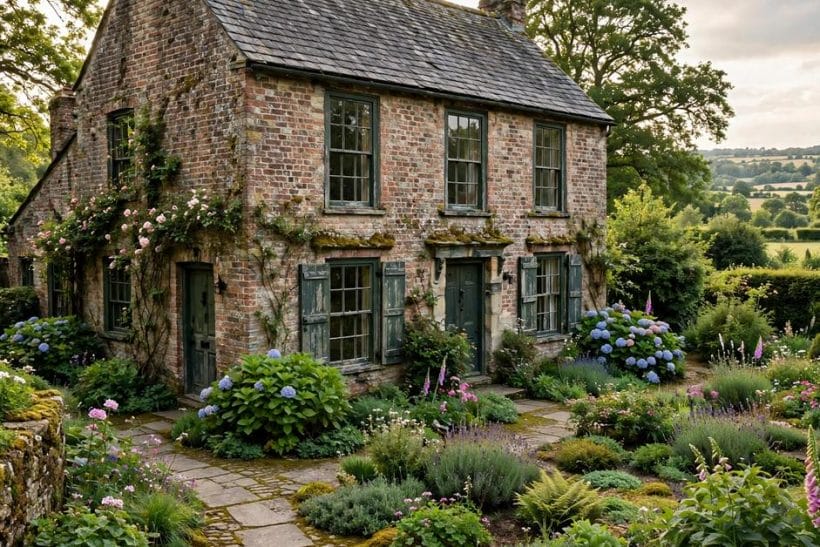
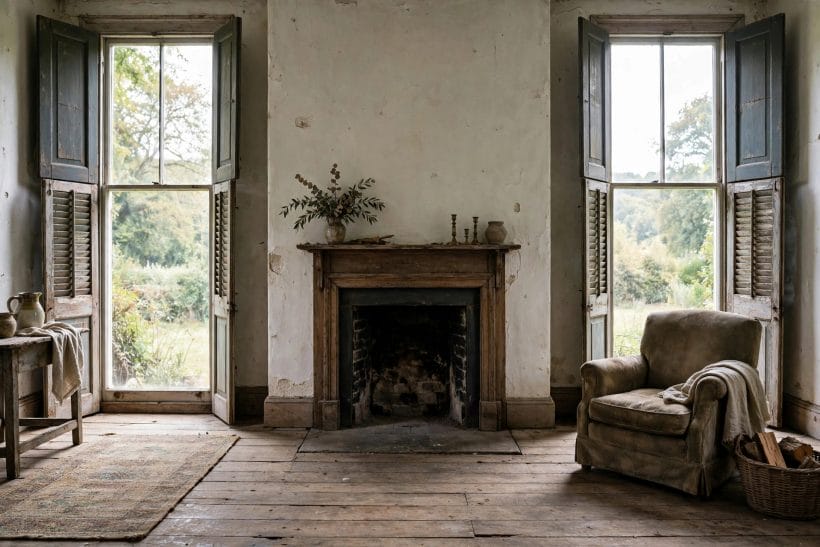
Character lives in the details that were made by hand and fitted to the building, not bought off a shelf. Panelled doors, deep skirting, a fireplace surround shaped for its room, window frames with slender glazing bars and a staircase that turns with a comfortable rhythm all belong to the house as a whole, and removing any one of them quietly weakens the rest. Before changing anything, learn to name what you are looking at, so that a later decision is a choice rather than an accident.
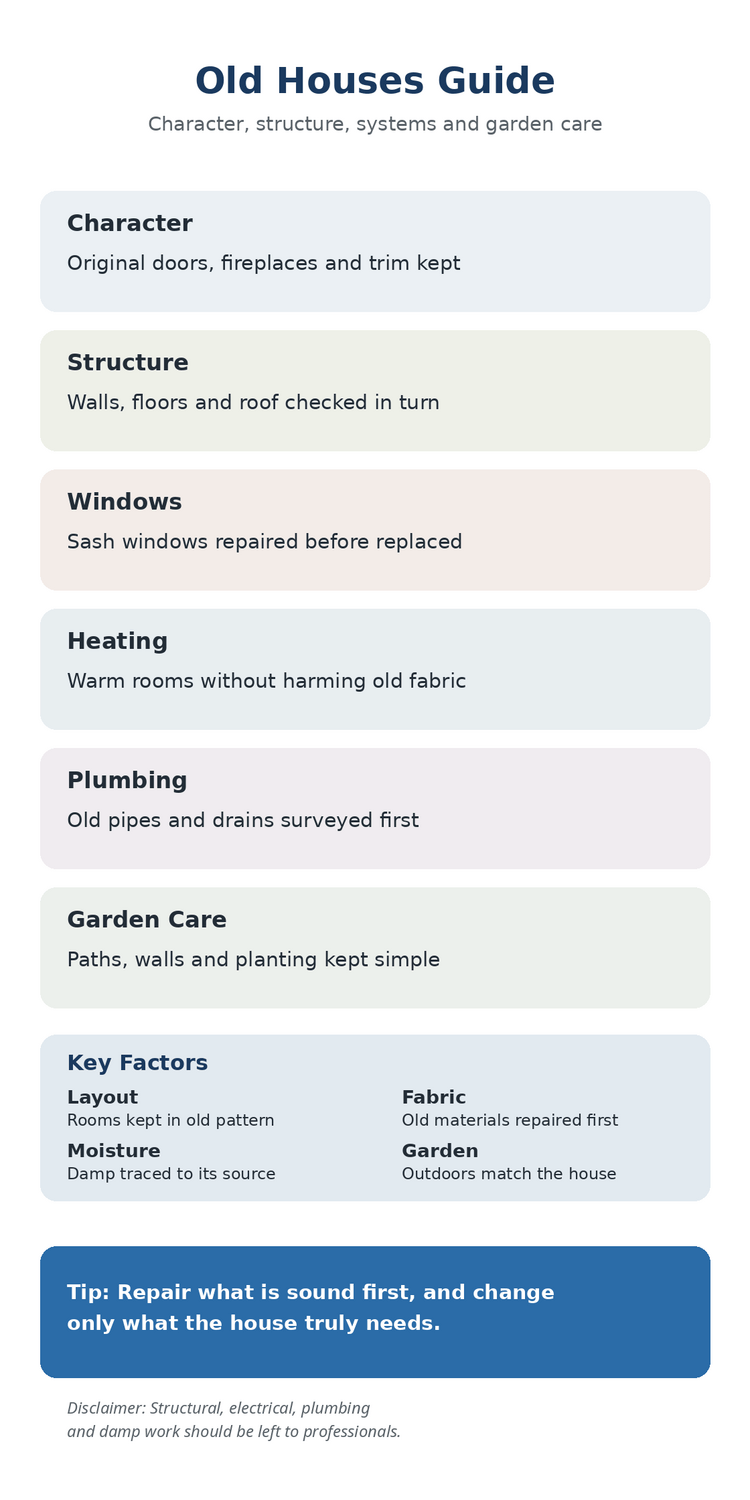
The plan of the house matters as much as its decoration. Old houses were often arranged around a hall or a central passage, with parlours and kitchens placed according to light, heat and work rather than fashion, and that arrangement still shapes daily life. A room that feels awkward may simply be used against its original purpose, and a small change of use can succeed where a wall removal would have destroyed the very thing that made the room pleasant.
Proportion is the quiet rule behind most old-house charm. Ceiling heights relate to room sizes, window openings relate to wall lengths and door heights relate to the people who passed through them. When a new fitting ignores those proportions, the room feels wrong even if the fitting itself is handsome, so measure the room before choosing anything for it, and let the existing proportions lead.
Finally, accept that patina is part of the character. Worn floorboards, softened brick edges and paint that has settled into old timber are not defects to be erased, they are the record of use. Repair keeps that record readable, while wholesale replacement wipes it away, so the gentlest repair that does the job is usually the right one.
2. Walls, Floors and Rooms in Turn
Work through the structure in a steady order, starting at the top and ending at the ground. The roof keeps everything else dry, so slipped coverings, failed flashings and blocked gutters deserve attention before any interior decoration, and a roof problem left through a wet season will undo fresh plaster and paint below it. Roof and structural work belongs to qualified professionals, and nothing in this guide asks you to climb onto a roof or open up a structure yourself.
Walls in old houses were built to breathe, and their plasters, renders and paints were chosen to let moisture move out rather than trap it behind a hard skin. A modern impermeable coating can therefore cause the very damp it was meant to cure, by holding moisture inside the wall where it softens plaster and feeds decay. When a wall needs repair, a breathable finish matched to the original material is the safer general direction, and a specialist should advise on the particular wall in front of you.
Floors tell their own story, and each type asks for its own care. Timber boards can be cleaned, repaired board by board and finished with a treatment that lets the wood breathe, while stone flags can be lifted, re-bedded and pointed where they have settled. Covering a sound old floor with a sealed modern layer may hide its character and trap moisture beneath it, so repair the floor you have before replacing it with something new.
Room by room, keep a simple written record of what you find: cracks and their direction, stains and their height on the wall, floors that slope and doors that stick. A dated note with a photograph lets a professional see change over time, which is far more useful than a single worried glance, and it stops small seasonal movement from being mistaken for a sudden failure.
3. Doors and Windows, and the Way In
Doors and windows are the most handled parts of any house, and in an old house they are often the finest joinery it owns. A panelled door with its original hinges and latch, or a sash window with slender bars and wavy glass, gives a room a scale and a light that a flat modern replacement cannot reproduce. Repair is therefore the first question, and replacement only the last, with the new work matched to the old in size, profile and glazing pattern.
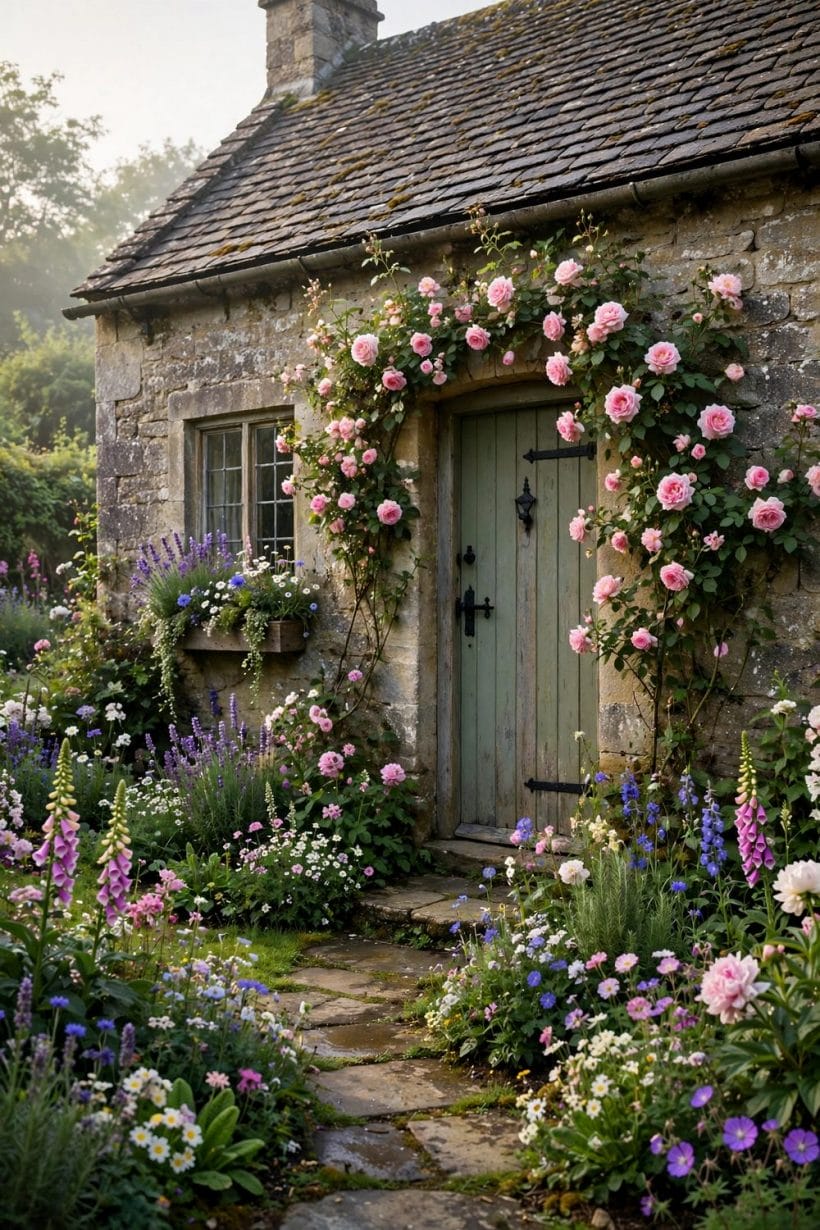
Sash windows deserve particular patience. Cords can be renewed, pulleys freed, draught seals fitted discreetly and putty repaired without discarding the frame, and each of those small repairs keeps the window working as it was designed to work. A window that sticks may need easing and repainting rather than replacing, and a professional joiner can judge whether the box frame itself is sound before any larger decision is made.
The entrance sets the tone for the whole house, and its details repay care: the door furniture, the step, the porch or canopy and the path that leads to it. For porch forms and entrance styling, the Victorian house ideas collection shows how period entrances carry ornament without clutter, and the same restraint suits most old houses, whatever their period. Keep the entrance legible, lit and dry, and it will welcome visitors as it always did.
Security and draughts can both be improved without harming character, provided the changes are reversible and discreet. Secondary glazing inside a window reveal, a well-fitted draught seal and a lock that suits the door are all kinder than a wholesale replacement, and they can be removed or renewed as needs change. Choose the smallest intervention that solves the problem, and the house keeps its face.
4. Kitchens and Bathrooms That Respect the House
Kitchens and bathrooms are where old houses most often clash with modern life, because both rooms demand water, drainage, ventilation and appliances that the original builders never planned for. The answer is rarely to gut the room and start again, and more often to fit the new needs around the old bones: keep the chimney breast, keep the window, keep the ceiling height, and let the new fittings answer to the room rather than the other way round.
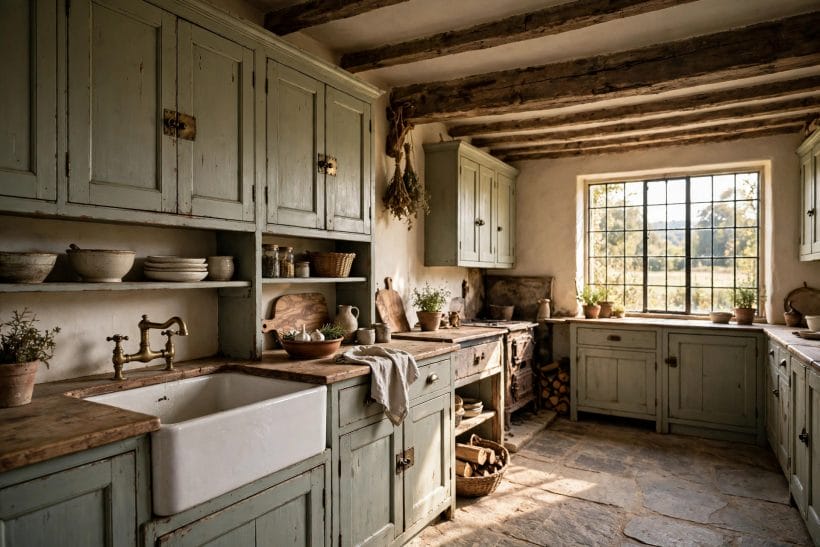
In the kitchen, painted timber cabinetry, a deep sink and open shelving sit comfortably against old walls, while a layout that follows the room shape works better than one that forces a rigid run of units into an uneven space. Uneven walls and floors are normal in an old house, so allow for scribing and adjustment rather than demanding perfect straight lines, and choose surfaces that can be repaired in place rather than replaced wholesale when they mark.
Bathrooms need the same restraint with an added duty of care, because water and old fabric are uneasy companions. Good ventilation, a floor that can be dried and joints that can be inspected all matter more than any single fixture, and plumbing and waterproofing work belongs to qualified professionals throughout. Where a bathroom meets a bedroom or a passage, a door that closes well and a fan that actually vents outside will protect the neighbouring rooms for years.
For wider renovation thinking, the home renovation planning guide sets out how to photograph rooms, scope work and sequence trades, which is exactly the discipline a kitchen or bathroom project needs before any fitting is ordered. A clear scope, written down before work starts, is what keeps a project honest when discoveries are made behind old walls.
5. Boundaries, Walls and the Outside of the House
The outside of an old house is a system, not a picture. Roof coverings shed water, gutters and downpipes carry it away, walls dry between showers and the ground around the house falls away so that water does not sit against the footings. When any one part of that system fails, the rest of the house feels it, so walk the perimeter after rain and look for overflow, staining and ground that has risen against the wall over time.
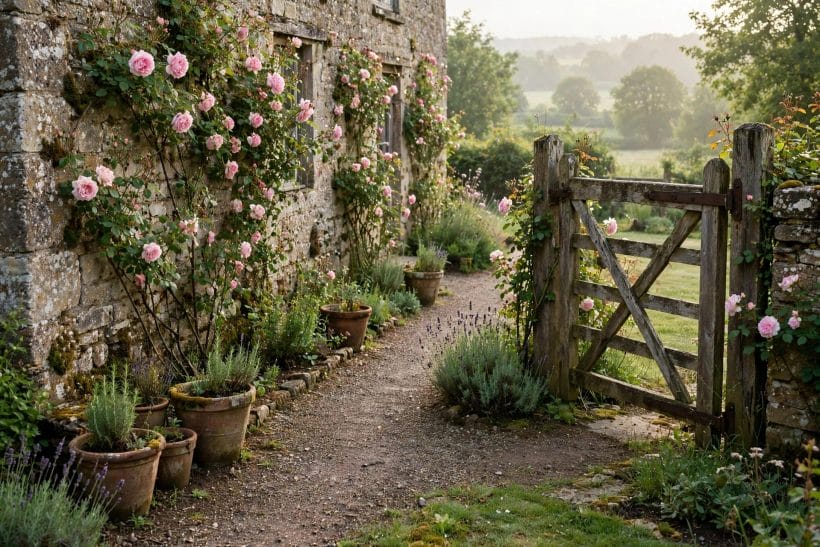
Garden walls, gates and fences belong to the same system, and they deserve the same repair-first approach as the house itself. A leaning garden wall may need rebuilding by a professional, but a wall that is simply weathered can be repointed in a mortar that matches the original, and a wooden gate can be repaired board by board. Boundaries frame the house, and keeping them in repair protects both privacy and drainage.
Ground levels are a quiet but common cause of damp, because paths, patios and soil have a habit of rising over the years until they bridge the protection at the base of the wall. Keep soil and paving below the level the house was built to expect, keep gullies clear and let air reach the base of the wall, and many damp patches will ease without any work inside at all. Digging near footings or altering drainage is professional work, not a weekend task.
Planting against the house needs the same watchfulness. Climbers and shrubs soften a frontage beautifully, but stems that trap moisture against render, roots that lift paving and branches that shade a wall permanently can all do slow harm. Prune to keep air moving, keep stems off the wall surface where the finish is fragile, and enjoy the planting at a little distance from the fabric it decorates.
6. Hallways, Stairs and Upper Rooms
Hallways and stairs are the circulation of the house, and their proportions decide how the whole building feels to move through. A generous hall with a staircase that rises steadily, lit from a landing window, makes even a modest house feel calm, while a cramped or dark passage makes every room beyond it feel smaller. Keep these spaces clear, lit and in repair, and the house will reward you daily.
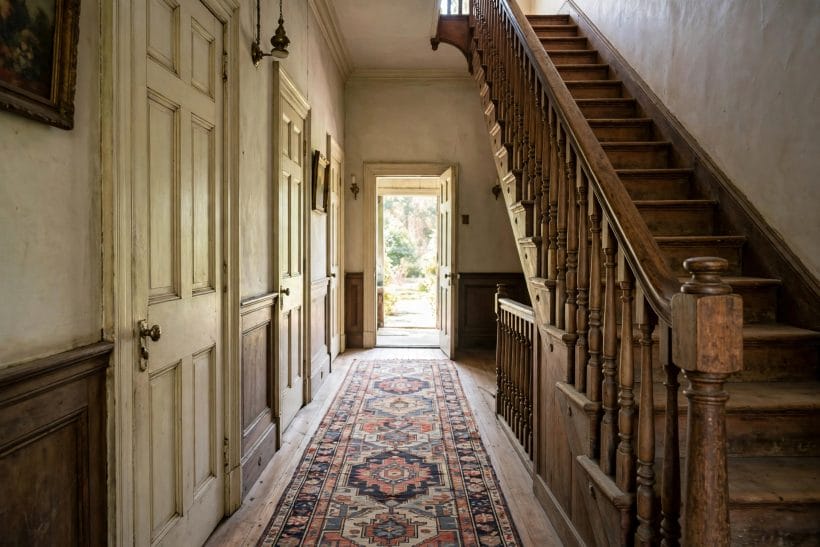
Staircases in old houses were built for their rooms, not for a standard, so treads, risers and handrails vary in ways that modern work must respect. A loose baluster can be refixed, a worn tread can be repaired and a handrail can be eased and repainted, all without rebuilding the stair, and any structural alteration to a staircase belongs to a qualified professional. A runner chosen for grip and quiet underfoot suits an old stair better than a hard covering that hides its condition.
Upper rooms often hold generous light in the house, and their sloping ceilings, dormers and small fireplaces give them a character the ground floor cannot match. Keep their windows working, their floors level enough for comfort and their storage fitted to the eaves rather than forced into the centre of the room, and they will serve as bedrooms, studies and quiet retreats without losing their shape.
Storage in old houses works well when it follows the building: cupboards under stairs, wardrobes built into alcoves and shelves fitted between chimney breasts all use space the house already offers. Freestanding furniture can then stay movable, which matters in rooms whose use may change over the years, and the house keeps its flexibility instead of being fixed around one arrangement.
7. Bedrooms and Quiet Rooms
Bedrooms in old houses are often simpler than the reception rooms, and that simplicity is their charm. High ceilings, tall windows and a fireplace, even one no longer used, give a bedroom a calm proportion that needs little decoration, and pale walls with timber furniture let the room itself do the work. Resist the urge to fill every wall, and the room will feel larger and rest more easily.
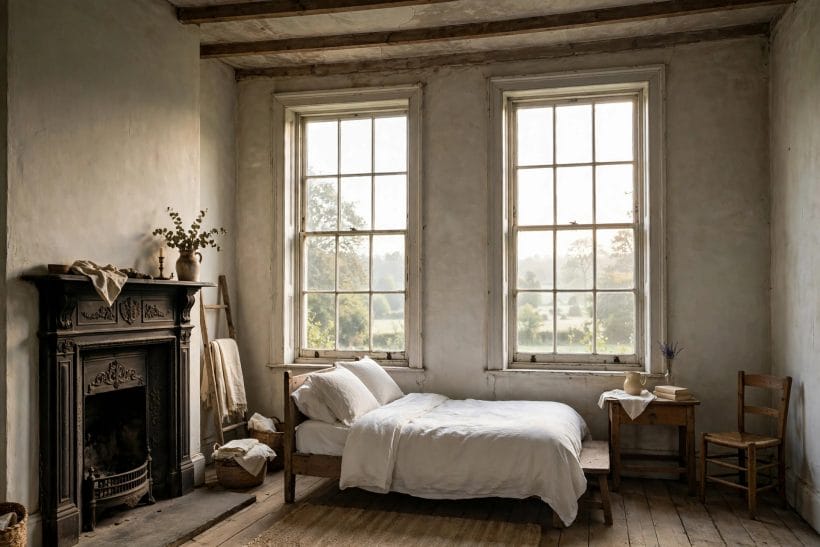
Light and air matter more in a bedroom than in any other room, because the room is closed for hours each night. A window that opens freely, a curtain that can be drawn fully and a door that closes quietly all contribute to sleep, and none of them needs a major alteration. If condensation gathers on cold mornings, ventilation and gentle, steady warmth will usually help more than sealing the room tighter, and persistent damp should be traced to its source by a professional.
Quiet rooms, whether a study, a sewing room or a reading corner, follow the same rule: fit the use to the room, not the room to the use. A small room with a single good window makes a fine study, while a larger room with a fireplace suits reading and conversation, and swapping those uses round often creates friction that no furniture can fix. Let the house suggest the arrangement, and daily life will flow more easily.
Floor coverings in bedrooms and quiet rooms should be kind to old floors beneath them. A rug that can be lifted for cleaning, a runner that protects a stair and a mat at a doorway all preserve the floor while adding warmth, and they can be changed with the seasons. Avoid fixing a covering permanently over a floor whose condition you have not checked, since a hidden floor can hide damp and decay for years.
8. Heating, Plumbing and Everyday Services
Heating an old house gently is an art, because the building was designed to breathe and to be warmed room by room rather than held at a single temperature throughout. Steady, moderate warmth suits old fabric better than sharp bursts of heat, and draught seals, curtains and shutters all reduce heat loss without altering the building. Heating, electrical and plumbing work belongs to qualified professionals, and this guide describes the aims, not the methods, of that work.
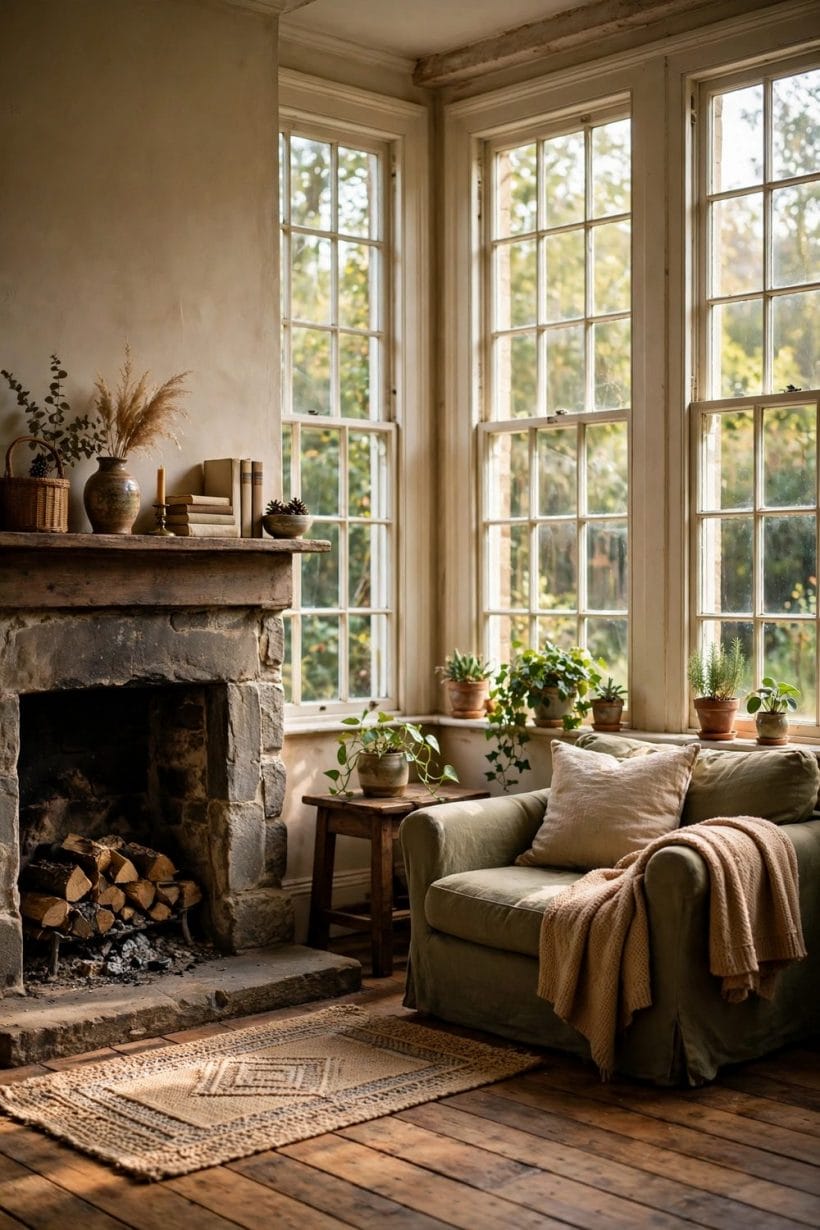
Fireplaces remain the heart of many old houses, even where they are no longer the main heat source. A surround kept in repair, a grate cleaned and a flue checked by a professional all keep the fireplace safe and handsome, and a fire lit occasionally reminds the household why the room was arranged around it. Chimney and flue work is never a task for an enthusiastic amateur, whatever the season.
Plumbing in an old house often runs through fabric that was never designed for it, so pipes, tanks and drains deserve a survey before any new bathroom or kitchen is planned. Old lead, iron and early copper runs may all need attention, and a professional can advise what to renew, what to retain and what to leave undisturbed. Water damage spreads quietly through old walls and floors, so a small leak found early is worth far more than a large repair found late.
Electrical services follow the same rule of professional care, and their routing should respect the fabric they pass through. Surface runs in a discreet trunking, sockets placed where they serve without chasing every wall and lighting that flatters old plaster all keep the house intact while bringing it up to modern life. Never open up old wiring or fittings yourself, and never assume a circuit is dead because a switch is off.
9. Planning a Renovation in the Right Order
Renovation rewards patience and punishes haste, because every old house hides something behind its walls and under its floors. The right order is almost always the same: make the house weathertight first, then sound, then dry, then warm, and only then decorative. A beautiful kitchen fitted before a leaking roof is repaired will be spoiled by the first wet winter, while a house made dry and sound will accept decoration gracefully whenever funds allow.
Begin with a written scope that separates the essential from the desirable, and price the essential first. A roof repair, a structural repair and a drainage repair are not optional, while a new fireplace surround or a garden wall rebuild can wait for a later phase without harming the house. Writing that distinction down protects the project when enthusiasm runs ahead of the budget, and it gives every trade a clear brief.
Sequence the trades so that each leaves the house ready for the next, and never let decoration overtake structure. Roofers and masons before plasterers, plasterers before joiners, joiners before painters: that simple chain avoids the waste of decorating a wall that must later be opened, and it keeps dust and damage away from finished work. A single coordinator, whether that is you or a professional, should hold the sequence and the scope together.
Expect discoveries, and keep a reserve for them, because old houses rarely reveal everything at the first inspection. A floor lifted for a pipe run may show decay, a wall opened for a socket may show an old flue, and each discovery is information, not failure. Pause, take advice, adjust the scope honestly, and the renovation will finish sounder than a project that pressed on regardless.
10. Gardens, Grounds and the Wider Plot
The garden of an old house is its largest room, and it repays the same repair-first thinking as the house itself. Paths that drain, walls that stand, gates that close and beds that can be worked without a struggle are the foundations of a garden that serves the household, and ornamental planting comes second to those practical bones. For planting ideas in a romantic, productive style, the cottage garden look collection shows how beds, paths and a productive heart can sit together, while the raised garden bed ideas collection shows how beds can be shaped for easier working.
Work the garden in the same seasonal rhythm the house itself follows. Spring is for clearing, pruning and repairing paths after winter, summer for watering, training climbers and enjoying the rooms the garden makes, autumn for cutting back, composting and protecting tender plants, and winter for planning, ordering and repairing structures while beds rest. That rhythm keeps the work manageable, and it keeps the garden in step with the house it serves.
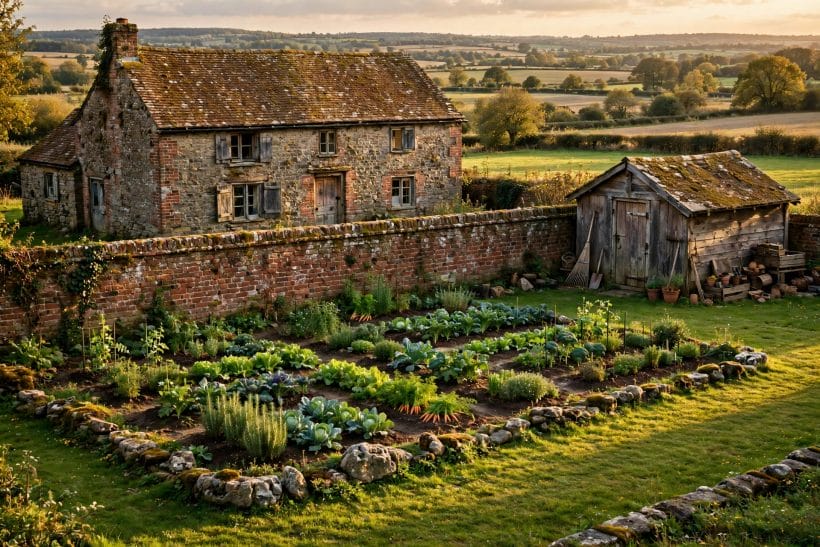
Productive gardening suits old plots particularly well, because their walls give shelter, their soil has often been worked for years and their outbuildings give storage for tools and crops. A vegetable patch, a herb bed by the kitchen door and fruit trained against a sunny wall all connect the household to its ground, and they do so without demanding a large outlay. Gardening advice here is general and hedged: soil, aspect and climate vary, so what thrives in one garden may struggle in another, and local knowledge is worth more than any general rule.
Finally, keep the wider plot in repair as part of the house, not as an afterthought. Outbuildings, sheds, stores and compost areas all need roofs that shed water and doors that close, and a neglected outbuilding can become a source of damp, pests and fire risk for the main house. A yearly walk around the whole plot, with a notebook in hand, will catch most problems while they are still small and cheap to put right.
Final Considerations
Living with an old house is a long conversation, not a single project, and the houses that endure are those whose owners listen before they act. Repair what is sound, change only what the house truly needs, keep the work professional where safety or structure is involved, and let the garden grow in step with the rooms it serves. That restraint is not a lack of ambition, it is the ambition itself: to hand the house on in better condition than you found it.
If you take one habit from this guide, make it the habit of looking before leaping: a walk around the house in daylight, a note of what has changed since last season and a conversation with a qualified professional before any structural, electrical, plumbing or damp work begins. Old houses reward that patience with rooms that feel settled, gardens that feel generous and a character that deepens with every careful year. The house has already lasted through many households, and with steady, sympathetic care it will last through many more.


0 Comments