

Steep roofs, tall windows and ornament with perfect manners: a Victorian house does not whisper. Dressed in its own system — rank, repetition, rich colour — it still makes the street look up.
These 75 Victorian house ideas walk the whole house in one tour: the composed face, the formal plan, room by room, the crafts it is made of, its garden — and the honest, comfortable keeping of it today.

1. Victorian House Ideas at a Glance
The central entity is the Victorian house: a tall, bayed, formally planned home defined by its attributes — a picturesque silhouette, ornament arranged by rank, a hall-and-rooms plan with doors, tall windows and high ceilings, a rich period palette of colour and pattern, and a coalition of crafts in timber, plaster, tile, glass and iron. It is the whole-house overview to which its exterior, trim and garden surveys attach.
| Question | Short answer |
|---|---|
| What defines a Victorian house? | The silhouette and the system: steep roofs, bays and tall chimneys outside; a formal hall plan, ornament by rank and rich colour within. |
| What matters most in restoring one? | Repair before replacement — sashes, plaster, tile and joinery carry the house’s credentials, and the original mended beats the replica perfect. |
| Can it be comfortable today? | Yes, by the house’s own logic: zoned warmth, closed doors, lined curtains drawn at dusk, and services routed through the plan’s existing shadows. |
| Where do the deeper surveys live? | The exterior, the gingerbread trim and the garden each have their own posts, linked from the sections here — this page is the overview that holds them together. |

2. The Victorian House Defined: Ornament With a System

The Victorian house is not decoration scattered on a box — it is a system: a tall, bayed, many-roomed plan wearing ornament that follows rules of rank and repetition. Its outside is surveyed in depth by the victorian house exterior ideas post; this post is the whole-house overview, inside and out, that those deeper surveys hang from.
1. Start With the House’s Silhouette: Tall, Bayed and Unashamed
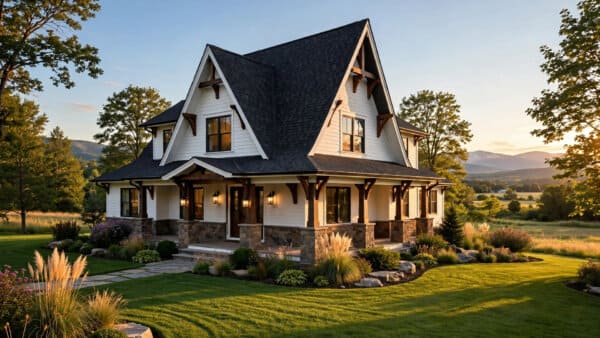
Steep roofs, tall chimneys, bays that push the walls outward and a skyline that refuses to be flat: the Victorian house announces itself from the street’s end.
2. Understand Ornament as a System of Rank
Cornice richest, window surrounds next, porch and gable dressed, walls comparatively calm: Victorian ornament is a hierarchy, not a confetti. Houses that dress every surface equally look frantic; the system is the elegance.
3. Let the Plan Be Formal: Hall, Parlour and Rooms With Doors
The Victorian interior is a suite of defined rooms off a hall, each with its own purpose and its own door.
4. Expect Height: Tall Ceilings, Tall Windows, Tall Doors
Proportion is the period’s gift: rooms taller than they are wide in feeling, windows that stand like portraits. Furnish and dress to that height — low, mean pieces look lost, and short curtains are the style’s saddest economy.
5. Read the House’s Own Rank Before Changing Anything
Grand villa, modest terrace and cottage each spoke Victorian at their own volume, with ornament scaled to means.
6. Keep the Period’s Colour Courage
Deep reds, bottle greens, ochres, inks and complex neutrals — Victorian colour was rich, layered and unafraid, inside and out. The washed-out version of the style is a modern misunderstanding; the real palette glows by lamplight.
7. Treat Pattern as the Interior’s Native Language
Wallpapers, tiles, carpets and cloth all patterned, in ranked conversation — the Victorian room is a woven argument of motifs. The skill is the ranking, learned in this post’s room sections: one voice leads, the others harmonise.
8. Honour the House’s Craft Evidence
Plaster roses, encaustic hall tiles, marble fireplaces, stained glass, joinery that fits like cabinetry: these survivals are the house’s credentials. Repair outranks replacement at every turn — the original, mended, beats the replica, perfect.
9. Plan Modern Comfort as a Guest, Not a Coup
Heating, wiring, plumbing and insulation must all move into a Victorian house without evicting its character. The art is routing and concealment — services in the house’s existing shadows, never chased across its finest faces.
10. Let the Garden Complete the Architecture
The Victorian house was designed to be seen through planting: a garden gate, a path, lawn and borders framing the face. House and garden are one composition in this style, which is why this post ends outdoors.
11. Remember the Style Rewards Keepers
Victorian houses repay attention lavishly and punish neglect in kind — their many materials and junctions ask for steady, small care. Households that enjoy keeping a house find their natural home in the period.
3. The Face: Towers, Bays, Porches and Painted Colour

The facade is the Victorian house’s public portrait, and its trim — the famous gingerbread — has a post of its own in the gingerbread houses tour of real examples. This section keeps to the face’s composition: the elements, the paint system and the order in which a street face is composed.
12. Let a Tower or a Tall Bay Give the Face Its Event
One vertical event — a turret, a two-storey bay, a great gable — organises the whole facade around itself. Houses with one event look composed; houses with three look like a fairground, however fine each piece is alone.
13. Dress the Porch as the Face’s Front Room
The porch is where the Victorian house receives the street: turned or chamfered posts, a decorated frieze, a ceiling with colour, and room for a chair.
14. Paint in the Period’s System: Body, Trim and Accent
The classic scheme gives walls one colour, trim a contrasting second, and sashes, doors and details a third accent — the recipe that makes ornament legible from the pavement. Flat, single-colour painting is how Victorian faces go mute.
15. Keep the Sashes Tall, Glazed and Honest
Original sash windows are the face’s eyes: repair, draught-proof and reglaze them before ever pricing their plastic impersonators. Their proportions and reflections cannot be bought new at any sane price, and the house knows the difference.
16. Use Stained and Coloured Glass Where the House Invites It
A fanlight, a stair window, a porch light in coloured glass gives the facade its jewellery and the hall its sunset. Keep new glass in the period’s grammar — geometric or softly floral, never the cartoon version.
17. Frame Windows With Their Full Dressings
Surrounds, sills and aprons were designed as a set, and their loss flattens a face more than any paint choice. Where dressings survive, restore them; where they are gone, reinstate the pattern from the street’s surviving cousins.
18. Give the Front Door Its Full Ceremony
Panelled door, fanlight above, furniture in brass, a step kept swept and a knocker that rings the house’s note: the Victorian door is a paragraph, not a panel.
19. Let the Roof Wear Pattern Where the Original Did
Bands of shaped tiles or slates, decorative ridge work and finials belong on houses born with them, restored in kind.
20. Anchor the Face With Its Ironwork
Railings, gates and boot scrapers in black iron are the facade’s punctuation, and their loss is why so many terraces feel unfinished. Reinstated ironwork returns the house’s street manners in a single project.
21. Light the Face for Welcome, Not Display
A porch lantern and a warm hall glow through the fanlight are the Victorian evening face. Floodlighting flattens ornament into glare; lamplight models it — the period was lit by flame and designed for exactly that kindness.
22. Step Across the Street and Judge the Whole Composition
Facades are read from opposite pavements, at walking pace, in sequence with their neighbours. Make every big decision — colour, trim, reinstatement — from that distance, and let the near view be for craft alone.
4. Inside: the Hall, the Parlour and the Formal Plan

Indoors, the Victorian house runs on ceremony: a hall that receives, front rooms that present, back rooms that serve. The parlour’s own traditions are close kin to the living room ideas pillar’s formal end; this section keeps to the Victorian plan itself — its sequence, its heights and its doors.
23. Let the Hall Set the House’s Tone in Ten Steps
Encaustic or patterned tile underfoot, a dado line, the stair rising ahead and doors in dark wood: the hall is the house’s overture.
24. Give the Stair Its Architectural Due
The Victorian stair — mahogany handrail, turned balusters, a window on the half-landing — is furniture and architecture in one. Strip its paint honestly, feed its rail, and let a runner carry pattern up the house’s spine.
25. Keep the Front Parlour as the House’s Best Room, Used
The parlour’s sin was never formality but disuse: a best room opened weekly stays alive, while one sealed for occasions becomes a shrine that smells of dust.
26. Arrange the Parlour Around Its Fireplace and Bay
Marble or cast-iron fireplace as the seat of honour, seating in the bay for light, the piano or its modern stand-ins along the wall: the Victorian parlour’s plan is a solved equation — inherit the solution before improvising.
27. Let the Dining Room Keep Its Gravity
Dark wood, a great table, pictures hung low over the sideboard and light pooled on the cloth: the Victorian dining room understands that eating together is theatre. Its gravity flatters every meal served in it, takeaway included.
28. Use the Back Parlour or Morning Room for Real Life
The period plan’s genius is its second sitting room — the informal one where the household actually lives. Honour the division: best room for ceremony, back room for slippers, and neither apologising for the other.
29. Respect Doors: Keep Them, Close Them, Dress Them
Victorian doors — four panels, rim locks, porcelain or wooden knobs — are the plan’s moving architecture.
30. Dress Tall Windows From the Pelmet to the Floor
Curtains at Victorian height are architecture in cloth: pelmets or poles at the cornice, fabric to the floor, tie-backs that shape the fall. Anything shorter reads as a coat that shrunk — the window’s dignity is length.
31. Hang Pictures at the Period’s Height and Density
Pictures hung from rails, lower than modern habit and in conversational groups, belong to these tall walls.
32. Keep Servants’ Geography Legible Where It Survives
Bells, back stairs, the scullery’s bones: the working plan beneath the ceremony is the house’s social history in plaster.
33. Borrow Light Between Rooms as the Period Did
Fanlights over doors, glazed upper panels and borrowed lights over the hall were the Victorians’ own answer to deep plans. Where privacy allows, restore those glazings — the house brightens by its original logic, not by new holes.
5. Rooms One by One: Kitchen, Bathrooms and Bedrooms in Period Dress

Beyond the formal rooms, each Victorian room has its own period answer, from the scullery-born kitchen to the bedroom over the parlour. The sleeping rooms’ general survey lives in the bedroom ideas pillar; here each room is dressed in its Victorian clothes and fitted, gently, for modern use.
34. Build the Kitchen on the Scullery’s Honest Bones
A Victorian-hearted kitchen is a working room with manners: a great range or its modern heir as the hearth, open shelves, a scrubbed table and nothing pretending to be a drawing room.
35. Let a Dresser Do the Kitchen’s Storage With Ceremony
The plate-racked dresser is the Victorian kitchen’s architecture and its display in one piece of furniture. Modern fitted units can live quietly alongside; the dresser gives the room its rank and its crockery a parade ground.
36. Tile the Kitchen Where Water and Work Meet
Ceramic at the range and sink, in the period’s plain or patterned grammar, is both authentic and the hardest-wearing answer. The Victorians tiled their working surfaces for the same reason we do — it survives Tuesdays.
37. Give the Bathroom Its Victorian Drama: the Roll-Top Bath
A freestanding bath on feet, high-level cistern kept or quoted, and tiles to dado height: the period bathroom is a small theatre of enamel and brass. Modern plumbing hides inside the choreography without changing the play.
38. Use Encaustic and Geometric Tile on Bathroom and Hall Floors
Patterned floors in clay colours are the Victorian house’s signature underfoot — durable, repairable tile by tile, and beautiful in exact proportion to their age. Where originals survive, mend them; where they are gone, the pattern book is open.
39. Dress Bedrooms in the Period’s Softness: Paper, Cloth and a Fireplace
The bedroom over the parlour often keeps its own small grate, and the room dresses in wallpaper, layered cloth and a washstand’s descendant chest. Its calm is the formal plan’s reward — the private floor, composed.
40. Keep a Nursery or Dressing Room in the Plan’s Logic
Small rooms off the landing — box room, dressing room, nursery — are the plan’s flexibility, taking hobbies, guests and babies in turn.
41. Furnish the Study or Library With the House’s Darkest Wood
Books, a desk with a lamp’s pool of light, and the deepest colours in the house: the Victorian study is the plan’s brain, and its gravity is a feature.
42. Let the Conservatory or Garden Room Be the House’s Light Trap
Victorian glasshouses married the garden to the plan, and a lean-to conservatory remains the sunniest seat in the house.
43. Convert the Cellar With Respect for Its Cool, Dark Nature
Cellars forgive little: damp, light and headroom must be answered honestly before any conversion dream.
44. Fit Modern Bathrooms Into the Plan’s Existing Shadows
Ensuites carved from dressing rooms, plumbing stacked over plumbing, extracts routed through old chimney breasts: the period plan hides its new services best in its own service geography. The plan knew where water belonged before we did.
6. Materials and Making: Timber, Plaster, Tile and Stained Glass

The Victorian house is a coalition of crafts, and its materials behave by rules their makers understood. Its staircase — the interior’s greatest piece of joinery — is surveyed as a subject in the staircase ideas post; this section keeps to the materials themselves, and how each is kept, mended and matched.
45. Feed the Joinery: Doors, Rails and Skirtings in Honest Wood
Victorian joinery was built to be repaired — sections scarfed, rails re-glued, panels replaced singly.
46. Repair Plaster as Plaster, in Lime’s Own Time
Cornices, roses and walls in older houses often live in lime, which breathes and moves kindly with old masonry.
47. Keep Fireplaces Working or Honestly Dressed
A marble or cast-iron fireplace is a room’s portrait bust: keep its grate sound, its surround cleaned appropriately, and its flue’s status known under local rules.
48. Let Brass and Iron Keep Their Separate Duties
Brass for the hand — knobs, knockers, rails that polish with touch; iron for structure and fire — grates, railings, brackets.
49. Mend Stained Glass by Leading, Not Replacing
A cracked quarry or a bowing panel is a repair, not a death sentence: glaziers who lead and solder keep these windows for another century.
50. Match Slates, Tiles and Bricks From the Salvage of the Same World
Roof and wall repairs in the period’s materials — sourced from salvage where new matches fail — keep the house’s weather skin honest.
51. Respect the Damp Logic of Solid Walls
Victorian walls are thick, solid and designed to manage moisture by breathing, not by barriers alone. Modern damp cures belong to specialists in old buildings; the wrong membrane can move the problem into the timbers.
52. Keep Floors in Their Original Hierarchy
Boards above, tile and stone below, carpet as the period’s luxury layer between: the floor plan of materials tells the house’s social map.
53. Use Traditional Paint Systems Where They Belong
Limewash on the lime, oil-bound colour on the joinery, and modern paints chosen for compatibility elsewhere: the house’s chemistry is a system.
54. Give Stone, Marble and Slate Their Cool Duties
Hearths, hall floors, dairy-cold larders and roofs: the period’s mineral materials serve where water, fire and wear rule, and each asks its own cleaning — gentle, material-specific, and never the strongest bottle in the cupboard.
55. Commission Craft in the Period’s Spirit, Not Its Costume
New work for an old house — a bookcase, a screen, a length of cornice — should be well made in the house’s grammar and plainly of its own day in detail.
7. The Garden and the Setting: Gate, Path, Lawn and Borders

The Victorian house finishes outdoors, in a garden designed as its green ante-room. That garden has a full survey of its own in the victorian landscaping ideas post; this section keeps to the setting’s composition — how gate, path, lawn and planting frame the house itself.
56. Enter Through a Gate That Belongs to the Railings
Iron gate and iron railings, or a timber gate in a hedge where the street is softer: the entrance is the composition’s first sentence.
57. Run the Path Straight and Honest to the Door
Victorian paths do not meander to front doors — they proceed, in tile, brick or stone, with the house as their destination. A straight path’s confidence is the facade’s first compliment; save curves for the garden’s private rooms.
58. Give the House a Lawn Apron to Stand On
A plain of grass before a decorated face is the period’s favourite contrast — ornament reads against calm. Keep the front lawn simple, edged and green, and let the borders and the house do the performing.
59. Plant Borders Deep, Dark and Evergreen at the Bones
Laurel, yew, privet and the period’s dark greens give the Victorian garden its winter architecture, against which roses and seasonal colour perform. Evergreen bones first, flowers second — the facade’s framing holds in January, not only in June.
60. Let One Tree Sign the Composition
A single well-chosen tree — planted with its mature size honestly imagined — signs a Victorian plot the way the tower signs the house.
61. Keep the Porch Planted: Climbers on Their Manners
Roses, jasmine or wisteria trained clear of gutters, doors and the sashes they would swallow: porch planting is the facade’s soft frame. Trained yearly, it embroiders the face; abandoned, it eats the house in green instalments.
62. Use Gravel, Brick and Stone in the Period’s Own Palette
The garden’s hard surfaces should borrow the house’s materials — brick from its walls, stone from its step, gravel in warm tones. Imported brightness jars; the garden that dresses from the house’s own wardrobe always composes.
63. Set a Seat Where the House Is Best Seen From
Every Victorian plot has one bench’s worth of perfect view: the facade across the lawn, evening light on the bays. Put the seat there. A house this composed deserves an audience of one, nightly, with tea.
64. Light the Path and Porch, and No More
A lantern at the gate’s end and the porch’s warm pool are the garden’s whole lighting script. The Victorian night garden was dark, scented and starlit — keep the lamps few and let the house glow from within.
65. Let the Back Garden Be the Working Country
Vegetables, laundry, sheds and play lived behind the Victorian house without shame, screened by the house itself. Keep the division — ceremony in front, industry behind — and both gardens do their work better for the treaty.
8. Living in a Victorian House: Comfort, Care and Honest Compromise

The final question is the daily one: how a Victorian house is lived in warmly, quietly and without a second mortgage of worry. Its street face in daily dress is the business of the front porch ideas post; here the house is judged from the sofa, in February, by its own household.
66. Warm the House by Zones, as Its Plan Suggests
Heat the rooms in use, close the doors the plan provided, and let the hall be the cool buffer it was designed as.
67. Draught-Proof the Sashes and Doors Before Replacing Anything
Brushes, seals and honest adjustment return most of a Victorian window’s comfort for a fraction of replacement’s cost and none of its character. The period’s joinery was made adjustable; use the kindness built into it.
68. Dress the Windows for the Cold They Actually Face
Lined curtains, drawn at dusk, are the house’s nightly insulation — the Victorians’ own answer, still the cheapest warm room in the house. Pelmet, lining and length are heating decisions wearing beautiful clothes.
69. Keep the Chimneys’ Status Known and the Fires Honest
Which flues work, which are capped, which serve the boiler: a written note in the house book ends the guesswork.
70. Maintain in Small Seasons, Not in Great Crises
Gutters in autumn, paint in its year, the roof walked in spring: the Victorian house is kept by a calendar of small kindnesses. Households that keep the calendar rarely meet the crisis — the house rewards rhythm over heroics.
71. Let Modern Life Sit in Period Furniture’s Manners
Screens on desks that close, chargers in the hall drawer, the router in a cupboard with ventilation: the house absorbs this century politely when its furniture is asked to help.
72. Compromise Where the House Is Stubborn, Win Where It Is Generous
Some Victorian truths — the cool hall, the one grand bathroom, the stairs’ daily exercise — are the price of its gifts of height, light and ceremony. Pay the small prices gladly and the house’s generosity dwarfs them.
73. Keep a House Book: Dates, Colours, Trades and Discoveries
Paint colours, tile sources, the flue map, the stopcock’s hiding place — written down, the house’s knowledge outlives memory and ownership. Every Victorian house deserves its biography, and its keepers deserve not to start from zero.
74. Buy the House’s Furniture at Its Own Scale, Second-Hand First
Tall rooms swallow small furniture and flatter the period’s own pieces, which the second-hand world holds in abundance. A Victorian house furnished from its own century’s survivors looks inevitable — because, in every way that matters, it is.
75. End With the Lamplight Test
At dusk, lamps lit, curtains drawn, the hall glowing through its fanlight: if the house then feels warm, composed and faintly ceremonial, the Victorians’ system is alive in it.
9. Checks and Mistakes: Before the First Pour or Purchase

Check the bones before the beauty: roof, walls, damp logic and the state of the original joinery and plaster, read by people who know old houses. A Victorian house forgives decoration postponed; it does not forgive water, and every check should start where the weather gets in.
Check the paperwork of the place — protections, permissions and the rules that attach to old and listed buildings vary, and qualified local advice governs before work begins. The house has stood through a century of regulations; a season of patience at the start is a small tithe.
The common mistakes are all impatience with the system: single-colour paint muting the ornament, doors and sashes replaced instead of repaired, patterns competing without rank, and modern services chased across the finest faces. Each is avoided by the post’s order — silhouette, system, plan, crafts, then comfort.
10. Costs and Pulling It Together
Costs stay qualitative, as honest keeping must: the economical end is the repair end — draught-proofing, mending, painting in the period’s three-colour system and furnishing second-hand at the house’s own scale. The expensive end is reinstatement and craft — roofs re-patterned, glass releaded, joinery remade by hand — worth it at the face and the hall, where the house is read, and phased everywhere else.
Pull it together in the order this post kept: silhouette, face, plan, rooms, crafts, garden, then daily keeping. Followed in that sequence, these seventy-five ideas become one house that receives its street, its guests and its own household with the same composed ceremony.
Final Considerations
A Victorian house asks for keepers, not curators: steady small care, respect for its system, and the courage of its colours. Give it those, and it returns what no new build can counterfeit — height, ceremony and a century’s head start on being loved.


0 Comments