
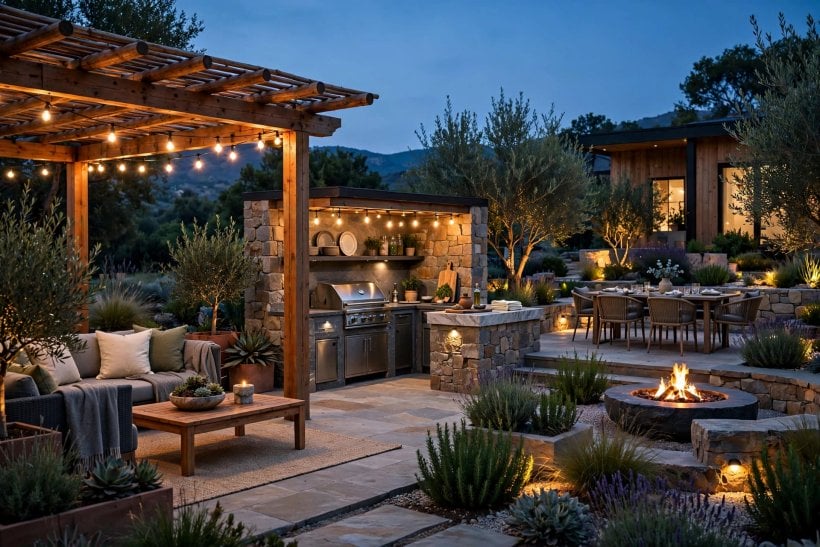
The gardens people actually live in are planned like rooms: a floor, a ceiling of sky or shade, places to cook, sit, gather around fire and linger after dark. These outdoor living spaces ideas build that outdoor home step by step — layout, kitchen, fire, shelter, furniture and light — in the order that makes each decision easier.
Start with the at-a-glance plan, then work through the sections your garden needs most: most projects succeed by finishing two or three zones properly rather than starting all of them at once.
1. Outdoor Living Spaces at a Glance: Rooms Without Walls
An outdoor room succeeds on the same fundamentals as an indoor one — a defined floor, comfortable seating, light for the hour and a reason to be there. Plan those four things zone by zone, and the garden stops being scenery and becomes the most-used part of the home.
| Zone | Core elements | What it hosts |
|---|---|---|
| Lounging patio | Deep seating, side tables, shade overhead | Daily relaxing, reading, conversation |
| Outdoor kitchen | Grill, worktop, storage, water nearby | Cooking without indoor relay trips |
| Dining terrace | Table, chairs, evening light, shade at noon | Meals from breakfast to dinner parties |
| Fire circle | Fire feature, ring of seats, spark-safe floor | Evenings, warmth, shoulder seasons |
| Garden room | Pergola or structure, climbers, defined edges | Quiet retreat, work, afternoon rest |
| Water and play | Pool, plunge, fountain or lawn games | Cooling off, children, active hours |
| Planting frame | Beds, pots, screening greenery | Privacy, scent, softness, wildlife |

A quick visual summary of the zones, surfaces and layers that make a garden liveable before the ideas begin.
- Divide the garden into rooms. Even a modest garden holds two or three distinct zones — lounging, dining, fire — separated by planting, level changes or furniture rather than fences. Rooms give each activity an address and the garden a sense of journey.
- Follow the sun across the day. Track where light and shade fall at breakfast, midday and evening before fixing anything permanent. Morning coffee wants early sun; summer dining wants midday shade; the fire circle wants the sunset view.
- Connect zones with real paths. Stepping stones or a gravel path worn by intention, not by muddy habit, link the zones and keep feet dry. Paths also give the garden structure in winter when planting sleeps.
- Put the most-used zone nearest the house. Daily lounging belongs steps from the door; occasional zones can live deeper in the garden. Distance is the silent killer of outdoor plans — convenience always wins.
- Plan utilities before surfaces. Water, drainage, power and gas are cheap to add before paving and painful afterwards. Even if the kitchen is years away, a capped water line and a conduit run are gifts to your future self.
- Give every zone an evening plan. A zone used only in daylight is half a zone. One light source, one warmth source or one reason to stay — each area needs its after-dark argument settled at planning stage.
- Phase the build honestly. Surfaces and structure first, planting second, furniture and decor last — and finish each phase completely. One beautiful finished corner beats a whole garden of nearly-done, because finished corners get used.
2. Patios and Layout Foundations
The floor decides everything built on it: size for the furniture you truly own, a surface kind to bare feet, and drainage that keeps puddles out of the seating. Borrow the zoning discipline from our Tiny House Living Room Ideas — the principles scale from parlour to patio unchanged.

- Size the patio for furniture plus movement. Chairs need pull-out space, people need passing space, and tables need serving space. Tape the full footprint on the lawn for a weekend before committing to any hard surface.
- Choose paving with bare feet in mind. Smooth stone, quality porcelain, brick and well-laid setts all age gracefully and feel good underfoot. Dark surfaces in full sun can become too hot to stand on by midday in warm climates.
- Decking for level changes and warmth. Timber or composite boards soften a garden’s geometry and solve sloping ground elegantly. Leave honest gaps, plan board direction to lead the eye, and keep a broom nearby — decks collect debris daily.
- Gravel for flexible, affordable ground. A gravel terrace with a firm edge costs little, drains beautifully and can be reshaped as plans evolve. Furniture sits best on a few flat stones placed under feet and legs.
- A lawn panel as the soft room. Not every zone needs hard flooring: a shaped lawn panel hosts picnics, play and barefoot mornings. Edge it crisply so the softness reads as design rather than leftover.
- Steps and levels as features. Where the garden slopes, embrace terraces: each level becomes a room with its own character, and retaining edges become seats, plant shelves and lamp ledges all at once.
- Edges that define without fencing. A row of pots, a low hedge or a change of surface tells the eye where one room ends. Soft edges keep the garden feeling generous while the zones stay legible.
- Drainage solved invisibly. Falls away from the house, permeable joints where possible and no low spots under seating. The best drainage is the kind nobody ever discusses because nothing ever pools.
3. Outdoor Kitchens and Dining
Cooking outside works when the trips indoors stop: grill, worktop, storage and water within a few steps of each other. Keep the drinks just as organised with the station thinking from our Home Coffee Bar Design Ideas, translated to lemonade and evening spritzes.

- Start with a serious grill station. One good cooking appliance on a stable, heat-safe base with worktop on both sides covers most outdoor cooking lives. Elaborate ranges impress visitors; landing space impresses cooks.
- Worktop that doubles as a bar. A counter along the kitchen’s edge seats two on stools, holds drinks while food cooks and keeps guests close without crowding the cook’s triangle. Company is the whole point of cooking outside.
- Storage for tools and serveware. Weather-tight storage at the kitchen — tongs, trays, unbreakable serveware — ends the indoor relay race. What lives outside gets used outside; what lives inside stays inside.
- A sink or at least a water point. Rinsing hands, veg and grill tools at the station changes outdoor cooking from camping to cuisine. Even a simple outdoor tap and a deep basin deliver most of the benefit.
- Fridge or ice well for cold things. A small outdoor fridge or a handsome ice-filled trough keeps drinks and salads cold through a long lunch. Shade it — a fridge baking in full sun works hard and dies young.
- Dining table under reliable shade. The table needs midday cover more than it needs a view. Roof, pergola, sail or umbrella — test the shadow at one o’clock in midsummer before choosing the table’s permanent home.
- Pizza oven or fire-cooking corner. A dedicated fire-cooking spot — oven, hearth grill or fire bowl with a grate — gives gatherings a theatre and the cook a second stage. Site it downwind of seating with elbow room all round.
- Herb planter at the cook’s elbow. Basil, rosemary, thyme and chillies in a raised planter beside the grill season everything and perfume the work. Cooking gardens earn their space at every single meal.
4. Fire Features for Gathering Around
Fire is the oldest room there is: a warm centre that arranges chairs, conversation and evenings around itself. Choose the feature your fuel, space and local rules honestly support, then build the circle properly.

- Sunken or ground-level fire pit. A simple pit in stone or steel at the garden’s heart, ringed by a spark-safe apron, delivers the classic campfire circle. Keep the pit’s edge at a height that warms knees, not just faces.
- Raised bowl for small gardens. A fire bowl on a stand brings flame to compact patios and can move for parties or storage. Its height makes it visible over chair arms — a small feature with an outsized glow.
- Outdoor fireplace for structure. A built fireplace gives a zone a wall, a chimney’s draw and a mantel to dress. It is the most architectural fire option and anchors a whole garden room around its hearth.
- Gas fire table for instant evenings. Flame at the turn of a dial, no smoke, no sparks, drinks on the same surface — gas fire tables suit spontaneous weeknight evenings and smoke-sensitive neighbours beautifully.
- Chiminea for directed warmth. A chiminea throws its heat forward like a little stove, perfect for a two-chair corner. It asks for a safe base, a clear flue path and respect on windy nights.
- Seating in a true circle. Arrange seats at conversation distance all the way round, with a shared surface or two for drinks. Fire circles fail when one side becomes the audience and the other the stage.
- Fuel stored dry and near. A tidy log store within reach — stacked, covered and off the ground — keeps the fire fed and the garden handsome. Wet wood is the end of more fires than rain.
- Safety built into the ritual. Water or sand bucket present, sparks respected on windy nights, children briefed, and local rules checked before the first match. A fire routine everyone knows keeps the magic safe.
5. Garden Rooms, Pergolas and Shade
A structure overhead — beams, a roof of climbers, a sail — is what turns a patch of patio into a room the mind can settle into. Shade is comfort, but enclosure is belonging; the best gardens offer both, with colours and finishes guided by our Tiny House Interior Paint Colors advice for timber and walls.

- Classic pergola over the dining zone. Four posts and an open lattice roof define the room while keeping the sky. Add climbers over the years and the shade deepens as the garden matures — patience with a beautiful payoff.
- Retractable canopy for flexible cover. A sliding or roll-out canopy gives shade at noon and stars at night from the same structure. It suits indecisive climates and households that argue happily about sun versus shade.
- Shade sails for sculptural cover. Tensioned sails in overlapping triangles shade awkward shapes elegantly and cheaply. Anchor them to structure, not fences, and angle for run-off so rain never pools and sags.
- Summerhouse or garden studio. A small roofed building extends the season at both ends: shelter from showers, storage in winter, a work or reading room in between. One building, four jobs, every month of the year.
- Arbour nook for two. A little roofed bench wrapped in climbers at the garden’s far end creates the destination every garden walk needs. Distance plus enclosure equals the feeling of a genuine escape.
- Living roof of climbers. Vines over a pergola cool the air beneath measurably and scent it in season. Choose plants suited to your winters, give roots generous soil, and prune on a calendar, not in a panic.
- Curtains and screens on structures. Outdoor curtains on a pergola’s sunny side add privacy, shade and softness, closing the room for evening. Tie them back securely; fabric and fire features must never meet.
- Gazebo for a formal focal point. A hexagonal gazebo gives larger gardens a landmark and a roofed room in one. Site it where paths cross or views converge so it organises the garden around itself.
6. Furniture and Comfort Outdoors
Outdoor furniture obeys the same rules as indoor: honest comfort, right scale, surfaces within reach — the buying discipline in our Tiny House Interior Design guide applies under the sky too. Buy the seats for the life you actually live outdoors.

- Deep lounge set as the centrepiece. A proper outdoor sofa and chairs with real cushions turn the main patio into the house’s best room half the year. Test the sit as seriously as you would an indoor sofa.
- Daybed or chaise for one lucky person. Every garden deserves one horizontal seat for reading, napping and cloud-watching. Place it where the afternoon shade arrives first and it will be occupied daily.
- Dining set sized to real gatherings. Seat your household plus two comfortably, with serving room on the table. Extendable tables and bench sides handle the feast days without crowding the ordinary ones.
- Adirondack or low fire chairs. Low, leaned-back chairs around the fire circle invite long evenings. Their wide arms hold drinks, books and elbows — furniture designed by someone who understood sitting still.
- Hammock between posts or trees. The cheapest luxury in this entire guide needs two strong points and shade at midday. Add a small side table within reach and surrender the afternoon gracefully.
- Side tables wherever people sit. One small surface per seat, minimum. Gardens without tables sprout drinks on walls, steps and grass — charming for a day, tiresome for a season.
- Cushion storage that actually happens. A deck box or bench store at the main zone makes the nightly cushion run a two-minute job. Comfort that is easy to protect survives; comfort that is a chore gets left out to die.
- Materials matched to climate and care. Teak, metal, resin wicker and modern outdoor fabrics each suit different weather and maintenance appetites. Choose for your real habits, not your aspirational ones, and everything lasts.
7. Lighting and Evening Ambience
Darkness is the garden’s second design: layered, warm and low. Light the paths for safety, the tables for faces, and the planting for depth — and keep plenty of honest darkness between, because night is the point.

- Path lights that guide, not glare. Low, shielded fittings along routes and at steps prevent stumbles without lighting the garden like a car park. Space them for pools of light with shadow between — rhythm reads as design.
- String lights over gathering zones. Festoon lights above the dining table and lounge declare celebration and flatter everyone beneath. Use outdoor-rated sets, support the spans properly, and keep spare bulbs in the cushion box.
- Uplighting for trees and structure. One or two spotlights washing up a tree trunk or pergola post give the night garden depth and drama. Aim carefully; badly aimed uplights light the neighbours’ ceiling, not your garden.
- Lanterns clustered on tables. Battery or candle lanterns in odd-numbered groups bring light down to face level where it belongs. They move where people move — the most flexible layer in the whole scheme.
- Wall lights by doors and kitchens. Practical light at the grill, the back door and the storage box keeps cooks and carriers safe. Put these on their own switch so utility never murders ambience.
- Solar accents for distant corners. Solar stakes and fairy lights mark the far beds and the arbour path with zero wiring. Treat solar as sparkle, not infrastructure, and it will always delight rather than disappoint.
- Firelight as the anchor. Where a fire feature burns, let other lights dim around it. Flame is the light humans gathered around for millennia; electric light should support its performance, not compete with it.
- Dimmers and zones of control. Two or three simple circuits — paths, gathering, accents — let the garden shift from party-bright to firefly-soft. Controls everyone understands are the ones that actually get used.
8. Water, Play and Movie Nights
Gardens earn their keep in active hours too: water to cool off in, games that pull people off chairs, and a screen under the stars. Our Tiny House Home Theater ideas shrink happily into an outdoor cinema corner.

- Plunge pool or stock tank for cooling. A compact plunge — built-in or a smartly sited tank pool — delivers summer’s greatest pleasure without a full pool’s footprint. Surround it with towel hooks, a bench and non-slip ground.
- Fountain for sound and calm. Moving water masks traffic noise, cools the ear and draws birds. Even a small bubbling bowl on the patio changes the whole garden’s sense of peace.
- Full pool zoned like a resort. Where space and budget allow, treat the pool area as its own room: loungers, shade, a drinks ledge and planting privacy. Zoned pools look designed; unzoned pools look parked.
- Lawn games with a home. Boules, croquet, cornhole or a simple ring-toss live in a basket by the door and come out weekly. Games are how gardens host people who do not want to just sit.
- Outdoor movie corner. A white wall or screen, a portable projector and the lounge furniture turned around make cinema nights a household institution. Store the kit in one box so setup takes ten minutes, not an hour.
- Children’s play woven in. A sandpit in a shaded corner, a swing from the strong branch, stepping logs along a path — play integrated with the garden’s design gets used for years and removed in an afternoon when outgrown.
- Shower or foot-wash point. An outdoor shower near the pool or a simple tap and basin by the back door keep water, mud and grass where they belong. Small utilities like this quietly govern how clean the house stays.
9. Planting, Decor and Small Gardens
Plants are the walls, curtains and perfume of outdoor rooms. Structure first, then seasonal colour, then the personal layer — and the companion planting in our Tiny House Landscaping Ideas guide fills the beds around every zone.

- Evergreen structure for winter bones. Hedges, clipped shapes and evergreen shrubs keep zones legible in January, when outdoor rooms are looked at more than sat in. Structure planting is the garden’s architecture; flowers are its clothes.
- Screening for privacy where it matters. Grow the screen at the overlooked corner, not around the whole boundary: pleached trees, tall grasses or a trellis of climbers where sightlines actually cross. Targeted privacy keeps the garden open and airy.
- Scent planted by seats and paths. Lavender by the path edge, jasmine by the arbour, herbs by the kitchen — scent belongs where people brush past or sit still. Fragrance is the layer guests remember without knowing why.
- Pots as movable furniture. Big pots group zones, soften corners and let tender plants chase the sun or dodge the frost. A consistent pot palette lets planting change freely without visual noise.
- Small gardens: one room, done beautifully. A compact garden wins by choosing a single purpose — dining terrace, lounge deck or fire garden — and finishing it completely. Multifunctional furniture and vertical planting make small feel considered, not cramped.
- Vertical gardening on walls and fences. Climbers, wall planters and espaliered fruit turn boundaries into assets in any size of garden. Greenery at eye level is what makes a space feel like a garden rather than a yard.
- Decor with a light hand. A sculpture, a beautiful bench, a string of bells — one or two considered objects per zone. Gardens, like rooms, tip from charming to cluttered quickly; editing is a design skill.
10. Seasons, Care and Sustainability
The final ideas protect all the others: routines that keep surfaces sound, plants alive and furniture ready, so the garden is an asset in every month — the same low-maintenance thinking behind our Modern Tiny House Interior Ideas, applied under the sky.
- Spring opening ritual. Wash surfaces, check fixings and furniture, refresh pots and test lights on one bright weekend. A garden opened deliberately gets used from the first warm day instead of the fifth.
- Watering systems that save evenings. Drip lines on timers for beds and pots turn daily watering into weekly checking. Plants thrive on consistency, and owners get their evenings back — both are worth the small setup.
- Storm and winter routines. Know what comes in, what gets covered and what gets drained before the first storm, not during it. A written household routine turns weather from damage into choreography.
- Surfaces kept swept and sealed. Leaves left on timber stain and slip; stone wants an annual wash; metal wants a check for rust spots. Thirty small minutes a month preserve what cost real money to build.
- Compost and green waste loops. A discreet compost corner turns prunings and leaves into next year’s mulch. Gardens that feed themselves need less bought in and carry a lighter footprint every season.
- Plant for wildlife and shade. Native planting, a water dish, and one tree chosen for the shade it will cast in ten years are the garden’s gift to its street. Outdoor rooms at their best are shared — with birds, bees and neighbours’ envy alike.
Final Considerations
Build in the order this guide is written: zones, surfaces, kitchen and fire, shelter, furniture, light, planting — and finish each layer before funding the next. The gardens people love for decades are rarely the most expensive ones; they are the ones where every element was placed for a reason and maintained with a light, regular hand.
Have structural work, gas, electrics and water connections done or checked by qualified people, follow local rules for fire features and pools, and keep flames, heaters and fabrics at safe distances. Do that, and the space outside your door becomes what it was always meant to be: the biggest, brightest room of the house.


0 Comments