

A small patio can feel like an extra room when the layout, shade and seating are planned together. This guide to outdoor patio furniture walks through calm, practical choices that help tiny gardens and compact terraces work beautifully every day.
Think in simple zones, choose pieces that earn their space, and let a few soft details do the finishing. No drama, no clutter, just an outdoor corner you will actually use, from the first coffee of the morning to the last quiet drink of the evening.
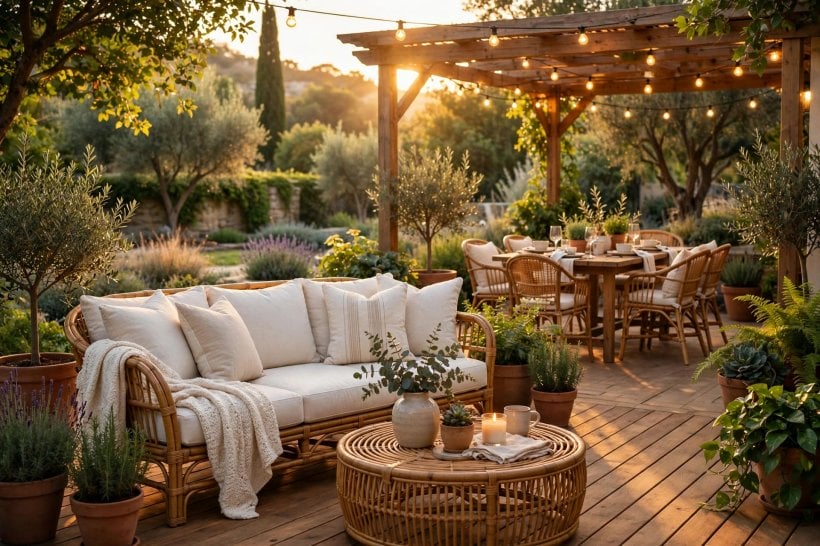
1. At a Glance: Planning a Patio That Works
Start with how the space will really be used. Morning coffee for one, long lunches for six and a quiet reading chair all ask for different things, and a good patio can hold more than one of them when the furniture is light, movable and honestly sized. Measure first, leave clear walking routes, and put the largest piece where it blocks the least light. Sketch the space on paper if it helps, mark the door, the steps and any drain or tap you need to reach, and only then start choosing pieces. The table below sums up the decisions that matter most before you buy or move a single chair.
| Decision | Simple guidance |
|---|---|
| Main use | Dining, lounging or a flexible mix of both |
| Layout | One clear route through, seating grouped in calm zones |
| Shade | Cover the seating you use most, at the time you use it |
| Materials | Weather-friendly finishes you are happy to clean and store |
| Small-space trick | Folding, stacking or bench seating that tucks away |
| Finishing touches | Lighting, cushions and plants added last, in one palette |
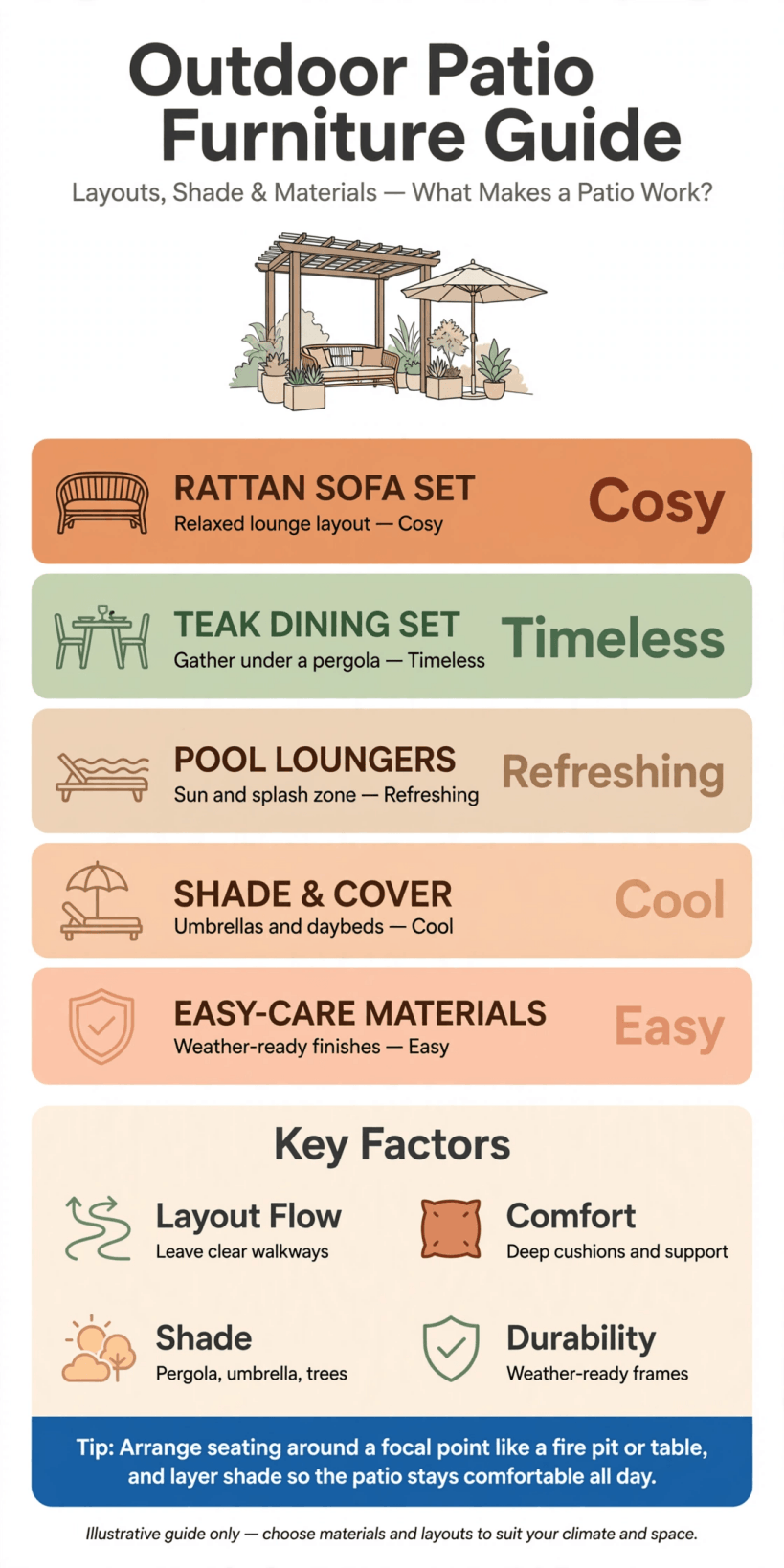
A quick visual summary of patio zones, shade options and the furniture pieces that earn their place in a small outdoor space.
The same zone thinking helps indoors, too. Our living room ideas for a tiny house show how grouping furniture by activity makes even a very small room feel calm, generous and easy to move through, and a patio benefits from exactly the same honest planning.
2. Layouts That Keep a Small Patio Feeling Open
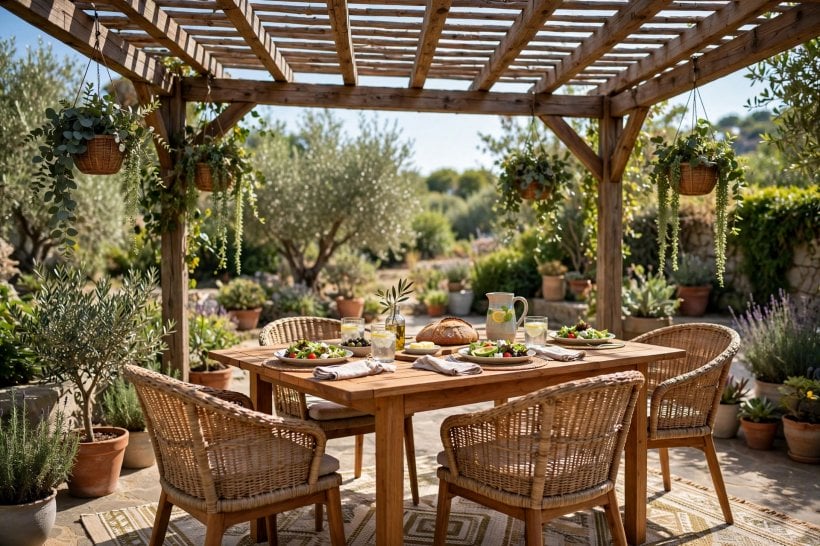
The best layout is usually the simplest one. Place a small dining set or a pair of lounge chairs along the longest edge, keep the centre of the patio breathing, and let the route from the door to the garden stay obvious. In a narrow space, a bench against a wall with two movable chairs opposite often works better than a bulky matching set, because you can open the arrangement up for guests or tuck it back for everyday calm.
Try the layout with tape on the floor or with indoor chairs moved outside for an afternoon before you commit to anything new. Live in the arrangement, carry a tray through it, sit in every seat and notice where you bump, squeeze or stretch. An afternoon of experimenting costs nothing and prevents years of stepping around a table that was always slightly too big for its corner. Small patios also benefit from keeping furniture legs light and visible floor space generous, because the eye reads open floor as extra room.
3. Zoning: Dining, Lounging and Quiet Corners
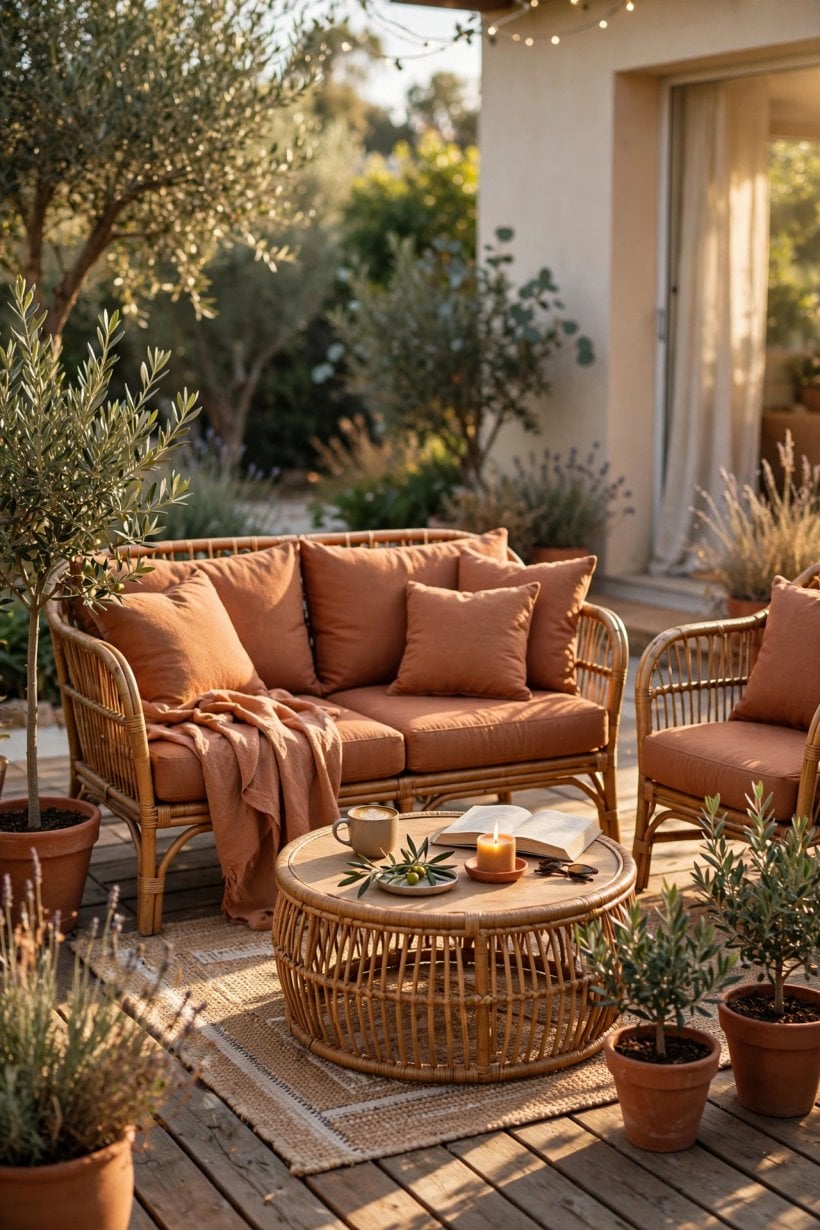
Zoning does not need walls or screens. A simple outdoor rug under the dining chairs, a planter beside a reading chair or a change in cushion colour can tell everyone where each activity belongs. Keep the dining zone nearest the kitchen door, because carrying plates and drinks across a whole patio gets old quickly, and put the quiet corner where the light and the view are best.
In tiny gardens this gentle separation makes the space feel larger, not smaller, because every square metre has a clear job. A low planter, a line of pots or even a change in paving tone can mark a boundary without blocking light or air. Children learn the zones, guests settle naturally, and the patio stops feeling like furniture stored outdoors and starts feeling like a set of small, welcoming rooms. Our home designing ideas for a tiny house use exactly the same principle inside, where one room calmly holds several activities at once.
4. Shade That Makes the Furniture Worth Using
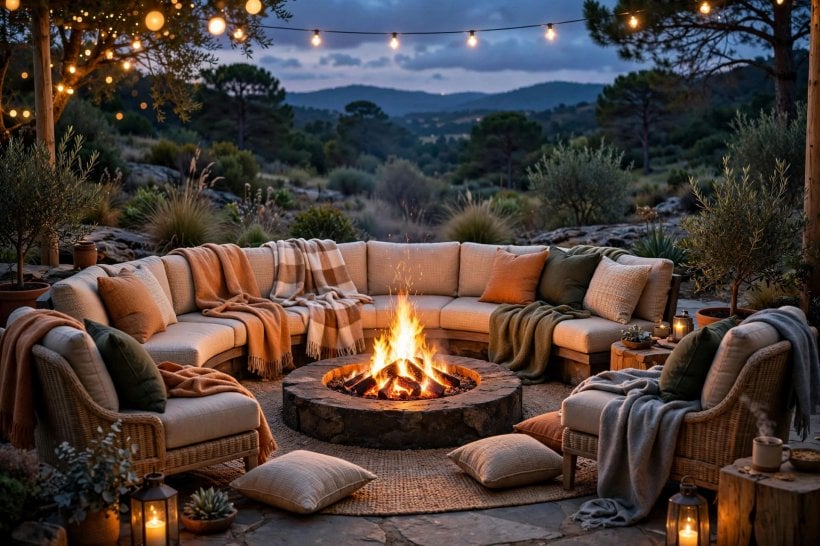
Shade decides whether a lovely patio sits empty at midday. A tilting umbrella over the dining table is the flexible classic, because it can follow the sun and fold away on grey days. A simple sail or a pergola-style cover suits a lounging zone that stays in one place, while a tall planter or a small tree in a pot gives soft, dappled cover for a single chair.
Watch where the sun falls at the hours you actually sit outside, then shade that spot rather than the whole patio. Morning shade for breakfast and late shade for supper may be two different corners, and a movable umbrella handles both kindly. Comfortable shade also protects cushions, finishes and skin, so the furniture you chose with care stays inviting for longer. If wind is a regular guest, choose a sturdy base and a cover you can secure or lower quickly, and the shade will feel like a pleasure rather than a worry.
5. Seating Choices for Real Life Outdoors
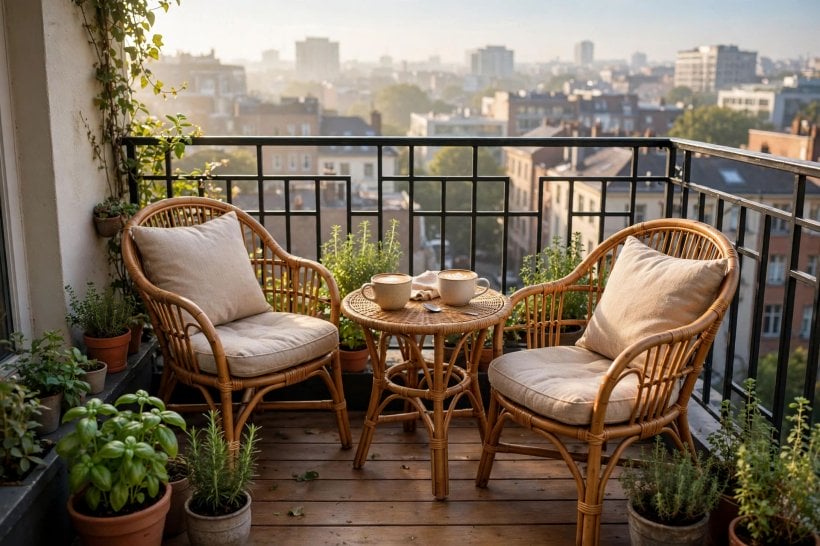
Choose seating you would happily sit in for an hour, not just seating that photographs well. A supportive chair with a cushion beats a sculptural seat that nobody chooses twice. Mix one comfortable anchor, such as a small outdoor sofa or a pair of deep chairs, with lighter pieces that can move: a folding chair for a guest, a stool that doubles as a side table, a bench that seats two children or one adult with a book.
Test the height of chairs against your table before committing, check that arms fit under the table edge if you plan to tuck chairs in, and keep spare cushions light enough to carry in when rain arrives. Think about who sits outside most: older guests appreciate a firm seat with arms, children are happy on a bench, and readers want one chair placed exactly where the evening light lands. For more small-space seating logic, see our home interior design ideas for a tiny house, where every chair has to earn its place in the same way.
6. Dining Outside Without the Squeeze
Outdoor dining feels generous when elbows, plates and serving dishes all fit without negotiation. A round table is kind to tight corners because nobody fights a table leg and people can squeeze in one more chair, while a narrow rectangular table suits a terrace wall beautifully. Leave room to pull chairs back and stand up without shuffling sideways; that single allowance changes a meal from cramped to relaxed.
Keep a small serving trolley, a spare stool or a narrow side table nearby for dishes and drinks, so the dining table itself stays uncluttered and nobody has to balance a serving bowl on a lap. Simple pleasures, repeated often, are the real luxury of a patio: breakfast outside on a bright morning, a slow lunch with friends, supper as the light fades and the garden cools. Plan the route from kitchen to table as carefully as the table itself, and outdoor meals will happen far more often, because they feel easy rather than like an expedition.
7. Materials and Finishes That Forgive the Weather
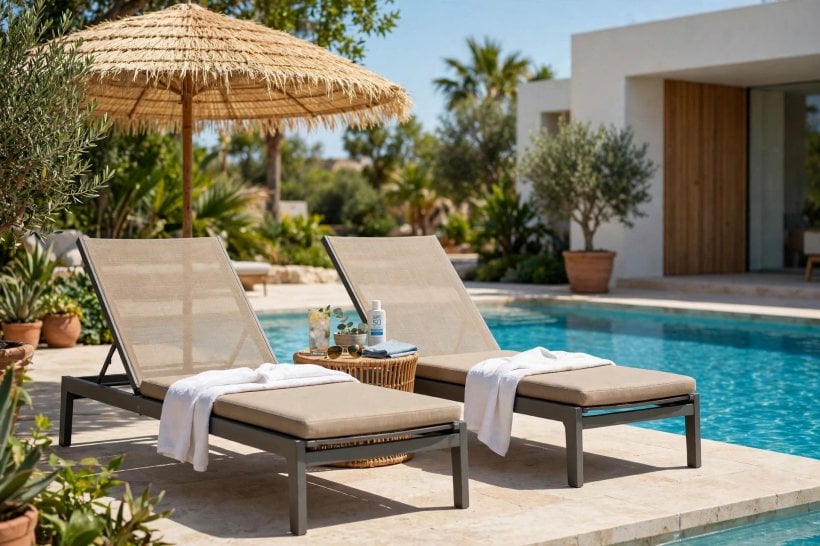
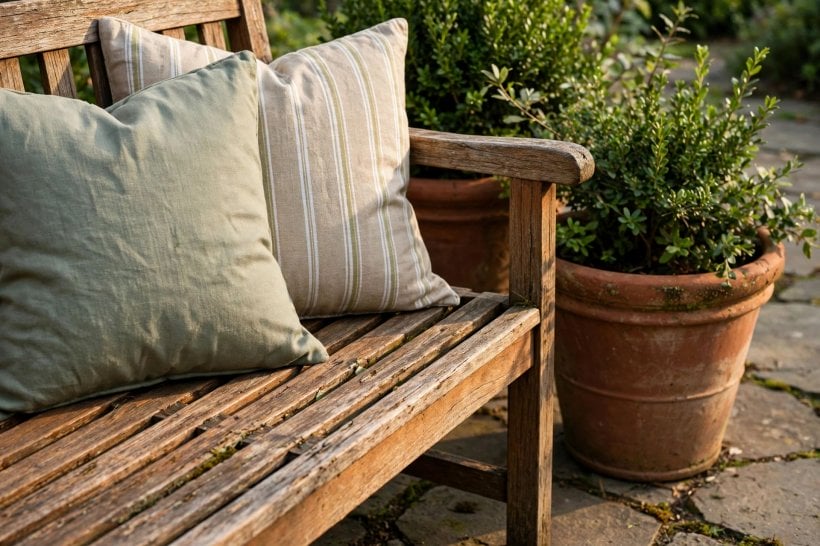
Every outdoor material asks for a slightly different kind of care, so choose the routine you will actually keep. Powder-coated metal feels light and tidy, woven pieces feel soft and relaxed, and timber-look finishes feel warm against planting. What matters most is honesty: if cushions must come in at night, store them somewhere genuinely easy; if a finish needs an occasional wipe or a cover through winter, plan that into the season from the start.
Keep the palette to two main materials and one accent, so a small patio feels collected rather than assembled from leftovers. A calm material story also makes the planting, which should provide most of the colour in the space, look even better. Where pieces will sit in full sun or under trees, expect finishes to weather a little and choose tones that age gracefully rather than fighting every mark. Furniture that forgives real weather and real life will be used more, worried about less and loved for longer.
8. Lighting for Evenings That Linger
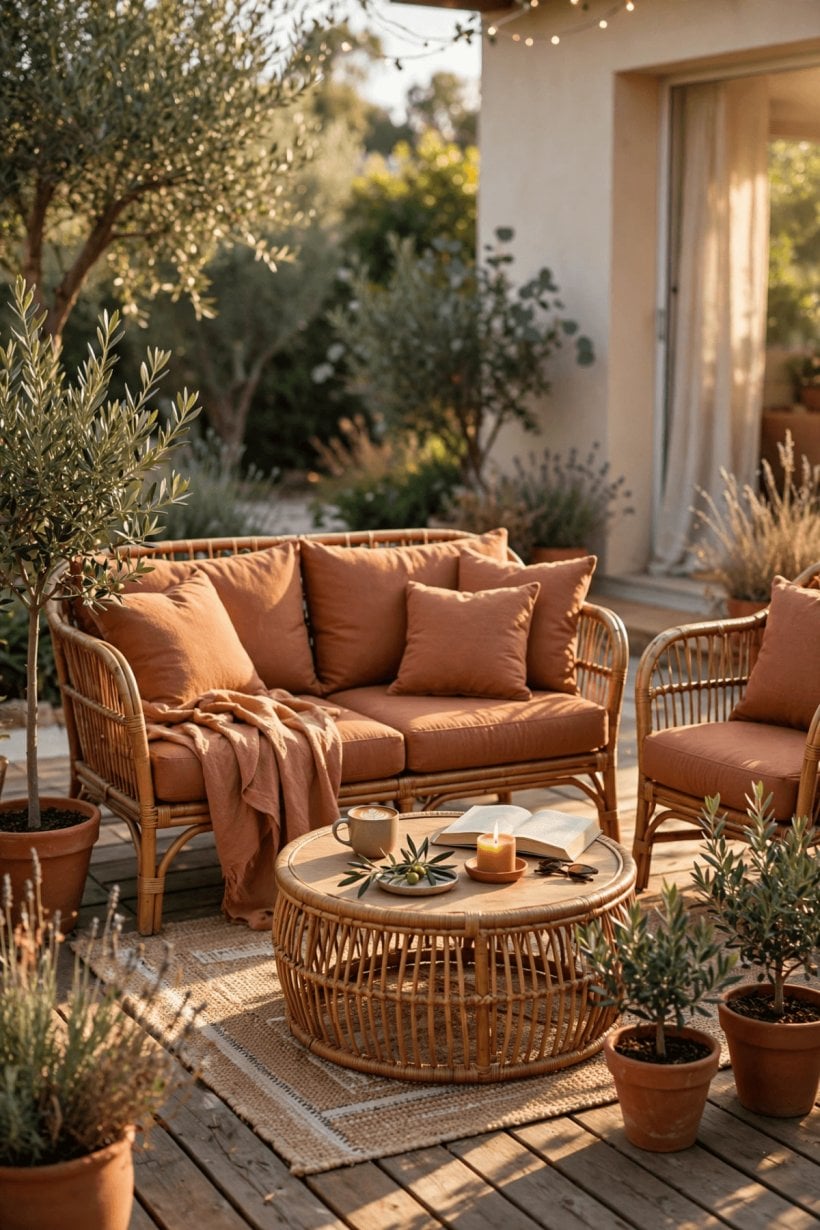
Good lighting turns a daytime patio into an evening room. A string of warm lights overhead gives a soft general glow, a lantern or two on the table makes faces and food look lovely, and a low light near steps or a change of level keeps movement easy after dark. Keep the light warm rather than blue-white, and aim it at tables, plants and walls instead of directly at eyes.
Solar and rechargeable options suit small spaces especially well because they avoid trailing cables across the route from the door. Test the arrangement on one ordinary evening before adding more; most patios need less light than people expect, placed with more care. A single well-placed lantern can do more for atmosphere than a dozen bright fittings, and a dim, warm patio encourages people to stay, talk and enjoy the cool of the evening. Our beachy interior design ideas share the same warm, unhurried mood indoors.
9. Small Patios, Balconies and Rental-Friendly Ideas
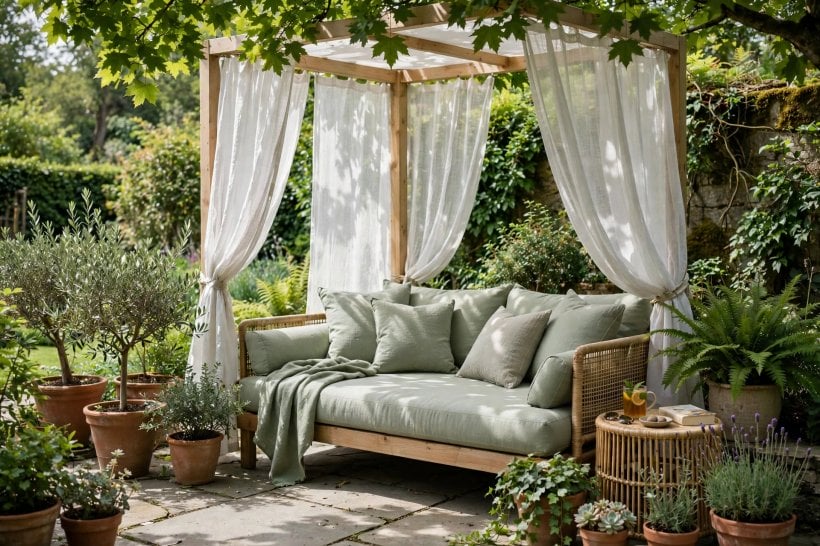
A tiny patio or balcony rewards folding and stacking pieces more than any other kind. A fold-away bistro set gives two people breakfast in the sun and folds flat when the space needs to be a drying area, a play corner or simply empty. Rail planters, a narrow bench with storage inside and one excellent chair you truly love can be a complete and satisfying scheme on their own.
Renters can lean on freestanding shade, outdoor rugs and pots rather than anything fixed, and take the whole arrangement along when they move. Measure the door, the hallway and any tight turn the furniture must pass through before ordering; the best set is the one that actually arrives in the space without a struggle. Vertical thinking helps too: a wall-mounted fold-down table, hooks for cushions and tall, narrow storage all give a small footprint more working ability without crowding the floor.
10. Storage, Care and the Finishing Details
The patios that stay lovely are the ones with an easy care routine. A slim storage box that doubles as a bench keeps cushions dry and close, covers protect larger pieces through the worst weather, and a quick sweep once a week keeps the floor feeling like a room rather than a yard. Check fixings and feet at the start of the season, wash cushion covers when they need it, and let everything dry fully before storing, so each spring starts fresh instead of musty.
Finish with details that make you smile: a tray for drinks, a throw for cool evenings, herbs in pots near the dining chairs and one scented plant near the quiet corner. Rotate cushions and accessories with the seasons instead of buying more, and edit anything that no longer earns its space. Keep a small basket near the door for the things that migrate outside, such as sunscreen, a book and a pair of garden shoes, and tidying becomes a two-minute habit rather than a weekend project. If you are planning the rooms that open onto the patio at the same time, our tiny house kitchen design ideas and our guide to bathroom interior design ideas for tiny houses complete the picture of a small home that flows calmly indoors and out.
Final Considerations
Buy and arrange slowly. Live with the layout for a few weeks, notice where the sun, the breeze and the conversation naturally gather, and then add or move pieces with that knowledge. The most loved patios are rarely the most expensive ones; they are the ones where the outdoor patio furniture matches the way a household actually eats, rests and welcomes people. Keep routes clear, shade honest, cushions easy to store and colours calm, and a modest patio will give you an extra room for most of the year. That is a remarkable return from a few chairs, a table, a little shade and a little thoughtful planning, repeated kindly season after season. Start with one corner, finish it properly, sit in it often, and let the rest of the patio grow from real use rather than from a catalogue picture.


0 Comments