
Buying paint looks simple from the shop aisle, yet the tin you take home has to live on your walls through daylight and lamplight, through cooking steam, hallway scuffs and years of everyday cleaning. The colour on a small card is only the starting point. What matters just as much is how the finish looks once it is on a large surface, how evenly it covers, how it stands up to the room it is in, and whether the colour still pleases you when the light changes during the day.
This guide sets out the checks worth making before you buy, in plain terms. It does not recommend any particular product, and it does not judge one paint against another. Instead it walks through finish, coverage, durability and colour testing as separate questions, so you can look at any paint with clear eyes and ask the right questions about the room you are actually painting.
1. Start With the Finish, Not the Colour Alone
Finish describes how much light a painted surface reflects, from a flat, chalky look that hides marks on the wall to a shinier surface that catches the light and is easier to wipe. A flat finish can make a wall look calm and even, which suits a bedroom or a ceiling, while a finish with more sheen can suit a wall that needs regular wiping. The choice is not about which finish is better in general, but about which one fits the room, the light and the wear that wall will see.
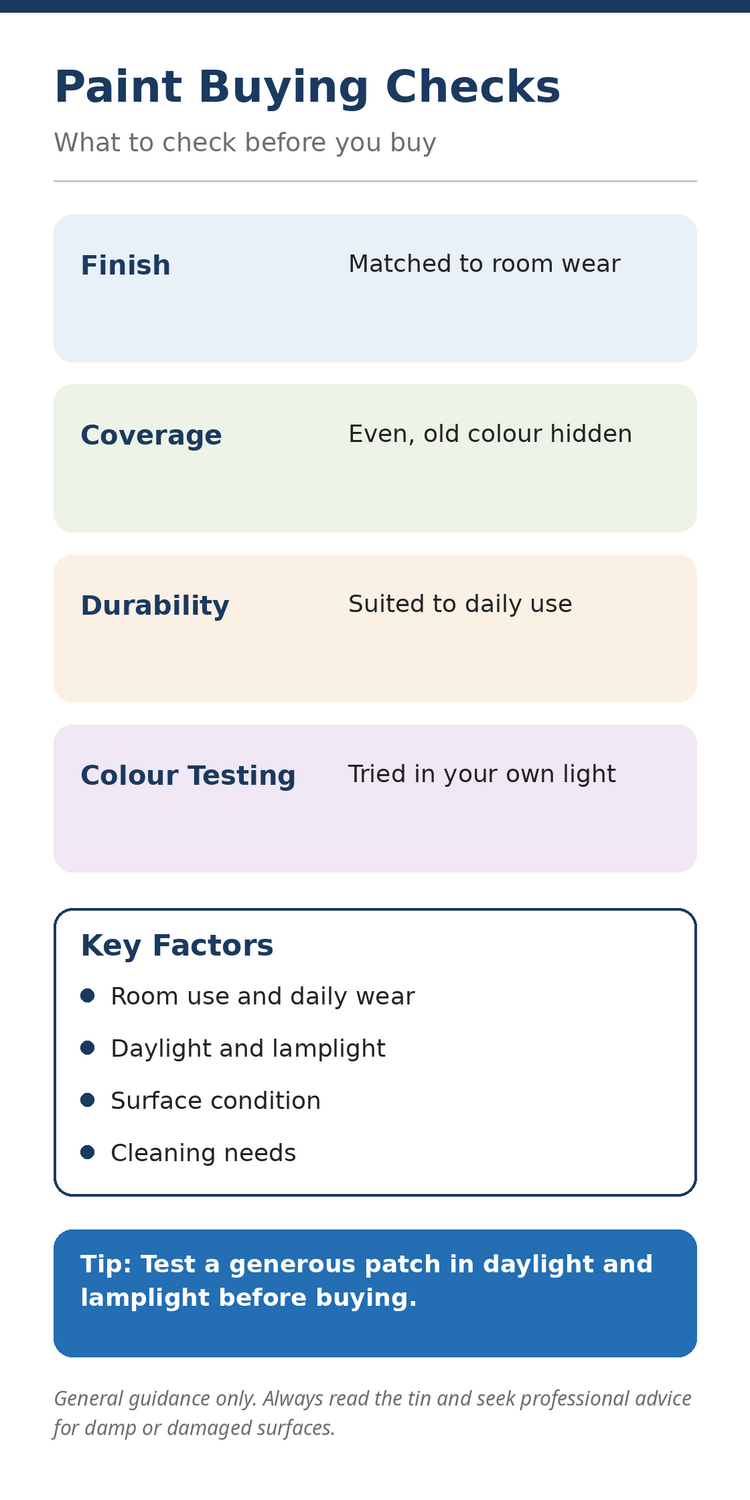
Look at finish samples on a wall rather than only on a card, because a finish that looks soft on a small sample can look quite different across a whole wall. Stand back and look from the doorway as well as up close, and check the wall in both daylight and lamplight. A shinier finish will show every bump and repair on an uneven wall, while a flatter finish is more forgiving of an imperfect surface. That trade-off is worth weighing before you decide, because it affects how the finished room will feel every day, not only on painting day.
Think too about the mood you want. A softer finish tends to quiet a room down, while a finish with more sheen can make a small room feel brighter by bouncing light around. Neither effect is right or wrong on its own. The question to carry into the shop is simple: what will this wall do, who will brush past it, and how much light will fall on it?
2. Read Coverage in Plain Terms
Coverage describes how much wall a tin of paint will cover and how evenly the colour builds up as you paint. A paint that covers well will hide the colour beneath it in fewer passes and leave an even result, while a paint that covers weakly may need extra coats before the old colour stops showing through. That difference matters for planning, because extra coats mean extra time, extra drying waits and extra paint.
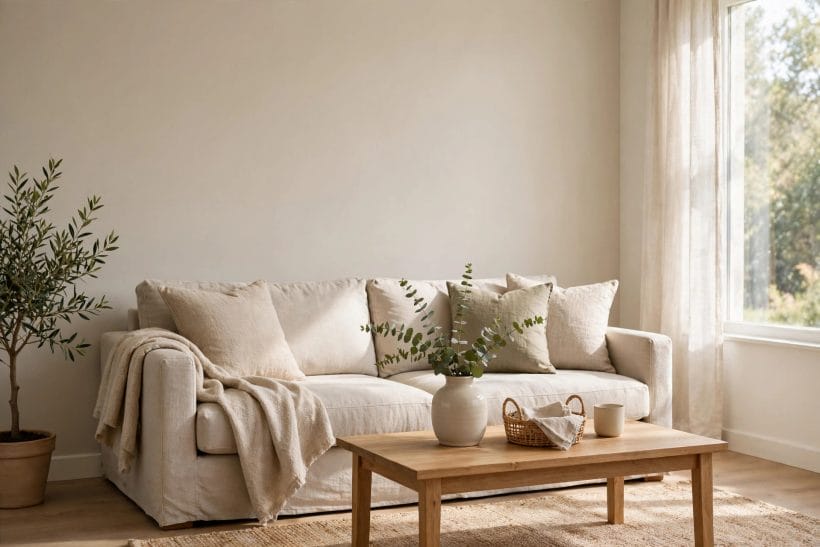
When you compare paints, read the coverage guidance on the tin and ask what surface it assumes. A smooth, primed wall and a rough or previously unpainted wall will not behave the same way, and a strong colour change, such as a dark wall going light, will usually need more work than a light wall refreshed in a similar shade. If the label guidance is vague, treat it as a rough guide rather than a promise, and plan a little spare paint for touch-ups later.
Coverage is also about evenness. Watch for thin patches, streaks and places where the old colour shows through at edges and corners, and check the wall once the paint has dried, since wet paint can hide unevenness that drying reveals. A careful first coat, allowed to dry fully, will tell you more about coverage than any claim on a tin, and it lets you judge honestly whether another coat will improve the result or simply add thickness without benefit.
3. Judge Durability by the Room, Not by a Promise
Durability means how well a painted surface stands up to the life of the room it is in. A hallway wall that bags brush past, a kitchen wall near cooking and splashes, and a bedroom wall that is rarely touched all ask different things of paint. The sensible check is to match the paint to the wear of the room, rather than expecting every wall in the home to need the same toughness.
Ask yourself where the wear will come from. In busy passages, the pressure points are scuffs and contact at hand height. Near cooking areas, the pressure points are steam, grease and frequent wiping. In rooms used by children or pets, the pressure points are marks, bumps and cleaning. A finish chosen for a quiet room may disappoint in a busy one, not because the paint failed, but because it was asked to do a job it was never suited to.
Durability also includes how a surface ages. Some paints mark easily but touch up invisibly, while others resist marks yet show every repair. Think about which of those matters more in each room. A kitchen ideas page can help you picture how a kitchen wall is used day to day, and that picture is a better guide to durability than any general claim. The room itself tells you what to check.
4. Test Colour in Your Own Light
Colour is the part of paint buying that most often goes wrong, and the reason is usually light. A colour that looks warm and inviting under shop lighting can look cold or grey in a north-facing room, and a colour that looks pale on a card can read much stronger across a whole wall. The only reliable test is to try the colour in the room itself, on the wall itself, in the light that room actually gets.

Paint a generous test patch, or several patches, and live with them for a while. Look at them in morning light, in afternoon light and under lamps in the evening, and look at them beside the furniture, flooring and curtains they will live with. Colours shift against wood tones, fabrics and neighbouring walls, so a patch viewed in isolation can mislead. A patch viewed in context tells the truth.
Resist the urge to decide from a single glance. A colour that surprises you on first sight may settle into the room once your eye adjusts, and a colour that charms at first may tire you once it covers a large wall. Give the test patch time, and check it from the doorway, from the seat where you usually sit, and from the places you will actually see the wall most often. A small living room ideas collection shows how much a wall colour shapes a compact room, which is why testing at full scale matters so much there.
5. Read the Label for What Actually Matters
The label on a tin carries the practical detail that decides whether a paint suits your project. It will describe the finish, the surfaces the paint is made for, how to prepare the surface, how long to wait between coats, and how to clean brushes and tools. Reading that detail before you buy saves far more trouble than reading it after the first coat is already on the wall.
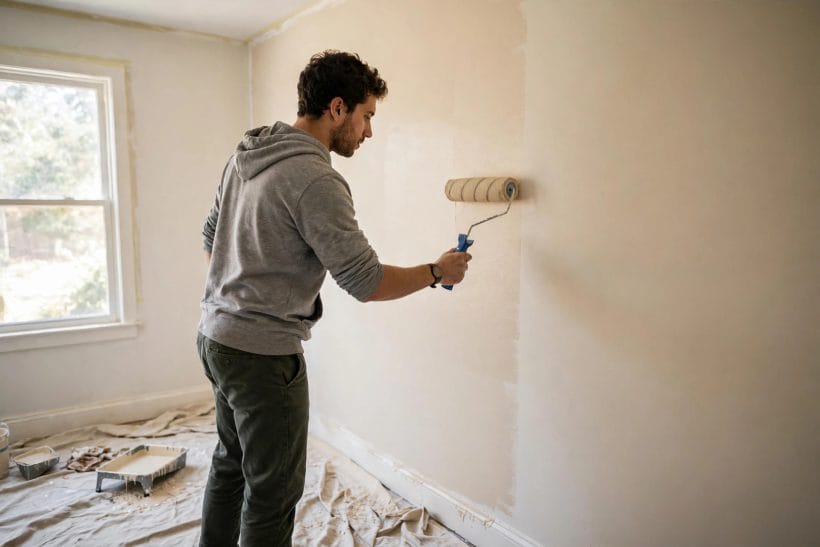
Pay attention to surface guidance in particular. Some paints are made for walls and ceilings, others for woodwork or masonry, and using a paint on a surface it was not made for can lead to peeling, poor adhesion or a finish that never quite settles. The label will also note whether a primer is advised for the surface you have, and whether the paint suits damp or high-moisture rooms. Those notes are not fine print to skip; they are the maker telling you what the paint was designed to do.
Also note the practical guidance on application and clean-up. Brushes, rollers and spraying each suit different paints and surfaces, and the cleaning method matters for your tools and for disposal. If any part of the label is unclear, ask in the shop before buying rather than guessing at home. A short question at the counter can prevent a long correction later.
6. Match the Paint to the Surface Beneath It
Every wall has a history, and that history affects how new paint behaves. A wall that was previously painted, a wall that is newly plastered, a wall with repairs, and a wall with stains or marks each need different preparation. The paint itself cannot fix a surface that has not been prepared, and the most careful colour choice will disappoint on a wall that is dusty, glossy, damaged or damp.
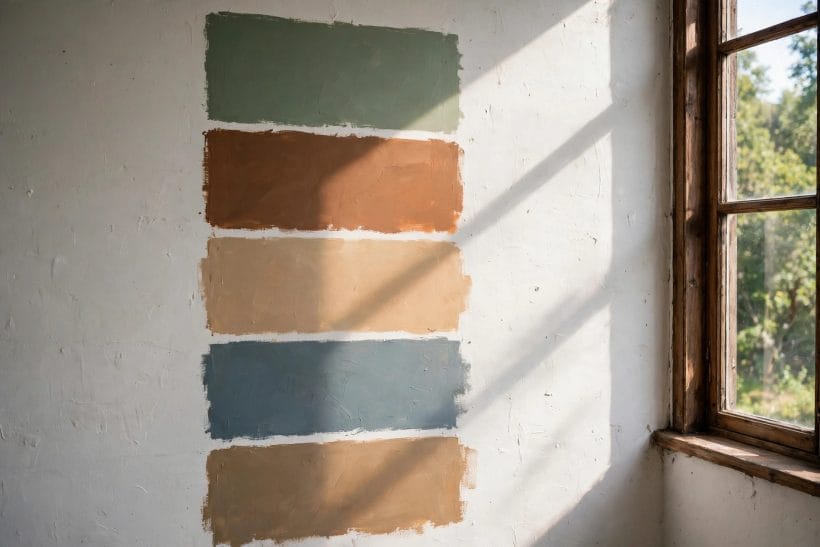
Before buying, look closely at the surface you plan to paint. Check for flaking, cracks, damp patches and glossy areas that may need attention, and think about whether repairs or priming belong in the plan. A surface in poor condition may need professional advice, especially where damp or structural damage is suspected, since painting over a problem hides it without solving it. Good preparation is unglamorous work, but it is what lets the paint do its job.
Consider the room as a whole as well. Walls, ceilings, trim and woodwork do not all take the same paint, and a scheme that works for a wall may not suit a door frame or a skirting board. A tiny house interiors collection is a useful reminder of how walls, trim and compact joinery meet in a small space, and why each surface deserves its own thought. Match the paint to each surface, not only to the room.
7. Plan Coats, Drying and Touch-Ups
Painting well is mostly a matter of patience. Each coat needs time to dry before the next one goes on, and rushing that wait can drag the coat beneath, leave texture where you wanted smoothness, or trap unevenness that later coats cannot hide. Before you buy, think through the sequence: preparation, first coat, drying, checking, further coats if needed, and a final look in good light.
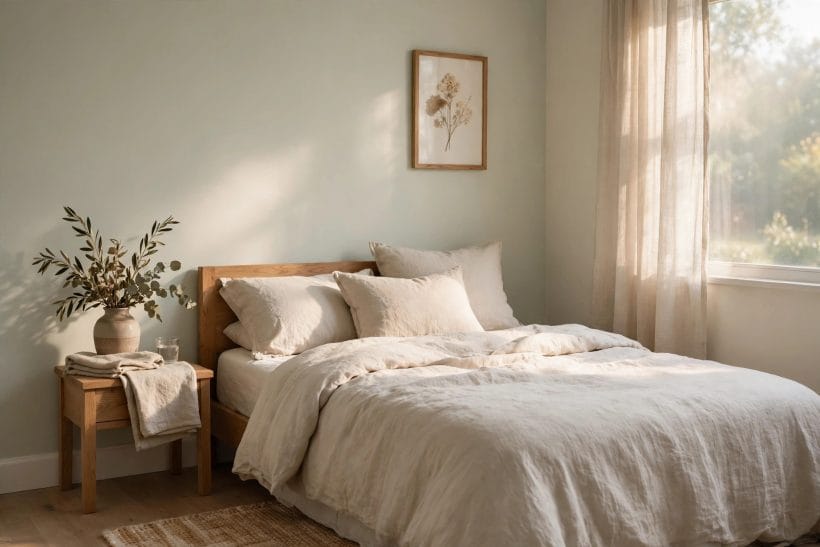
Touch-ups deserve a place in the plan too. Walls get marked, furniture gets moved, and small repairs happen, so keeping a little paint aside for later is simple foresight. Label the stored tin with the room it belongs to, and keep it somewhere it will not freeze, overheat or get knocked over. A tin stored well is a small thing that saves a large frustration when a scuff needs covering months later.
Plan the room around the painting as well. Move what you can, protect what stays, and allow ventilation while you work and while coats dry. A calm, unhurried sequence gives a better result than a fast one, and it gives you the chance to check coverage and colour honestly between coats, when corrections are still easy to make.
8. Compare Samples Side by Side
When you have narrowed the choice to a few colours, compare them side by side on the same wall, in the same light, at the same time of day. Colours judged on different days or in different rooms cannot be compared fairly, because light and surroundings change how every colour reads. Side-by-side patches remove that guesswork and let differences show themselves.
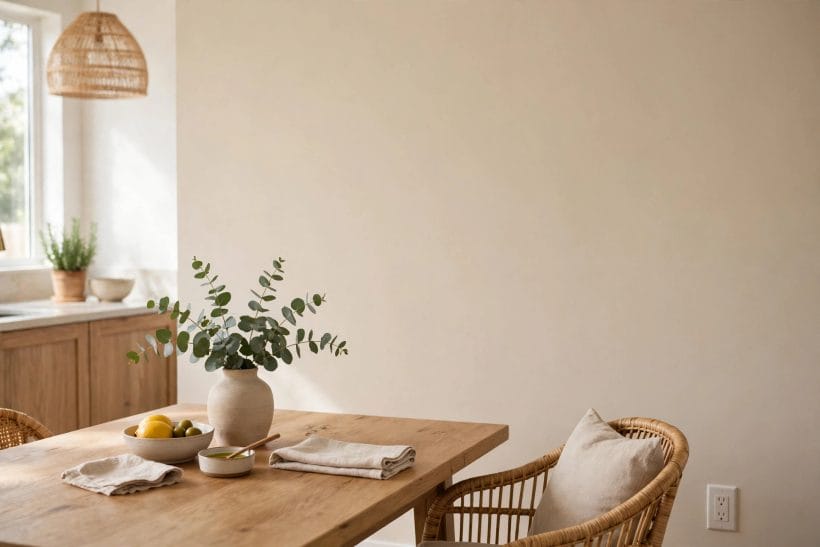
Keep the patches generous and separate them with a little bare wall, so each colour can be seen cleanly without bleeding into its neighbour. Step back and look at the whole wall, not only at the patches, and notice which colour recedes quietly and which one demands attention. In a room where the wall should sit behind furniture and daily life, the quieter colour is often the one that lasts longest without tiring you.
Ask other people who live in the home to look as well, since they will live with the colour too. Different eyes notice different things: one person may spot a grey undertone, another may notice how a colour changes under lamplight. A tiny house storage ideas page shows how much wall area stays visible once storage and furniture are in place, which is worth remembering when you judge how dominant a colour will feel once the room is furnished.
9. Think About Cleaning and Everyday Wear
A painted wall is not a picture to be admired from a distance; it is a working surface. It will be dusted, wiped, brushed against and occasionally marked, and the finish you choose decides how easily those everyday moments can be dealt with. Before buying, think honestly about how each wall will be cleaned and how often it will need it.
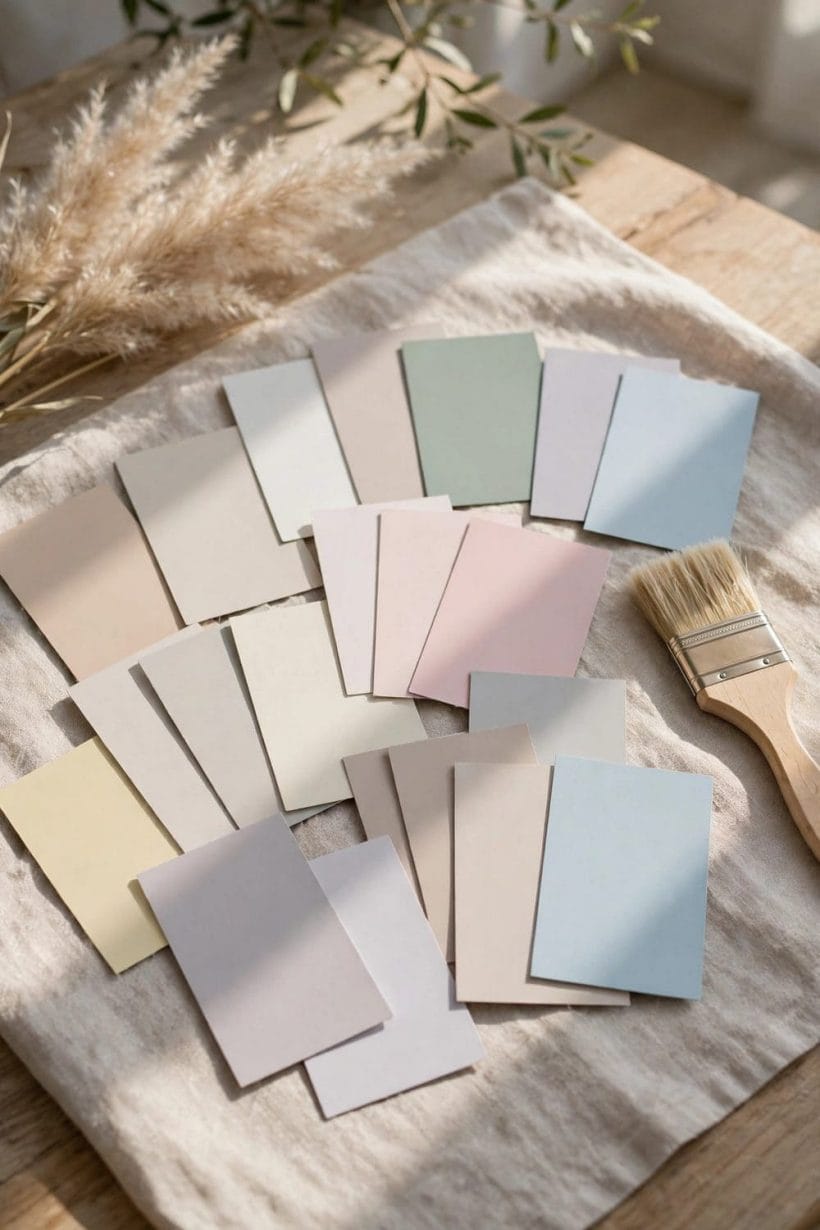
A finish that wipes clean easily suits walls near cooking, eating and busy passages, while a softer finish may suit a wall that is rarely touched and where a calm, even look matters more. There is no finish that is both perfectly soft-looking and perfectly wipeable, so the choice is always a balance. Decide which side of that balance each room needs, rather than expecting one finish to do everything.
Cleaning guidance on the label matters here too. Some surfaces tolerate gentle wiping, while others mark if scrubbed, and using the wrong cleaning method can damage a finish that was perfectly good when it dried. A tiny house building design ideas collection shows how closely walls, cooking areas and living areas sit together in compact homes, where wipeable walls near daily activity earn their keep. Let the daily life of the room, not the shop display, set the cleaning test.
10. Buy Enough and Store the Rest Well
Running out of paint halfway through a wall is one of the most avoidable painting frustrations. It can leave a visible difference between batches, force a rushed trip back to the shop, or leave a wall half-finished while coats dry unevenly. Measuring the walls you plan to paint, and planning for preparation and possible extra coats, helps you buy with confidence rather than guesswork.
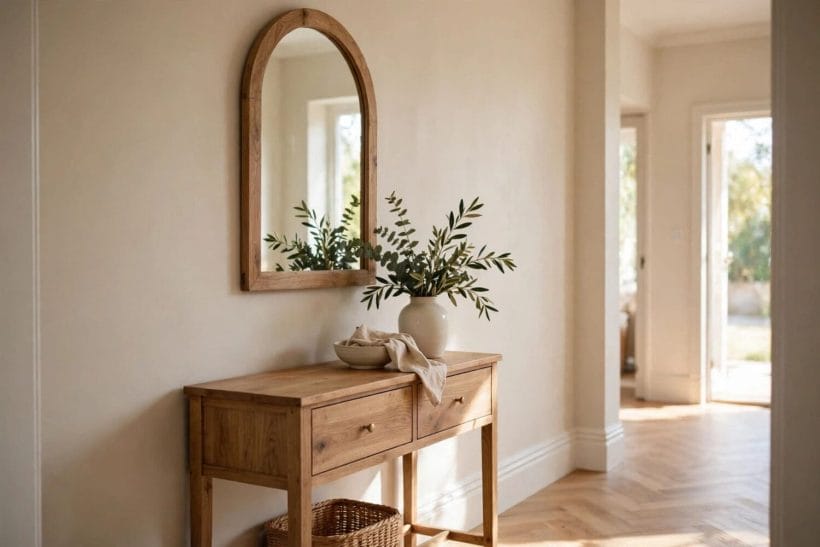
Buying a little extra is not waste when it is planned. Spare paint covers touch-ups, small repairs and the patches that show up only once furniture returns to the room. What counts as enough depends on the size of the room, the condition of the surface and the strength of the colour change, so treat any rough guide as a starting point and adjust for your own walls.
Storage closes the loop. Keep spare paint sealed, labelled by room, and stored away from extreme heat and cold, with the lid secure and the tin upright. A tin that is well stored stays usable for touch-ups, while a tin left open, unlabelled or in a harsh spot may be useless when you need it. The few minutes spent labelling and storing properly protect the whole job you have just finished.
Final Considerations
Paint buying rewards a slow, room-by-room approach. Finish, coverage, durability and colour testing are separate checks, and each one deserves its own moment of attention before you commit. A finish that suits a quiet bedroom may not suit a busy hallway. A colour that charms on a card may change completely on your wall. A paint that covers well on a smooth surface may need more care on a repaired one. None of that is a reason to feel daunted; it is simply the shape of a job done thoughtfully.
Start with the room and its daily life, test colour in that room and its light, read the label for the surfaces you actually have, and plan coats, drying and touch-ups before the first brush is loaded. When any part of the job involves damp, damage, structural work or surfaces you are unsure about, seek professional advice rather than painting over the question. A building a tiny house checklist is a good reminder that careful planning before work begins is what keeps a project calm from start to finish, and painting is no exception.
The best result is rarely the boldest colour or the fastest job. It is the wall that still pleases you in morning light and lamplight, that wipes clean where it needs to, and that you can touch up easily when life leaves its mark. Check finish, coverage, durability and colour in that order, and the paint you buy will have been chosen for the room you live in, not only for the shop aisle you stood in.


0 Comments