

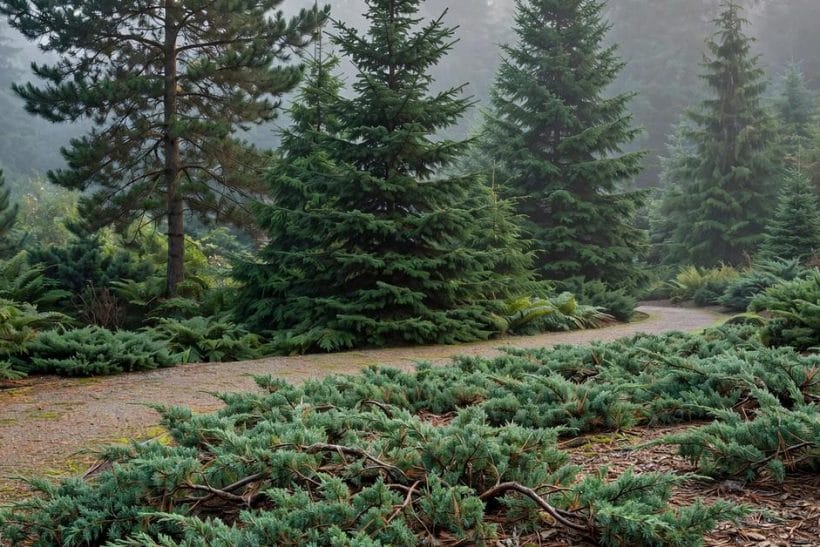
Conifers are among the most dependable plants a garden can hold. They keep their foliage through the colder months, they give a garden shape when flowering plants have faded, and they come in forms that suit almost every kind of plot, from a wide boundary to a single pot by a door. A garden built around conifers can feel settled and green in every season, without demanding constant attention.
This guide looks at conifers in general terms: the shapes they grow in, how to choose a spot for them, and how to care for them through the year. Nothing here depends on a particular variety or a particular climate, and every suggestion is offered as general guidance to adapt to local conditions, soil and light. Conifers reward patience more than fuss, and the best results usually come from choosing the right shape for the space and then letting the plant settle.
1. What Makes a Conifer a Conifer
A conifer is an evergreen plant that carries its seeds in cones, and most conifers keep needle-like or scale-like foliage all year. That evergreen habit is the reason they are so useful in garden design: while other plants lose their leaves and leave gaps, conifers hold their structure and colour through winter, giving beds and boundaries a sense of permanence.
The family is broad, and its members differ greatly in size, colour and habit. Some grow into tall trees with a clear trunk and a layered crown, while others spread low across the ground or stay compact enough for a container. Foliage may be deep green, blue-green, golden or grey-green, and the texture may be soft and feathery or firm and prickly to the touch.
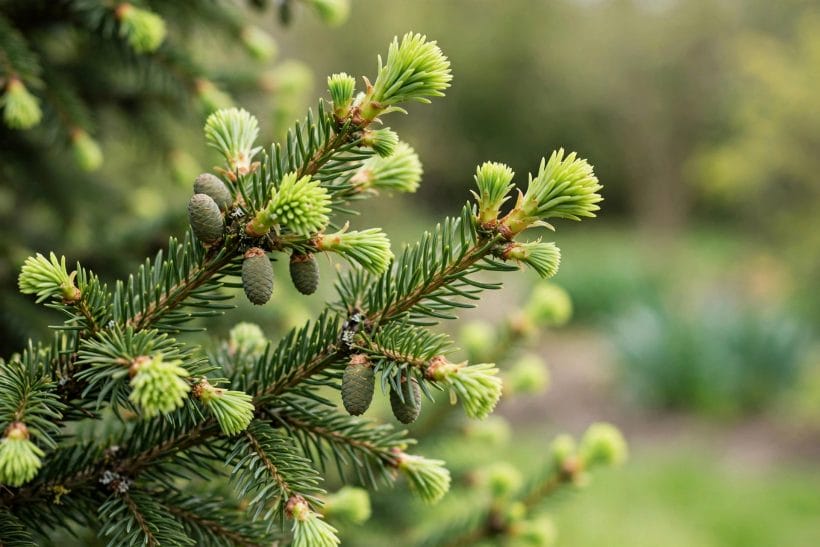
Cones are another point of interest, though they are often overlooked. Some are small and neat, sitting upright on the branches, while others are larger and hang down. Birds and small wildlife may visit conifers for shelter and food, and a mature conifer can become a quiet anchor for the life of a garden, offering cover through the harshest weather.
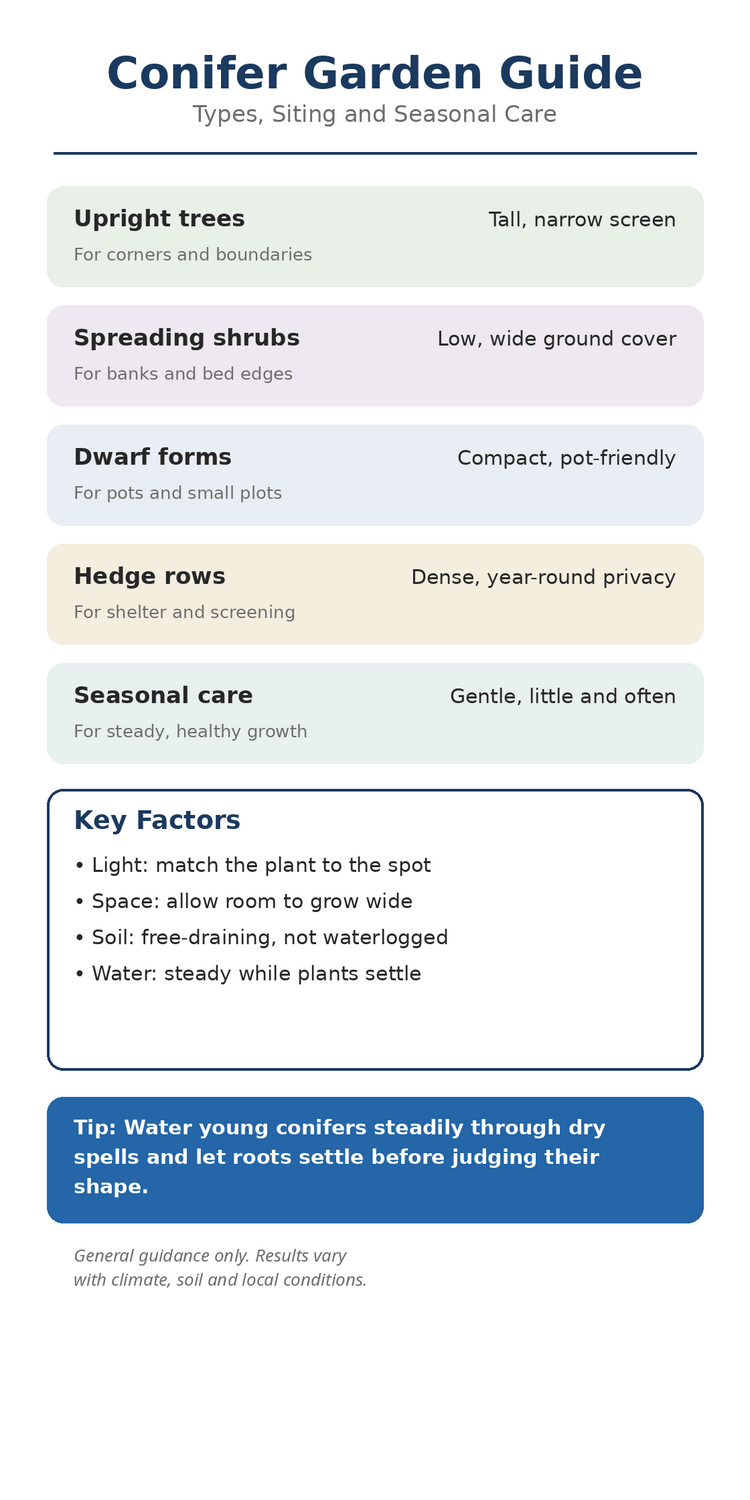
Because the range is so wide, it helps to think in shapes rather than names when planning. A tall upright form, a spreading form, a dwarf form and a hedge form each do a different job, and matching the shape to the space matters more than any other single decision. The sections that follow take each shape in turn.
2. Upright Trees for Height and Structure
Upright conifers are the vertical accents of a garden. A single tall tree can draw the eye upward, mark a corner, frame a view, or give a flat garden a sense of scale. Planted in a loose group, upright trees can form a woodland corner that feels established even while the trees are still young.
When choosing an upright tree, the mature spread matters as much as the height. A narrow, column-like form suits a tight corner or a boundary where space is limited, while a broader pyramid shape needs more room to spread its lower branches. Crowding a broad tree against a wall or a path often leads to branches being cut back later, which can spoil the natural outline.
Upright trees also change how a garden feels. Their shade can cool a seating area in summer, their foliage can soften wind, and their steady green can calm a planting scheme that might otherwise feel busy. It is worth standing in the spot at different times of day before planting, to see where shade will fall and which views the tree will frame or block.
3. Spreading Shrubs for Ground Cover
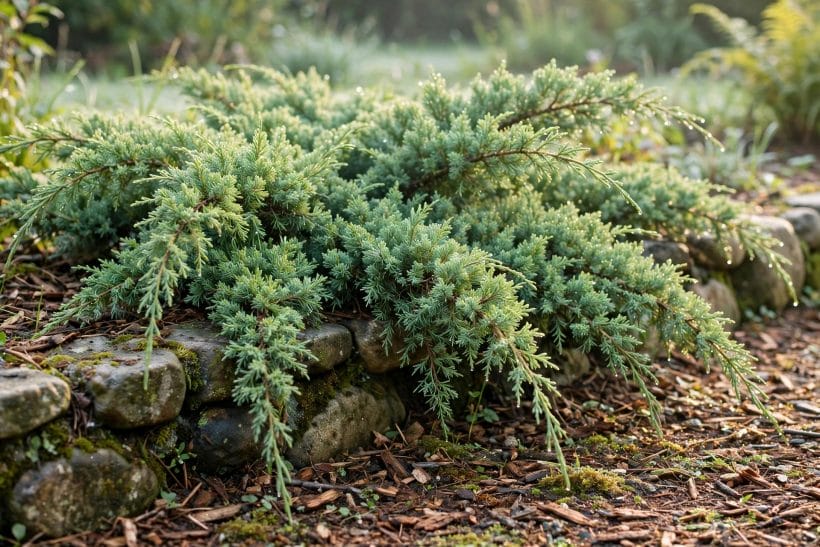
Spreading conifers grow outward rather than upward, and they are among the most practical plants for covering ground. A low juniper, for example, can knit together across a bank or a bed edge, suppressing weeds beneath its foliage and giving a slope a finished look without regular mowing or trimming.
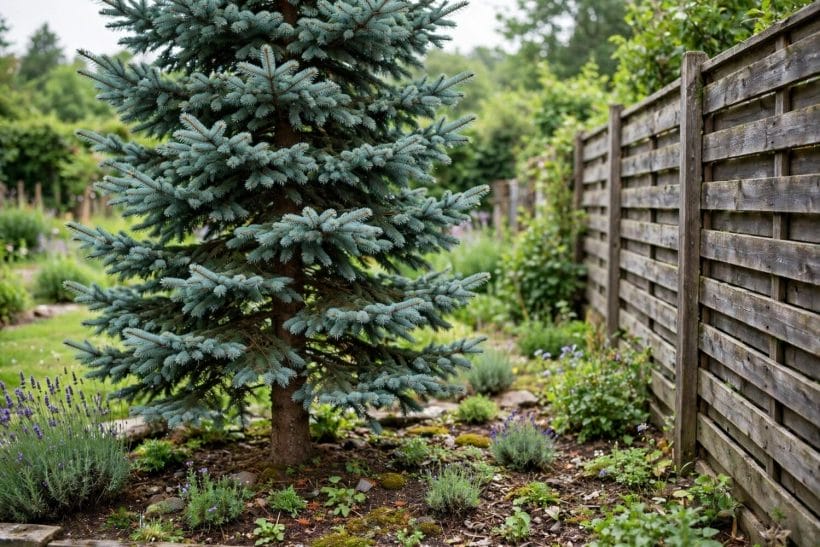
Ground-cover conifers work well where a garden is hard to reach or awkward to maintain. Banks, strips beside paths, and the ground beneath taller trees are all places where a spreading form can earn its keep. Once established, the dense foliage shades the soil, which can help the ground hold moisture during dry spells.
The spread of these plants deserves respect at planting time. A small plant in a pot may look modest, but a spreading conifer can cover a wide area over time, and planting several too close together can lead to tangled growth. Giving each plant room to reach its natural width keeps the planting looking relaxed rather than crowded.
Colour is another gift of spreading conifers. Blue-green, grey-green and golden forms can pick up the tones of stone, gravel and timber nearby, and a drift of one colour across a bed can tie a planting together. Mixing too many colours in a small area can feel restless, so a single tone repeated across a bed often looks calmer.
4. Dwarf Forms for Pots and Small Plots
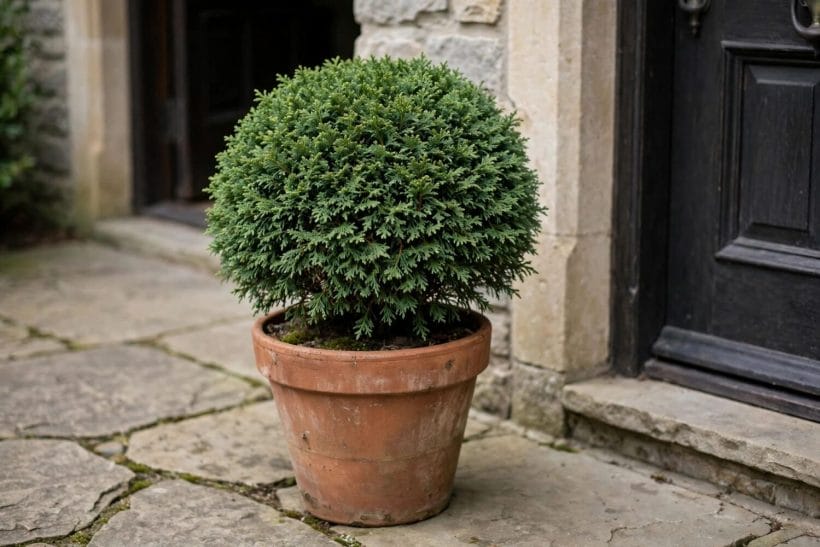
Not every garden has room for a tree, and dwarf conifers exist for exactly that reason. These compact forms stay small, grow slowly, and suit pots, troughs, small front gardens and the edges of paths. A pair of dwarf conifers in pots can frame a doorway, while a single specimen can anchor a small bed.
Pots suit dwarf conifers well, provided the container is generous and drains freely. A pot that is too small dries out quickly and cramps the roots, while a pot with no drainage can leave roots sitting in water, which most conifers dislike. A layer of mulch over the surface of the compost can help hold moisture and keep the pot looking tidy.
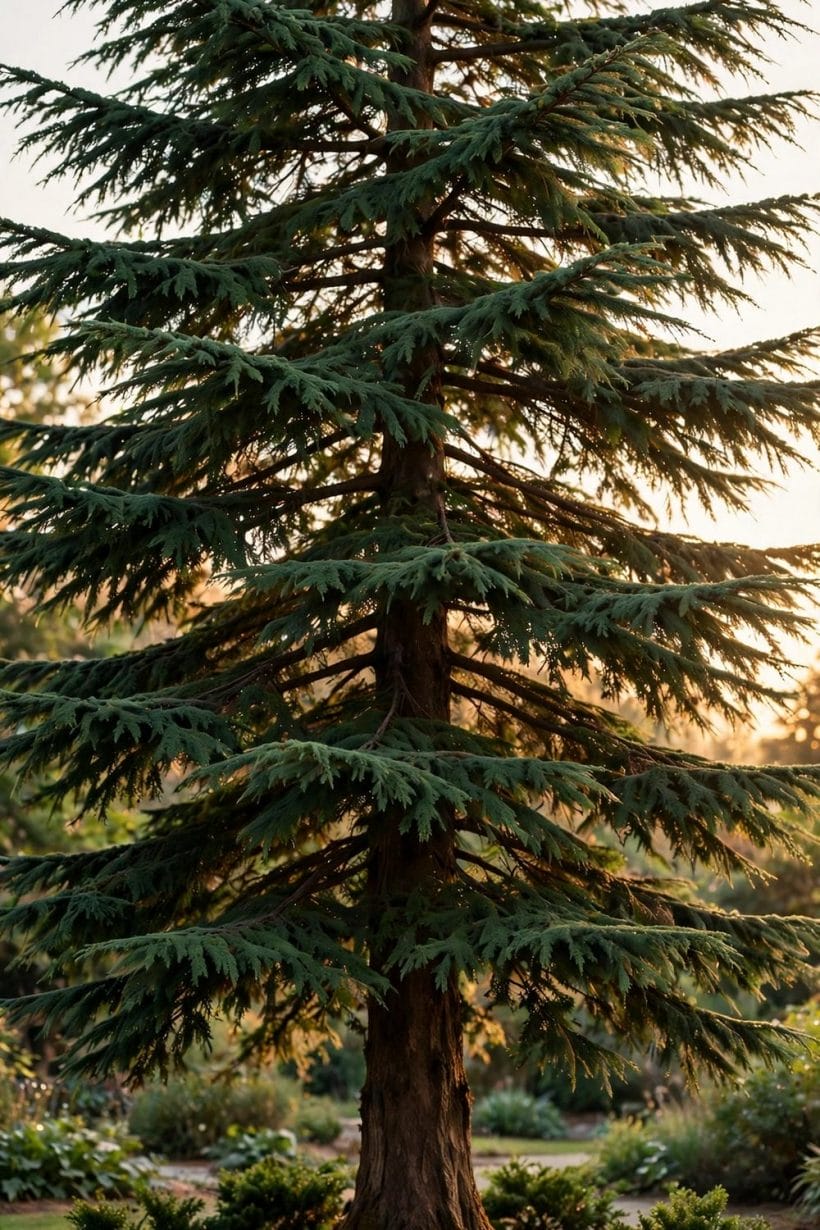
Small plots benefit from dwarf forms in another way: they give winter structure without overwhelming the space. A tiny garden can feel bare in the colder months when herbaceous plants die back, and a dwarf conifer keeps a point of green through that quiet season. Placed where it can be seen from a window, it can lift the whole garden through winter.
Dwarf does not mean no care at all. Plants in pots need watering more often than plants in open ground, especially during dry and windy weather, and they benefit from an occasional feed in the growing season. Checking the pot each week and watering when the compost feels dry is a gentler approach than watering on a fixed routine regardless of weather.
5. Hedge Rows for Privacy and Shelter
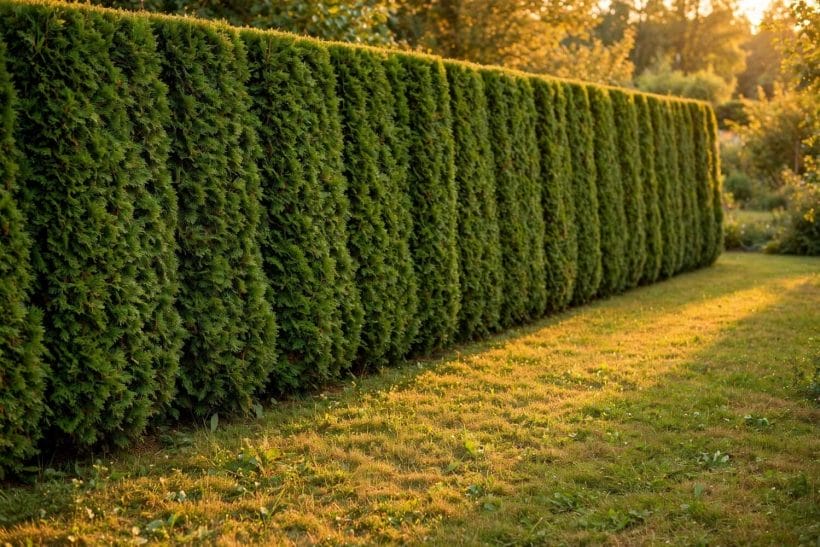
A conifer hedge is a living wall, and it can do work that a fence cannot. It softens the boundary of a garden, muffles sound, shelters seating areas from wind, and gives birds somewhere to nest and shelter. A well-kept hedge can also make a garden feel private without the hard edge of timber or brick.
The key to a good hedge is even spacing and a clear idea of the finished height. Plants set too far apart take a long time to knit together, while plants set too close compete and thin out. Deciding the height before planting helps too, since a hedge that is allowed to grow far above its intended height and then cut back hard can take a long time to recover its shape.
Trimming a hedge little and often keeps it dense and tidy. Light trimming encourages bushy growth from the sides, while leaving a hedge untrimmed for a long time and then cutting hard can expose bare wood that may be slow to green up again. A hedge that tapers slightly toward the top, wider at the base than at the crown, tends to keep its lower foliage better, since light can reach the bottom.
Hedges also need room at the base. A clear strip of soil or mulch along the foot of a hedge makes watering and trimming easier, and it keeps grass and weeds from competing with the roots. Where a hedge runs beside a path, allowing a little extra width means the hedge can grow without blocking the way.
6. Reading Light, Soil and Drainage Before Planting
Before choosing any conifer, it is worth reading the garden itself. Light is the first thing to notice: some spots are sunny for most of the day, others sit in shade cast by buildings or large trees, and many gardens have corners that are sunny in one season and shaded in another. Matching the plant to the light of its spot gives it a far better start than any amount of later care.
Soil comes next, and it varies more than many gardeners expect. Some soils are sandy and drain quickly, others are heavy and hold water, and many gardens contain both within a few paces. Digging a small hole and watching how quickly water drains away can tell a gardener a great deal, and adding organic matter to the planting area can help heavy soil drain and light soil hold moisture.
Drainage matters especially for conifers, since most dislike roots that stay wet. A spot where water gathers after rain is a poor place for a conifer, and raising the planting area slightly or choosing a different corner can make the difference between a plant that thrives and one that struggles. A plant that suits the soil it is given will usually need less intervention later.
Wind is the last factor worth weighing. Exposed gardens, coastal plots and hilltops can be hard on young conifers, drying their foliage and rocking their roots. A sheltered corner, a windbreak hedge, or a stout stake for a young tree can all help a plant settle while its roots take hold.
7. Siting Conifers Around Paths, Walls and the House
Where a conifer sits in relation to the house shapes how it is enjoyed. A tree framed by a window can become a living picture through the seasons, and a conifer beside a seating area can give shade and shelter where they are most welcome. Thinking about views from inside the house, as well as views within the garden, often leads to better placement.
Paths and walls need a little forethought too. A conifer planted too close to a path will eventually brush passers-by or drop foliage onto the surface, while one planted too close to a wall may grow lopsided as it reaches for light. Leaving room for the mature width of the plant keeps paths clear and walls free of rubbing branches.
Small homes and small plots call for the same care at a smaller scale. A compact conifer by a door or a dwarf form beside a seating corner can give a tiny garden structure without crowding it, and the same thinking that shapes interior planning guides applies outdoors: every plant should earn its place, and empty space is part of the design, not a gap to be filled.
Boundaries deserve a conversation as well as a plan. A tall hedge or tree near a boundary can shade a neighbour’s garden or drop foliage across the line, and talking through the plan before planting can prevent years of friction. A lower hedge, a narrower form, or a position set a little further from the boundary can often give the same effect with less impact.
8. Planting and Settling In
Planting a conifer well is mostly a matter of care and patience. The planting hole should be generous, the plant should sit at the same depth it grew at before, and the soil should be firmed gently around the roots without being packed hard. Watering well at planting time helps settle the soil around the roots and gives the plant a good start.
The first season after planting is the settling-in period, and it is the time when a conifer most needs attention. Regular watering during dry weather matters more than any other single act of care, since a young plant has a small root system and cannot yet reach water deep in the soil. Mulch around the base can help hold moisture and keep weeds down, provided it is kept clear of the trunk itself.
Staking a young tree can help in a windy spot, but a stake should be a temporary support, not a permanent crutch. A loosely tied stake that lets the trunk move a little encourages the tree to grow strong wood, while a rigid tie can rub the bark and weaken the trunk. Checking ties through the first season and removing the stake once the tree stands firm is good practice.
It is normal for a newly planted conifer to look quiet for a while. Roots grow before top growth shows, and a plant that seems to be doing nothing above ground may be busy below it. Judging a young conifer after a single season can be misleading; many plants take a season or two to show their true character.
9. Seasonal Care Through the Year
Conifers ask little through the year, but a gentle seasonal rhythm keeps them at their best. Spring is a good time to walk the garden and look at each plant with fresh eyes: checking for broken branches after winter, clearing mulch that has drifted against trunks, and noting anything that needs attention before growth begins.
Summer care is mostly about water. Established conifers in open ground usually cope well, but young plants, plants in pots, and plants in exposed spots may need watering during dry spells. Watering deeply and less often encourages roots to grow downward, while a light sprinkle every day tends to keep roots near the surface.
Autumn is the season for tidying and for planting. The soil is still warm, rain usually returns, and newly planted conifers have time to settle before winter. It is also a good time to refresh mulch, clear fallen leaves from around the base of plants, and give hedges a final light trim so they go into winter tidy.
Winter care is mostly about leaving plants alone. Heavy snow can weigh down branches, and gently brushing snow off a young conifer after a fall can prevent branches from bending out of shape. Frozen soil means roots cannot take up water, so watering during a mild spell after a long frost can help plants in pots, though plants in open ground usually manage without.
Feeding is a light-touch matter. Many conifers grow well in ordinary garden soil without regular feeding, and a plant that is growing steadily and holding good colour probably needs nothing more. A plant that looks pale or grows weakly may benefit from a general garden feed in spring, but feeding is no substitute for the right spot, good drainage and steady water.
10. Colour, Texture and Companions Through the Seasons
Conifers give a garden its backbone, but they shine brightest with companions. Flowering shrubs, grasses, bulbs and perennials all look better against a steady green background, and a conifer bed can become a stage for seasonal change rather than a static block of green. The contrast between soft grass plumes and firm conifer foliage, or between spring bulbs and dark evergreen branches, is one of the quiet pleasures of a mixed garden.
Herbs and kitchen planting can sit happily near conifers too, especially where a low spreading form edges a bed without shading it heavily. A sunny corner by a kitchen door, planned with the same care as herb garden layouts and kitchen ideas, can pair fragrant herbs with the steady green of a dwarf conifer, giving a small space both beauty and use.
Texture matters as much as colour. Feathery foliage beside bold leaves, fine needles beside broad stone, and smooth bark beside rough timber all create interest without any flowers at all. A garden that relies on texture as well as colour tends to look good in every season, including the quiet months when little is in bloom.
Small homes can use the same ideas at a smaller scale. A courtyard or a narrow side passage can hold a dwarf conifer, a pot of herbs and a seat, and the planting can be planned alongside small living room ideas so that the view from indoors and the planting outdoors work together. Even a single well-placed conifer can make a small outdoor space feel finished.
Planning the whole plot, rather than planting one corner at a time, usually gives a calmer result. Thinking about storage, access and seating alongside planting helps a garden work as a place to live in, not just to look at, and storage ideas for small homes, tiny house building and design ideas and a building checklist for a tiny house can all inform how a small plot and its planting are arranged together.

Final Considerations
Conifers suit gardeners who like a garden that looks good without constant work, but they still reward thought at the start. Choose the shape for the space, match the plant to the light and soil, give it room to grow, and water it steadily while it settles. Those four habits cover most of what a conifer needs.
It is also worth accepting that conifers change slowly. A planting that looks sparse in its first year can look generous a few seasons later, and a hedge that seems thin at first can thicken with light, regular trimming. Patience is part of the pleasure: watching a garden of conifers mature is a slow reward, and one that lasts through every season.
Finally, keep expectations gentle. Gardens vary with climate, soil, aspect and weather, and no two conifers will behave exactly alike, even in the same garden. A plant that struggles in one corner may thrive in another, and moving a young plant to a better spot is often wiser than persisting with a poor one. With a little observation and a light hand, conifers can give a garden structure, shelter and green life all year round.





0 Comments