

A bedroom with white walls and grey trim feels calm the moment you walk in. The white walls keep the room bright and open, while the grey trim draws a soft line around the windows, the doors and the foot of the wall. Nothing shouts for attention, and that quiet balance is exactly why the pairing works so well for a room meant for rest. It suits a large bedroom with tall windows just as well as a small room where every choice has to earn its place, and it leaves plenty of room for bedding, pictures and furniture to add warmth without crowding the eye.
The idea is simple, but the details decide whether the room feels crisp or cold. A grey that is too dark can make the trim feel heavy, while a grey that is too close to the white can disappear altogether. The finish on the walls, the width of the trim and the way daylight falls across the room all change how the two colours sit together. This guide walks through those choices one at a time, so you can shape a bedroom that feels restful in the morning light and gentle in the evening, with trim that frames the room rather than taking it over.
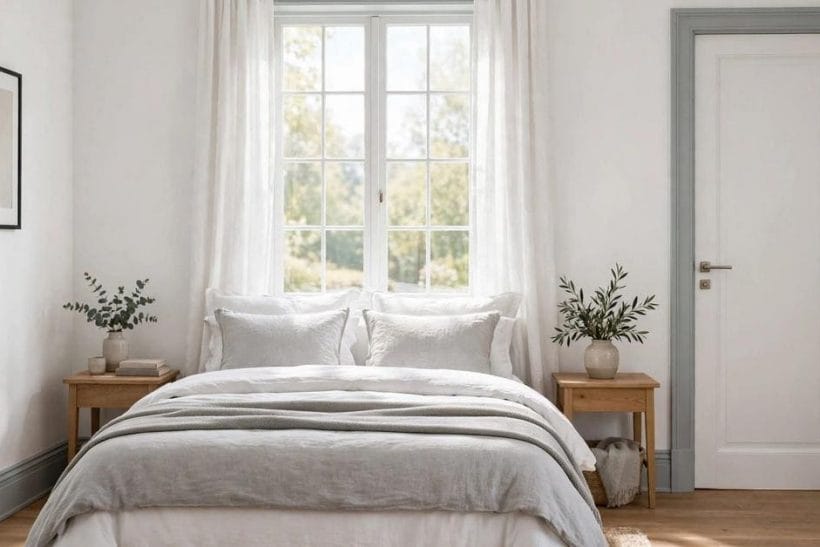
1. Why White Walls and Grey Trim Work Together
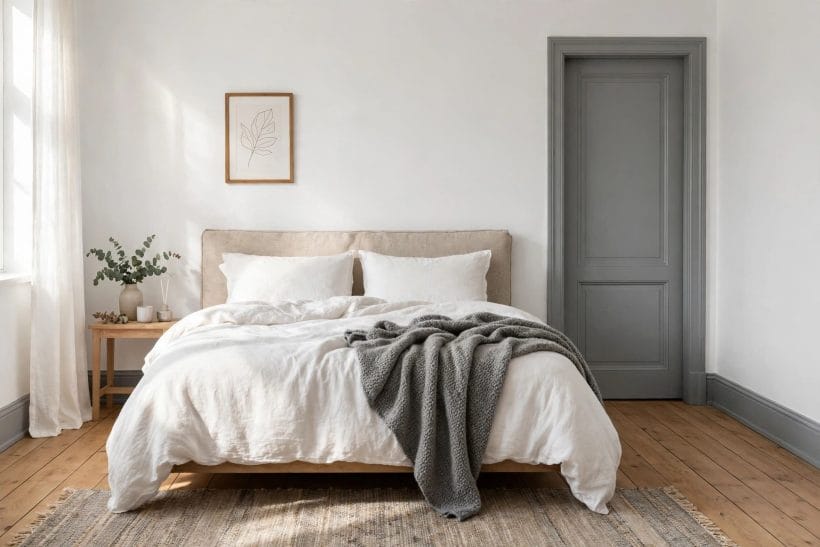
White walls reflect daylight and make a bedroom feel larger than it is, which matters most in rooms with a single window or a low ceiling. Grey trim then gives that brightness a shape. Around a window, it outlines the view and pulls the eye toward the light. Around a door, it marks the way in and out of the room without needing a bold colour. Along the skirting boards, it grounds the walls and ties the floor to the rest of the room. Each line is quiet on its own, and together they give the room a finished, thoughtful feel.
The pairing also stays flexible as tastes change. White walls accept almost any bedding, curtain or picture, so a change of throw or a new set of cushions can refresh the room without repainting. Grey trim is steady enough to sit beside warm wood, pale linen or soft natural fibres, and it does not fight with the colours that come and go through the seasons. That flexibility is useful in a bedroom, where comfort matters more than novelty and where a scheme that still pleases after a year is worth more than one that dazzles for a week.
There is a mood to the combination as well. White on its own can feel stark, especially under bright light, and grey on its own can feel flat. Together, they balance each other: the white keeps the grey from feeling heavy, and the grey keeps the white from feeling bare. The result is a room that feels tidy without feeling bare, and calm without feeling cold, which is a good starting point for sleep and for slow mornings.
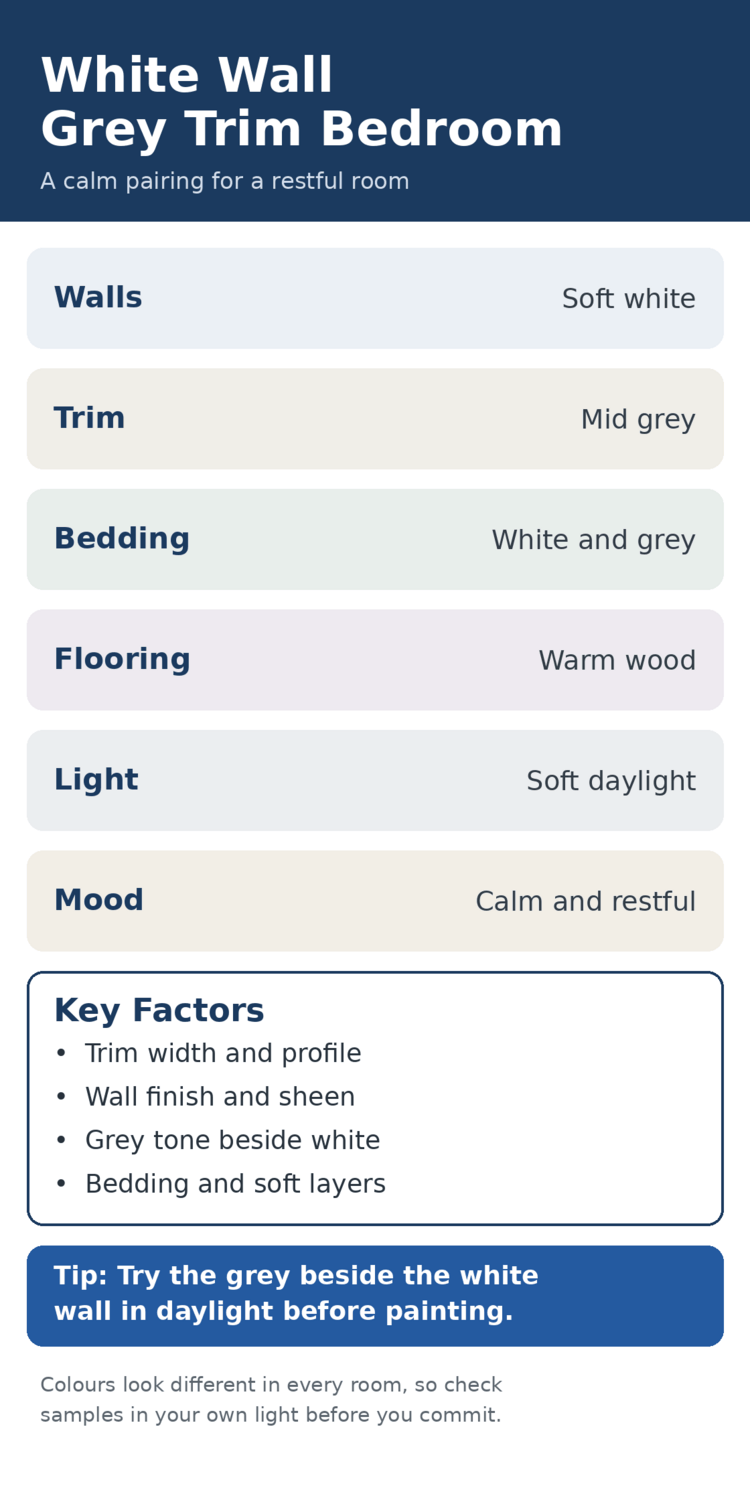
2. Choosing a Grey That Sits Well Beside White
Start by looking at greys beside the white of your own walls, not beside a sample card in a shop. White is rarely a pure, neutral white in a lived-in room: daylight, lamplight and the colour of the floor all warm it or cool it a little. A grey that looks soft in one room can look blue or brown in another, so hold a painted sample against the wall and live with it through a day of changing light before you settle. Morning light, afternoon sun and evening lamplight each tell a slightly different story, and the grey you choose should feel agreeable in all three.
A mid grey is the safest middle ground for most bedrooms. It is dark enough to read clearly against white, so the trim still does its framing job, yet light enough to keep the room feeling open. A very dark grey can be striking around a single feature, such as a door, but carried around every window and skirting board it can start to dominate a small room. A very pale grey, on the other hand, may fade into the white and lose the outline effect entirely, leaving the room looking simply white. The middle of the range gives definition without weight.
Think about warmth as well as darkness. A grey with a warm undertone sits happily beside warm wood floors and cream bedding, while a cooler grey suits pale linen and crisp white sheets. Neither is right in every room; the choice depends on the floor, the furniture and the light you already have. If your room leans warm, a cool grey can feel jarring, and if it leans cool, a warm grey can look muddy. Matching the undertone to the room, rather than chasing a single shade, is what makes the pairing feel settled.
For broader room planning, the interior design ideas collection offers general starting points that sit well alongside a bedroom scheme like this one.
3. Window Trim That Frames the Light
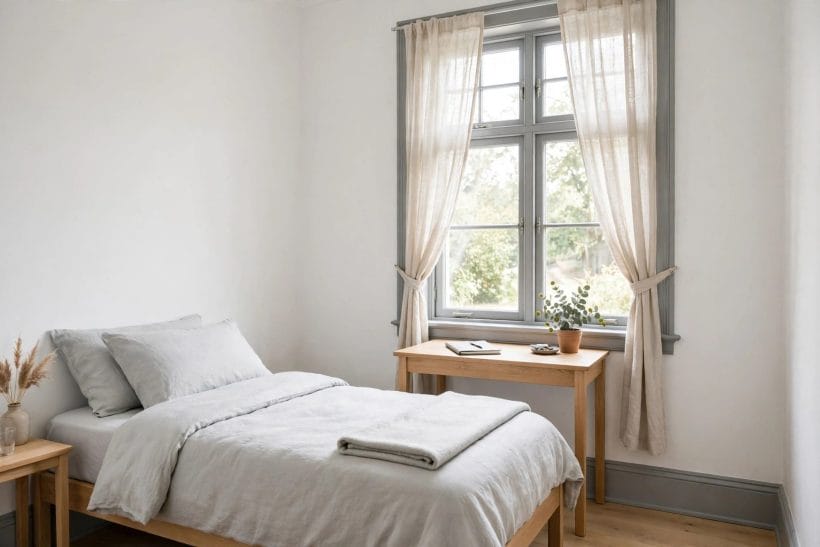
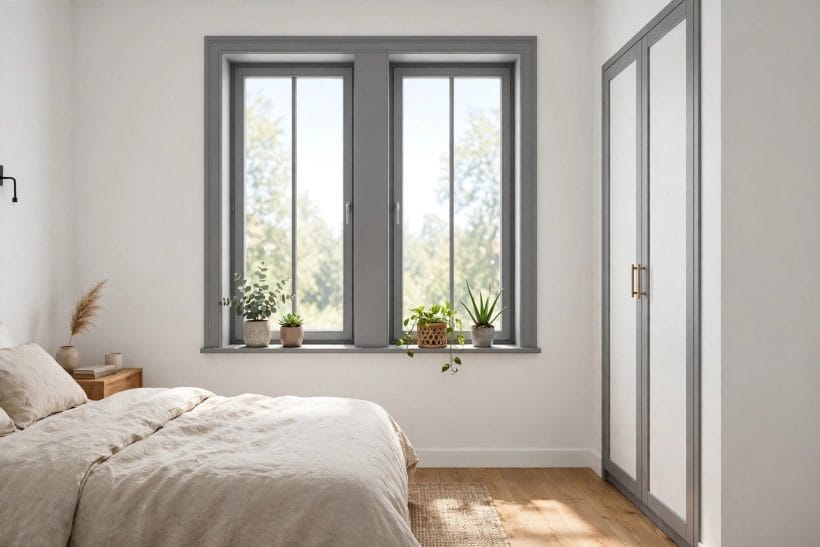
Windows are where this pairing earns its keep. A grey frame around a window turns the opening into a picture, giving the daylight a clear edge and making the view beyond feel considered rather than accidental. In a bedroom, that framing also helps at night, when curtains are drawn and the window becomes a quiet panel in the wall rather than a dark hole. Keep the trim profile simple and consistent from window to window, so the eye moves easily around the room instead of stopping at each change of detail.
Width matters more than ornament here. A slim trim suits a small room and a modern interior, where clean lines keep the space feeling open. A wider trim suits a larger room and a more traditional interior, where a broader frame gives the window presence against a long wall. Whichever width you choose, carry it through the room: windows of different widths in the same bedroom can look unsettled, while a steady width makes even mismatched window sizes feel part of one scheme.
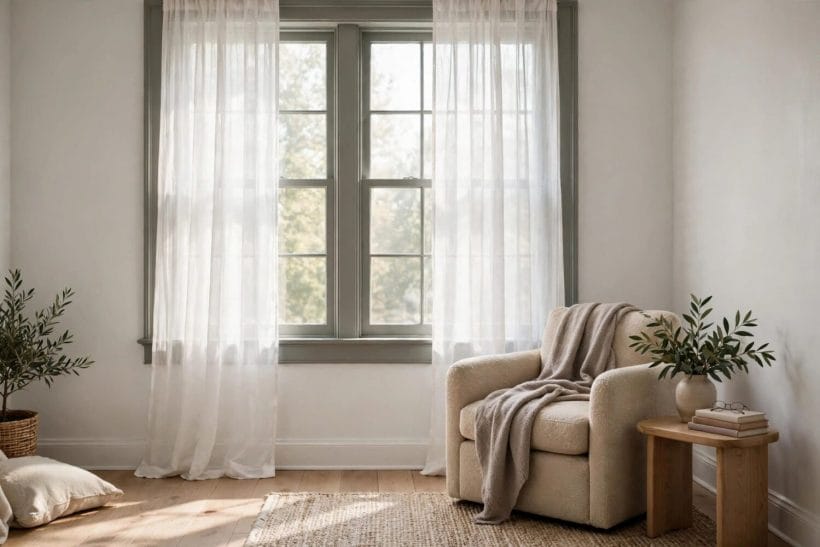
Curtains and blinds should work with the trim, not hide it. Sheer white curtains soften the light and let the grey frame stay visible, which is ideal for a bedroom that needs daylight without glare. Heavier curtains in a soft neutral can close the room in at night while still leaving a glimpse of the frame at the edges. If you prefer blinds, a pale blind inside the frame keeps the outline intact, while a blind hung well outside the frame can cover the trim and undo the very detail you painted it for.
4. Door Frames, Skirting and Quiet Detail
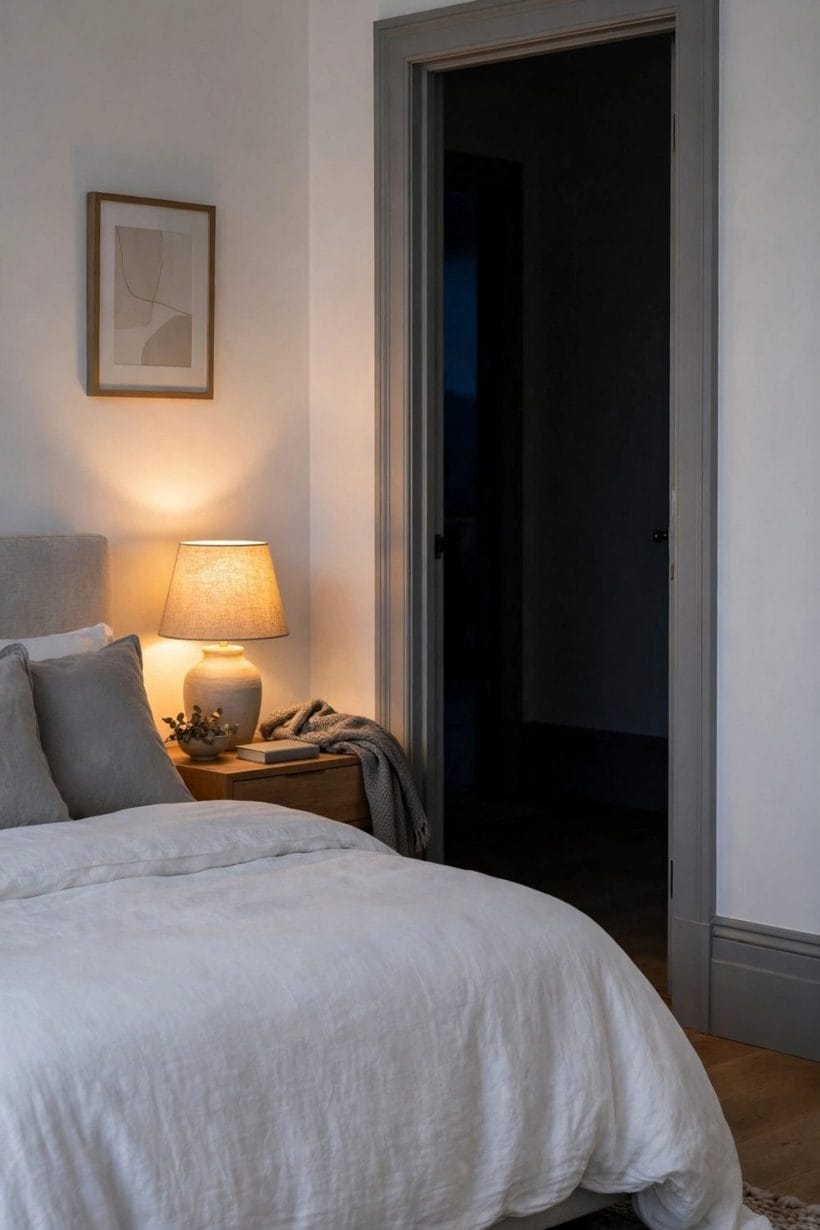
Door frames in grey give a bedroom a sense of order. Every doorway becomes a threshold, a gentle signal that you are entering a calmer space, and the colour carries the window trim through the room so the scheme feels whole rather than piecemeal. A white door inside a grey frame is a classic combination: the door stays bright and the frame gives it shape. The same treatment on a wardrobe or a built-in cupboard door can tie storage into the scheme, though it is worth keeping at least one element plain so the room does not feel overworked.
Skirting boards are the quiet workhorses of the pairing. They protect the foot of the wall, hide the join between wall and floor, and carry the grey line right around the room at ankle height. That low line matters more than it seems: it anchors the walls, especially where the floor is warm wood or a pale rug, and it stops the white walls from floating above the floor. A simple, clean skirting profile suits this scheme best, since fussy mouldings can fight with the calm mood the colours are trying to create.
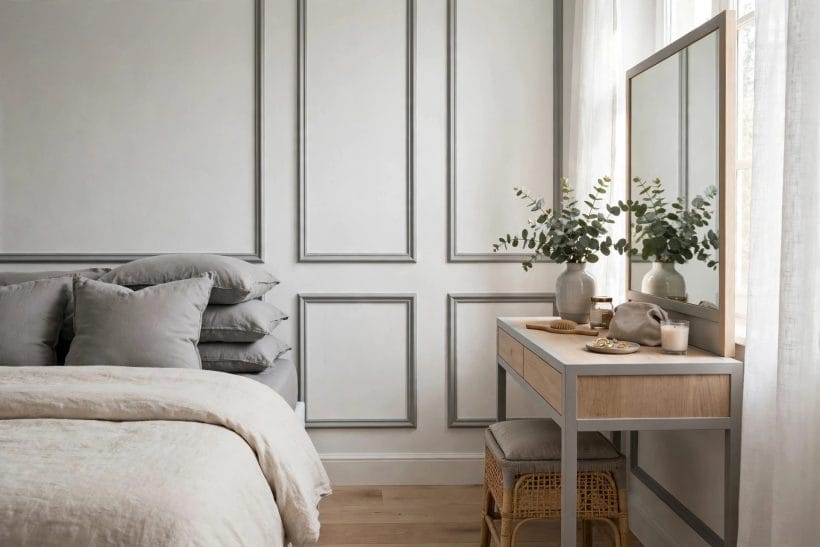
Small details deserve the same restraint. Architraves, picture rails and the frame of a mirror can all carry the grey, but each extra grey element adds visual weight. Choose the lines that shape the room, such as windows, doors and skirting, and leave the rest white. That discipline is what keeps the room feeling restful rather than busy, and it leaves room for personal touches, such as framed prints or a favourite lamp, to stand out against the white walls.
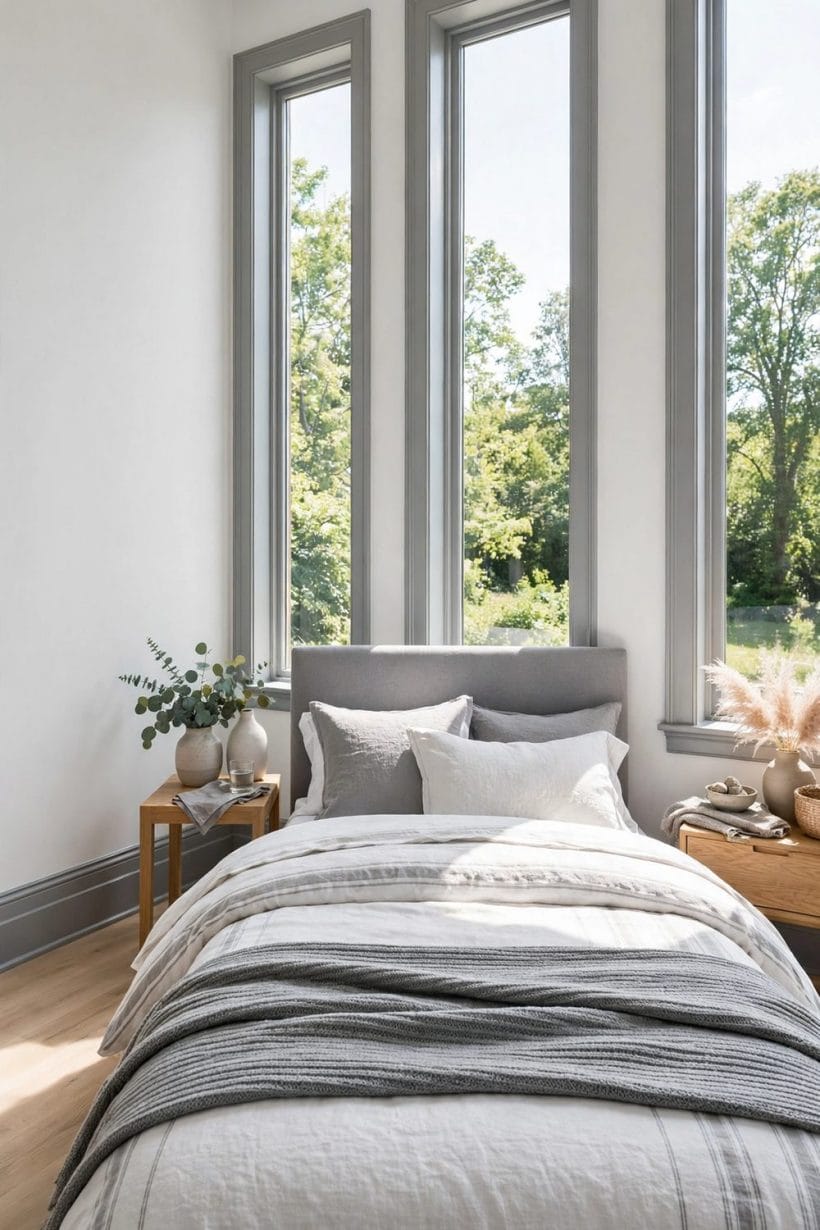
5. Bedding That Softens the Contrast
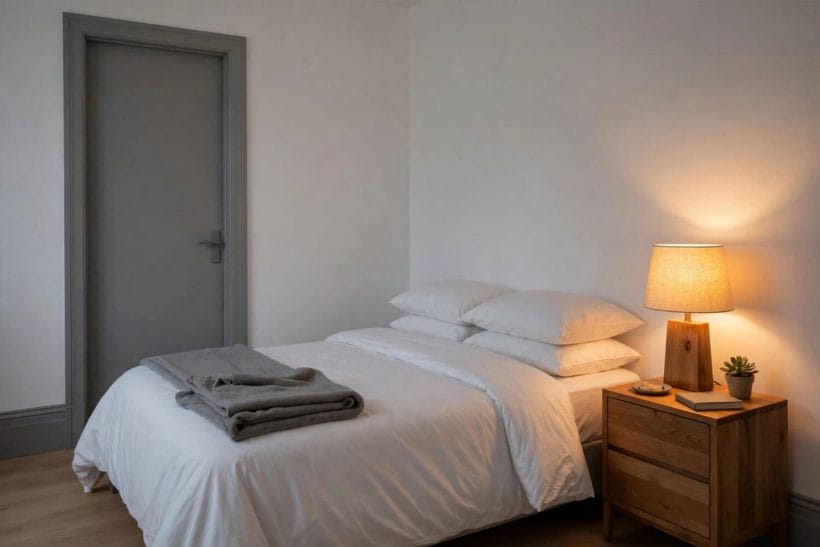
Bedding is where the pairing turns from architecture into comfort. White sheets and pillowcases echo the walls and keep the bed feeling fresh, while grey cushions, a grey throw or a softly patterned coverlet pick up the trim and stop the bed from floating away from the rest of the room. Layering matters: a plain white duvet with a folded grey throw at the foot of the bed repeats the wall-and-trim rhythm in fabric, and a couple of grey cushions in front of the sleeping pillows finish the echo without needing a matched set.
Texture does as much work as colour here. Linen, cotton and wool each catch the light differently, so a mix of textures in white and grey feels richer than a single flat fabric in either colour. A knitted throw, a quilted coverlet or a brushed cotton sheet adds depth that flat paint cannot, and that depth keeps the room from feeling clinical. Natural fibres also suit the calm mood of the scheme, and they age gracefully, softening with washing in a way that suits a bedroom built for everyday use.
Keep the palette on the bed close to the palette on the walls. A strong accent colour can work as a single cushion or a small throw, but a bed dressed in clashing brights will pull attention away from the trim and break the quiet balance of the room. If you like colour, let it arrive through flowers, a book cover or a picture, where it can be changed easily, and let the bed itself stay in the white and grey family that the room is built around.
6. Flooring and Furniture That Warm the Room
Warm wood flooring is the natural partner for white walls and grey trim. It brings a honeyed tone to the foot of the room, softens the contrast between white and grey, and keeps the space from feeling chilly underfoot on a cold morning. A pale rug beside the bed adds another layer of warmth and gives bare feet a soft landing, while its texture breaks up a long run of wooden boards. If the floor is already a cool tone, a warmer rug or wooden furniture can supply the missing warmth instead.
Furniture should stay simple and let the trim do the outlining. Pale wood bedside tables, a plain wardrobe and a straightforward headboard sit happily in this scheme, and their warm tones stop the grey from feeling severe. Dark furniture can work too, but it needs care: a very dark wardrobe against white walls and grey trim can become the loudest thing in the room, so balance it with lighter bedding and a pale rug. The aim is a room where no single piece shouts, and where the eye can rest.
Storage deserves a thought as well, since a calm colour scheme shows clutter more readily than a busy one. Closed storage, such as drawers and cupboards, keeps the surfaces clear and lets the white walls and grey lines stay visible. Open shelves can work for a few favourite objects, but a shelf crowded with odds and ends will fight the tidy feeling the pairing creates. A tidy room is not about perfection; it is about giving the colours room to breathe.
7. Small Bedrooms and the Same Pairing
Small bedrooms benefit from this pairing more than most rooms, because white walls make a tight space feel less confined. The trick is to keep the grey trim slim and consistent, so it outlines the room without closing it in. A narrow skirting board, a slim window frame and a simple door frame give the small room its shape while leaving the white walls to do the work of opening the space up. In a tiny room, every line counts, so a single steady grey line around the room is more effective than several competing details.
Furniture in a small bedroom should follow the same discipline. A bed with a low headboard leaves more white wall visible above it, which makes the ceiling feel higher. Bedside tables that are small and pale keep the floor area feeling open, and a mirror on one wall can borrow light from the window and double the sense of space. The grey trim then ties these choices together, giving the small room a finished feel that a plain white box can lack.
Colour in a small room should stay close to the walls. White and grey bedding, pale curtains and a light rug keep the space feeling airy, while a single darker cushion or a wooden picture frame adds just enough contrast to stop the room from feeling washed out. The tiny house interiors collection has general ideas for compact rooms that translate well to a small bedroom worked in this pairing.
8. Lighting That Keeps Grey Gentle
Light changes grey more than it changes almost any other colour, so lighting deserves planning in a white and grey bedroom. Daylight is the kindest light for this pairing: it keeps the white bright and the grey soft, and it shows the true relationship between the two. A bedroom with a good window will look its best in the morning, and the grey trim will read as a gentle outline rather than a hard edge. Keep window dressings light during the day so that daylight can do this work.
In the evening, warm lamplight changes the mood. A bedside lamp with a warm glow softens the grey trim and warms the white walls, turning the room from bright to restful as the day ends. A single overhead light, on the other hand, can flatten the room and make the grey look harsher, so layer the light instead: a bedside lamp for reading, a soft light for dressing, and darkness where it is not needed. Dimmer switches, where they are already fitted, let you tune the room to the hour without changing a bulb.
Picture lights and small wall lights can pick out the trim itself, washing a little light down a grey frame or along a skirting board. Used sparingly, this makes the architecture of the room part of the evening mood rather than something that disappears after dark. Keep the fittings simple and the light warm, and the room will feel as considered at night as it does in daylight.
9. Wall Panels, Pictures and Layered Detail
Wall panelling can add depth to a white wall without changing the colour scheme. A panelled section behind the bed, painted white with the trim in grey, gives the headboard wall a quiet structure and makes the bed feel anchored. The panels catch shadows as the light moves through the day, so the wall gains texture even though its colours stay the same. Keep the panelling to one wall, or to the lower part of the walls, so the room keeps its bright, open feeling.
Pictures and prints sit beautifully on white walls, and grey frames repeat the trim colour in a smaller, personal way. A row of framed prints above a chest of drawers, or a single large picture over the bed, gives the eye somewhere to land without breaking the calm. Choose frames in grey, pale wood or white, and keep the pictures themselves soft in tone, so the wall remains a backdrop rather than a gallery wall competing with the room.
Other layers, such as a woven wall hanging, a wooden mirror frame or a shelf with a plant, add life to the scheme while staying inside its mood. Plants are especially welcome: green leaves against white walls and grey trim bring a living note into the room, and a trailing plant on a windowsill softens the straight lines of the window frame. A plant on the sill also draws the eye to the window, which is exactly where the grey trim is doing its best work.
10. Keeping the Look Calm Over Time
A white and grey bedroom is easy to live with, but it does show marks, so a little upkeep keeps it looking its best. White walls near a bed or a doorway can pick up scuffs, and grey skirting boards show dust more readily than a darker colour would. A regular wipe of the skirting and a gentle clean of the walls around handles and switches keeps the lines crisp. Touching up a scuffed patch of trim is a small job, and it restores the outline that the whole scheme depends on.
Bedding and soft furnishings need the same steady care. White sheets and pillowcases stay fresh with regular washing, and a grey throw benefits from being shaken out and aired rather than left folded for weeks. Rotating cushions and refolding throws now and then keeps the bed looking dressed rather than settled into a single shape. These are small habits, not chores, and they keep the room feeling like a place that is cared for.
Finally, resist the urge to keep adding to the room. A calm scheme invites additions, a new cushion here, a new picture there, and each one is harmless on its own. Over time, though, additions can crowd the white walls and hide the grey lines that give the room its character. Every now and then, step back and look at the room as a whole: if the trim is still visible and the walls still breathe, the scheme is doing its job, and the room will keep feeling restful for years.
Final Considerations
A bedroom in white walls and grey trim is a scheme built on restraint, and restraint is what makes it last. The white keeps the room bright, the grey gives it shape, and the space between them leaves room for bedding, furniture and personal touches to add warmth. There is no single right shade of grey and no single right width of trim; the right choices are the ones that suit your light, your floor and your furniture, and that still please you in the morning and in the evening.
If you are starting from scratch, paint a sample of grey beside your white wall and watch it through a full day before you commit. If you are refreshing a room you already have, start with the trim around the windows, since that is where the pairing shows itself most clearly, and let the doors and skirting follow. Either way, keep the lines simple, the bedding soft and the room tidy, and the pairing will repay you with a bedroom that feels calm, bright and easy to live in.
For wider home ideas that complement a restful bedroom, the tiny house designs collection, the building checklist, the exterior ideas collection, the backyard ideas collection and the garden ideas collection each offer general inspiration beyond the bedroom itself.




0 Comments