

A driveway is the largest surface most visitors ever see of your home, and its pattern, colour and edges quietly set expectations before anyone reaches the front door.
These driveway pavers ideas collect 75 patterns, borders and finishing touches, from herringbone classics to relaxed gravel-and-slab mixes, so you can plan a surface that suits your house, your climate and the way you park, walk and live.
1. Plan the Surface Before the Pattern
Every good driveway starts below ground. A sound, well-compacted base, correct falls for drainage and solid edge restraints matter far more than the visible pattern, because even the prettiest surface will shift if what sits underneath is weak. Measure the area, think about turning space, and consider how water will leave the surface after heavy rain, ideally towards planted areas rather than the house or the street.
Well-chosen driveway pavers reward that preparation for decades, coping with daily parking, frost, heat and the occasional heavy delivery. Rules for drainage, dropped kerbs and work near the road vary by place, so check with your city or county before you dig, especially where the driveway meets a public pavement or highway. Use the table below while you plan, then work through patterns, borders and details in the sections that follow.
| At a Glance | What to Know |
|---|---|
| Best for kerb appeal | A simple pattern in a colour that echoes the house, finished with a contrasting border. |
| Most forgiving pattern | Herringbone and basketweave layouts that disguise small variations and everyday marks. |
| Key to longevity | A deep, compacted base, free drainage and strong edges that stop the surface spreading. |
| Watch out for | Standing water, weeds in open joints and slopes that send rain towards the garage. |
| Simple care rhythm | Sweep regularly, top up jointing material when needed and treat marks promptly. |
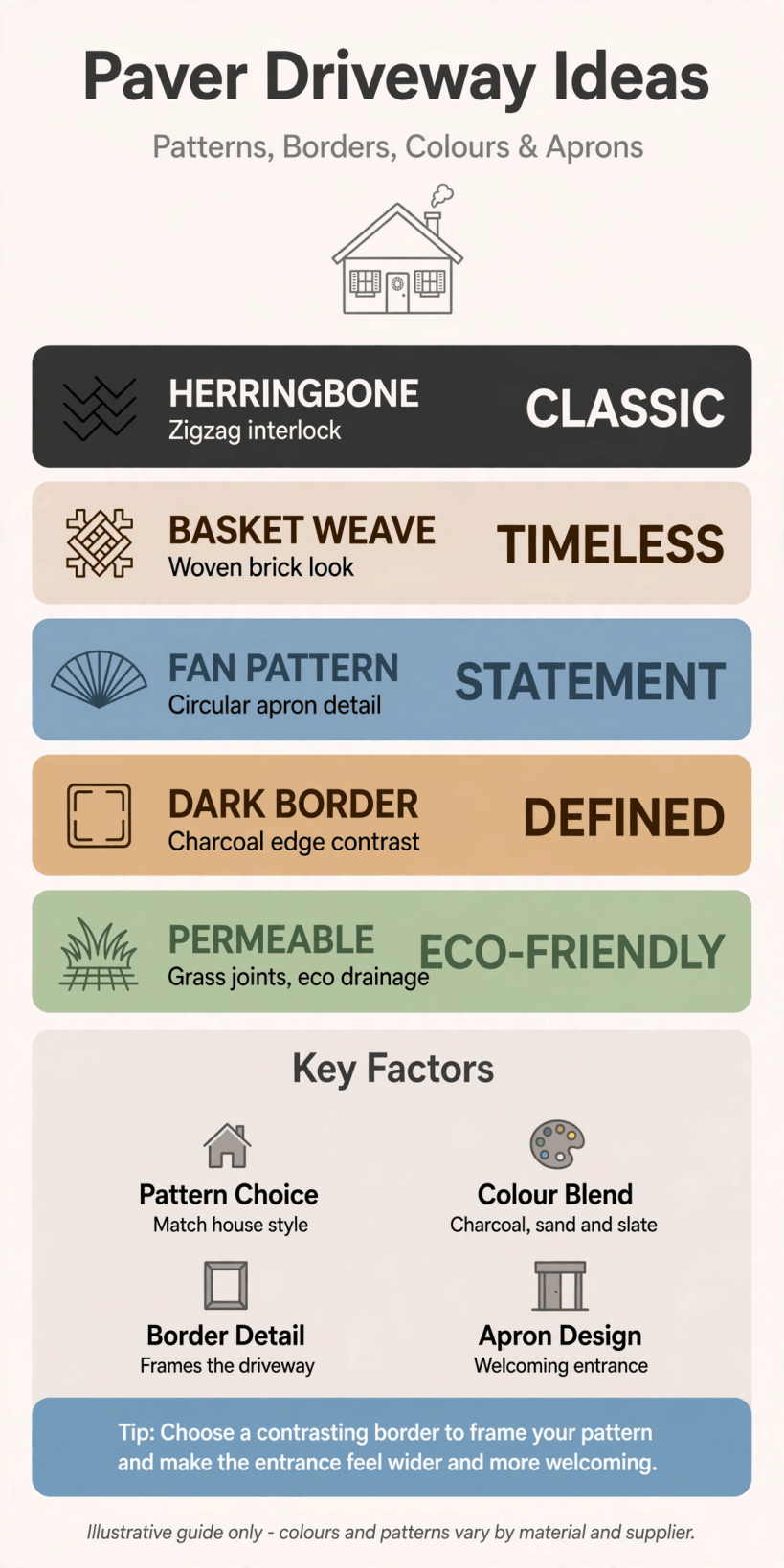
A quick visual guide to patterns, borders and base preparation for a lasting paved driveway.
2. Classic Patterns That Never Date
Some layouts have been used for centuries because they work: they lock together tightly, spread loads well and look right in front of almost any house. If you are improving the whole approach, our guide to tiny house landscaping ideas shows how planting and paths can soften a new paved surface beautifully.
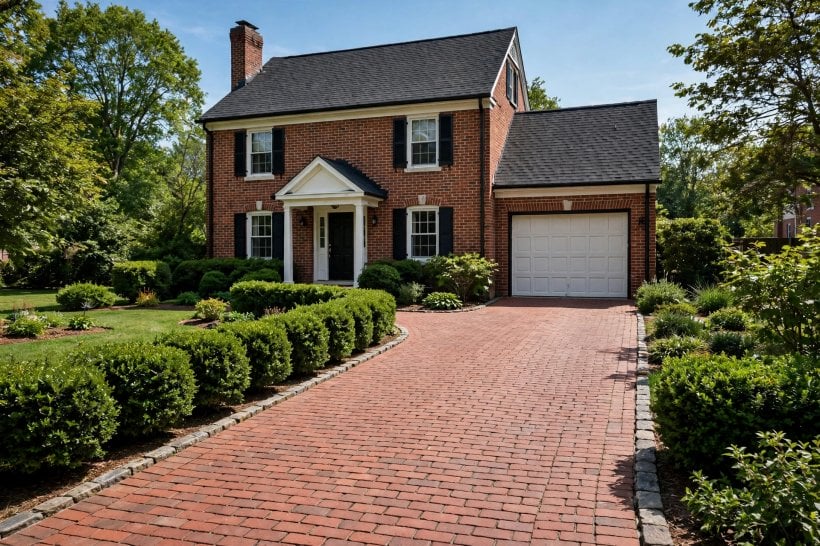
- Herringbone at forty-five degrees. The strongest interlocking pattern for driveways, turning simple rectangles into a rich, directional surface that hides wear gracefully.
- Herringbone at ninety degrees. A straighter take on the classic, giving a calmer grid-like feel that suits modern homes and wider parking areas.
- Running bond rows. Simple offset rows echo brickwork on the house, creating a quiet, traditional surface that lets borders provide the detail.
- Basketweave pairing. Pairs of blocks alternating direction create a woven texture that feels crafted and suits cottage and period homes.
- Stacked bond grid. Aligned joints give a sharp, contemporary look, best on smaller driveways where precision can be kept perfectly consistent.
- Cobble-style fan pattern. Small setts laid in sweeping arcs bring old-world charm and cope gracefully with gentle curves and slopes.
- Circular feature medallion. A round pattern at the centre or entrance of a wide driveway adds a focal point without complicating the whole layout.
- Random course cottage style. Mixed sizes in loose courses feel relaxed and rural, forgiving of older houses and informal planting alongside.
- Large-format slab grid. Big, smooth slabs with narrow joints give a calm, architectural surface that pairs well with minimalist facades.
3. Borders, Bands and Edge Details
A border is what makes a driveway look finished rather than simply laid. It frames the pattern, protects the edges and gives you a natural place to introduce a second colour. Keep borders simple, repeat them consistently, and let them guide visitors towards the door.
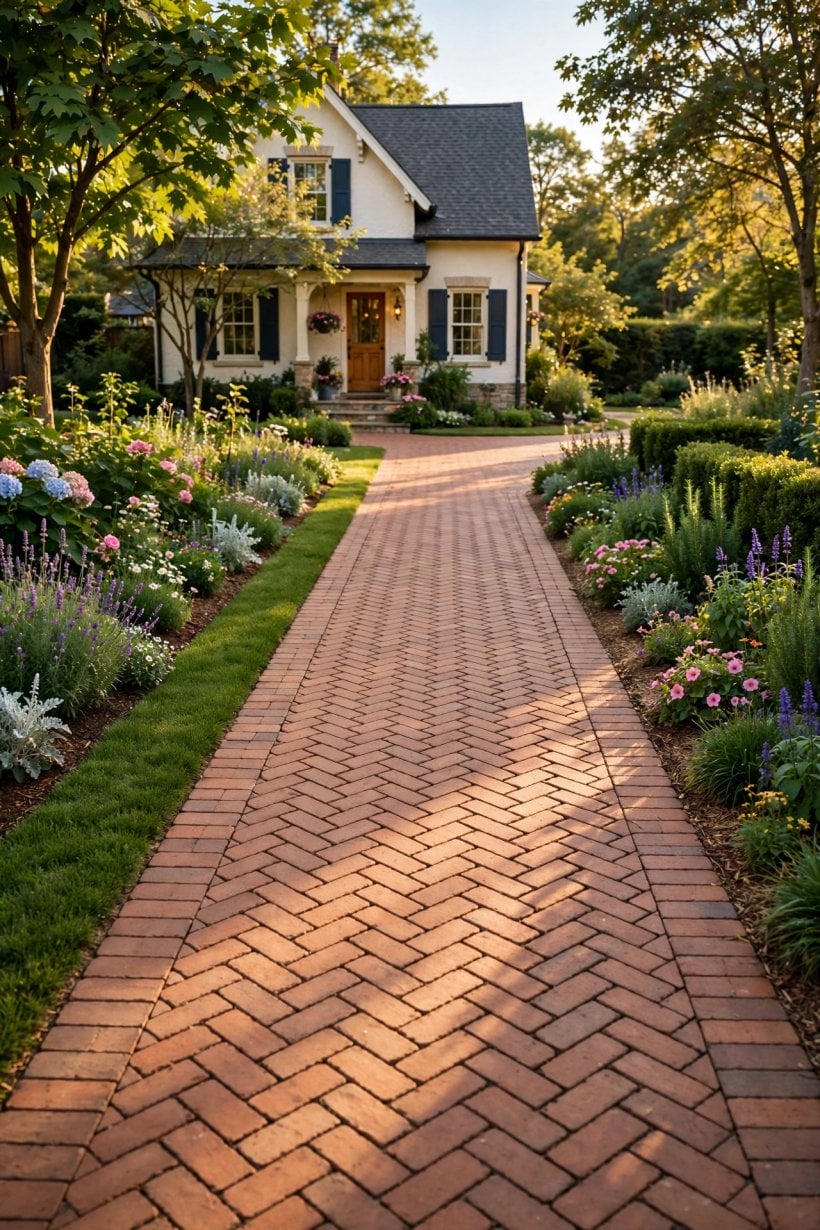
- Single soldier-course edge. Upright blocks in a line give the neatest possible frame and a strong edge restraint in one detail.
- Double border in contrast. Two rows in a darker shade create a picture-frame effect that makes pale centres look deliberate and crisp.
- Charcoal frame for warm centres. A dark outline around terracotta or buff blocks sharpens the whole design and echoes window frames or the door.
- Running band across the width. A contrasting stripe every few metres breaks up a long driveway and adds rhythm to a plain pattern.
- Diamond inlay accents. Small rotated squares worked into a border add crafted detail that rewards a closer look without shouting.
- Curved border sweep. Following the natural curve of the drive with the border keeps edges elegant and avoids awkward cut pieces.
- Stone kerb edging. A raised stone kerb contains gravel areas, protects planting and gives the driveway a substantial, built feel.
- Metal edge restraint. A discreet metal strip holds edges where you want the planting, not the hardware, to be the visible boundary.
- Threshold band at the door. A wider band of contrasting blocks where the driveway meets the path signals the entrance and slows the eye pleasantly.
4. Colours and Blends for Every House Style
Colour should start with the house: its brick, stone, render and roof. A driveway that echoes one of those tones will always look settled, while a completely unrelated shade fights the building. The palette discipline in our overview of tiny house and small-space interior design works outdoors too: limit yourself to two or three related tones.
- Warm buff blend. Honey and sand tones flatter stone and render, and they hide dust and light marks better than plain colours.
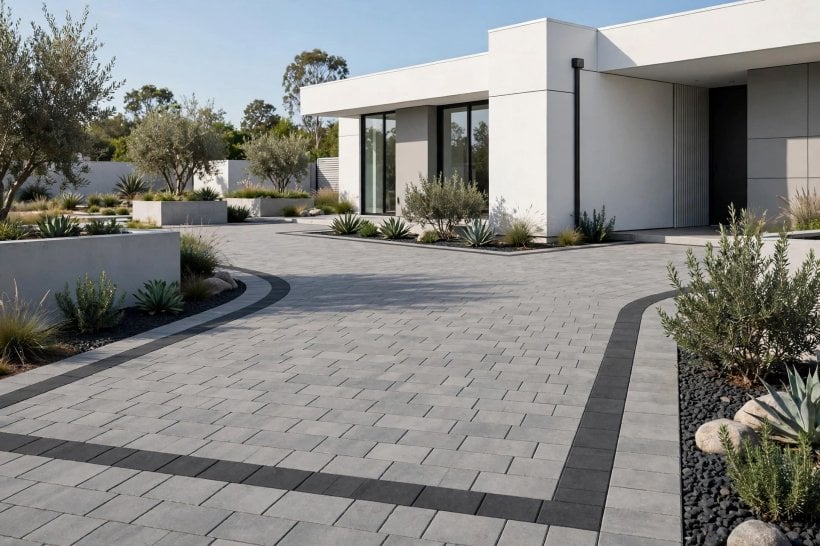
- Charcoal monochrome. Deep grey blocks give a smart, urban look that makes green planting and pale houses look sharper.
- Terracotta and clay red. Traditional reds suit brick homes and country lanes, mellowing beautifully as the surface weathers.
- Silver-grey granite effect. Speckled greys bring a natural stone feel with a calm, contemporary mood that suits modern builds.
- Mixed brindle shading. Blocks blended with two tones per piece create depth and disguise tyre marks and seasonal debris.
- Pale stone for dark houses. A light driveway lifts a heavily shaded or dark-fronted home and reflects welcome light towards the door.
- Two-tone checkerboard. Alternating light and dark large blocks give a bold, retro character, best kept to smaller parking courts.
- Weathered antique finish. Tumbled edges and softened colours make a new driveway feel established from the first day it is used.
- Matching the roof tone. Echoing slate or tile colours in the driveway ties the whole elevation together in a surprisingly satisfying way.
5. Layouts for Small, Narrow and Sloping Drives
Awkward plots are where thoughtful design earns its keep. The right pattern can widen a narrow strip visually, a border can organise a slope, and a turning area can transform daily parking from a chore into a pleasure.
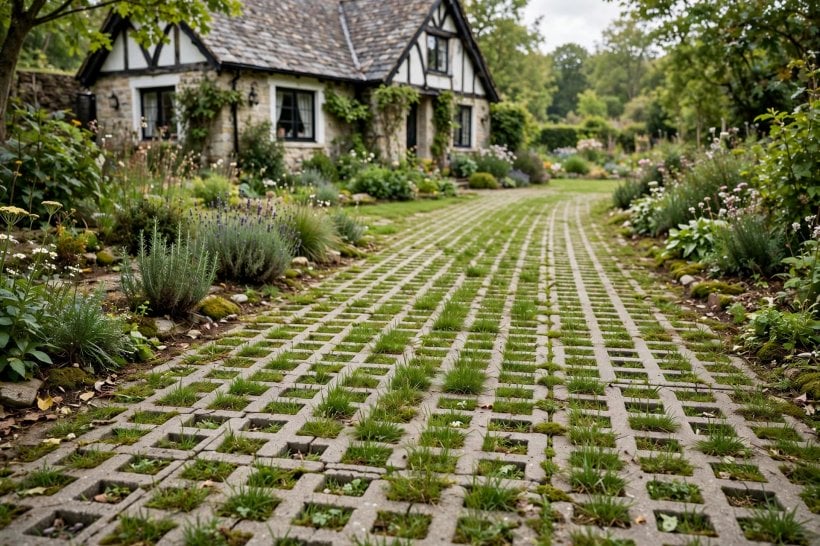
- Diagonal pattern to widen. Laying herringbone or rows at an angle makes a narrow drive feel broader and leads the eye outward.
- Central grass strip drive. Two paved tracks with planting between them reduce hard surface, help drainage and suit rural or eco-minded homes.
- Turning circle in pattern. A round patterned area at the top of a long drive makes leaving in forward gear simple and safer.
- Stepped terraces on a slope. Breaking a steep drive into shallow sections with retaining edges improves grip and looks intentional.
- Shared court pattern unity. One pattern across a shared parking court gives several homes a calm, coordinated frontage.
- Extra bay in matching blocks. A visitor parking bay in the same material extends the design instead of looking like a later patch.
- Path integrated into the drive. A contrasting walking route worked into the surface guides guests to the door, dry-footed, in any weather.
- Compact front-garden conversion. On a fully paved front plot, borders and a planted strip keep the space welcoming rather than stark.
6. Mixing Materials for Character
Paving does not have to work alone. Gravel, stone, timber and planting each bring something different, and combinations often drain better and cost less than one material everywhere. Borrow colour confidence from our guide to tiny house interior paint colors when choosing painted gates and fences to complete the scene.
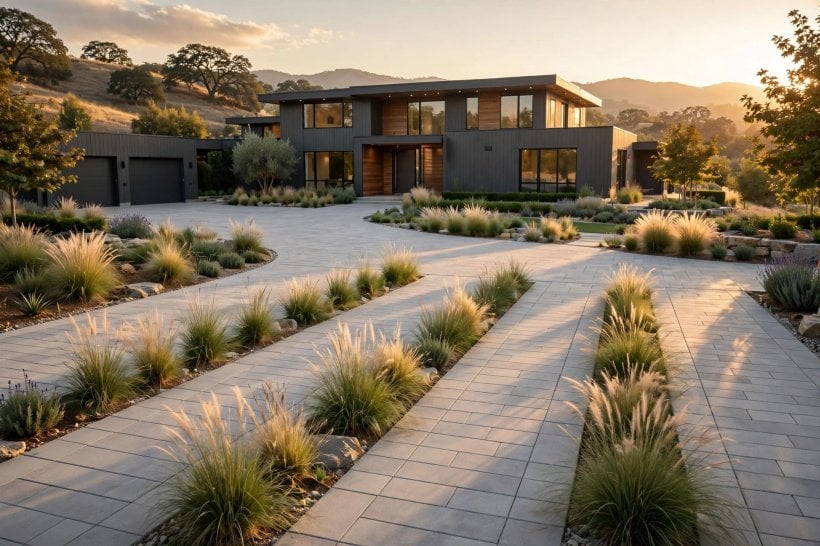
- Pavers with gravel margins. A firm paved centre with gravel edges softens the design, improves drainage and stretches the budget further.
- Stone sett apron at the entrance. A band of chunky setts where the drive meets the road adds durability where turning stresses are highest.
- Slabs floating in gravel. Large stepping slabs across a gravel drive give a modern, low-maintenance route for cars and feet alike.
- Brick blocks with stone borders. Pairing clay blocks with a natural stone frame mixes warmth with structure for a timeless country look.
- Permeable block systems. Open-jointed designs let rain soak away through the surface, which can help where local drainage rules encourage it; check guidance first.
- Timber-edged parking bay. Sturdy timber edging suits a rural extra bay, weathering to silver and blending with fences and planting.
- Resin-bound centre panel. A smooth, bound-gravel panel inside a paver border gives a clean centre with a crafted frame.
- Reclaimed blocks and setts. Salvaged materials bring instant age and character, provided sizes are sorted carefully for an even finish.
7. Kerb Appeal Finishing Touches
The final ten percent of the work delivers most of the compliments. Lighting, planting and a cared-for entrance turn a good surface into a memorable arrival, and none of it needs to be expensive. The same layered approach described in our kitchen design ideas for tiny houses and small spaces applies: keep daily-use routes clear and put beauty where it is seen most.
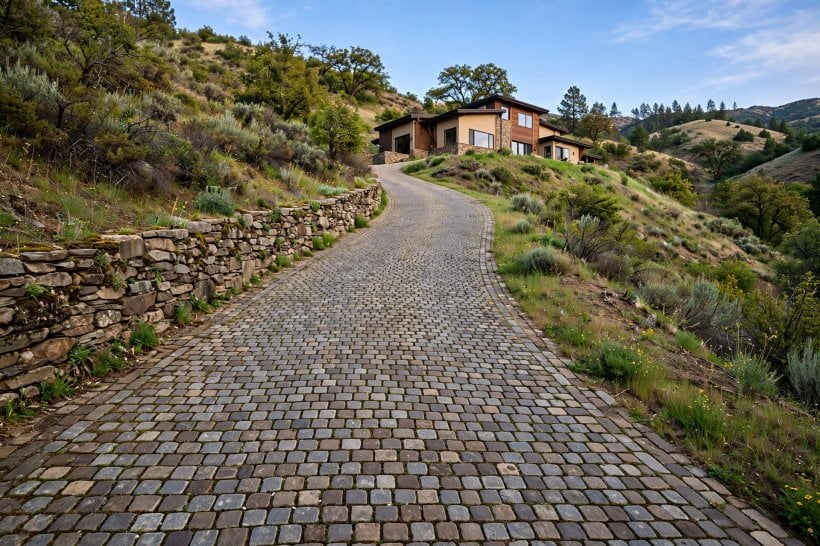
- Low lighting along the edge. Discreet lights mark the border after dark, guide parking and make the pattern glow on winter evenings.
- Lavender or herb edging. A scented ribbon of planting softens hard edges and gives visitors a fragrant welcome in summer.
- Matching gate and fence colour. Painting gates to echo the border colour makes the whole frontage read as one designed piece.
- House number in the border. Worked numerals or a contrasting plaque detail add a personal, crafted note near the entrance.
- Planter pair at the garage. Two substantial planters soften the garage doors, often the plainest part of any front elevation.
- Clipped evergreen punctuation. A few rounded evergreens along the drive give year-round structure that paving alone cannot provide.
- Welcome mat of pattern. A distinct patterned panel in front of the door acts like a rug, marking the threshold with care.
- Seasonal pot rotation. Swapping pots by the door each season refreshes the whole driveway view for very little effort.
8. Green, Shady and Family-Friendly Drives
A driveway has to work for real life: children, bikes, deliveries, pets and the occasional paddling pool. Softer edges, planted margins and thoughtful drainage make the space kinder for everyone who uses it.
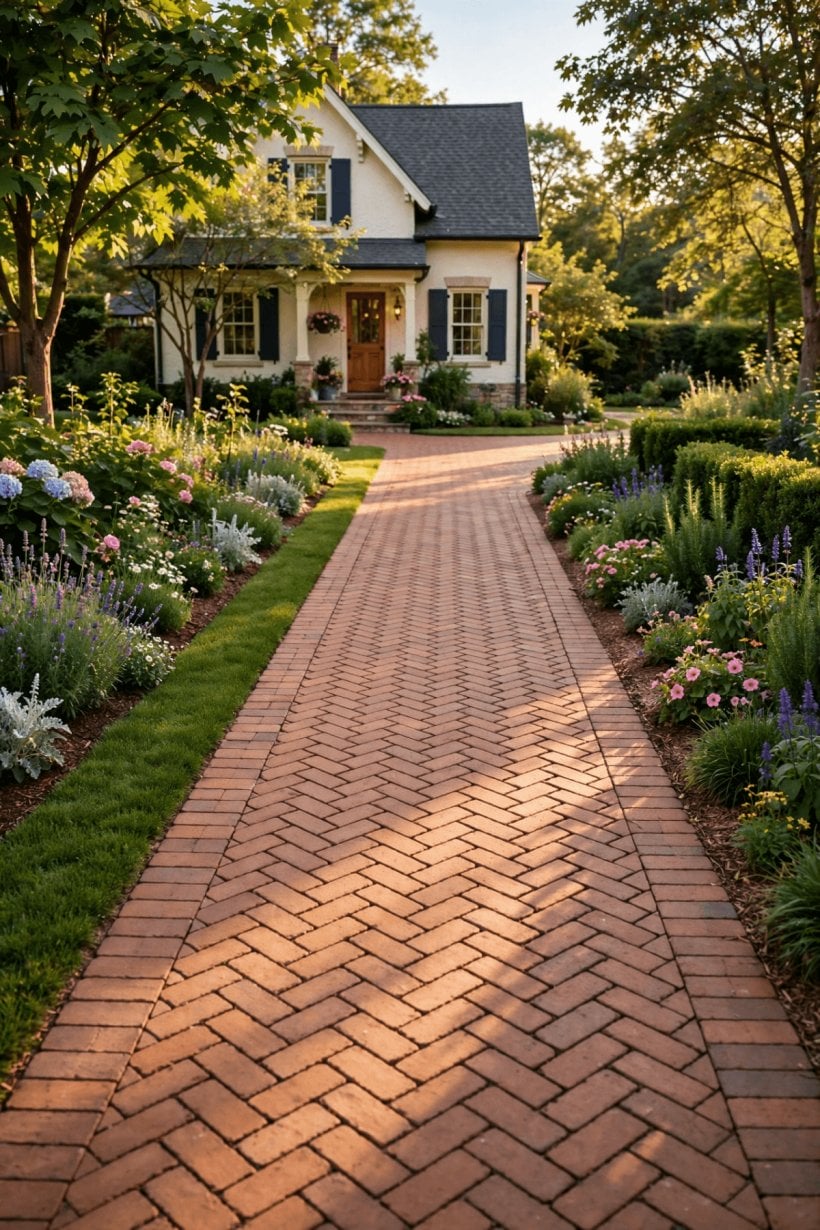
- Rain garden beside the drive. A shallow planted dip catches runoff from the surface, slowing water and supporting wildlife at the same time.
- Shade-tree parking pocket. Positioning one parking spot under a well-placed tree keeps cars cooler and the frontage greener.
- Grass-jointed eco paving. Wider joints planted with tough ground cover soften large areas and help water soak away naturally.
- Smooth route for wheels. Keep a smooth, level band within the pattern for prams, wheelchairs, bikes and wheeled bins.
- Play-friendly parking court. A calm pattern with no loose material underfoot doubles as a safe space for chalk, scooters and games.
- Bin store in matching materials. Screening bins with the same blocks or timber as the border removes the biggest eyesore on most driveways.
- Bike and scooter parking pad. A small paved extension near the door keeps everyday wheels tidy instead of scattered across the drive.
- Wildlife-friendly lighting. Warm, downward lights on timers give safety without flooding hedges and gardens with glare all night.
9. Repairs, Refreshes and Pattern Rescues
One advantage of blocks over a single slab surface is repairability: small areas can be lifted, re-bedded and relaid. An older driveway often needs cleaning, fresh jointing and a new border rather than complete replacement, as the calm, make-do-and-mend thinking in our living room interior design ideas for tiny houses shows indoors.
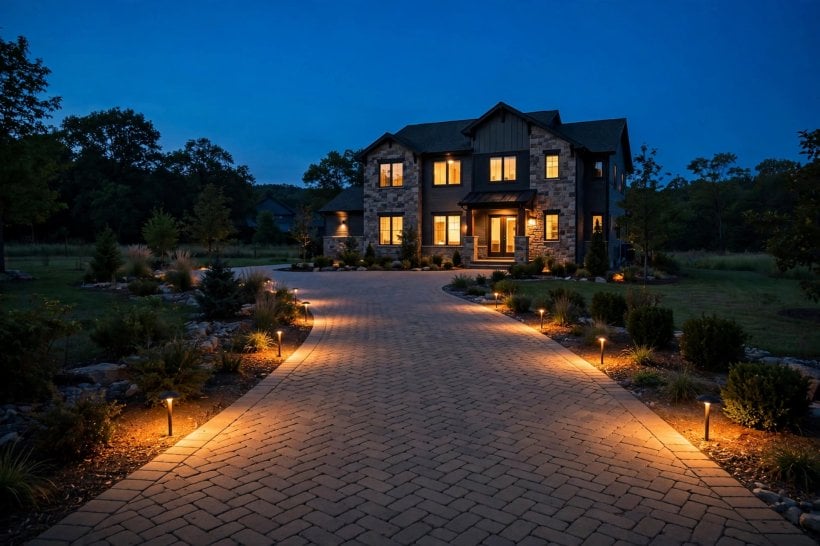
- Lift and re-lay a dipped patch. Correcting the base beneath a sunken area restores levels and stops puddles forming after rain.
- Fresh jointing sweep-in. Topping up joints locks blocks together, discourages weeds and instantly smartens the whole surface.
- Border-first renovation. Replacing tired edges with a strong new border can make the original centre look newly laid.
- Deep clean and weed treatment. A careful clean reveals the original colours and shows which areas genuinely need repair work.
- Swap damaged blocks individually. Keeping spare blocks from the original batch lets you replace cracked pieces without visible patching.
- Add a pattern panel to plain concrete. Cutting in a paved feature area can break up an expanse of plain surface where full replacement is impractical; take professional advice first.
- Re-grade a puddle corner. Adjusting levels in one corner to restore the fall often cures the only real fault in an old drive.
- Seal selectively, if advised. Some surfaces benefit from a suitable sealant and others do not, so follow the material guidance rather than sealing by default.
10. Costs, Contractors and Checking the Rules
Talk about money in honest, qualitative terms with any contractor: ground preparation, drainage and edging are where quality hides, and skimping there is a false economy. Get itemised quotes, ask what base depth and materials are included, and check references for similar work. Dropped kerbs, drainage connections and work affecting the public highway usually need permission, so check with your city or county and utility providers before starting. The neighbourly planning in our piece on Colorado tiny house communities is a good model for keeping everyone informed.
- Measure and sketch first. An accurate sketch with levels and drainage notes helps every contractor quote for exactly the same work.
- Ask about the base in writing. The unseen layers decide how long the driveway lasts, so their specification belongs in the quote.
- Confirm drainage plans. Agree where water will go before work starts, and confirm any permissions the design depends on.
- Order a small overage. A few spare blocks from the same batch make future repairs invisible and are cheap insurance.
- Stage the work sensibly. Apron, main field, borders, then finishing touches is a logical order that protects completed areas.
- Plan parking during the works. Agree where vehicles go while the base cures and the surface settles, so daily life keeps running.
- Walk the finished levels. Check falls with a hose before final payment, watching that water leaves the surface as designed.
- Keep the paperwork. Store quotes, material names and guarantees together; they make maintenance and any future extension far simpler.
Final Considerations
Choose a pattern you will enjoy seeing every day, a colour that belongs to your house and borders that make the design feel inevitable. Invest first in the base, the drainage and the edges, because those invisible decisions decide whether the visible ones still look good in twenty years. Our round-up of home interior design ideas for tiny houses follows the same principle indoors: structure first, decoration second, always.
Photograph your driveway through the seasons, sweep it little and often, and top up joints before small gaps become big jobs. A well-planned paved entrance is one of the hardest-working and most welcoming parts of any home, and it will repay a careful plan every single day.


0 Comments