

Premium rigid-core vinyl plank is the flooring aisle’s fastest talker: waterproof, wood-look, warm, indestructible — the claims pile up faster than the samples. A buyer comparing a top-end range, the kind people search for by a product line’s name, needs something better than claims: a checking routine.
This guide is that routine. It reads a luxury vinyl plank the way a surveyor reads a house — construction first, then the claims, then the floor it will live on — so that whatever range ends up on the shortlist, it earns its place on evidence rather than on the showroom’s lighting.

1. Luxury Vinyl Plank Flooring at a Glance
Luxury vinyl plank — LVP — is a manufactured floor built in layers: a hard-wearing transparent surface, a photographic wood or stone design, a core that gives the plank its character, and a backing. The premium end of the market is dominated by rigid-core planks, whose dense mineral-filled cores keep them flat, stable and click-lockable. This guide covers how to check any premium range before buying; the wider buying landscape is the online flooring guide, and nothing here reviews a single product — brands differ, but a sound plank passes the same checks whatever its box says.
| Question | Short answer |
|---|---|
| What makes a plank ‘premium’? | Its construction — a thicker wear layer, a stable rigid core, a convincing design layer and a backing that calms sound — not its price tag |
| What should be checked first? | The wear layer and the core: they decide how the floor ages and how flat it stays, long after the colour is chosen |
| Is ‘waterproof’ the whole story? | No — the plank may shrug off water while the floor beneath it cannot; the claim covers the product, not the room |
| What decides a good installation? | The subfloor. Rigid planks telegraph what lies beneath, so preparation matters more here than with almost any other floor |
| How should samples be judged? | At home, in the room’s own light, over days — and walked on, knelt on and scratched, because a sample is a promise to test |
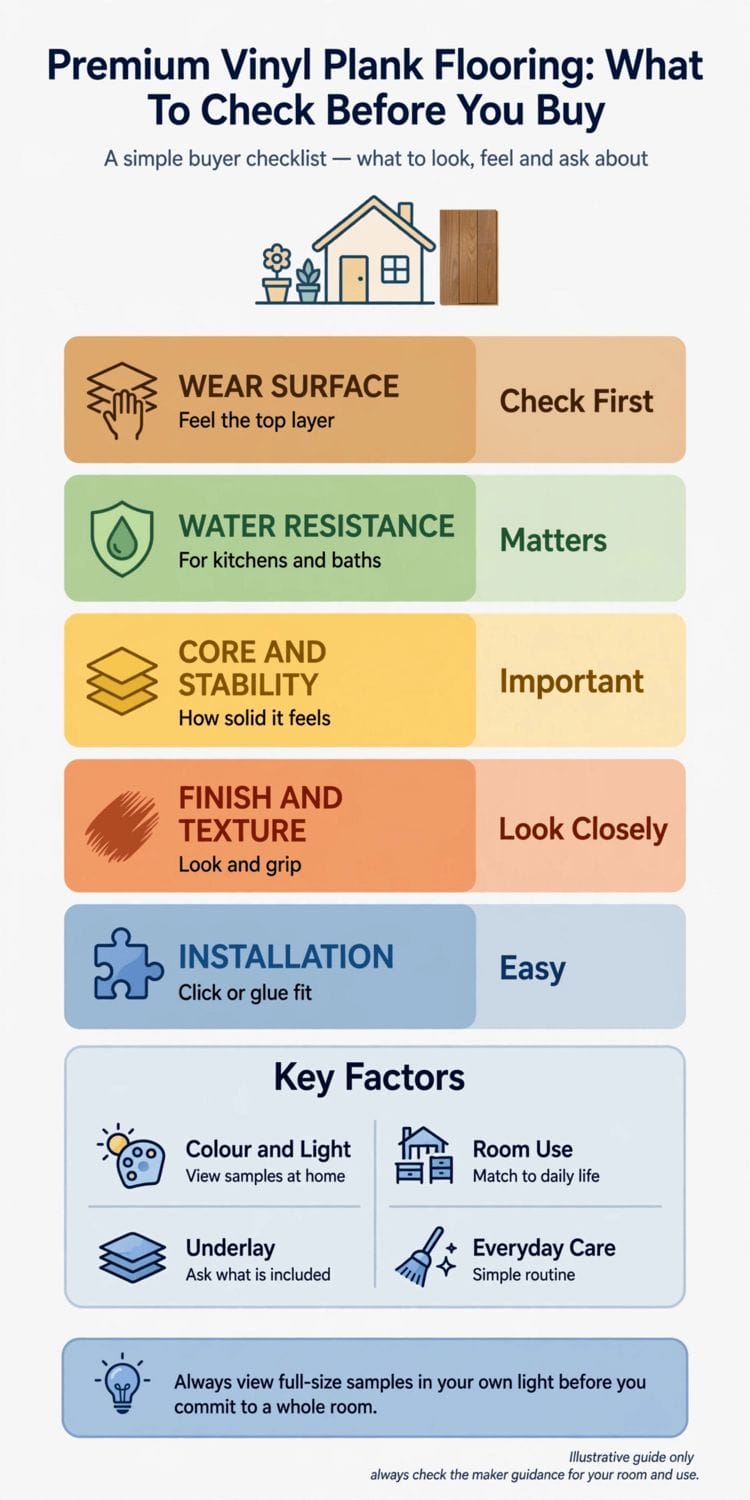
2. What the Plank Is Made Of: Layers Before Looks
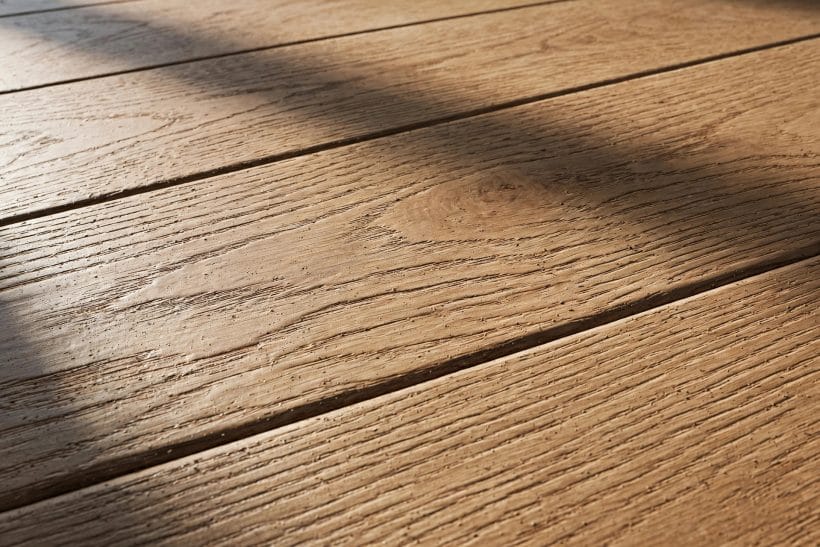
Every luxury vinyl plank is a sandwich, and the checking starts by reading it from the top. The wear layer is the transparent shield over the design: it takes the grit, the chair legs and the sunlight, and its thickness — grades run from thin domestic to heavy commercial — is the single best predictor of how the floor will look in a decade. Ask for the wear layer’s rating in plain terms and be wary of any range that will not state it; in this market, silence about the top layer usually means the top layer is the compromise.
Below it, the design layer is a printed film, and its quality is judged by repetition: count how many planks pass before the same knot and grain return. Premium ranges carry many distinct designs in rotation, so the floor reads as timber rather than as a photocopy. The core beneath decides the plank’s feel and stability — the subject of the next section — and the backing, often cork or foam pre-attached, handles sound and small imperfections. A checklist habit worth building: handle the plank. A premium one feels dense, lies dead flat on the bench, and shows a clean, tight edge along its click profile.
3. Rigid Core or Flexible: The Plank’s Character
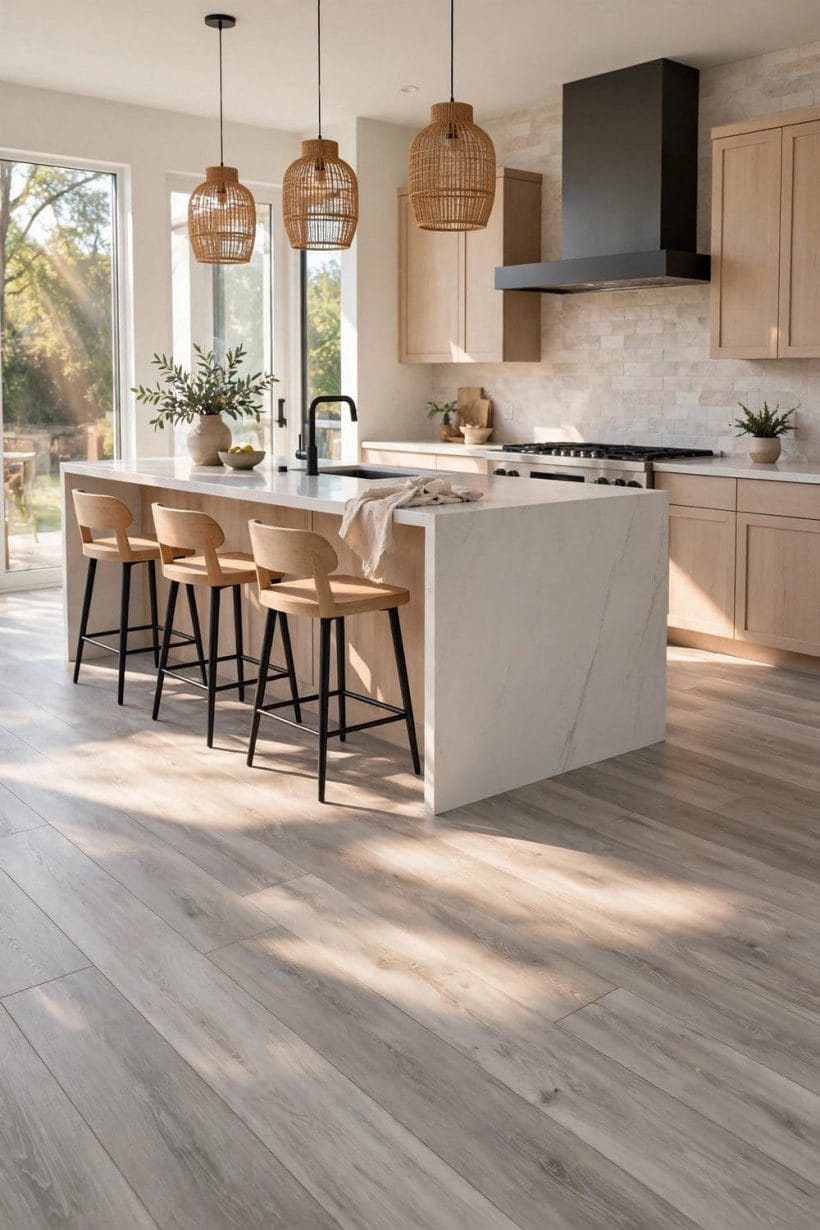
The premium market’s main fork is the core. Rigid-core planks — the dense, stone-composite family and its softer wood-composite cousins — hold their shape, hide minor subfloor unevenness better than thin flexible vinyl, and click together into a floating floor that feels solid underfoot. The denser stone-composite versions feel harder and cooler, closer to tile; the wood-composite versions trade a little of that rigidity for warmth and quiet. Neither is ‘better’ in the abstract — the room decides: a hard-traffic hall argues one way, a bedroom the other.
Traditional flexible luxury vinyl still exists at the premium end, mostly as glue-down planks, and it has its own virtues: the thinnest build-up, a seamless feel on a perfect subfloor, and individual planks that can be lifted and replaced. Its demand is honesty about the subfloor — flexible vinyl shows every ridge and hollow beneath it. The checking question for any range is therefore not which core the marketing prefers, but which core the room’s floor, traffic and underfoot expectations actually call for — and whether the range being considered is the strong version of its type, or merely the expensive one.
4. The Waterproof Question, Asked Properly
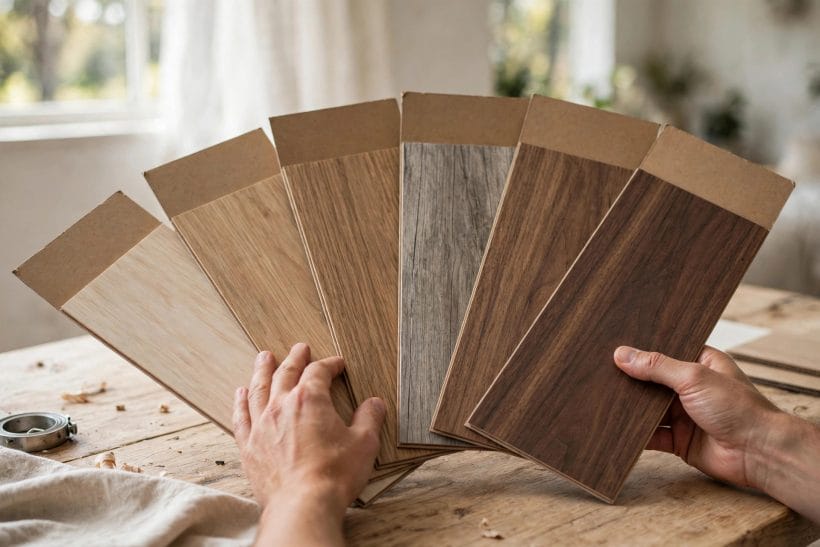
Waterproof is the word that sells this floor, and it is mostly true — of the plank. Vinyl does not swell, rot or stain the way timber does, and a spilled pan or a dog’s water bowl is a non-event on its surface. The checker’s refinement is to ask what the claim leaves out: water that finds the joints can reach the subfloor beneath a floating installation, and in a bathroom or a flood-prone kitchen it is the floor under the floor that suffers. Premium ranges earn their keep here with tighter click joints and bevels that shed water toward the mop rather than into the seam.
Ask, therefore, how the range handles water at its edges: whether the manufacturer sanctions wet-area installation, what it says about wet mopping and steam cleaners — many ranges forbid the steam cleaner outright, a clause worth reading before the first clean rather than after — and how spills at the room’s perimeter, where the expansion gap lives, are meant to be sealed. A range whose guidance answers these questions plainly is making a claim it expects to keep. One that repeats the single word ‘waterproof’ to every question is selling the word, not the floor.
In practice the waterproof question is a timetable: how long can water stand, and where does it go when it stands too long? A puddle on the plank’s face is a cloth’s work; water wicked into an unsealed perimeter is a subfloor’s slow problem. Kitchens forgive almost everything; bathrooms and utility rooms, where water is a daily resident rather than a visitor, are where the premium joint, the sealed edge and the honest fitting guide stop being selling points and start being the whole purchase. Choose the range whose answers were written for the wettest room it will serve, not the driest.
5. The Subfloor Decides: Preparation Before Planks
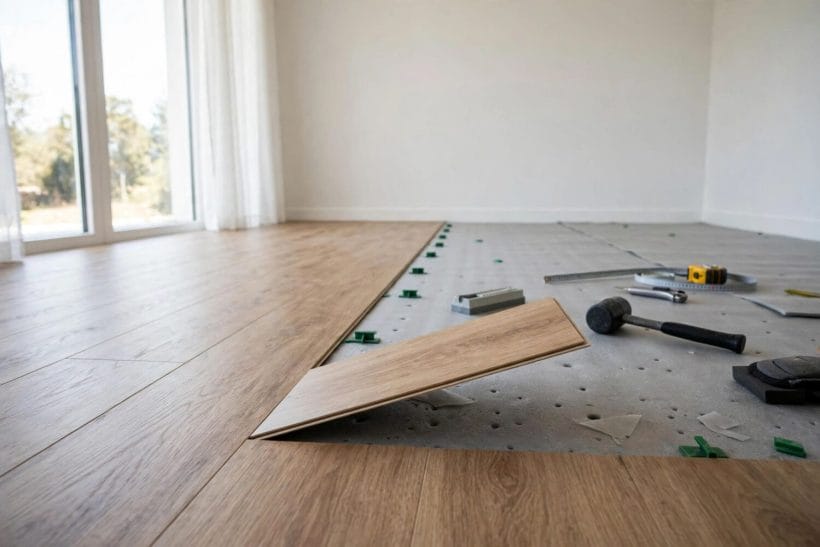
More premium vinyl floors disappoint through their subfloors than through their planks. Rigid cores are forgiving of texture but not of movement or serious unevenness: a hollow beneath a click-locked floor becomes a soft, creaking spot, and a ridge becomes a stressed joint that can eventually give. The checks here happen before any range is chosen — a long straightedge across the existing floor in several directions, an honest look at thresholds and door swings, and a decision about whether the room needs levelling compound, a new plywood skin, or simply cleaning down to sound material.
Moisture is the subfloor’s other verdict, especially over concrete: a floor that sweats damp upward will test any installation, and premium ranges specify moisture limits and the underlay or membrane they expect beneath. Existing floors matter too — vinyl over sound, well-fixed timber or tile is common practice; vinyl over carpet, cushion vinyl or a moving floor is not. The premium purchase includes, in effect, the preparation it demands, so a range whose fitting guide is specific about subfloor standards is telling the truth about what its warranty will later require.
Leave the subfloor tour at the thresholds. A new floor changes heights at every doorway it meets: doors may need easing, adjoining floors need a transition that neither trips nor pinches, and appliances that slide out for servicing need the room the new build-up leaves them. None of this is difficult, but all of it is cheaper decided at the checking stage than discovered on fitting day. The premium plank deserves a premium arrival — a room measured, a subfloor passed fit, and thresholds planned — and a buyer who has done these checks has already reviewed the installation half of the product.
6. Fitting Methods: Click, Loose-Lay and Glue

Three fitting families divide the premium market, and each carries checks of its own. Click-lock floating floors — the rigid-core default — need the expansion gap respected at every wall and fixed point, and joints that close with a clean, flush click; a sample pair that rocks, gaps or needs force is a profile to walk away from, however pretty the design. Fitting costs and patterns across the house are weighed in the flooring installation cost post; here the product-side check is the joint itself, tested in the hand before it is trusted across a room.
Loose-lay planks, heavier and grippy-backed, suit rooms where future access matters and go down fast over sound floors, but they ask for a truly flat base and perimeters secured as the maker directs. Glue-down remains the commercial veteran: the most stable, the best at single-plank repair, and the least forgiving of a poor subfloor or a rushed adhesive job. For the checker, the method is also a repairability question — floating floors lift from the nearest wall, glue-down planks lift individually, loose-lay lifts anywhere — and a household with dogs, children and time should choose the repair story it prefers before it needs it.
7. Reading the Box, Testing the Sample
The box tells the truth in small print: wear-layer class, core type, plank dimensions, the pattern-repeat count where stated, the rooms and conditions the warranty covers, and the fitting and cleaning instructions the warranty depends on. Read the exclusions with the same care as the promises — underfloor heating limits, sunlight and temperature ranges, the steam-cleaner clause — because a premium warranty is a contract, not a compliment. Comparing the material honestly against timber’s own case, set out in the hardwood flooring cost post, keeps the decision sane: vinyl is not fake wood to apologise for, but its ownership story is different, and the box is where that story is written.
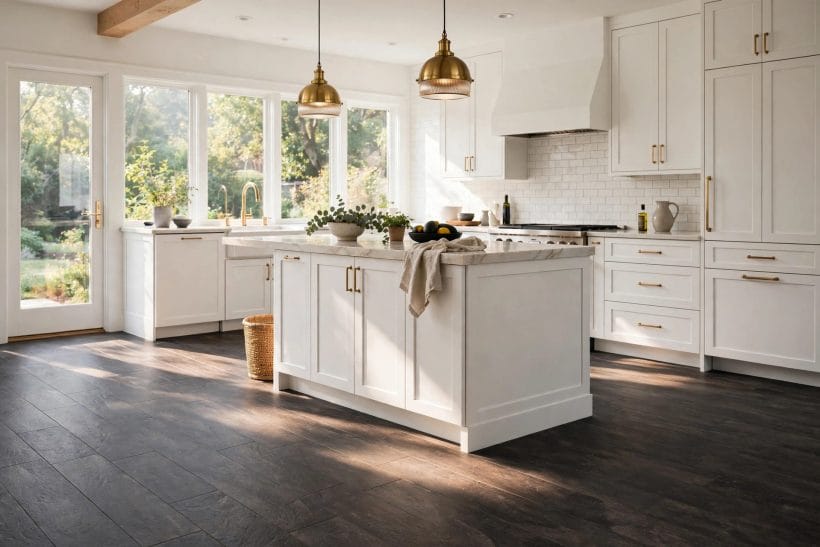
Then test the sample like a sceptic. Lay several planks’ worth in the room, not one square in the hand: colours shift between the showroom’s light and the room’s, as the light wood floor living room post shows for pale floors generally. Walk it in shoes and socks, drag a chair, drop the keys, leave a wet mug ring overnight. Check the bevel’s shadow line and how the joints read at glancing light. A sample that survives a week of domestic insult and still pleases the eye at breakfast has told the buyer more than any review star ever printed.
8. Sound, Warmth and Life Underfoot
A floor is lived on with ears and feet as much as eyes. Rigid vinyl’s reputation for a hollow, clicky note underfoot is earned by the thinnest installations and cured by the premium ones: an attached cork or foam backing, a sound subfloor and a full, flat fit keep the note low and solid. In flats and upstairs rooms the acoustic question doubles — the downstairs neighbour hears what the brochure never mentions — so check what the range claims for impact sound and what underlay the maker pairs with it, especially in small-space installations of the kind the tiny house flooring post works through, where every footfall is a roommate.
Warmth follows the core: stone-composite planks draw heat from a bare foot more readily than wood-composite or cork-backed ones, and underfloor heating — which most premium ranges accept within stated limits — flattens the difference entirely. Texture matters here too: the embossed grain that makes the design convincing also gives grip, and the checker should feel for the balance — enough texture to read as timber and hold a sock on a wet morning, not so much that the mop drags. These are showroom-testable qualities, all of them, in five unhurried minutes with a sample and a pair of socks.
Care belongs in this section too, because a floor’s underfoot life is maintained, not bought once. The premium wear layer asks little — sweeping, a damp mop, felt pads under furniture, a mat at the door that takes the grit before the floor does — but it asks it consistently, and the ranges differ in what they forbid: wax polishes, steam, certain solvents. A buyer who reads the care sheet before purchase knows whether the floor’s routine fits the household’s habits. The best premium floor is not the one with the longest promise; it is the one whose small daily asks will actually be done.
9. Mistakes and Misleading Claims: The Checker’s Warnings

The commonest buying mistake is shopping by the photograph: a design layer that flatters in the render can repeat obviously across a real floor, and the only defence is counting the repeat across a laid sample. Close behind it is price-as-proof — assuming the dearest range in the shop is the most durable, when the wear-layer class and the core, both checkable, are the durability. And the third is inheriting the previous floor’s problems: laying a premium plank over an unlevel, damp or moving subfloor, then blaming the plank for the subfloor’s behaviour.
Claims deserve the same scepticism, kindly applied. ‘Waterproof’ that dissolves at the joints, ‘lifetime’ warranties that exclude the room the floor is bought for, ‘commercial grade’ attached to a wear layer that is merely domestic — each is legal, each is checkable, and each is answered by the same habit: ask for the specification, the fitting guide and the warranty text, and read them before the deposit rather than after the dispute. A genuinely premium range survives this reading with its dignity intact; that survival, not its reviews, is the review.
10. The Pre-Buy Checklist and What Premium Buys
Before money moves, the checklist runs in order. Construction: wear-layer class stated and suited to the room’s traffic; core chosen for the room, not the advertisement; design repeat counted on a laid sample. Claims: waterproof read at the joints and the perimeter; warranty exclusions read, including heat, sunlight and cleaning clauses. Ground: subfloor checked for level, movement and moisture, with preparation settled before the fitting date. Ownership: fitting method chosen for its repair story; sound and warmth tested in socks; the colour lived with for days in the room’s own light. A range that passes all four groups has been reviewed in the only way that protects the buyer — in person, on paper, in the room.
What the premium end buys, when it is genuine, is not a name but a margin: a thicker shield against the years, a flatter and quieter floor, joints that stay closed, a design that survives being seen a thousand times. Set against the alternatives honestly — the relay-and-repair economics in the laminate flooring cost post make the comparison for the neighbouring material — the decision becomes a household one about time, traffic and taste. Check the plank, not the promise, and the floor will do the rest.
Final Considerations
Every premium vinyl range wants to be believed; the good ones also want to be checked, and they build their boxes, samples and warranties accordingly. The buyer’s power in this market is not expertise — it is the routine: layers, claims, subfloor, sample, paper.
Run the routine on any range, at any price, and the floor that arrives will be the floor that was promised. That is all a review can honestly do — the rest is walking on it.



0 Comments