

Light wood floors are the quiet revolution of the modern living room: they lift dark houses, calm busy ones and make small rooms read larger, all while asking almost nothing of the walls. But a pale floor is not a blank page — it has a tone, a grain and a temperament, and the rooms that succeed on it are the ones furnished in conversation with the boards rather than in ignorance of them.
This collection treats the floor as the central entity: reading its tone and finish, laying out seating around its pale field, choosing sofas and colours at its temperature, mixing timbers without quarrels, and keeping the surface bright under real family life. Its sibling collections in this living-room cluster are linked where their methods transfer.
1. Light Wood Floor Living Room Ideas at a Glance
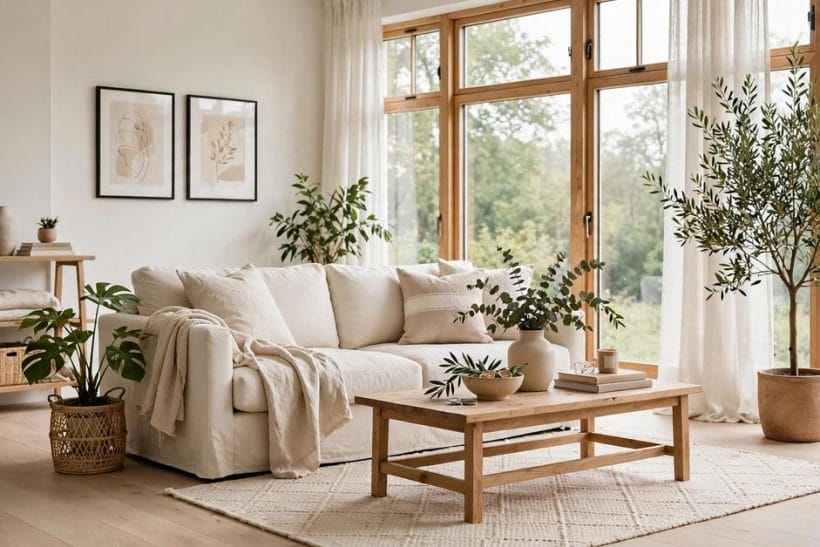
The light wood floor living room is the floor-led member of the living room ideas pillar in this collection: pale boards — oak, ash or their honest imitations — set the room’s temperature, and every layout, fabric and timber is ranked beneath them. Its attributes are tone (warm honey to cool ash), surface (grain, plank width, sheen), light behaviour (reflection, glare, fading) and care (repairable finishes, grit discipline). Settle those four and the seventy-five choices below arrange themselves.
| Question | Short answer |
|---|---|
| What sofa colour suits light wood? | Deep tones anchor it; pale tones continue it — texture decides in tonal rooms. |
| Can I mix other woods with it? | Yes — match temperature, not species, and repeat one darker timber twice. |
| Do light floors work in dark rooms? | They are the best cure for dark rooms — they bounce what light exists, twice. |
| Are pale floors hard to keep? | They show crumbs but hide dust; felt pads, door mats and dry mopping carry the day. |
| What wall colours work? | Warm whites, sage, warm greys — or one deep end wall for drama. |
| Wide or narrow planks? | Wide planks calm large rooms; narrow boards and parquet suit patterned, traditional ones. |
2. Reading Light Wood: Tones, Grain and Finishes
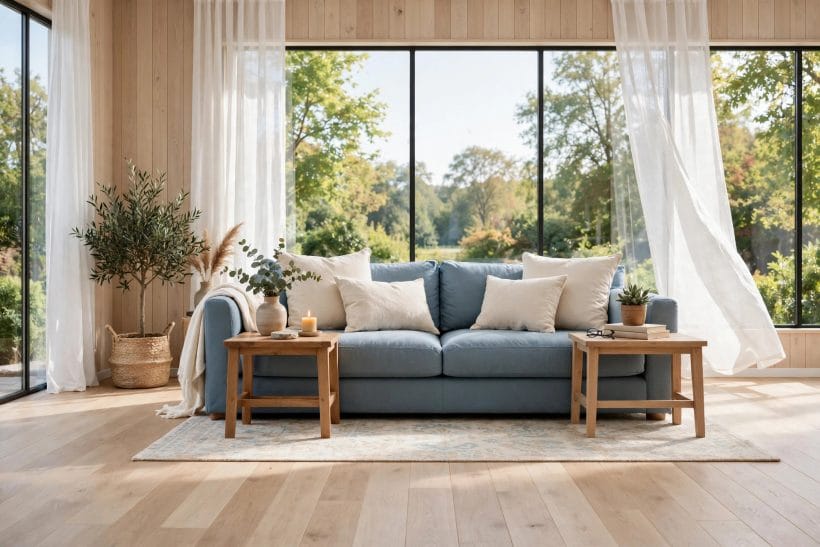
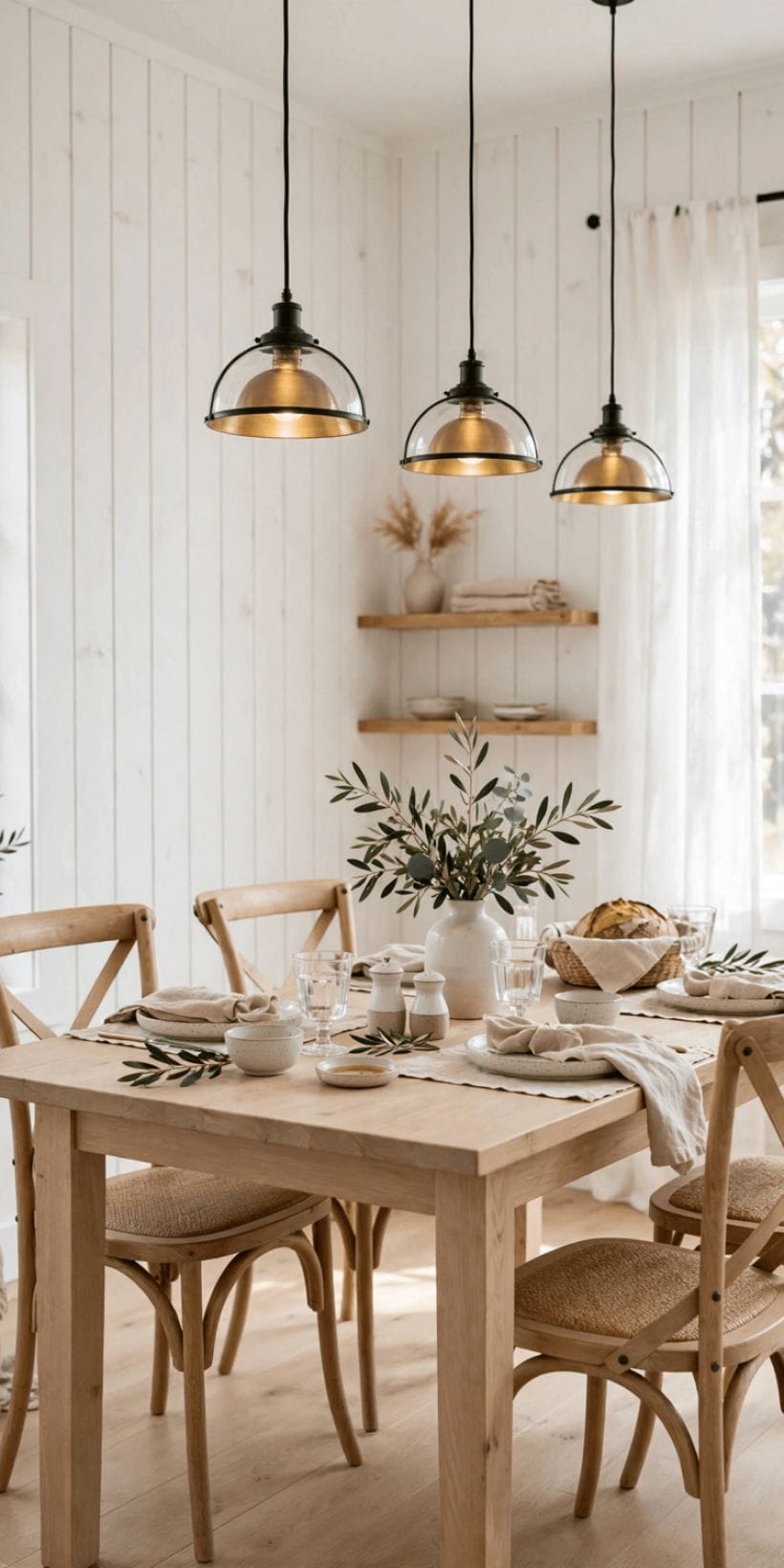
A light wood floor is not a neutral backdrop; it is the room’s largest colour decision, with a tone, a grain and a sheen of its own. Everything placed on it is judged against it. This section reads the floor first — what its pale boards are actually doing — before a single sofa is chosen.
1. Know your tone: honey, ash or white-washed
Light woods divide by temperature. Honey and natural oak tones run warm and golden; ash and white-washed finishes run cool and grey-leaning. Hold a board against the room’s daylight and the lean declares itself.
2. Grain is pattern, whether you planned it or not
A pale floor with strong grain is a patterned floor, and it will compete with rugs and upholstery prints. Quiet, straight grain sits behind anything; lively, knotty grain asks the rest of the room to calm down.
3. Plank width changes the room’s scale
Wide planks make a living room feel calmer and larger, because the eye crosses fewer joints; narrow boards and parquet patterns make it busier and more traditional.
4. Sheen decides how the light behaves
A matte finish drinks light and feels modern and soft; a satin finish returns a gentle glow; gloss on pale wood can glare and show every scratch.
5. The floor is lighter than the sample
One board in the hand looks deeper than a roomful under daylight, because the eye averages the whole field. A floor that should read pale needs a sample that looks almost too pale in the shop.
6. Direction: run the boards toward the light
Boards laid toward the main window draw the eye through the room and make it feel longer; laid across, they widen it. Herringbone and chevron make direction a pattern instead.
7. Stairs, thresholds and the adjoining rooms
A living-room floor rarely ends at the living room. Where it meets hall tiles, a kitchen floor or a staircase, the tones either shake hands or argue at the doorway.
8. Undertones in the wood you already own
Existing timber — beams, a staircase, old doors — votes in the new floor’s election. A warm old beam over a cool ash floor is the classic living-room quarrel.
9. Real wood, laminate and luxury vinyl read differently
Solid and engineered boards carry grain with depth; good laminates and vinyls imitate the photograph of wood, which repeats if you look for it.
10. A finish you can repair is a finish you can live with
Pale floors show the room’s life: heel marks, dog claws, the sofa’s shuffle. Finishes that can be spot-repaired or re-oiled in patches forgive that life; hard lacquers demand whole-room refinishing.
11. Decide the floor’s role before anything else
Settle the ambition in one sentence: is the pale floor the room’s quiet foundation, or its featured surface? Foundations take calm furniture in deeper tones; featured floors take restraint everywhere else.
3. Layouts Around a Pale Floor
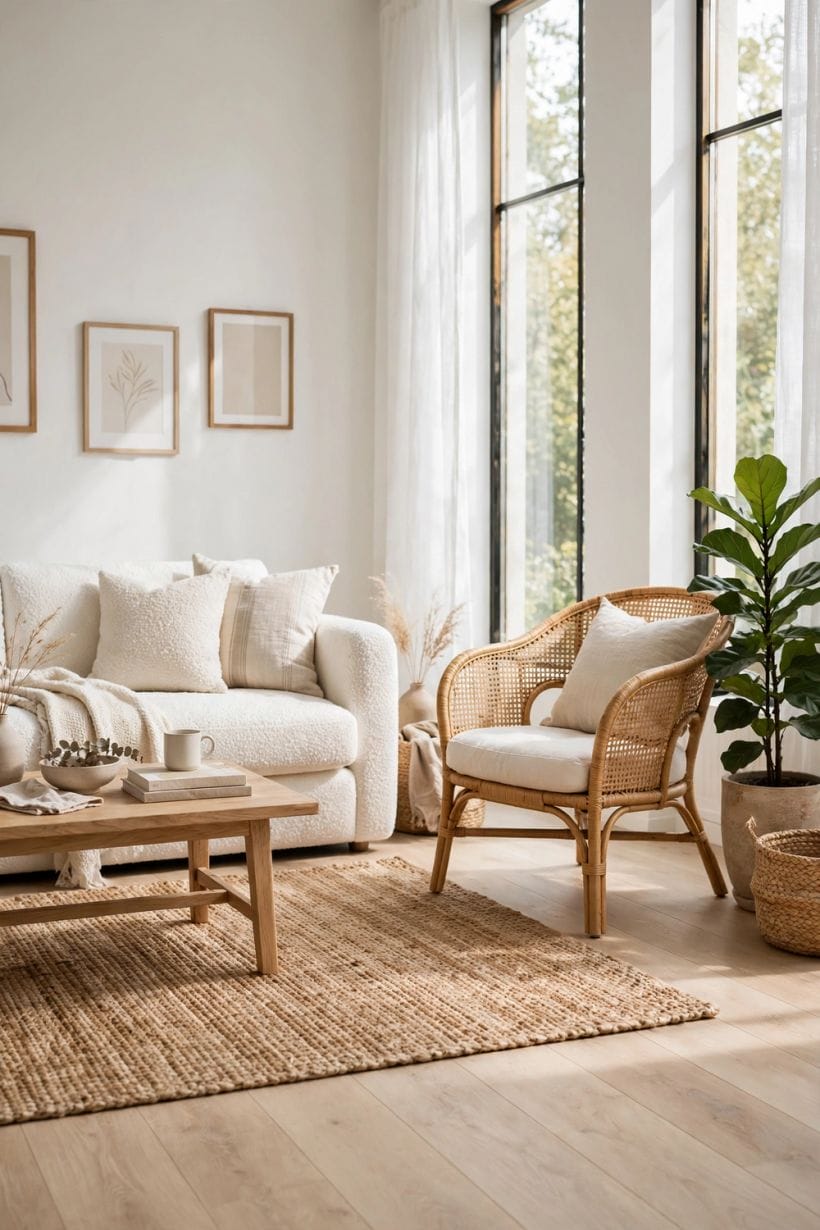
A light floor changes how furniture should be arranged: it shows every footprint of the layout, exposes the gaps between pieces and reflects light up into the room’s middle. These layouts use the pale field deliberately — anchoring it, zoning it and leaving it room to shine.
12. Anchor the seating on one large rug
The classic pale-floor layout floats the seating group on a single generous rug, sofa feet and chair feet all on it.
13. Float the sofa off the wall
Pale floors reward floating furniture: a sofa pulled forward, with a console behind it, stops the room’s edges looking empty and lets the boards run visibly beneath the group.
14. Zone a long room with two floor centres
A long living room on pale boards can hold two centres — a seating end and a reading or desk end — each with its own rug or mat, the boards running between them like a street.
15. Keep the middle open in a small room
In a compact room, push the furniture to the edges and let the pale floor own the middle: the unobstructed field is what makes the room feel large.
16. Symmetry suits the pale ground
Matched chairs, paired lamps and a centred fireplace compose beautifully on light wood, because the floor’s calm reads as ceremony. Symmetry is also the easiest layout to keep tidy, which matters on a floor that displays disorder so honestly.
17. Angle one piece, keep the rest honest
A single angled chair or a chaise turned toward the window gives a pale-floor room its life, while the remaining furniture keeps the room’s axes. Angling everything turns the layout into a showroom accident; angling nothing can feel like a waiting room.
18. Use the window wall as the composition’s head
Seat the room facing its best asset: light.
19. Low furniture keeps the floor visible
Every tall, heavy piece hides the floor it stands on. Low sofas, open-based chairs and leggy tables keep the pale field visible at sitting eye level, which is the whole point of paying for beautiful boards.
20. Traffic lanes in bare boards
Leave the room’s walking routes — door to door, door to sofa — in bare wood, rugs only under the sitting zones. The lanes gleam, the routes read clearly, and the rugs last longer away from the traffic.
21. A fireplace end and a garden end
Rooms with a fireplace at one end and garden doors at the other have two seasons. Arrange the deep chairs toward the fire for winter and keep lighter pieces near the glass for summer, letting the pale floor unify the two moods.
22. Leave a margin of floor at the walls
Pull every piece a hand’s breadth off the skirting and let a clean margin of pale board run around the room.
4. Sofas and Seating on Light Wood
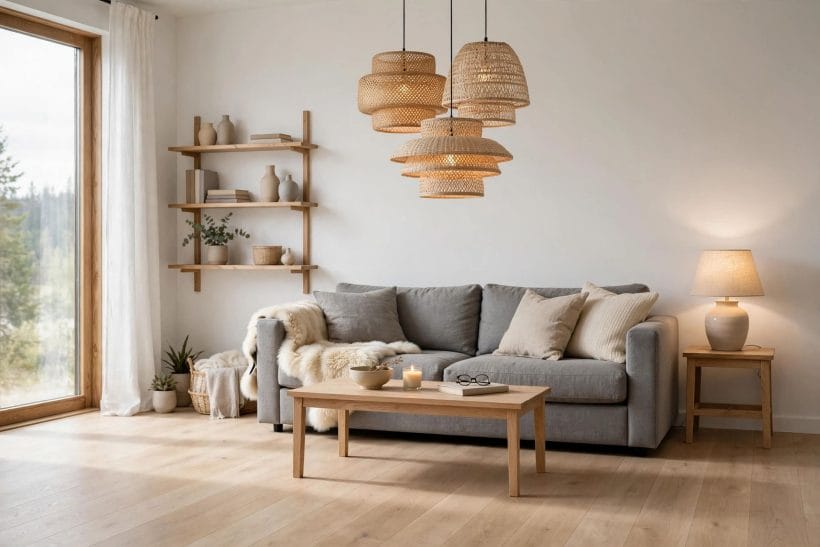
The sofa is the largest object the floor must carry, and the pairing of upholstery tone with pale timber is where these rooms are won or lost. Deep fabric grounds the floor; pale fabric continues it. Both work — in different rooms, for different reasons.
23. Deep upholstery grounds a pale floor
A charcoal, navy, forest or plum sofa on light boards gives the room its anchor and its contrast in one piece; the floor reads lighter and the sofa reads richer by the exchange.
24. The tonal room: pale sofa, pale floor
A cream or oatmeal sofa on light wood builds the calm, tonal living room — serene, spacious and unforgiving of clutter. It works when texture does the talking: boucle against linen, wool against timber grain. The white living room ideas collection works this same tonal register hardest, and its discipline about texture is worth borrowing wholesale.
25. Leather warms the cool floors
Aged tan and cognac leather are light wood’s oldest friends: the warm hide bridges honey-toned boards and almost any wall colour, and it forgives family life better than pale fabric. On cool, ash-toned floors, leather is often the single piece that stops the room feeling chilly.
26. Two different chairs beat a matched suite
A sofa plus two unrelated armchairs — one fabric, one leather or rattan — gives a pale-floor room its collected, lived-in ease. Suites can look showroom-flat on a calm floor.
27. Legs matter: show the floor beneath
Sofas and chairs on visible legs — timber or metal — let the boards run under the seating and keep the room’s floor visible at the edges of every piece.
28. Timber legs at the floor’s temperature
Wooden furniture legs should sit at the floor’s own temperature: warm oak legs on honey floors, cooler stained legs on ash.
29. Cushions carry the room’s accent colour
On a neutral sofa over pale boards, cushions are the room’s colour budget: two or three in one accent, repeated once elsewhere.
30. A chaise or daybed along the window
A low chaise stretched along the window wall keeps the view unblocked, catches the light the floor is reflecting, and gives the room its relaxed diagonal.
31. Armchairs in a darker weave for the reading corner
One deep-toned reading chair in the corner — with its lamp and side table — balances a pale scheme and claims the room’s quiet spot.
32. Scale the seating to the boards
Wide-plank floors take oversized, low seating gracefully; narrow boards and parquet ask for slimmer profiles and more legs in view.
33. Keep one piece of black or iron for definition
A single black element — a floor lamp’s stem, a picture frame, a side table — draws the eye’s baseline in a pale room and stops the scheme floating away.
5. Colour Above a Light Floor: Walls and Textiles
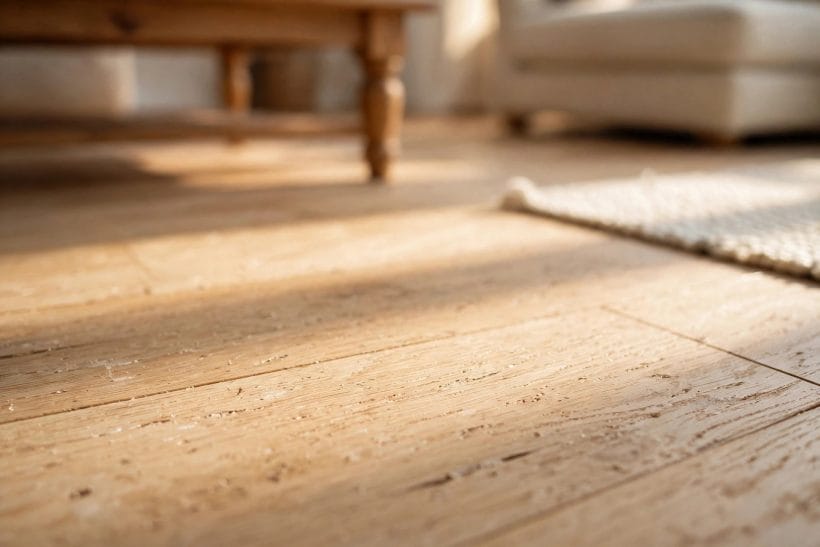
A pale floor reflects colour from everything above it and casts its own warmth upward in return. Walls, curtains and textiles therefore behave differently here than on dark boards — generally softer, always more visible. These are the pairings that work, including the neighbouring living-room collections this post links to.
34. White walls, and which white
On warm honey floors, a soft warm white keeps the room cohesive; on cool ash floors, a cleaner white holds the crispness.
35. Sage and soft greens for the calm scheme
Green is light wood’s natural companion — leaf to timber — and sage or eucalyptus walls over pale boards make the restful, garden-adjacent living room. It is also the pairing underpinning the coastal living room ideas in this cluster, where the same floor carries a breezier version of the scheme with white and natural fibre.
36. Warm greys keep the modern edge
A warm grey wall over light oak is the contemporary default for good reason: it cools the room’s mood without fighting the floor’s warmth, and it takes any accent colour gracefully.
37. One coloured wall, floor kept calm
A single deep wall — ink blue, forest, aubergine — at the room’s end gives a pale-floor room its drama while the other walls stay light. The boards carry the eye to the colour and back.
38. Curtains at the floor’s tone or the wall’s, not between
Curtains should belong to a camp: match them toward the wall colour for calm, or toward a deeper textile tone for framing — but avoid the in-between shade that matches neither and argues with both.
39. The transitional lesson: ranked neutrals
The transitional living room ideas collection builds its whole method on ranked neutrals over warm floors — cream, taupe, greige in descending volume — and light wood is that method’s favourite ground. Borrowing its ranking discipline is the fastest route to a pale-floor room that feels designed rather than merely pale.
40. Rugs decide the room’s colour temperature
Over pale boards the rug is the scheme’s thermostat: a warm rust or terracotta rug heats the room; a blue-grey one cools it; a natural jute one leaves the floor’s own temperature in charge.
41. Pattern belongs in one layer only
Pale floors already carry grain; add a patterned rug and the upholstery must go plain, or patterned cushions and the rug must calm down. One patterned layer per sightline is the rule that keeps these rooms serene.
42. Black-and-white accents sharpen gently
A graphic black-and-white cushion, a striped throw or a monochrome print gives a pale scheme its punctuation without adding a competing colour. Used sparingly it reads as editing; the room stays light while gaining the definition that keeps serenity from sliding into blandness.
43. Plants are a colour too
Green foliage over light wood is the easiest colour decision in the room: it always works, it moves, and it costs little.
44. Evening colour: plan for lamplight’s warmth
Lamplight warms every colour it touches, and pale floors bounce that warmth around the room generously.
6. Tables, Storage and Mixing Timbers
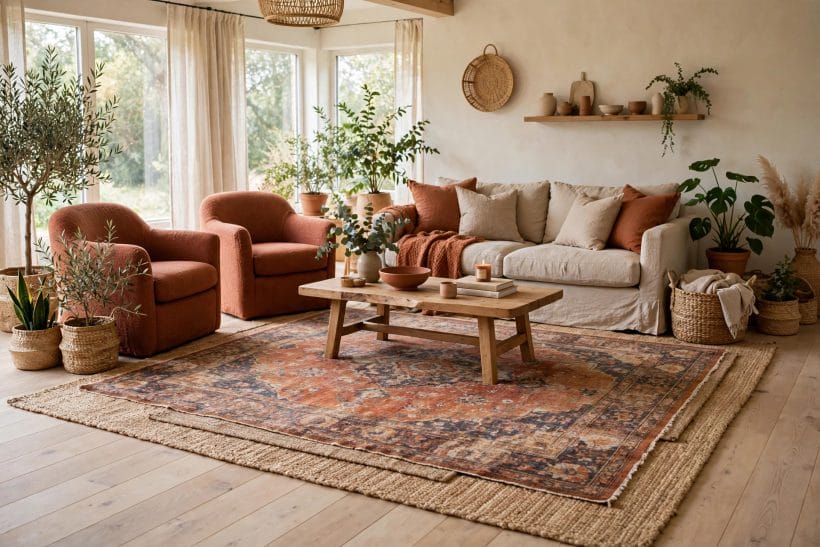
The anxiety of the light-wood room is timber mixing: the floor is one wood, the furniture is several others, and the fear is a timber-yard effect. The fear is mostly unfounded — mixed timbers are how real rooms look — provided the mixing follows a couple of simple rankings.
45. Match the temperature, not the species
Furniture timber does not need to be the floor’s species; it needs to be the floor’s temperature. Warm oak tables sit happily on warm ash boards even in different shades, while one cool grey-stained piece can quarrel with a honey floor all by itself.
46. One darker timber as the room’s anchor wood
Give the room a second, deeper timber — walnut is the classic — and repeat it at least twice: coffee table and bookcase, or sideboard and picture frames.
47. Painted furniture breaks the timber count
A painted sideboard or cabinet — cream, sage, ink — removes one timber from the negotiation entirely and lets the remaining woods relax.
48. Coffee tables: glass and stone keep the floor visible
A glass or pale stone coffee table lets the boards show through the room’s centre, where a heavy timber table would park a dark rectangle.
49. Open shelving displays better on pale floors
Bookcases and open shelves look lighter and less looming when the floor beneath them is pale, because the reflected light lifts their undersides.
50. Side tables at each seat, legs in the air
A small table beside every seat — for the cup, the book, the lamp — is the living room’s basic courtesy, and leggy metal or timber designs keep the floor’s field unbroken around the seating. Trays on ottomans flex for guests; permanent seats deserve permanent tables.
51. The media unit: low, long and calm
Television furniture should be the room’s quietest piece: low, long, handleless if possible, in the floor’s temperature or a painted neutral. The screen brings its own black rectangle; the unit’s job is to not add a second visual event.
52. Rattan, cane and woven pieces bridge the timbers
Woven natural materials sit between wood tones and mediate them: a rattan chair or cane-fronted cabinet gives warm and cool timbers a common neighbour. They also carry the garden into the room’s palette, which is why pale-floor schemes reach for them so often.
53. Desks in the living room: keep them leggy and light
Where the living room holds a work corner, a slim desk on legs with a light top keeps the floor reading through beneath it, and a chair that tucks fully under returns the corner to the room at day’s end.
54. Inherited dark furniture: place it with intent
A heavy dark bookcase or dresser from another life can live on pale boards if it is placed as the room’s declared anchor — centred, styled, lit — rather than shoved at a wall.
55. Storage that closes keeps the floor’s calm
Pale floors reflect whatever stands on them, including clutter. Closed storage — cupboards, lidded boxes, drawers — keeps the room’s visual floor as calm as its wooden one.
7. Light and Windows Over Pale Boards
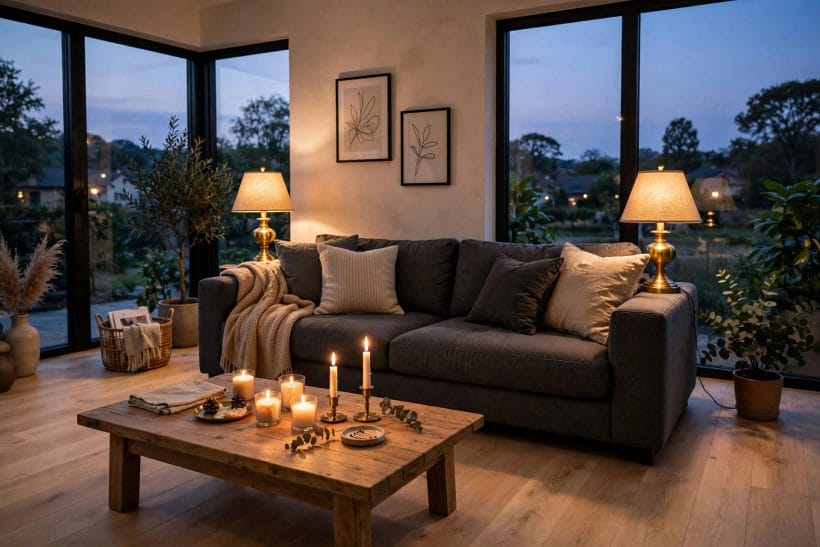
A light wood floor is a lighting instrument: it bounces daylight and lamplight upward, softening shadows and lifting the whole room. Managing that gift — glare at noon, glow at night, fading at the window line — is the difference between a bright room and a bleached one.
56. Expect the room to feel a size larger
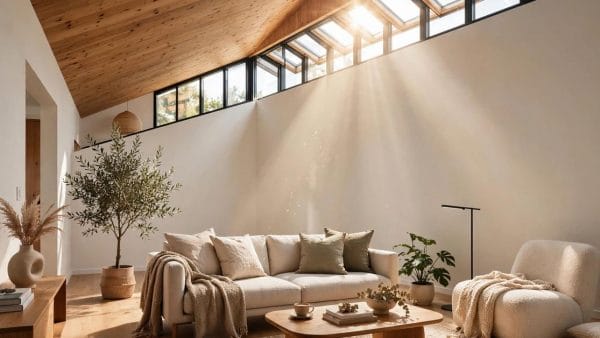
Reflected light from pale boards reaches the ceiling and the far wall, erasing the dark corners where rooms feel small. This is the floor’s chief gift and the reason it suits north-facing living rooms especially: the boards harvest what light there is and spend it twice.
57. Manage glare with sheers, not darkness
Bright sun on pale boards can glare at the seating eye line. Sheer curtains or a voile blind soften the strike without surrendering the light — the goal is diffusion, not shade.
58. Fading is real: rotate and protect
Sunlight lightens some timbers and yellows others, and the stripe under a rug’s edge tells the story years later.
59. Lamplight: low sources flatter pale wood
Table and floor lamps bounce warm light off pale boards and back into faces, which is the most flattering arrangement a living room can have.
60. The modern scheme’s light discipline
The modern living room ideas collection pairs pale floors with strict, layered lighting — one ambient source, task light at the reading seats, accent light on the artwork — and it is the template to copy here. Light wood returns every layer visibly, so the layers must be planned rather than accidental.
61. Window walls: pale floors carry the view
In rooms blessed with garden glass, the pale floor acts as a fore-ground to the view, reflecting the garden’s green upward. Keep the window wall’s furniture low and the boards near the glass uncluttered, and indoors and outdoors read as one composition at every hour.
62. Candles and firelight on pale timber
Flame light is where light wood performs best: the boards catch the flicker and the room glows from the floor up.
63. Mirrors double the floor’s work
A mirror placed to catch window light bounces it onto the boards and back again, doubling the floor’s harvest. Opposite or adjacent to the window are the working positions.
64. Curtain colour under strong reflection
Pale boards bounce light up into curtain hems, slightly washing the fabric’s lower half in daylight.
65. Keep the ceiling pale to complete the circuit
Light travels floor to ceiling and back in these rooms; a pale ceiling completes the circuit and keeps the bounce even. A dark ceiling over pale boards can feel like a lid.
8. Care, Wear and Keeping It Light
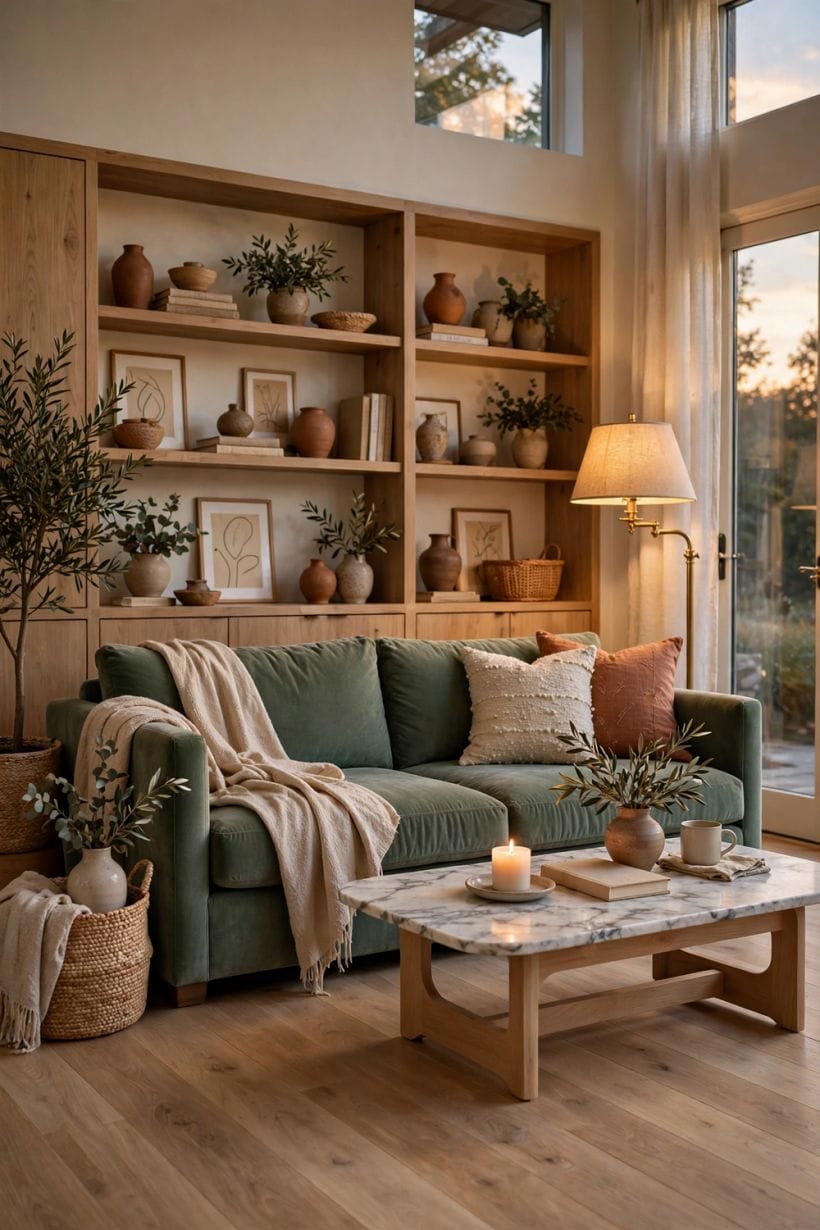
The honest objection to light wood is maintenance: pale boards show the crumbs, the paw prints and the dragged chair leg that dark floors forgive. The objection is manageable — and the counter-truth is that pale floors hide dust and hair better than dark ones. These are the working rules.
66. The daily five minutes: dry before wet
Pale floors are kept by frequency, not effort: a soft broom or dry mop most days lifts the grit that scratches finishes and the dust that greys them.
67. Felt pads under everything, checked yearly
Chair legs, sofa feet and table bases all get felt pads, and the pads get replaced when they flatten or collect grit.
68. A mat at the door the room actually uses
Grit enters on shoes, so the living room’s defence stands at its real entrance — often the garden door, not the hall.
69. Rugs where life happens, bare where it passes
Put rugs under the seating and the play zone, where wear, spills and dropped objects concentrate; keep traffic lanes bare and gleaming.
70. Dogs, children and the honest finish
Households with dogs and small children should choose the finish for the life, not the photograph: textured, matte, repairable surfaces show claw marks and toy traffic least and forgive local repairs invisibly.
71. Sun management is care, too
The window stripe of faded or yellowed boards is the pale floor’s commonest injury, and it is prevented by sheers at the bright hours and by rotating rugs and furniture so the sun’s work is shared across the field.
72. Spills: speed over products
On pale timber a spill’s damage is mostly time: wine, coffee and pet accidents lifted at once rarely mark; left overnight, they find the grain.
73. Recoating rhythms, stated generally
Oil and hardwax finishes welcome local renewal — a worn patch at the sofa’s front edge can be refreshed without touching the rest — while lacquered floors eventually ask for a whole-room sand and seal.
74. Embrace the patina
A lived-on pale floor mellows: traffic lanes soften, the sun’s zones warm, the boards gather the house’s history in their tone.
75. The entrance test before you commit
Before choosing pale boards for a house with a muddy garden, a gravel drive or a dog with strong opinions, run the entrance honestly: where will the dirt land, and who will lift it?
9. Checks and Mistakes: Before the First Purchase or the First Fitting
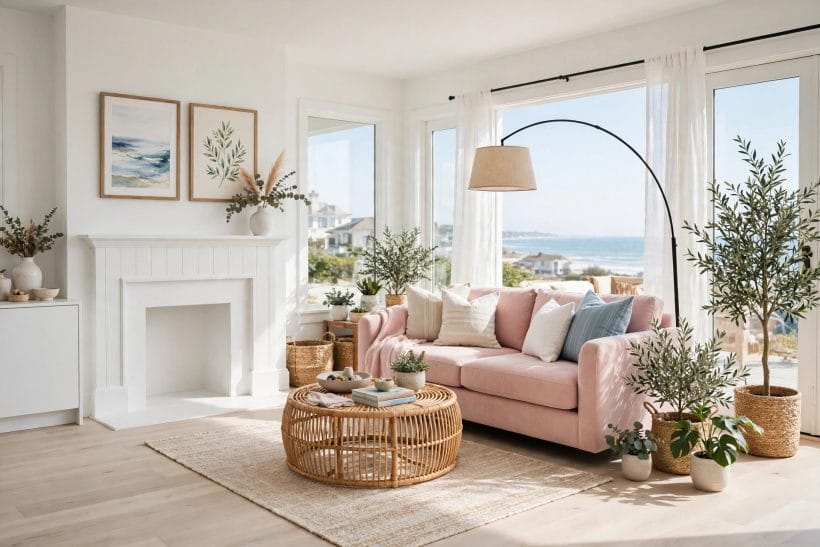
Audit the room from the doorway at noon and again by lamplight: is the floor clearly the foundation, with one sofa tone anchoring it and one accent colour repeated? Are the timber temperatures at peace from ankle height upward — because that is where a pale-floor room is actually judged, in the side-by-side comparison at the skirting line.
Test the big commitments in place: boards laid out in the room’s own light before ordering, wall paint judged at floor level, the sofa fabric held against both. Pale schemes are unforgiving of shop-light decisions, because the floor will re-light every choice once it is home.
Check the practicalities: felt pads on every foot, a mat at the door the room really uses, sheers where the sun strikes, and a finish whose repair rhythm the household has actually asked about. Light wood forgives a lived-in house; it does not forgive an unasked question.
10. Costs and Pulling It Together
The budget truth of the pale floor is that it spends its money once — on the boards and their honest finish — and then makes everything above it look more expensive: plain sofas read as designed, inherited furniture reads as curated, and daylight itself seems to have been upgraded. Protect that investment with the care rules above rather than with anxiety.
The wider floor-to-ceiling field is gathered under the home design ideas hub, where this post’s living-room siblings — white, transitional, coastal and modern — work the same rooms in their own registers. A house that chooses its floors room by room but its temperatures as one family feels designed at the level guests actually experience.
Final Considerations
A light wood floor asks for one thing above all: to be treated as a participant. Give it sofas at its temperature, timbers that respect its tone, light that it can return with interest, and care that takes five honest minutes a day. In exchange it gives the living room its brightness, its calm and its sense of space — every day, in every season, without being asked twice.
Start with the floor’s own reading — tone, grain, sheen, direction — and let each furnishing decision answer to it in turn. The rooms in this collection that work best are not the ones with the most beautiful boards, but the ones where nothing above the boards is arguing with them.

0 Comments