
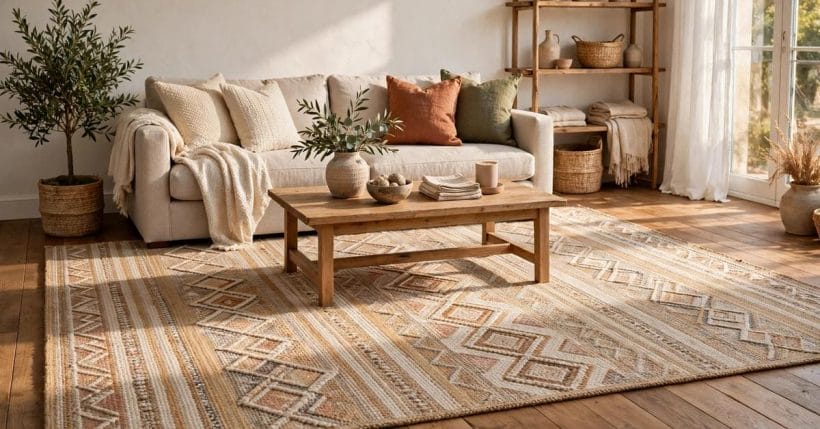
A rug can pull a room together or quietly fight it. The difference is rarely taste — it is fit, fibre and the few checks made before the rug comes home. A rug bought for its pattern alone often ends up too small, too slippery or too hard to keep clean, and the room never settles around it. This guide works through the checks that matter, in the order that saves the most regret: the room first, the size second, the material third, and the buying decision last.
The checks below suit any rug, from a flatweave runner to a deep-pile lounge rug, and any room, from a compact sitting room to an open-plan living space. Nothing here names a seller or a maker, and nothing promises a price or a policy — those change constantly and can only be checked at the moment of buying. What does not change is the rug itself: its size against your furniture, its fibre against your traffic, and its care against your household.
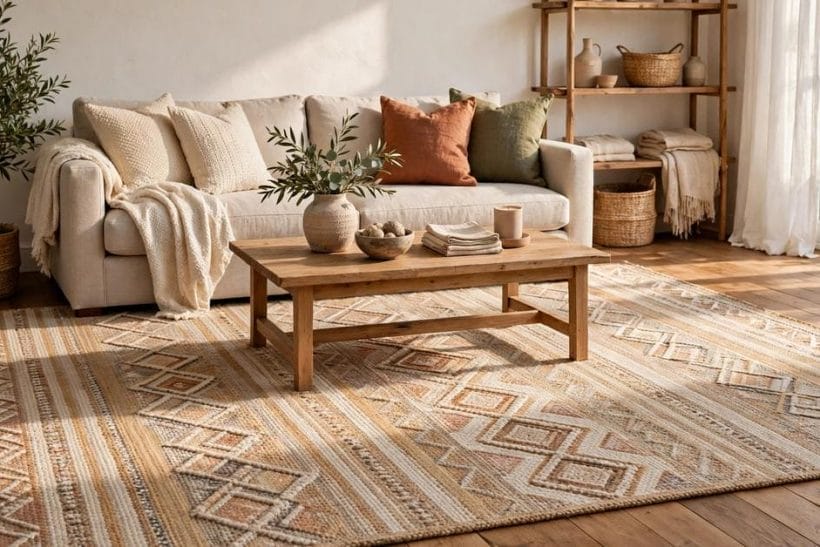
1. Start With the Room, Not the Rug
Begin by standing in the room and naming what the rug has to do. Is it warming a seating group, softening a dining space, or marking a walkway? Each job points to a different rug. A seating-group rug anchors furniture and softens sound; a dining rug must sit calmly under chairs that slide in and out; a hallway runner must stay put under daily footfall. When the job is clear, the size and material choices that follow become straightforward.
Look at the room’s fixed points before anything else: doorways the rug must not block, heating vents it must not cover, and the swing of doors that pass over it. A rug that catches a door or smothers a vent is a daily irritation, however beautiful its pattern. Note the light too — a rug seen mostly in lamplight reads darker than the same rug in daylight, so judge colour in the room’s own light wherever possible.
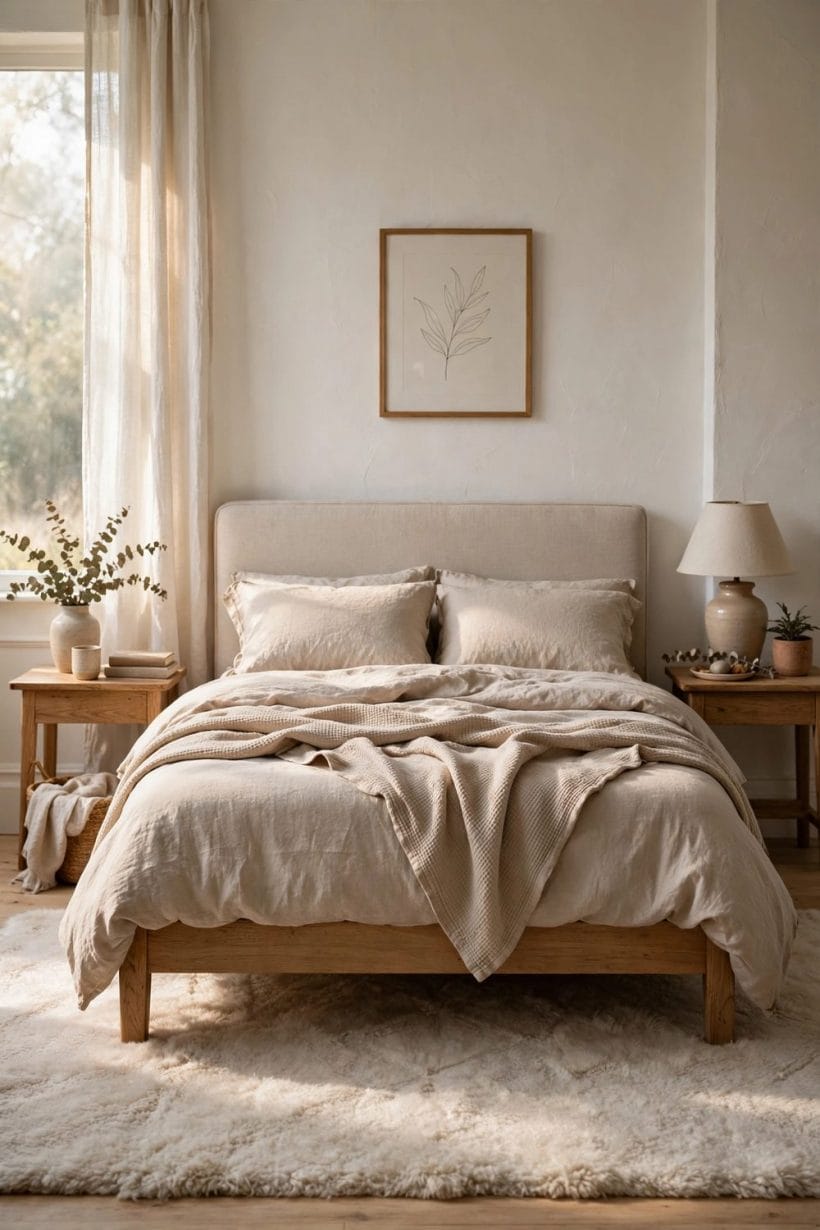
Finally, consider what already lives in the room. A patterned sofa pairs best with a quieter rug, while a plain room can carry a bolder pattern. The rug should relate to something already present — a cushion colour, a timber tone, a wall shade — so it reads as part of the room rather than an afterthought. Our interior design ideas explore how rooms hold together in the same way.
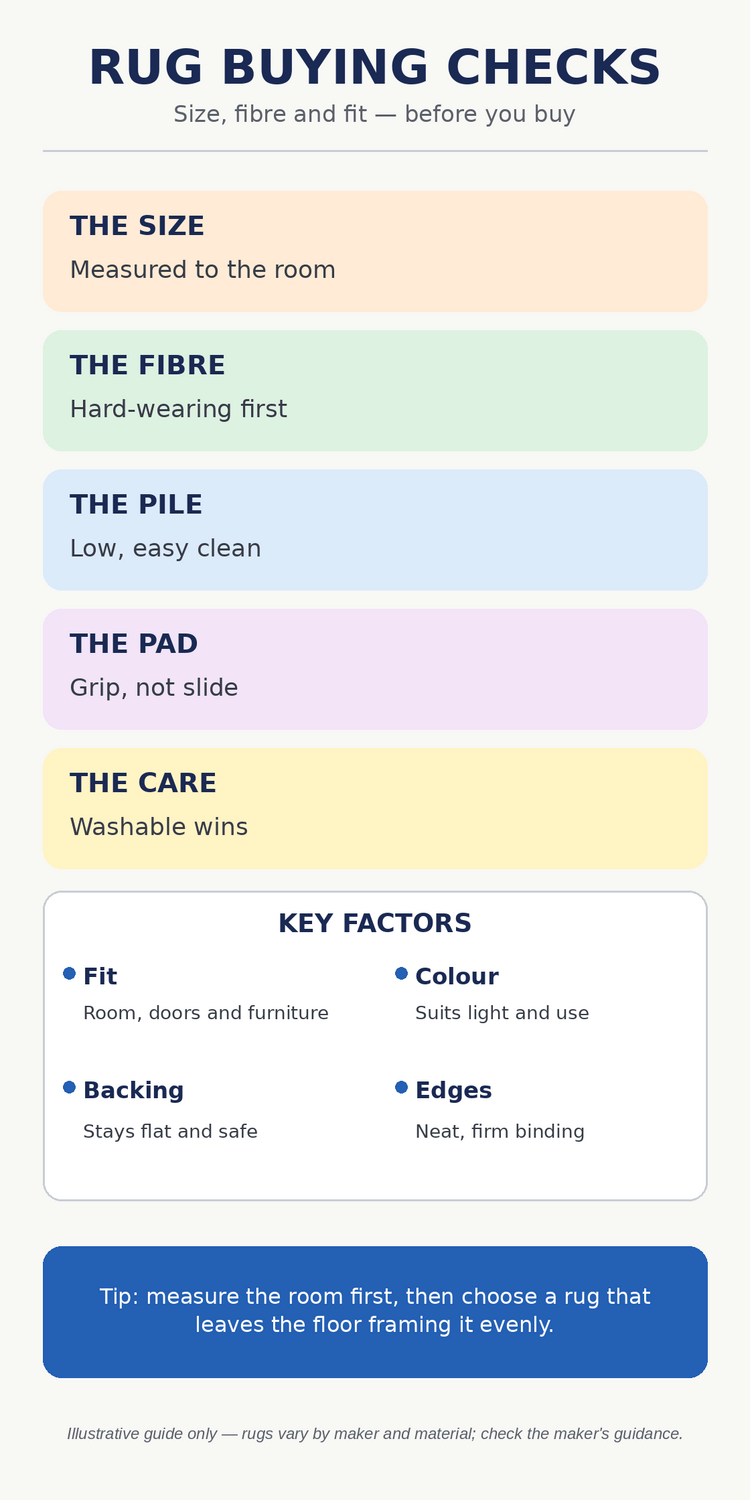
2. Size: Let the Furniture Set the Edges
Size is the single most common rug regret, and it is almost always the same mistake: a rug too small for its furniture. A living-room rug should sit under the front legs of the sofa and chairs at least, so the seating group reads as one arrangement rather than furniture perched on an island. When the rug is too small, the room looks fragmented and the rug itself looks lost.
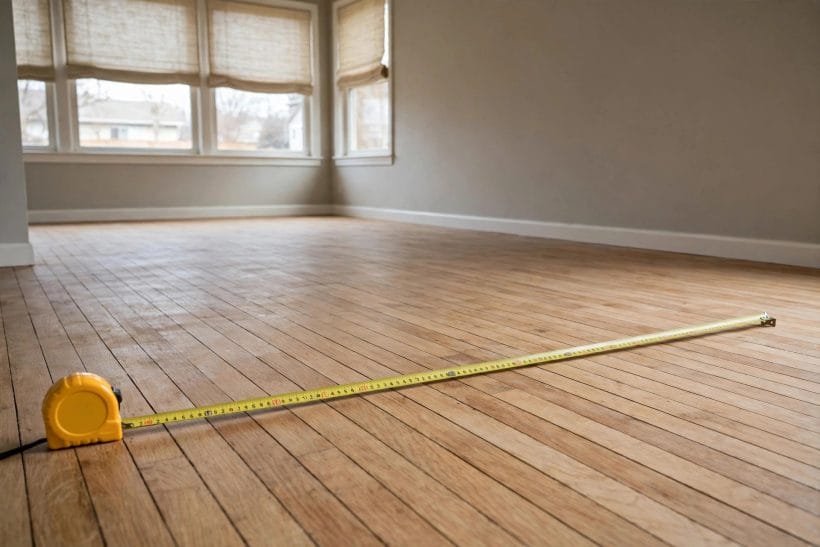
Measure before you shop, and measure the furniture arrangement, not the empty floor. Mark the rug’s intended footprint with tape or folded sheets and live with the outline for a day — walk around it, open doors across it, pull chairs out over it. This rehearsal costs nothing and catches the two classic errors: a rug that crowds a doorway and a rug that stops awkwardly mid-room.
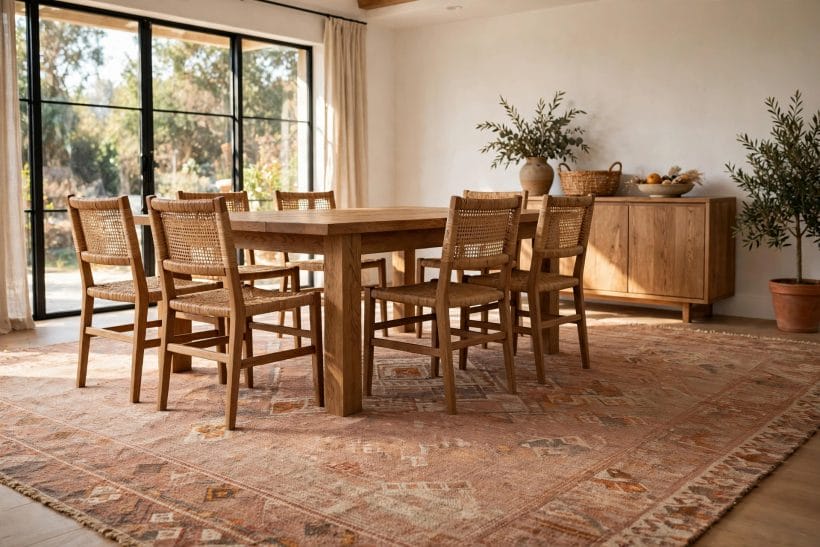
In a dining room, the test is the pulled-out chair: with chairs drawn out as if someone were sitting down, all four legs should still rest on the rug. A rug that ends under the chair legs rocks and catches, and it wears fastest exactly where chairs scrape. The same logic applies to any room where furniture moves — size for the furniture in use, not at rest.
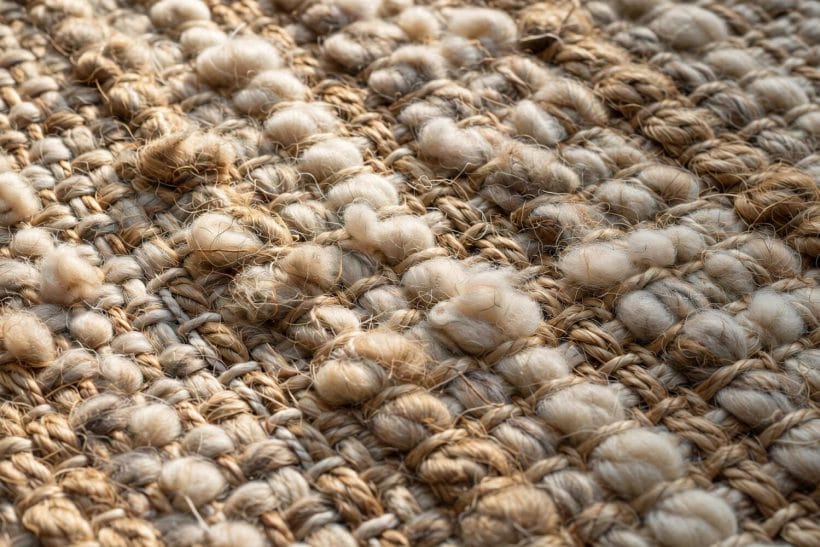
3. Fibre: Match the Material to the Traffic
Fibre decides how a rug lives, not just how it looks. Wool is naturally resilient and forgiving of spills, which suits rooms that see daily life; cotton flatweaves are light and washable but show wear sooner in hard-traffic paths; plant fibres bring texture and a casual feel but dislike damp rooms and heavy soiling. There is no best fibre in the abstract — only the fibre that matches your room’s traffic, pets, children and cleaning habits.
Ask how the rug will be cleaned before you fall for it. A rug that needs specialist cleaning suits a low-traffic bedroom far better than a hallway or a family room, where spills are a matter of when, not if. If your household includes pets, favour fibres and weaves that release hair easily and tolerate frequent vacuuming without shedding their own pile.
Touch matters as much as durability. Bare feet meet bedroom rugs daily, so softness earns its place there; a hallway rug is met mostly in shoes, so toughness earns its place instead. When a rug must do both jobs — soft underfoot and hard-wearing — look for a dense, low pile in a resilient fibre rather than a deep, loose one.
4. Pile: Low for Paths, Soft for Bare Feet
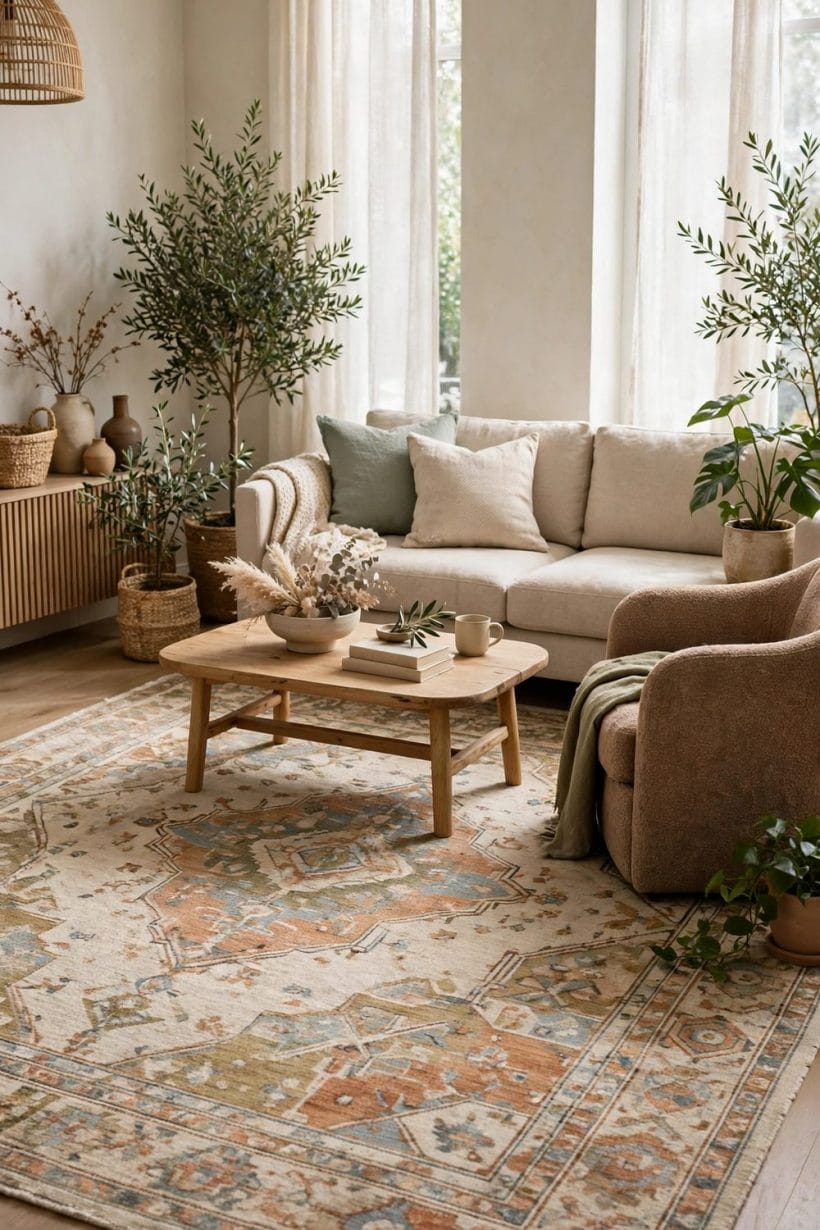
Pile height shapes both comfort and practicality. Low, dense pile is easy to walk on, easy to vacuum and kind to chair legs and wheels; it suits dining rooms, hallways and any space where furniture moves. Deep pile feels luxurious under bare feet and quiets a room, but it traps crumbs, slows vacuuming and can swallow small items.
Consider doors again here: a deep-pile rug at a doorway can catch a door’s swing or bunch under it, while a low pile glides clear. The same applies to the transition between rooms — a rug that meets a hard floor should sit low enough not to become a trip edge, especially where children or older visitors walk.
Pattern and pile interact too. A busy pattern hides crumbs and wear, which flatters a family room; a plain, deep pile shows every mark, which suits a calm bedroom better. Choose the combination that forgives your household’s real life, not the household in the showroom photograph.
5. Colour and Pattern: Let the Room Lead
Colour should be chosen in the room, not in the shop. Light shifts everything: a rug that looked warm grey under shop lights can read cold blue at home, and a rich red can dominate a small room that needed a quieter tone. Borrow a sample or a swatch where offered, and view it in the room at different times of day before committing.
As a working rule, let one element lead: if the room already has a strong pattern — curtains, upholstery, wallpaper — let the rug stay quieter; if the room is plain, the rug can carry the pattern. This is not a law, but it prevents the commonest colour clash, where rug and sofa compete for attention and neither wins.
Think about the floor beneath as well. A rug’s edge against timber, tile or carpet creates its own colour relationship, and a rug that harmonises with the floor reads as intentional. Dark rugs ground a light room; light rugs lift a dark one. Our dusty rose colour guide shows how a single colour family can be judged against its neighbours before it goes on the floor.
6. The Pad Beneath: Grip, Cushion, Protection
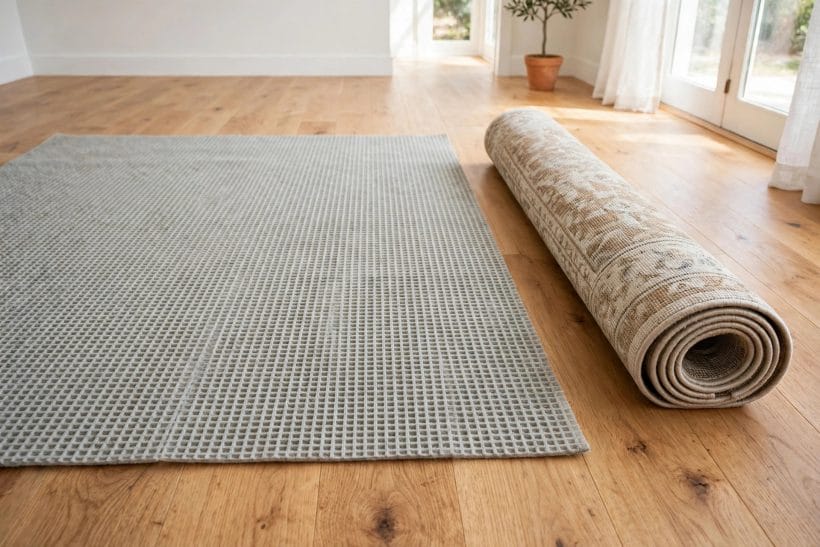
The pad beneath a rug does three quiet jobs: it stops the rug sliding, it adds cushion underfoot, and it protects the floor from the rug’s backing. A rug without a pad on a hard floor will creep with every footstep, bunch at the edges and wear faster where it moves. On carpet, a pad is less about grip and more about preventing the rug from wrinkling into the pile beneath.
Choose the pad for the floor, not just the rug: a grippy pad suits hard floors, while a thicker cushion pad suits a rug that will be sat or played on. Check that the pad is slightly smaller than the rug so it never peeks out at the edges, and check that it suits the floor finish — some pads can mark certain finishes over time, so the floor maker’s guidance is worth reading before the pad goes down.
Replace pads when they flatten or crumble. A worn pad stops gripping and stops cushioning, and a rug on a dead pad slides just as it would with none. The pad is the cheapest part of the arrangement and the easiest to overlook — which is exactly why it deserves its own check.
7. Buying Online: Checks Before You Order
Buying a rug unseen is a measurement exercise first and a colour gamble second. The photograph cannot tell you the true colour, the true texture or the true scale — only the listing’s measurements, the fibre description and the care instructions can do that, and all three deserve a careful read before ordering. Compare the listed size against your taped outline, not against the room’s dimensions in your head.
Read the terms that govern a change of mind before you order, and read them on the seller’s own page at the time of buying, since terms change. Know what a return would cost you and how long you have, and keep the packaging until you are sure — a rug that cannot be returned in its packaging is a rug you own the moment it arrives. This guide recommends no seller and no source; the checks themselves are the protection, whichever seller you choose.
Order a swatch first when one is offered. A swatch in your room, in your light, against your floor, answers the colour question that no screen can. If no swatch is offered, weigh the risk honestly: a plain, forgiving colour is a safer unseen buy than a bold pattern whose tone could swing in either direction.
8. In the Shop: What to Touch and Ask
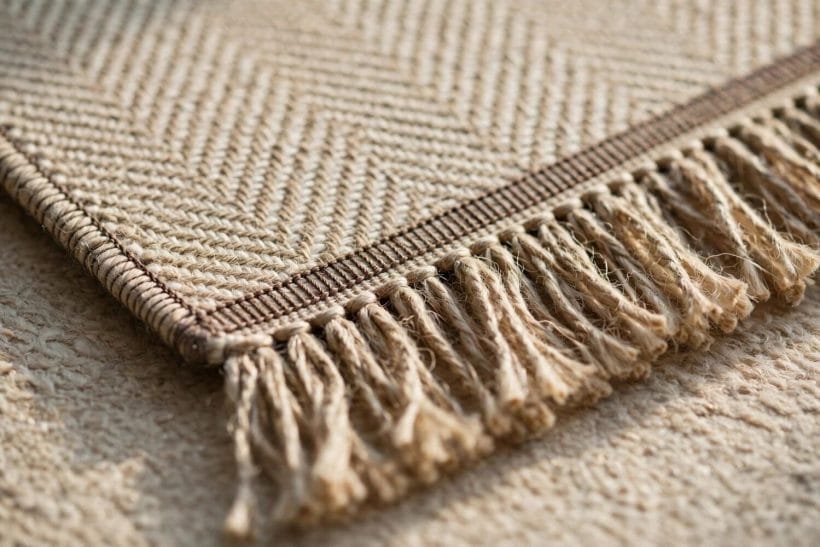
In a shop, your hands and feet are the instruments. Walk on the rug in your normal shoes, press the pile, fold a corner to test flexibility, and look at the backing — a well-finished backing lies flat and resists fraying at the edges. Ask about cleaning, about the pad that suits it, and about how the colour holds up to sunlight if the rug will sit near a window.
Ask what the rug is made of in full, not just the face fibre — backing and binding matter for durability and for floor protection. Ask how it should be cleaned after a spill, and whether spot-cleaning is safe or whether the whole rug needs attention. The answers tell you what living with the rug will actually cost in time.
Finally, check the rug flat, not folded or rolled. A rug can hide uneven edges, a skewed pattern or a curling corner when it is displayed folded, and all three show immediately once it lies flat at home. The same discipline applies to the furniture quality checks we apply to the pieces that will sit on it — construction first, appearance second.
9. Care: Cleaning Without Ruining the Rug
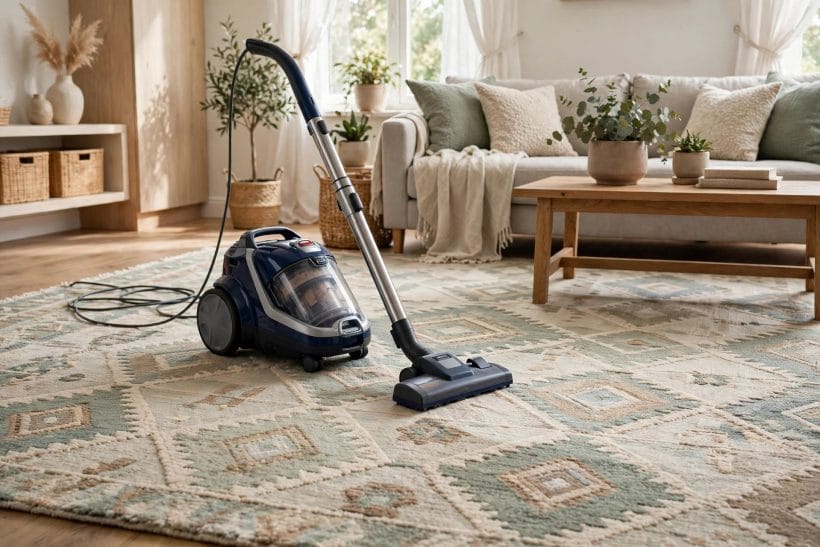
Care starts the day the rug arrives: vacuum regularly, rotate it with the seasons so wear and sunlight spread evenly, and deal with spills promptly rather than letting them set. Blot, never rub — rubbing drives a spill deeper into the pile and can distort the fibres. For anything beyond a fresh spill, follow the maker’s care guidance rather than improvising with household cleaners, which can bleach or stiffen fibres.
Sunlight fades rugs unevenly, so a rug that sits half in sun and half in shade will eventually show the difference. Rotating the rug and, where possible, filtering harsh sun through curtains slows the effect. In damp rooms, lift the rug occasionally and check beneath it — trapped moisture harms both rug and floor, and plant-fibre rugs suffer first.
Know when to call a professional. A valuable rug, a stubborn stain or a rug that has been soaked deserves specialist care rather than experimentation. The cost of a professional clean is small against the cost of replacing a rug ruined by the wrong treatment.
10. When a Rug Is Wrong: Returns and Second Thoughts
Sometimes a rug that passed every check still feels wrong at home — the colour fights the sofa, the size reads differently, the pattern dominates. Give it a few days before deciding; a new rug changes a room’s balance and the eye needs time to adjust. Live with it, move furniture on it, see it in morning and evening light.
If it still fails, act within the return terms you read before ordering, and keep the rug in returnable condition while you decide — no shoes on it, no spills near it, packaging kept. A rug returned promptly and carefully is a rug that cost you only the return effort, not the full price.
And if the rug cannot be returned, it can still be re-homed within the house: a living-room rug that overwhelms can calm a bedroom, and a runner that crowds a hall can soften a kitchen. The checks in this guide apply just as well the second time — measure, test the light, and let the room lead. For the pieces that share the floor, our furniture buying checks and table pad checks follow the same measure-first logic.
Final Considerations
A good rug decision is a short list of checks made in the right order: the room’s job, the furniture’s footprint, the fibre’s match to traffic, the pile’s match to feet and doors, the colour’s match to light, the pad beneath, and the terms of buying. None of these checks requires expertise — only a tape measure, a swatch and a willingness to test before committing.
The rug that passes them will not be the most dramatic rug in the shop, but it will be the rug that still looks right a year later, under real feet, real spills and real light. That is the whole point of checking: not to find a perfect rug, but to find the rug that fits the room you actually live in. Pair it with the room around it — our tiny house designs, kitchen ideas all start from the same place: measure first, then choose.



0 Comments