
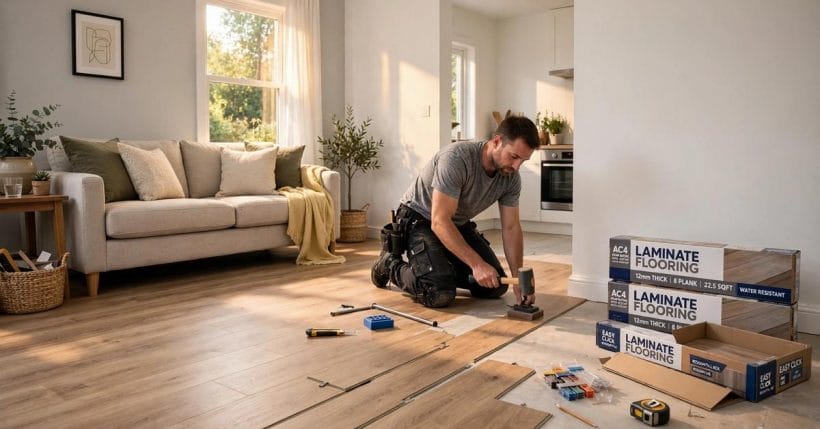
Laminate flooring earns its place in a home on a simple promise: the look of timber or tile with a surface that copes with ordinary family life. The promise is real, but it is never one single thing. One range leans on a hard top layer, another on a long plank rhythm, a third on a locking system that holds its joints tight. The checks below read any laminate floor on its own terms, in the order a careful buyer would use them, with nothing taken on trust from a photograph or a headline claim.
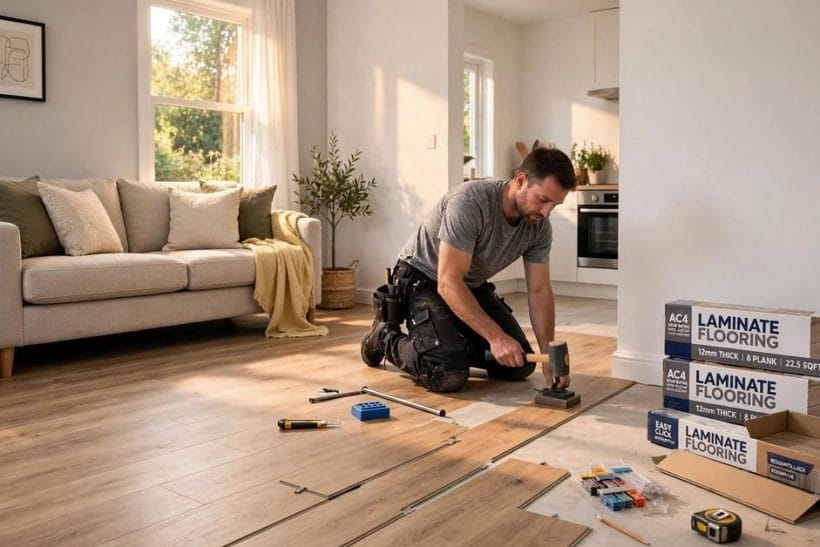
Fitting is treated throughout as professional work. Subfloor preparation, cutting, locking and finishing all affect how a laminate floor wears, and a professional fitter is the person to confirm that a chosen floor suits the room it is going into. Nothing here is a fitting lesson, and no claim here replaces the product sheet for the exact floor being considered.
1. Start With the Surface Layer
Five checks carry most of the decision, and the table below is the whole post in miniature. Flooring in its full breadth, every material and every room, is gathered in the tiny house flooring ideas collection; this post stays with one material and reads it closely.
| Check | In a word |
|---|---|
| SURFACE LAYER | Check the top layer |
| PLANK FORM | Length, width and edge |
| MOISTURE FIT | Match the room |
| UNDERLAYMENT | Ask what sits below |
| FIT AND LOCKING | Tight, even joints |
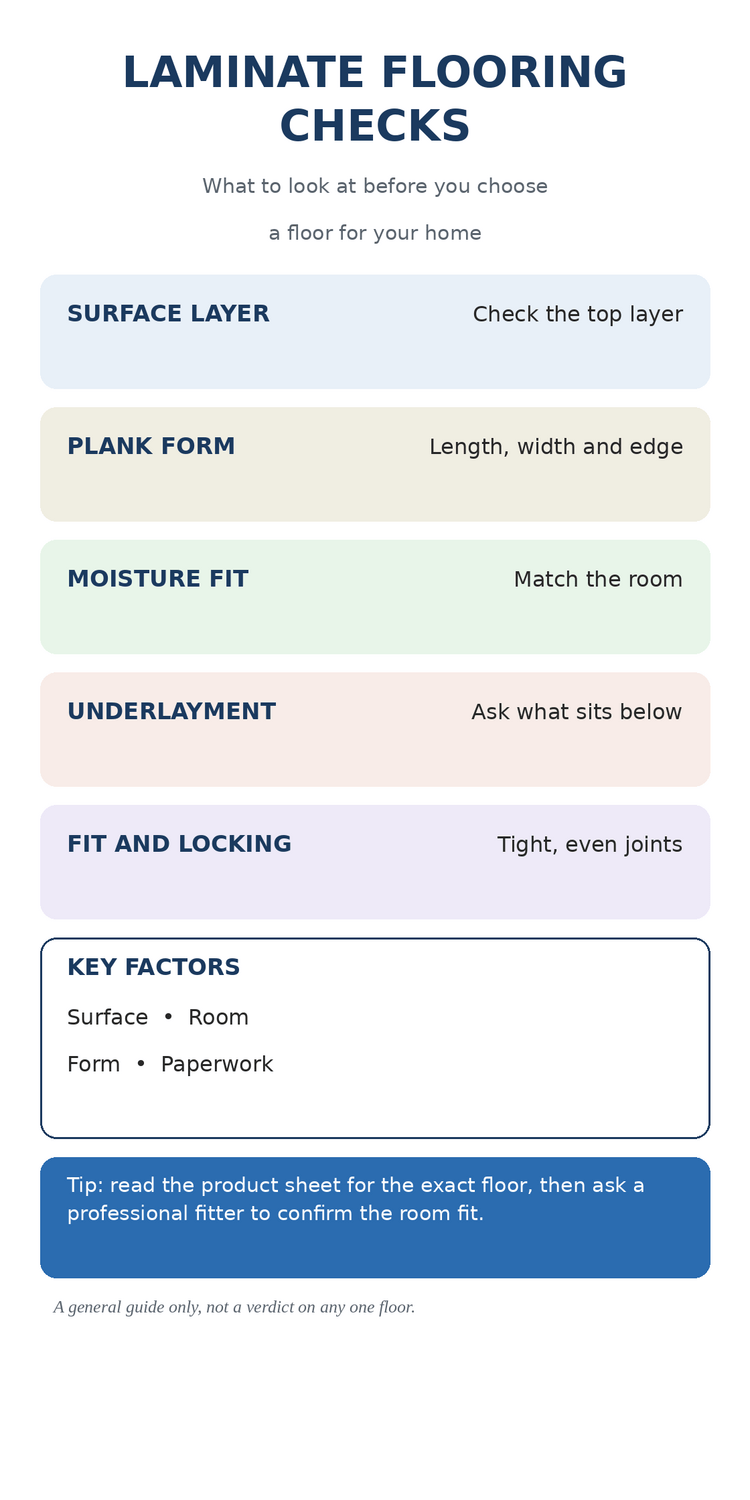
Four factors decide how the checks land in a real room: the surface, because the top layer takes all the traffic; the form, because plank length and edge shape change how a room reads; the room, because water, sun and traffic load a floor unevenly; and the paperwork, because written terms and local quotes are where broad claims become specific. The sections below take them in order, and each one ends with the question to carry into a showroom or a quote.
2. Know the Plank Forms
Laminate arrives as planks, and the plank is the unit everything else is judged by. Long planks stretch a room and draw the eye along its length, while shorter planks break a floor into a calmer, more even rhythm. Wide planks make a small room feel broader, and narrow planks suit rooms where a finer grain of detail looks right. None of these is better in itself; each one suits a different room, a different light and a different household.
The edge shape matters as much as the plank size. A bevelled edge marks each plank clearly and gives a floor a board-by-board look, while a square edge lets planks run together into a smoother sheet of pattern. Look at a laid area, not a single plank in isolation, because the edge effect only shows itself across several planks at once. Plans for the rooms themselves, and how a floor must run through them, sit in the tiny house floor plans collection, which is worth reading before any plank size is chosen.
Ask this before moving on: does this plank form suit the room it is going into, in its light and at its size, or does it only look good as a single sample?
3. Read the Surface Closely
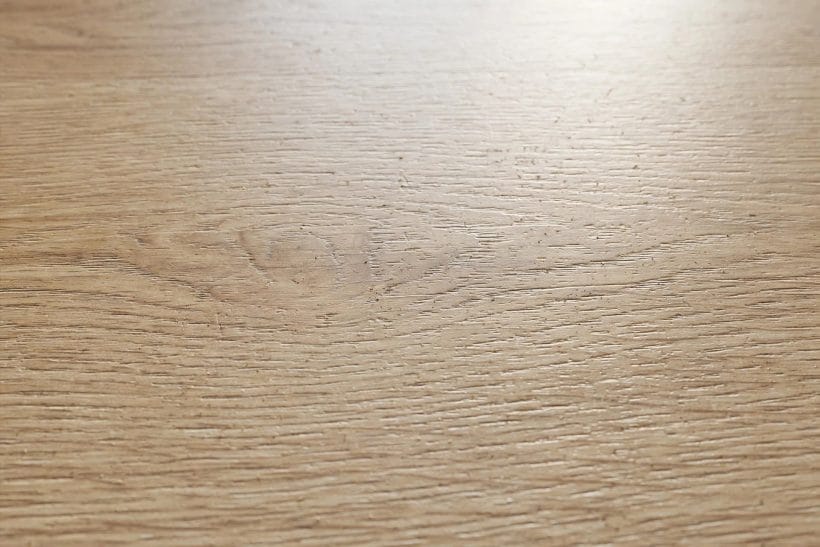
The surface is the part of the floor a household actually lives with. Run a hand across a sample and look at it from standing height, from a low angle and in the light of the room it will serve. A pattern that looks rich in a showroom can look busy in a small room, and a quiet pattern can look flat in a large one. The grain, the sheen and the colour variation between planks all deserve the same slow look, because they are what the eye will meet every day.
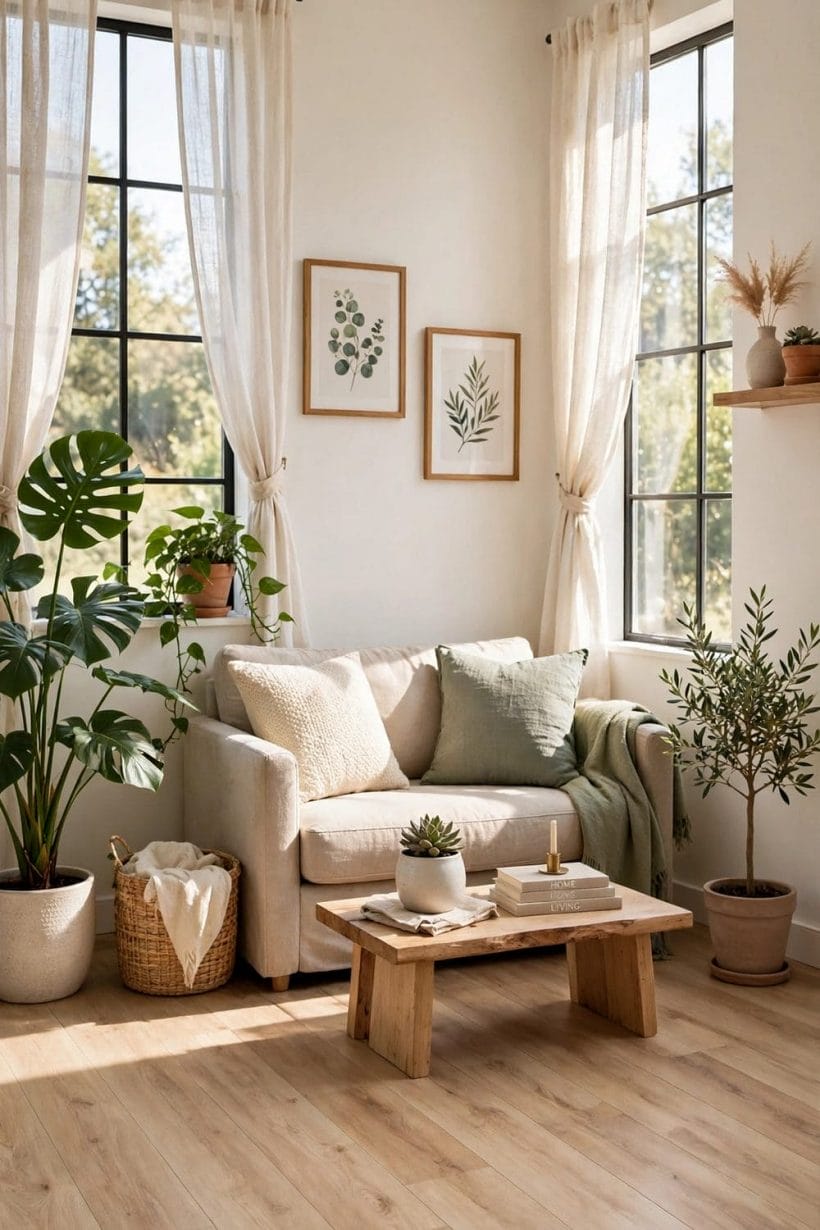
Colour variation is a point buyers often miss. Some ranges repeat a small set of plank patterns, and the repetition shows once a floor is laid across a room. Others carry a wider spread of tones, and the floor reads as more varied and natural. Ask how much variation a range carries, and look at a laid area large enough for repetition, or its absence, to show. Warmth underfoot is a related question: a floor laid over a heated subfloor behaves differently from one laid over a cold one, so the heating question belongs early, and the underfloor heating in tiny houses guide sets out the heating forms a professional fitter can advise on.
Ask this before moving on: does this surface still please the eye at standing height, in this room’s light, across a wide laid area?
4. Check the Locking and the Joints
Planks meet at joints, and joints are where a floor either holds together or starts to show its age. A good joint closes tightly, sits level with its neighbours and stays closed when walked across. Ask the fitter how the locking system works in general terms, and what preparation the subfloor needs for joints to sit evenly. A floor laid over an uneven base will show that unevenness at its joints first, whatever the plank quality.
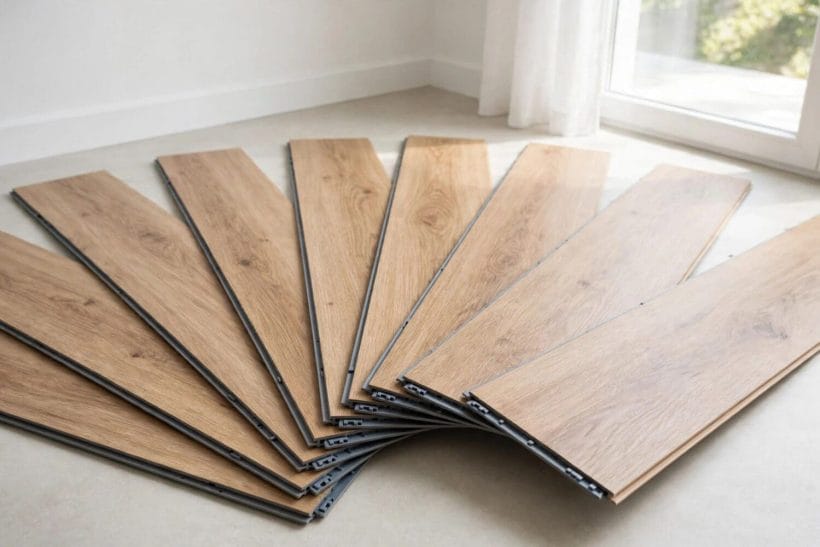
Look at joints in a laid floor, not only in a sample pair clicked together on a counter. Walk across the laid area slowly and watch for movement, for edges that catch the light unevenly and for gaps that open near walls and doorways. These are the places where fitting quality shows, and they are also the places a professional fitter will check before handing a room back. A joint that looks tight on day one and stays tight under everyday walking is the whole point of the check.
Ask this before moving on: do the joints sit tight and level across a laid area, including near walls and doorways?
5. Ask What Sits Below
Underlayment is the layer between the subfloor and the planks, and it is easy to overlook because it is never seen once a floor is down. It still shapes how a floor feels, how it sounds and how evenly it sits. Some floors arrive with a layer already attached to each plank, while others need a separate roll laid first. Either way, the question is the same: what sits below, and what does it do for this room?
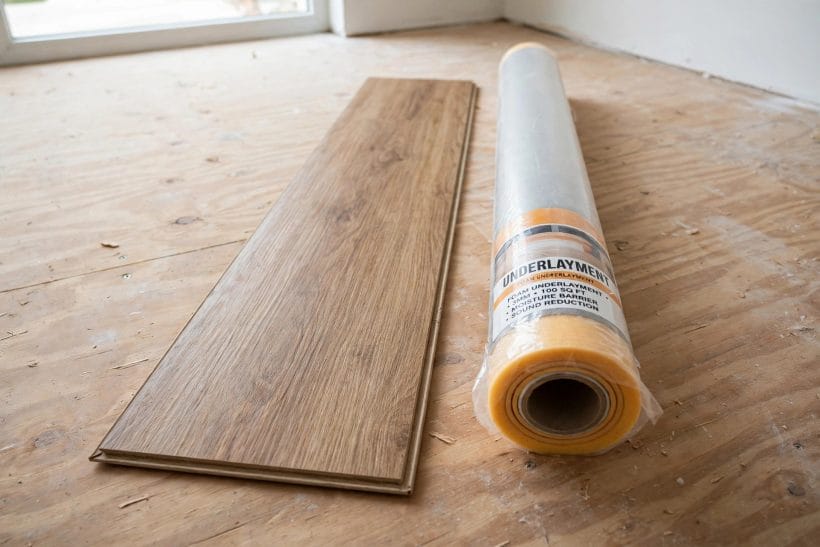
Sound is the most immediate effect. A hard floor over a bare subfloor can sound hollow underfoot, and the layer below softens that sound and cushions the step. Evenness is the second effect, because a thin cushioning layer helps small subfloor irregularities sit less visibly at the joints. Moisture is the third question to raise in general terms: ask the fitter what, if anything, sits below the planks in rooms where spills and damp air are part of everyday life, and whether the product sheet names any condition for those rooms. No general guide can answer that for a particular floor; the product sheet and the fitter answer it together.
Ask this before moving on: what sits below these planks, and what does it do for sound, feel and evenness in this room?
6. Match the Floor to the Room
A floor is never chosen in the abstract; it is chosen for a kitchen, a hallway, a bedroom or a living room, and each room loads it differently. Kitchens meet spills, dropped items and frequent cleaning. Hallways meet grit from outdoors and constant through-traffic. Bedrooms meet quiet, barefoot mornings and little else. The same plank can be a sensible choice in one of these rooms and a poor one in another, and the room check is what keeps a buyer from choosing on looks alone.
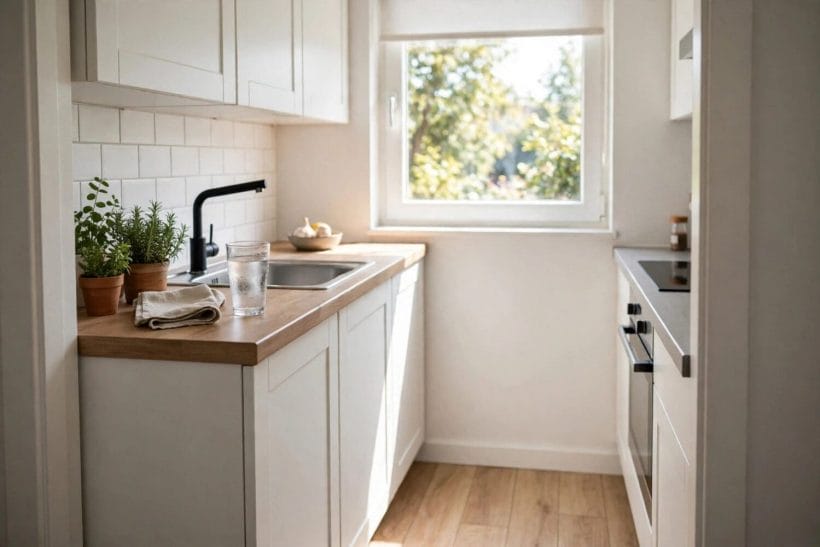
Moisture belongs in this section in general terms, and nowhere else as a verdict. Rooms differ in how much water they meet: a kitchen meets splashes at the sink and the cooker, an entry meets wet shoes, a bathroom doorway meets steam and damp towels. Ask, for each room, whether the product sheet describes that room as a suitable place for the floor, and what everyday care it names for spills. Spills wiped up as part of ordinary cleaning, mats at entries and a fitter’s advice on room suitability are the general habits that keep any floor at its best. Broader kitchen thinking, including how a floor must work alongside cabinets and appliances, is gathered in the kitchen ideas collection.
Ask this before moving on: does the product sheet describe this floor as suitable for this exact room, with its spills and its traffic?
7. Plan the Order and the Spares
Ordering is a check in its own right, and it is the one buyers most often rush. Measure the room with the fitter, allow for cuts at walls and doorways, and confirm how many spare planks to keep back. Spares matter because a single plank can be marked by a dropped item or a moved piece of furniture, and a matching spare kept from the same order is worth far more than a later search for a matching tone.
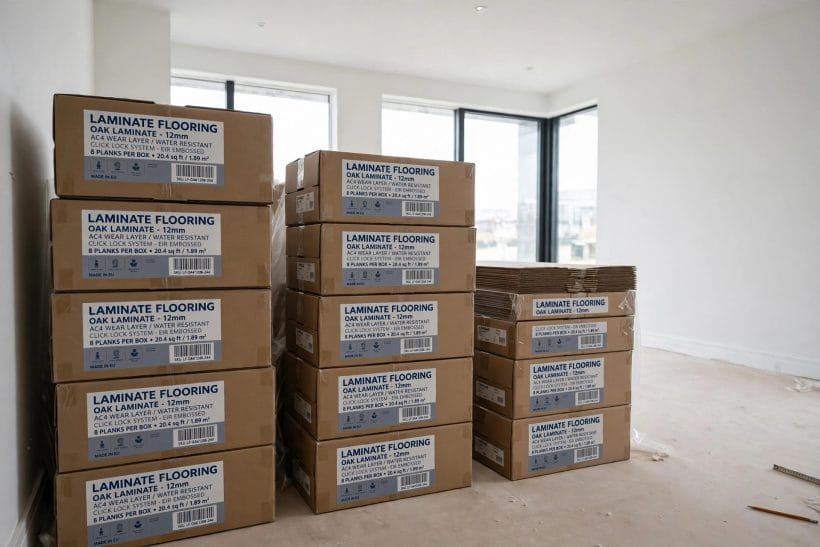
Delivery timing matters too. Planks delivered early need a dry, indoor place to wait, and planks delivered late hold up a fitter’s schedule. Agree the delivery point, the storage place and the fitting window before ordering, and keep the order paperwork with the product sheet so that any later question about the floor can be answered from the same file. In a small kitchen, where every plank is visible and every cut is close at hand, careful ordering pays for itself twice over; the tiny kitchen ideas collection shows how much a small kitchen asks of every surface in it.
Ask this before moving on: are the measurements, the cuts, the spares and the delivery window all agreed before the order is placed?
8. Mind the Transitions
Rooms rarely end neatly. A laminate floor meets tile at a bathroom doorway, meets a different floor in a hallway, or steps up at a threshold, and each meeting needs a transition that looks tidy and feels safe underfoot. Ask the fitter which transitions the job needs, where each one sits and what it will look like when finished. A transition planned late tends to look improvised; a transition planned early looks like part of the floor.
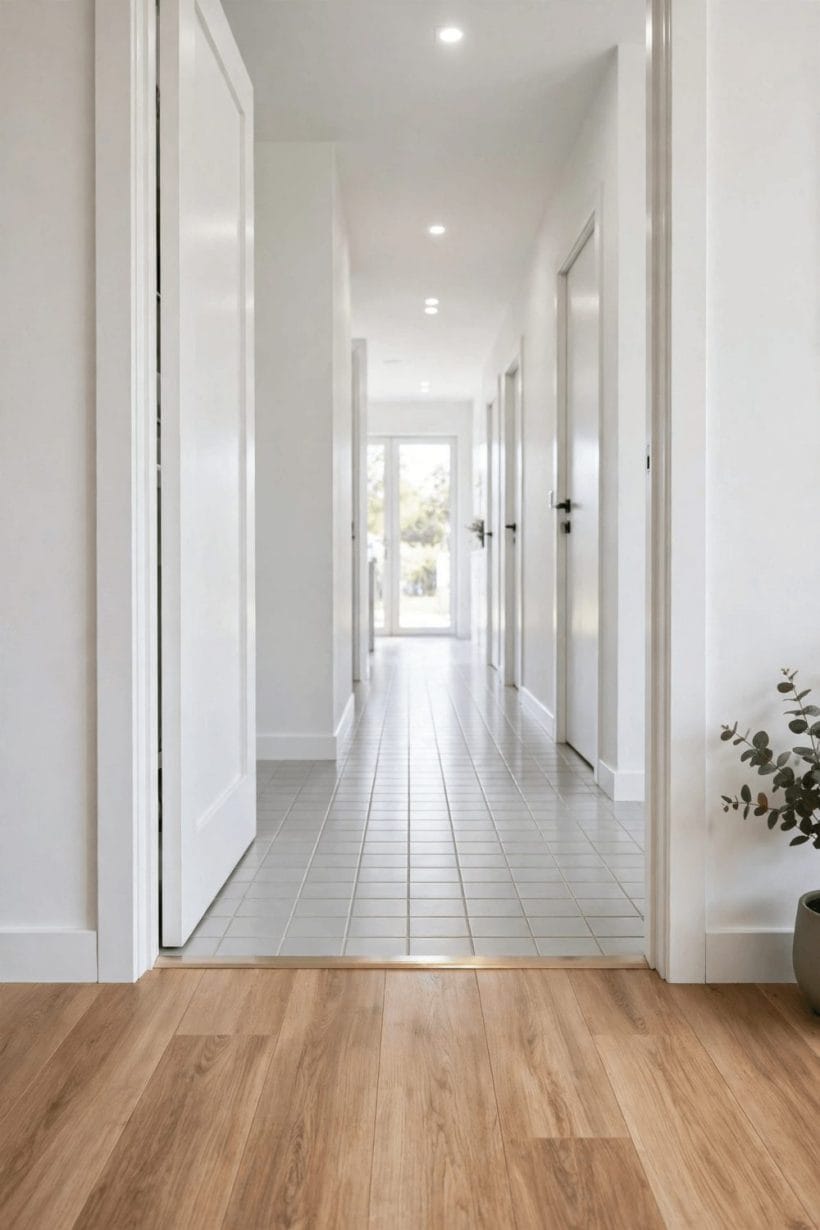
Height is the quiet question at every transition. Two floors of different build-ups meet at different heights, and a transition strip bridges that difference. Walk the route through the home in the mind’s eye: from bedroom to hallway, from hallway to kitchen, from kitchen to outdoors. Each crossing is a place where a shoe catches or a chair leg hesitates, and each one deserves a planned answer. Bedroom floors, where bare feet meet the transition first thing in the morning, deserve particular care, and the tiny house bedroom ideas collection is a useful place to think about how a bedroom floor should feel.
Ask this before moving on: is every meeting between this floor and another floor given a planned, tidy transition?
9. Read the Paperwork and the Quotes
Paperwork is unglamorous and decisive. The product sheet names the floor, its care and its conditions in writing; the quote names the fitting, the preparation, the transitions and the finishing in figures agreed before work starts. Read both slowly, and ask about anything that is vague. A quote that names each element separately is easier to compare than one that gathers everything into a single line, and a product sheet that names room suitability plainly is easier to trust than one that gestures at it.
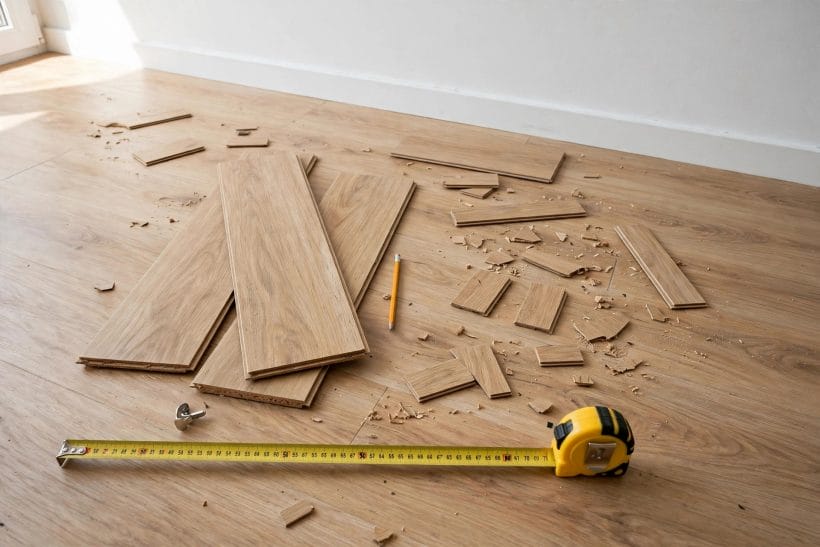
Finishing edges close the paperwork circle. Skirting, beading and door trims frame a floor and hide its expansion gaps, and they deserve a line in the quote rather than an assumption. Ask what finishing is included, what it looks like and who supplies it. The tiny house skirting options guide sets out the finishing choices a home can make, and the fitter can confirm which one suits the floor and the walls it meets. Keep every document together: product sheet, quote, order note and care note in one file, so that later questions have one place to go.
Ask this before moving on: does the paperwork name the floor, the fitting, the transitions and the finishing, each in plain terms?
10. Care for the Floor in Everyday Use
Everyday care is simple, and simplicity is its virtue. Sweep or vacuum regularly so that grit does not travel across the surface under shoes. Wipe spills as part of ordinary cleaning rather than leaving them to sit. Place mats at entries where outdoor grit arrives, and felt pads under chair and table legs where furniture moves often. These are general habits, not treatments, and they suit any laminate floor in any home.
Sunlight deserves a general note too. A floor in strong, direct sun through a large window will show its colour differently over time from the same floor in a shaded room, so consider curtains, blinds or the simple habit of closing a blind in the brightest hours. Rugs, too, change how a floor wears: a rug protects the area beneath it and leaves the surrounding floor to take the traffic, so moving a rug from time to time keeps wear even across a room. Nothing here requires a special product or a special routine, only steady, ordinary attention.
Ask this before moving on: is the everyday care for this floor something this household will actually keep up, week after week?
Final Considerations
The checks in this guide reduce to a short habit: look at a laid area, read the product sheet, ask the fitter, and match the floor to the room. Surface, form, locking, underlayment, room fit, ordering, transitions, paperwork and everyday care each carry one question, and a floor that answers all ten questions well is a floor chosen with eyes open. A floor that answers several of them poorly is not necessarily a poor floor, but it is a floor that deserves a second look, a second quote or a different room.
Take the questions into the showroom and into the quote, and let the answers, not the photograph, decide. A professional fitter’s judgement on subfloor, room suitability and finishing is the final check no guide can replace, and a product sheet read in full is the document that backs that judgement up. Chosen this way, a laminate floor is simply a floor that fits its home, its rooms and its household, and that fit is the only verdict this guide offers.




0 Comments