
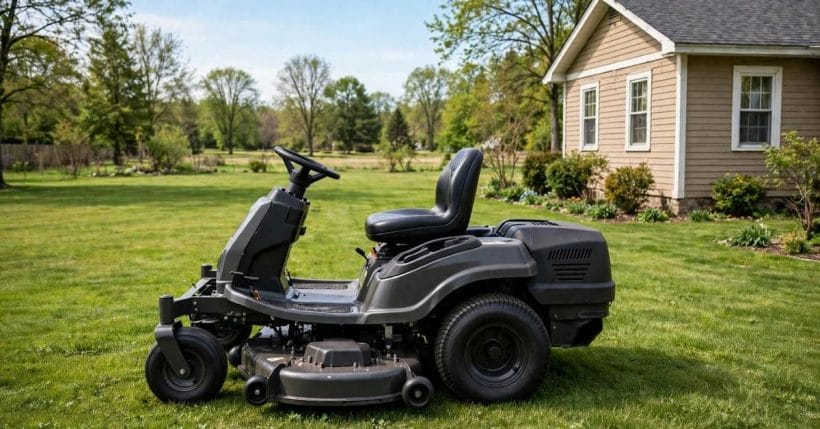
A small lawn can still take a long time to cut when the ground is broken up by beds, trees, paths, and gates. A riding mower that suits a wide open field may feel clumsy on a compact plot, while a smaller machine may leave a larger garden feeling endless. The shape of the machine matters as much as the shape of the lawn, and that is where a rear-engine layout earns a closer look.
People searching for rear engine riding mower reviews are usually looking for a way to judge one machine against another without getting lost in claims. This guide keeps the focus on what you can see, sit on, steer, and reach with your own hands, so you can walk around any machine of this layout and judge it on its own merits, in general terms, before you decide anything.
1. What the Rear Layout Means
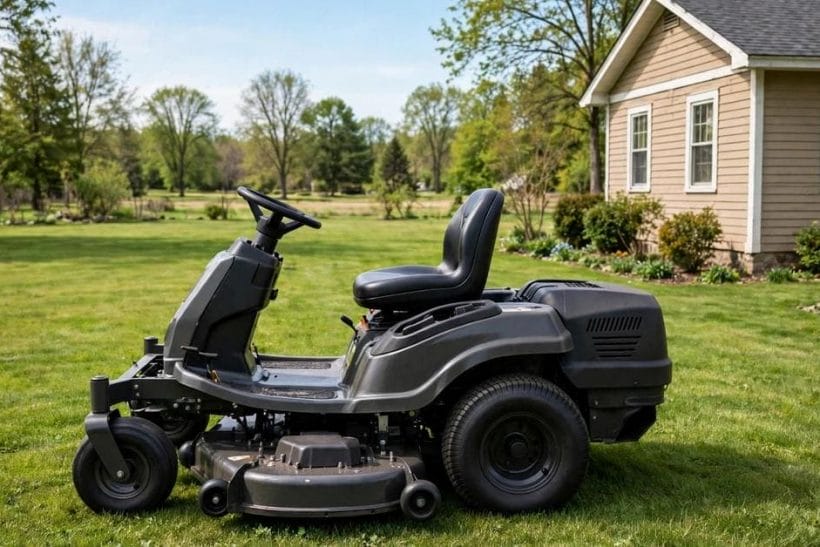
On a rear-engine riding mower, the engine sits behind the seat rather than in front of the driver or under a long bonnet. That single change shapes the whole machine. The front stays low and open, the driver sits close to the cutting deck, and the overall length stays compact. For a home with a modest lawn and a modest shed, that compact shape is often the first thing that draws attention.
The layout also changes what you see as you drive. With no tall engine cover ahead of you, the view forward stays clear, and the edges of the deck are easier to follow along a bed or a path. That matters on a garden where the mowing line is set by planting rather than by open ground, and where a small mistake can scalp a border or clip a low shrub.
Look at the machine as a whole before you look at any single part. The seat, the steering, the deck, and the rear engine housing should read as one settled design, with nothing sticking out awkwardly and nothing that looks hard to reach. A machine that looks tidy and balanced from the side usually feels tidy and balanced to drive, and a machine that looks awkward at rest rarely feels better once it is moving. Browsing tiny house exterior ideas alongside mower shapes can help here, because a compact home and a compact mower share the same question: how much useful work fits into a small footprint without crowding the plot.
2. The Cutting Deck, Seen From Below
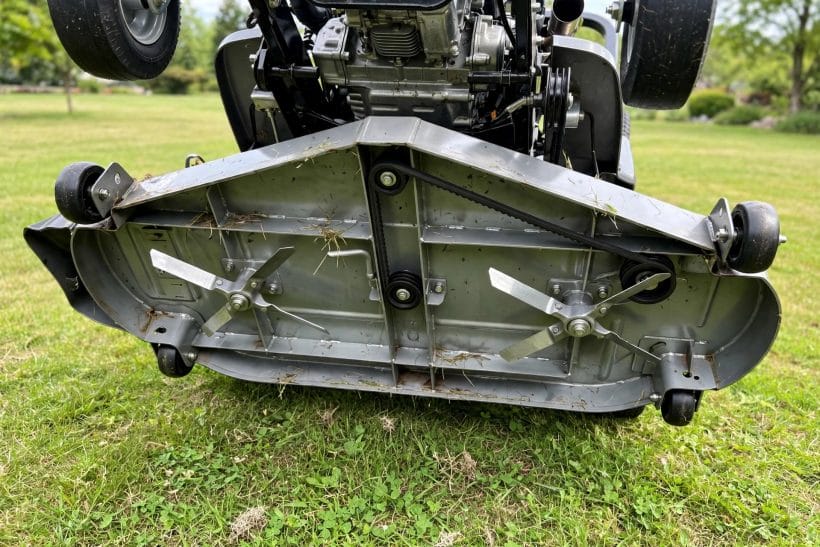
The deck is the part that does the actual cutting, so it deserves more attention than any other single area. Look underneath whenever you can, and look for a deck that is clean, even, and free of heavy dents or bent edges. A deck that has been kept clean tells you something about how easy it will be to keep clean yourself, because grass builds up under every deck and the shape of the housing decides whether that build-up clears away or clings in corners.
Notice how the deck hangs and how it moves. It should sit level when lowered, rise and fall smoothly, and hold its height setting without drifting. A deck that tilts or wobbles will cut unevenly, leaving one side of a pass shorter than the other, and that unevenness shows up most clearly on a lawn that is otherwise flat and well kept.
Think about the width of the deck in relation to your own garden, not in the abstract. A wider deck covers open ground faster, but it also needs wider gaps between trees, beds, and garden furniture. A narrower deck takes longer across open ground, yet it slips through tighter gaps and turns more easily around planting. Walk your own garden with its narrowest gaps in mind, and let those gaps set the limit, rather than letting an open stretch of lawn set it.
3. Size and Shape on Your Own Lawn
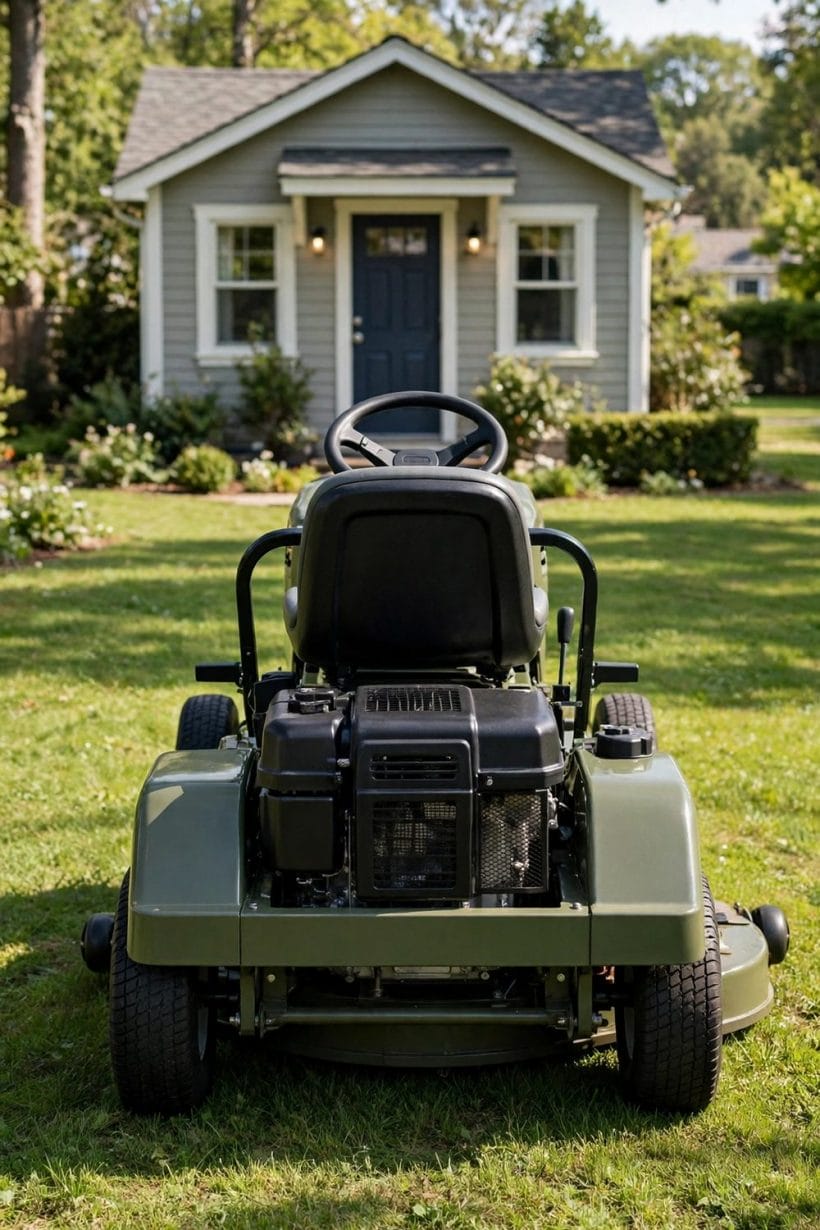
Stand back and picture the machine on your own ground. A rear-engine mower is compact by design, but compact is a relative word, and your gates, paths, and shed door decide what compact really means at your home. Measure the narrowest point the machine must pass through, and compare that with the machine standing in front of you, allowing room for your hands on the steering and for a comfortable margin on each side.
Consider the slopes and the edges of your garden as well. A lawn that rolls gently, dips near a drain, or rises toward a bank will test a mower differently from a flat rectangle. The machine should feel planted on the ground rather than perched, and the wheels should sit squarely rather than lifting at one corner when the ground changes. A short drive over uneven ground, where one is offered, tells you more than a long look at a machine standing still.
Think about where the machine will live between cuts, because a mower that fits the lawn but not the shed will spend its life under a cover in the weather. The shape of the rear housing, the height of the seat back, and the position of the steering all add to the space the machine needs when parked. A machine that slides into its home easily will be used more often and looked after more willingly than one that has to be wrestled into place every time. Ideas in tiny house garden ideas are useful at this stage, since a small garden rewards anything that keeps tools, planting, and open lawn in balance rather than letting one crowd out the others.
4. Seat, Steering, and Controls
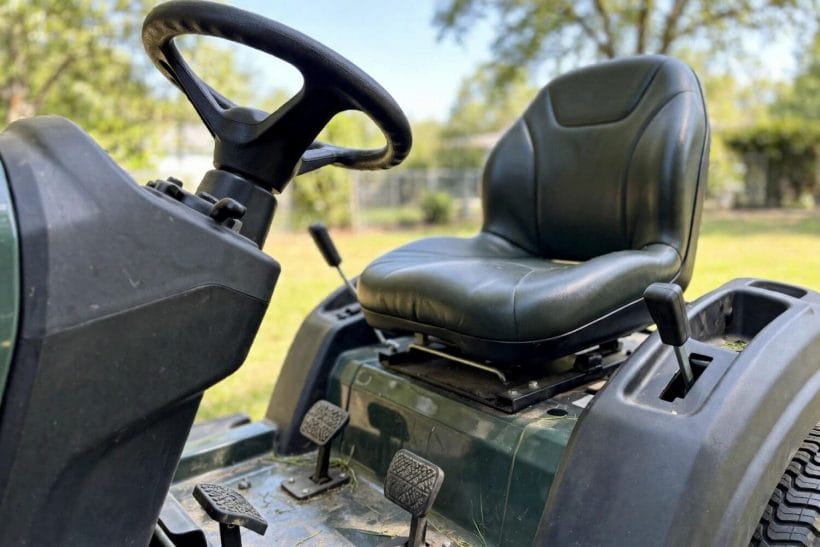
Sit on the machine before anything else, and sit the way you would sit for a full mowing session rather than perching for a moment. Your feet should reach the controls without stretching, your hands should rest naturally on the steering, and your back should feel supported rather than held upright by effort. A seat that feels fine for a moment can feel very different after a long pass around a garden, so give yourself time to notice where pressure builds and where your posture starts to shift.
Work the controls slowly, one at a time, and notice whether each one moves cleanly and returns to where it started. The steering should feel direct rather than vague, with no looseness at the centre and no stiffness that fights you through a turn. Levers and pedals should fall under your hand or foot without a hunt, and labels or symbols should be easy to read at a glance rather than demanding a close look while you are trying to drive.
Pay attention to how the controls are grouped. A layout that keeps the most-used controls close together lets you keep your eyes on the lawn, while a layout that scatters them forces you to look down at your hands. That difference sounds small on a still machine, yet it grows with every pass, every turn, and every stop to clear a path or open a gate.
5. Turning Around Beds and Trees
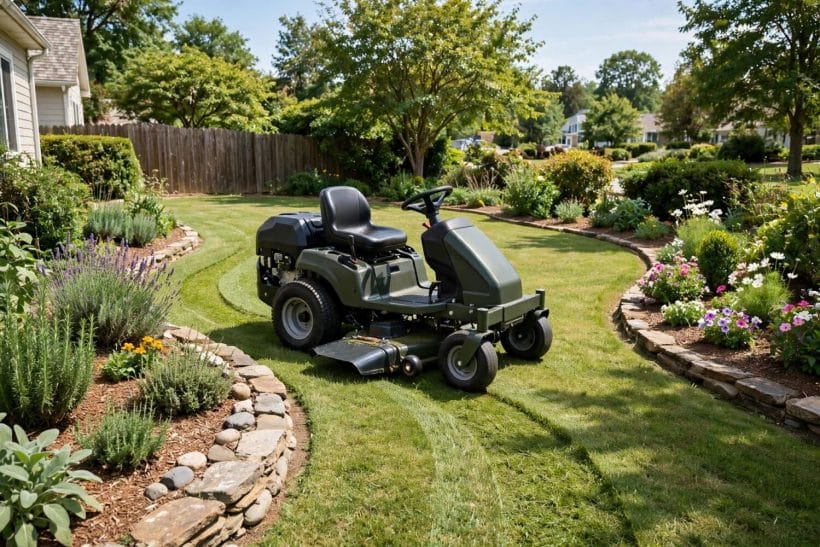
A rear-engine mower earns its keep in gardens where the mowing line is never straight. Beds curve, trees stand in the middle of lawns, and paths cut across at angles, so the machine must turn tightly without tearing the grass or clipping a border. Watch how the machine behaves at the end of a pass, where it slows, turns, and lines up for the next strip, because that turning moment repeats more often than any other move in a small garden.
Notice the turning circle in practice rather than as an abstract claim. A machine that turns in a tight, even arc will leave a tidy pattern and spare the grass at the turn, while a machine that needs a wide sweep will force you to back up, reposition, and re-cut the same ground. Tight turns also matter near fences and walls, where there is no room to swing wide and where a clumsy turn can scrape paint, bark, or brick.
Consider the wheels and how they track through a turn. The inside wheel should not dig in or drag, and the outside wheel should not climb onto a border or a path edge. A smooth turn feels unhurried, with the machine pivoting around its own centre rather than lurching around a corner. If a turn feels like a negotiation every time, that feeling will still be there on every mow, long after the novelty of a new machine has worn off.
6. Storage and the Shed Door
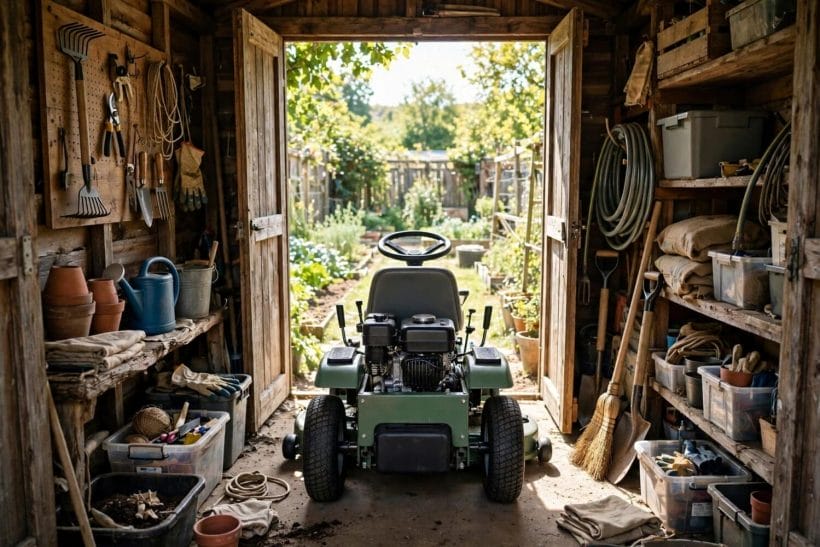
Storage is easy to overlook while a machine is gleaming on a showroom floor, yet it decides how the machine ages. A mower kept dry, out of direct weather, and away from damp ground will keep its deck, seat, and controls in better shape than one left outside, and a shed that fits the machine with room to walk around it makes routine care far more likely to happen.
Check the route into storage as carefully as the storage itself. The doorway, the ramp or step, and the turning space inside the shed all need to suit the machine, and a tight doorway can turn every mow into a careful shuffle. Look for a clear path from the lawn to the shed, free of steps that catch a deck or slopes that make parking awkward, and think about how the machine will be moved when the ground is wet.
Inside the shed, the machine should sit with its controls, deck, and rear housing all reachable, rather than wedged against a wall where only one side can be cleaned. A little spare room around the machine also leaves space for the simple tools of lawn care, kept where they are used rather than scattered across a garage. Browsing garden shed ideas can spark practical storage thinking, and tiny house storage ideas carry the same lesson indoors: when everything has a place within reach, looking after things becomes a habit rather than a chore.
7. Servicing Access and Everyday Upkeep
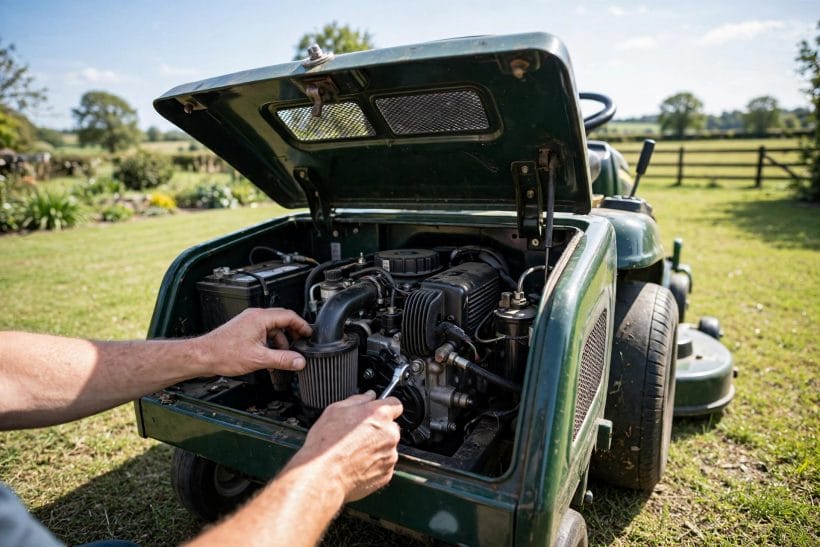
Every mower needs care, and the ease of that care shapes how long the machine stays pleasant to use. Look at how the rear housing opens, how much room there is around the engine, and whether ordinary checks can be done without removing a tangle of covers. A design that opens simply and closes securely will be looked after, while a design that fights you at every step will tempt you to put care off until a small job becomes a large one.
Notice where the everyday points sit: the places you check, clean, and top up between mows. They should be reachable without awkward reaching or lying on the ground, and they should be protected from grass and dust without being hidden away. A tidy engine bay, with parts laid out in a way that makes sense at a glance, is a good sign, because it shows the machine was designed to be lived with rather than merely sold.
Think about who will carry out deeper servicing, and keep that conversation in mind from the start. Some owners enjoy routine care themselves, while others prefer a professional to handle anything beyond simple checks, and both approaches are sound as long as the choice is made honestly. A tidy corner for tools, manuals, and spares helps either way, and interior design ideas for a workshop corner can turn a cluttered garage wall into a calm, workable space where servicing actually gets done.
8. Visibility From the Seat
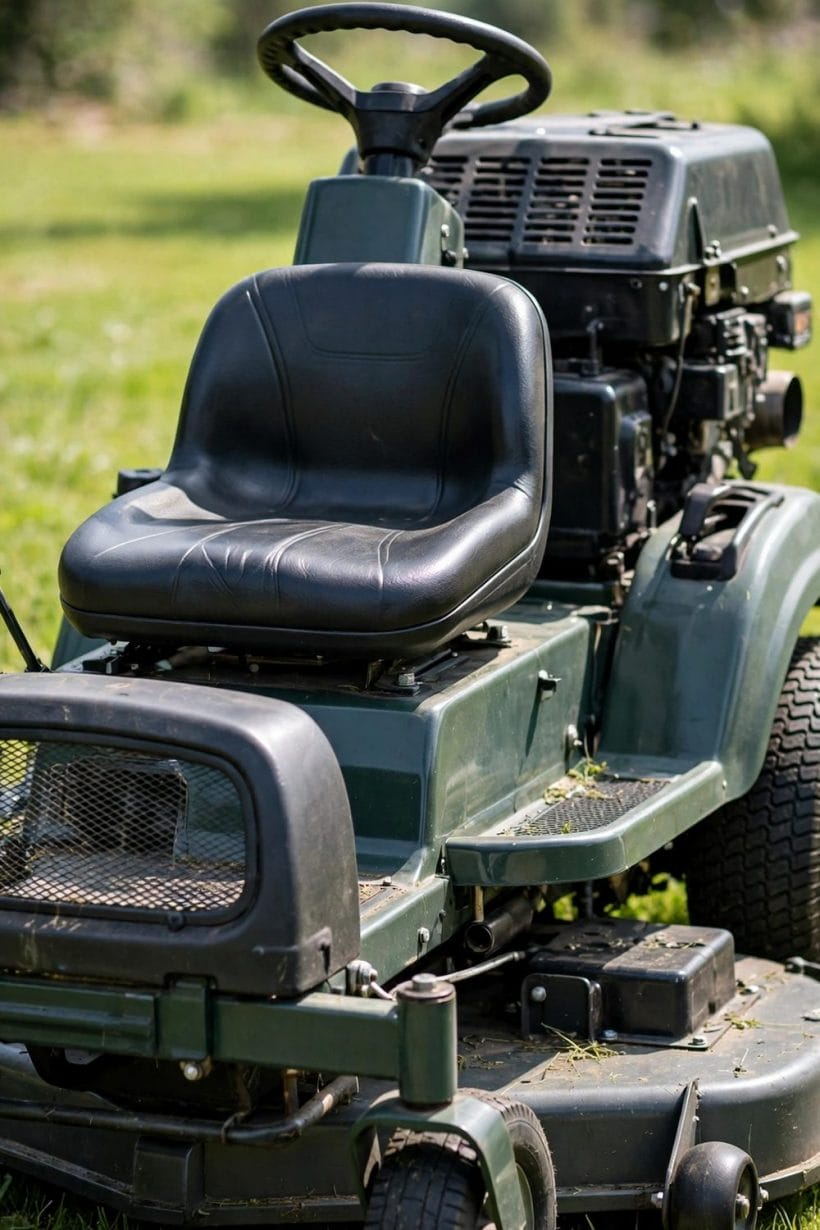
Visibility is one of the quiet strengths of a rear-engine layout, and it is worth testing properly. Sit in the driving position and look forward along the line you would mow, checking whether the deck edges, the front wheels, and the ground ahead are all easy to see. A clear view lets you follow a bed edge closely without guessing, and it lets you spot stones, toys, hoses, and low branches before the deck reaches them.
Look behind you as well, because mowing involves reversing out of corners, backing away from gates, and turning in tight spaces. The seat position, the shape of the rear housing, and the height of the seat back all affect how much you can see when you turn your head, and a machine that blocks the rear view will make every reverse feel uncertain.
Consider visibility in different light, too. A lawn mown in bright sun, under trees, or toward evening light can hide dips, edges, and obstacles that are obvious at midday. A driving position that keeps your eyes high, your view wide, and your posture relaxed will serve you in all of those conditions, while a cramped or low position will narrow your view exactly when you need it widest.
9. The Finish Across the Lawn
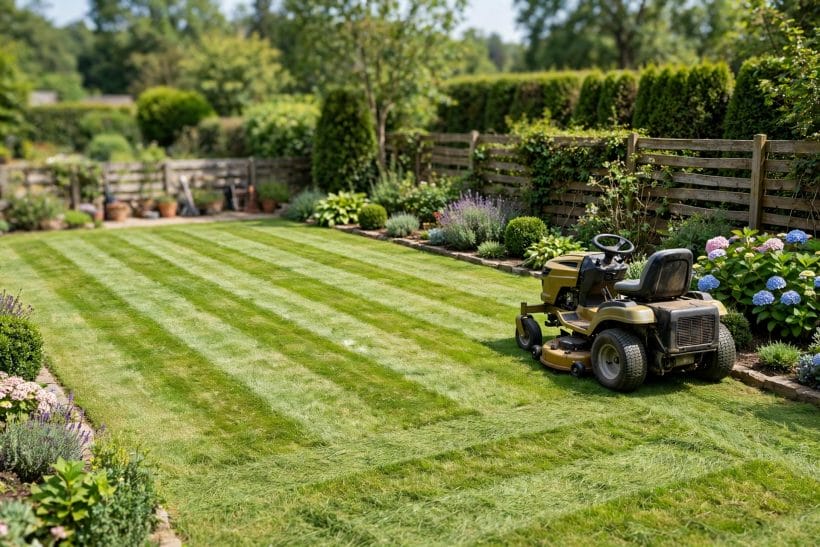
The finish a mower leaves is the part you live with after the engine stops. Walk across a freshly cut lawn and look for an even height, clean lines, and edges that meet neatly where passes overlap. A good finish looks calm rather than striped by accident, with no scalped patches where the deck dipped and no tufts left standing where it lifted.
Notice how the machine handles clippings, because that shapes both the look of the lawn and the work that follows. Some gardens suit clippings left finely on the lawn, while others need them collected or directed away from paths and beds, and the right choice depends on your grass, your soil, and how often you mow. What matters at the checking stage is that the clipping path is clear, the collection or discharge area is easy to reach, and nothing clogs after a short run.
Think about the lawn as part of the home rather than as a separate chore, because a tidy lawn frames everything around it. A well-kept strip of grass makes planting look intentional, paths look inviting, and a small house look cared for from the street. Reading home design ideas with the lawn in mind can help you see the mower as one piece of a larger picture, where the finish on the grass and the look of the house support each other.
10. Questions to Ask Before You Decide
Once you have looked, sat, steered, and turned, a few plain questions will bring the whole picture together. Ask how the machine suits the narrowest gap in your garden, not just the widest lawn, and how it will be stored, cleaned, and serviced in your own home rather than in ideal conditions. Ask what routine care involves, who can carry it out, and what help is available if something stops working as it should.
Ask about the parts that wear with use, and how easily they can be reached, cleaned, or replaced when the time comes. A deck, a set of blades, and the moving parts of the drive all wear gradually, and a machine that lets you see that wear early will let you act early too. Ask also about the guidance that comes with the machine, and whether it explains care in plain language that you can follow at home without guesswork.
Finally, ask yourself how the machine fits the way you actually garden. A machine that suits a neighbour with a wide open lawn may not suit a garden broken up by beds and trees, and a machine that suits a large plot may feel too much for a small one. The right questions are the ones rooted in your own ground, your own shed, and your own routine, because those are the conditions the machine will meet every time it is used. Tiny house designs make the same point in another form: a small, well-planned space works when every part is chosen for the life lived in it, not for a life imagined elsewhere.
Final Considerations
A rear-engine riding mower is a compact, practical shape for a garden where beds, trees, and paths break up the lawn, and where storage space is limited. Its strengths show up in the turning circle, the clear forward view, and the short overall length, while its limits show up wherever a garden demands a wider deck, a larger collection capacity, or a machine built for very large open ground. Judging it honestly means weighing those two sides against your own garden, not against a garden in general.
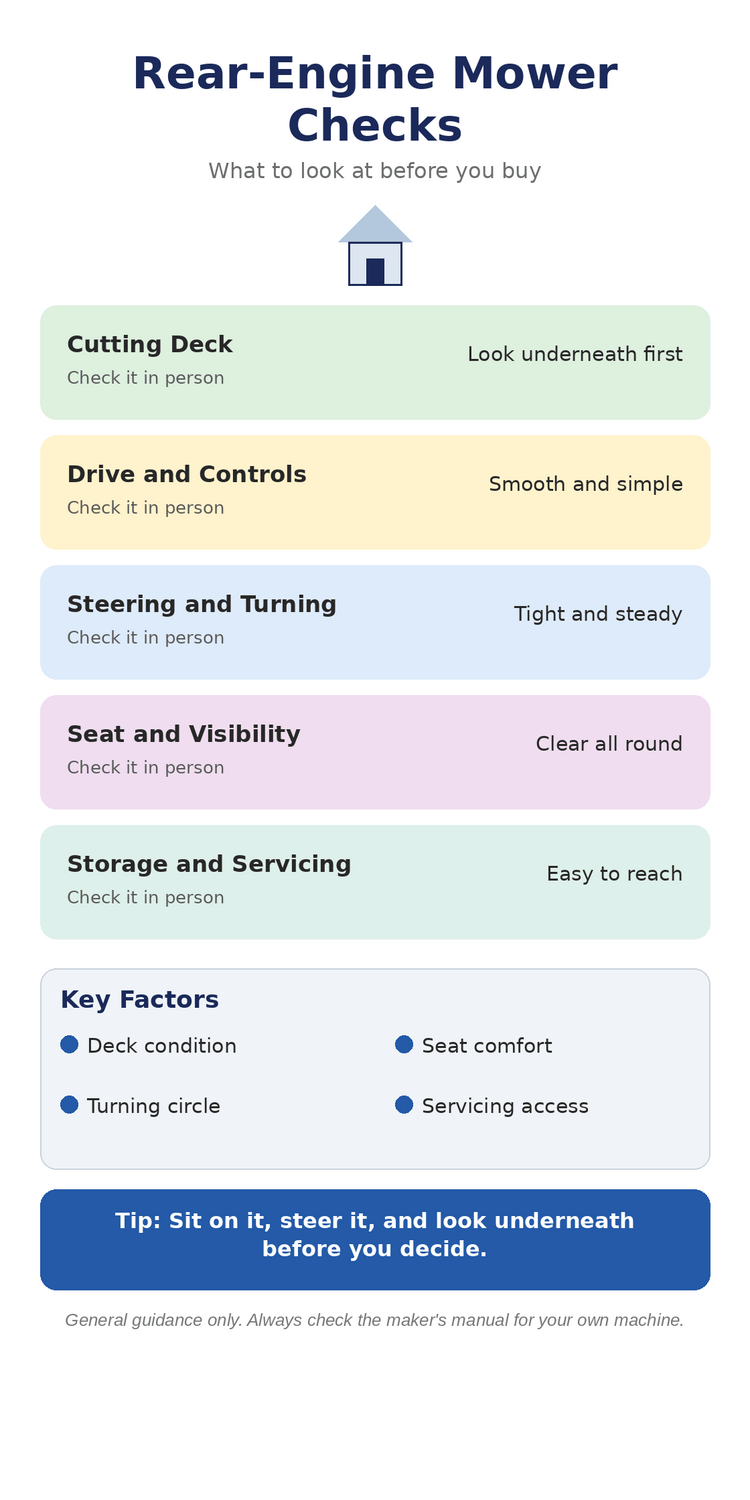
The checks in this guide are meant to be carried out in person, slowly, and in the order that matters to you. Look underneath, sit in the seat, steer through a turn, open the rear housing, and picture the machine in your shed. Those simple actions will tell you more than any claim, because they test the machine against the ground it will actually cut. That is the real value behind rear engine riding mower reviews as a starting point: not a verdict handed to you, but a set of questions that help you reach your own judgement with confidence.
Take your time, compare the machine against your own lawn rather than against another machine in the abstract, and let the garden itself set the standard. A mower that fits its ground, its shed, and its owner will be used willingly, looked after properly, and kept for a long time, and that quiet fit is the outcome any round of checking can deliver.


0 Comments