
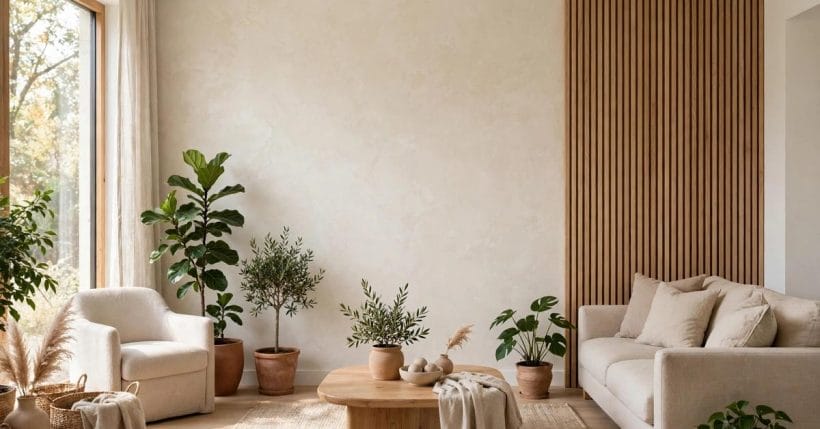
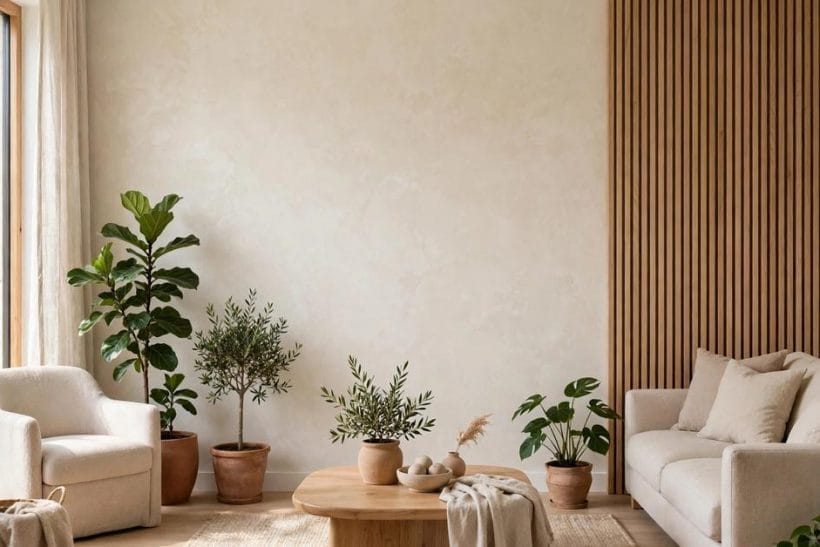
A wall is the largest surface in most rooms, and the way it is treated sets the mood long before furniture is noticed. Modern interior walls tend to favour calm colour, honest texture and a restrained use of pattern, so a room feels settled rather than busy. This guide looks at the layouts, colours and practical details that shape a good result, from a plain painted surface to timber, plaster and brick, and at how those choices sit together in a home that is meant to be lived in every day.
The appeal of a modern wall treatment is rarely about novelty for its own sake. It is about balance: enough texture to give a room character, enough quiet space to let light, furniture and everyday objects breathe. Looking at tiny house interiors is a useful reminder of that discipline, because in a compact room every surface has to earn its place. The same thinking scales up to a larger home, where a calm wall can hold a whole scheme together.
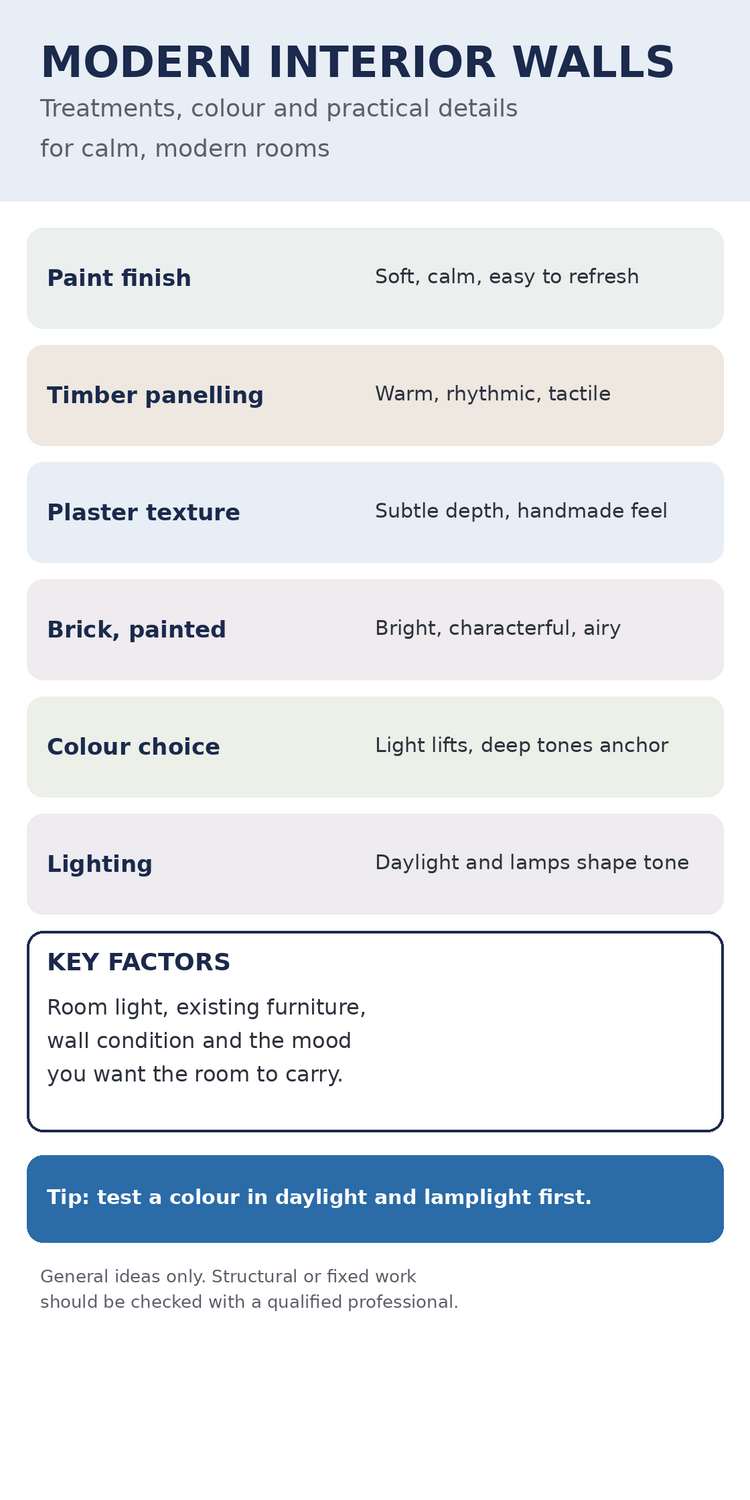
| Item | What it is |
|---|---|
| Paint: The Quiet Foundation | Paint remains the most flexible way to shape a modern room, and its strength lies in subtlety. |
| Colour Families That Suit Modern Rooms | Modern colour families tend to stay close to nature: warm whites, soft greys, muted greens, dusty blues and gentle earth tones. |
| Timber Panelling and Slats | Timber brings warmth and rhythm to a modern room in a way paint alone cannot. |
| Plaster, Limewash and Gentle Texture | Textured plaster and limewash finishes give a wall a soft, handmade quality that flat paint cannot match. |
| Brick, Painted and Natural | Brick brings an immediate sense of history and solidity to a modern interior, even in a newly built home. |
| Feature Surfaces and Focal Points | Every well-composed room has a place where the eye naturally lands, and the wall treatment can either create that place or support it. |
| Hallways, Corners and Linking Spaces | Hallways and corners are often treated as afterthoughts, yet they shape how a home feels as a whole. |
| Bedrooms: Walls That Support Rest | Bedroom walls have a different job from those in a living room: they should help the room feel restful at the end of the day. |
| Small Rooms, Open-Plan Spaces and Practical Details | Small rooms reward wall treatments that stay light and continuous. |
1. Reading the Room Before Choosing a Treatment
Start with the room as it already is, not with a finish seen in isolation. Notice where daylight falls through the day, which wall catches the eye on entering, and where furniture naturally gathers. A wall that faces a window will read lighter and cooler than the same colour on a wall that sits in shade, and a treatment that looks gentle in a bright room can feel heavy in a dim corner. Spending time with those observations prevents a choice that fights the room.
Existing furniture matters just as much. Warm timber, pale linen, dark metal and soft upholstery each ask for a different backdrop. A quiet painted surface lets strong furniture lead, while a textured or panelled surface can carry a room where the furniture is deliberately plain. The aim is a partnership between wall and furnishing, where neither has to shout to be noticed.
It also helps to think about how the room is used. A living room that hosts conversation and reading wants a backdrop that feels welcoming at all hours, while a bedroom wall is best when it supports rest. Hallways and linking spaces benefit from continuity, so the eye moves easily from one room to the next. When the purpose of each space is clear, the wall treatment follows naturally.
2. Paint: The Quiet Foundation
Paint remains the most flexible way to shape a modern room, and its strength lies in subtlety. A soft white, a warm off-white, a muted grey or a gentle sage can change how spacious a room feels without drawing attention to itself. The finish matters too: a flat, chalky surface softens light and hides small imperfections, while a gentle sheen reflects light and suits spaces that need wiping down. Choosing between them is a question of mood and use rather than fashion.
Colour should be tested in the room itself, in daylight and under lamps, and beside the furniture and flooring it will live with. A shade that looks perfect on a small card can shift dramatically across a full wall, especially near windows or under warm lighting. Living with a painted sample for a few days, through morning light and evening lamplight, gives a truer sense of how the colour will behave than any single glance.
Paint also makes it easy to create a gentle hierarchy in a room. The main walls can stay calm while a single feature surface carries a deeper tone, and that contrast gives the eye a place to rest. Looking at interior design ideas beside paint samples helps, because a colour seen alone reads very differently from the same colour running across a full wall with furniture, curtains and art in place.
3. Colour Families That Suit Modern Rooms
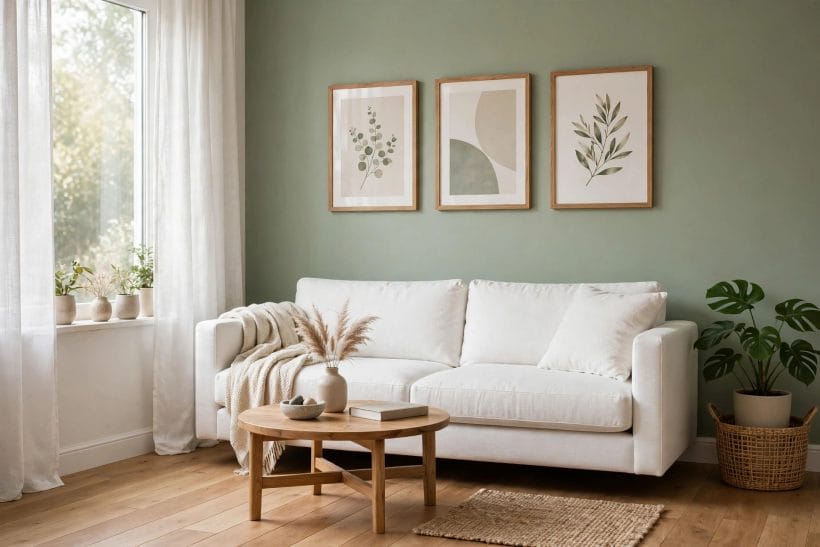
Modern colour families tend to stay close to nature: warm whites, soft greys, muted greens, dusty blues and gentle earth tones. These shades share a quiet quality that lets a room feel calm, and they pair easily with timber, linen, stone and plants. A green wall, for example, can feel fresh and restful at once, especially when it sits beside pale upholstery and warm wood.
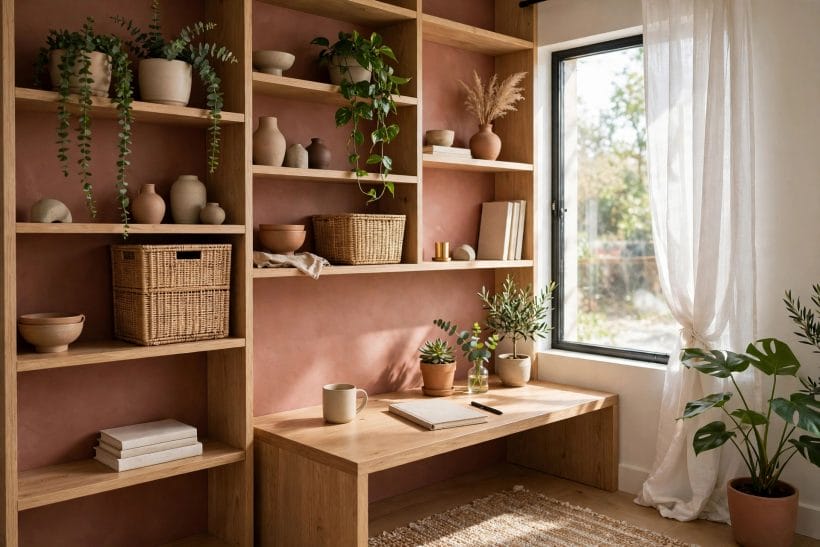
Deeper tones have their place as well, used with restraint. A deep green, a soft charcoal or a warm terracotta on a single wall can anchor a room and give it depth, provided the surrounding surfaces stay light and the room receives enough daylight. The contrast is what makes the deeper tone work: without light surfaces beside it, even a beautiful colour can feel enclosing.
Warm and cool undertones deserve attention, because they change how a colour sits with flooring and furniture. A warm white flatters timber floors and cream fabrics, while a cooler white suits grey stone and pale metals. When the undertone of the wall, the floor and the main furniture agree, the room feels coherent even when the palette is simple.
4. Timber Panelling and Slats
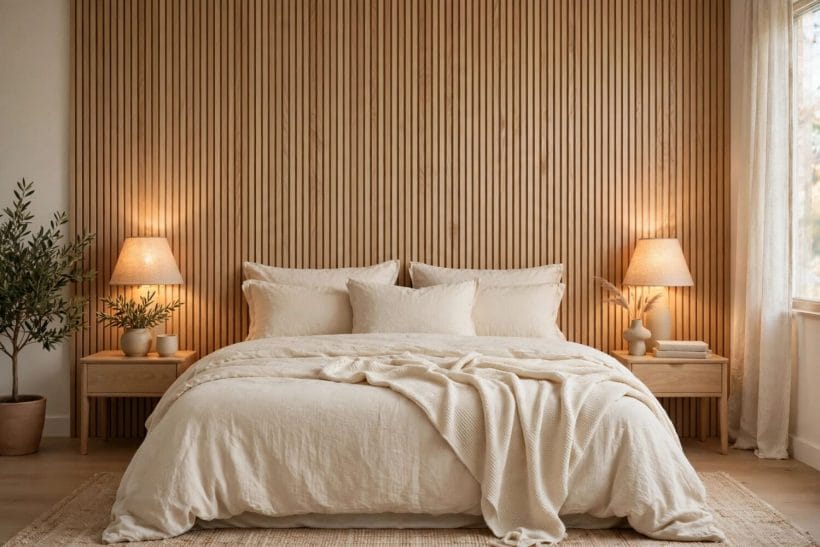
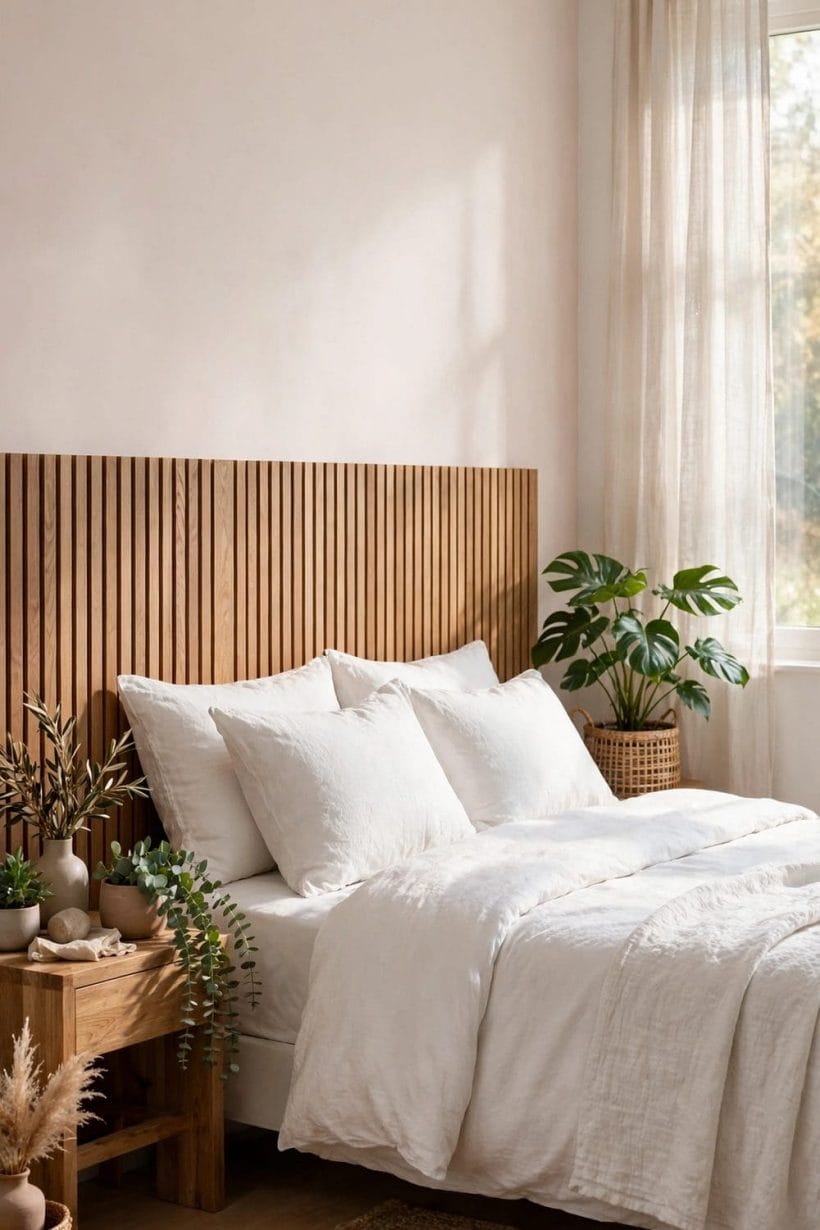
Timber brings warmth and rhythm to a modern room in a way paint alone cannot. Vertical slats draw the eye upward and give a wall a gentle, regular beat, while wider boards feel calmer and more grounded. Light oak reads airy and Scandinavian, while a deeper timber feels richer and more traditional. The choice of tone should follow the timber already in the room, so floors, doors and panels feel related rather than competing.
Panelling works best when it is given a clear role. A full panelled wall behind a sofa or a bed creates a natural focal point, while a partial panelled section can define a reading corner or a dining zone within an open room. Keeping the rest of the walls quiet lets the timber do its work without the room feeling lined from floor to ceiling.
Care and longevity matter here as well. Timber responds to light and to the dryness or humidity of a home, and its tone will mellow over time. That gradual change is part of its charm, but it is worth considering when matching new panels to existing woodwork. A professional can advise on fixing, finishing and the suitability of a panel for a particular wall, especially where the wall carries services or sits in a damp-prone area.
5. Plaster, Limewash and Gentle Texture
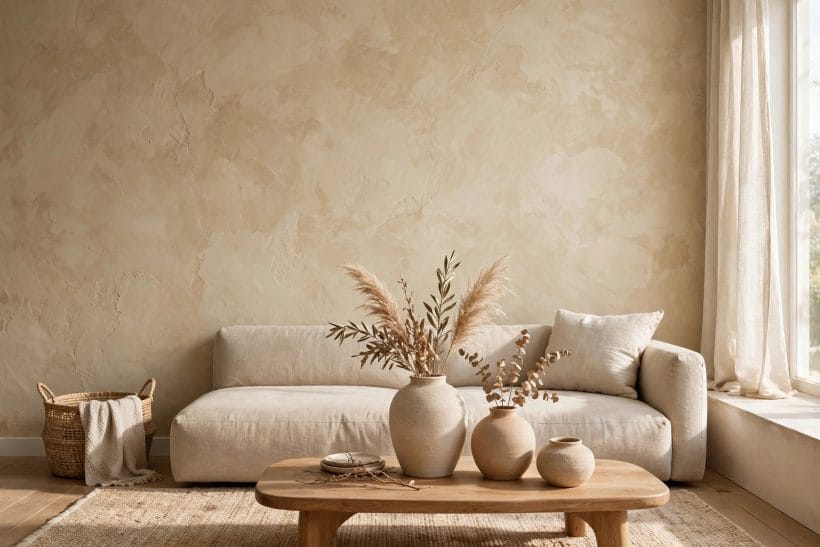
Textured plaster and limewash finishes give a wall a soft, handmade quality that flat paint cannot match. The surface catches light unevenly, so a wall seems to shift gently through the day, brighter where the sun touches it and softer in shade. That movement adds depth without pattern, which is why these finishes suit rooms where calm is the priority.
The palette for textured finishes usually stays pale and earthy: warm white, soft clay, gentle sand and muted stone. Colour is applied in washes rather than as a single flat coat, so the result feels layered and organic. Furniture in natural materials sits happily against such a surface, and the room gains a quiet, collected feeling rather than a decorated one.
Texture also forgives. A wall with a gentle plaster finish does not demand perfect flatness, and small marks of everyday life blend into its surface more easily than they would on a hard, glossy wall. For a room that is used daily, that forgiving quality is a practical virtue, and it keeps the space looking settled rather than precious. Ideas for a calm backdrop behind a bed can be compared with an accent wall behind the bed, where a single surface is allowed to carry the character of the room.
6. Brick, Painted and Natural
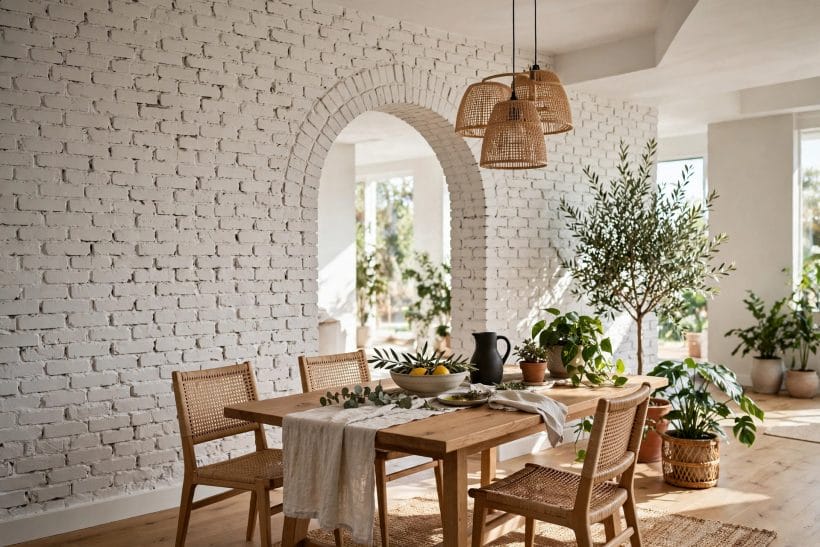
Brick brings an immediate sense of history and solidity to a modern interior, even in a newly built home. Left natural, it adds warmth and a strong, honest texture, especially beside timber and linen. Painted in white or a soft neutral, the same brick keeps its texture while feeling lighter and more contemporary, and the mortar lines give the wall a subtle pattern that paint alone cannot provide.
A brick wall is best used as a single statement surface rather than on every wall of a room. Around a fireplace, behind a dining table or along a hallway, it gives the eye something to linger on. When the surrounding walls stay plain, the brick reads as a deliberate choice rather than a leftover, and the room keeps its modern calm.
Condition is worth checking before celebrating a brick surface. Old brick can be dusty, uneven or marked by previous finishes, and a professional can advise whether cleaning, sealing or painting is appropriate for that particular wall. The goal is to keep the character of the material while making sure the surface is sound and comfortable to live beside.
7. Feature Surfaces and Focal Points
Every well-composed room has a place where the eye naturally lands, and the wall treatment can either create that place or support it. A feature surface might be a panelled wall, a deep colour, a textured finish or a wall that frames a fireplace or a piece of art. What matters is that it is intentional: one surface leads, and the others support.
Restraint is the key to a feature surface that ages well. When only one wall carries a strong treatment, the room feels composed; when several walls compete, the effect can feel restless. The feature wall should also relate to the furniture in front of it, so a sofa, a bed or a table sits comfortably against it rather than fighting for attention.
Art and shelving can complete a feature surface, but they should be placed with the same restraint. A few well-chosen pieces, hung at a comfortable height and given breathing room, will always outlast a crowded display. Looking at tiny house living room ideas shows how a single calm wall, with one or two considered pieces, can carry a whole room.
8. Hallways, Corners and Linking Spaces
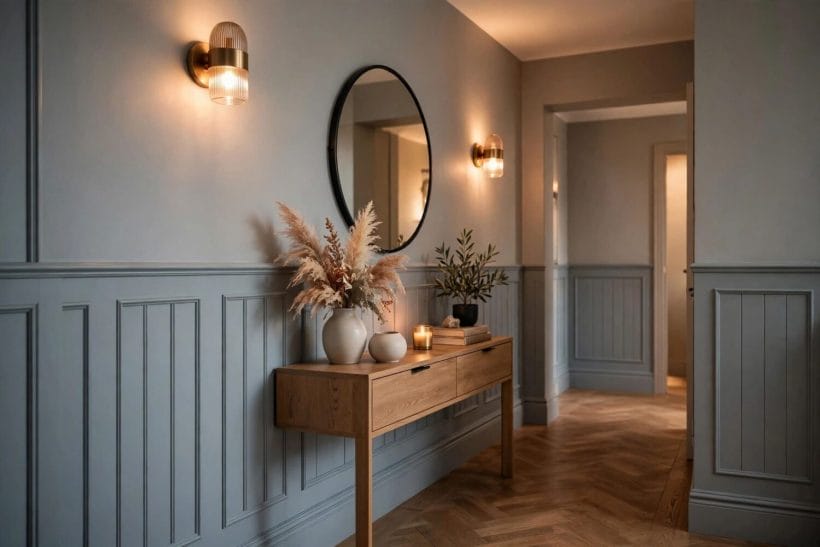
Hallways and corners are often treated as afterthoughts, yet they shape how a home feels as a whole. A consistent wall treatment through linking spaces gives a home a sense of flow, so moving from room to room feels smooth rather than disjointed. Panelled lower walls, a continuous paint colour or a repeated trim detail can tie separate rooms together without making them identical.
Light is especially important in these narrower spaces. Pale colours, a mirror placed to catch daylight, and warm wall lights can make a hallway feel welcoming rather than cramped. Dark or heavily patterned treatments, by contrast, can make a narrow space feel tighter, so restraint pays off here more than anywhere.
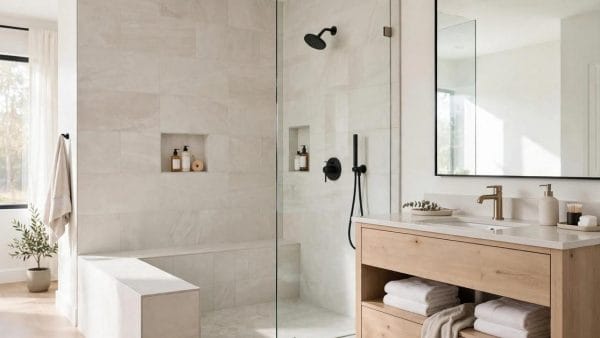
Storage and display in hallways should follow the wall rather than fight it. A slim console, a single bench or a short run of hooks sits comfortably against a panelled or painted wall, while bulky furniture can crowd the passage. When the wall treatment and the furniture are planned together, even a modest hallway feels considered. A pairing of pale walls with light cabinetry, as explored in grey walls with white cabinets, shows how a quiet backdrop can keep a practical space feeling bright.
9. Bedrooms: Walls That Support Rest
Bedroom walls have a different job from those in a living room: they should help the room feel restful at the end of the day. Soft, muted colours, gentle texture and a calm surface behind the bed all support that mood. Strong contrasts and busy patterns, however beautiful elsewhere, can feel stimulating in a room meant for sleep.
The wall behind the bed deserves particular care, since it is the surface seen most often from the doorway and from the bed itself. Timber panelling, a soft painted tone or a textured plaster finish can all give that wall a quiet presence without demanding attention. Bedding in pale, natural fabrics then completes the effect, layering softness upon softness.
Lighting completes the bedroom wall. Warm bedside lamps cast a gentle glow across paint or timber, softening the surface and making the room feel enclosed in a good way. Harsh overhead light, by contrast, can flatten even a beautiful wall treatment, so lamps and dimmers are worth considering as part of the wall scheme rather than as an afterthought. Calm bedroom schemes are explored further in tiny house bedroom ideas, where a restrained wall lets the whole room breathe.
10. Small Rooms, Open-Plan Spaces and Practical Details
Small rooms reward wall treatments that stay light and continuous. When the same pale colour runs across all the walls, the boundaries of the room soften and the space feels larger than it is. A single feature surface can still work in a small room, provided it is kept gentle and the remaining walls stay quiet.
Open-plan spaces need the opposite skill: using walls to define zones without building barriers. A change of colour, a panelled section or a textured finish can mark where the living area ends and the dining area begins, while the overall palette stays coherent. The eye reads the change as a gentle signal rather than a division, and the space keeps its openness.
Continuity of flooring, trim and ceiling colour helps both small and open rooms. When those elements stay consistent, the wall treatment can vary from zone to zone without the home feeling fragmented. The result is a home that feels both varied and unified, with each space distinct yet clearly part of the same whole.
Before any new treatment is chosen, the condition of the existing wall deserves honest attention. Cracks, damp marks, uneven plaster or old finishes can affect how a new surface looks and lasts, and they should be understood before they are covered. A professional can advise on whether a wall needs repair, drying or preparation, and that advice is especially important where the wall is structural or carries services.
Light should be considered at every stage. A treatment chosen in a shop or from a photograph will behave differently in a north-facing room, a sunny room and a room lit mainly by lamps. Observing the wall through a full day, and under the lighting that will actually be used in the evening, prevents disappointment and keeps the finished room feeling right at all hours.
Upkeep is the final practical question. Painted walls can be refreshed and touched up with relative ease, timber needs occasional care to keep its finish, and textured plaster rewards gentle cleaning rather than harsh treatment. Choosing a finish whose upkeep suits the household, including children, pets and everyday wear, keeps the wall looking good long after the first excitement has faded. Broader home schemes that tie walls, furniture and colour together are gathered in home design ideas, a useful place to check a wall choice against the whole house.
Final Considerations
Modern interior walls work best when they are chosen slowly, tested in the room, and kept in balance with light, furniture and everyday life. A calm painted surface, a warm timber panel, a soft plaster texture or a painted brick wall can each carry a room, provided the treatment suits the space and is given room to breathe. The strongest schemes are rarely the loudest; they are the ones where every surface feels considered and nothing has to compete.
Any work that touches the structure of a home, opens a wall, moves a support or alters services should be left to a qualified professional, and no decorative idea in this guide is a substitute for that advice. With that boundary respected, the decorative choices are free to be enjoyed: test colours in real light, live with samples, and choose the treatment that makes the room feel like home. A wall that is calm, well kept and well lit will reward that patience every day.


0 Comments