
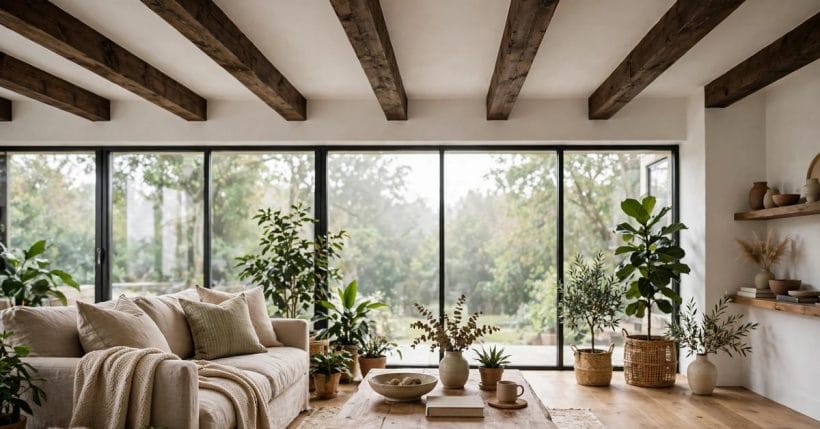
A ceiling can change how a whole room feels, and few features do it as directly as beams. A wood beam ceiling draws the eye upward, adds rhythm to a flat surface, and brings a natural material into a space that might otherwise feel plain. Done well, it makes a room feel grounded and finished. Done without thought, it can make a low room feel lower, a bright room feel heavy, or a calm scheme feel busy. The difference usually comes down to planning: the finish, the spacing, the room itself, and an honest look at what the ceiling can carry.
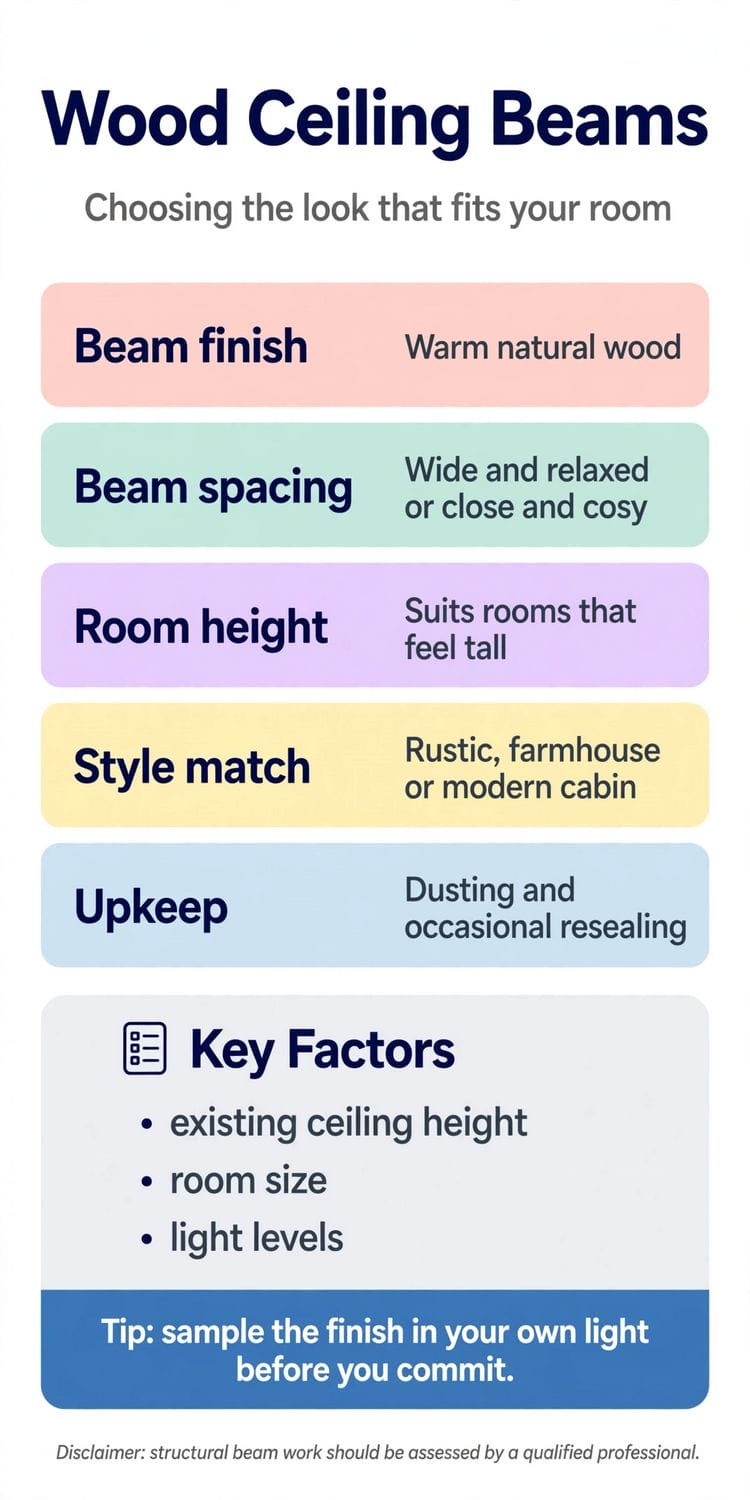
This guide stays with one form only, the beam itself, and looks at how it behaves in different rooms and finishes. It covers what to notice, what to ask, and how to care for beams once they are in place. Anything that touches the structure of a ceiling, including load-bearing members, fixings into joists, and any change to how a ceiling is supported, belongs with a qualified professional, and this guide does not attempt to teach that work. What follows is about the look, the planning, and the living-with-it part.
1. Start With the Room, Not the Beam
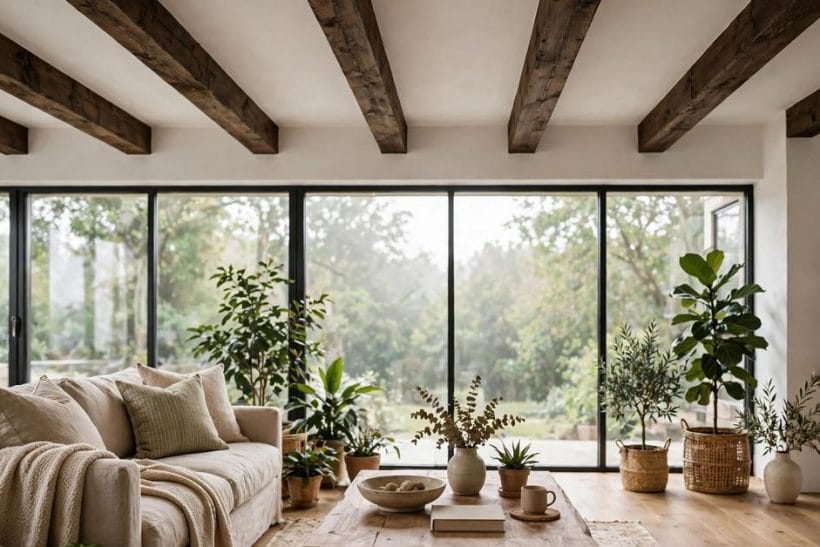
Before choosing a beam style, stand in the room and look at what is already there. Notice the height of the ceiling, the size of the windows, the direction of the daylight, and the colours of the floor and walls. A room with generous height and strong daylight can carry darker, bolder beams without feeling closed in. A smaller room with one window needs a lighter touch, or the beams will dominate everything beneath them.
Think about the furniture too. A room full of tall bookcases and heavy pieces already has plenty of visual weight, so quieter beams may suit it better. A spare room with pale walls and simple furniture can take more character overhead. The beams should answer the room, not compete with it. When the room and the beams feel like they belong together, the ceiling stops being a feature on its own and becomes part of the whole.
It also helps to consider the view from the doorway. Most people see a ceiling first from the entrance, at an angle, so the first beams in sight set the tone. If they look calm and even from there, the rest of the room usually follows.
2. Dark Beams for Warmth and Contrast
Dark beams are the classic choice, and their appeal is easy to understand. Against a pale ceiling they create strong lines that give a room structure and a sense of history, even in a new home. They pair well with warm woods elsewhere in the room, with stone or brick, and with soft furnishings in natural fabrics. A living room with dark beams often feels more settled in the evening, when lamplight warms the wood and softens the contrast.
The trade-off is weight. Dark beams absorb light, so in a room that is already dim they can make the ceiling feel closer. That matters most in north-facing rooms and in rooms with small windows. One way to keep the warmth without the heaviness is to let the ceiling between the beams stay pale and bright, so the dark lines read as rhythm rather than as a solid mass. Keeping the walls light helps too, since the contrast then sits overhead where it belongs.
Dark finishes also show dust and cobwebs more readily than pale ones, especially where beams meet the ceiling. That is a small point, but it is part of living with the look, and it is worth knowing before committing.
3. Pale and Whitewashed Beams for Light Rooms
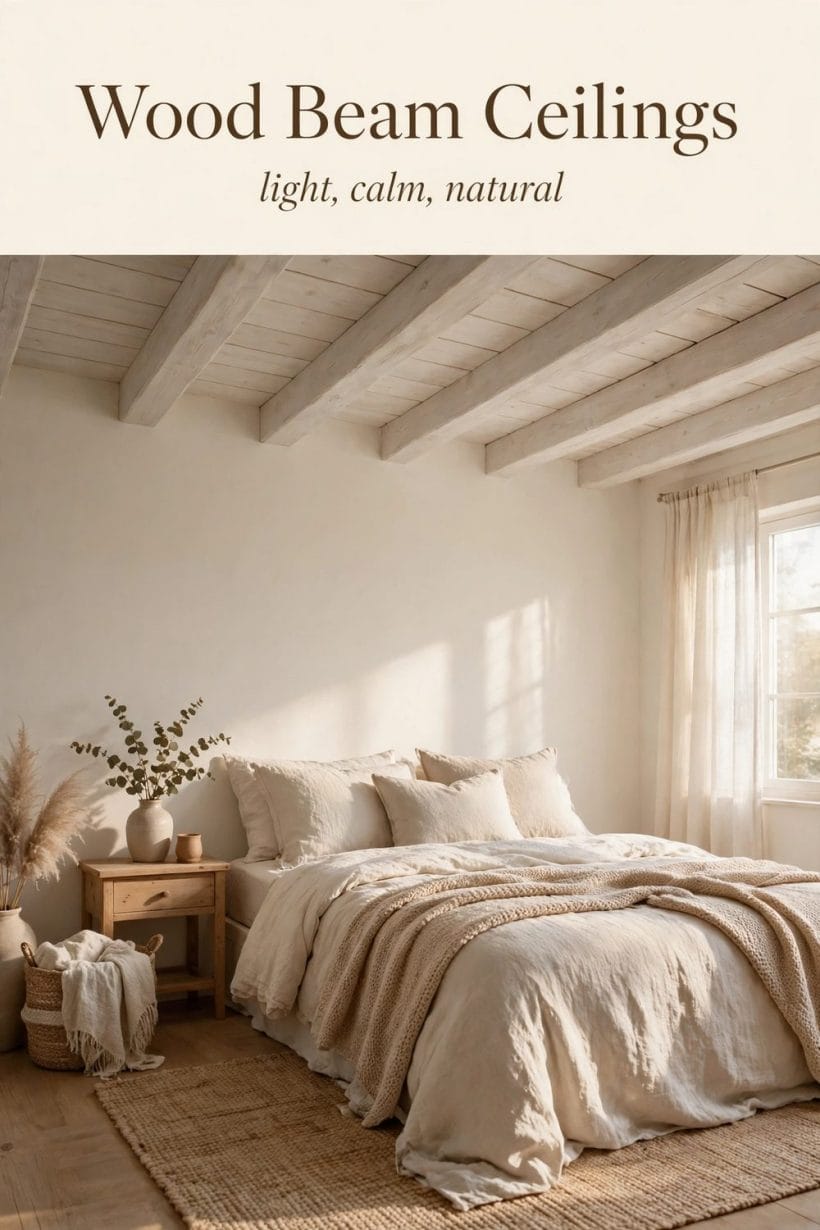
At the other end of the scale, pale and whitewashed beams keep the texture of wood while letting light do most of the work. The grain is still visible, but the overall effect is softer, and the ceiling feels higher than it would under a dark finish. This makes pale beams a natural fit for bedrooms, for small living spaces, and for rooms where the daylight is limited.
A whitewashed finish also sits comfortably with coastal, Scandinavian, and relaxed farmhouse schemes, where the palette is already light. It does not demand attention, which can be a virtue: the beams add interest without becoming the loudest thing in the room. In a bedroom, that quiet quality is often exactly what is wanted, since the ceiling is the last thing seen at night and the first thing seen in the morning.
One caution applies to pale finishes. They can look washed out if the rest of the room is entirely white, with nothing to give the eye a resting point. A mid-toned floor, a coloured rug, or wooden furniture in a natural tone is usually enough to anchor the scheme and let the pale beams read as a deliberate choice.
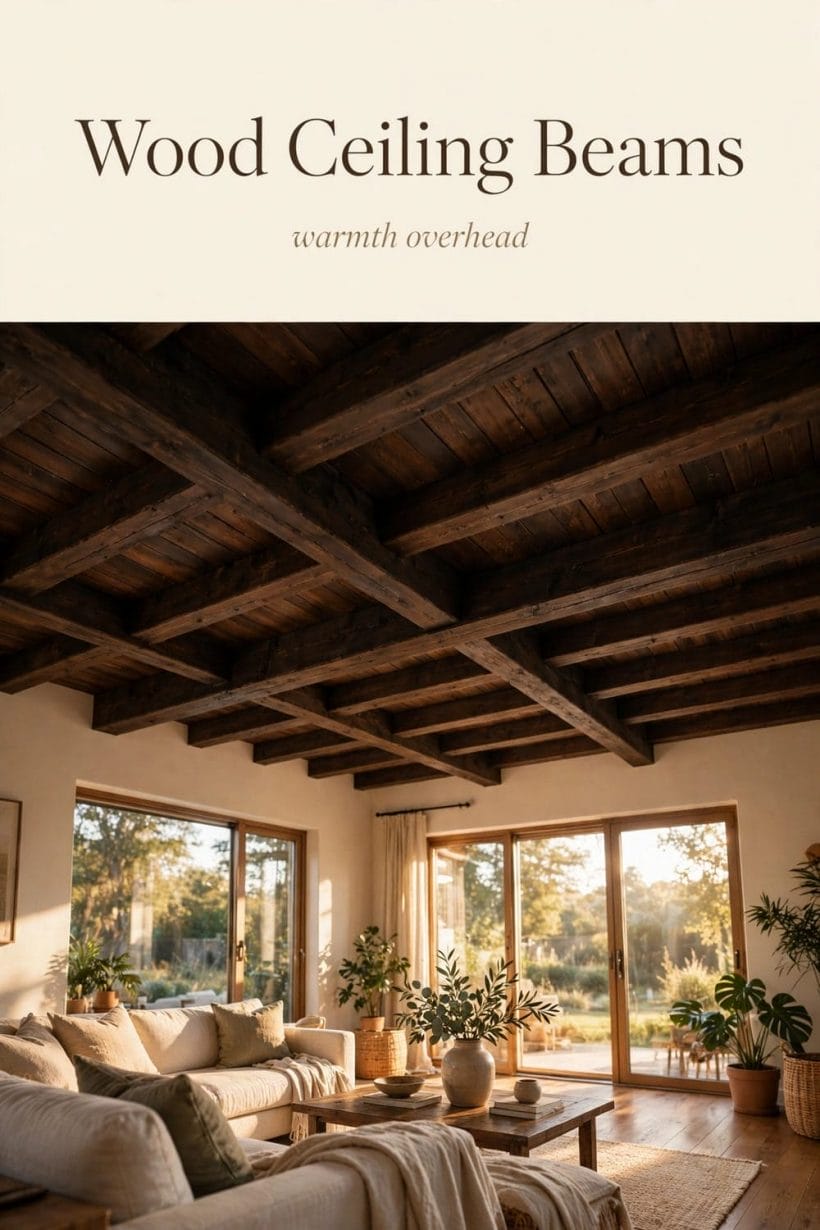
4. Beams in the Living Room
The living room is where beams earn their keep most visibly, because it is the room where people gather, relax, and spend long evenings. Beams here frame the space and give it a sense of occasion without any extra decoration. They also help a large, open room feel more intimate, by breaking a broad ceiling into a series of bays that the eye can follow.
In a living room, the relationship between beams and lighting deserves attention. Pendant lights and ceiling lights hang in the spaces between beams, and their positions should be planned with the beam layout in mind, so that lights do not crowd the wood or cast awkward shadows across it. Lamps at seating height matter just as much, since they light the lower half of the room and keep the beams from feeling like a dark lid.
For more ideas on shaping a comfortable main room, browse these tiny living room ideas and small living room ideas, which show how a ceiling feature works alongside furniture, storage, and layout in rooms where every choice counts.
5. Beams in the Kitchen
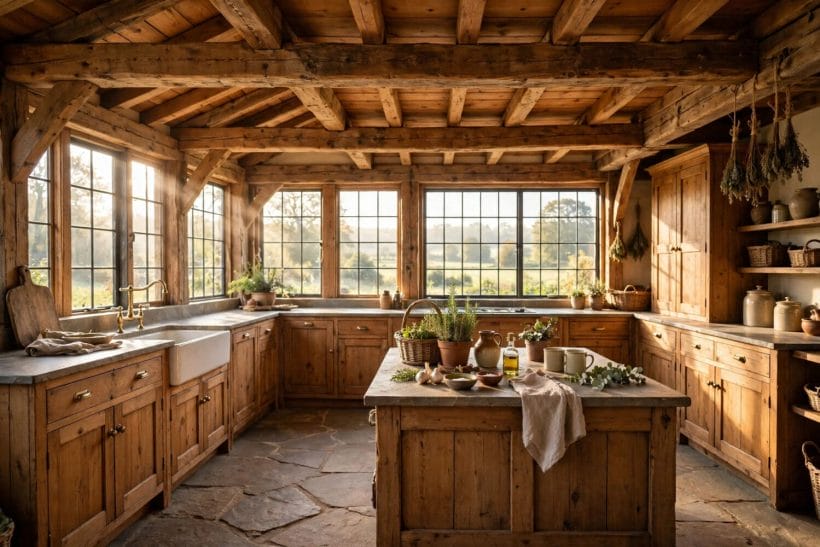
Kitchens have their own demands. Cooking produces steam and grease, and both find their way upward, so a kitchen ceiling needs a finish that can be wiped clean and that will not suffer from repeated damp air. Sealed wood copes better than raw wood here, and a finish that can be refreshed from time to time will keep the beams looking cared for rather than tired.
Beams in a kitchen also share the ceiling with practical things: cooker hoods, vents, and task lighting over worktops. The layout should leave sensible clearances around these, and anything that involves cutting into a ceiling or moving a vent is a job for a professional. The visual reward is real, though. Beams over a kitchen table or an island give the cooking space a warmth that plain ceilings rarely achieve, and they connect the kitchen to the rest of a home that uses wood elsewhere.
For kitchen layouts that balance practicality with character, see these tiny kitchen ideas, where ceiling lines, storage, and worktop placement are planned as one scheme rather than as separate problems.
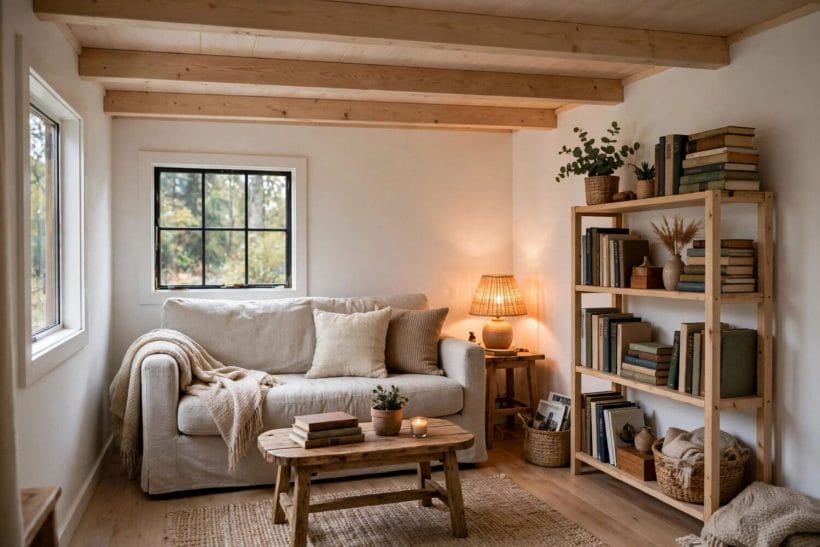
6. Beams in the Bedroom
A bedroom ceiling is seen more intimately than any other, often from a pillow. Beams here should feel calm rather than dramatic. Pale finishes, even spacing, and a restrained contrast with the ceiling surface all help. The aim is a ceiling that is pleasant to wake up to, not one that demands attention.
Bedroom beams also interact with wardrobes and tall furniture. A wardrobe that reaches close to the ceiling can crowd the beams, so it is worth checking heights before fixing furniture in place. Where the bedroom is small, beams that run across the shorter dimension of the room can make the space feel wider, while beams running the long way tend to draw the eye toward the far wall. Neither is right or wrong; it depends on which feeling the room needs.
Soft lighting suits bedroom beams best. A single harsh ceiling light can throw strong shadows from each beam, while layered lamps and dimmable lights let the wood read gently in the evening and fade into the background at night.
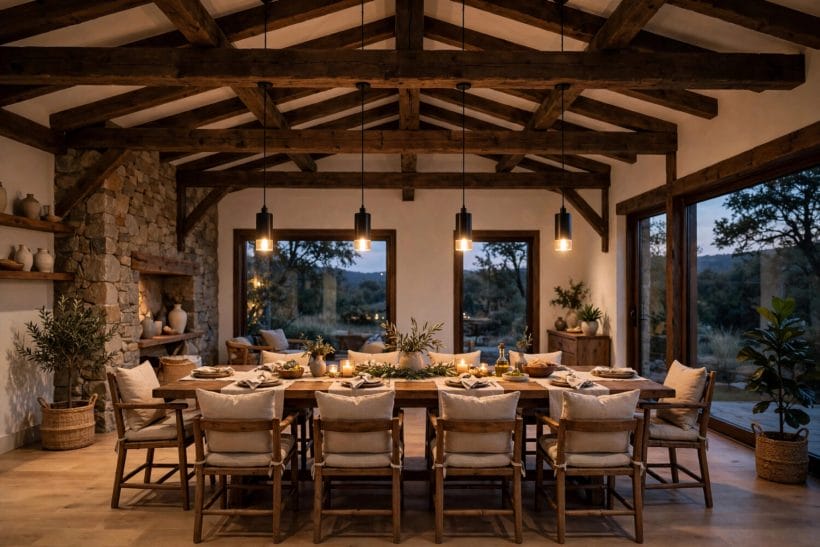
7. Beams in Small and Tiny Homes
Small homes might seem like the last place for beams, but they can work beautifully when the scale is right. In a tiny home, a beamed ceiling adds character that the rest of the interior, which is necessarily compact, may not have room for. The beams give the eye something to enjoy overhead, where floor space is precious and wall space is taken up by storage and windows.
Scale is everything here. Slimmer beams, paler finishes, and wider spacing keep the ceiling feeling open, while chunky dark beams in a very small room can quickly feel oppressive. It is also worth remembering that in a small home the ceiling is often close to a sleeping loft or a raised bed, so the beams will be seen at close quarters. A smooth, well-finished surface matters more at that distance than it does in a large room.
For compact interiors where the ceiling has to work hard, explore these modern tiny house interior ideas, and for the vertical circulation that often sits beneath a beamed ceiling, these tiny house stairs show how stairs, lofts, and overhead lines can be planned together.
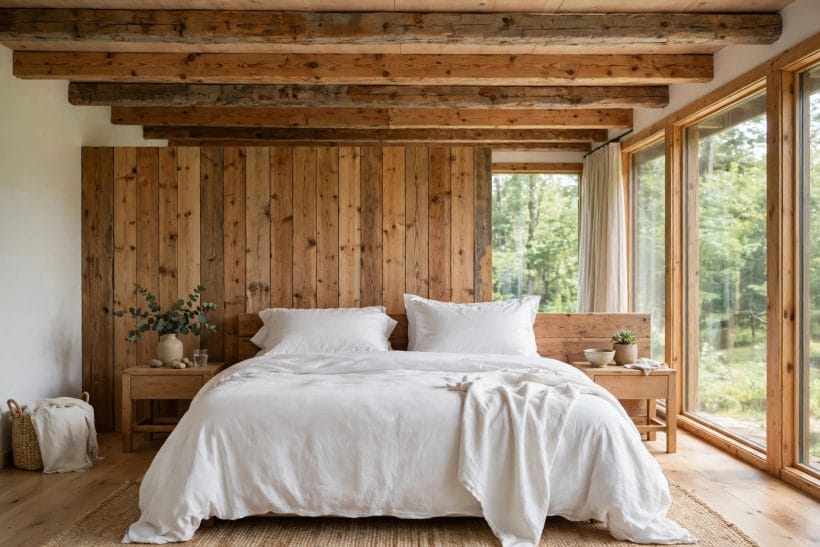
8. Beam Finishes and How They Age
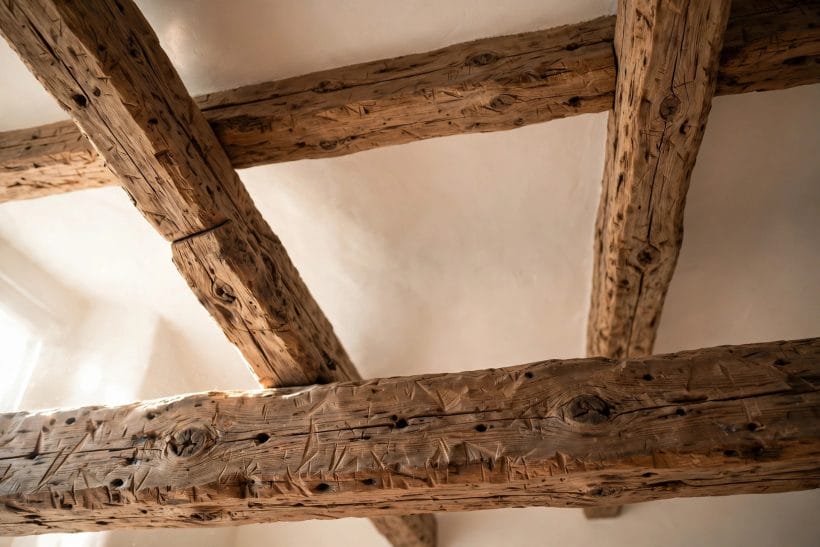
Wood changes with time, and beam finishes change with it. Natural wood deepens in colour as it ages, especially where sunlight reaches it. Sealed finishes slow that change and make cleaning easier, while oiled finishes can be refreshed but need attention more often. Painted finishes hide the grain and give a cleaner, more uniform look, but they also need touching up where the paint chips or wears.
The right finish depends on the room and on how much upkeep feels acceptable. A living room beam that is rarely touched can carry almost any finish, while a kitchen beam or a beam near a frequently opened window will be tested by moisture and temperature changes. Asking what a finish looks like after a few years, not just on the day it is applied, is one of the most useful questions to ask a supplier or a professional.
It is also worth thinking about consistency. Beams that match the tone of a wooden floor or a staircase feel intentional, while beams in a completely unrelated tone can look like an afterthought. They do not need to match exactly; a shared warmth or a shared coolness is usually enough to tie the scheme together.
9. Light, Colour and the Space Between Beams
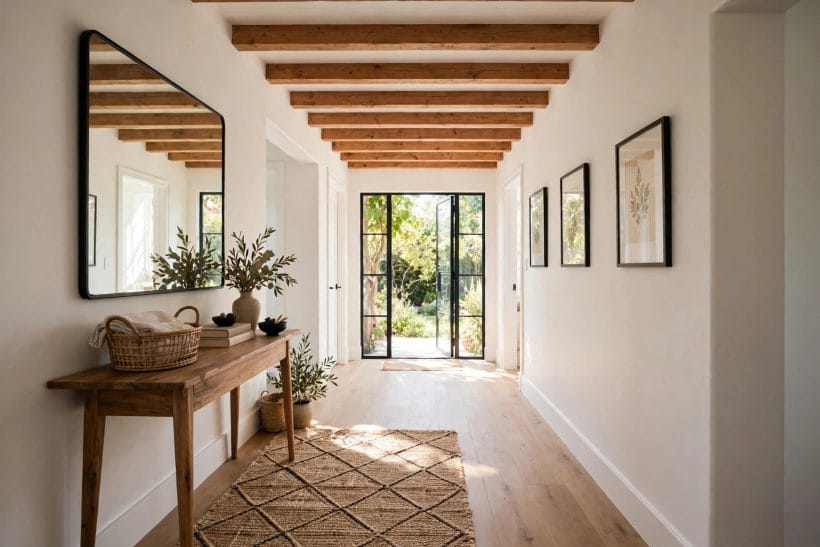
The space between beams matters as much as the beams themselves. A pale ceiling surface between dark beams keeps the room bright, while a ceiling surface in a warm tone can make the whole scheme feel cosier. The colour of that in-between surface also affects how the beams read: against a crisp white they look sharp and graphic, while against a softer tone they look gentler and more traditional.
Daylight changes the picture through the day. Morning light raking across beams picks out grain and texture, while flat midday light can make the same beams look plainer. Evening lamplight warms them again. None of this is a problem, but it is worth looking at beam samples in the room itself, at different times of day, rather than judging them only in a showroom.
Artificial lighting needs the same care. Lights placed between beams wash the ceiling surface and let the beams stand out in relief, while lights that sit too close to a beam can create a hard shadow line. A lighting plan that treats beams and lights together, rather than adding lights as an afterthought, gives a much calmer result.
10. Planning Notes and Questions for a Professional
Good planning starts with honest questions. Is the ceiling structure suitable for the look being considered, and what would a professional need to check before anything is fixed in place? Are there wires, pipes, or vents in the ceiling that the beam layout must work around? How will the beams be supported, and what happens if a beam needs to be moved later? These are not questions to answer by guesswork; they are the reason a qualified professional should be involved from the start of any project that alters a ceiling.
A second group of questions concerns the finish and the long term. How should the beams be cleaned, and how often? Can the finish be refreshed without removing the beams? What happens to the finish in a steamy or sunlit room? The answers shape both the choice of beam and the choice of finish, and they are easier to get before work begins than after it.
Finally, think about the rest of the home. A beamed ceiling in one room can set an expectation that the neighbouring rooms do not meet, which can make the beamed room feel disconnected. Carrying a hint of the same wood tone into an adjoining space, through furniture, a door frame, or a shelf, often ties the rooms together without repeating the full feature. For broader context on how a home’s design hangs together, see these tiny house building design ideas. And for the record, a wood beam ceiling is a long-term feature, so it is worth choosing slowly, sampling finishes in place, and letting a professional confirm that the plan is sound before any work starts.
Final Considerations
Wood ceiling beams suit homes that want warmth, texture, and a sense of craft overhead. They work in living rooms, kitchens, bedrooms, and small homes alike, provided the finish, scale, and spacing respect the room they are in. Dark beams bring drama and contrast, pale beams bring light and calm, and the space between beams shapes how either one feels.
The most important distinction in this whole subject is between the look and the structure. Choosing a finish, planning a layout, and caring for beams are decisions a homeowner can enjoy making. Anything that supports, alters, or fixes into the structure of a ceiling is not, and it should be left to a qualified professional. Keep that line clear, and a beamed ceiling can be enjoyed for years: a natural material overhead, ageing gracefully, making an ordinary room feel considered and complete.




0 Comments