

A rustic patio is less about buying a matching set and more about making a welcoming place from honest materials: stone, timber, gravel, clay, iron and plants. These 75 ideas are grouped so you can plan in order — layout first, then surfaces, shade, seating, food, light, planting, decor and care — and build your patio in calm stages as time and budget allow.
1. At a Glance: Plan First, Then Build the Charm
Before the first idea, answer the basic questions. They decide everything else, from the size of your table to the kind of shade that will actually work in August.
| Question | What to decide |
|---|---|
| How will you use it? | Morning coffee, family meals, gardening rest stops or evening fires — name the main use and design for that first. |
| Where does the sun fall? | Watch the plot at breakfast, midday and evening before fixing any layout or shade structure in place. |
| What surface suits the ground? | Gravel, stone, brick, decking or a mix — match the surface to drainage, slope and how much upkeep you enjoy. |
| What can you build yourself? | Be honest about skills and helpers; simple, well-finished work beats ambitious work left half done. |
| What should it cost? | Set a staged budget: groundwork first, then furniture, then the decorative layers that can grow over seasons. |
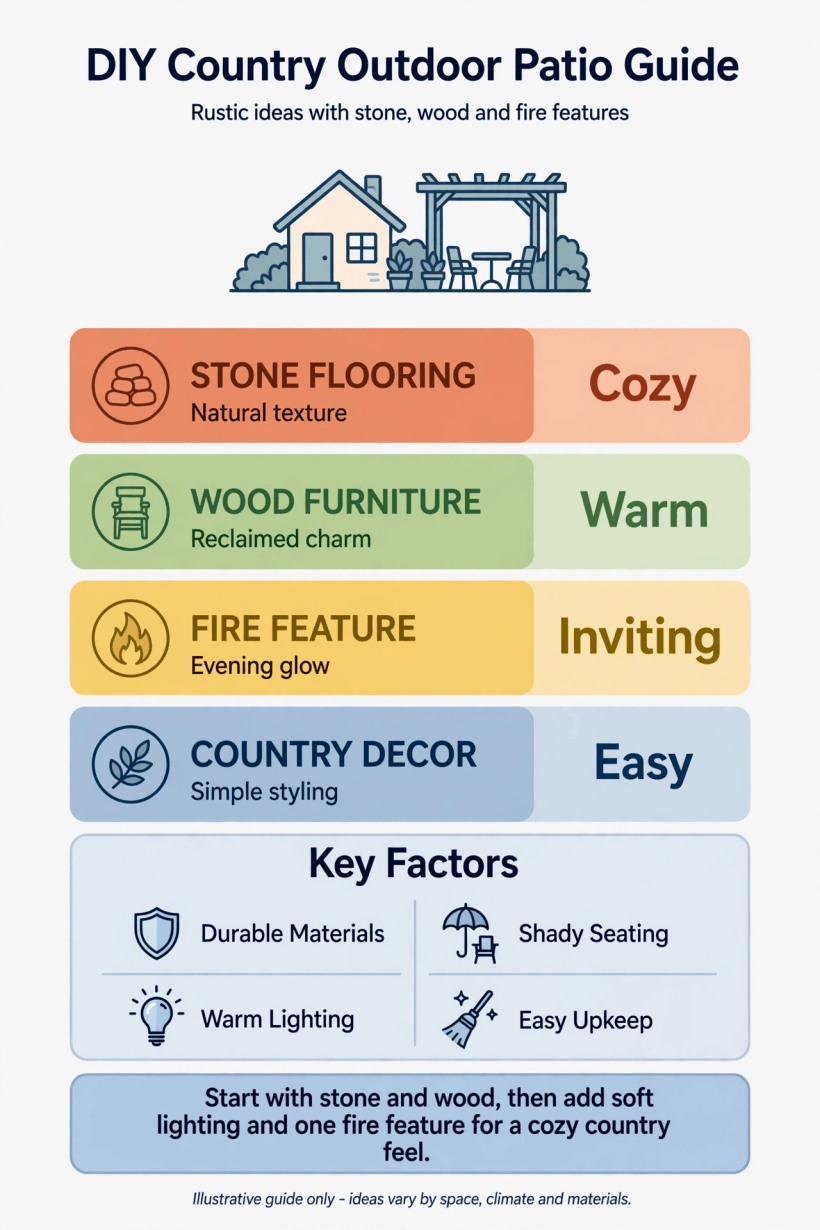
The planning order in one view: use, sun, surface, skills and budget — in that sequence.
With those answers settled, the ideas below fall into place naturally. Take them as a menu rather than a shopping list: a small patio may only need twelve of them done well, while a large yard can absorb all seventy-five over a few summers without ever feeling finished or fussy.
2. Layouts That Suit Your Plot
Good rustic patios follow the shape of the land and the habits of the household. Sketch the plot roughly, mark doors, paths, trees and the sun’s path, then try these layout ideas on paper before moving a single stone.
- The doorstep terrace: a simple rectangle outside the main door for daily use, kept clear enough for muddy boots and watering cans.
- The L-shaped wrap: seating along two sides of the house, giving one sunny arm and one shaded arm through the day.
- The garden room: a square patio enclosed by low hedges, trellis or a dry-stone edge so it feels like a room without a roof.
- The path-side pause: a widened circle or bay on an existing path, with one bench — small effort, daily pleasure.
- The two-level split: dining on the upper level, lounging below, joined by wide shallow steps that double as extra seats.
- The tree-centred plan: surfacing arranged around an existing tree, with its shade treated as the main structure of the space.
- The working edge: one side kept open and hard-surfaced for potting, stacking firewood and moving wheelbarrows through.
Whichever shape you choose, keep routes through the garden clear and let planting soften the outline, in the spirit of these tiny house landscaping ideas, where small plots still feel generous because every zone earns its place. A patio that respects paths and views will be used daily; one that blocks them becomes furniture storage.
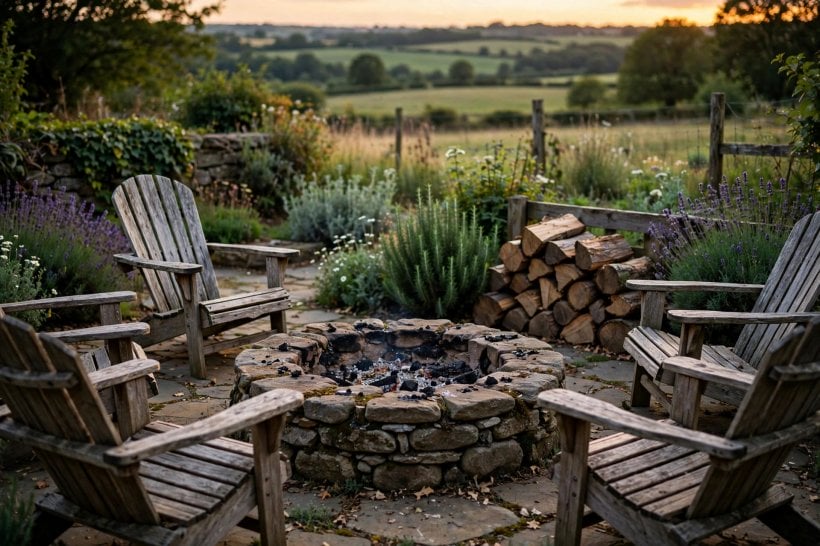
3. Groundwork: Surfaces You Can Lay and Live With
The surface decides how the patio feels underfoot, how it drains after rain, and how much sweeping it asks of you. A hands-on diy country outdoor patio usually mixes one main surface with a contrasting border, which looks deliberate and hides the joins between stages of work.
- Compacted gravel: affordable, forgiving and quick to top up; edge it firmly so it stays where it belongs.
- Reclaimed brick: warm colour and instant age; lay it on a prepared bed and brush sand into the joints.
- Irregular stone flags: the classic rustic look, with moss or low herbs encouraged in wider joints.
- Timber decking squares: useful over tired concrete, and kind to bare feet near a back door.
- Stepping-stone insets: large flat stones set in gravel where chairs and tables stand, so legs stay level.
- A brick or stone border: a single soldier course around any surface lifts the whole job from plain to finished.
- A gentle fall: build in a slight slope away from the house so puddles drain instead of creeping indoors.
Take the groundwork slowly and get levels right; the staged, measure-twice mindset in this guide on how to build your own tiny house applies just as well outdoors. Surfaces are the hardest part to redo, so they deserve your best weekend, your sharpest string line and your most patient helper.
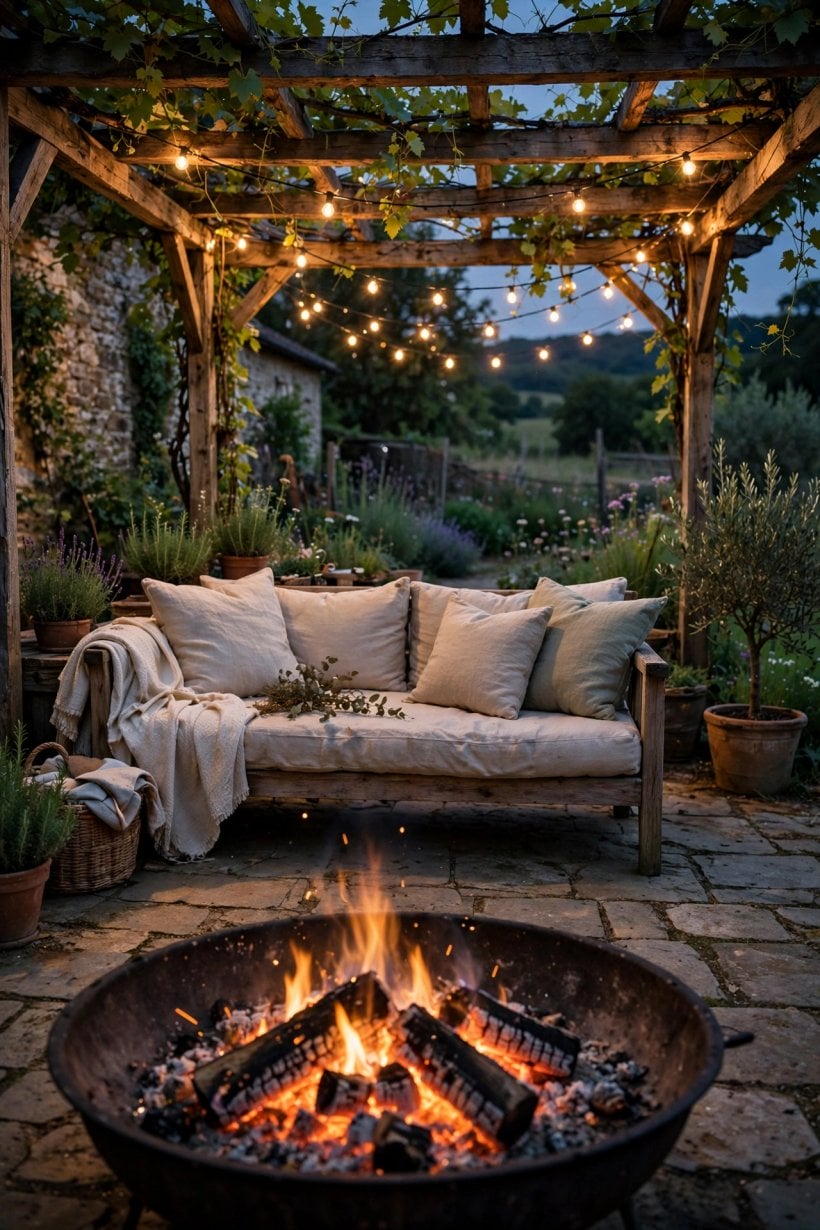
4. Shade That Looks Built In
Shade turns a hot slab into a room you can use all day. The best rustic shade looks grown or built rather than bought in a hurry, and it casts its shadow where your chairs actually sit in the afternoon, not where they sat in the morning.
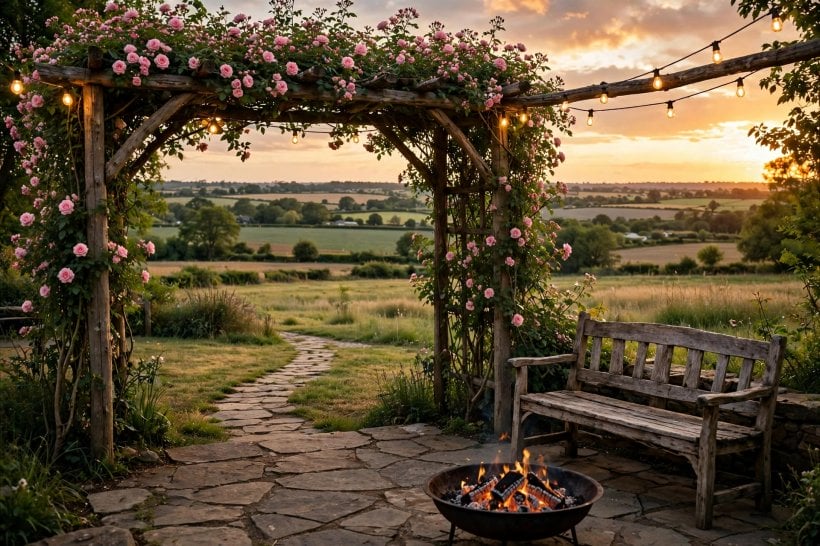
- A simple pergola: four posts and an open top, softened over time by a vine or trained rose.
- A lean-to awning: timber battens and canvas fixed to the house wall, rolled or removed for winter.
- A shade sail: a triangle of canvas between posts and wall fixings, taken down in storm season.
- A rustic arbour: a small roofed seat built into a corner, doubling as the patio’s focal point.
- A living canopy: a pleached or espaliered tree trained to throw dappled shade over a table.
- A movable umbrella: still the flexible option — choose a heavy base and natural canvas tones.
- Reed or willow screening overhead: laid across pergola beams for filtered, countryside light.
Build shade structures sturdy and square, with posts set properly rather than balanced, and think ahead to how fabric comes down for washing or winter storage. Dappled, partial shade often suits rustic planting and weathered timber better than total cover, and it keeps the patio feeling open to the sky on the many days when the sun is welcome rather than fierce.
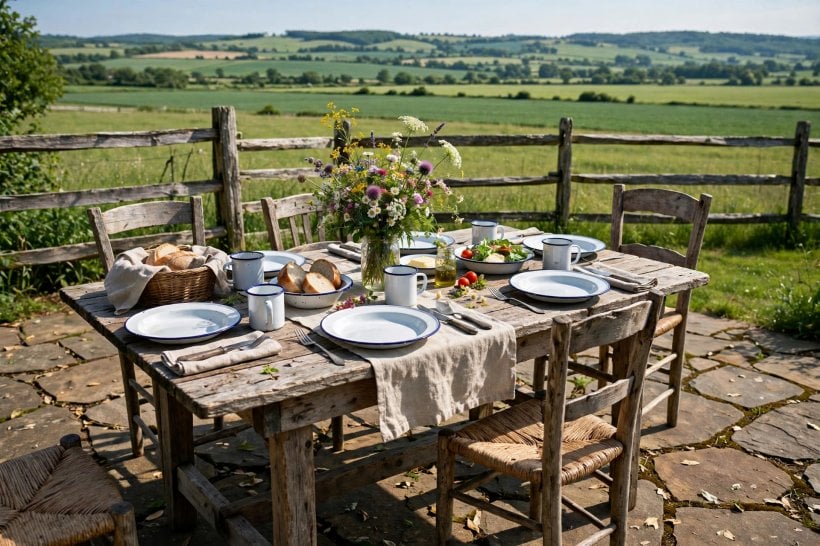
5. Seating With Character
Rustic seating mixes built-in pieces that anchor the space with movable chairs that follow the sun, the fire or the conversation. Aim for more sitting places than you strictly need; patios are social magnets, and spare seats appear in every good memory of them.
- A built-in corner bench: timber slats on a stone or block base, with storage hidden underneath.
- A porch swing or hanging bench: gentle movement, strong fixings, and cushions that come indoors at night.
- Adirondack-style loungers: wide arms that hold a mug, angled backs made for long evenings.
- A settler’s bench by the door: the everyday seat for boots, baskets and five-minute rests.
- Log rounds and stump stools: movable, sculptural and perfect around a fire.
- A window seat ledge: a deep sill or low wall top at sitting height along the patio’s sunny edge.
- Second-hand wooden chairs: mismatched on purpose, unified with one paint colour or shared cushions.
Arrange seating the way you would a room — conversation facing inward, a view kept open, a small table within reach of every seat — much as these tiny house living room ideas arrange compact interiors around how people actually sit and talk. Then test the arrangement for a week of real life before fixing anything permanent in place.
6. Tables, Food and Fire
Eating outdoors is the heart of patio life, and rustic style suits it perfectly: long tables, shared dishes, a fire nearby and nothing too precious to be used hard. Plan this zone where carrying hot dishes from the kitchen is a short, level, well-lit walk.
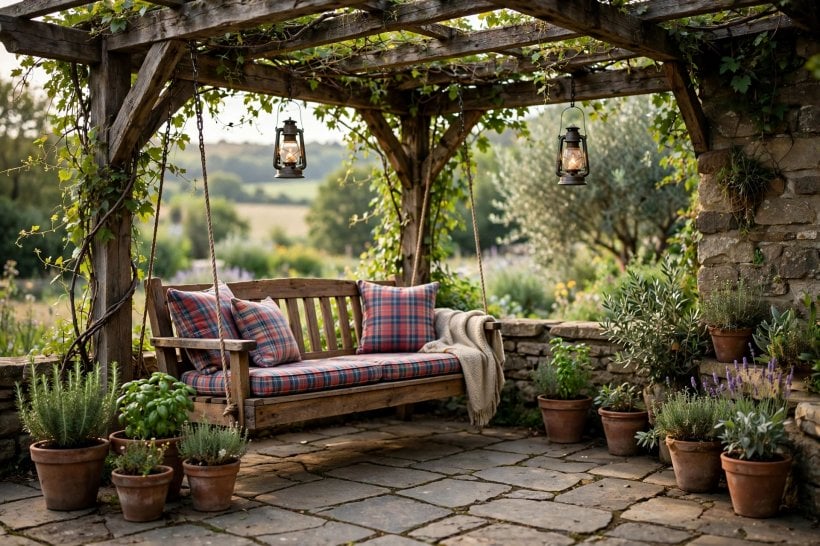
- A farmhouse table: thick planks, roomy benches, and a surface that welcomes hot pans on trivets, not coasters and worry.
- A potting-bench serving station: shelves for glasses and jugs, a hook rail for utensils, a bin tucked beneath.
- A fire pit with a cooking grate: check local rules first, site it away from fences and overhangs, and keep water or sand close by.
- A kettle-style barbecue corner: a heat-safe base, tool hooks and a small worktop at standing height.
- A drinks ledge: a wide railing or wall top where glasses rest safely away from chair legs.
- A herb planter by the table: snip-and-serve pots of hardy herbs within arm’s reach of the cook.
- A firewood store as furniture: a neat log stack that screens, stores and perfumes the seating area at once.
The indoor-outdoor ease in these tiny barn house interior examples — natural wood, practical surfaces, nothing fussy — translates directly to a patio kitchen corner. Keep fire safety unglamorous and non-negotiable: clearances respected, sparks considered, children briefed, and the fire fully out before the last person goes indoors.
7. Lighting for Long Evenings
When the light goes, a patio either empties or becomes the best room of the house. Layered, warm lighting makes the difference, and rustic settings forgive a mix of lanterns, candles and simple fittings that would clash in a formal garden.
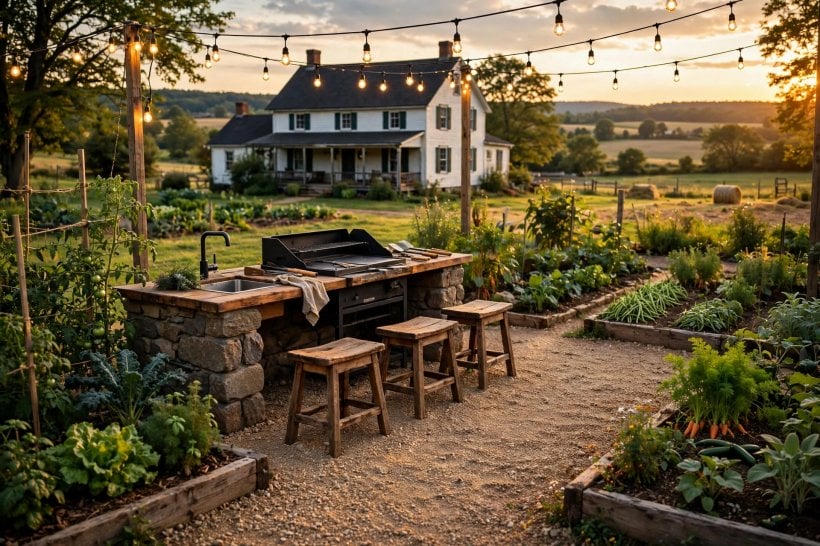
- String lights overhead: swagged between posts and beams, on outdoor-rated fixings, with the switch by the door.
- Lanterns with real candles: grouped on tables and steps, always in stable holders and never left unattended.
- Solar stake lights: marking paths and edges so evening movement is safe without glare.
- A wall lantern by the door: the practical anchor light for keys, locks and last trips to the shed.
- Firelight itself: a fire pit or chiminea placed where its glow reaches faces, not just feet.
- Low lights in planting: one or two uplights in a shrub or small tree for depth behind the seating.
- Candle jars along a ledge: saved jam jars, sand in the base, and a long lighter kept in the kitchen drawer.
Think of evening light in layers — background glow, task light at the table, and safe light on steps — the same layering that makes these bedroom interior design tiny houses feel calm after dark. Test your layout on the first warm night with a notebook; you will immediately see which corner is too dark and which light shines straight into a seated guest’s eyes.
8. Planting, Pots and Green Edges
Planting is what turns hard landscaping into a garden room. Rustic patios suit relaxed, useful planting: herbs, climbers, grasses and cottage-style flowers in generous, unfussy groups, with something green in view from every seat.
- Climbers on the pergola: roses, honeysuckle or grape softening posts and feeding the shade plan.
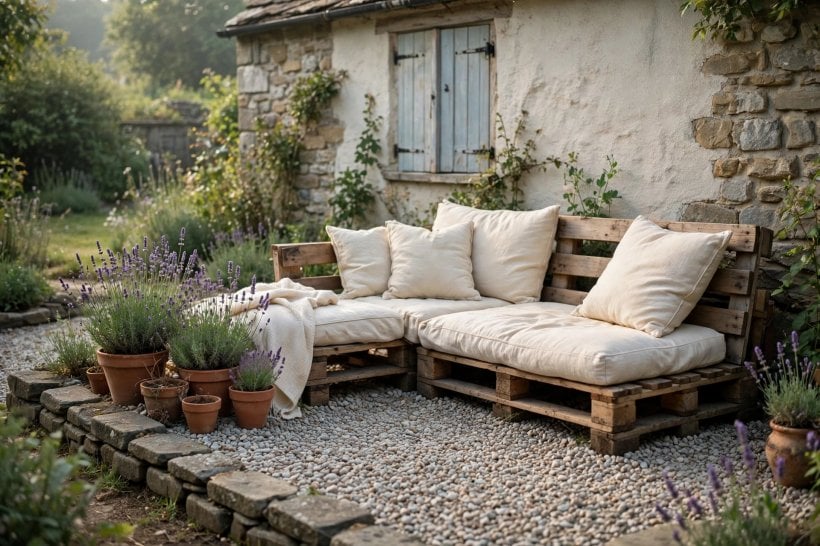
- Herb pots by the kitchen door: the most-used pots closest to the cook, grouped for easy watering.
- A lavender or rosemary edge: a scented, drought-tolerant border that brushes ankles as you pass.
- Grasses in gravel: soft movement and winter structure where paving meets lawn.
- A small tree in a big pot: instant height and shade-in-training for renters or new plots.
- Window-box style planters on rails: trailing plants spilling toward the seating at eye level.
- A self-seeded corner: one bed left loose, where hollyhocks, foxgloves or herbs settle where they please.
Match plants to the sun map you made in section one, group thirsty pots together near the tap, and use the biggest containers you can manage — they dry out more slowly and look calmer than a scatter of small ones. For more small-plot planting structure, these tiny house bedroom ideas may be indoor inspiration, but the principle of one restful green view from where you rest is exactly the same outdoors.
9. Decor Details That Make It Yours
Decor is the last layer and the most personal. Rustic style welcomes the handmade, the repaired and the found, so this is where your patio stops looking like a project and starts looking like your place.
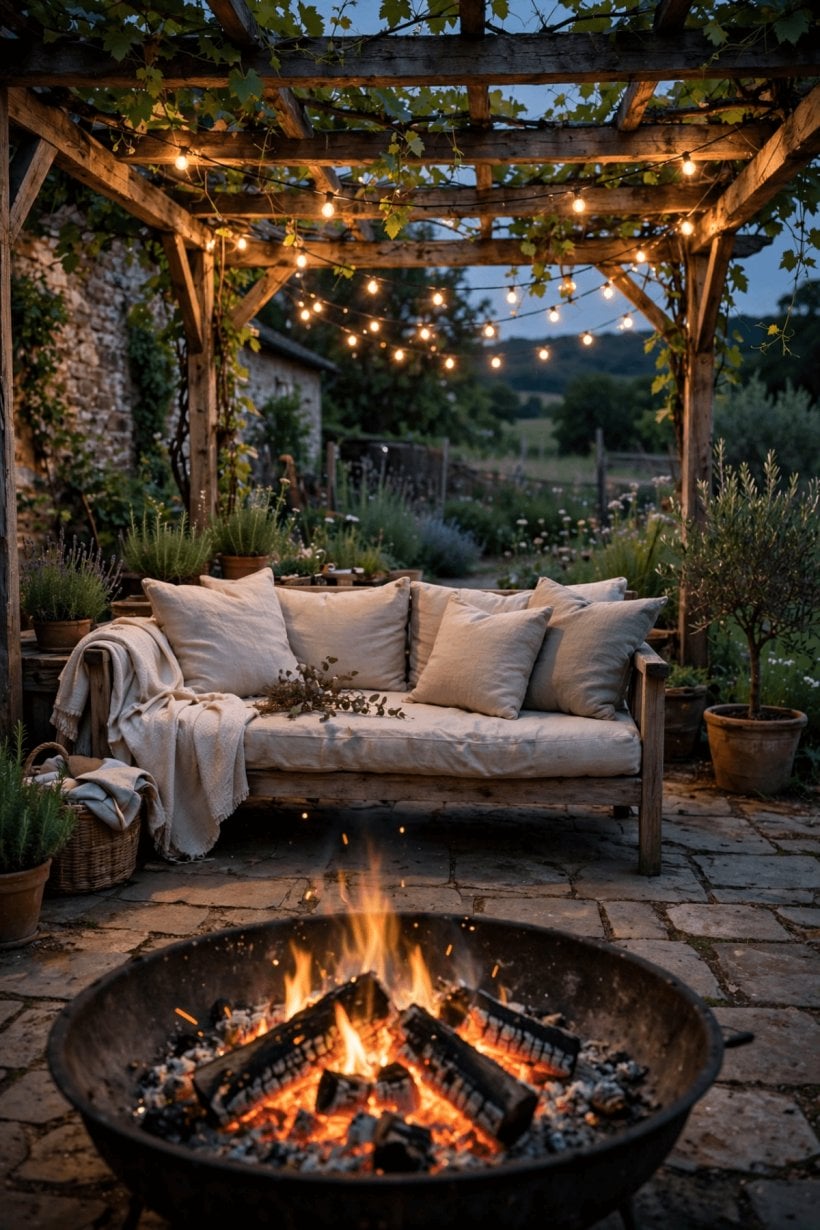
- Natural-fibre cushions and throws: stored in a lidded bench, brought out daily, shaken and aired often.
- A weathered welcome sign: painted by hand on reclaimed board by the gate or door.
- Terracotta and zinc: pots, watering cans and buckets that age gracefully and mix with everything.
- An outdoor rug in earthy tones: defines the seating zone and softens gravel or stone underfoot.
- A mirror or wall plaque: bouncing light into a shaded corner, fixed firmly against wind.
- Bird feeders and a shallow bath: moving, living decoration that changes with the seasons.
- A seasonal wreath or garland: greenery in winter, dried flowers in autumn, fresh herbs in summer.
Colour can stay earthy without staying dull: one confident accent — a painted bench, bright cushions, a coloured door beyond — lifts natural timber and stone, as the joyful schemes in this collection of colorful tiny house interior ideas prove indoors. Edit kindly each season: rustic charm curdles into clutter when every found object stays, so keep the pieces that earn their place and pass the rest along.
10. Care, Storage and Seasonal Routines
A rustic patio forgives a lot, but it still rewards small, regular care. Ten minutes weekly beats a heroic annual rescue, and honest storage keeps furniture, fabric and tools ready for the first fine day of spring.
- Sweep and top up: gravel raked back into place, sand brushed into brick joints, leaves cleared from corners.
- Wash surfaces safely: a stiff brush and water for most algae; test any cleaner on a hidden patch first.
- Oil or treat timber: benches and pergola posts checked yearly for splits, loose fixings and hungry wood.
- Store cushions dry: a ventilated box or indoor shelf, never sealed damp in plastic.
- Winterise water: taps lagged, hoses drained and coiled, terracotta lifted off cold wet ground.
- Check shade fixings: sails, canvas and pergola joints inspected after storms, tightened before they flap loose.
- Refresh one thing per season: a painted bench, new planting or repaired edging keeps the whole space feeling tended.
Keep a simple note of what you treated, planted and repaired, and when. It takes two minutes, prevents double work, and becomes a pleasant record of the patio growing up. Rustic materials age honestly; your job is only to keep age looking like character rather than neglect, which is mostly a matter of little and often.
Final Considerations
Start with use, sun and surface, then add shade, seating and light in that order, and let decor arrive slowly as you live with the space. Whether your diy country outdoor patio is a doorstep terrace or a full garden room, the recipe holds: honest materials, comfortable places to sit, shade where the afternoon lands, and details that mean something to you. Build it in stages, use it between stages, and let each season suggest the next of these seventy-five ideas to try.
One last practical note: photograph your patio at the end of each stage, always from the same spot by the door. Those pictures show how the light moves across the space, where chairs actually gather, and which corners stay empty — far better evidence than memory when you plan the next stage. They also make a satisfying record of a place built slowly and honestly, which is the whole spirit of this kind of project: nothing rushed, nothing pretending, just an outdoor room that keeps getting better at welcoming people.

0 Comments