

Three white powders sit in many laundry cupboards, and they are often treated as interchangeable. They are not. Borax, washing soda and oxygen boosters each change the wash water in a different way, which is why one rescues greasy workwear, another brightens a dull load, and the third is the one to reach for when a coloured shirt is stained.
1. At a Glance: Three Boosters, Side by Side
Searches for oxiclean vs borax usually start with a simple question: are an oxygen booster and borax the same thing with different labels? They are not, and washing soda is different again. The table below compares the three booster types on what they are, what they do well, and where to be careful. Product labels vary, so treat this as a map of the types rather than advice about any single brand.
| Feature | Borax | Washing Soda | Oxygen Booster |
|---|---|---|---|
| What it is | A naturally occurring mineral salt (sodium borate) sold as a powder. | Sodium carbonate, a stronger alkaline powder related to, but not the same as, baking soda. | Usually sodium percarbonate, which releases oxygen (hydrogen peroxide) when dissolved in water. |
| Main action | Softens water, helps detergent work, deodorises and supports stain removal. | Raises alkalinity strongly, cuts grease and helps lift heavy, ground-in soil. | Oxygen bubbles break down many food, drink and organic stains and brighten fabrics. |
| Best suited to | Everyday load refreshing, odour-prone items, hard-water areas. | Greasy workwear, grubby towels, very soiled sturdy fabrics — often as a soak. | Stain treatment and colour-safe brightening, especially as a pre-soak. |
| Use with care | Follow label guidance; keep away from children and pets; not a food item despite the old-fashioned box. | Can irritate skin — gloves are wise; may be harsh on delicate fibres and some dyes with repeated strong use. | Often not recommended on wool or silk — check the label; works best dissolved in warm water first. |
| Typical role | The gentle all-rounder already in the cupboard. | The heavy-duty option for occasional deep-clean loads. | The targeted stain and brightening treatment. |
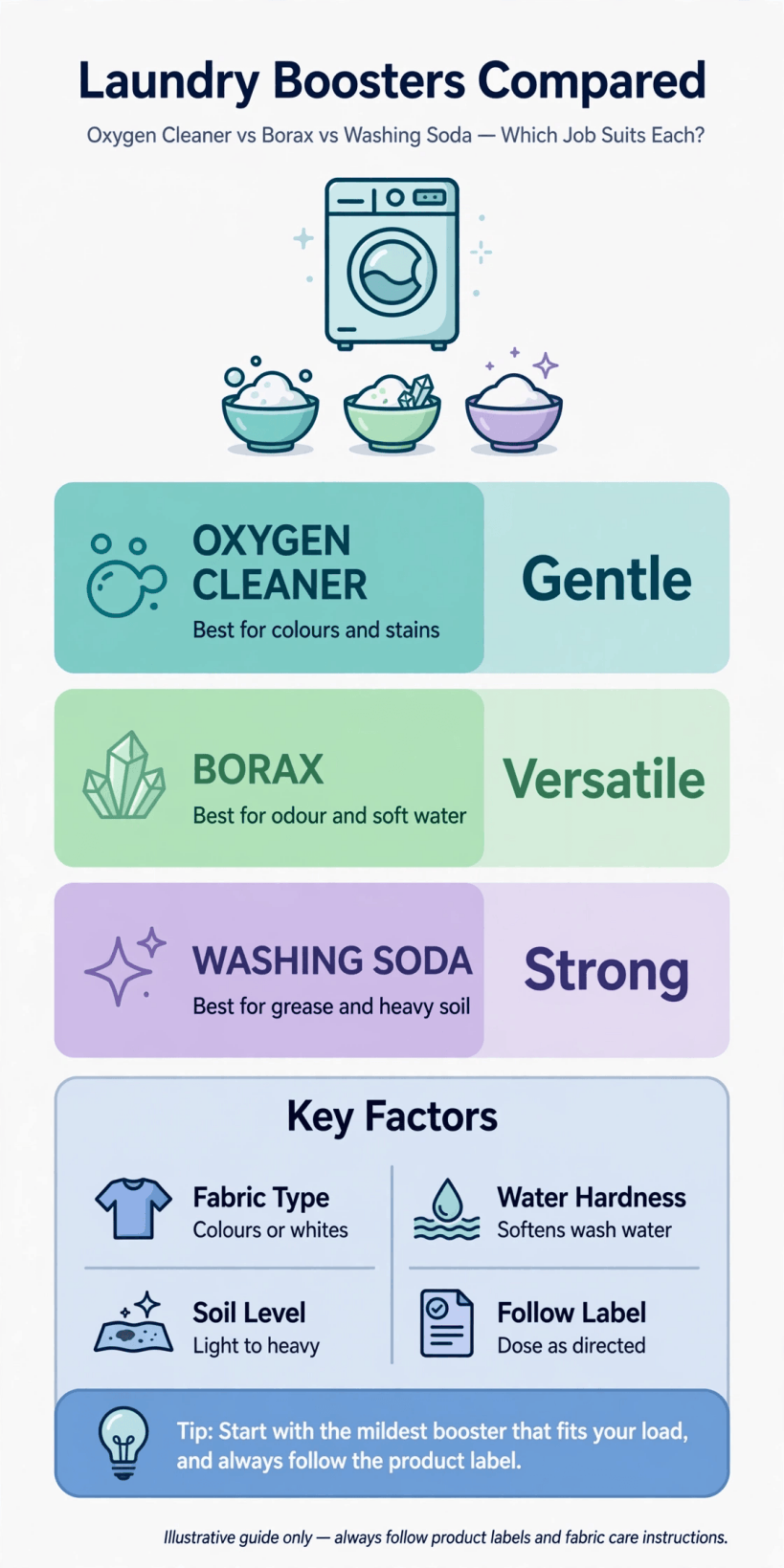
The three booster types at a glance: what each one is, and the job it does best.
Read the sections that follow for the detail behind each column: how each powder behaves in the drum, which fabrics welcome it, how to dose and dissolve it, and the common mistakes that make a good booster look useless.
2. What a Laundry Booster Actually Does
A booster is not a detergent. It does not replace the product that lifts soil and holds it in the water until the rinse; instead it changes the wash conditions so your detergent can work better. Some boosters soften hard water, freeing detergent to clean instead of fighting minerals. Some raise alkalinity, which helps break down grease and acidic stains. Oxygen-based boosters add a gentle bleaching action that attacks the coloured compounds in many stains.
In small homes, where one machine handles everything from bedding to gardening clothes, that supporting role matters. The compact laundry corners in these tiny house bathroom ideas show how limited these spaces can be — there is rarely room for a shelf of single-purpose products, so one or two boosters chosen well beat five chosen hopefully. Understanding the three types in this guide means you can cover almost every load with at most two tubs.
A booster also cannot fix everything. Set-in dye transfer, rust marks, and stains that have been tumble-dried repeatedly may not respond to any powder, and no booster compensates for an overloaded drum, too little detergent, or water so cool that powders never dissolve. Treat boosters as one part of a system — right load size, right temperature for the fabric, product fully dissolved — and their differences become clear and predictable rather than mysterious.
3. Borax: The Gentle All-Rounder
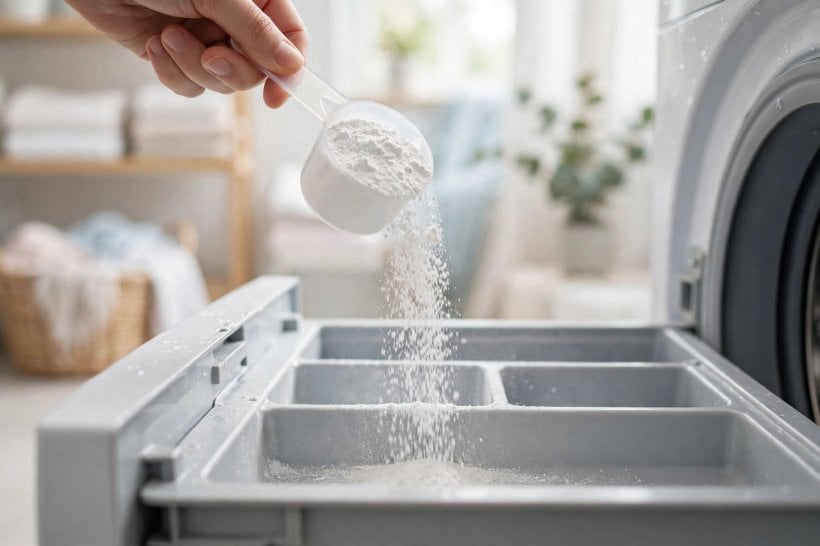
Borax is the oldest of the three in household use: a mineral salt that dissolves into mildly alkaline water. In the wash it helps in quiet ways. It softens water, which is valuable in hard-water areas where detergent alone can leave fabrics stiff and grey over time. It supports stain removal, helps control the sour smell that builds up in towels and sportswear, and is often used to refresh loads that are not heavily soiled but no longer smell clean.
Think of borax as a regular-load companion rather than a rescue treatment. Many households add it to towels, bedding and everyday cottons as routine, and use it in a warm soak for musty items before the main wash. Because its action is mild, it is the booster people reach for when they want help without worrying much about colours — though, as with any additive, following the product label and your garments’ care labels comes first, and colourfastness testing is sensible for anything precious or deeply dyed.
If you are setting up a small laundry area from scratch — the kind of compact utility corner planned carefully in projects like these guides on how to build your own tiny house — borax earns its shelf space by covering the widest range of ordinary jobs. It will not strip grease like washing soda or bleach a tea stain like an oxygen soak, but for week-in, week-out freshness it is the dependable middle option of the three.
4. Washing Soda: The Stronger Degreaser
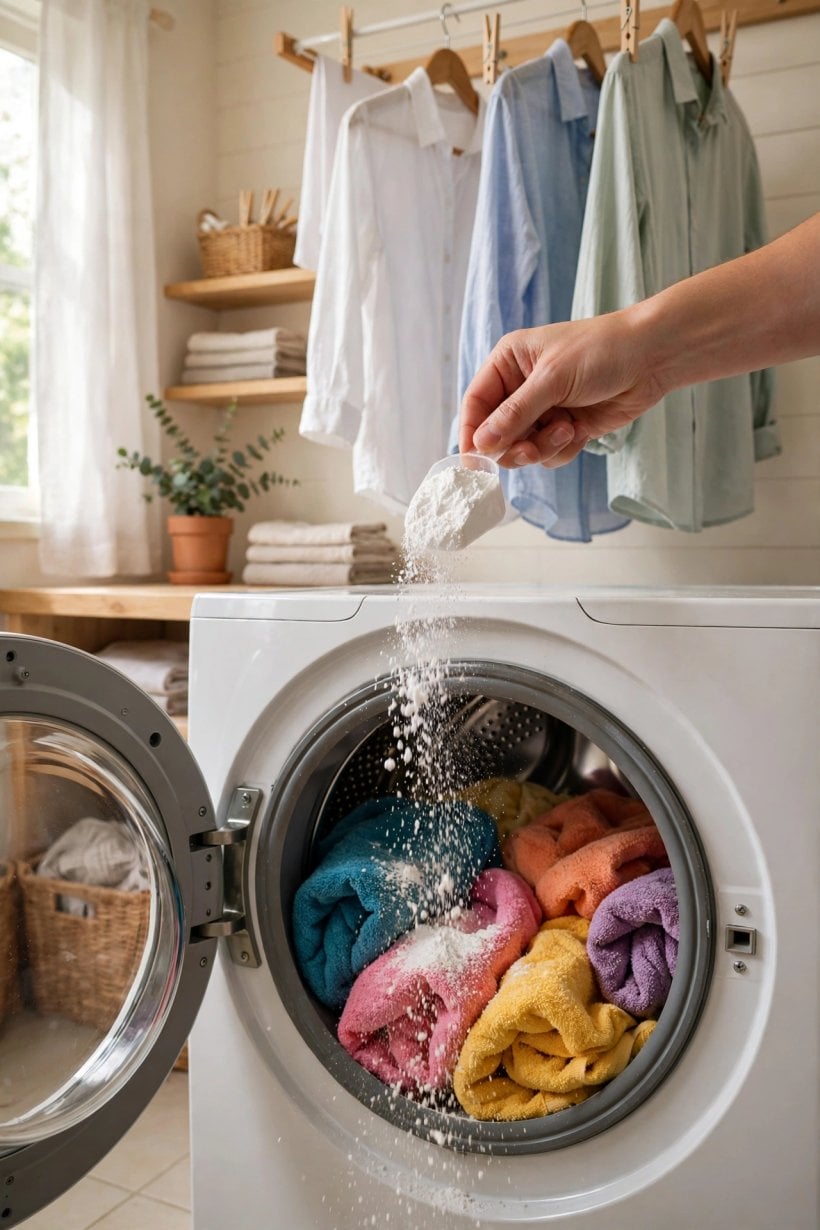
Washing soda — sodium carbonate — is the strongest alkali of the three, and that strength is its purpose. Alkaline water helps break down fats and grease, loosens heavy soil, and softens water as it works, which is why washing soda has a long history with grubby work clothes, kitchen cloths, mop heads and towels that have absorbed cooking oils. It is an ingredient inside many detergents; used as a booster, you are adding extra of that cleaning muscle for loads that genuinely need it.
That strength asks for respect. Wear gloves when handling strong solutions, because washing soda can irritate skin, and avoid breathing the dust when scooping. Use it thoughtfully with fibres: sturdy cottons and linens generally tolerate it well in the wash, while delicates, wool and silk are not its natural partners, and strong or frequent use can be unkind to some dyes and finishes. Many labels suggest it as an occasional deep-clean or soak rather than an every-load habit, and that rhythm suits how most households actually generate truly greasy laundry — in bursts, not daily.
For a pre-soak, dissolve washing soda fully in warm water before adding items, and do not leave coloured or delicate pieces soaking for long periods. Rinse well, and never mix boosters casually with other household chemicals: the golden rule of the laundry shelf is one product at a time, added as its label directs, in a machine or bucket that gets rinsed clean afterwards.
5. Oxygen Boosters: Colour-Safe Brightening and Soaking
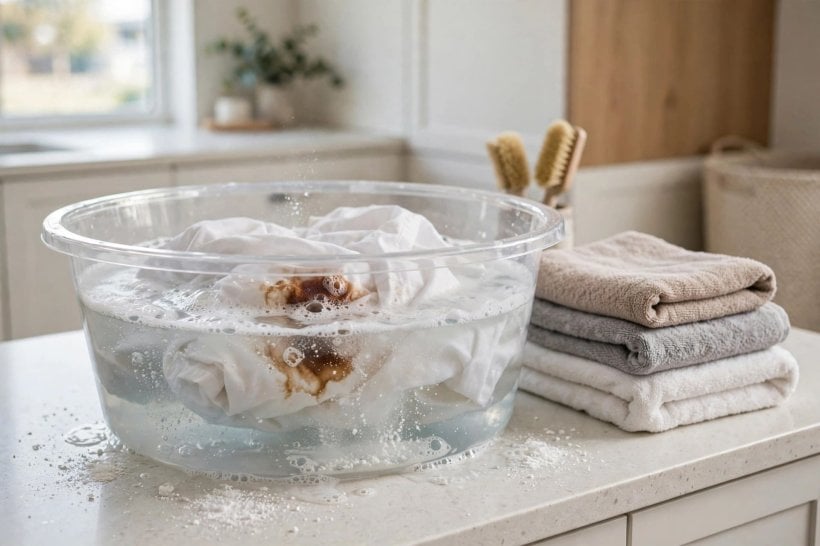
Oxygen boosters are built on sodium percarbonate, a powder that releases hydrogen peroxide when it meets water. The fizzing oxygen action helps break down the coloured compounds in many everyday stains — tea, coffee, wine, food, grass and general dinginess — which is why these products are marketed as colour-safe bleach alternatives. Unlike chlorine bleach, oxygen boosters are generally used on coloured laundry as well as whites, always subject to the product label and a colourfastness check on anything you cannot afford to fade.
Temperature and time are the two secrets. Percarbonate dissolves and activates best in warm water; in a cold soak it works more slowly and may need longer. That is why oxygen boosters shine as pre-soaks: dissolve the powder in warm water first, add the garment once the powder has disappeared, and give the stain time — often an hour or several — before washing as usual. Tipping dry powder onto a stain in a cold drum and expecting miracles in a short cycle is the most common reason people conclude these products do not work.
Respect the exceptions on the label. Many oxygen booster labels advise against use on wool, silk and leather, and against soaking garments with metal trims or flame-resistant finishes for long periods. When in doubt, treat a hidden seam first. Used as directed, though, an oxygen soak is the gentlest strong option in this comparison: no harsh alkalinity, no chlorine smell, and a real effect on the stains that make school shirts, table linen and summer clothes look tired before their time.
6. Head to Head on Real Loads: Stains, Odours and Whites
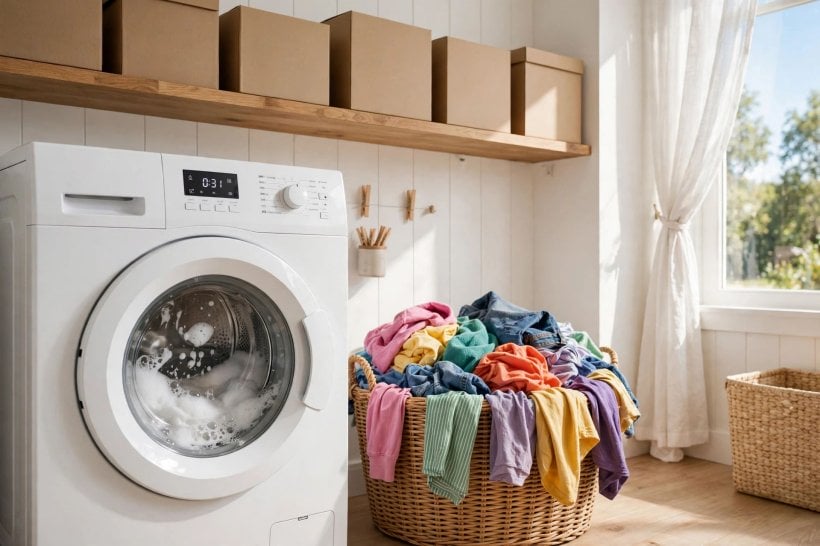
Abstract comparisons only go so far, so picture four real baskets. First, greasy workwear and kitchen cloths: washing soda is the natural pick, because alkalinity is what grease responds to, and a warm soak before the wash does most of the work. Second, a curry-splashed coloured shirt or a coffee-stained tablecloth: the oxygen booster wins, given warm water and soaking time, because its job is breaking down coloured stain compounds without chlorine bleach.
Third, the towel problem — clean-looking towels that smell stale the moment they get damp. That is an odour and build-up issue more than a stain issue, and borax in a warm wash or soak is the classic household answer, alongside checking that towels dry fully between uses and that the machine itself is not harbouring the smell. Fourth, whites that have slowly greyed in hard water: any of the three can help as part of the wash, but the honest fix is combined — water softening support from borax or washing soda, an oxygen soak for the dinginess, and not overloading the drum so rinsing can actually carry the grey away.
Bedding deserves its own sentence, because it is bulky, skin-adjacent and usually washed warm. The calm, fabric-first care in these tiny house bedroom ideas is a reminder that bedding lasts longer when washing stays gentle and regular; a mild borax boost suits routine bedding washes, with an occasional oxygen soak for pillowcases and summer whites rather than strong alkali every week.
7. Fabrics and Loads: What Each Suits, and What to Avoid
Fabric care labels outrank any guide, including this one, so read them first — then use these general patterns. Sturdy cottons and linens tolerate all three boosters as their labels allow, which is why towels, sheets and workwear are the easy cases. Synthetics generally handle borax and oxygen boosters well; with washing soda, moderation and thorough rinsing keep finishes and elastic happier over time.
Delicates are where the three part company. Wool and silk dislike strong alkali and are commonly excluded on oxygen booster labels too, so the safe answer for a wool jumper or silk blouse is usually no booster at all — a suitable specialist wash, cool water and gentle handling instead. Dark and richly dyed items sit in the middle: borax is the mildest companion, oxygen products are widely used on colours but deserve a colourfastness test, and repeated strong washing-soda use is the option most likely to fade a beloved deep colour over a season.
Colour confidence is easier when the wardrobe itself is planned, a point the playful schemes in these colorful tiny house interior examples make for rooms and that applies equally to clothes: know which pieces are precious, wash them in the gentlest company, and let sturdy everyday items take the stronger treatments. Sorting by fabric and soil level, not just by colour, is the unglamorous habit that makes every booster in this guide look better.
8. Dosing, Dissolving and Common Mistakes
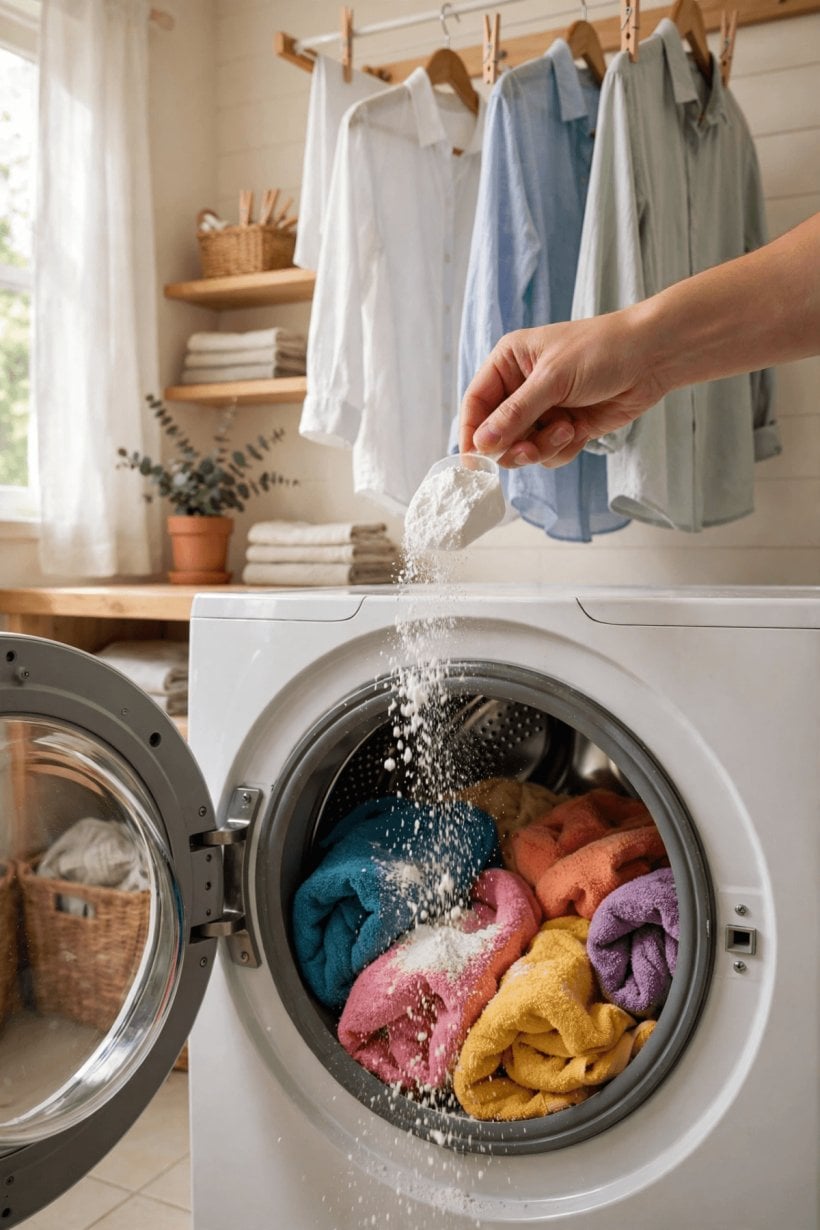
More powder is not more clean. Overdosing any booster can leave residue on fabrics, dull colours, irritate skin that later wears the garment, and strain the machine. Follow the dose on your product’s label for your machine type and load size, and remember that high-efficiency machines use less water, which makes correct dosing and full dissolving even more important. If your clothes come out feeling gritty or stiff, the likely culprits are dose, dissolving or an overloaded drum — not a booster that is too weak.
Dissolving is the second half of dosing. Powders should meet water before they meet fabric wherever the label allows: add booster to the drum before clothes in a top loader, use the dispenser as your machine manual directs in a front loader, and for soaks, stir the powder into warm water until it disappears before submerging items. Undissolved powder sitting on wet fabric is how white specks, patches and uneven fading happen, especially with oxygen products in cool water.
The remaining mistakes are habits: mixing boosters together to create a super-powder (unnecessary, and it can make solutions harsher than labels intend), adding chlorine bleach to the same wash as other additives (never improvise chemical combinations — follow labels strictly), and judging a stain treatment before the garment has dried, when marks look worse than they are. Soft furnishings follow the same rules — the throws and cushion covers in these tiny house living room ideas will all, eventually, meet a wash, and they will thank you for dissolved powder and honest dosing when they do.
9. Safety, Storage and Small-Space Sense
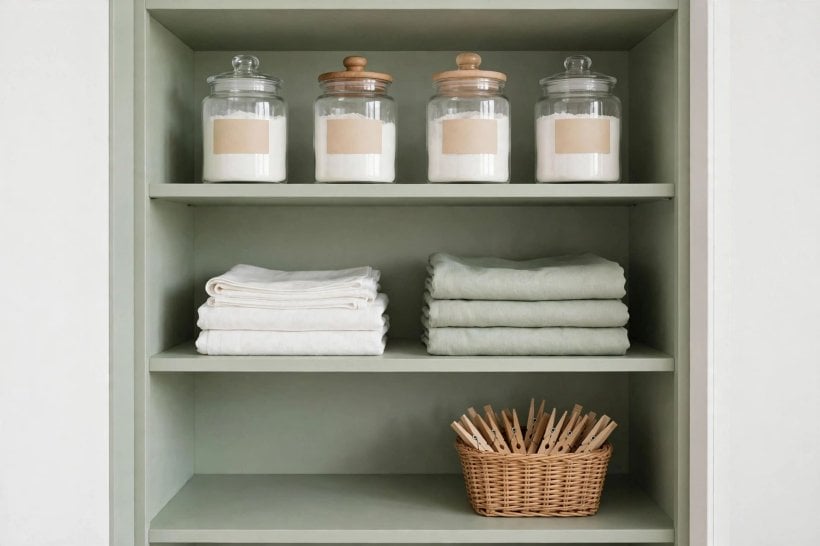
All three powders are household chemicals, and the dull rules are the ones that matter: keep them in their original labelled containers or clearly labelled jars, store them dry and out of reach of children and pets, and never decant them into food or drink containers. Borax in particular has an old-fashioned, familiar box that can invite carelessness; treat it with the same respect as any cleaning product, wash hands after handling powders, and use gloves for strong washing-soda solutions or if your skin is sensitive.
Storage in small homes is a design problem as much as a safety one. A single lidded box on a high shelf beats open tubs under a sink that small hands and pets can reach, and keeping powders dry matters because damp percarbonate loses its fizz in the jar and damp washing soda clumps into rocks. Decant only what a clearly labelled, sealed container can hold, keep the original packaging or its instructions until the product is finished, and note purchase dates on refills so old powder gets used first.
Finally, think about where wash water goes, especially in homes with septic systems, greywater reuse or garden drainage. Rules and good practice vary by place and system, so check the guidance for your own setup before tipping soak water anywhere unusual — the same check-local-first habit that these tiny house landscaping ideas recommend for anything that changes what flows across a plot. Ordinary machine loads used as labels direct are the normal, expected use for all three products.
10. Which to Pick When: The Verdict
Here is the short answer to the oxiclean vs borax question, with washing soda given its fair place. If you can only keep one booster, keep borax: it covers the most everyday ground — freshness, hard-water help, mild stain support — with the least worry about colours and fibres. If your laundry life includes genuinely greasy loads, add washing soda as the occasional heavy-duty soak and degreaser, used with gloves and respect. If stains on colours are your recurring battle — food, drink, grass, dingy whites — an oxygen booster is the specialist worth its shelf space, provided you give it warm water and soaking time.
Two-tub households cover nearly everything: borax for routine loads plus an oxygen booster for stain soaks is the calmest combination, while borax plus washing soda suits homes whose dirt is more grease than stain. Keeping all three is reasonable only if each has a real job in your wash week; otherwise they become three half-used powders ageing in the damp. Buy the type that matches your most common problem first, learn it properly for a month, and only then decide whether a second type would genuinely earn its place.
And if a load fails to come clean, change one variable at a time — dose, dissolving, soak time, load size — before blaming the powder. These are simple, well-understood products; matched to the right job and used as their labels direct, each of the three does exactly what this comparison promises, no more and no less.
Final Considerations
Borax refreshes and supports, washing soda degreases with strength, and oxygen boosters brighten and lift stains with time and warm water. That single sentence is the whole comparison. Choose by problem, not by habit or packaging: odours and everyday loads to borax, grease to washing soda, coloured stains to oxygen. Dose as directed, dissolve fully, store safely, and let fabric labels have the final word. Do that, and whichever tub you keep by the machine will stop being a hopeful extra and become what it should be — the right tool, used on purpose.




0 Comments