

A fence gate is the smallest door a house owns, and the most used. It is the first thing a visitor touches and the last thing a gardener closes. A good gate swings true, latches cleanly, and looks like it belongs to the fence around it. A bad gate drags, sticks, and sags, and it announces itself every time it moves.
This post is a pictures-led survey of fence gates: the forms, the materials, and the details that make each one work. It carries no count in its title, because the pictures are the point, not a number. The gate family has a pillar post of its own, and the sections below link to it and to its siblings where they help.
1. The Gate Family at a Glance
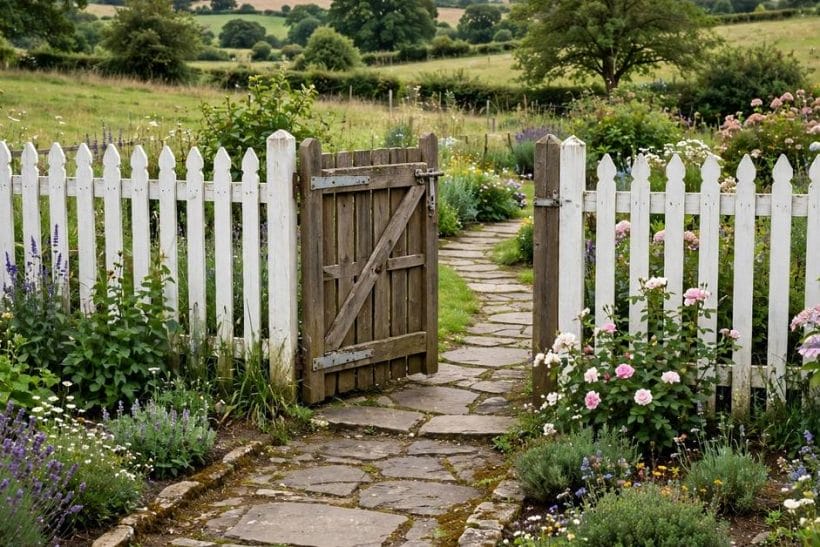
Gate ideas start with the fence they belong to. A picket fence wants a picket gate. A close-boarded fence wants a close-boarded gate. A metal railing wants a metal gate. The gate that matches its fence looks inevitable; the gate that fights its fence looks borrowed, however handsome it is on its own.
Within that rule there is plenty of room. Gates vary in height, in top shape, in hardware, and in planting around them. A low gate invites. A tall gate guards. An arched top softens. A flat top stays formal. The survey below walks through those choices one at a time.
Modern gate ideas are the pillar post for this family, with the full range of gate forms in one place. This survey sits beside it, as the pictures-led companion.
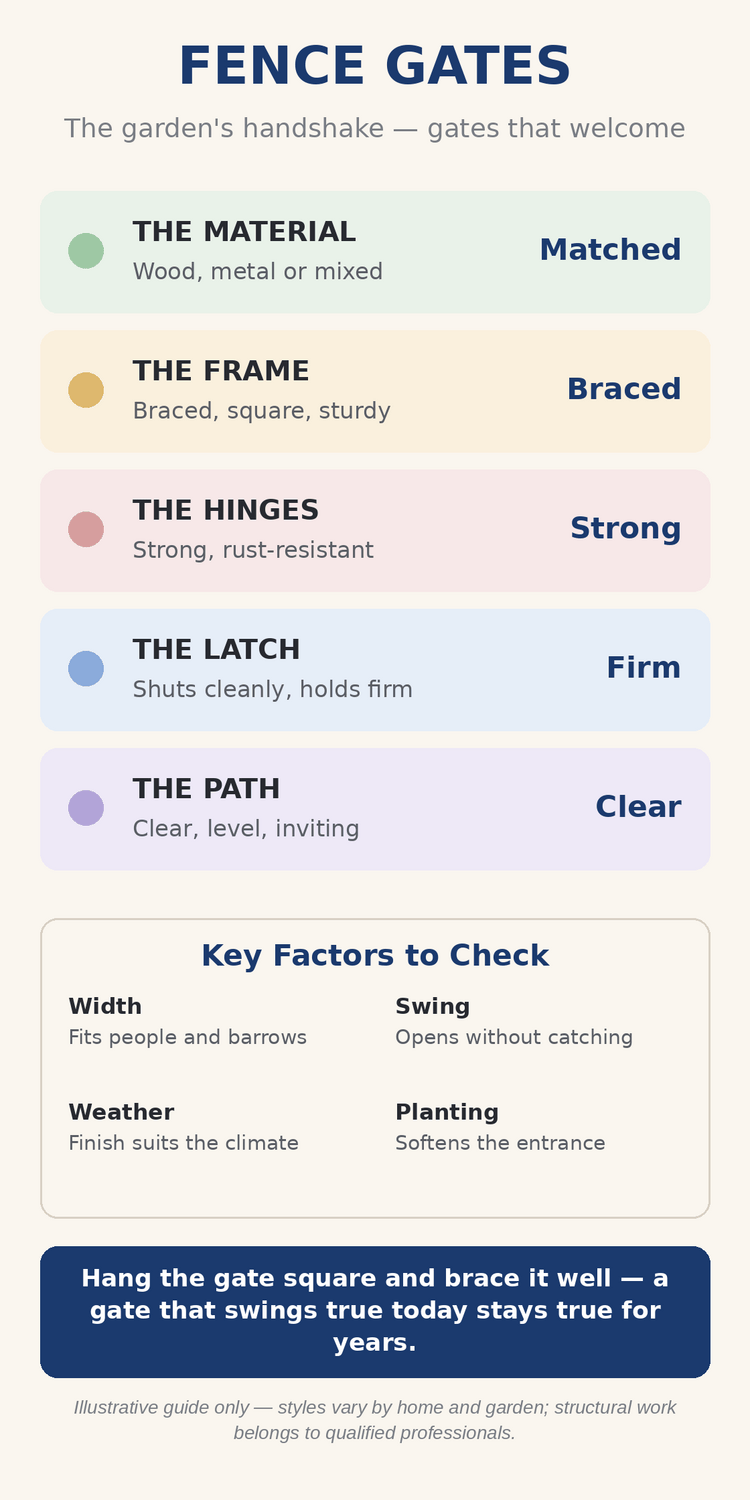
Proportion is the gate’s quiet rule. A gate should match its fence in height and in the shape of its top, whether flat, arched, or pointed. A gate taller than its fence looks like a door in a low wall. A gate shorter than its fence looks like an afterthought. When the fence changes height along its run, the gate should match the fence at the point where it hangs, not the fence’s average.
2. The Approach Matters as Much as the Gate
A gate is only half of an entrance. The other half is the path that leads to it, and the planting that frames it. A gate at the end of a clear, level path feels welcoming. The same gate at the end of a muddy track feels like an afterthought. Before choosing a gate, walk the approach as a visitor would, and notice what the eye meets first.
Planting softens a gate without hiding it. Low shrubs at the sides, a climber on the fence, and a pot or two by the posts all help. Planting that swallows the gate hurts: a gate hidden behind growth is a gate visitors cannot find, and a latch buried in leaves is a latch nobody uses.
Tiny house porch ideas show the approach from the other end, where the porch, not the gate, is the welcome. The two posts read well together: gate first, porch second, one journey.
Path materials change how a gate feels underfoot. Gravel crunches and drains well, but it migrates under a swinging gate and needs raking back. Stone slabs stay put and suit a formal entrance, but they need a firm, level base or they rock. Brick suits cottage gardens and ages gracefully. Whatever the material, the path should drain away from the gate posts, because standing water rots wood and undermines footings.
3. Gates and the Front of the House
A front gate sets the tone for the whole front of the house. It should agree with the front door, the porch, and the planting, without copying any of them exactly. A wooden gate suits a wooden door. A painted gate suits painted trim. A metal gate suits railings and stonework. The agreement is in material and colour, not in identical detail.
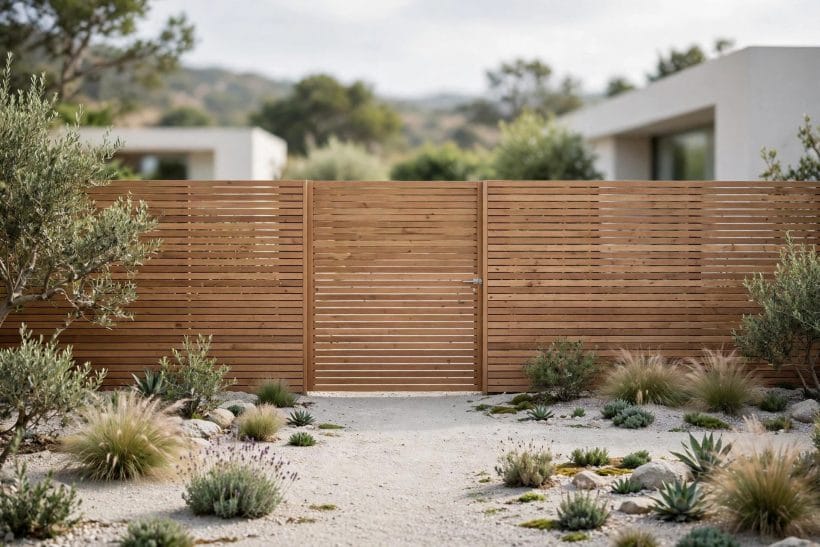
Height is the front gate’s biggest decision. A low gate keeps the garden visible and the street friendly. A tall gate gives privacy and a sense of enclosure. Neither is better; the right height depends on the street, the neighbours, and how much of the garden the household wants to share with passers-by.
Exterior entryway ideas cover the front-of-house sequence the gate begins: approach, door, porch, and the welcome between them.
Light the approach, not just the gate. A small light by the gate, or a pair of low lights along the path, makes the entrance findable after dark and welcoming to visitors. The light should fall on the path and the latch, not into visitors’ eyes. A house number or name near the gate helps strangers too, and it keeps delivery drivers from knocking on the wrong door.
4. Wooden Gates, the Classic Choice
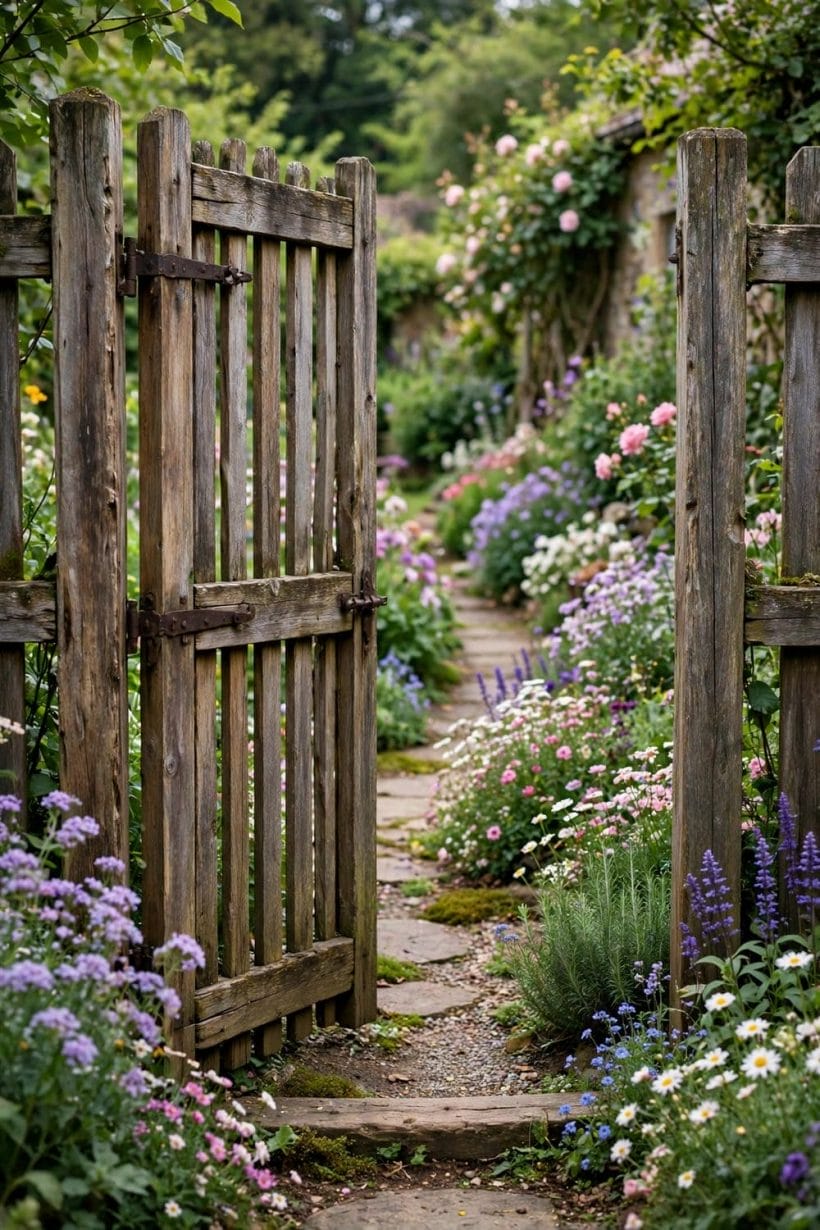
Wood is the most common gate material, and the most forgiving. It suits picket fences, close-boarded fences, and cottage gardens, and it can be painted, stained, or left to weather. A wooden gate is also the easiest to adjust: a hinge moved, a brace added, a board replaced, all without specialist tools.
The weakness of wood is movement. Wood swells when wet and shrinks when dry, and a gate that fits in summer can stick in winter. Good wooden gates are built with that movement in mind: a braced frame that holds square, hinges that carry the weight, and a gap at the latch side that allows for swelling. A gate built tight in dry weather will teach its owner about wood movement soon enough.
Wooden garden gate ideas go deep on the wooden branch of the family, with planting, paths, and seasonal care alongside the gate itself.
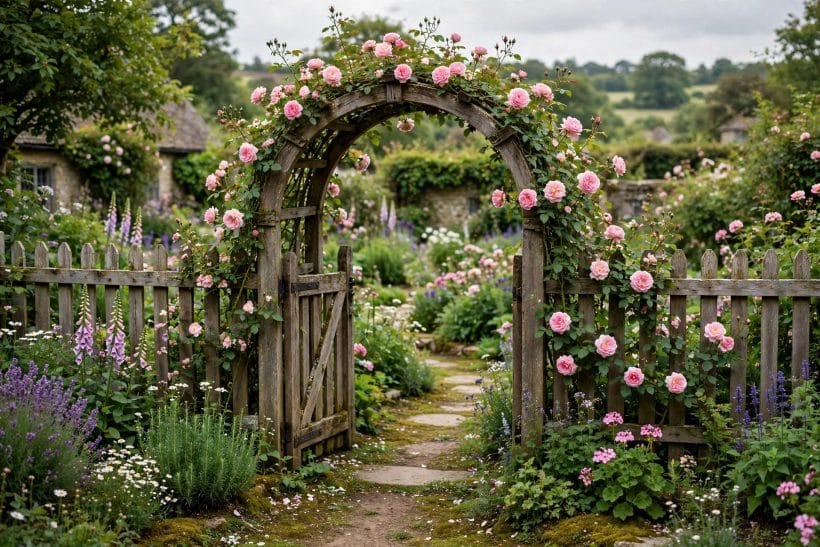
Wood choice matters in general terms. Hardwoods last longer outdoors and resist knocks, while softwoods are lighter and easier to work but need more regular treatment. Whatever the wood, it should be treated or painted for outdoor use, and the treatment should be renewed on a cycle, not once and forgotten. A wooden gate’s life is measured in treatments, not in years alone.
5. Metal Gates, Formal and Lasting
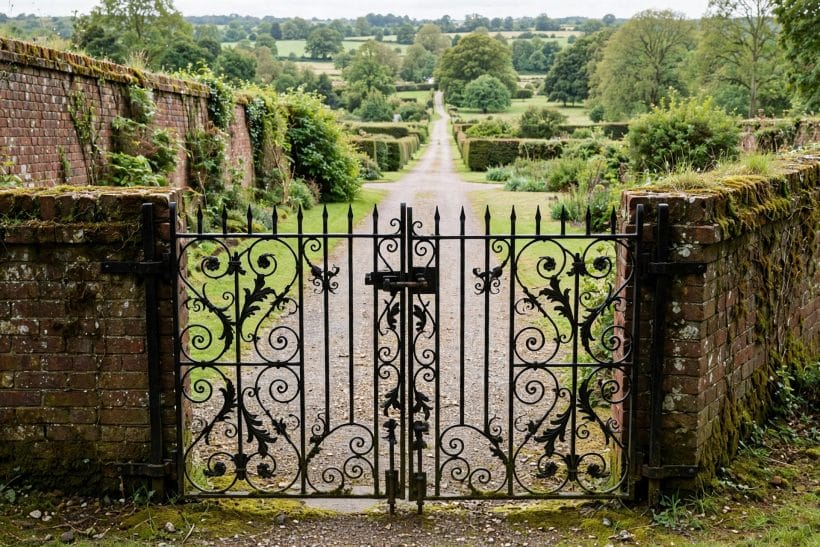
Metal gates suit formal gardens, brick walls, and houses with railings. Ironwork, whether traditional scrollwork or plain bars, gives a gate that is strong for its weight and that lets light and air through. A metal gate does not swell with the weather, and it does not need the seasonal adjustment wood sometimes asks for.
Metal’s weakness is rust, and the defence is finish. A well-painted or powder-coated gate resists weather for years. A chipped or neglected finish lets rust start at the chip and spread under the paint. The check is simple: look at the bottom rail and the hinge joints, where water sits longest, and touch up chips before they become patches.
Weight matters with metal. A heavy iron gate needs hinges and a post that can carry it, or it will sag and drag. The post is the unsung half of a metal gate: a gate is only as true as the post it hangs from.
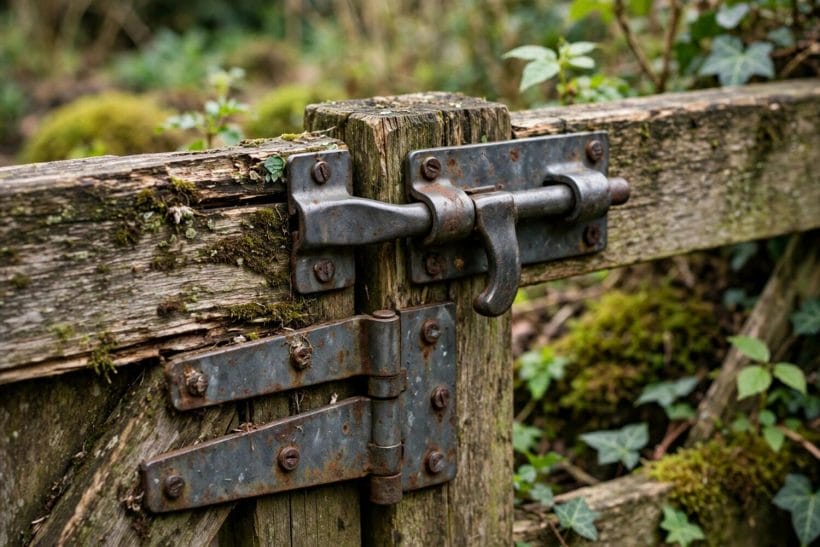
Metal finishes decide how a gate ages. Paint gives colour and a smooth finish but needs touching up where it chips. A galvanised finish resists rust from the start and suits a plainer look. Near the sea, salty air speeds rust on any finish, so coastal gates need more frequent checks at joints and bottom rails, where water and salt collect longest.
6. Hinges, Latches and the Swing
Hardware decides whether a gate is a pleasure or a chore. Hinges should carry the gate’s weight without strain, and they should be fixed to solid timber or masonry, not to a board that flexes. A gate that drops at the latch side is usually a gate whose hinges, or whose post, have given way.
The latch should shut cleanly with one hand, from both sides, and hold firm in wind. A latch that needs lifting, shoving, or a second try is a latch that will be left unlatched, which defeats the gate. Test the latch at the shop or at the fitter’s yard, not just on paper: swing, shut, and open it several times before accepting the work.
The swing itself deserves thought. A gate should open without catching on the path, the planting, or a slope. A gate that opens uphill will catch its own ground. A gate that opens across a path blocks the path while it moves. The swing direction is a small decision with daily consequences.
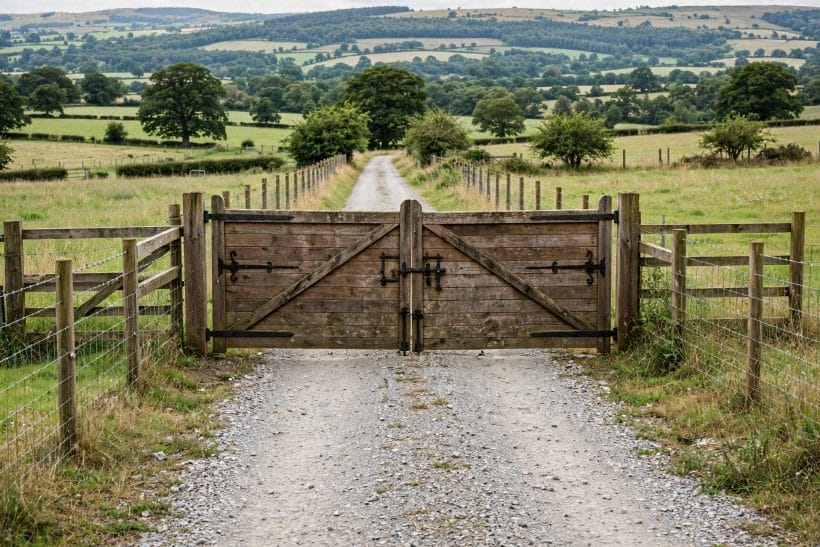
Self-closing hinges are worth considering where children or pets use the gate. A gate that swings shut on its own stays latched without anyone remembering, which matters when the gate guards a road or a pond. The closing force should be gentle, not a slam, and the latch should catch reliably at the speed the hinge closes. Test the combination, not just the parts.
7. Gates in the Garden, Not Just at the Front
Not every gate is a front gate. Garden gates divide one part of a garden from another: the vegetable patch from the lawn, the play area from the flower beds, the working end from the sitting end. These gates can be lighter and lower than a front gate, because their job is division and charm, not security or privacy.
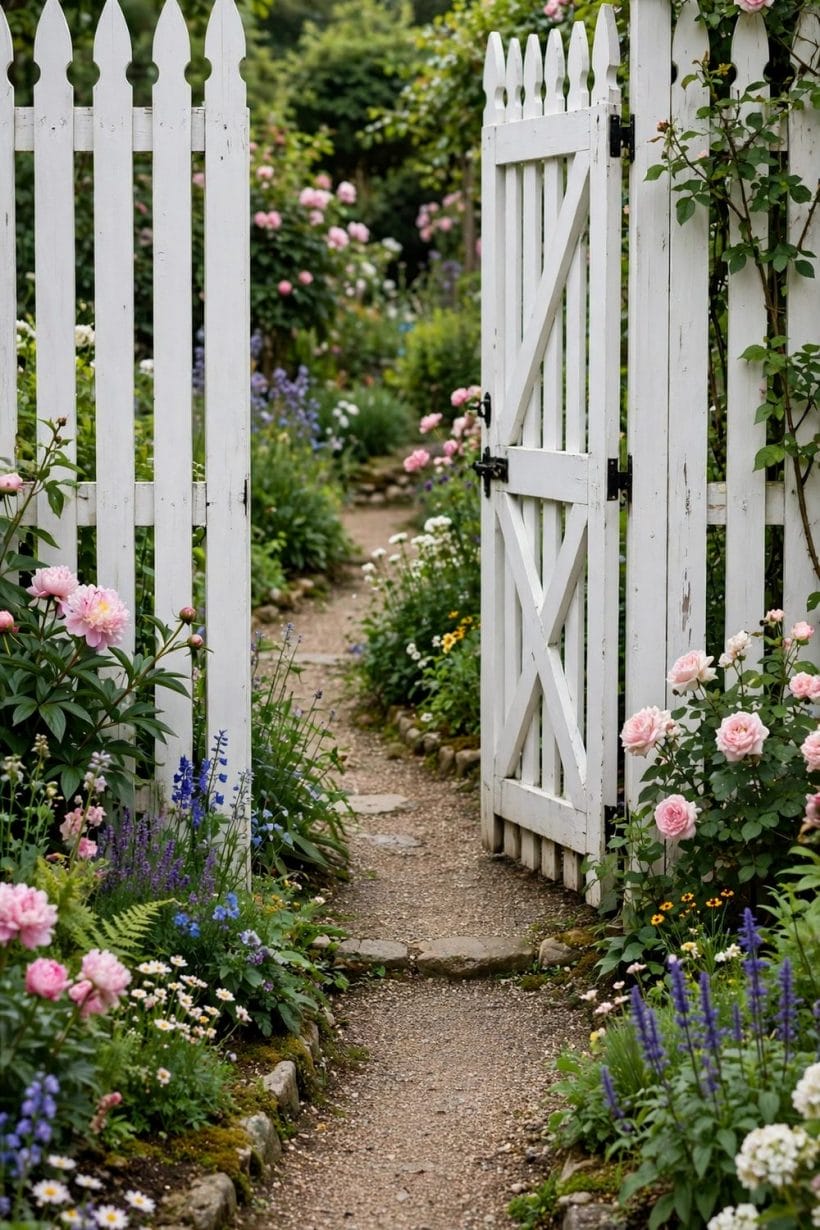
A garden gate is also a chance to frame a view. A gate at the end of a path, with planting on both sides, turns a walk into a small arrival. An arch above it, with a climber, makes the arrival feel deliberate. The gate does not need to be grand; it needs to be placed where the garden already wants a pause.
Asian landscaping ideas show gates and garden divisions inside a different design language, where a gate is often a quiet threshold rather than a statement.
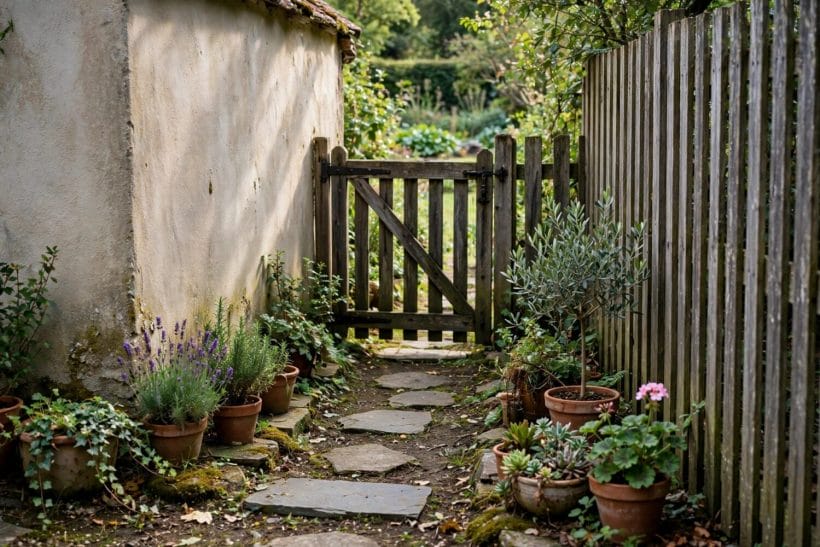
Garden gates also divide habitats, and a thoughtful gate leaves room for the garden’s smaller residents. A small gap beneath a garden gate lets hedgehogs and other creatures pass between gardens, which matters in a neighbourhood where gardens form a connected habitat. The gap need not be large, and it should not compromise the gate’s job, but a gate built with wildlife in mind serves two purposes at once.
8. Side Gates and Narrow Passages
Side gates live in narrow places: between house and fence, along a passage, behind a garage. Their constraints are width and light, and their virtue is usefulness. A side gate that opens fully, latches reliably, and lets a barrow through is worth more than a handsome gate that catches on the wall.
Measure a side gate by what passes through it: a person, a barrow, a bin, a mower. The widest regular load sets the width, and the gate should clear it with room to spare. A gate that forces a barrow to tilt is a gate that will be propped open, which is the same as no gate at all.
Light matters in a passage too. A gate with gaps, slats, or an open top lets daylight into a narrow space. A solid gate in a narrow passage makes a dark corridor. The choice between solid and open is a choice about the passage, not just about the gate.
Side-gate security starts with the hinges. Hinges on the inside of the gate cannot be lifted from outside, and a lockable latch keeps the gate shut against more than wind. A side gate that looks secure but lifts off its hinges from the street is not secure at all. Check the hinge side as carefully as the latch side, and fix hinges with screws that cannot be removed from outside.
9. Double Gates and Wider Openings
Double gates suit driveways and wide garden entrances, where a single leaf would be too heavy or too wide to swing well. Two leaves share the weight, and each leaf swings a shorter arc. When both leaves open, the entrance feels generous; when one leaf stays shut, the opening still works for everyday use.
Double gates need a way to hold the fixed leaf: a drop bolt into the ground, a socket in a hard surface, or a similar catch. Without it, the fixed leaf drifts and the moving leaf cannot latch. The ground socket deserves the same attention as the hinges, because a socket full of grit or mud is a socket that does not hold.
Dream homes show wide entrances and double gates inside larger garden plans, where the gate is one element of a composed approach rather than a lone feature.
Automation is a bigger step, and it belongs to a professional. An electric opener needs power, a safe mechanism, and sensors that stop the gate if something blocks it. It also needs a manual release for power cuts, or the gate becomes a wall when the power fails. An automated gate that has not been planned for safety and for failure is a liability, however convenient it looks.
10. What to Check Before Choosing
Before choosing a gate, check six things. First, the fence: does the gate match its material and height? Second, the post: is it solid, upright, and able to carry the gate’s weight? Third, the swing: does the gate open fully without catching path, slope, or planting? Fourth, the latch: does it shut cleanly with one hand from both sides? Fifth, the width: does the widest regular load pass through with room to spare? Sixth, the approach: does the path and planting make the gate findable and welcoming?
If any of those six fails, the gate is not ready, however handsome it looks in a catalogue. A gate is a working part of a house, used daily, in all weathers, by people with their hands full. It should be judged the way it will be used: swung, latched, and walked through, not just looked at.
Give every gate a seasonal check. In spring, oil the hinges and check the latch. In summer, trim planting that crowds the swing. In autumn, clear leaves from the latch and the ground socket. In winter, watch for swelling in wooden gates and for ice in ground sockets. A gate checked four times a year rarely needs a repair, and a gate never checked usually needs one all at once.
Final Considerations
Fence gates repay attention to the unglamorous parts: the post, the hinges, the latch, and the swing. The pretty parts — the arch, the planting, the paint — matter too, but they sit on top of the working parts, and they cannot rescue a gate whose frame is weak or whose post leans.
Choose the gate for its fence, its approach, and its daily load, in that order. Hang it square, brace it well, and latch it cleanly. Then plant around it, paint it if it wants paint, and let it do its quiet job: opening easily, closing firmly, and welcoming people into the garden beyond.



0 Comments