

A seat inside the shower changes everything: shaving legs gets easier, steam sessions last longer, and anyone with a sore knee or a tired back showers in comfort instead of hurry.
These seventy-five shower bench ideas cover materials, layouts and the practical details nobody mentions until the tiles are already up — plus honest, qualitative guidance on where the money goes.
1. Benches in the Shower at a Glance
Decide three things early: whether the seat is built in or added later, what it is made of, and exactly where it sits in relation to the shower head and controls. A shower bench earns its keep only when it is comfortable to reach, quick to rinse and sized for the person who will use it most. Use the table as a starting point, and treat every dimension in this article as typical guidance to check against your own space, your installer’s advice and local codes.
| Choice | Popular starting point | Worth knowing |
|---|---|---|
| Type | Built-in tiled bench for renovations; freestanding for quick upgrades | Built-ins must be planned before tiling |
| Material | Tile over a formed base, or warm teak-style timber | Timber needs airflow and occasional oiling |
| Position | Back wall or corner, within reach of the spray | Keep controls reachable from the seat |
| Height | Roughly chair height, adjusted for the user | Test with a stool before committing |
| Cost feel | Freestanding seats are the budget end; stone built-ins the premium end | Waterproofing quality matters more than finish |
| Care | Weekly rinse and wipe; good ventilation | Seal grout and stone as makers advise |

The short version: choose the type first, size it to the user, keep the controls close, and never skimp on waterproofing.
Planning a whole small bathroom rather than one fitting? The space-saving thinking in smart tiny house design ideas applies surprisingly well to compact shower rooms.
2. Built-In Bench Layouts
Built-in seats are designed with the room, so they can follow its geometry exactly — spanning a wall, wrapping a corner or floating as a slim ledge. They suit renovations and new bathrooms where the structure, slope and waterproofing can all be handled in the right order.

1. Full-width back-wall bench. A seat spanning the rear wall gives the most generous perch and a clean, architectural line that makes even a modest enclosure feel deliberate.
2. Corner bench. A triangular or curved corner seat uses the least floor space, leaving the centre of the shower free for standing and turning.
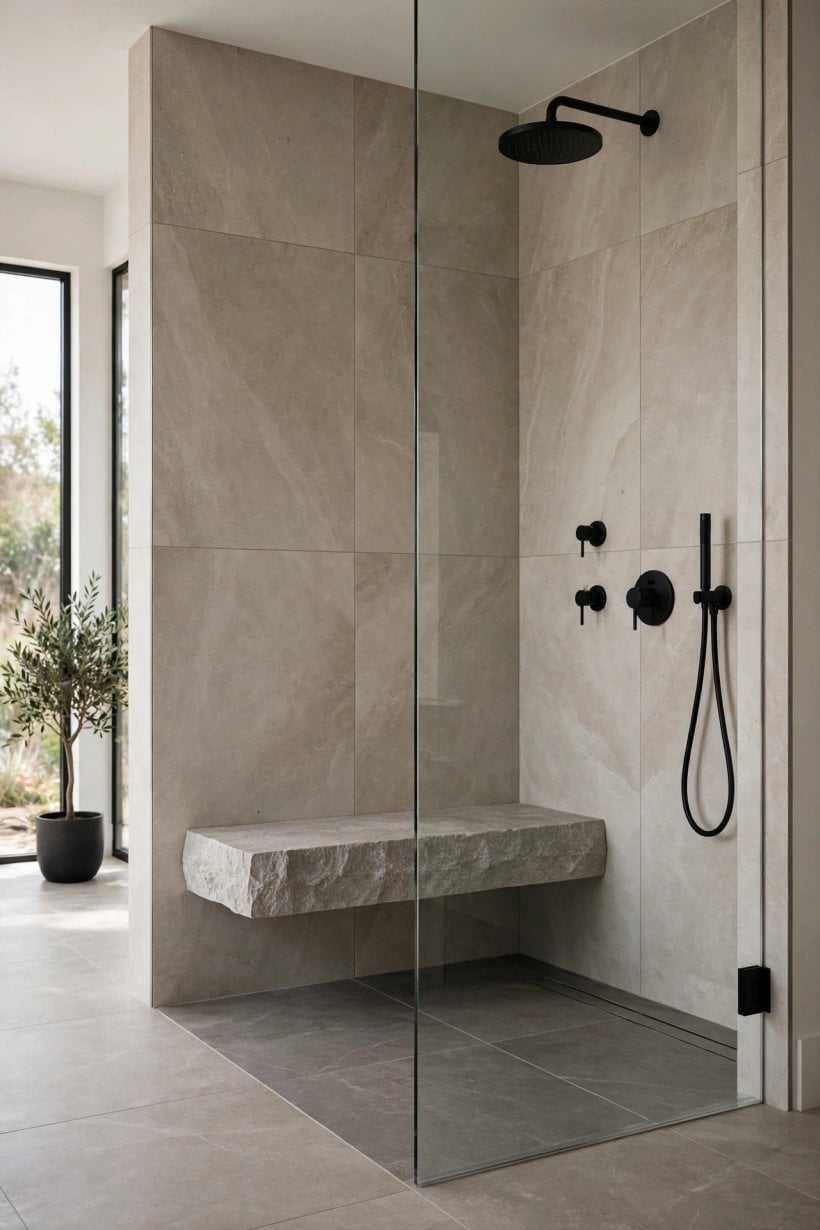
3. Floating bench. A wall-hung slab with clear space beneath looks light, lets the floor drain visually, and makes cleaning underneath effortless.
4. L-shaped wrap. Extending the seat along two walls helps carers assist from the side and gives couples room to share a steam session.
5. Bench opposite the shower head. Sitting just outside the direct spray suits people who like warmth and steam without water in the face the whole time.
6. Bench under the shower head. Placing the seat in the spray is the choice for hair washing and long soaks of tired feet; pair it with a handheld shower for control.
7. Short ledge bench in a narrow enclosure. Even a shallow ledge, deep enough to perch on briefly, helps in tight showers where a full seat would crowd the standing room.
8. Bench with a step. One lower step in front of a higher seat makes climbing in and out easier for smaller users and children, and doubles as a footrest.
3. Freestanding, Folding and Portable Seats
Not every bench needs a builder. Freestanding and folding options bring the comfort to existing showers, rentals and guest bathrooms, and they can move when needs change. Stability is the whole game here: wide feet, non-slip pads and a frame rated for the user.
9. Classic teak slatted stool. Warm underfoot and naturally at home with water, a slatted timber stool drains freely and lifts out for cleaning in seconds.
10. Wall-mounted folding seat. A hinged seat folds flat against the tiles when not in use, which is ideal in shared or very small enclosures.
11. Corner stool. A small triangular stool tucks into the corner of an existing shower, giving a perch without any fixing at all.
12. Aluminium-frame bath seat board. For shower-over-bath set-ups, a secure seat board across the tub helps users sit where standing in a slippery bath feels risky.
13. Swivel stool. A rotating top helps anyone with limited hip movement turn under the spray without shuffling wet feet.
14. Wide transfer-style bench. A longer seat that extends beyond the enclosure edge helps users slide across from a chair; ask an occupational therapist what suits your situation.
15. Stool with a lower shelf. A small shelf beneath the seat keeps bottles off the floor and within reach of someone seated.
16. Pair of small stools. Two light stools — one to sit on, one for products or a footrest — flex with whoever is showering that day.
4. Materials That Love Water
Everything in a shower lives wet, warm and soapy, so materials must shrug off all three. The honest differences are in maintenance: some surfaces need sealing, some need oiling, and some simply need a wipe and good ventilation after use.
17. Porcelain tile over a formed base. The renovation classic: endlessly colour-matched to the walls, durable, and only as good as the waterproofing beneath it.
18. Large-format tile top. Fewer grout lines on the seat itself means a smoother perch and quicker cleaning after every shower.
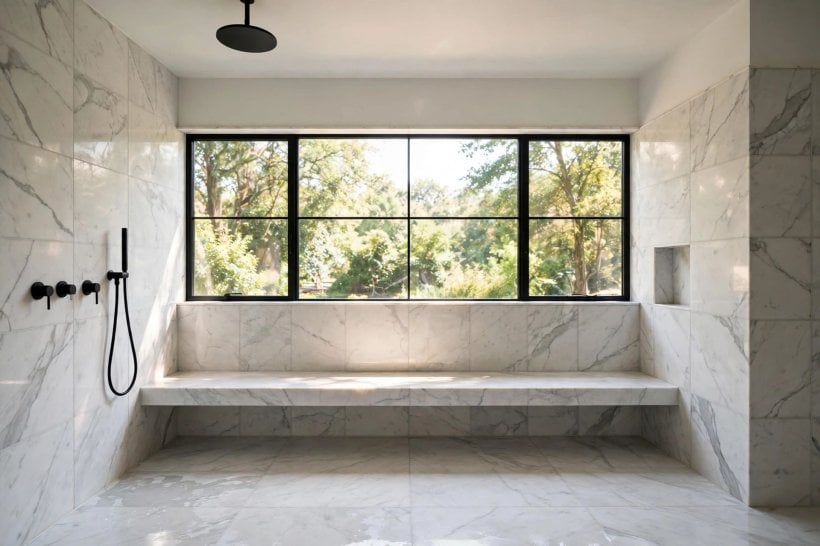
19. Natural stone slab. Marble or granite tops feel luxurious and stay cool; they need sealing and a little care with coloured soaps and oils.
20. Quartz or solid-surface top. Engineered slabs give a seamless, non-porous seat that wipes clean and suits contemporary bathrooms.
21. Teak and other oily hardwoods. Dense tropical timbers handle water gracefully and feel warm; expect to oil them occasionally and accept gentle silvering outdoors-style.
22. Bamboo slats. A lighter, renewable feel with a spa look; choose well-sealed boards and ventilate, since bamboo dislikes sitting in puddles.
23. Marine-style composite. Modern composites shrug off water completely and come in soft, stone-like tones for a low-maintenance seat.
24. Moulded waterproof bench form. Ready-made tileable forms take the guesswork out of slopes and structure, and are clad to match the room exactly.
While choosing finishes, the palettes in tiny house interior paint colours can help coordinate painted bathroom woodwork with your tile and stone.
5. Sizing, Height and Comfort Details
Comfort is measurable, but personal: the right seat height lets feet rest flat, the right depth supports thighs without pressing behind the knees, and a gentle slope keeps water from pooling where you sit. Always mock the size up with boxes or a garden chair before building anything permanent.

25. Chair-height seating. A top surface around typical dining-chair height suits most adults; adjust up or down for the main user’s leg length.
26. Feet-flat test. Sit on your mock-up: both feet should rest flat with knees comfortable. If heels dangle, the seat is too high or too deep.
27. Depth for support. A seat deep enough to support most of the thigh feels secure, while very shallow ledges suit only brief perching.
28. A slight forward slope. Built-in tops are usually formed with a gentle fall so water runs off instead of pooling against the wall junction.
29. Rounded front edge. A softened or bullnose edge is kinder behind the knees and looks more crafted than a sharp tile arris.
30. A backrest wall, warmed. Leaning against cold tile is a shock; a timber back slat or simply positioning the seat in the warm spray zone solves it.
31. Space to stand up. Leave clear floor in front of the seat and, where possible, a grab point nearby — standing from a wet seat needs room and confidence.
32. Room for two knees and a bucket. Foot-soaking is a beloved bench ritual; a little extra width turns the seat into a small home spa station.
6. Waterproofing and Structure
The prettiest bench in the world fails if water reaches its structure. This is the section to read twice and to discuss with your installer: membranes, falls and fixings are invisible in photographs and decisive in real life.

33. Waterproof the whole seat zone. Membrane should run continuously over the seat and into the wall and floor systems, with no gaps at the inside corner.
34. Slope every horizontal surface. Tops, and any ledge above them, need a consistent fall toward the shower floor so nothing ponds against joints.
35. Build on a proper base. Formed foam systems, blockwork or a framed and boarded structure all work when properly supported and tanked; wobble is never acceptable.
36. Fix folding seats into structure. Hinged seats must anchor into studs, masonry or proper reinforcement — never into tile and plasterboard alone.
37. Seal the wall junction. A flexible sanitary seal at the seat-to-wall line, maintained over the years, is the small detail that prevents big repairs.
38. Mind the grout. Quality grout, well sealed where the maker advises, keeps the seat face fresh; cracked grout on a seat is a repair, not a quirk.
39. Ventilate the room. An effective extractor or an openable window lets the seat dry between showers, which protects every material in this article.
40. Ask about warranties. Reputable waterproofing systems and installers stand behind their work; get the details in writing before tiles close everything in.
7. Safety, Support and Everyday Ease
A bench is often bought for comfort and kept for safety. Add steadying points, reachable controls and slip-aware finishes, and the shower becomes calmer for children, grandparents and anyone recovering from a knock or an operation.

41. A grab bar beside the seat. One well-placed bar at rising height turns sitting and standing into a confident move; have fixings checked for solid structure.
42. Handheld shower on a slide rail. A height-adjustable handheld unit lets seated users direct water themselves and rinse the seat down afterwards.
43. Controls reachable from the bench. Nobody should have to stand, dripping, to adjust temperature; plan the valve position from the seated position.
44. Thermostatic control for steadiness. A thermostatic valve helps keep temperature stable when other taps run, which matters most for seated users who move slowly.
45. Slip-aware seat texture. Matte, honed or slatted surfaces grip better than polished stone; test a sample wet and soapy before you commit.
46. Contrast the seat edge. A slightly contrasting front edge helps users with low vision judge the seat’s position in a pale, steamy room.
47. Keep toiletries within arm’s reach. A niche or shelf at seated shoulder height ends the risky stretch-and-twist for shampoo bottles.
48. Night-friendly lighting. A soft low-level light for night-time bathroom trips makes the whole room, bench included, safer without a blinding glare.
For a fuller accessibility picture, designs like those in modern tiny house interior ideas show how level access and clear floors help every room, not just the bathroom.
8. Style Pairings and Finishing Touches
With comfort and structure settled, styling makes the seat belong to its room. Match a metal finish, repeat one material from elsewhere in the bathroom, and the bench looks designed rather than added.
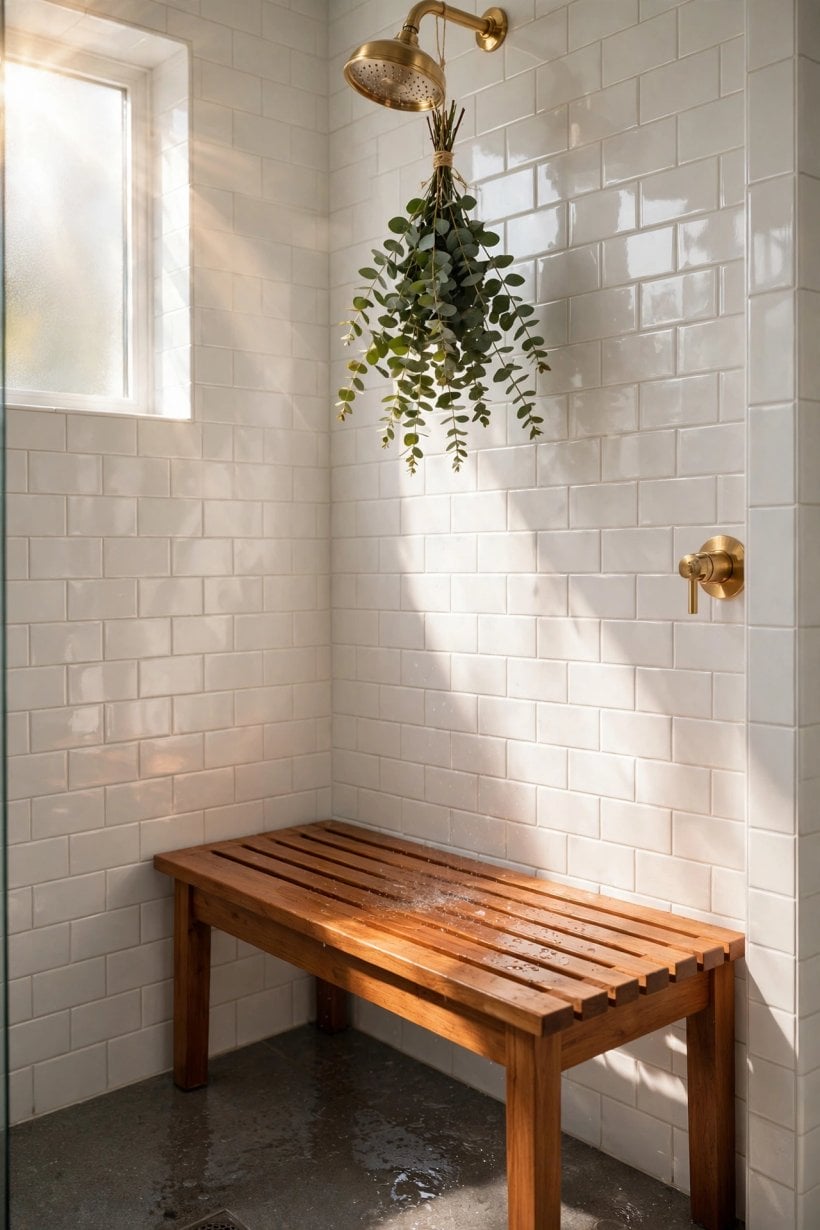
49. Match the metal. Let stool legs, hinges or a bench frame echo the shower’s brass, chrome or black fittings for a pulled-together look.
50. Spa pairing: timber and white. A warm wood seat against white tile and one plant on the windowsill is the timeless wellness combination.
51. Hotel pairing: stone and symmetry. A stone slab, twin wall lights and folded towels on the seat read instantly as boutique-hotel calm.
52. Coastal pairing: pale slats and blue. Whitewashed timber with sea-glass tiles gives a light, breezy seat for bright bathrooms.
53. Modern pairing: black frame, grey slab. Dark metal and mid-grey solid surface make a crisp, graphic bench in minimalist schemes.
54. A cushion is not invited. Skip fabric pads in the wet zone; comfort comes from shape and material, and textiles belong on the dry side of the glass.
55. Style the dry moment. Rolled towels or a small plant placed on the seat when the shower is off keeps the room photo-ready for guests.
56. Repeat the seat material elsewhere. A matching timber bath bridge, stool by the basin or mirror frame ties the bench into the whole room.
57. Keep the view simple. In a small enclosure, one beautiful seat beats three competing features; let bottles live in a niche, not on display.
9. Storage, Niches and Small Extras
The best benches quietly solve storage too. A seat puts products at sitting height, offers a shelf for the radio or the rubber duck, and can hide the clutter that usually migrates around a shower floor.

58. Niche at seated height. Build the product niche where a seated hand falls naturally, rather than at standing eye level by default.
59. A second, higher niche. Two niches — one for the seated user, one standing — end the bottle shuffle in shared bathrooms.
60. Under-bench cubby. The space beneath a floating seat holds a small basket for cleaning supplies or a child’s bath toys.
61. Footrest rail or low ledge. A low bar or ledge near the seat makes leg shaving and foot scrubbing comfortable and safer.
62. Hook rail outside the spray. Robes and towels on hooks just beyond the glass stay dry and land in hand the moment the water stops.
63. A waterproof speaker shelf. Music and podcasts stretch steam sessions; give the speaker a dry-ish perch at the seat’s far end.
64. Plant perch. Humidity-loving plants thrive on the bench’s far corner, softening tile and improving the whole room’s feel.
65. Candle ledge, used wisely. A tea light on a wide, stable ledge away from water and towels makes evening showers feel ceremonial; never leave flames unattended.
66. Towel warming nearby. A heated rail within reach of the enclosure means the first dry moment matches the comfort of the seat itself.
10. Costs, Care and Buying Sense
Costs vary widely with region, materials and trades, so think in bands rather than figures: simple stools sit at the modest end, folding quality seats in the middle, and fully tiled or stone built-ins at the top once waterproofing and labour are counted. Care, happily, is cheap everywhere.
67. Spend on waterproofing first. In any built-in, the invisible system is the investment; decorative upgrades can always come later.
68. Count the whole job. A bench added mid-renovation is far simpler than one retrofitted into finished tiling; ask what making-good is included in any quote.
69. Compare like with like. When quotes differ, check the base construction, membrane system and fixings specified — the differences hide there.
70. Buy freestanding quality once. A sturdy, well-finished stool outlasts several flimsy ones and feels safer every single day.
71. Check weight ratings honestly. For any seat, confirm the maker’s stated capacity suits every intended user, with a sensible margin.
72. Rinse and squeegee the seat. Thirty seconds after each shower keeps soap film and limescale from building a home on the surface.
73. Oil timber on a rhythm. Timber seats appreciate a light oil when water stops beading; follow the maker’s guidance for your product.
74. Inspect seals yearly. A quick annual look at junctions and fixings, tightening and resealing as needed, keeps small maintenance small.
75. Keep the paperwork. Store care instructions, warranty details and a note of tile and grout colours with your household documents for future touch-ups.
Final Considerations
Choose the seat for the body that will use it, the material for the life your household actually lives, and never let a beautiful finish talk you out of proper waterproofing and structure. Whether it is a five-minute teak stool or a tiled bench planned into a full renovation, a well-chosen seat quietly upgrades every shower from a chore into a pause — and that is money and effort very well spent.


0 Comments