

A shower is the one place in the house where a single material does nearly everything: it takes the water, makes the colour, sets the pattern and decides how the room will age.
These tiled shower ideas stay on that material — the tile types, colours, patterns, formats and grout that pictures of tiled showers keep returning to, and the care that keeps them looking chosen rather than merely installed.
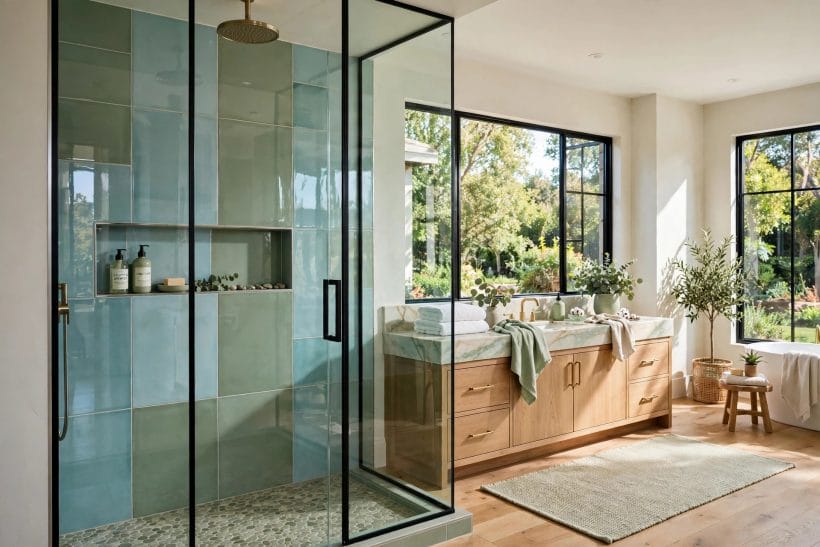
1. Tiled Shower Ideas at a Glance
The tiled shower is a wet room within the room: walls and floor surfaced in tile — porcelain, glazed ceramic, stone or glass — over a waterproofed base, with grout as its jointing and its second design material. Its attributes are the tile body (what it is made of), the glaze (its colour and finish), the format (the size and shape of the pieces), the layout (how the pieces are arranged) and the grout (the lines that complete the picture). It sits inside the wider bathroom story told by the bathroom ideas pillar; this post is the tile chapter of that story, and only the tile chapter.
| Question | Short answer |
|---|---|
| What tile suits a shower best? | Porcelain and glazed ceramic lead — dense, water-shedding, easy to keep; natural stone joins them where its sealing is kept up. |
| Does tile size change the room? | Yes: small formats add grout lines and grip underfoot, large formats calm the wall into a single quiet plane. |
| Is grout part of the design? | Half of it — grout colour can merge a wall into one surface or draw its pattern in lines. |
| Can a tiled shower be repaired? | Tile by tile, yes: single tiles, grout and silicone all renew without rebuilding the shower. |
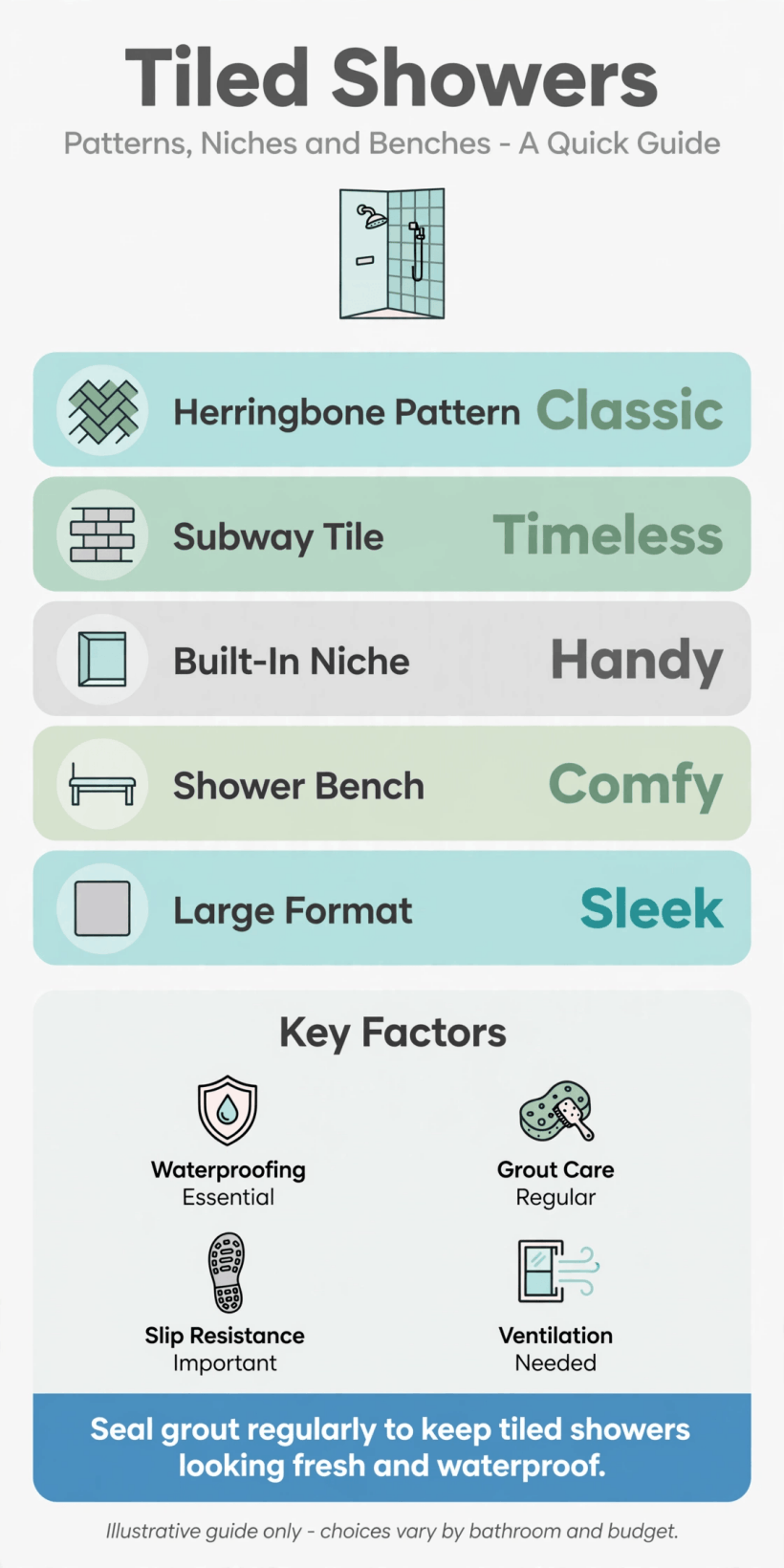
2. The Tile Itself: Ceramic, Porcelain and Honest Stone
Every shower in this survey is decided before the first fitting is chosen, at the tile merchant’s shelf. The layout questions — entries, screens, drainage — belong to the walk in shower ideas survey; this post stays on the surface itself: what the tile is made of, and what that making means under daily water.
1. Porcelain is the shower’s workhorse
Fired dense and hard, porcelain takes water on its face and shrugs it off, which is why it lines more showers than any other tile.
2. Glazed ceramic for colour that stays kind
Ceramic’s glaze is where tile colour lives at its friendliest: soft whites, greens and blues with a slight handmade wobble. On walls, away from the floor’s traffic, glazed ceramic is the warm, forgiving classic.
3. Natural stone for a shower that ages
Marble, slate and travertine bring real geology into the shower — veining no printer invented.
4. Glass tile for light in a small shower
Glass tiles borrow light from the room and lend it back with interest, brightening showers that have no window. They suit splash zones and feature walls best, laid by a tiler patient with their unforgiving edges.
5. Terracotta and zellige for the handmade register
Hand-fired tiles — zellige above all — refuse flatness: every piece tilts the light a little differently, and the wall shimmers like water itself.
6. Encaustic-look porcelain for pattern without the upkeep
Real encaustic cement tile is heavy, thirsty and demanding in a shower. Its porcelain imitators carry the same bold geometry with none of the sealing calendar — the pattern-lover’s practical compromise.
7. Unglazed tile where grip matters
On the shower floor, the glaze comes off: unglazed and textured surfaces give wet feet something to hold. The floor is the one place in the shower where performance outranks beauty, and honest tiles say so.
8. Read the tile’s edge before its face
A rectified edge gives hairline joints and a crisp modern plane; a soft pillowed edge gives the handmade, cottage register. The face gets the photograph, but the edge decides the wall’s whole accent.
9. One tile, whole shower: the disciplined classic
Lining every surface in a single tile is the oldest shower decision and still the calmest. It makes small showers feel larger, cleaning simpler, and the room’s other materials — timber, brass, linen — free to speak.
10. Two tiles, one conversation
A floor tile and a wall tile that share a tone but differ in finish is the classic pairing: matte underfoot, satin on the walls.
11. Order the sample board before the boxes
Tiles lie in single photographs. A sample board — the real pieces, grouted, wetted and seen in morning and evening light — tells the truth about colour shift and sheen that no screen can.
3. Colour and Glaze: What the Surface Says
Colour in a shower is not decoration added to tile; it is the tile, chosen at the shelf and fixed for decades. The full room these tiles line is surveyed in the modern bathroom ideas post; here the subject is the palette of the surface itself — the whites, greens, stones and blacks that tile does best.
12. White tile, warm or cool, is a real decision
Two white tiles can disagree completely: one blue-white and gallery-crisp, one cream and candlelit. In a shower the light is often artificial, which exaggerates the split — compare whites under the bathroom’s own bulbs, not the showroom’s.
13. Green tile and water belong together
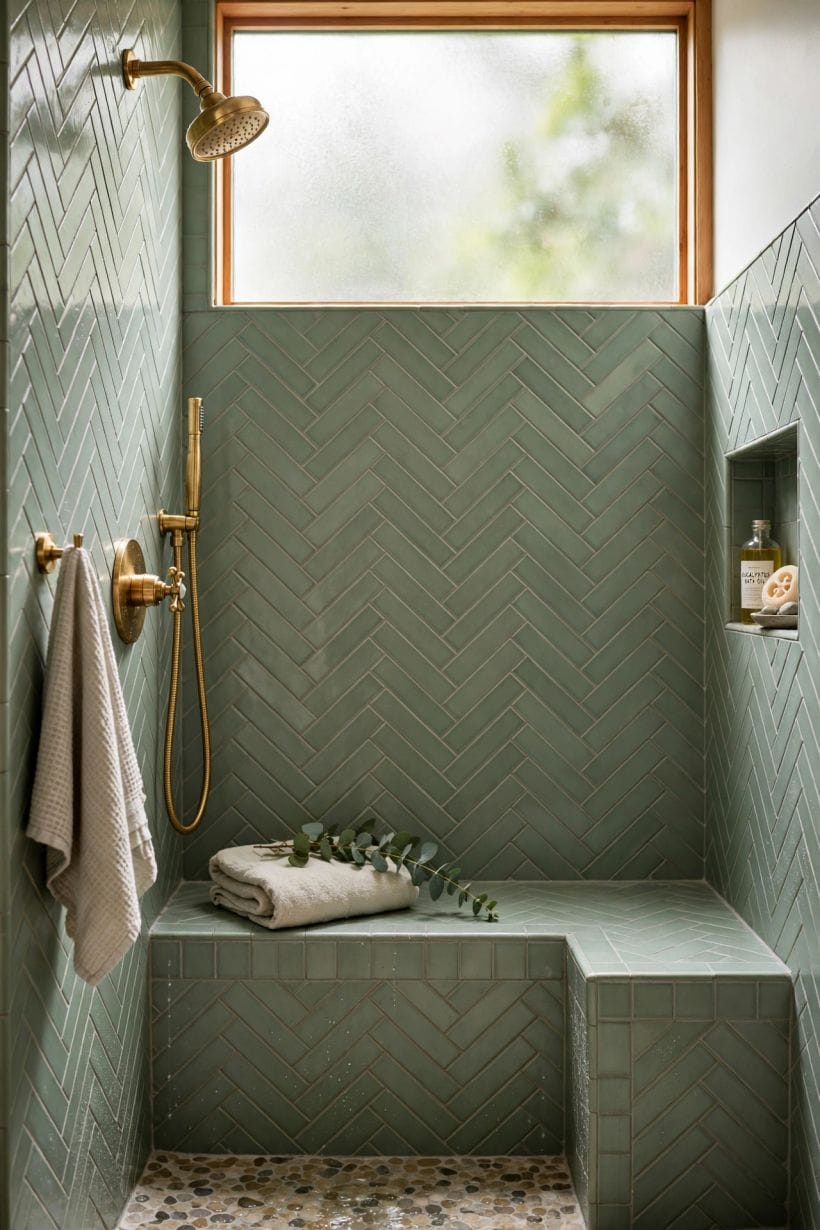
From palest sage to deep bottle green, green is tile’s native colour in a wet room: it flatters skin, hides water marks kindly, and pairs with every metal from chrome to aged brass.
14. Blue tile for the coastal register
Blue tiles carry the sea into the plan — glazed blues especially, whose depths shift as they catch the light. Kept to the shower, blue stays a pleasure; spread over the whole room it can turn chilly.
15. Stone tones for the quiet shower
Greys, taupes and bone tones in tile make the shower a background rather than an event — the right call where the room’s drama lives elsewhere, in a view, a tub or a garden door.
16. Black tile, used like ink
A black-tiled shower is a drawn line around the morning: dramatic, cocooning and exact about water marks, which show pale on dark. It rewards the tidy and suits showers with strong light to strike the glaze.
17. Gloss glaze for bounce and brightness
Gloss tiles reflect the room back at itself, doubling light and making small showers feel awake. They also show every droplet — a fair trade in a bright room, a chore in a dim one.
18. Matte glaze for calm and grip of eye
Matte tiles drink light instead of throwing it, which calms busy patterns and makes colour read deeper and truer. The modern shower’s default finish, and the kindest to live with at close quarters.
19. Satin: the negotiated finish
Between gloss and matte sits satin, with a low sheen that forgives water marks while still lifting a dark colour. Most family showers, honestly assessed, are satin showers waiting to be specified.
20. Colour through the body, not only the face
Where a tile’s colour runs through its whole thickness, chips and cut edges show the same tone and the wall forgives accidents. Surface-printed tiles are finer and cheaper; through-body tiles are the long game’s choice.
21. Let one wall carry the colour
A single coloured wall — usually the one the water falls against — with quiet tiles elsewhere gives the shower its focus and the room its rest. Colour everywhere is a shout; colour placed is a sentence.
22. Test colour wet, always
Every tile darkens and deepens under water, some dramatically. The shower is the one room where the material spends its life wet, so judge the sample board under the tap before committing the wall.
4. Pattern and Layout: The Grid and Its Variations
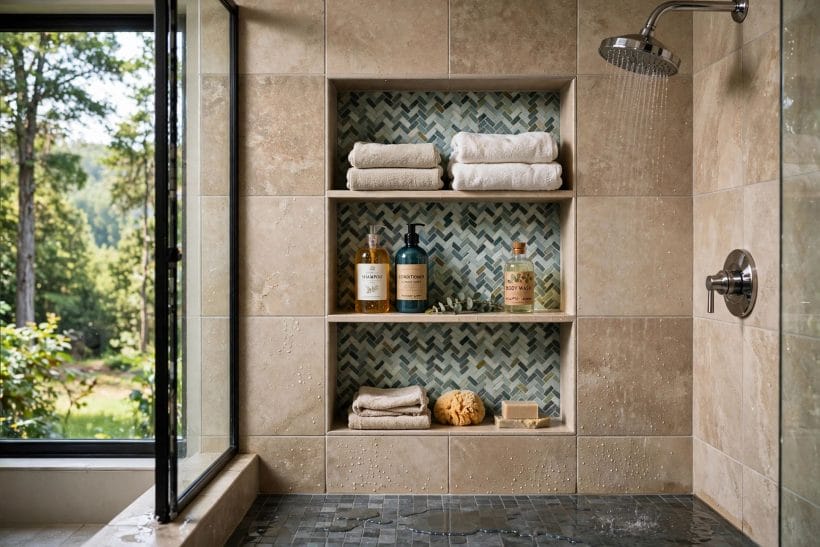
The same tile can build a dozen different showers depending on how it is laid — the pattern is the second design decision, taken with the trowel rather than the catalogue. Layout of the room itself is a separate craft, worked in the ceramic tile bathroom survey; here it is the arrangement of the pieces on the wall.
23. The stacked grid: modern and honest
Tiles stacked in straight columns, joint over joint, is the contemporary default — a calm graph paper that lets colour and format lead. It is also the least forgiving layout: any wandering joint shows at once.
24. The brick bond: the cottage classic
Offsetting each row by half a tile softens the grid into brickwork’s familiar rhythm. It suits handmade and metro tiles, hides minor unevenness kindly, and warms modern fixtures back toward the domestic.
25. Herringbone for movement
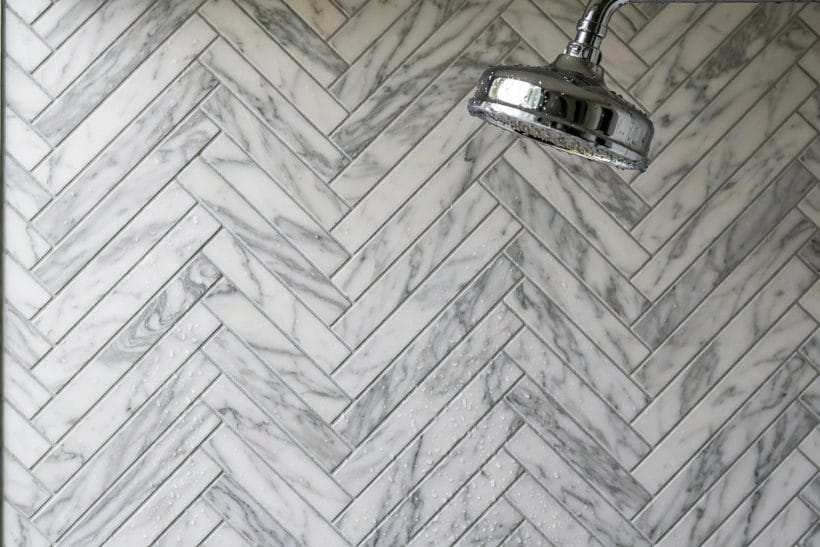
Laid at angles, slim tiles weave into herringbone — the pattern with the most motion in this survey.
26. Chevron: herringbone’s tailored cousin
Where herringbone overlaps its points, chevron cuts them into a continuous zigzag ribbon. The effect is sharper and more formal, and the cutting makes it the tiler’s test piece — commission it from hands that show examples.
27. Vertical stacks make low showers taller
Turning the grid upright — tiles stacked in columns that climb — draws the eye up and lends height to low-ceilinged showers. The same tile, the same wall, a taller room: pattern as architecture.
28. A horizontal band to organise the wall
One or two courses of a different tone run around the shower at shoulder height can organise fixtures, hide a change of tile, and give the eye a horizon.
29. The feature panel behind the water
Framing a rectangle of patterned or coloured tile on the main wall — bordered by the field tile like a picture — concentrates the budget and the beauty where the eye rests during every shower.
30. Continue the floor up one wall
Running the floor tile up the wall behind the fittings wraps the shower in one material embrace. It suits small showers especially, blurring the corner where floor meets wall into a single folded surface.
31. Border and pencil trims: the drawn edge
A slim pencil or bullnose trim finishes raw tile edges with a drawn line instead of a cut one.
32. Mixed sizes in one colour family
A large field tile with a matching mosaic in the niche and on the floor keeps one colour story while changing scale — pattern by proportion rather than by print, and calm enough for the smallest shower.
33. Lay the pattern dry before it is fixed
A dry-lay of the feature wall on the floor — tiles arranged, photographed, adjusted — costs an hour and saves the pattern’s mistakes from becoming permanent. Good tilers suggest it themselves.
5. Shape and Format: From Mosaic to the Large Panel
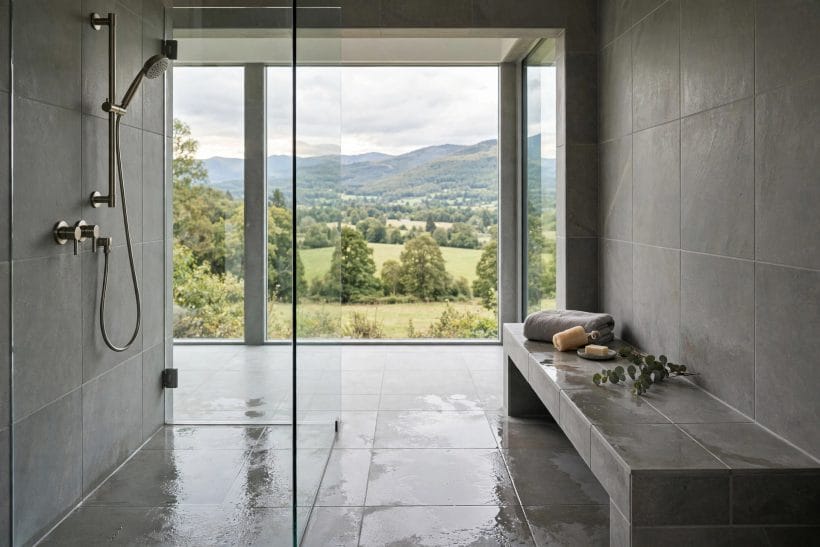
Format is pattern’s partner: the size and shape of the pieces set the grout count, the grip and the room’s scale. The rooms these formats serve — including the grandest — are surveyed in the master bathroom ideas post; this section stays with the pieces themselves.
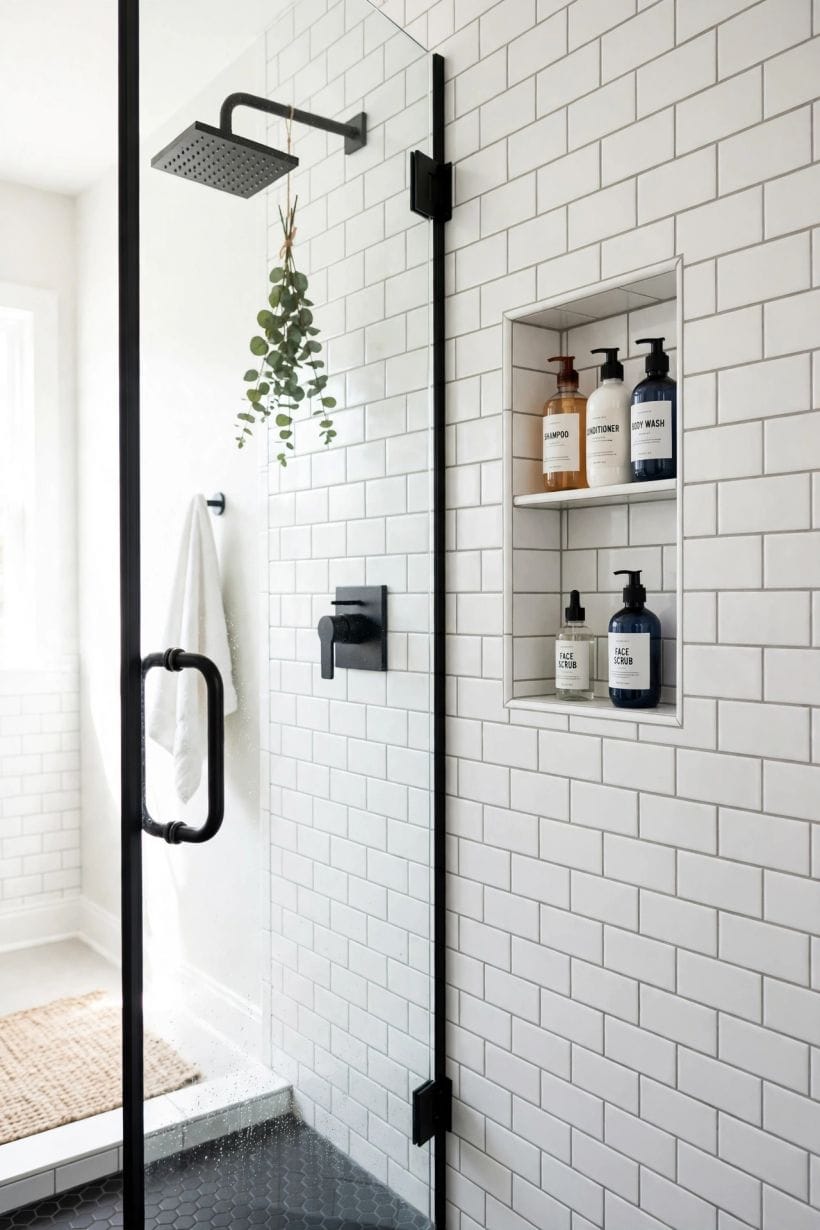
34. Metro tiles: the eternal rectangle
The bevelled brick-shaped tile has lined a century of wet rooms without dating, because its proportions sit halfway between grid and brickwork.
35. Square tiles and the return of the grid
Plain squares, laid stacked with fine joints, are tile’s minimalist register — mid-century in origin, contemporary again. Their plainness throws all attention onto colour and grout, so both must be chosen exactly.
36. Hexagons underfoot
Small hexagons are the shower floor’s historic answer: many joints for grip, a honeycomb that forgives slopes toward the drain, and a pattern that suits every style from cottage to loft. The floor’s hardest-working shape.
37. Penny rounds for softness
Round mosaic tiles soften the whole shower — a pebble-like field that is gentle underfoot and kind to curved details. In matte porcelain they read as texture rather than pattern, a background with a pulse.
38. Sheet mosaics for niches and floors
Mosaics arrive on mesh sheets, which makes their hundreds of pieces one decision instead of hundreds. Reserve them for floors, niches and borders, where their joint-rich grip and sparkle do the most good per piece.
39. Large-format tiles for the calm wall
Big tiles mean few joints, and few joints mean a wall that reads as a single calm plane — the spa register.
40. Plank tiles: timber’s pattern, tile’s nerve
Long porcelain planks carry timber’s grain into the shower without timber’s worries about water. Laid staggered like floorboards, they warm modern showers that all-mineral surfaces would leave cold.
41. Fish-scale and fan tiles for the romantic shower
Overlapping fan shapes bring a mermaid softness no rectangle can manage. They suit one wall, a soft colour and good light — the decorative peak of the tile world, best used like jewellery, once.
42. Kit-kat and finger tiles: the fine vertical
Slim upright finger tiles give walls a ribbed, textile fineness — pattern at the scale of corduroy. They flatter tall niches and splashbacks of colour, and their many joints make grout colour a headline choice.
43. Match format to the room’s scale
Small showers overwhelmed by huge tiles lose their corners; grand showers tiled in tiny mosaic can feel restless. The rule of the survey: the smaller the room, the quieter the format — with one deliberate exception allowed.
44. Thickness and weight are the wall’s business
Large and stone tiles are heavy, and old plaster or board may not be a fair foundation for them. A tiler’s assessment of the wall itself comes before the format is finalised — beauty is load-bearing here.
6. Grout: The Quiet Half of Every Tiled Wall
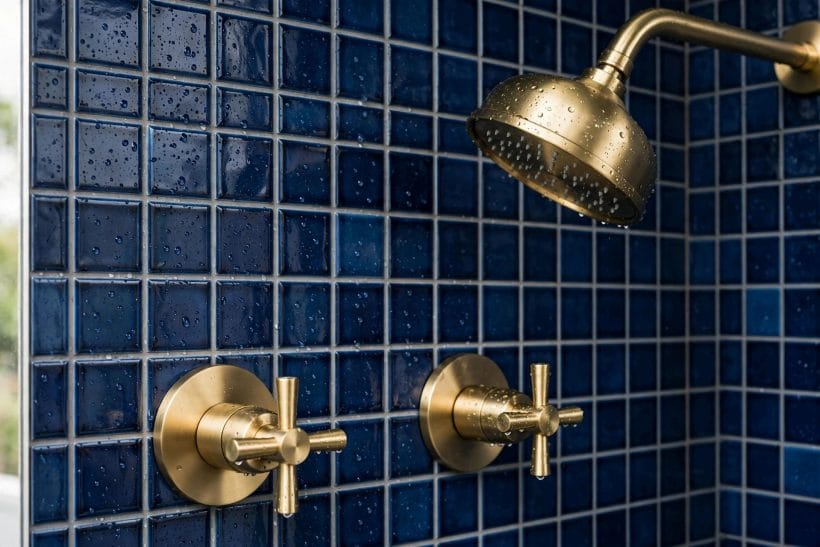
Half of what the eye reads as ’tile’ is actually grout — the lines between. The shower surveys gathered in the all showers bathroom ideas post show grout doing its work in every style; here it gets its own section, because choosing it well is the cheapest design decision in the whole shower.
45. Matching grout: the seamless wall
Grout mixed to the tile’s own colour dissolves the grid and lets the surface read as one plane.
46. Contrasting grout: the drawn grid
Pale tiles with dark grout — or the reverse — turn the joints into draughtsmanship, drawing the pattern in ink. It celebrates layout and handmade wobble alike, and hides everyday marks in the lines themselves.
47. Joint width is a style decision
Hairline joints say precision and modernity; wider joints say handmade, rustic, forgiving. The width must suit the tile’s edge — rectified tiles can run fine, pillowed tiles cannot — so edge and joint are chosen together.
48. Epoxy grout for the hard-worked shower
Epoxy grouts resist staining and water far beyond cement-based ones, at a higher price and a faster, less forgiving application. In the family shower that never dries, epoxy is less an upgrade than an insurance.
49. The floor’s grout works hardest
Shower-floor grout takes standing water, soap and feet daily; it is where discoloration begins. A mid-tone grout on the floor — never the purest white — keeps the shower looking kept without weekly penance.
50. Seal cement grout, then keep the date
Cement grout drinks unless sealed, and the sealant is a calendar item, not a lifetime promise. Note the resealing date where the household keeps such things; the shower will quietly depend on it.
51. Silicone belongs at the corners
Where walls meet, and where tile meets tray or bath, movement lives — and rigid grout cracks there. Flexible silicone in a matched colour is the correct joint at every change of plane, renewed when it tires.
52. Grout colour changes tile colour
A pale tile framed in dark grout looks darker and richer; the same tile in white grout looks paler and softer.
53. Regrouting: the shower’s second youth
Tired grout can be raked out and renewed without touching a single tile, and the transformation is out of all proportion to the work. Many a ‘dated’ shower is simply a well-tiled one waiting for new lines.
54. Sample the grout on the sample board
Grout colour is a wet-room decision too: it dries lighter than the mixed paste suggests, and darkens again under water.
55. Keep a labelled box of spares
A few spare tiles and a note of the grout colour, kept in a labelled box, are the difference between a one-tile repair and a whole-wall problem in ten years’ time.
7. Detailing in Tile: Niches, Benches and Finished Edges
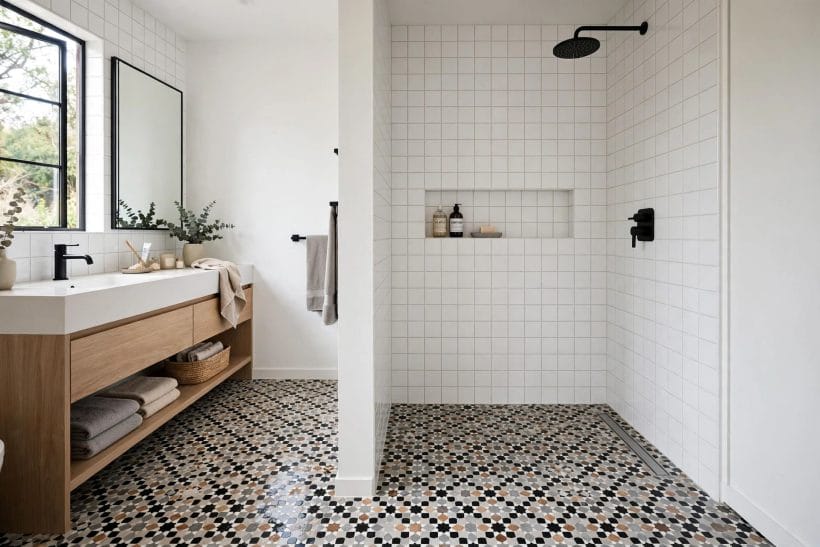
A tiled shower is finished at its details: the shelf recessed into its wall, the bench folded from its floor, the edge where tile politely stops. These are tile-craft questions, answered here in tile terms; the waterproofing beneath them is a professional system, as the waterproof tiny house bathroom wet bath survey shows in miniature.
56. The tiled niche: a shelf made of the wall itself
A recess lined in the wall’s own tile — or deliberately contrasted — holds bottles at hand without a caddy in sight.
57. Slope the niche’s sill, invisibly
A niche floor tilted a breath toward the shower sheds its puddles instead of keeping them. It is a one-line instruction to the tiler and a permanent difference to the shelf’s cleanliness.
58. A bench folded from tile
A built bench, tiled over its top and face, gives the shower a seat, a footrest and a shelf in one gesture.
59. Mitred corners: tile folded like paper
Where two tiled faces meet at an external corner, mitred edges fold the pattern around the turn with no trim in sight.
60. Metal trims for the crisp modern edge
Slim metal profiles — brushed, blackened or brassed — finish exposed tile edges with a machined line. They protect the edge better than any tile trim and give large-format tiling its gallery finish.
61. Bullnose and glazed edges: the traditional finish
Tiles made with a rounded, glazed edge close a tiled area the old way, in the material itself. Where the range still offers them, they give cottage and traditional showers their soft, complete border.
62. Half-height tile and the painted wall above
Tiling to shoulder height and painting above is the budget’s classic compromise, and in a shower it must be a considered one: the tiled zone takes the water, the painted zone takes only steam, in a paint made for the job.
63. Tile the ceiling only with a reason
A tiled ceiling completes the full wet-room wrap and suits low, steamy showers; elsewhere it spends money in the dark. Where it is done, small light tiles and a tiler honest about overhead work are the requirements.
64. Thresholds and the polite stop
Where shower tile meets the bathroom floor, a threshold strip in stone or metal makes the border deliberate. The eye reads intention; the feet read a small, dry frontier between two territories.
65. Repeat one detail three times
A niche back, a bench face and a border course in the same accent tile tie a shower together more surely than any single grand gesture. Repetition is how tile details become design rather than decoration.
8. Keeping Tile Beautiful: Care, Repair and Renewal
Tile’s promise is permanence, but permanence is a partnership: the surface asks for little, and asks for it regularly. This closing section covers the keeping of the tiled shower — the squeegee habit, the honest cleaners, and the repairs that keep a good wall from ever needing replacement.
66. The squeegee is the whole secret
Thirty seconds with a squeegee after the last shower of the morning removes most of the water that would otherwise sit in grout and corners.
67. Gentle cleaners for a gentle surface
Glazed tile needs little more than a mild cleaner and a soft cloth; harsh acids etch glaze and stone alike, and scouring powders dull both.
68. Ventilation is tile care too
A shower that dries between uses keeps its grout and silicone young; one that stays steamed invites mildew into every joint. The fan’s run after the shower is as much tile maintenance as any bottle under the sink.
69. Stone wants its sealer renewed
Natural stone in a shower is sealed, and the seal is a renewable coat, not a permanent state. Water that stops beading on the surface is the signal; resealing on that signal keeps stone honest for decades.
70. A cracked tile is a one-tile repair
A single damaged tile can be cut out and replaced without disturbing its neighbours — if a spare from the original batch survives.
71. Silicone renewal is normal maintenance
The flexible joints at corners and tray edges tire years before the tile does; raking them out and renewing them is routine, like repainting a door.
72. Limescale yields to patience
In hard-water districts, scale films the glaze — and dissolves under mild, patient treatment rather than force. A cloth soaked and left on the deposit does the work that scrubbing cannot, without scratching the surface beneath.
73. Mats and bottles: the quiet abrasions
Gritty bottles dragged across mosaic floors and grit trapped under bath mats are how glazed floors lose their finish. Rinse the floor’s corners when cleaning, and lift — don’t drag — the bottles on the niche shelf.
74. Regrout before you renovate
When a tiled shower looks tired, the order of suspicion is grout, silicone, then tile — and the first two are renewable in a weekend. Many full re-tiles are commissioned against walls that needed only their lines redrawn.
75. Keep the paperwork with the spares
The tile’s name, maker, batch and grout colour, written on a card in the spares box, turn every future repair into a matching exercise instead of an archaeology dig.
9. Checks and Mistakes: Before the First Purchase or the First Stone
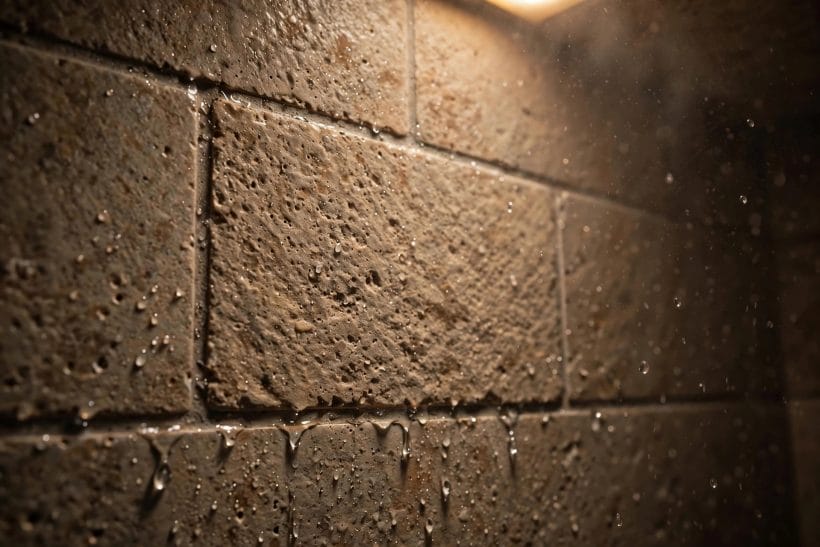
Begin at the shelf, not the showroom wall: handle the actual tiles, wet them, and look at them under bathroom light. The commonest tiled-shower mistake is choosing from photographs — tile colour shifts with glaze, light and water, and the sample board is the only honest preview.
Second: respect the division of labour this post has kept. Tile is the surface; the waterproofing beneath it, the falls to the drain and the structure of the walls are professional systems with their own rules. Commission those properly, from people who guarantee them, and never ask the tile to hide a problem underneath — it cannot, and the failure will announce itself through the grout. Third: beware the over-patterned shower. Tile offers pattern at every scale, and using all of it at once — herringbone walls, mosaic floor, patterned niche, contrast grout — spends the room’s calm in a single gesture. Choose one pattern lead, one supporting texture, and let the rest be quiet.
10. Costs and Pulling It Together
Tiled showers divide honestly by effort and material rather than by mysteries: glazed ceramic and porcelain in a single tile with matching grout are the modest, durable baseline; a second tile, a pattern layout or a feature wall is the middle register; natural stone, handmade tiles and large-format work are the generous end, where the material and the tiler’s hours both cost more. In every register the money is best spent in the same order — sound waterproofing first, a good tiler second, the tile itself third.
Pull the shower together by deciding its one sentence: the green wall, the stone calm, the herringbone’s movement. Choose that sentence first, let tile, grout and detail all speak it, and link the finished room back into the house — the bathroom pillar, the walk-in survey and the shower collection each tell their part of the same wet-room story. A tiled shower chosen this way stops being a specification and becomes the room the house wakes up in.
Final Considerations
Pictures of tiled showers endure because tile endures: it is the rare surface that can be at once waterproof, colourful, patterned and repairable, and it has lined bathing rooms for centuries without exhausting its ideas. The seventy-five in this survey are the material’s standing arguments — porcelain’s reliability, glaze’s colour, pattern’s energy, grout’s quiet half of the design.
Choose the tile the way the room will live with it: wet, early, daily. Get that choice right and the shower asks almost nothing more of you than a squeegee, a kept sealer date and a spares box in the cupboard — and gives back a small, bright, water-tight room that still looks deliberate decades from now.

0 Comments