
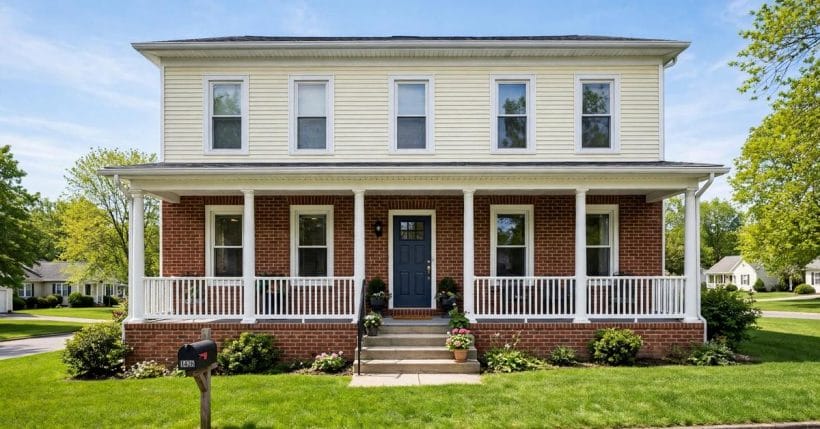
Brick has a strong voice on the outside of a house. Its colour is warm, its surface is patterned with mortar joints, and its texture catches light differently through the day. When a second material joins it on the same facade, the pairing either settles into a calm whole or starts to argue. The five materials in this guide are the ones most often seen sitting happily beside brick, and each one does the job in a different way: one softens brick, one quiets it, one warms it, one smooths against it, and one answers its roughness with roughness of its own.
This guide looks at each pairing only through the lens of appearance: colour, texture, profile, trim and the line where the two materials meet. Nothing here ranks one material above another, and nothing here makes claims about how any material performs over time. The question throughout is a visual one: how does this siding sit next to brick, and what does the combination look like from the street? If you are planning a change to the outside of your own home, that visual question is the right place to start, and the answers below give you a way to compare vinyl siding and brick combinations with four other pairings on equal terms.
1. Vinyl Siding and Brick: The Classic Pairing
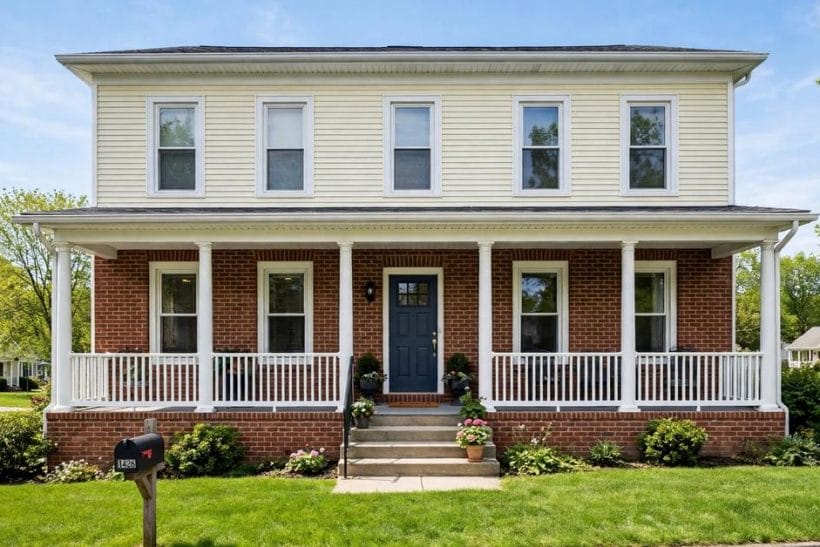
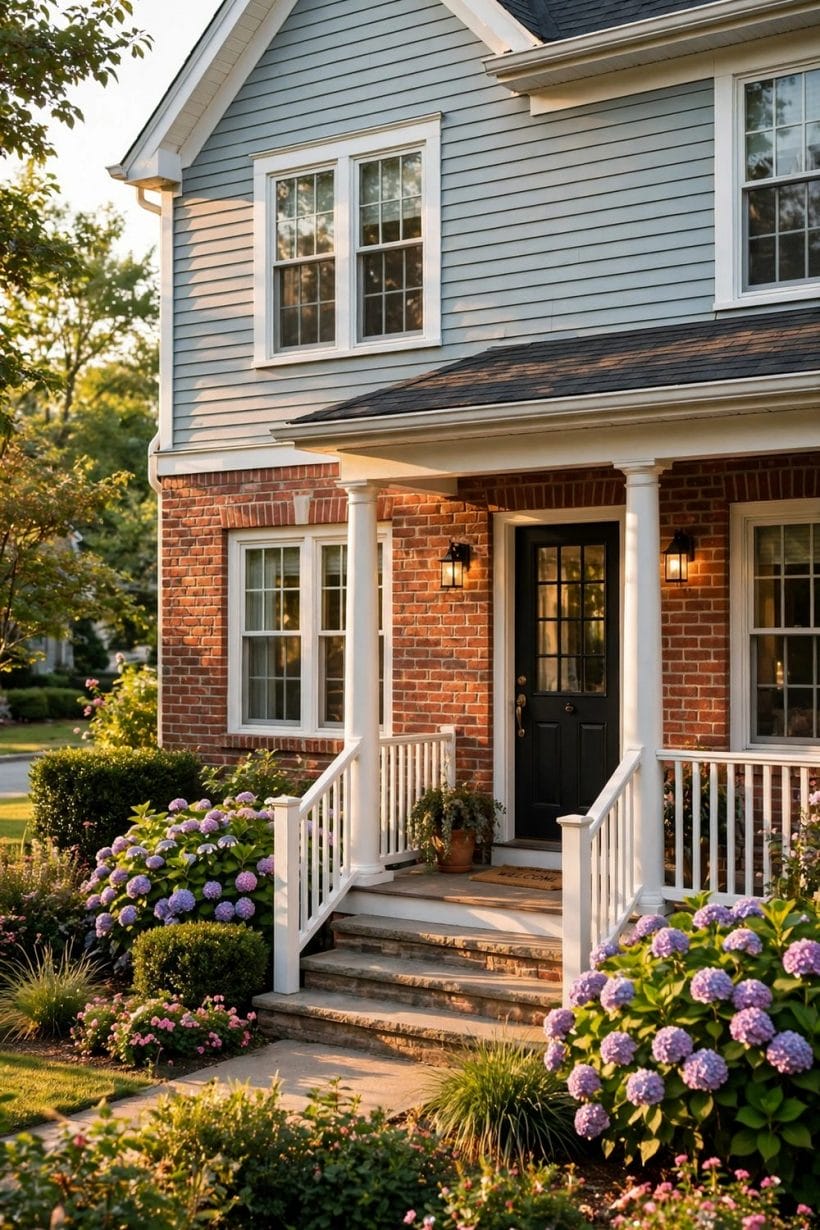
Vinyl siding and brick is the pairing most people picture first, and there is a good reason for that: the two materials divide the work of the facade neatly. Brick usually takes the lower storey, where its weight and pattern ground the house, while vinyl siding takes the upper storey, where its smooth, even boards read as a lighter plane above. Seen from the street, the house gains a clear horizontal order, with a solid base and a calm upper wall, and the eye moves easily from one to the other.
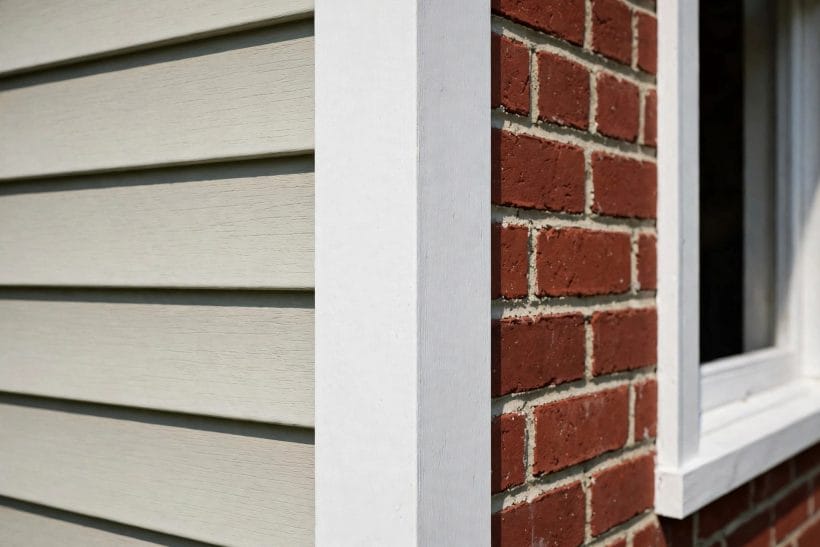
Colour is where this pairing is won or lost. A pale cream or soft grey vinyl lets red brick stay the warmest colour on the house, so the brick reads as the feature and the siding reads as its quiet partner. A mid blue-grey vinyl, by contrast, sets up a gentle cool-and-warm contrast: the brick glows warmer against the cooler boards, and the house feels livelier without feeling busy. White trim is the usual bridge between the two, picking out windows, corners and the line where brick gives way to siding, and giving the eye a crisp edge to follow.
The profile of the boards matters too. Narrow horizontal boards cast a fine rhythm of shadow lines across the upper wall, which plays nicely against the small, regular pattern of brickwork below. Wider boards read calmer and plainer, which suits a house where the brick itself is already busy with varied tones. Either way, the pairing works best when one material is clearly dominant: brick leading on the ground floor, siding filling the upper wall, and a single trim colour tying the two together.
2. Fibre-Cement Siding and Brick: Calm, Flat Panels
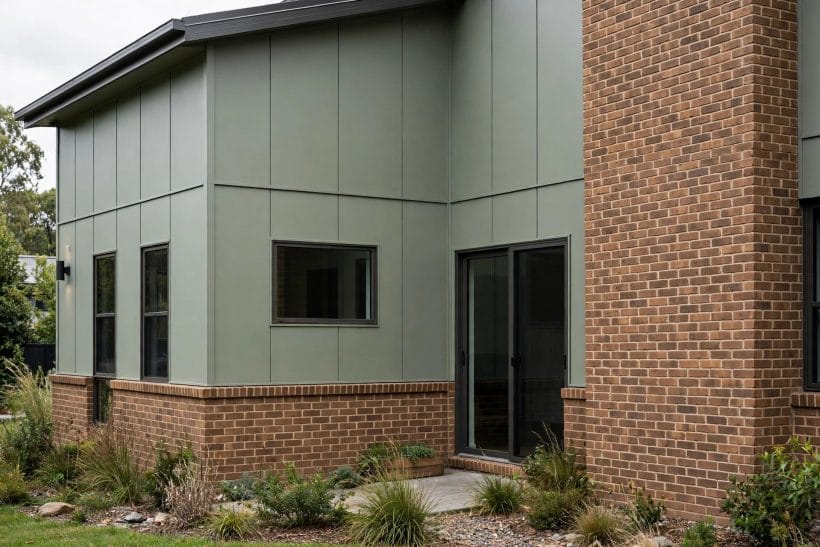
Fibre-cement siding meets brick in a quieter register. Where vinyl boards carry a visible horizontal rhythm, flat fibre-cement panels present a smooth, almost unbroken surface, broken only by slim joints. Against brick, that flatness is the whole point: the brick supplies all the pattern the facade needs, and the panels supply a calm field that lets the brickwork breathe. The result is a house that looks composed and modern without looking stark.
Colour pairings tend toward the muted end of the range. A sage green panel beside brown brick is a good example of the effect: neither material shouts, and the two sit together like colours found in the same landscape. Soft grey panels work the same way against red brick, cooling the warmth of the brick just enough to keep the facade from feeling heavy. Because the panels are so flat, the trim around windows and at corners carries more visual weight than it does with board siding, and a dark window frame can sharpen the whole composition.
This pairing suits houses where the brick is used in large, confident areas, such as a full chimney breast or a long garden wall, because the panels do not compete for attention. The junction between panel and brick is usually a straight, clean line, and that straightness is part of the appeal: two honest materials, each showing its own character, meeting without fuss.
3. Timber Boards and Brick: Warmth Against Red Brick
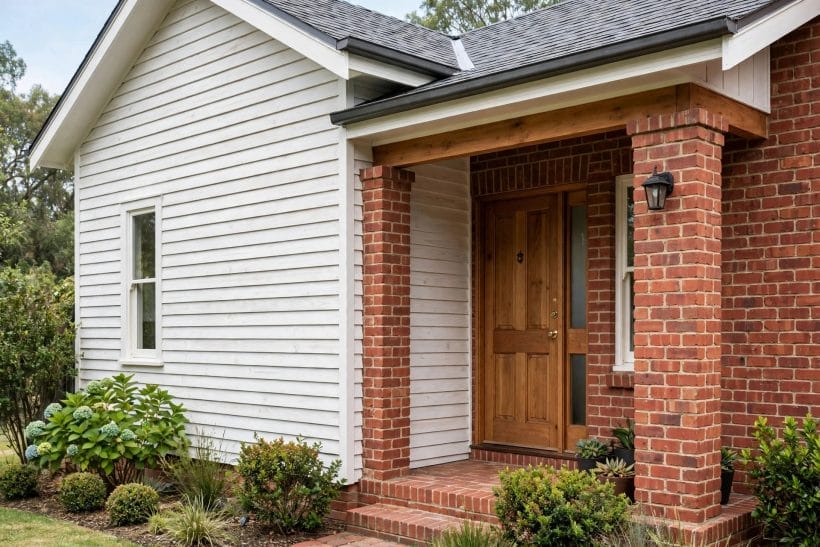
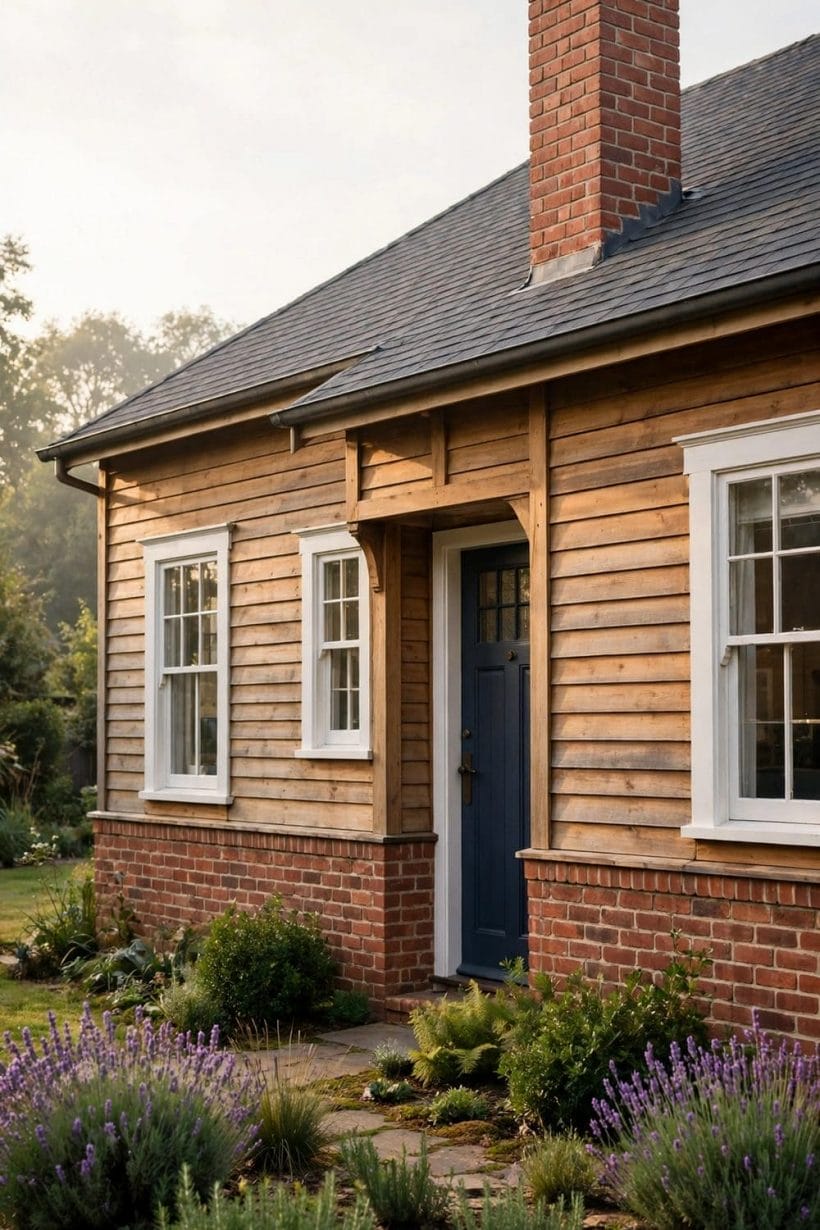
Timber weatherboards bring a warmth to brick that no manufactured board quite matches, because timber carries visible grain. Even painted white, a timber board shows a soft, organic line that echoes the handmade feel of brick. The two materials share a natural origin story, and on the facade they read as companions rather than contrasts: brick with its earthy firing, timber with its grain and growth lines.
Painted timber is the most forgiving version of this pairing. White or cream boards beside red brick give a fresh, cottage-like reading, and the white of the boards can be picked up in the window trim and porch details so the whole front feels coordinated. Natural, unpainted timber takes the pairing in a different direction: honey and mid-brown boards deepen the warmth of the brick, and the house takes on a rustic, grounded character, especially when the timber is used on a gable or an upper gable end above a brick ground floor.
Board width changes the mood. Narrow boards feel detailed and traditional, suiting smaller houses and porches, while wider boards feel bolder and more contemporary. Brick porch piers are a natural meeting point for this pairing: the piers carry the brick up into the porch structure, while the timber boards fill the walls around them, so the two materials are woven together rather than simply stacked.
4. Smooth Stucco and Brick: A Soft Contrast
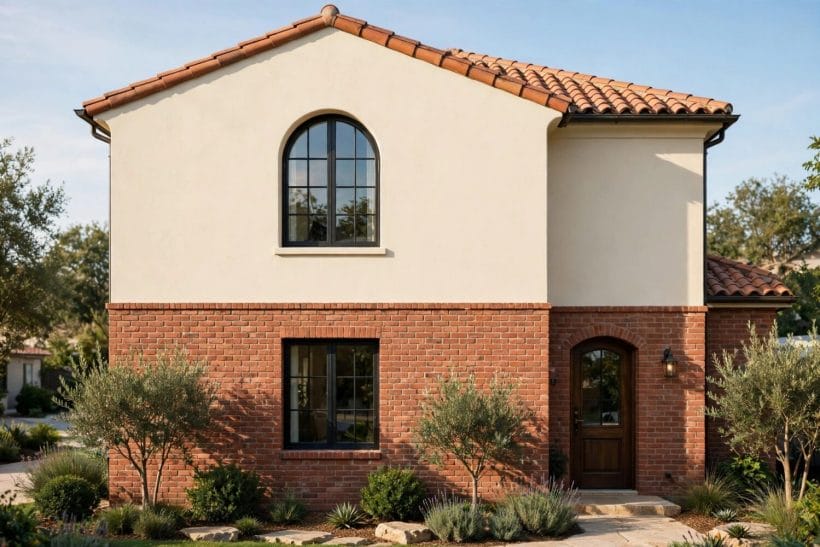
Smooth stucco, or render, is the softest partner brick can have. Where brick is patterned, jointed and textured, stucco is a single unbroken skin of colour, and that contrast is what makes the pairing so pleasing. The brick reads as structure and the stucco reads as surface, and the house gains a Mediterranean or Spanish-influenced calm, especially when the stucco is warm cream and the brick is a deep red.
The usual arrangement puts brick on the lower wall and stucco above, with a clear horizontal line between them, often marked by a slim band of trim or a change in plane. That line is important: without it, the two materials can look as though they are simply colliding. With it, the facade gains the same readable order as the vinyl-and-brick pairing, but with a softer upper wall. Arched windows and doorways suit this pairing particularly well, because the arch echoes the softness of the render while the brick around the base keeps the house grounded.
Colour discipline matters more here than with any other pairing in this guide, because stucco shows colour so plainly. A cream, warm white or pale sand render lets the brick do the talking, while a strongly coloured render can overpower the brick and unbalance the facade. Kept pale, stucco gives brick its most elegant partner: quiet above, warm below, and calm from the street.
5. Stone Veneer and Brick: Texture Against Texture
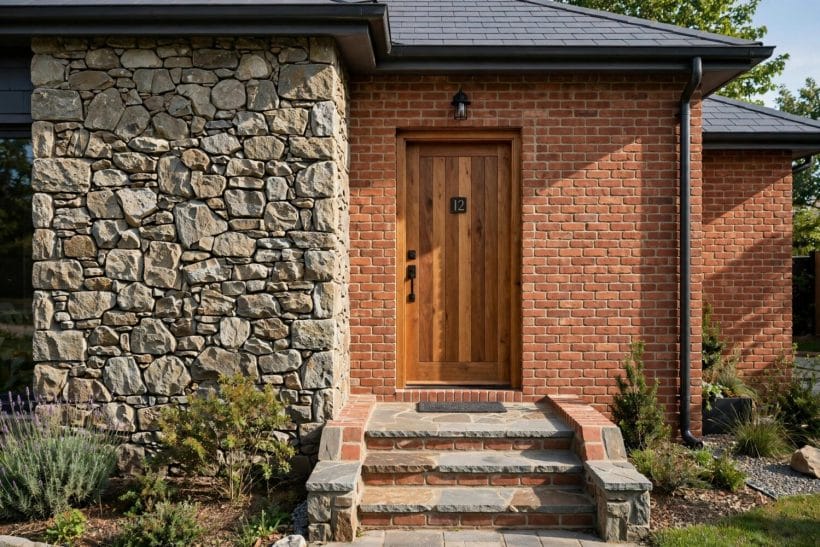
Stone veneer is the boldest partner for brick, because it answers texture with texture. Brick is regular and rhythmic; stone is irregular, rough and varied in shape and tone. Put side by side, the two create a facade with real depth, where the eye moves between the orderly courses of brick and the craggy face of stone. It is a pairing that suits entrance areas especially well, where a stone-clad pier or porch wall can anchor the front of the house.
The key to this pairing is proportion. Stone works best as an accent rather than as an equal partner: a porch wall, a chimney breast, or a single feature panel, with brick carrying the larger wall areas. Used that way, the stone reads as a deliberate highlight, and the brick reads as the steady background. Reversed, with stone everywhere and brick as the accent, the facade can feel restless, because two strong textures are competing for the same attention.
Tone matters as well. Grey and brown stone tones sit comfortably beside red brick, because they share an earthy family, while very pale stone can look detached from warm brick unless the trim and mortar tones are chosen to bridge the gap. A timber front door is a natural companion here, adding a third natural texture that softens the meeting of stone and brick and gives the entrance a welcoming focus.
6. Colour: Reading the Brick Before Choosing Siding
Every successful brick pairing starts with the brick itself, because brick is rarely a single colour. A red brick wall contains oranges, browns and darker fired tones, and the mortar between the bricks adds a lighter thread through the whole surface. Stand back from the house and look at the overall impression the brick makes: is it warm and glowing, or muted and brownish? Is the mortar light, which opens the pattern up, or dark, which makes the wall read as one deep mass?
The siding colour should answer that overall impression rather than fight it. Warm red brick welcomes cool or neutral siding colours, such as soft grey, sage or blue-grey, because the contrast lets both materials be seen clearly. Brown brick, which is already muted, welcomes slightly warmer or paler siding, such as cream or pale sage, which lifts the facade without introducing a jarring new hue. In both cases, the trim colour is the peacemaker: white trim sharpens the pairing, while a trim colour picked up from the brick or the mortar softens it.
It helps to look at the whole street picture as well, including the roof, the garden and the neighbouring houses, and to think about how the house will look in different light. A colour that looks calm in morning light can look washed out at midday, and a colour that looks rich in summer can look heavy in winter. For broader ideas about how the outside of a small house can be put together, tiny house exterior ideas show how colour, material and proportion work together on compact facades.
7. Texture: Balancing Smooth and Rough Surfaces
Texture is the second decision after colour, and it is the one that gives a brick pairing its character. Brick is a medium texture: not as rough as stone, not as smooth as render. Pairing it with a smoother material, such as vinyl boards, flat panels or stucco, creates a gentle contrast in which the brick reads as the textured element and the siding reads as the calm one. Pairing it with a rougher material, such as stone veneer, creates a bolder contrast in which both materials carry texture and the facade feels richer and more rugged.
Scale plays into texture as well. The small unit of a brick, repeated hundreds of times, creates a fine grain across a wall. A siding with a fine grain of its own, such as narrow boards, echoes that rhythm and feels harmonious. A siding with a large, plain surface, such as flat panels or smooth render, contrasts with that rhythm and feels restful. Neither approach is right or wrong; they simply give different moods, one detailed and one calm.
Shadow is texture’s quiet partner. Boards cast slim shadow lines, panels cast almost none, and stone casts deep, irregular shadows. On a sunny facade, those shadows become part of the pattern, so it is worth looking at a pairing in strong light as well as in shade. A combination that looks flat on a cloudy day can come alive in sunshine, and a combination that looks busy in sunshine can settle beautifully once the light softens.
8. Trim: The Detail That Holds the Pairing Together
If colour and texture are the big decisions, trim is the detail that makes the pairing look intentional. Trim is the framing around windows, doors, corners and eaves, and on a two-material facade it does two jobs at once: it finishes each material neatly, and it gives the eye a continuous line to follow across the change of material. A house with thoughtful trim looks finished; a house without it can look as though the materials were simply butted together.
White trim is the most common choice, and it works because it is neutral: it does not belong to the brick or to the siding, so it can belong to both. Against red brick, white trim reads crisply and draws attention to the windows and the entrance. Against pale siding, the same trim reads more quietly, which is fine, because the trim’s job there is to frame rather than to feature. Dark trim takes the opposite approach: it sharpens the whole facade and suits modern pairings, such as flat panels with brown brick, where a dark window frame adds definition.
Width matters as much as colour. Slim trim feels refined and suits smaller houses, where heavy trim can overwhelm the facade. Wider trim feels substantial and suits larger walls and grander entrances. Whatever width is chosen, consistency is what sells the pairing: the same trim colour and profile at the windows, the corners and the eaves tells the eye that the two materials were chosen together, as one design.
9. Transitions: Where Siding Meets Brick
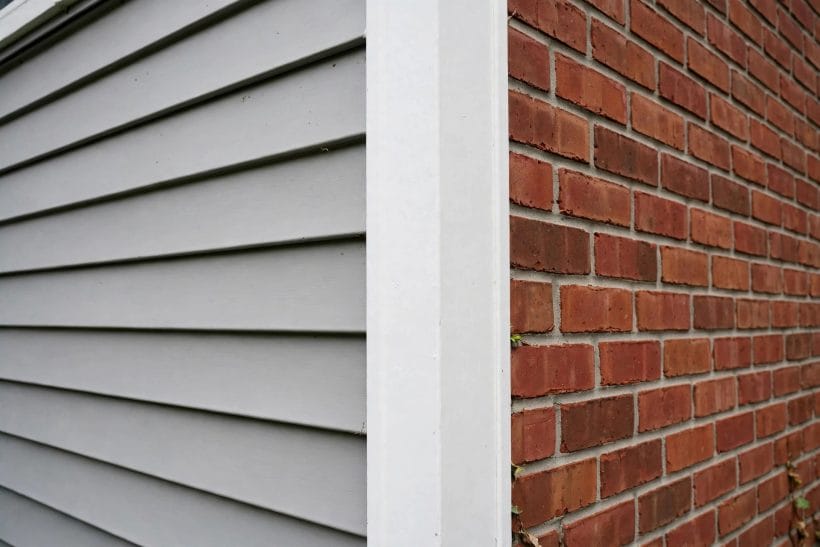
The transition is the line where one material ends and the other begins, and it deserves as much thought as the materials themselves. The most common transition is horizontal: brick below, siding above, with a trim board or a slight change in plane marking the change. Done well, this reads as a natural division of the facade, like the hem of a garment, and it gives the house a clear, grounded order.
Vertical transitions work differently. A brick chimney rising through siding, or a brick pier standing beside a sided wall, creates a vertical accent that draws the eye upward. These transitions need a clean edge, usually a corner board or a neatly finished brick return, so the two materials meet without a ragged joint. Corner boards are the unsung heroes here: a simple vertical board at the corner gives both materials a finished edge and stops the junction from looking accidental.
Porches are where transitions are most visible, because the porch brings brick piers, sided walls, trim and roofing together in a small space. A brick pier with timber or vinyl walls behind it is a classic porch composition, and it works because each material has a clear role: brick as structure, siding as infill, trim as the frame. For porch compositions of this kind, tiny house porch ideas offer plenty of small-scale examples of brick and siding meeting gracefully at the entrance.
10. Putting the Five Pairings Side by Side
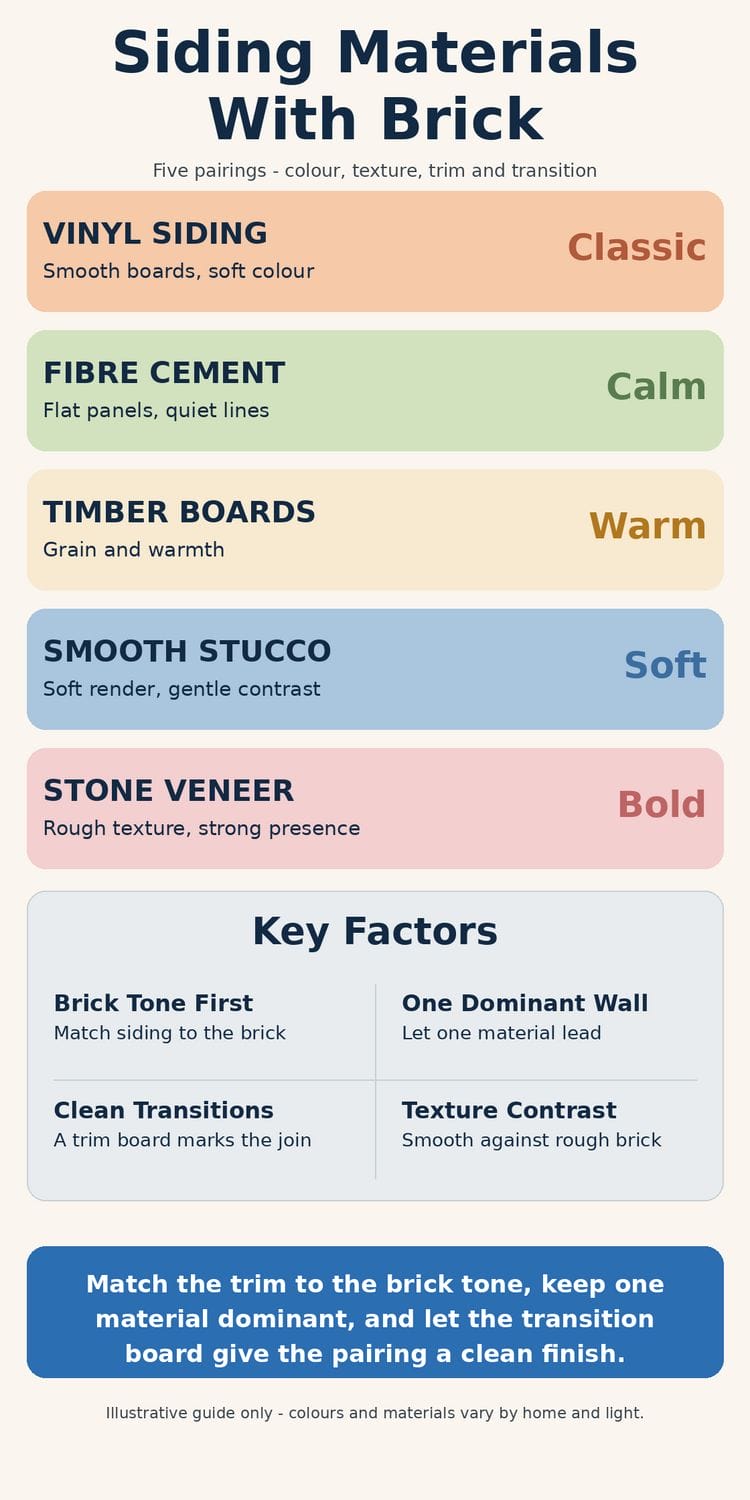
Set side by side, the five pairings form a clear spectrum. Vinyl siding gives brick its most familiar partner: smooth, even and easy to read from the street. Fibre-cement panels give brick its calmest partner: flat, quiet and modern. Timber boards give brick its warmest partner: grained, natural and cottage-like. Smooth stucco gives brick its softest partner: a single pale skin above a warm base. Stone veneer gives brick its boldest partner: rough, rugged and full of character.
Choosing between them is less about finding a single winner than about matching a mood to a house. A small house with a busy brick pattern may welcome the calm of flat panels or smooth stucco, while a larger house with plain brick may welcome the rhythm of boards or the richness of stone. The roof colour, the window style and the garden all pull in the same direction, and the most successful facades are the ones where every element agrees on the same mood.
Inside the house, the same thinking applies in miniature: rooms feel most settled when their colours and textures agree with each other rather than competing. A calm kitchen palette, a restful bedroom, or a small living room with one clear feature all follow the same principle as a good brick pairing, which is why it helps to browse kitchen ideas, tiny bedroom ideas, small living room ideas and tiny living room ideas with the facade in mind: the house reads as one design when the inside and the outside share a mood.
Final Considerations
Before settling on a pairing, look at real examples in your own area and notice which combinations you keep returning to. Photographs are useful, but a house seen in person, in changing light and from across the street, tells you more about a pairing than any single image can. Pay attention to the trim and the transitions as much as to the materials themselves, because those are the details that separate a considered facade from an accidental one.
It also helps to keep the palette disciplined. Two wall materials plus one trim colour is a reliable recipe; adding a third wall material or a second trim colour quickly makes a facade feel busy. Let the brick lead, choose one siding partner that answers its colour and texture, and let the trim tie the two together. Among vinyl siding and brick combinations and the four other pairings in this guide, the right choice is the one that makes the whole house feel calm, coherent and welcoming from the street, and that is a judgement best made slowly, with the house itself in view.


0 Comments