

One long cushion, no gaps, no arguments: the single-cushion sofa looks like a bench, lounges like a bed and somehow makes every other sofa in the showroom look fussy.
Here are the 8 reasons it wins — comfort, looks, sleeping, cleaning and more — plus the honest checks to run before you commit, because a bench seat is not for every household.
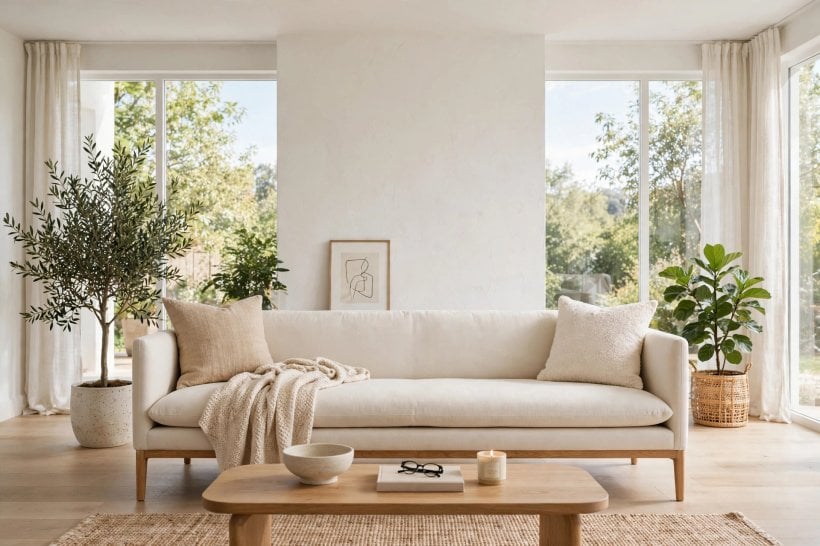
1. Single-Cushion Sofas at a Glance
A single cushion sofa — also sold as a bench-seat sofa — carries one long seat cushion across its whole width instead of two or three separate ones. That one construction choice changes how the sofa looks, how it lounges, how it sleeps a guest and how it ages. Everything in this guide hangs off that single entity-attribute: one cushion, many consequences, good and occasionally not.
| What is it? | A sofa whose seat is a single bench cushion spanning the full width, usually over a two- or three-seat frame. |
| Who suits it? | Loungers, nappers, couples, and anyone who hates falling into the crack between cushions. |
| Best-known benefit? | It doubles as a daybed and an emergency guest bed better than any multi-cushion layout. |
| Main trade-off? | One cushion means one wear pattern — you cannot rotate cushions to even out use, and replacement is all-or-nothing. |
| Buying priority? | Cushion core quality: the single cushion is the sofa’s whole comfort story, so its filling and support matter most. |
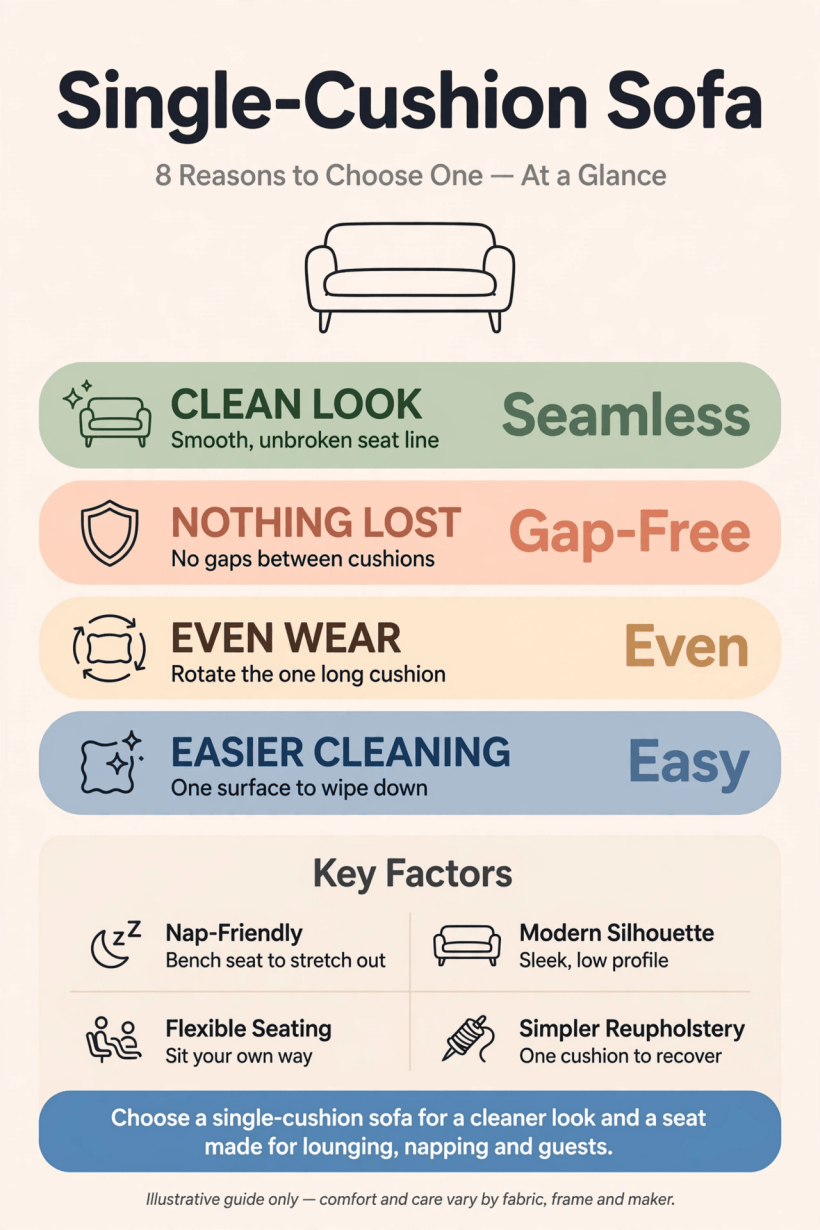
At a glance: one cushion buys lounging, sleeping and clean lines — and asks for a quality core and honest wear expectations in return.
2. The 8 Reasons to Go for a Single-Cushion Sofa
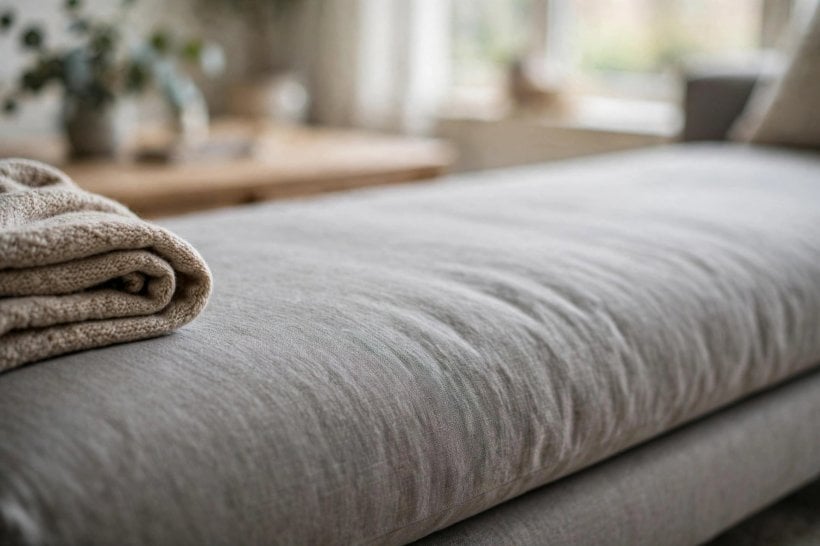
Each reason below is the same fact viewed from a different chair: no divisions in the seat. Read them as a set — most households find three or four apply to them directly, and those three or four are the real case for the style.
1. Nobody Sits in the Crack
The middle seat of a three-cushion sofa is a diplomatic fiction — two cushion edges and a dip that collects the unlucky guest. A bench seat abolishes the problem: every sitting position is equally cushioned, and three people can share a two-and-a-bit-seat frame without anyone balancing on a seam.
2. It Is a Nap Couch by Design
Lying along a sofa means lying across cushions, and every seam prints itself into your back through a thin blanket. One continuous cushion is a flat, even sleeping line from end to end — the difference between a nap you plan and a nap you survive.
3. It Works as a Guest Bed
Add bedding and the bench seat is the most credible sofa-bed substitute that is not a sofa bed: no mechanism, no bar in the back, a sleep surface the full length of the frame. In small homes this is the reason that closes the sale, and it is why the style anchors so many of the hard-working layouts in these small living room ideas.
4. The Lines Are Cleaner
One cushion, one horizontal line. Bench seats read calm and tailored where multi-cushion sofas read busy, and they let the frame, the fabric and the room’s other pieces carry the design — the upholstery equivalent of the uncluttered surfaces in these modern living room interior design ideas for tiny houses.
5. Lounging Sideways Actually Works
Real sofa use is diagonal: feet up, back in the corner, laptop or book at an angle. Separate cushions fight the diagonal — one slides, one tilts. A single cushion stays put as one surface, so the corner-lounge position the whole household fights over simply works.
6. Cleaning Under and Over Is Simpler
One cushion to lift, shake, vacuum and treat instead of three — and no inter-cushion trenches farming crumbs, coins and remote controls. For households with children or dogs, the absence of the crumb canyon alone justifies the style.
7. It Makes a Small Sofa Feel Bigger
Divisions shrink things visually; continuity stretches them. A compact bench-seat sofa seats the same bodies as its three-cushion twin but looks — and feels — more generous, an illusion worth having in the rooms these tiny living room ideas are designed for.
8. It Ages as One Surface
Separate cushions age at different rates and advertise it — the favourite seat sags while the others stay plump, and the sofa looks tired before it is. A bench cushion softens evenly along its length, so the whole seat shares one graceful wear pattern instead of three competing ones.
3. Comfort: What the Single Cushion Must Get Right
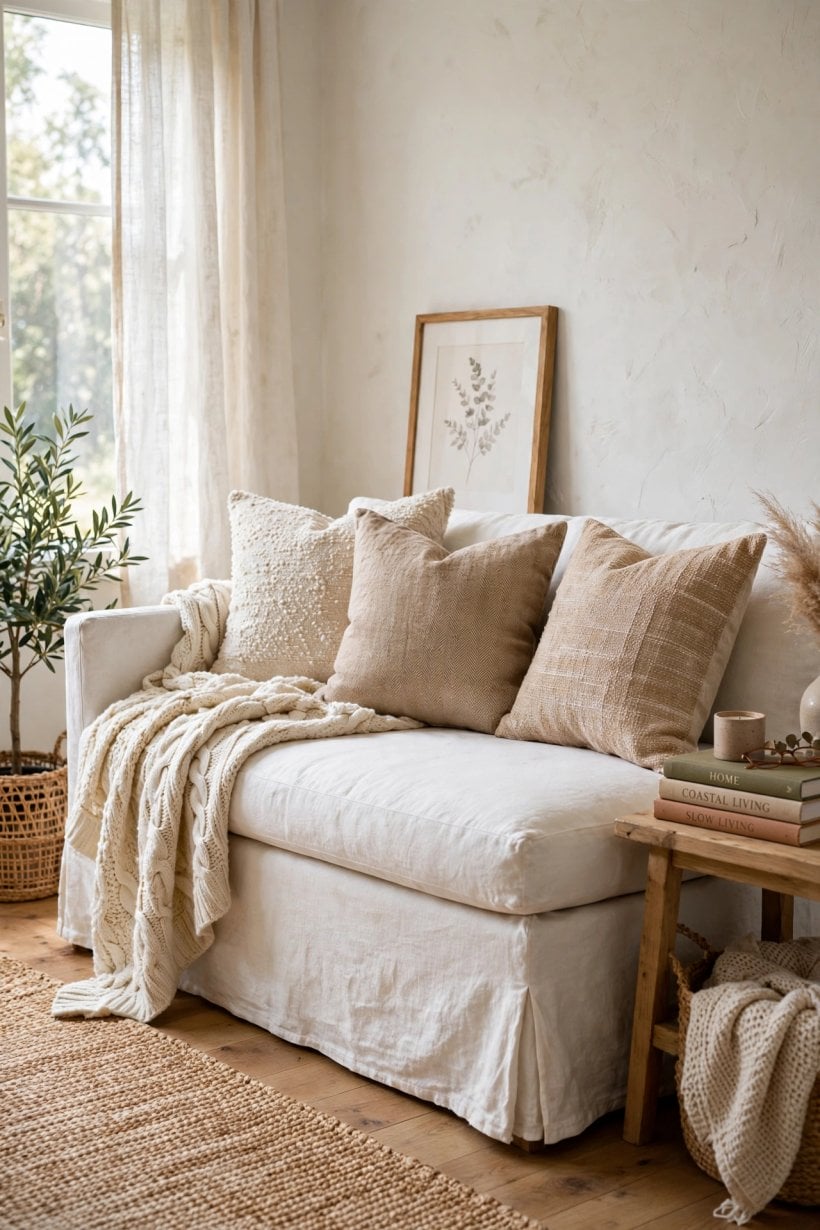
With the case made, the conditions. A bench cushion is one long span, and a long span is a structural promise: it must support the middle as honestly as the ends. The core is everything — a quality foam core, ideally wrapped for softness, or a sprung or feather-blend construction at the fine end. Cheap foam in a long cushion hammocks in the middle within a season, and there is no second cushion to hide behind. Sit-test properly when you shop: sit in the centre, sit at each end, lie down full length, and sit in your real diagonal lounge. The frame beneath matters too — a bench cushion over a well-sprung base feels alive; over sagging webbing it feels like a mattress on the floor. This is the same buy-the-structure-first discipline that governs the seating throughout our tiny living room decorating guide: upholstery is a decade-long decision disguised as a fabric choice.
4. Sizes and Room Fit
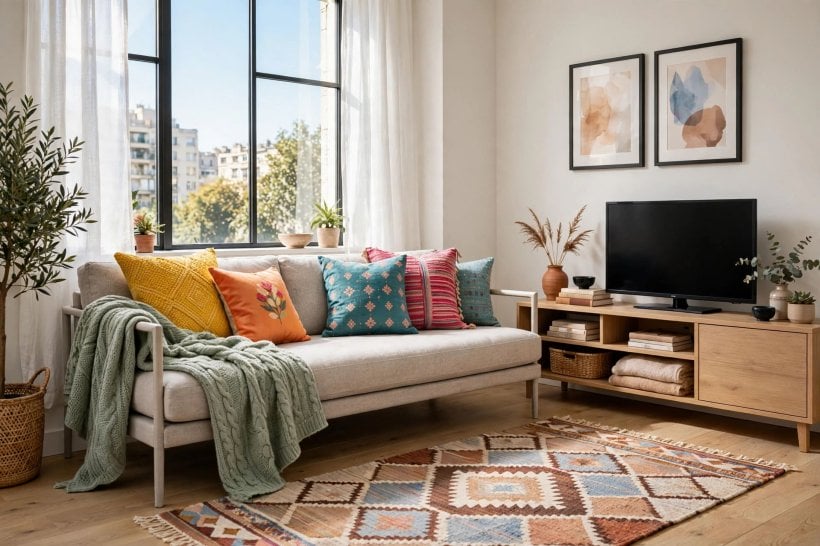
Bench-seat sofas come in every frame size from a generous loveseat to a full three-seater, and the single-cushion effect strengthens with length: longer spans lounge and sleep better. In a compact room, a low-backed bench sofa is a particular gift — the undivided seat line and low profile keep sightlines open, making the room read larger around it. Check the cushion’s practical dimensions too: cushion depth decides whether short legs dangle, cushion length decides whether your tallest household member truly sleeps, and the whole piece must fit the delivery route — a one-piece long cushion is removable, but the frame is not, so measure doors and stairs for the frame as you would for any sofa. Deep seats suit loungers and frustrate upright sitters; households that read, work and host formally at the sofa should weigh seat depth as carefully as cushion count. Pair the proportions to the room using the same scale logic as these tiny house living room ideas — the biggest piece sets the room’s register, and everything else arranges around it.
5. Fabrics and Cushion Care
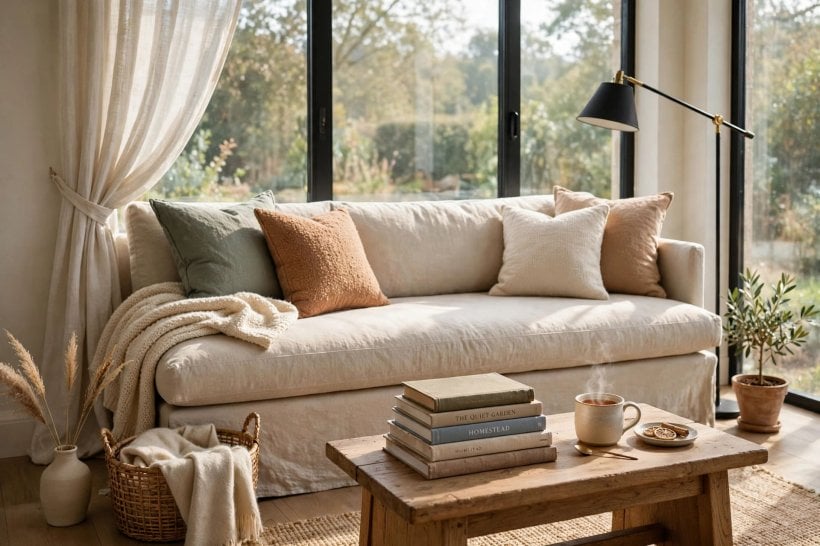
A single cushion concentrates fabric wear in the middle, where everyone actually sits — so fabric choice and care matter more than on a divided seat. Tight weaves and performance fabrics shrug off the concentrated sitting zone best; loose linens look beautiful and will show the centre’s polish sooner. Removable, washable or replaceable covers are close to essential: one stain policy governs the whole seat, and a cover you can wash is the difference between a mishap and a disaster. Rotation in the multi-cushion sense is impossible, but the cushion can still be flipped end-to-end and, on many designs, turned over — do both on a schedule, the way you rotate a mattress, so the wear spreads across the span instead of settling into one beloved dip. Plump and dress the cushion weekly; long cushions telegraph neglect faster than small ones, and two minutes with your hands keeps the line tailored. Follow the maker’s filling care, especially for feather blends, which want daily enthusiasm and repay it with the best lounge in the house.
6. Styling a Bench-Seat Sofa
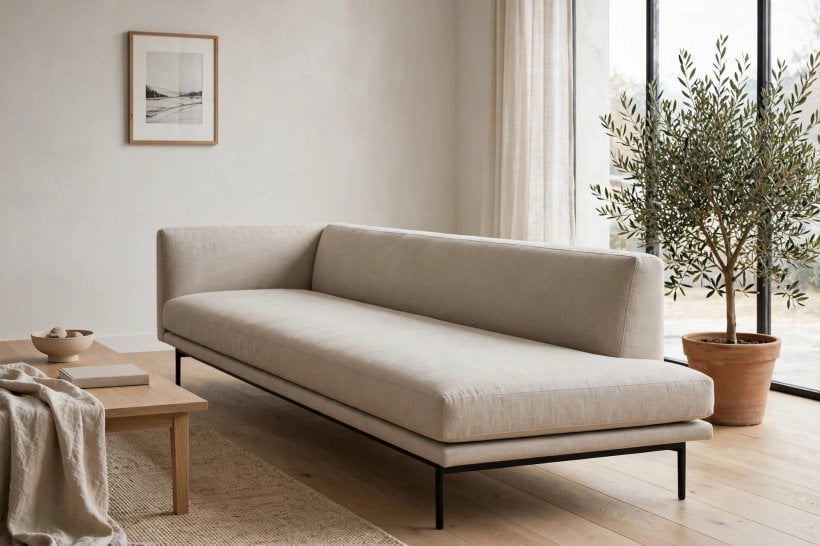
The clean seat line is a styling asset with one rule: decorate the ends, not the middle. Scatter cushions belong clustered at the corners, where they frame the span; a row of cushions marched along the back re-divides the seat you bought undivided. A throw folded along one arm or draped at one end adds the softness cue without breaking the line. Behind the sofa, the long horizontal asks for answering lines — a low bookcase, a wide picture ledge, a long low coffee table — rather than tall narrow pieces that fight it. In farmhouse and relaxed schemes like those in these farmhouse living room ideas, a bench sofa in a worn natural fabric is practically the uniform: it carries the room’s casualness on one long, honest surface. Keep legs visible where the design allows — a floating line under the frame keeps a long sofa light in a small room.
7. The Honest Trade-Offs
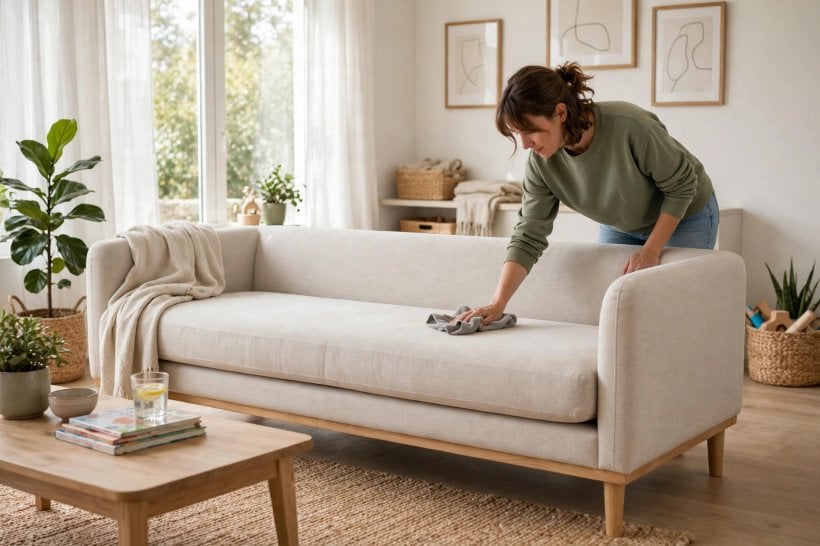
Balance, briefly and plainly. One: no rotation — the centre wears, and while flipping helps, the seat’s life is the life of one cushion; a replaceable cushion or cover from the maker softens this, so ask about spares before buying. Two: replacement cost — when the cushion finally tires, you replace the whole span, not one third of it. Three: formal sitting — some people simply prefer the defined personal territory of their own cushion, and multi-generational households that sit upright together may genuinely be happier divided. Four: very long spans on soft cores can drift toward the hammock; the centre sit-test is your defence. None of these cancels the eight reasons — they define the households the reasons serve. Loungers, nappers, small-space hosts: proceed. Upright sitters, cushion territorialists, anyone buying the cheapest core in the shop: divide and cushion as usual.
8. Costs and Buying Checks
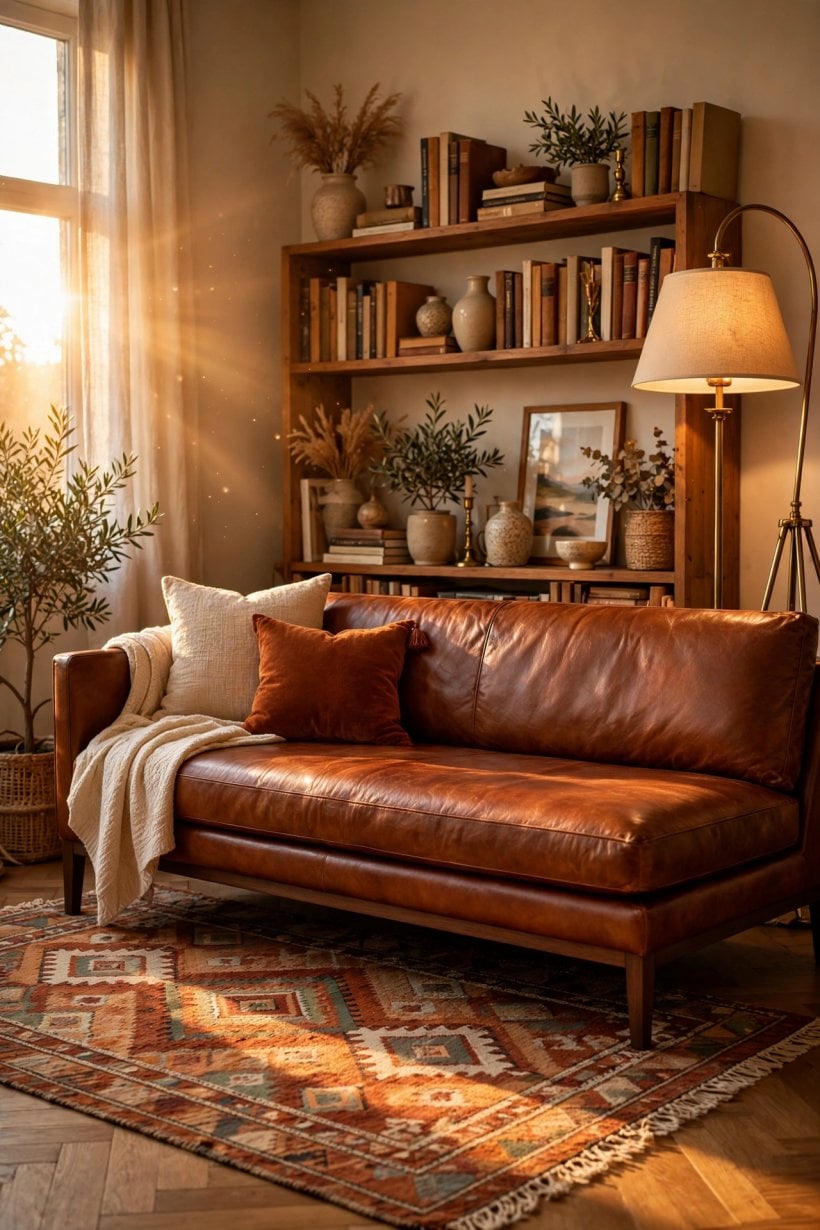
Bench-seat sofas are priced by frame and fabric like any sofa, with the cushion core the line item worth interrogating: ask what the core is, whether it is reversible, whether the cover removes, and whether a replacement cushion can be ordered in five years’ time — a maker who answers all four easily is selling furniture; one who cannot is selling a season. Judge cost against the roles the piece replaces: sofa, daybed, guest bed and, in small homes, sometimes the second bed entirely. That multi-role arithmetic is the foundation of small-space furnishing budgets everywhere, including the ones behind these small space interior design ideas. In the shop, run the full test battery from the comfort section — centre sit, end sit, full-length lie, diagonal lounge — and check the cushion returns to shape when you stand. A cushion that keeps your impression is telling you its future.
9. Pairing: Coffee Tables, Rugs and the Rest of the Room
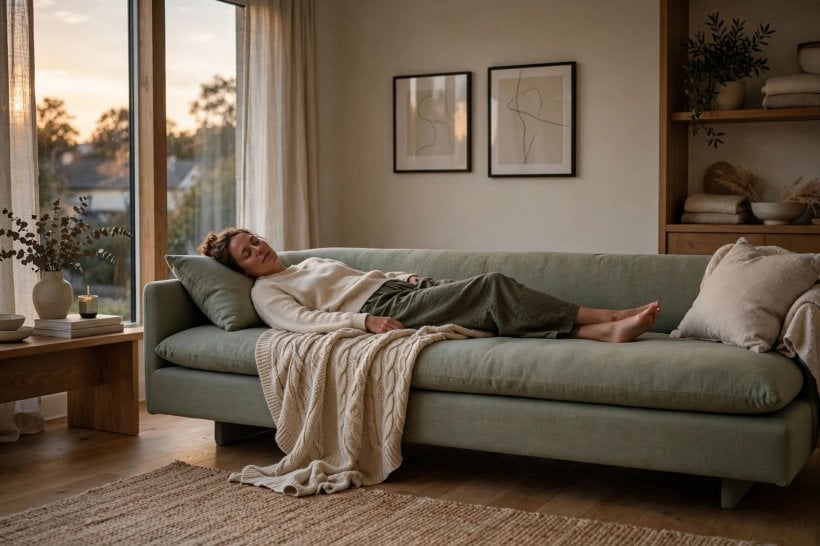
The bench sofa composes best with pieces that respect its line. A long, low coffee table echoes the span; a rug should run wider than the sofa so the whole arrangement sits on it as one island; side tables at both ends balance the composition and give the corner loungers their drink space. Armchairs opposite can be as divided and buttoned as they like — the sofa carries the calm. Lighting from the ends (table lamps, a floor lamp at one corner) keeps the middle of the room visually quiet, where the sofa’s line does its work. In open-plan rooms the bench sofa is a natural divider: its back is one long calm surface to zone against a dining area, far tidier than the stepped back of a multi-cushion piece. A narrow console table behind it finishes the division, giving the dining side a serving surface and the sofa side a home for lamps and books — the bench sofa ends up furnishing both rooms at once.
10. Verdict: Who Should Pick a Single-Cushion Sofa
Pick the single-cushion sofa if you lounge more than you sit, nap where you land, host sleepover guests without a spare room, live small, or simply want the calmest line in the room. Pick a divided seat if your household sits upright and territorial, if you rotate cushions religiously to stretch a budget buy, or if the only bench sofas in reach have cores you would not trust for a decade. The style is a genuine functional choice dressed as a fashion one — decide it on behaviour, not on the showroom photograph, and it will not disappoint.
Final Considerations
Eight reasons reduce to one: a single cushion makes a sofa behave like the furniture people actually want — a place to sprawl, sleep and gather without negotiation. Pay for the core, protect it with a washable cover, flip it on schedule, and the bench seat will out-lounge divided sofas for years.
Try the lie-down test in the shop and you will know in ten seconds whether you are a bench-seat household. Most people who take the test, take the sofa.


0 Comments