

Stand at your sink and look up: if you are ducking to find your chin, or tilting to see your hairline, the mirror is at the wrong height — and no frame, however pretty, will fix that. A bathroom mirror is chosen by measurement first and style second.
This guide walks through the checks in order: the vanity it hangs over, the height it sits at, its size, shape, frame and lighting — so the mirror you buy fits the wall, the tap and the people using it.
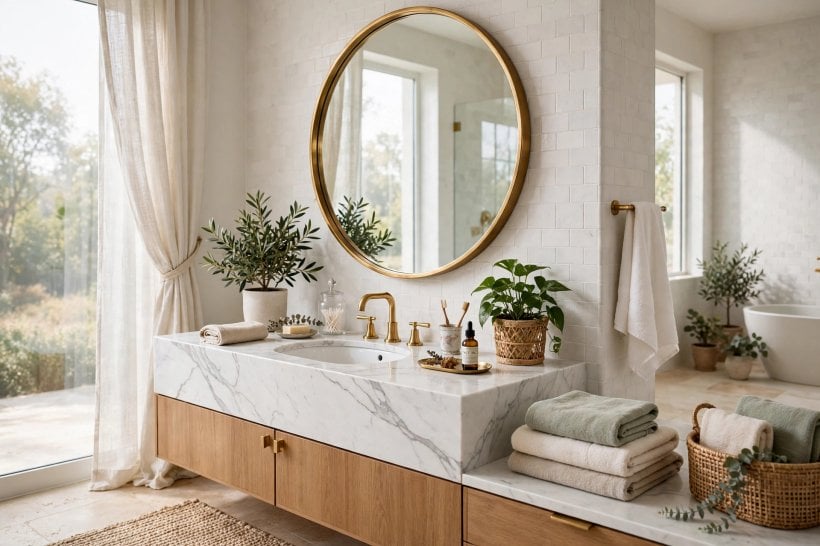
1. Bathroom Mirrors at a Glance
The central decision is bathroom mirror height — where the glass sits in relation to the people standing at the basin. Get the height right and almost any shape or style works; get it wrong and the mirror annoys every user, every day. Everything else — width, shape, frame, lighting — is chosen around that fixed point and around the vanity below it.
| Where should the mirror sit? | Centred roughly at eye level for the household’s regular users, with the bottom edge clear of the splash zone above the basin. |
| How wide? | Usually no wider than the vanity, and often a few centimetres narrower each side so the mirror reads as part of the unit. |
| One mirror or two? | Two for a double vanity — one centred over each basin. One wide mirror suits a single basin or a shared trough. |
| Biggest mistake? | Hanging by eye from the top of the wall instead of measuring from the users and the basin up. |
| Small bathroom trick? | Go bigger: an oversized mirror returns more light and makes a compact room feel twice as wide. |
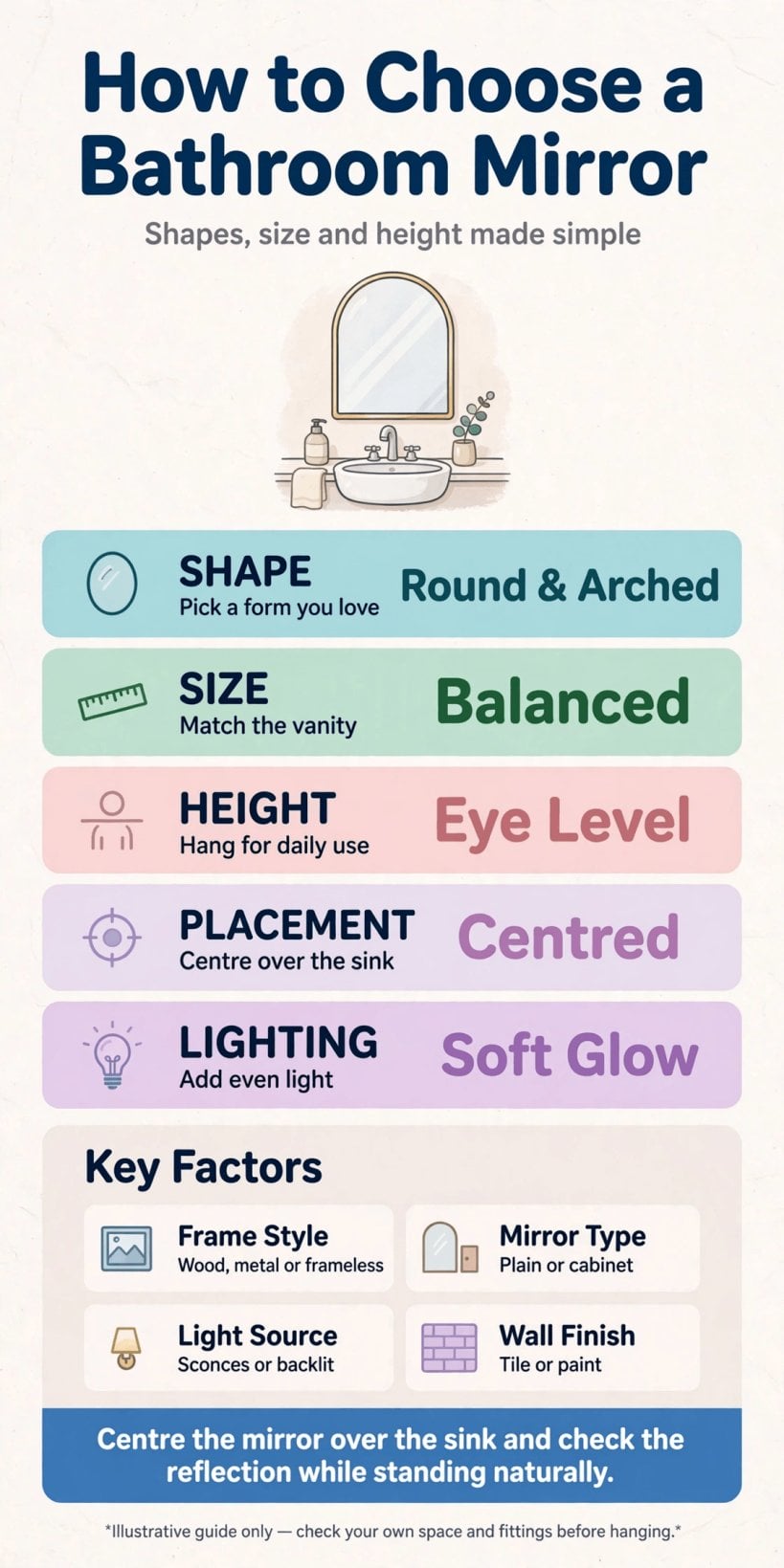
At a glance: measure from the users down to the basin, keep the glass clear of splashes, and let the vanity set the width.
2. Start With the Vanity: Width and Proportion
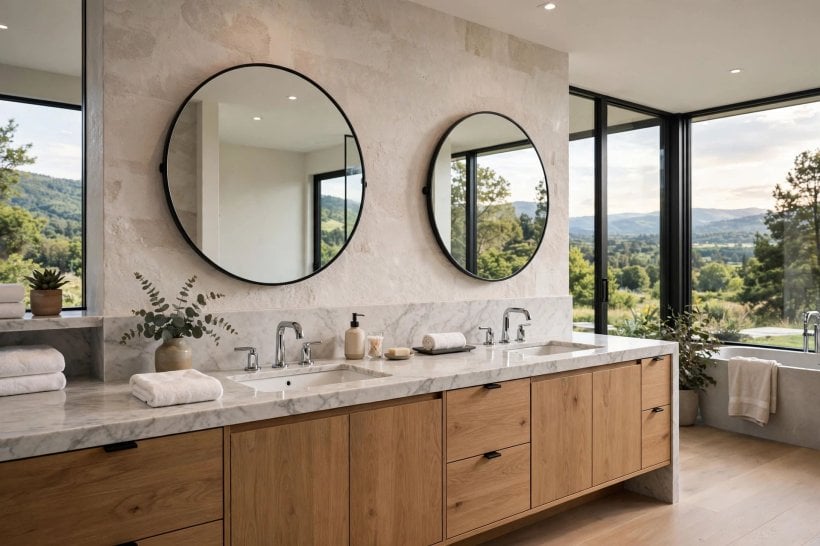
The mirror and the vanity are read as one piece of furniture, so proportion between them matters more than the mirror’s size in isolation. The usual working rule is that the mirror should not extend beyond the vanity’s edges — a mirror slightly narrower than the unit below looks deliberate, while one that overhangs looks like a measuring error. In the compact layouts in our tiny house bathroom layouts, where the vanity may be the only furniture in the room, that alignment is what makes the whole wall read as designed rather than assembled.
Height of the unit counts too. A tall basin or a vessel sink raises the splash zone and shortens the usable wall above it; a low, wall-hung vanity leaves room for a taller mirror. Before choosing anything, note three measurements: the vanity’s width, the height of the tap at its tallest point, and the distance from the worktop to any obstruction above — a window, a sloping ceiling, a wall cabinet. Those three numbers quietly decide most of the shortlist for you.
3. Mirror Height: Where the Glass Should Sit
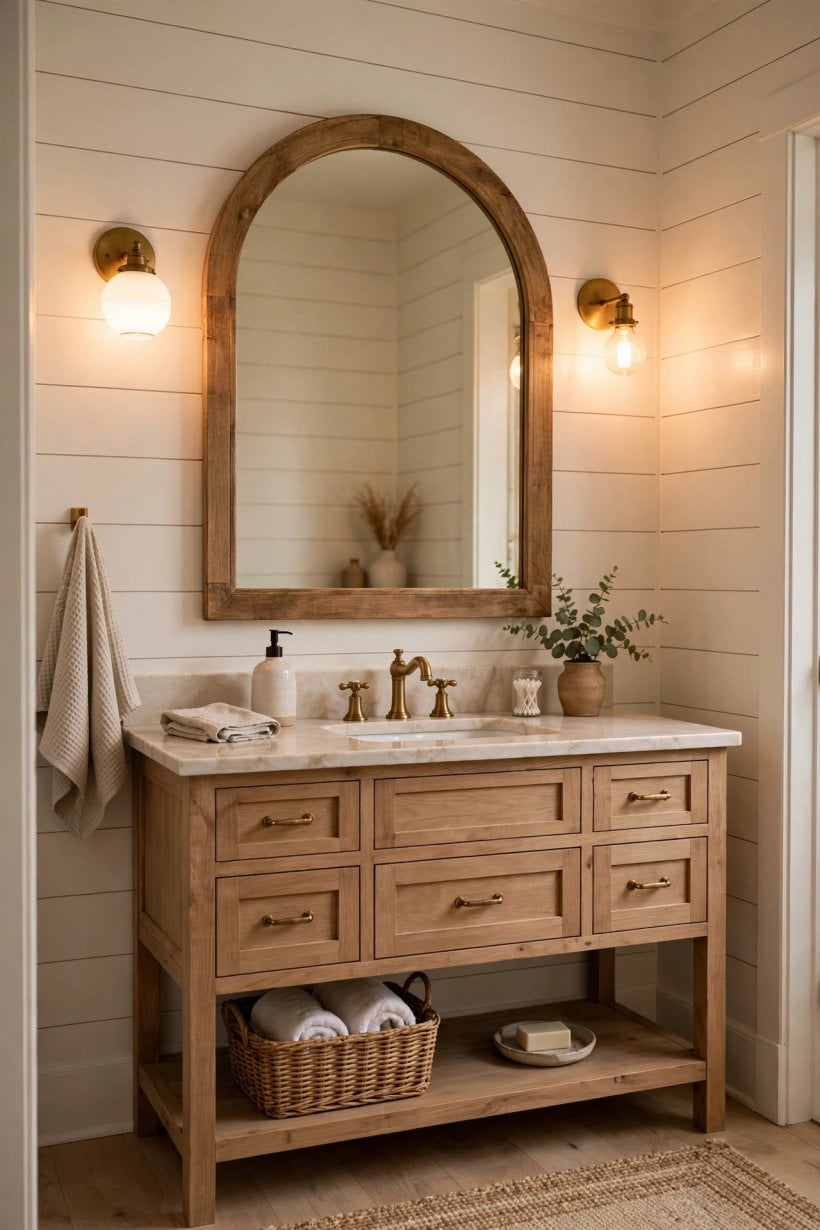
The aim is simple to state: every regular user should see their whole head and shoulders without stooping or stretching. In practice, that means the centre of the mirror lands around the eye level of the household’s adults — for most homes, a centreline somewhere around typical standing eye level works, but the honest method is to measure your own household: stand at the basin in the shoes you wear indoors, note eye level for the tallest and shortest adults, and set the centre between them, favouring the person who uses the mirror most.
The bottom edge has its own rule: it must clear the splash zone. Leave a comfortable gap between the top of the basin or tap and the lower edge of the glass, so splashes land on tile or worktop — which wipe clean — rather than creeping behind the mirror, where moisture attacks the backing and blackens the edges over time. Where children use the bathroom daily, a taller mirror that reaches lower solves the stooping problem for them without moving the centre for adults; the same whole-household thinking shapes the family bathrooms in our tiny house bathroom designs.
4. Shapes: Round, Rectangle, Arch and Pill
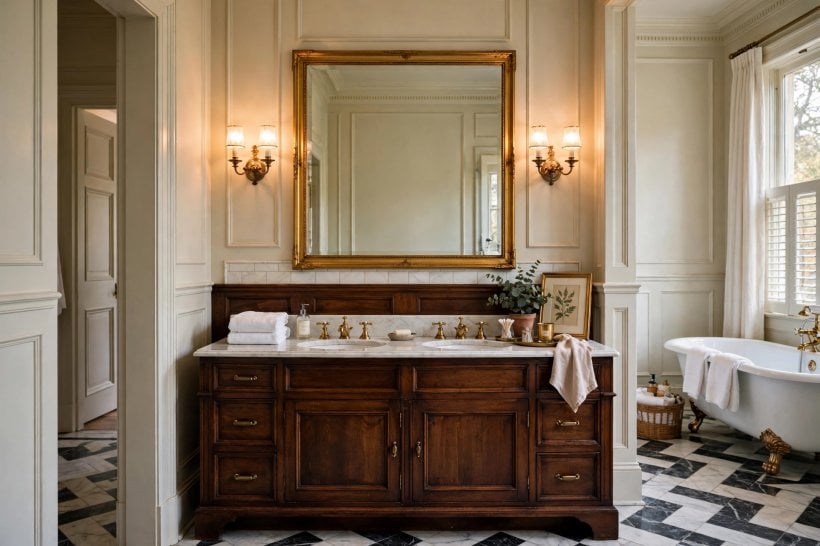
Shape is where the mirror earns its style. Rectangular mirrors maximise reflective area and suit angular rooms and modern fittings; their straight top edge also makes the height maths easiest, since the centre and edges are the same all the way across. Round mirrors soften a hard-tiled room and pair naturally with round basins and curved tapware — but remember that a circle’s useful width is only at its middle, so a round mirror needs to be sized up compared with a rectangle over the same vanity.
Arched and pill-shaped mirrors split the difference: a flat bottom edge that sits neatly above the splash zone, a softened top that echoes traditional architecture, and near-rectangular coverage. Whatever the shape, judge it by the same test — stand at the basin and check the reflection of the shortest and tallest users, because it is the reflection, not the outline, that the household lives with.
Two fashionable options deserve a caution each. Oversized leaner mirrors — tall glass resting on the floor or a ledge — look relaxed in a bedroom but sit awkwardly in a working bathroom, where their lower half reflects the basin front rather than a face and their lean eats splash clearance. And the long horizontal “runway” mirror, stretched well beyond the vanity, reflects mostly wall and door at its ends; its useful area is still only the part in front of the person standing there. Shape trends come and go quickly, but the reflection test never changes, and it is free to run in the showroom: stand at the marked distance, look for your whole head, and only then look at the frame.
5. One Mirror or Two: Single and Double Vanities
Over a double vanity, two mirrors — one centred precisely over each basin — almost always work better than a single wide sheet. Each user gets a mirror aligned with their own tap and their own eye line, the pair introduces a pleasing rhythm to the wall, and the gap between them gives the eye a rest. A single wide mirror over two basins has one advantage: it reflects more light around the room, which is why it still suits the shared, family-rush bathroom.
Alignment is the detail that decides success. Each mirror’s centre should sit on the centreline of its basin and tap, not spaced evenly along the wall by eye — a few centimetres of drift is visible every single morning. The same centreline discipline runs through the fitted bathrooms in our bathroom interior design ideas for tiny houses, where small rooms forgive nothing.
6. Frames, Edges and Finishes
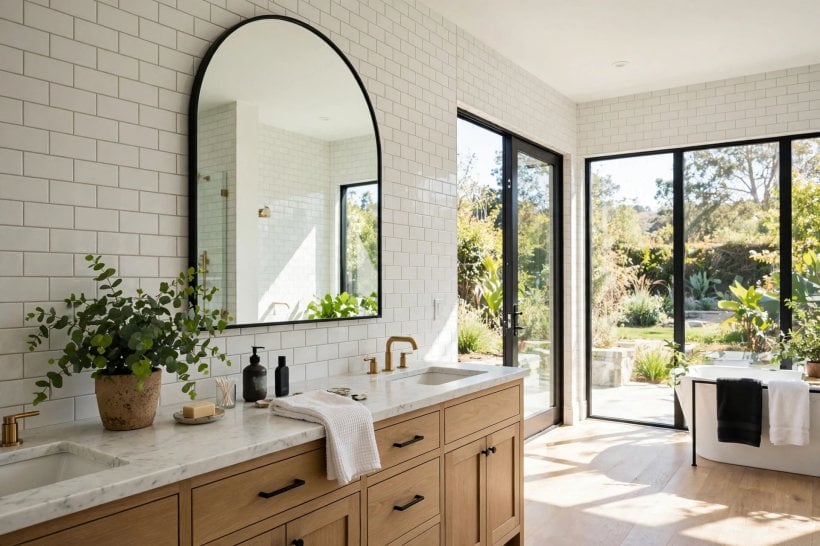
A frame does three jobs: it protects the mirror’s vulnerable edges from knocks and moisture, it defines the mirror against the wall, and it carries the room’s material story — brushed metal to match the tapware, warm timber to soften a white scheme, black for a graphic edge. Frameless mirrors read lighter and more modern, and polished or bevelled edges give them a finished rim, but the exposed edge is exactly where moisture damage starts, so frameless glass earns its keep best in well-ventilated rooms.
In steamy bathrooms, check what the frame and backing are made of before falling for the finish. Solid timber swells, cheap composites bubble, and unsealed mirror backing corrodes from the edges inward — the blackened border on old bathroom mirrors is that corrosion, not dirt. Ask for a mirror sold as bathroom-suitable, with sealed edges and a safety backing, and treat that specification as more important than the frame’s colour. It is the same moisture-first logic that governs material choices in our waterproof tiny house bathroom guide.
7. Lighting Around the Mirror
A mirror is only as good as the light falling on the face in front of it. A single ceiling light behind the user casts the face into shadow — the reason so many bathroom mirrors disappoint. The flattering arrangement is light at face level: fittings either side of the mirror at roughly head height, throwing even light from both sides so neither half of the face is shaded, or a light above the mirror angled down the glass as a second choice.
One more feature is worth its small premium in a busy family bathroom: a demister pad. It warms the centre of the glass so the mirror stays clear through showers, removing the daily wipe-down that drags gritty cloth across the surface and slowly dulls it. Mirrors with demisters need the same planned electrical feed as illuminated models, so the decision belongs at the same stage — before the walls are closed and tiled.
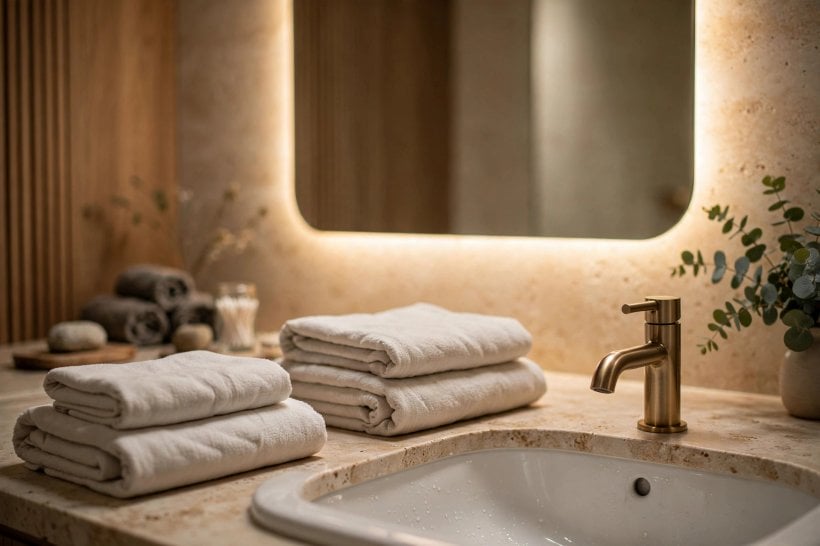
Backlit and illuminated mirrors build that lighting into the glass itself — a clean solution for small rooms with no room for side fittings, and for anyone who applies makeup or shaves at the basin. If you choose one, check how the light is switched and whether it can be dimmed, and remember the mirror will need an electrical feed planned before tiling, not after. Coordinate finishes with the tapware, and keep bulbs consistent in warmth across the room so skin tones read true — the goal the lighting plans in our interior design for bathrooms in tiny houses work toward as well.
8. Storage Mirrors: Cabinets and Shelves
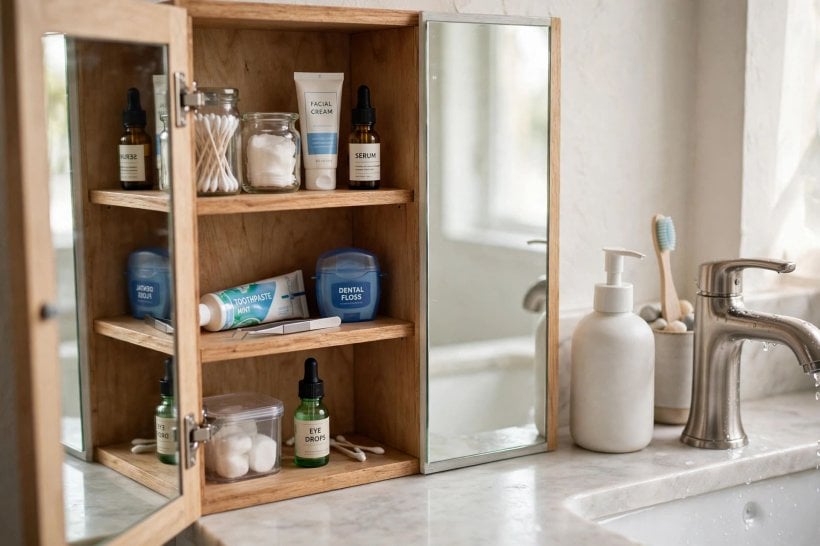
A mirrored cabinet buys storage at eye level — the most valuable storage in a small bathroom — without giving up the mirror. The checks are practical: the cabinet’s depth decides how far it projects into the room (stand at the basin and lean in, as you would to rinse, before fixing the depth), the doors must clear taps and each other, and the mirror height rules still apply to the cabinet’s face, which should centre on the users exactly like a flat mirror.
Recessed cabinets sit flusher and look built-in, but need a wall that can take the recess — check what is inside the wall before promising yourself one. Surface-mounted cabinets are the simpler retrofit. Open shelving beneath or beside a mirror is the lighter alternative: a slim shelf under the glass catches daily items, though it narrows the splash clearance, so keep the shelf shallow and sealed. In the smallest bathrooms — the ones catalogued in our bathroom interior design ideas — a shallow mirrored cabinet over the basin is often the single hardest-working fitting in the room.
9. Small Bathrooms and Tiny Houses: Bigger Is Better
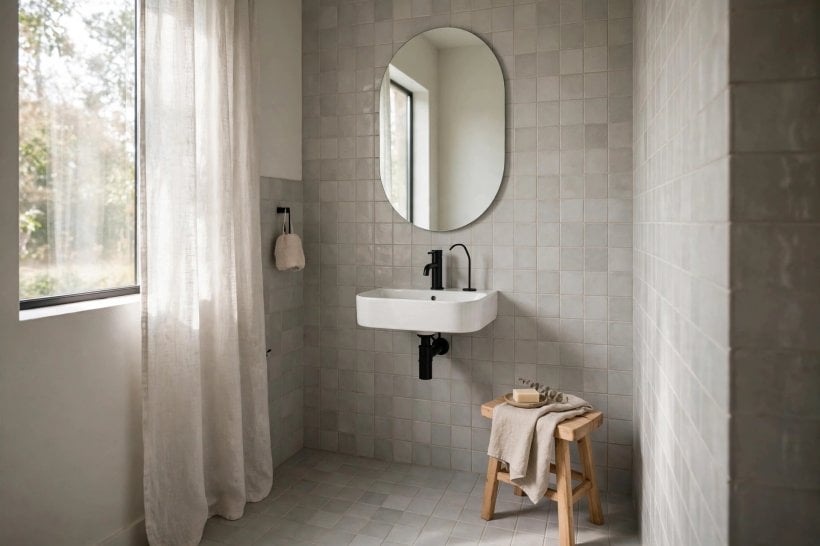
Small rooms reverse the usual caution. Where a big bathroom can carry a modest mirror, a compact one benefits from glass that fills the wall above the vanity edge to edge: the reflection doubles the apparent depth of the room, bounces light into corners, and gives the eye a vista instead of a wall. A mirror that runs down close to the splashback and up toward the ceiling makes even a tiny ensuite feel like a proper room.
Two cautions keep the trick honest. First, a large mirror reflects whatever faces it — a cluttered shelf or the toilet — so arrange the opposite wall as carefully as the mirror wall. Second, large glass is heavy: fixings must suit the wall construction, and in a tiny house or any home that moves, travels or flexes, the mirror should be mechanically fixed and safety-backed, never held by adhesive alone.
10. Buying Checks and Mistakes to Avoid
Before ordering, run the short checklist: users measured (tallest and shortest), vanity width noted, tap height noted, splash clearance allowed, wall obstructions checked, fixings suited to the wall, bathroom-rated glass and backing confirmed. Most mirror regrets trace back to skipping one of those — the gorgeous mirror hung too high for a shorter partner, the frameless sheet blackening at the edges in a steamy room, the cabinet door that meets the tall tap every time it opens.
And hang it properly. Mark the centreline from the basin, not from the wall; use a level, not the tile lines, which are not always true; and rest the fixings on structure or proper wall plugs rated for the mirror’s weight. A mirror is one of the few bathroom fittings touched by every person in the house, twice a day, forever — twenty minutes of measuring is the whole price of getting it right.
Final Considerations
Choose a bathroom mirror the way you would choose a window: position first, size second, style third. Set the height from the people who will stand in front of it, keep the glass clear of the splash zone, match the width to the vanity, and light the face — not the ceiling. Do those four things and any shape or finish you love will work; skip them and the prettiest mirror in the shop will still be wrong every morning.
When in doubt, err larger and plainer: a generous, bathroom-rated mirror, hung at the right height, outlasts trends and makes the smallest room in the house feel like it was designed on purpose.

0 Comments