

It sounds like a typo, a dish, or a dance — but a schrank is none of those. It is the great freestanding wardrobe at the heart of the traditional German home, and once you know it, you start seeing them everywhere antiques are sold.
This guide explains what a German schrank wardrobe is, the styles and woods you will meet, how to judge one before buying, and how to live with a very large, very solid piece of furniture.
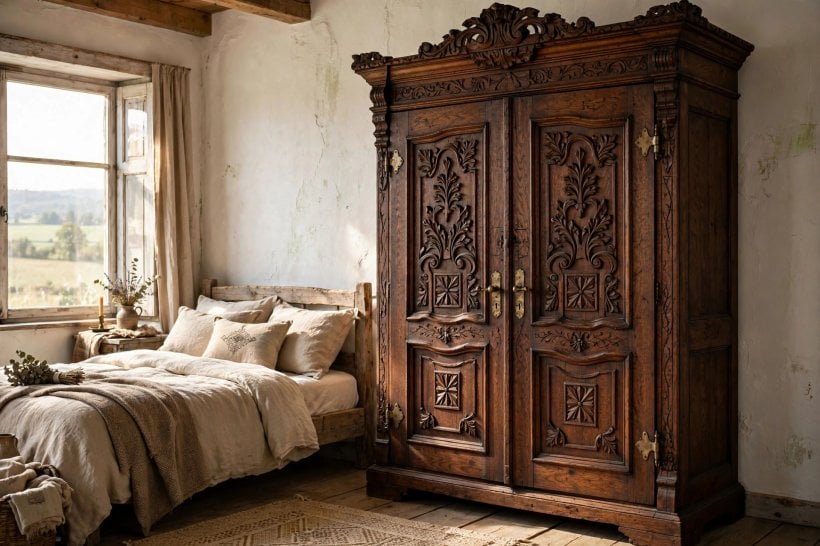
1. The German Schrank Wardrobe at a Glance
Schrank is simply the German word for a cupboard or wardrobe, but in the antiques and furniture trade “a schrank” means something specific: a large, freestanding, usually two-door wardrobe from Germany or the wider German-speaking region, built to stand as a room’s main storage piece in homes that had no built-in closets. It is the central entity of this guide — a piece defined by its scale, its solid-timber construction and its knock-down design, which lets a very large wardrobe come apart into panels for moving. (It is often searched for, and misspelled, as “german shrunk” — the piece itself is a schrank, pronounced roughly “shronk”.)
| What is it? | A large freestanding wardrobe of German origin — the storage centrepiece of homes built without closets. |
| Typical construction? | Solid pine, oak or walnut, panelled, and designed to dismantle into flat pieces for transport. |
| Why do people buy them? | Enormous honest storage, real timber, and presence — one piece does the work of a wall of flat-pack. |
| Biggest caution? | Size: measure doors, stairs and ceiling height before falling in love — schranks are big even in pieces. |
| What decides value? | Wood, condition of the panels and cornice, original hardware, and completeness of the knock-down fittings. |
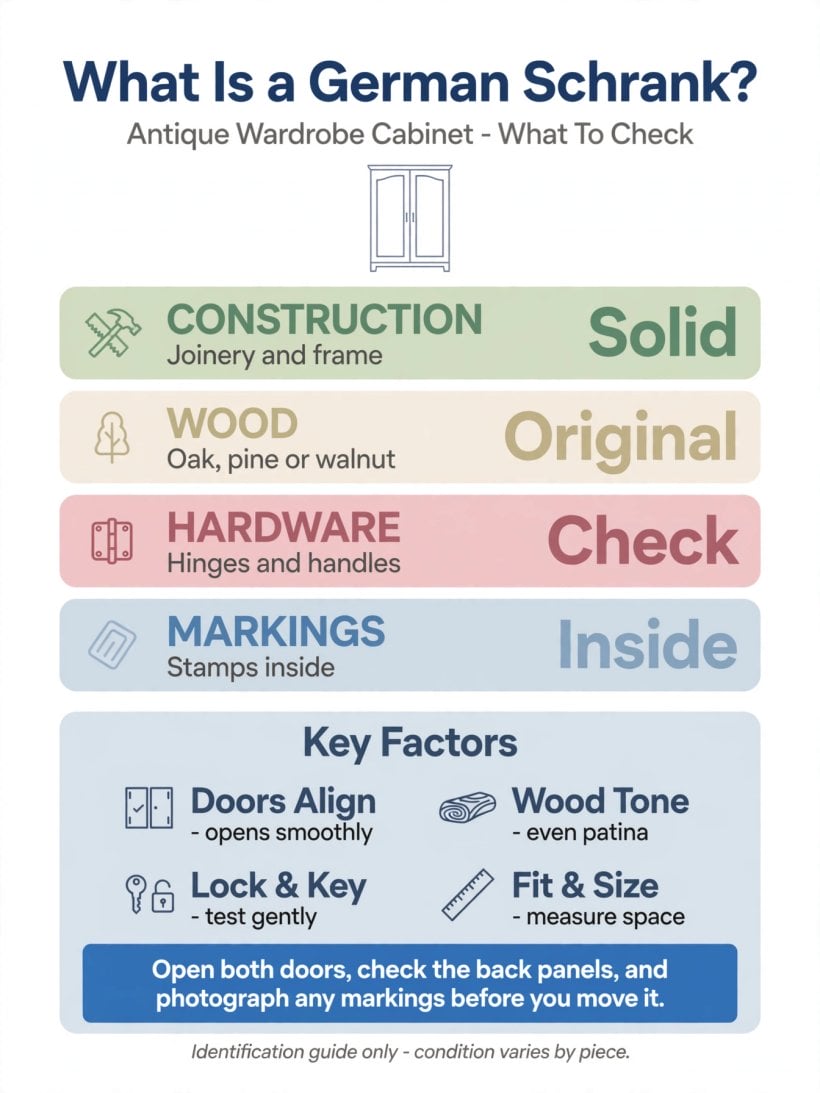
At a glance: a schrank is a room-sized wardrobe that comes apart — judge the wood, the hardware and the fit of its panels.
2. Where the Schrank Comes From
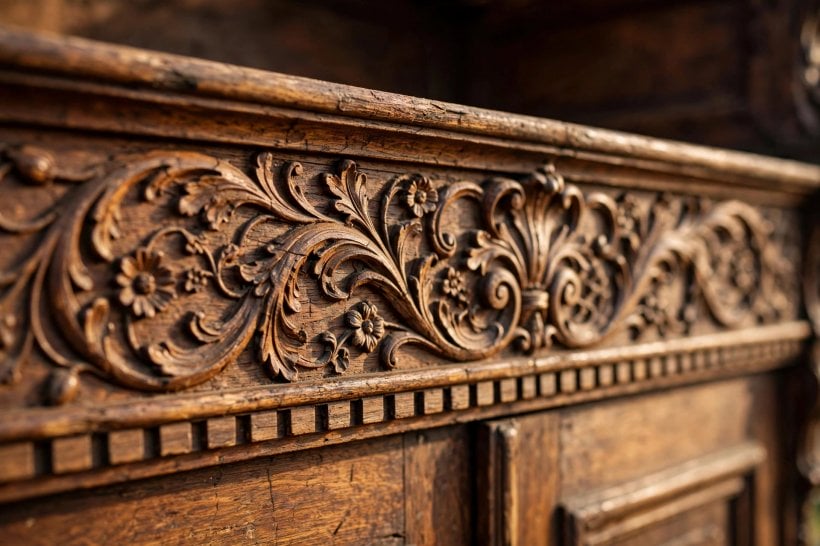
For centuries, German-speaking homes stored clothing and linen in furniture, not in architecture. The schrank stood in the bedroom or the hall as the household’s strongbox for textiles — often a marriage piece, made when a couple set up home, and built to be inherited. Regional traditions shaped them: painted pine schranks from farming regions, carved oak from wealthier towns, plainer Biedermeier lines in the nineteenth century. The type survived because the need did — and because the knock-down construction made even a two-metre wardrobe movable between houses, floors and generations. The form also emigrated: German-speaking settlers carried the schrank tradition to North America, where Pennsylvania German craftsmen made their own painted schranks for farmhouses built, again, without closets — so examples in the market today may be European originals, emigrant-made pieces, or later homages, and a good dealer will tell you plainly which. Marriage custom explains many survivors’ quality: a schrank was a serious gift, sometimes painted with the couple’s names and the year, and furniture made to mark a family’s founding was rarely made cheaply. That is why the antique market holds so many sound examples two centuries on — the type was built, from the start, to be the last wardrobe a household bought. It belongs to the same honest-furniture tradition celebrated in these Amish-built tiny houses: solid material, joinery you can inspect, and nothing decorative pretending to be structural.
3. The Knock-Down Secret: Why Schranks Come Apart
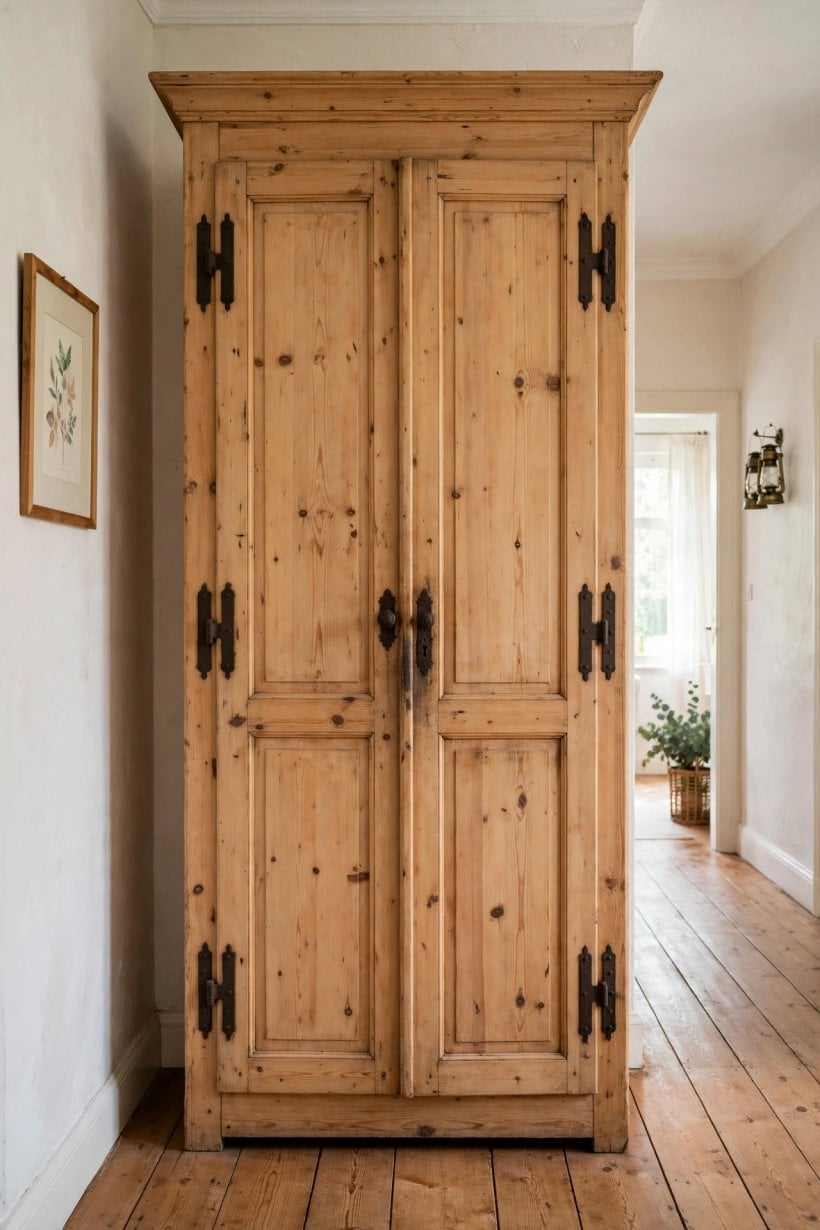
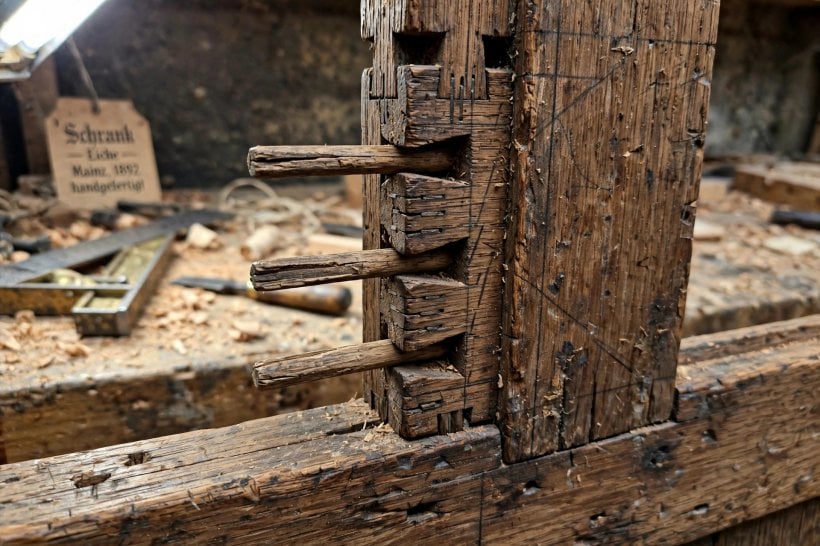
The schrank’s cleverest attribute is invisible when it is standing: it dismantles. Sides, top, back, doors, cornice and base were made as separate panels joined with wedges, pegs or screw fittings, so the whole wardrobe flat-packs — a century before flat-pack was a business model. This is why antique schranks survive in upper-floor bedrooms that no modern one-piece wardrobe could ever reach. When you inspect one for sale, the knock-down system is a quality test in itself: panels should separate and rejoin cleanly, wedges and fittings should be present, and a schrank that has been glued solid by a previous owner has lost its defining advantage. Ask the seller to demonstrate or describe the breakdown — dealers who know the type expect the question.
4. Woods and Finishes
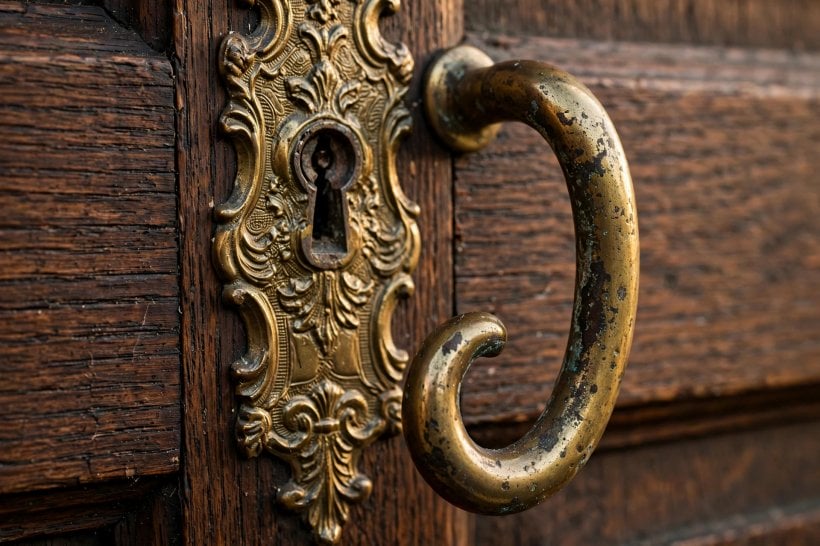
Most schranks you will meet are pine — often originally painted or grained, sometimes stripped to the pale, mellow timber that suits modern rooms so well. Oak schranks are heavier, darker and usually earlier or grander; walnut and fruitwood pieces exist at the fine end, with veneered doors and inlay rather than carving. Finish tells the history: original paint, especially the folk-painted decoration of rural pieces, is a feature to preserve rather than a defect to strip; a waxed, stripped pine finish is the neutral classic; heavy dark varnish usually means a later refinishing and a chance to negotiate. Whatever the finish, judge the timber by the inside — back panels and drawer bottoms show honest, undoctored wood, and they are where woodworm, damp and repairs declare themselves.
5. Styles You Will Meet
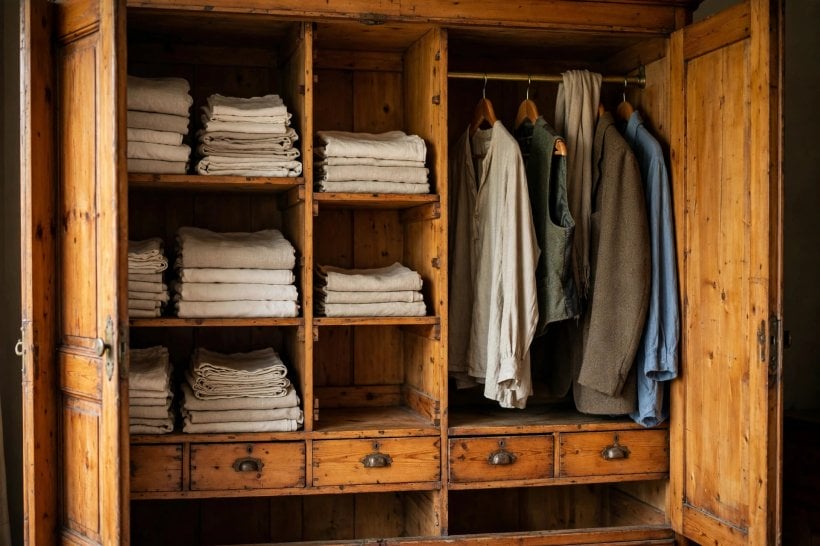
A few recurring styles cover most of the market. The farmhouse schrank: two doors, a strong cornice, painted or plain pine, sometimes a drawer in the base. The carved oak schrank: panelled doors with relief carving, bun or bracket feet, a presence that suits period rooms. The Biedermeier schrank: restrained, elegant, relying on beautiful veneer figure rather than ornament — the easiest style to place in a modern interior. Later nineteenth-century pieces borrow revival details — columns, arches, heavier cornices — and tend to be the largest of all. And there are smaller one-door schranks and hall schranks, narrower and shallower, made for linen rather than hanging clothes: measure the interior before assuming a schrank is a wardrobe in the modern sense, because some were always linen presses. Styling any of them follows the same composition rules as the rooms in these small space interior design ideas — one large, calm piece anchors a room better than several smaller ones competing.
6. Inside: Layouts and What Fits
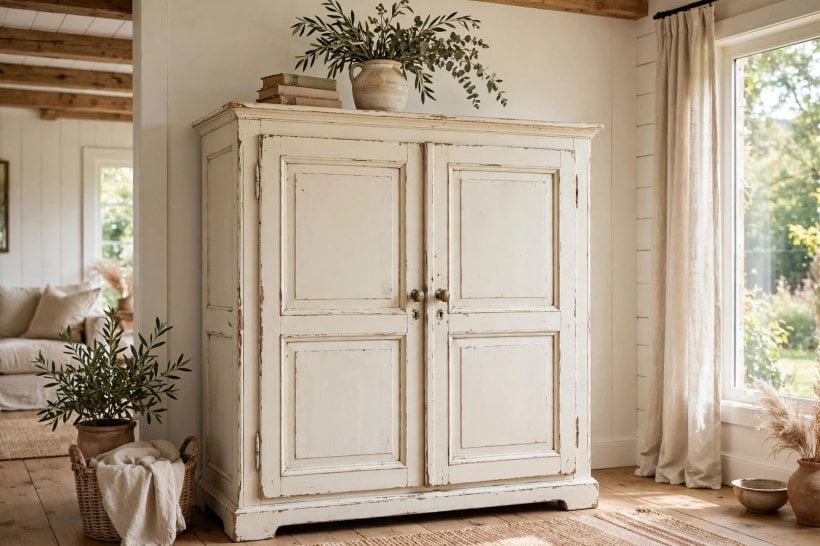
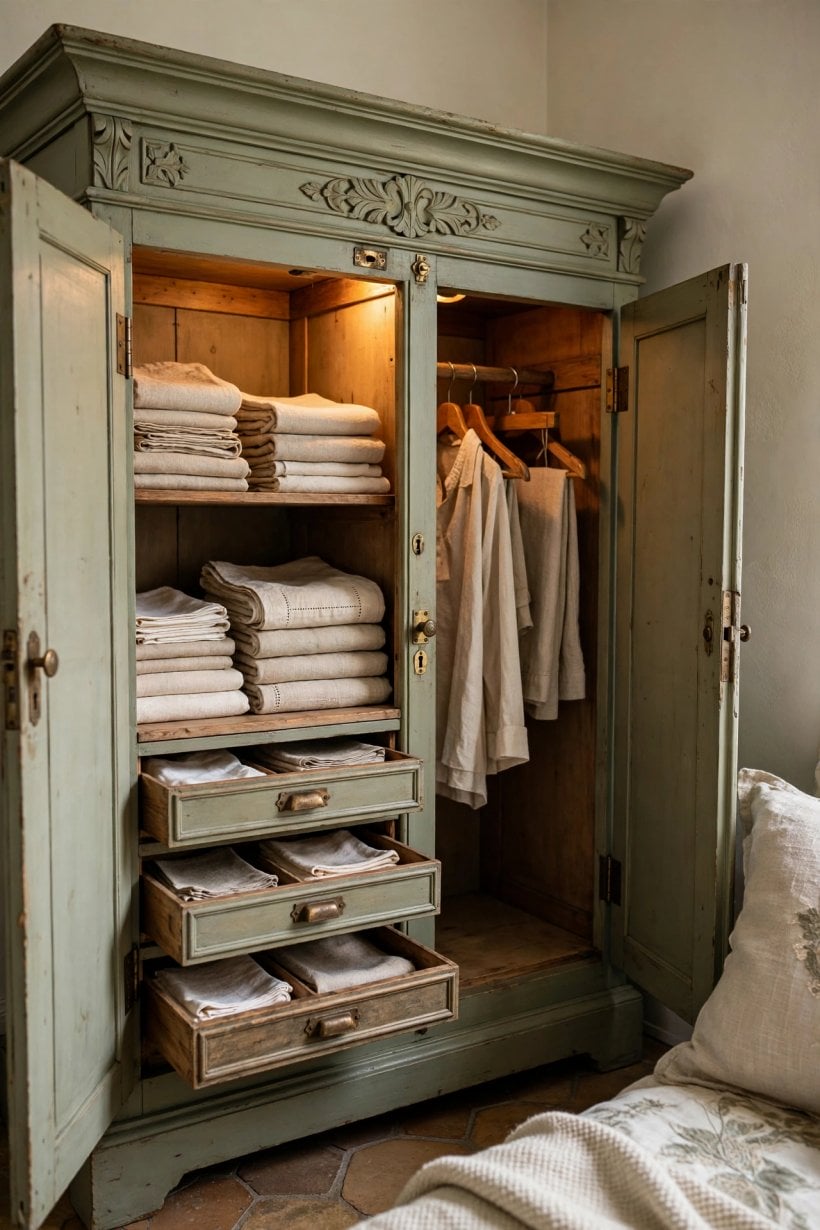
Open the doors before you judge: interiors vary more than exteriors. Many schranks offer a full-width hanging space with a rail or hooks, sometimes with a shelf above; others split between hanging and stacked shelves for linen; base drawers appear on many farmhouse pieces. Traditional interiors used hooks or a high rail suited to the clothes of their day, so check the usable depth and drop against modern hangers and long coats — a retrofit rail is a simple, reversible job, but confirm the interior depth takes a standard hanger with the doors closed. Shelf spacing suits folded linen and blankets better than modern storage boxes; measure your boxes before promising them a home. Modernising the interior is easy and should stay reversible: a freestanding rail on feet, removable shelf boards resting on the existing bearers, and fabric boxes sized to the bays give you a contemporary wardrobe without a single new screw hole in antique timber. Lighting is the one indulgence worth adding properly — a battery or plug-in LED strip on the door frame, switched by the door itself, transforms a deep dark interior, and it removes as cleanly as it fitted. Keep the original hooks and fittings in a labelled bag inside the piece if you remove any: the next owner, perhaps decades from now, will thank you exactly as you would thank the last one. The storage logic is the close cousin of these tiny house closet design ideas — deep, flexible volume beats fussy fitted compartments when the collection changes with the seasons.
7. Judging Condition: What to Check Before You Buy
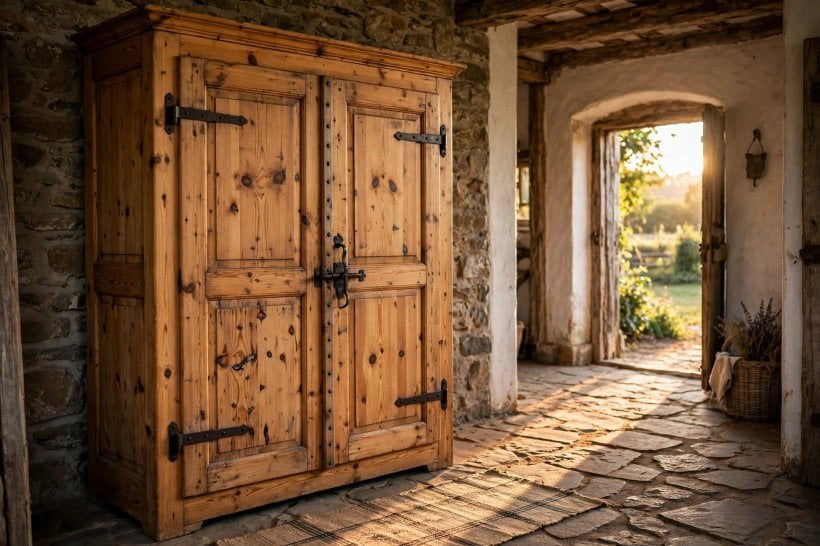
Work through the piece like a surveyor. Structure: sight along the sides for bowed panels, open and close both doors a dozen times, and check the cornice and base for looseness — a schrank that racks when pushed will annoy forever. Timber: look for fresh woodworm flight holes and frass (fine dust) underneath and inside, and feel back panels for damp softness. Hardware: original forged hinges and locks add real value and work beautifully when sound; replaced hardware is fine if it is honest and sturdy. Completeness: every knock-down fitting, wedge and the key, if a lock exists. Restoration: old repairs in matching timber are character; fresh filler, new wood let into visible places and heavy overpainting are questions to ask out loud. None of this requires expertise — it requires twenty unhurried minutes and the willingness to crawl, open and push, the same inspection habits that apply to the fitted storage in our tiny house plans with hidden storage. Add one sense to the inspection: smell. A sound schrank smells of dry timber and old wax. Sour damp, strong must or the sweet reek of active rot are warnings that no photograph will ever give you, and they point at storage history — cellars and outbuildings — that the panels will confirm if you check the backs and the underside of the base. A merely stuffy interior from years closed in a dry room airs out in a week; damp that has lived in the timber is a negotiation, or a walk-away, and knowing the difference before money moves is the whole value of inspecting in person.
8. Size, Access and Getting It Home
Here is where schrank romances end: access. Even dismantled, the side panels and doors are large, rigid rectangles, and the assembled piece needs ceiling clearance plus a few inches to be raised from its panels. Measure the full route — vehicle, doorway widths, hall turns, stair landings, ceiling height at the destination — and compare it against the seller’s dimensions in writing, not from a photograph’s proportions. Confirm who dismantles, who carries, and who reassembles; a dealer who delivers schranks weekly is worth a premium over a bargain that strands two metres of oak on your pavement. Once home, assembly is genuinely satisfying: panels, wedges and gravity, in the maker’s intended order, with a helper and a soft floor covering. Level the piece on its base before loading it — big wardrobes on uneven floors announce themselves with doors that swing on their own.
9. Living With a Schrank: Styling and Care
A schrank earns its floor space daily when it is given a clear job: the household’s coats and boots in a hall (a one-door or shallower piece suits), the linen and blanket store in a bedroom, or the full wardrobe it was born to be. Styling-wise it is a room’s anchor — give it breathing space, keep the top clear or use it for one considered object rather than a skyline of clutter, and let its scale set the room’s register, much as the statement pieces do in these good home design ideas for tiny houses. Uses beyond clothes reward imagination: a schrank makes a superb pantry, craft store, or media and games cupboard, and its doors close on all of it.
Care is the simple antique regime: dust with a soft cloth, feed dry timber occasionally with a suitable wax, keep the piece out of direct fierce sun and away from radiators that dry one side unevenly, and treat any fresh woodworm promptly rather than hopefully. Air the interior now and then; a lavender bag or cedar block keeps it sweet. Nothing here is precious — schranks survived centuries of farmhouses — but steady, mild conditions are what the next century asks of you.
10. Costs and Where to Find One
Prices are driven qualitatively by wood, size, age, carving and condition, and they vary enormously by market: painted pine farmhouse pieces are the accessible end, fine veneered or early carved examples the collector end. Sources mirror that spread — local antique dealers (best for inspection and delivery), auctions (best prices, least hand-holding, inspect in person on viewing day), online marketplaces (widest choice, highest measurement-and-condition risk), and architectural salvage yards, where schranks appear among the doors and fireplaces. Buy the best condition you can afford rather than the biggest bargain: joinery and panel repairs on a piece this size quickly outspend the saving, while a sound schrank is effectively a finished purchase for life. If you are furnishing a compact home, weigh the footprint honestly against the volume it returns — the arithmetic behind these tiny house interior designs, where one deep, tall store often beats shallow storage spread through every room.
Final Considerations
A German schrank wardrobe is furniture from before closets: a room’s worth of storage, in honest solid timber, engineered to come apart and be inherited. Judge it on wood, hardware, the knock-down fittings and — above all — whether it fits your doors, your stairs and your life. Do that, and the piece that puzzled you in a search box becomes the hardest-working antique you own.
Few modern wardrobes will be standing, serviceable and handsome in a hundred years. The schrank already has been — it is simply waiting for its next household.




0 Comments