
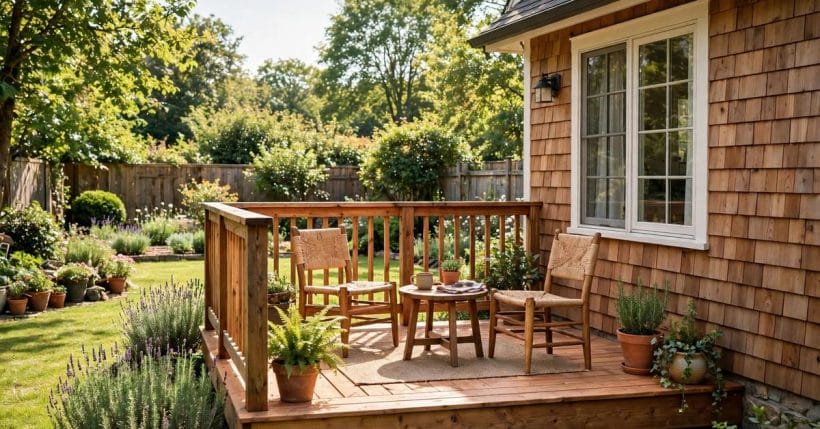
Most gardens do not need a bigger deck. They need a smaller one, in the right place, that gets used every single day.
These seventy-five small deck ideas size the platform from the furniture outward — footprints, layouts, boards and built-ins that make a modest deck live large. The family’s ground floor is patio ideas, where the outdoor room is planned whole.
1. Small Deck Ideas at a Glance
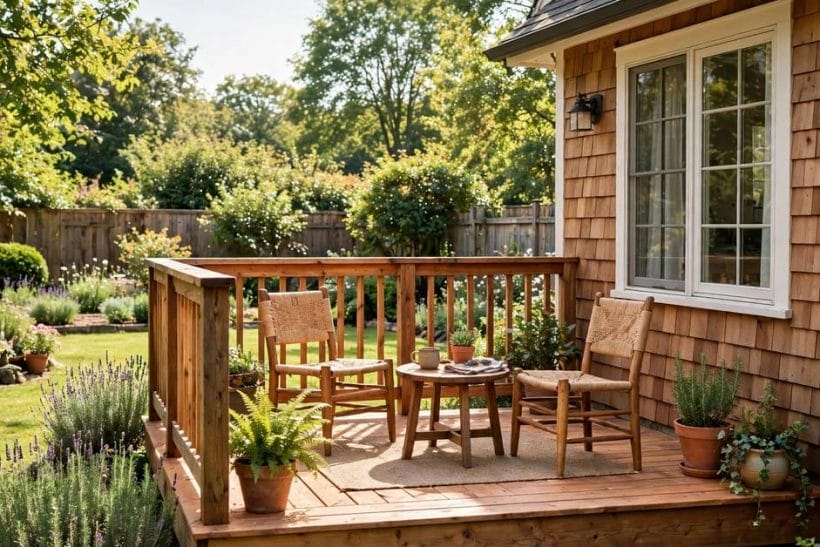
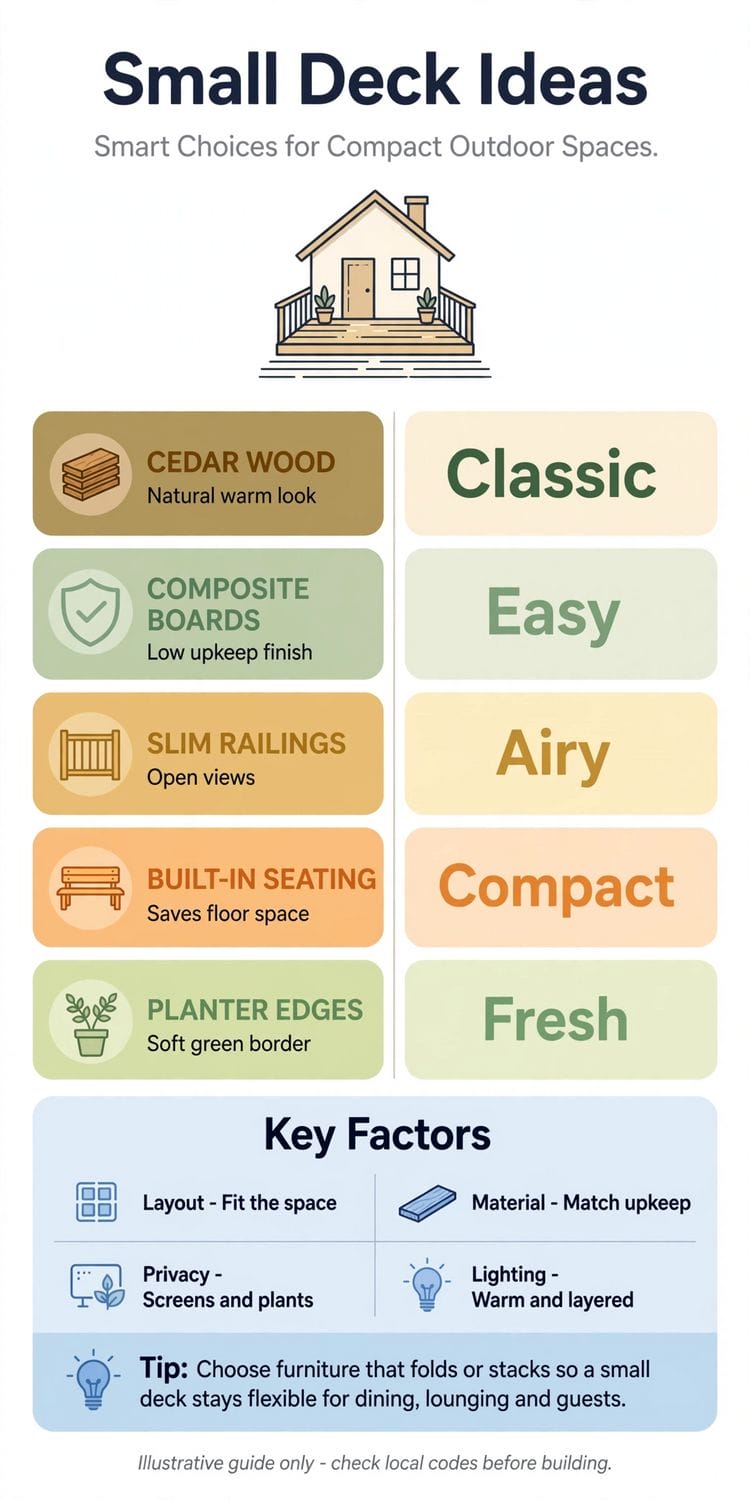
A small deck is a raised or ground-level boarded platform sized for a compact garden or a single use — dining for four, a reading corner, a tiny home’s second room. Its defining discipline is economy: every board, railing and piece of furniture must earn its place, because there is no spare space to absorb a mistake. Small decks range from a ground-level platform outside the back door to a two-tier design on a slope, and the best of them feel larger than their measurements through layout, pale boards and edges that work twice.
| Question | Short answer |
|---|---|
| What counts as a small deck? | A compact boarded platform sized to one main use and a small plot |
| How small can a deck be? | As small as a table, two chairs and room to pull them back |
| What makes a small deck feel bigger? | Pale boards, a clear walking line and edges that double as seating |
| Does a small deck need a railing? | Only where the drop requires one — low decks often need none |
| What is the biggest small-deck mistake? | Sizing the deck from the garden instead of from the furniture |
2. Sizing and Shaping: Footprints That Earn Their Space
A small deck succeeds or fails at the tape-measure stage: the footprint has to fit the furniture, the doors and the garden all at once. The shapes below are the ones that recur in small gardens because each answers a particular awkwardness of plot, slope or house wall.
1. A plain rectangle hugging the house wall
The default small deck and often the best: a simple rectangle carried on the house wall, deep enough for a table and chairs with walking room behind, and cheap in structure because three sides of its life are simple.
2. A square deck that reads as an outdoor room
A square footprint feels like a room rather than a ledge: the table centres, the chairs gather, and no corner is left over. Squares suit small square gardens and the ends of terraces where the plot turns its face to the sun.
3. A corner deck where two walls meet
The sheltered angle where the house turns is a natural small-deck site: one wall carries the structure, the other breaks the wind, and the deck feels private from the first day. Corner decks punch above their size in daily use.
4. An L-shaped deck wrapping a corner
Two small rectangles joined at the corner give a small deck its zones: dining on one leg, lounging on the other, with the bend between them doing the separating that furniture alone cannot.
5. A narrow side-return deck along the house
The forgotten strip beside many houses — too narrow for a lawn, perfect for a deck: a long bench, a row of pots and a morning-coffee chair turn a passage into a place.
6. A small deck on posts over sloping ground
Where the garden falls away, a modest deck on posts levels a piece of it: the slope that made the plot awkward becomes the deck’s view, and the structure beneath stays open for storage.
7. A ground-level platform deck
Boards laid just above the ground on a simple frame: no steps, no railing, no fuss. Ground-level platforms suit level plots, older knees and wheelchair routes, and they are the kindest small deck to build on a budget.
8. A deck shaped around an existing tree
Where a tree owns the middle of the plot, build around it: a framed opening lets the trunk through, the canopy becomes the deck’s shade, and the garden keeps its oldest resident. Leave the opening generous — trunks grow.
9. A two-tier small deck joined by wide steps
Split a small footprint into two levels — dining above, lounging below — and let broad steps double as seats. The level change zones a tiny area more honestly than any arrangement of furniture.
10. A small deck with a built-in edge instead of a railing
Where the drop is modest, a bench or a planter run along the edge does the railing’s work while seating the gathering — the footprint stays small because nothing is spent on a fence line.
11. A balcony-style deck for an upper room
A small deck off an upper floor — a bedroom’s morning terrace — asks little of the garden and gives the house a second outdoor room. Structure and privacy screening decide its success more than size ever will.
3. Layouts for Dining, Lounging and Morning Coffee
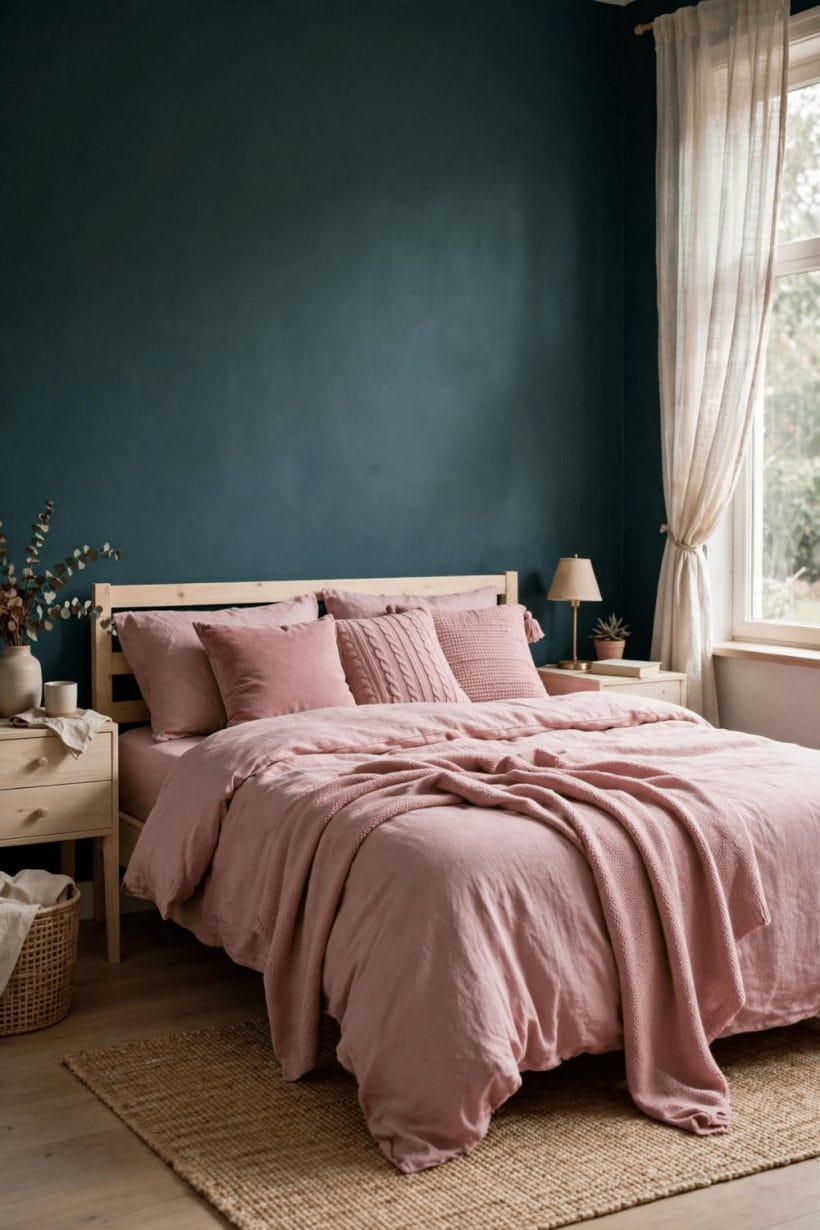
Small decks are furnished by intention, not by shopping: each layout below begins from the hour of the day the deck serves best. The roofed end of the family — decks that carry a cover of their own — is planned separately in covered deck ideas; everything here works under open sky.
12. A dining layout for four, no more
Size the table to the ordinary week: four chairs, room to pull them back, and a serving spot that is not a lap. A small deck dines best when the table is honest about the household’s real numbers.
13. A lounge layout built around one deep seat
One generous seat — a loveseat or a deep chair — plus a small table beats four skimpy chairs on a small deck. The lounge layout claims the evening hours the dining layout leaves behind.
14. A breakfast corner facing the morning sun
Two chairs and a small round table in the deck’s sunniest corner: the cheapest luxury in this whole list, and the one that gets used on the most days of the year.
15. A reading nook at the quiet end
A chair with a back, a footstool and a side table at the deck’s far end, screened by a planter: the reading nook turns the least-trafficked boards into the most-loved ones.
16. A layout that keeps a clear path to the door
On a small deck the route from door to garden is sacred: arrange furniture along the edges so the walking line stays open, and the deck feels bigger every time someone crosses it.
17. A flexible layout on castors and folding pieces
Furniture that folds, stacks or rolls lets one small deck be three rooms in a day: breakfast corner at eight, sun deck at noon, dining room at seven. Flexibility is the small deck’s square footage.
18. A conversation square with seats on three sides
Chairs on three sides of a low table, the fourth side left open to the garden view: the sociable layout, sized to talk rather than to dine, and kind to small footprints.
19. A sun-and-shade split layout
Half the deck given to a lounger in the sun, half to a shaded seat under a sail or an umbrella: two climates on one small platform, and the household’s sun-chasers and shade-seekers both served.
20. A work-from-the-deck layout
A modest table, a chair with a back and shade on the screen: the small deck as the house’s fair-weather office, with the garden for a view and the kitchen a few steps away for coffee.
21. A layout for one: the solitary deck
A single deep chair, a table for a book and a drink, and no apology: some small decks are retreats, and designing for one person honestly makes the most restful corner in the garden.
22. A children’s corner kept in sight
A patch of the deck near the door, a small table and washable cushions: children colonise it happily while the adults keep the far end — and the whole household is outside together.
4. Boards and Materials That Make Small Decks Feel Bigger
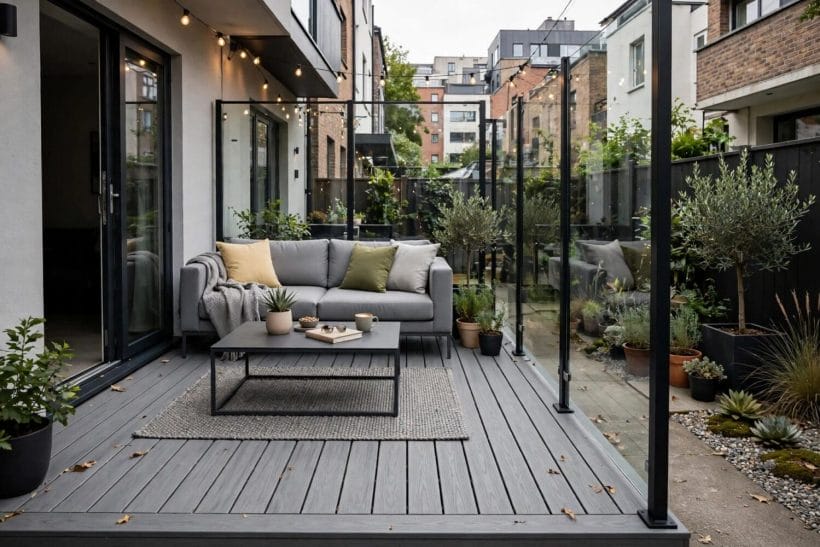
On a small deck every board is visible all the time, so material choices carry unusual weight. The ground-level cousin of the deck — paving at grade — is compared in gravel patio ideas; here the subject is boards, and how their colour, direction and width change a small footprint’s feel.
23. Pale boards that borrow light
Light-coloured boards bounce daylight around a small deck and make its edges recede. Pale timber or pale composite suits shaded plots and north-facing gardens where every lumen is spoken for.
24. Boards laid diagonally to widen the feel
A diagonal lay leads the eye corner to corner and makes a narrow deck feel broader than its tape measure. It costs extra cutting and care at the edges — on a small deck, the waste is small too.
25. Long boards run toward the view
Boards laid lengthwise, pointing at the garden’s best view, stretch a small deck visually: the lines carry the eye out, and the deck borrows the garden’s depth as its own.
26. Wide planks for fewer lines
Fewer, wider boards mean fewer seams, and a calmer floor reads as a larger floor. Wide planks move more with the seasons than narrow ones, so fixings and gaps want planning by someone who knows the material.
27. Composite boards for a small, busy deck
Wood-fibre and plastic boards that need no staining and resist splinters: the practical floor where the deck is small, heavily used and walked on barefoot daily. Colour stays put year after year.
28. Natural timber that silvers gracefully
Untreated hardwood or durable softwood left to grey in the weather: the low-effort, high-character floor. Silvered boards suit planted gardens, where the deck is one texture among many rather than the main event.
29. A picture-frame border in a second tone
A border course of boards in a contrasting tone frames a small deck like a rug: the eye reads the frame as the room’s edge, and the deck gains the definition size alone cannot give.
30. Dark boards as a stage for pale furniture
The grounding scheme: dark-stained boards that recede, pale furniture that stands forward. Dark floors hide the marks of outdoor life and show pollen more; choose them for looks, not for hiding.
31. A mixed deck-and-paving footprint
Half boards, half paving stones: the deck shrinks to the seating zone while the paving takes the traffic and the pots. Mixed footprints stretch a small budget across a larger outdoor room.
32. Step treads matched to the deck boards
Carry the deck’s own boards onto its steps so the whole structure reads as one object: on small decks, visual unity is worth more than any single material upgrade.
33. A rug-pattern inlay of two board tones
Two tones of board laid as a simple geometric inlay under the table: the deck’s floor becomes its decoration, and a small footprint gains the pattern interest that furniture would crowd out.
5. Railings, Edges and Privacy on a Small Footprint
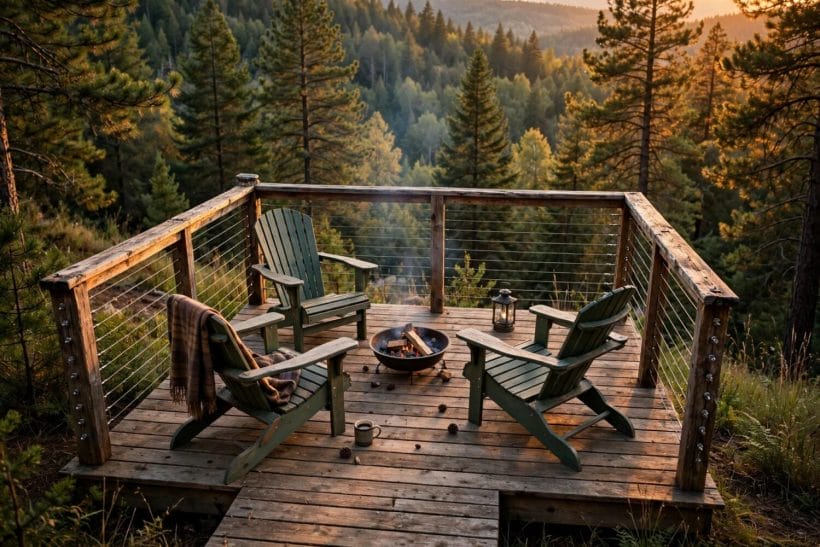
Small decks live close to boundaries and neighbours, so their edges work harder than a big deck’s ever will. The guard, the screen and the planting below are chosen to protect the gathering without spending the footprint on fencing. The fully walled version of this privacy is a room of its own, planned in courtyard ideas.
34. A slim cable railing that disappears
Horizontal cables between slim posts guard the drop while vanishing against the view: the small deck keeps its guard and its garden picture at the same time.
35. A glass panel at the windy edge only
Glass on the one side the wind attacks, open rails elsewhere: shelter where it is needed, air where it is not, and no money spent guarding edges the weather ignores.
36. A planter-topped half wall
A low solid edge planted along its top guards, seats and screens at once — and on a small deck, an edge doing three jobs is an edge that earns its boards.
37. Slatted screens that filter rather than block
Timber slats with shadow gaps give privacy with striped light still passing: the neighbour is softened, not confronted, and the deck keeps its air. Slats pair naturally with modern small decks.
38. A hedge grown to sitting height
The living railing: a hedge at the deck’s foot grown to the height of a seated shoulder. It is the slowest edge and the softest — it greens, moves, harbours birds and asks only for clipping.
39. A trellis with a climber for a green wall
A light trellis and one vigorous climber give a small deck a wall of leaves by midsummer: privacy that improves yearly and costs a fraction of any built screen.
40. Outdoor curtains on the overlooked side
Fabric panels on a wire, drawn across when the neighbours are out and pulled back for the view: privacy on demand, which on a small deck is usually the only kind needed.
41. A bench edge where the drop is small
Where the deck sits one step above the lawn, a built-in bench along the edge seats the gathering and marks the boundary — no railing, no visual fence, no lost inches.
42. No edge at all on a ground-level deck
The honest finish for the lowest decks: the boards simply end and the lawn begins. Ground-level decks gain their sense of space precisely from having no edge to read.
43. A gate and a step that invite rather than block
Where a small deck needs a gate — for dogs or toddlers — make it match the railing and keep it light: the entrance should read as part of the deck’s welcome, not its defences.
44. Frosted panels for borrowed privacy
Where the overlooking is close and permanent, a frosted or reed-textured panel at the one exposed side gives privacy with daylight: the small deck stays bright while the sightline is closed.
6. Built-Ins and Furniture That Earn Their Space
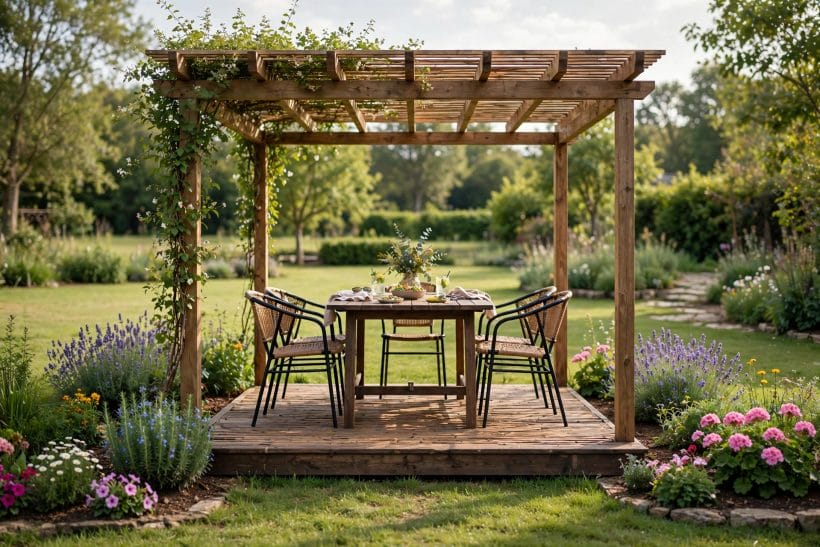
Every object on a small deck pays rent in usefulness or it goes. The built-ins below are borrowed from the discipline of tiny homes — the same thinking that shapes tiny house deck ideas — where a piece that does two jobs is worth two pieces that do one.
45. A built-in bench with storage inside
The small deck’s hardest worker: seating along the wall, cushions and tools inside its lid, and a back formed by the house itself. A storage bench replaces chairs, a shed run and a cushion box at once.
46. A fold-down table on the wall or railing
A hinged tabletop that drops flat when the meal ends: dining for four appears from nowhere and vanishes the same way. Wall-mounted versions suit the narrowest decks in this list.
47. Stacking chairs that live in a corner
Four chairs that stack into one chair’s footprint when the deck is empty: the classic small-space bargain, and still the best one where the deck doubles as a route through the garden.
48. A slim console table as the serving station
A narrow table against the house wall carries drinks, salads and the grill’s output, then holds pots and lanterns between meals. Serving space is what small-deck dining usually lacks — not seats.
49. Corner seating that uses the dead angle
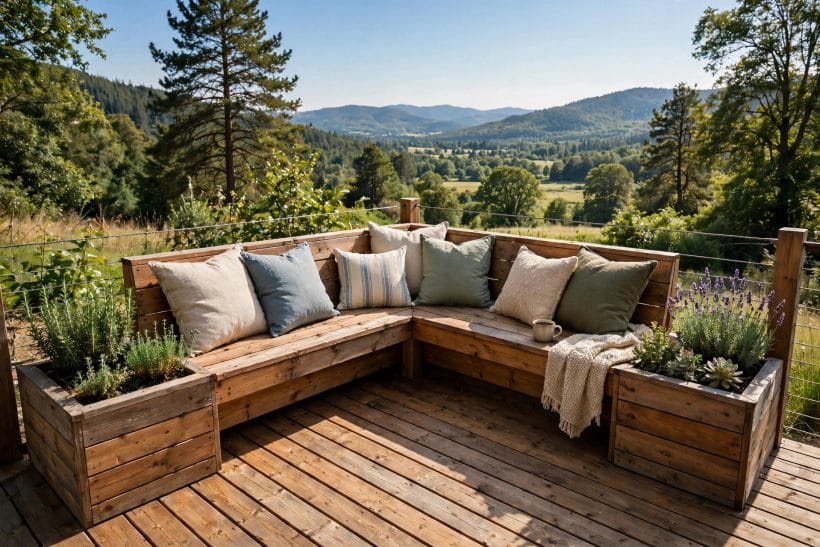
An L of benching fitted into the deck’s corner seats five where two chairs seat two: corners are where small decks hide their spare capacity.
50. A movable trolley instead of a fixed bar
A trolley parks in the kitchen, loads in one trip and serves the deck wherever it stands. On a small deck, anything that can leave is a kind of extra space.
51. Planters built into the deck’s edge
Planting boxes formed in the deck’s own frame green the boundary without pots stealing floor: herbs by the dining end, flowers by the lounger, and nothing underfoot.
52. A single statement chair instead of a set
One beautiful deep chair and a small table, chosen without compromise, can serve a small deck better than a matched set squeezed in: quality of seat over quantity of seats.
53. Nesting side tables that spread for guests
Two or three small tables that nest into one footprint and scatter when drinks multiply: occasional furniture for the days the deck hosts more than its ordinary crowd.
54. A hammock chair hung from a beam or stand
The hanging seat takes no floor at all when hung from structure, and folds the deck’s siesta into a corner. Keep its swing clear of the walking line and it earns its air space.
55. Cushions stored in a deck box that doubles as a table
The weatherproof box that holds the cushions, topped with a tray, becomes the coffee table between showers: two jobs, one footprint, and dry cushions at the end of it.
7. Shade, Light and Planting for Small Decks
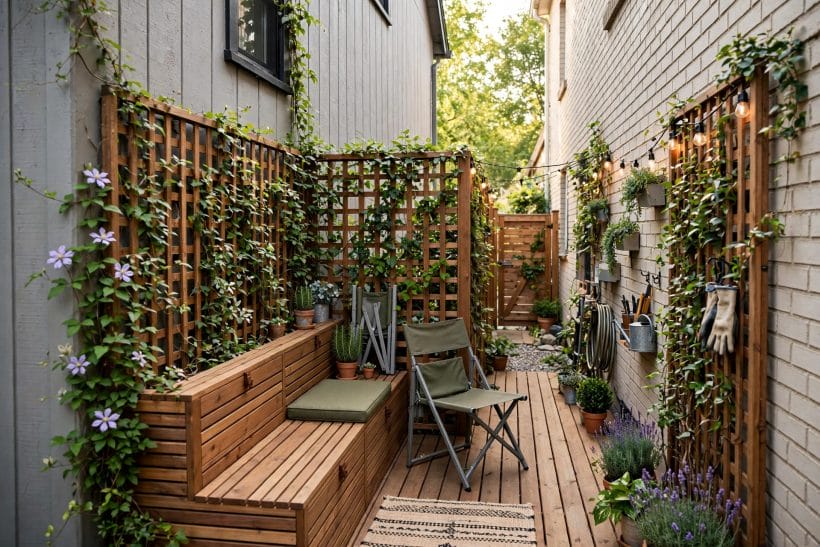
A small deck’s comfort is decided by its lightest elements: the sail overhead, the lamp at the step, the pot at the corner. None of them asks for floor the deck does not have.
56. A shade sail cut to the deck’s own triangle
A single sail tensioned between the house and two posts shades the seating corner and leaves the rest open: the lightest cover a small deck can carry, and down in minutes before a storm.
57. A tilting umbrella on a side pole
A cantilever umbrella parks its pole outside the deck’s edge and leans its shade over the table: no pole through the middle of a small floor, and shade that follows the sun by tilting.
58. A slim pergola frame without a roof
Four posts and a lattice of beams, unroofed: the pergola gives a small deck its architecture and something to hang lights and climbers from, while the sky stays the ceiling.
59. String lights along the house wall
A single run of festoon lights along the wall and back gives a small deck its evening face: warm, low light that makes the smallest platform feel like the garden’s chosen room.
60. Step lights that mark the edge
Small lights set into the deck’s step or edge boards: safety rendered as decoration, guiding feet at dusk and drawing the deck’s outline in light after dark.
61. Solar lanterns that move with the evening
Lanterns charged by day and carried where the evening settles — table, step or reading corner. Movable light suits small decks, whose best seat changes with the season.
62. A wall of herbs in railing planters
Planters clipped along the railing plant the deck’s edge with herbs: green at elbow height, scent when brushed, and the kitchen’s flavours a step from the table.
63. One large pot as the deck’s tree
A single generous pot with a small tree or a tall grass gives a small deck its vertical note: one big planting beats six small ones, which only read as clutter at this scale.
64. Climbing plants on the sunny posts
A climber on the deck’s sunny post or screen softens the structure and perfumes the seating by summer. Choose varieties that stay mannerly — a small deck cannot host a takeover.
65. A rug that defines the sitting zone
An outdoor rug under the chairs draws the room’s boundary on the boards: the deck’s living zone is named by textile, and the rest stays circulation. Rugs also warm the boards for bare feet.
8. Small Deck Styles: Tiny-Home, Cottage, Modern and More
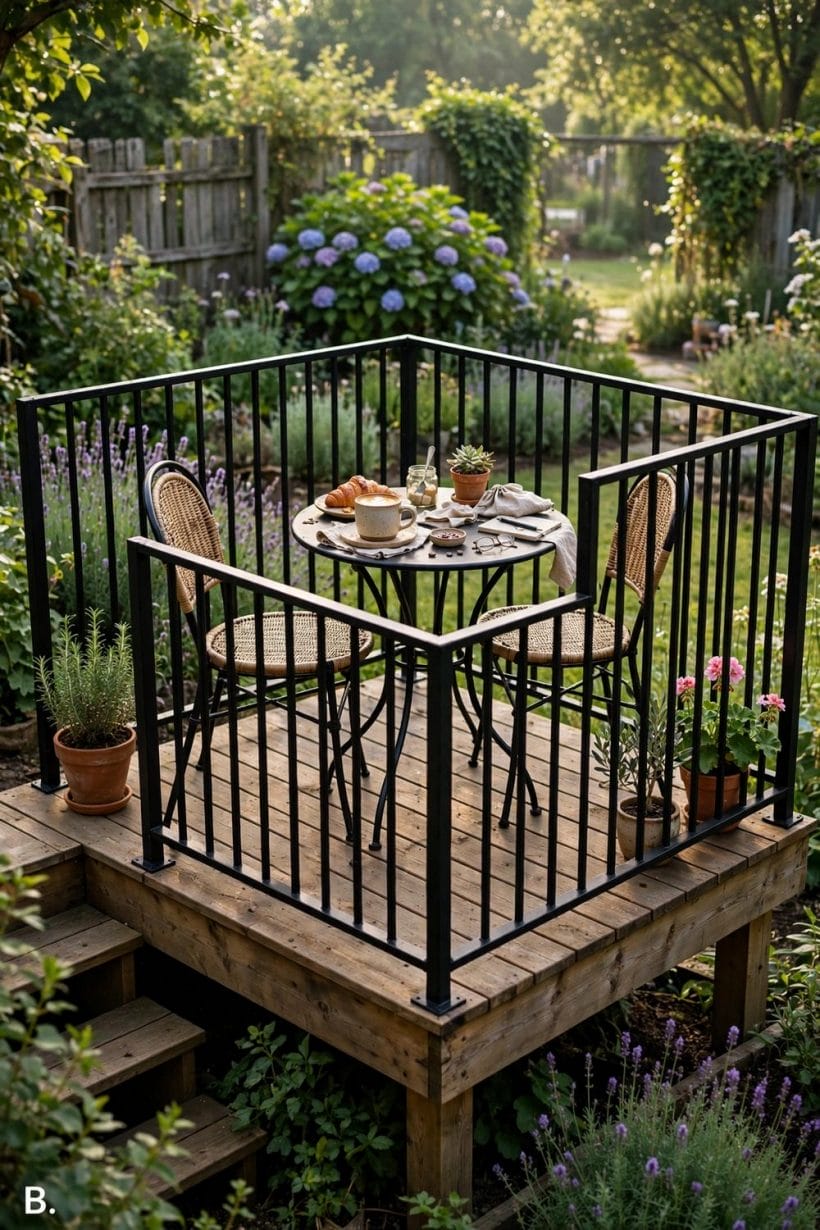
Style on a small deck is mostly editing: one voice, few objects, materials that agree. The veranda tradition behind several of these voices is carried at full size in craftsman porch ideas; here each style is cut down to what a small footprint can honestly wear.
66. Tiny-home deck: the deck as a second room
For a tiny house the small deck is not an accessory but the second room: sized to the dining table and the day’s living, roofed or open, with the little interior left to sleep and shelter.
67. Cottage style with painted boards and roses
Pale-painted boards, a rose at the post, painted furniture in garden colours: the cottage deck is the storybook end of the family, and it flatters small footprints most of all.
68. Modern minimal: dark boards, one bench, one pot
Slim dark boards, a single built-in bench and one sculptural pot: the modern small deck is a study in restraint, where every object earns its place and the planting does the decorating.
69. Coastal style in white and weathered timber
White paint, silvered boards, rope and linen: the coastal deck imports the beach house’s ease to any garden, and it is the style most forgiving of sandy feet and weather.
70. Rustic style with rough timber and stone
Heavy boards, a stone step, furniture built like it means to stay: the rustic small deck suits woodland plots and stone cottages, and it improves with every season’s weathering.
71. Mediterranean pots and terracotta
Terracotta pots, a tiled table top, iron chairs and shade that dapples through a vine: the Mediterranean small deck is built for long lunches in a warm corner.
72. Japanese-inspired quiet platform
Low boards, dark stain, gravel at the edges and planting reduced to a few perfect specimens: the quiet platform is a place for tea and thought at the garden’s still end.
73. Bohemian layers in miniature
A simple platform under the household’s colour: one rug, cushions in mixed prints, lanterns and plants in every pot that fits. Bohemian layering works on small decks precisely because it is dense.
74. Farmhouse style with a bench and enamelware
A plain bench, a scrubbed table, enamel and galvanised metal on top: the farmhouse deck is the working porch remembered fondly, cut down to a small plot’s honest size.
75. Scandinavian pale and simple
Pale boards, white-painted furniture, wool throws for the evening and candles in jars: the northern small deck is bright at noon and glowing at dusk, and never crowded in either.
9. Checks and Mistakes: Before the First Purchase or the First Fitting
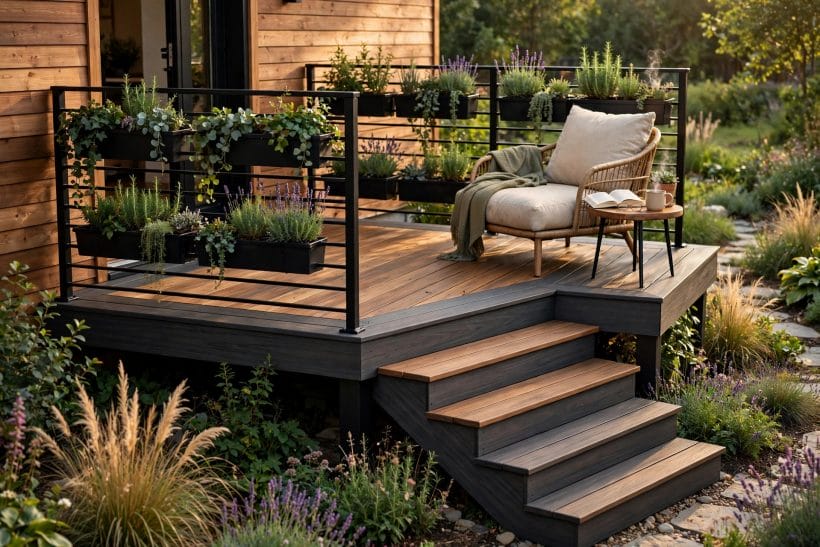
Begin with the rules and the ground, because even a small deck is a structure. Many areas treat decks above a certain height or size as work that needs approval, and the rules differ from place to place — check the local position before the design hardens, and let a builder judge footings and fixings where the deck is raised.
Drainage decides whether a deck rots or endures. Boards need air beneath them and a fall that sheds water away from the house wall; a ground-level platform wants a gravel bed under its frame, and a raised deck wants its posts on proper footings clear of pooled water.
Measure the furniture before the deck, not after. The commonest small-deck mistake is a footprint drawn from the garden’s convenience and furnished from hope: tape out the table, the chairs pulled back and the walking line on the lawn first, and let those honest dimensions set the boards.
Mind the sun’s path across a small plot. A deck placed for the noon sun may sit in the house’s shadow by dinner; the decks that get used are the ones placed for the hours the household actually spends outside.
10. Costs and Pulling It Together
Costs follow size, height and material, in that order. A ground-level platform of softwood is the modest end; a raised deck on posts with hardwood or composite boards, built-in seating and screens is the expensive end — and on small decks the fittings and finishes, not the boards, are usually where the money gathers.
The drivers in order: the structure first (footings, frame, posts where the ground slopes), then the boards themselves, then the edges — railings, screens, steps — then wiring for lights, then furniture and planting.
Pull the design together by sizing the deck from the furniture, choosing the boards from the household’s maintenance appetite, and letting one style voice — cottage, modern, coastal — settle every later choice.
Final Considerations
A small deck is proof that outdoor living is measured in habits, not square metres: the breakfast corner used daily is worth more than the grand terrace admired weekly.
Start with the footprint the furniture honestly needs, build the edges to work twice, and let these seventy-five ideas argue for their place on your boards.

0 Comments