

Spills happen in every home, from muddy paws by the door to coffee carried one handed through the hall. Choosing a stain-resistant carpet is less about finding a miracle finish and more about matching fibre, treatment and daily care to the way your rooms are actually used. This guide compares the best-known branded approach with solution-dyed alternatives in plain, qualitative terms, so you can choose calmly, clean confidently and enjoy softer floors for longer.
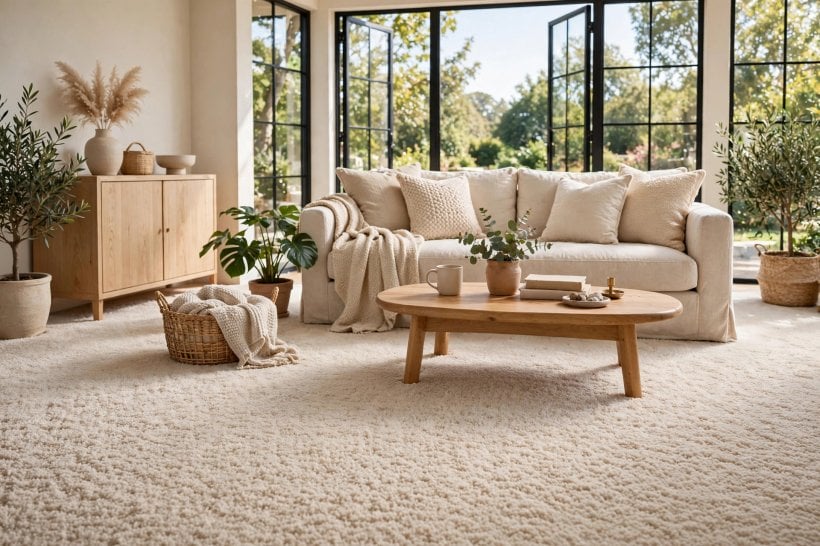
1. At a Glance: The Short Answer
Before the detail, here is the honest summary. No carpet is stain-proof, and any seller who promises that is overselling. What good stain-resistant carpets do is buy you time: liquids sit on or near the surface a little longer, giving you a fair chance to blot, rinse and lift the mark before it bonds. How well that works depends first on the fibre itself, second on any treatment added to it, and third on how you clean. A modest carpet cleaned promptly will usually out-perform a premium carpet that is neglected for a week.
| Question | Short answer |
|---|---|
| What matters most? | The fibre first, then the treatment, then your cleaning routine. |
| Is branded always better? | Not automatically. Branded ranges package fibre, treatment and warranty together; alternatives can match them on fibre alone. |
| Which rooms benefit most? | Hallways, stairs, family rooms, rental homes and anywhere children or pets live. |
| What ruins performance fastest? | Heat-setting a spill, harsh scrubbing, and leaving grit to grind into the pile. |
| How do I choose? | Match the fibre to your traffic, read warranty terms in general terms, and pick a colour that forgives daily life. |
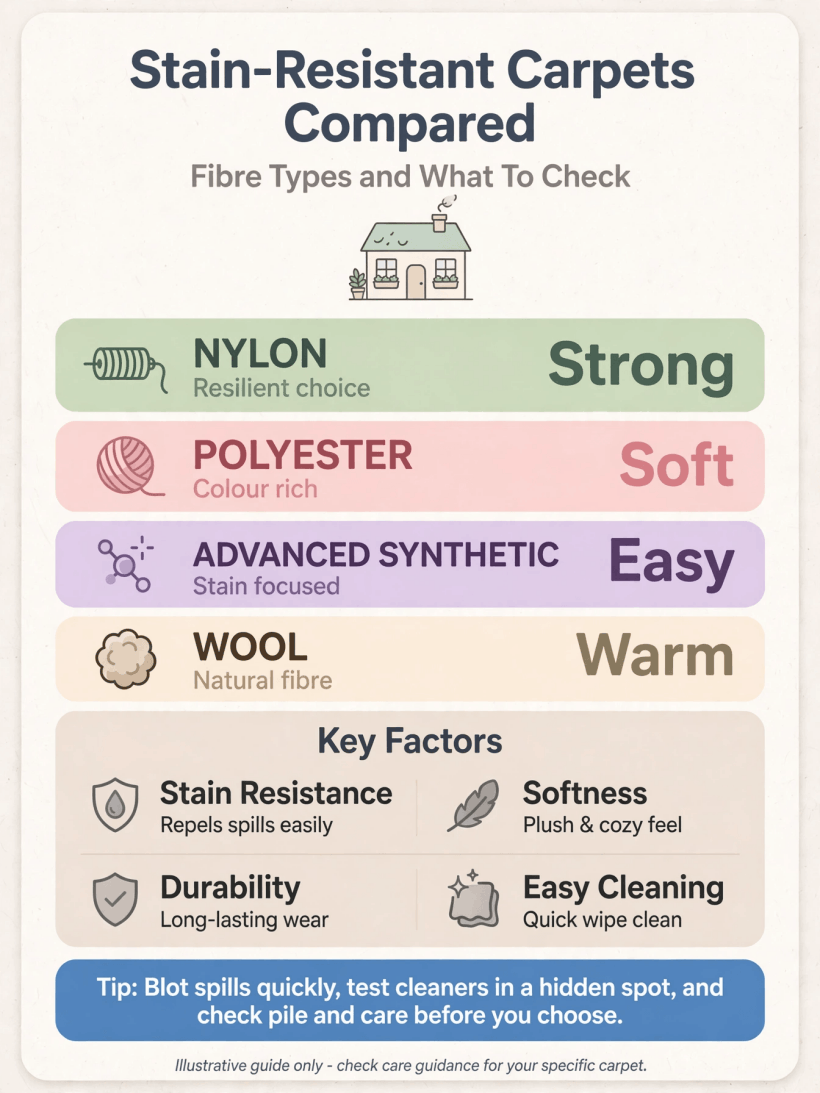
At a glance: fibre, treatment and care work together — no single feature makes a carpet stain-proof.
Keep that order in mind as you read. Retail displays are designed to make treatments sound like magic coatings, yet experienced fitters will quietly tell you the same thing this guide says openly: start with the right fibre for the room, treat any finish as a helpful extra, and learn the simple blotting routine in section 8. Do those three things and almost any well-chosen carpet in this category will serve you well. Skip them, and even the most expensive option will disappoint sooner than it should.
2. Fibre Types: What the Pile Is Made Of
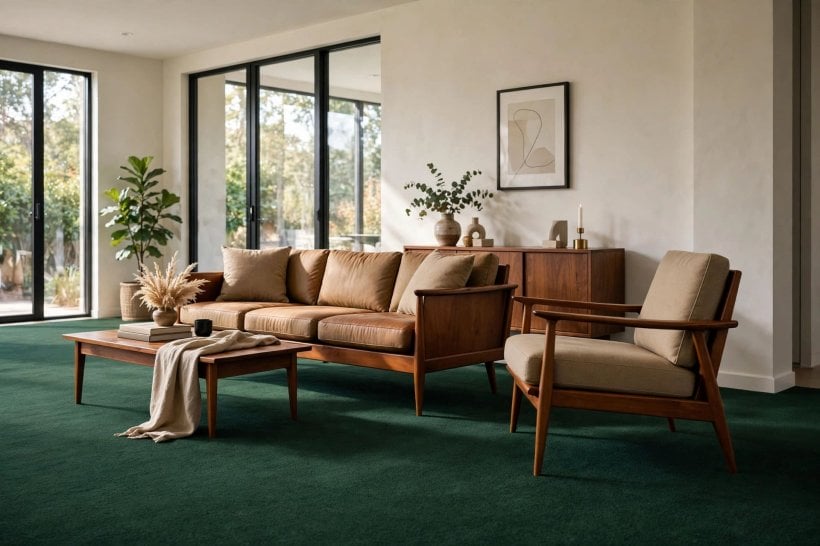
Fibres behave differently because their surfaces and chemistry differ. Nylon has long been the workhorse for busy homes: it resists crushing, springs back under furniture, and accepts stain treatments well, which is why so many branded ranges are built on it. When shoppers research a stainmaster carpet, they are usually looking at a nylon pile paired with a proprietary treatment and a branded warranty, sold as one reassuring package. Polyester feels softer and naturally resists water-based spills, although it can flatten faster in heavy traffic. Triexta, a newer fibre family, is often praised for softness combined with built-in resistance, because the protection is part of the fibre rather than a coating. Polypropylene shrugs off moisture and is easy to clean, but it can feel less luxurious and may hold oily marks. Wool, the natural option, hides soil beautifully and feels wonderful, yet it absorbs spills quickly and needs gentler cleaning. None of these is universally best. For a compact home like those in our guide to tiny houses for sale in Dallas, Texas, a resilient nylon or triexta in the main walkway usually makes more sense than a delicate wool, however lovely the wool feels underfoot on day one.
3. How Stain Treatments Actually Work
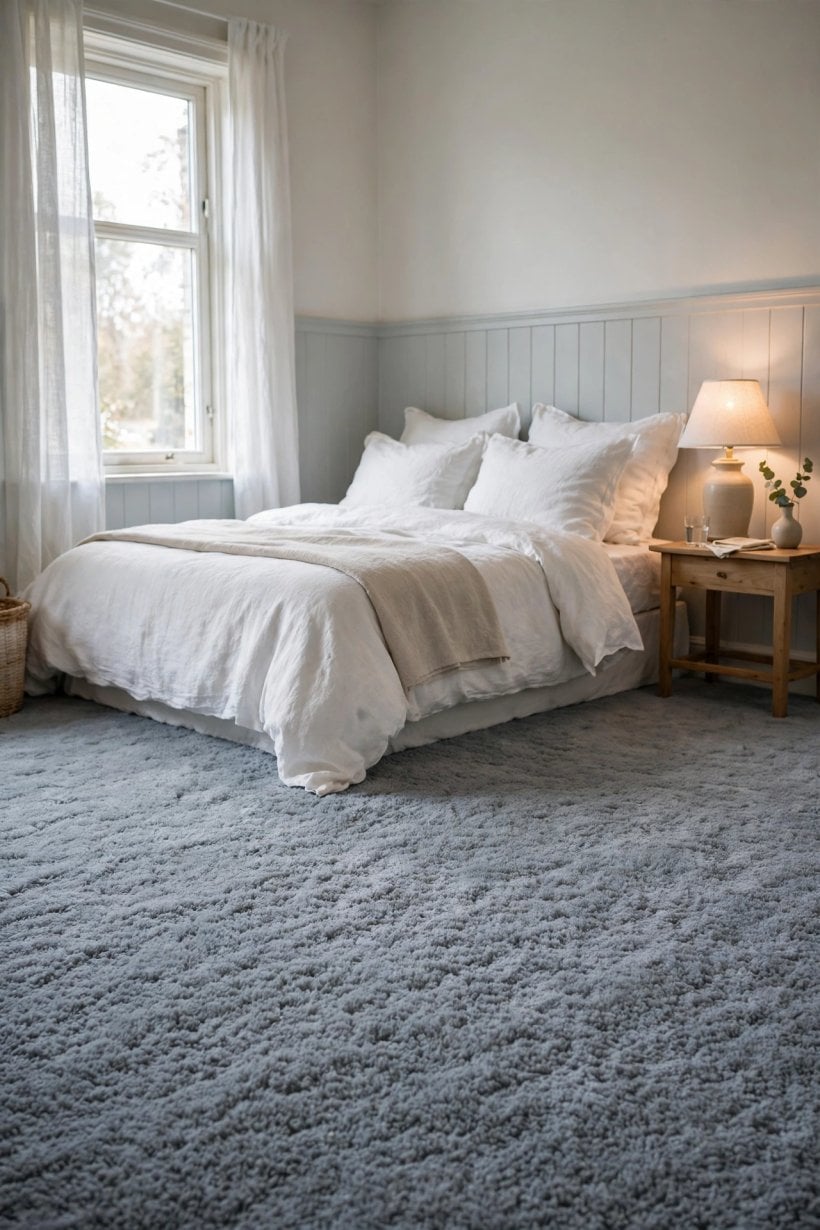
Treatments fall into two broad families. Topical treatments are applied to the finished fibre, rather like a raincoat: they slow absorption and make spills bead, but they can gradually wear or wash away in the busiest paths, which is why some makers discuss reapplication after deep cleaning. Built-in protection works differently. With solution-dyed fibres, colour runs through the whole filament, so marks and fading have less visual impact, and the resistance does not depend on a surface layer staying intact. Some fibres are also shaped or formulated to release soil more easily during vacuuming and washing. Understanding this difference explains many showroom arguments. A treated nylon may resist a fresh spill brilliantly on day one, while a solution-dyed alternative may look almost unchanged after years of ordinary life, even if its day-one beading is less dramatic. Ask sellers which type you are being shown, how cleaning affects it, and whether the warranty expects professional cleaning at intervals. If a display uses coloured water, remember that real life involves hot coffee, pet accidents and gritty mud, all of which behave differently. A plain answer about the treatment type is worth more than a theatrical demonstration with a single friendly liquid.
4. The Branded Route: What You Are Paying For
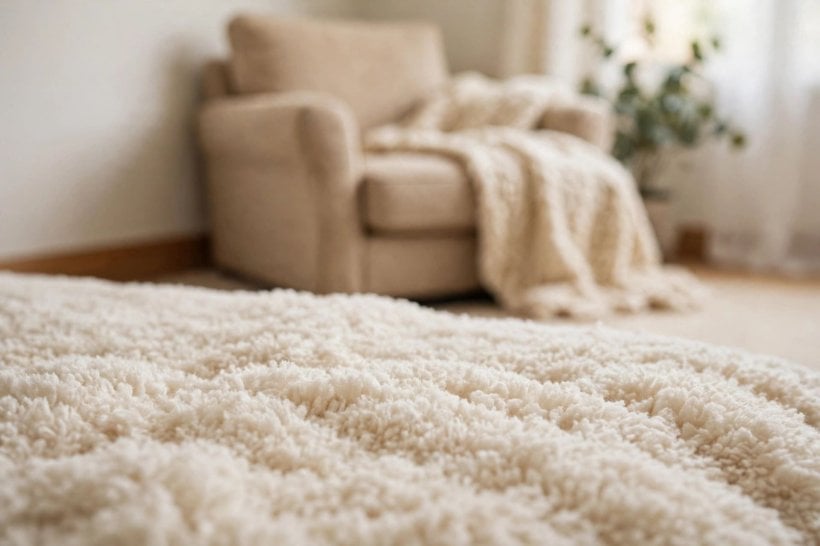
Buying a recognised brand is partly about the carpet and partly about the system around it. You typically get a defined fibre specification, a named treatment, a structured warranty with clear categories, and a dealer network that understands the product. That consistency has real value if you want predictable results across several rooms, or if you are furnishing a rental and want paperwork that a future buyer or tenant can understand. Branded ranges also tend to offer coordinated colours across different pile weights, so the stairs, landing and bedrooms can match without identical construction. The trade-offs are equally real. You pay for the name, the marketing and the warranty structure, and you are limited to that range’s palette and constructions. Independent retailers sometimes offer unbranded carpets with very similar fibres for less, although comparing them takes more effort on your part. Think of it like the choices in our gift shop interior design ideas for tiny houses: the curated option is easier and more predictable, while the hunt-it-yourself option can reward patience. Neither approach is foolish; the right one depends on your time, confidence and appetite for paperwork.
5. Solution-Dyed and Triexta Alternatives
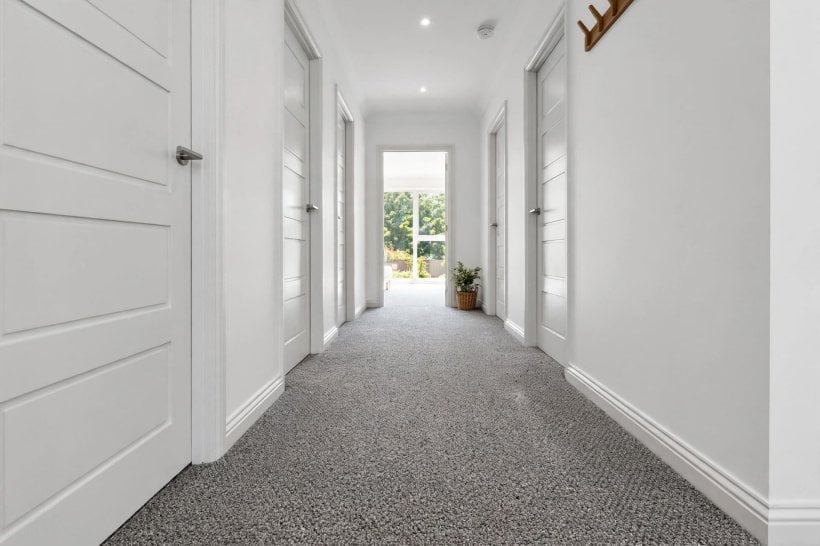
The main alternatives sold beside branded nylon are solution-dyed nylon, triexta and modern polyester ranges, often under retailer or mill labels rather than a single famous name. Their shared selling point is that resistance is largely inherent. Colour that runs through the fibre cannot be scrubbed off the surface, and these carpets are generally forgiving of the diluted cleaning solutions homeowners actually use. Triexta in particular has built a following among pet owners, because it combines a soft hand with strong spill behaviour and good texture retention for a mid-priced fibre. Solution-dyed nylon keeps nylon’s famous resilience while adding colourfastness that suits sunny rooms. Polyester versions are usually the softest and most budget-friendly, though heavy furniture and daily hall traffic will test them sooner. Where these alternatives can lag is warranty clarity and range coordination: terms vary by seller, and the fine print matters more because there is no single national brand promise behind it. That is manageable if you ask for the warranty in writing before you buy. Households planning whole-home changes, much like readers of our tiny houses for sale in Augusta, Georgia guide, often find these ranges free up budget for better underlay, which improves comfort more than a logo does.
6. Pile Construction, Density and Feel
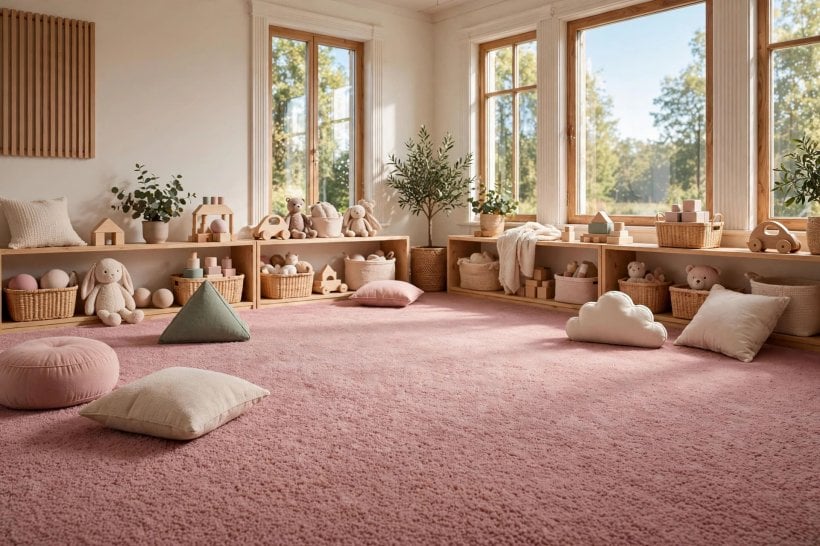
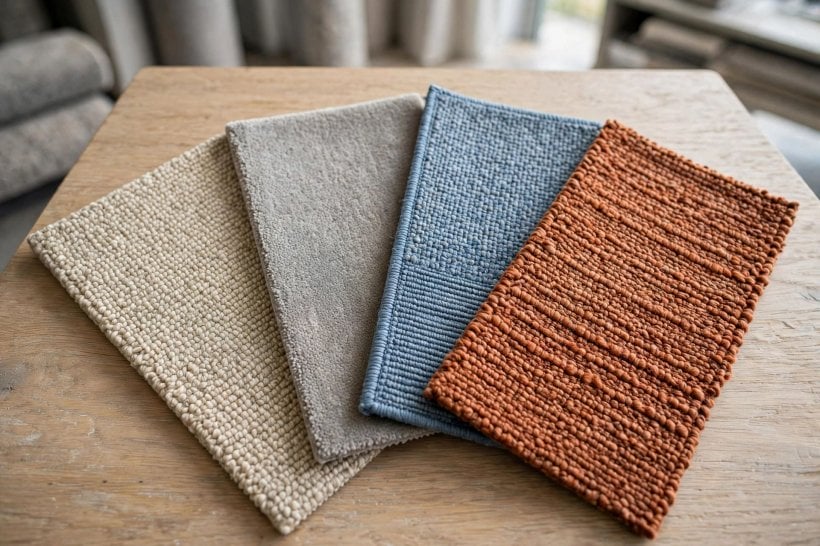
Two carpets made from the same fibre can behave very differently depending on how they are built. A short, dense pile generally shows fewer marks, vacuums more effectively and resists the tracked-in soil that makes hallways look tired. Deep, luxurious piles feel wonderful in a bedroom but can hold spills closer to the backing and demand more patient blotting. Twist piles are popular for family rooms because their textured surface disguises footprints and everyday crumbs. Loop piles can be hard-wearing, although households with pets sometimes worry about claws catching loops. Density matters quietly in the background: the closer the tufts, the better the carpet resists crushing and the less room dirt has to settle where vacuum suction struggles to reach. When you compare samples, press your thumb firmly into each one and watch how quickly it recovers, then bend the sample to see how much backing shows. Take samples home if you can, because showroom lighting flatters everything. A practical tip borrowed from small-space living, as in our modern interior design ideas for tiny houses, is to place the sample in your worst doorway for two days and judge it by real life rather than by hope.
7. Colour, Pattern and Hiding Everyday Marks

Colour choice is a stain strategy in itself. Very pale carpets show every crumb and shadow, while very dark carpets reveal lint, pet hair and pale dust with equal enthusiasm. Mid-tone, slightly heathered or flecked shades are the quiet heroes of family homes, because their mixed tones break up the outline of small marks until cleaning day. Warm greys, soft taupes and muted blues tend to be forgiving while still feeling calm and current. Pattern helps too: a subtle tonal pattern hides far more than a flat, uniform colour, especially on stairs where wear concentrates in the centre of each tread. Think about the light in your rooms as well. Strong daylight from large windows will expose fading differences and traffic lanes over time, which is another argument for solution-dyed colour in sun-filled spaces; readers planning glazing often pair this with our guide to how much solar panels cost for a tiny house when budgeting a whole project. Finally, be honest about your household. A cream carpet in a home with three dogs and a muddy garden path is not a brave choice; it is a weekly appointment with disappointment that no treatment can fully prevent.
8. Care Routines That Keep the Promise
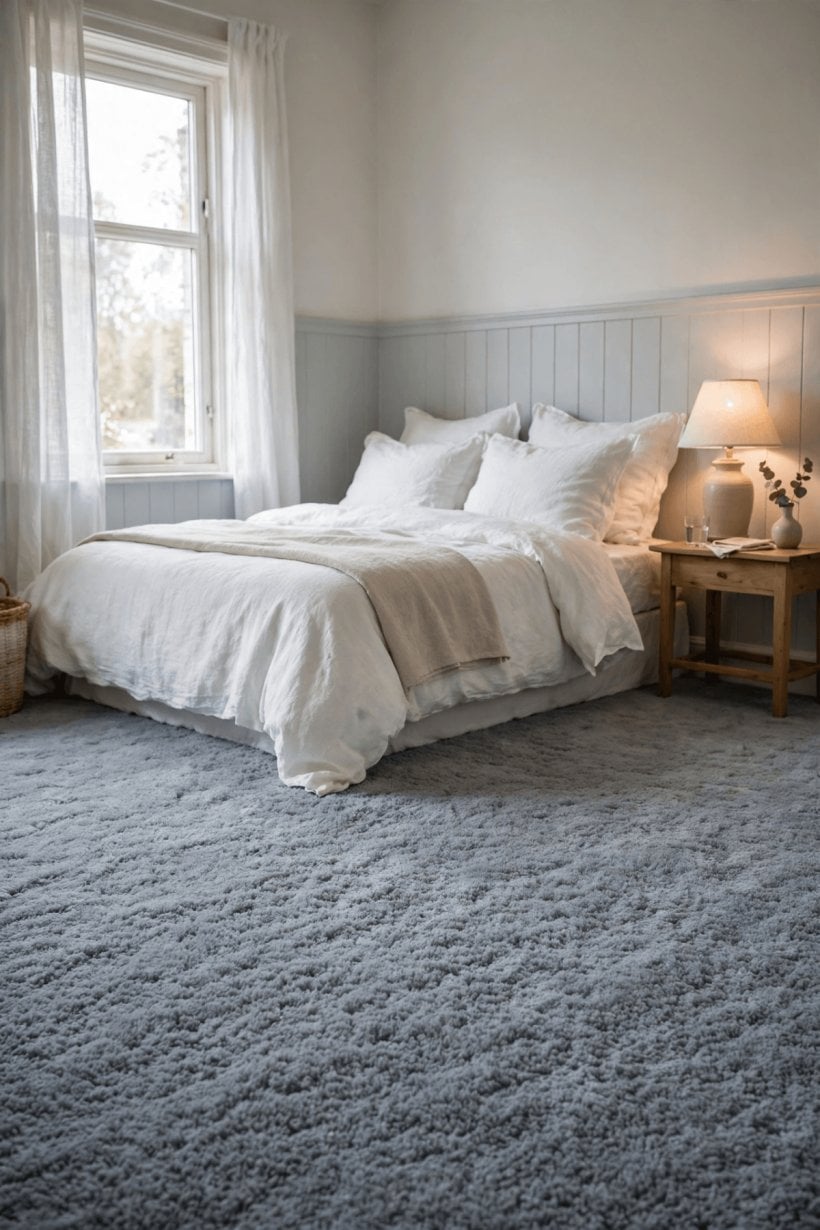
Stain resistance is a partnership between the carpet and the person holding the cloth. When a spill happens, scoop up solids first, then blot from the outside in with a clean, light-coloured towel, using cool water before anything stronger. Never scrub in circles; that frays the pile and spreads the mark. Heat is the enemy, so keep steam and hot water away until you are sure the mark has gone, because warmth can set some spills permanently. Vacuum slowly and regularly, since grit left in the pile acts like sandpaper under shoes and dulls the fibres that make a carpet look clean. Door mats, a no-shoes habit and prompt attention to pet accidents do more for appearance than any single product claim. Follow the maker’s guidance on cleaning solutions, because some strong chemicals can damage treatments or void warranty conditions, and test any solution in a hidden corner first. A professional deep clean at sensible intervals lifts embedded soil that home machines miss. Households furnishing a first compact home, like those browsing tiny houses for sale in Orange County, California, often find a simple written routine on the utility cupboard door keeps everyone consistent.
9. Warranties in General Terms: Reading the Small Print
Warranties in this category are best read as categories rather than promises of perfection. Typically they distinguish between stain resistance, soil resistance, texture retention and manufacturing defects, each with its own conditions. Many exclude certain substances that challenge any carpet, such as strongly coloured medicines, bleach-based products or pet issues that soak through to the backing. Some expect reasonable care: prompt spill attention, regular vacuuming and periodic professional cleaning, with receipts kept as evidence. Branded warranties tend to be more standardised, which makes comparison easier, while retailer-label warranties vary more and deserve a slower read. In all cases, ask three plain questions before you buy. What exactly is covered, in ordinary words? What must I do to keep the cover valid? And what happens in practice if a claim succeeds — cleaning, repair or partial replacement? Get the answers in writing and keep them with your invoice. Also note that a long warranty period describes the maker’s confidence in categories of performance, not a guarantee that the carpet will look new for that whole span. A carpet can be performing exactly as warranted and still show the honest patina of a busy family hallway.
10. Who Should Pick Which: The Verdict
Here is the fair verdict. If you want the most predictable, paperwork-backed route — a defined nylon fibre, a named treatment, coordinated colours across rooms and a standardised warranty — the branded route is the comfortable choice, and for many households researching a stainmaster carpet that predictability is precisely the point. It particularly suits rental owners, resale-minded sellers and anyone who prefers one accountable name on the invoice. If, however, your priority is inherent, through-the-fibre resistance and value, a solution-dyed nylon or triexta range under a retailer label is at least its equal in daily life, and often the smarter buy for pet-heavy homes, sunny rooms and tight budgets, provided you read its warranty carefully before ordering. Polyester alternatives suit bedrooms and lighter-traffic spaces where softness matters most. Wool remains the connoisseur’s pick for looks and soil-hiding, accepting gentler care in return. In short: pick the brand for the system, pick solution-dyed or triexta for the fibre itself, and pick either with a mid-tone, flecked colour. That combination, more than any logo, is what keeps a floor looking good between real life and cleaning day.
Final Considerations
A stain-resistant carpet should make your home feel more relaxed, not more precious. Stand in the showroom and picture your actual Tuesday evening: wet shoes, a dropped mug, a pet with muddy feet and someone calling you from another room. Choose the fibre, treatment and colour that forgive that evening, from a seller who explained the warranty in plain words. Keep the care routine in section 8, blot rather than scrub, and let mats and vacuuming do their quiet work. Whether you choose the branded system or a solution-dyed alternative, a well-matched carpet will repay you every day in comfort, warmth and one less thing to worry about. Measure carefully, confirm your choice in writing, and enjoy the softer, calmer floor you picked on purpose.



0 Comments