
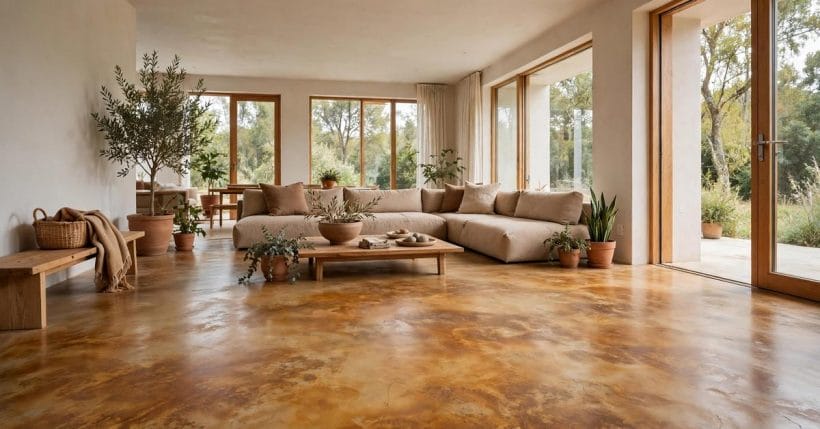
A concrete slab does not have to look like bare concrete. When colour is worked into its surface and the finish is chosen with care, the same hard-wearing floor can read warm and earthy in a living room, calm and pale on a veranda, or rich and dark in a hallway. This survey of stained concrete floors looks at the material as a whole: the colours it takes, the layouts that suit it, the rooms and outdoor spaces where it earns its keep, and the practical details that decide whether it ages gracefully or disappoints. It is a material survey only, written for anyone weighing a floor that is meant to last, not a set of instructions for doing the work.
The ideas below treat the floor as part of the room, not as an isolated surface. Colour, joint pattern, sheen and furniture all pull in the same direction when the plan is settled early, and they can quietly fight each other when they are chosen separately. Where a related survey already covers one neighbouring idea in depth, this gallery points to it rather than repeating it, keeping the focus here firmly on stained concrete itself. For the outdoor side of the story, the tiny house patio ideas collection is a useful companion, since so much stained concrete lives just outside the back door.
| Item | What it is |
|---|---|
| Laying Out the Floor as a Pattern | A stained concrete floor is rarely one unbroken sheet of colour. |
| The Colour Range, From Pale Sand to Deep Earth | The colour range of stained concrete leans earthy by nature. |
| Sheen and Finish: Matte Calm or Soft Glow | Sheen changes the mood of a stained floor as much as colour does. |
| Patterns, Borders and Decorative Scoring | Scoring turns a plain slab into a designed floor without adding any other material. |
1. Reading the Floor Before Choosing Anything
Every slab has a character of its own before colour is added. Some show a fine, even texture, others carry trowel marks, small variations in tone, or the faint history of how they were laid. Colour laid over the surface does not erase that character; it works with it, deepening some areas and leaving others lighter, so the finished floor tends to look variegated rather than flat. That mottled quality is the point for most people who choose this floor, and it is worth deciding early whether you like it, because it is not a look that can be made perfectly uniform afterwards.
Light changes everything about how the colour reads. A tone that looks soft and sandy under a showroom light can turn warmer beside a south-facing window, and cooler in a north-facing room that gets little direct sun. Samples viewed in the actual room, at different times of day, tell a truer story than any small swatch viewed elsewhere. Furniture, wall colour and rug placement also shift the reading, so it helps to look at the sample with the room’s real palette around it rather than against a blank wall.
The condition of the slab matters just as much as its colour. Old repairs, patches, cracks and previous coatings all show through colour to some degree, and some are better celebrated as part of the floor’s story than hidden. A professional assessment early on will show which marks will add character and which need attention before colour is applied, and it will also settle whether the slab is a good candidate at all. That honest starting point saves disappointment later, when a finish is already down.

2. Laying Out the Floor as a Pattern
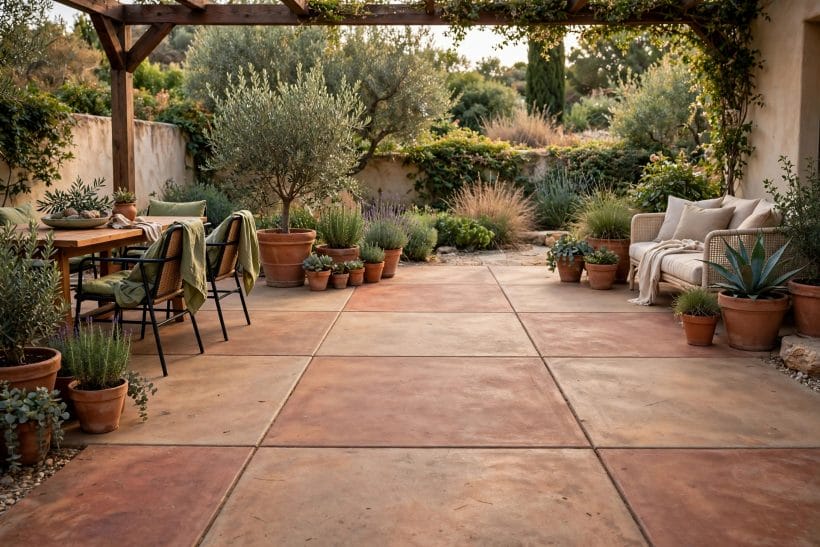
A stained concrete floor is rarely one unbroken sheet of colour. Saw-cut joints, which the slab needs in any case, can be planned as a visible pattern: a generous grid across a living room, a border that frames a dining area, or bands that echo the direction of the room. When those lines are drawn deliberately, they give the floor a sense of intention, and they help large areas feel composed rather than empty. The pattern should be settled before colour is applied, because moving a joint line later is not a small matter.
Scale is the quiet decision inside every layout. A fine grid suits a smaller room, where it adds rhythm without crowding the space, while a larger grid lets a big open room breathe and keeps the eye moving calmly across the floor. Borders work best when they frame something real, such as a seating group or a walkway, rather than floating without purpose. Where the floor runs from one room into another, keeping the same grid direction helps the spaces feel connected, even when the furniture changes completely.
Outdoor layouts follow the same thinking with a little more freedom. A patio can carry a bolder grid, a path can be banded to mark its edges, and a veranda can use a border to separate the sitting area from the walkway. The companion survey of concrete patio ideas shows how poured surfaces are shaped into outdoor rooms, and its lessons about zones and edges translate directly to stained work. Whatever the pattern, it should be drawn on paper first and walked through in the mind, because the floor will outlive every other decision in the room.
3. The Colour Range, From Pale Sand to Deep Earth
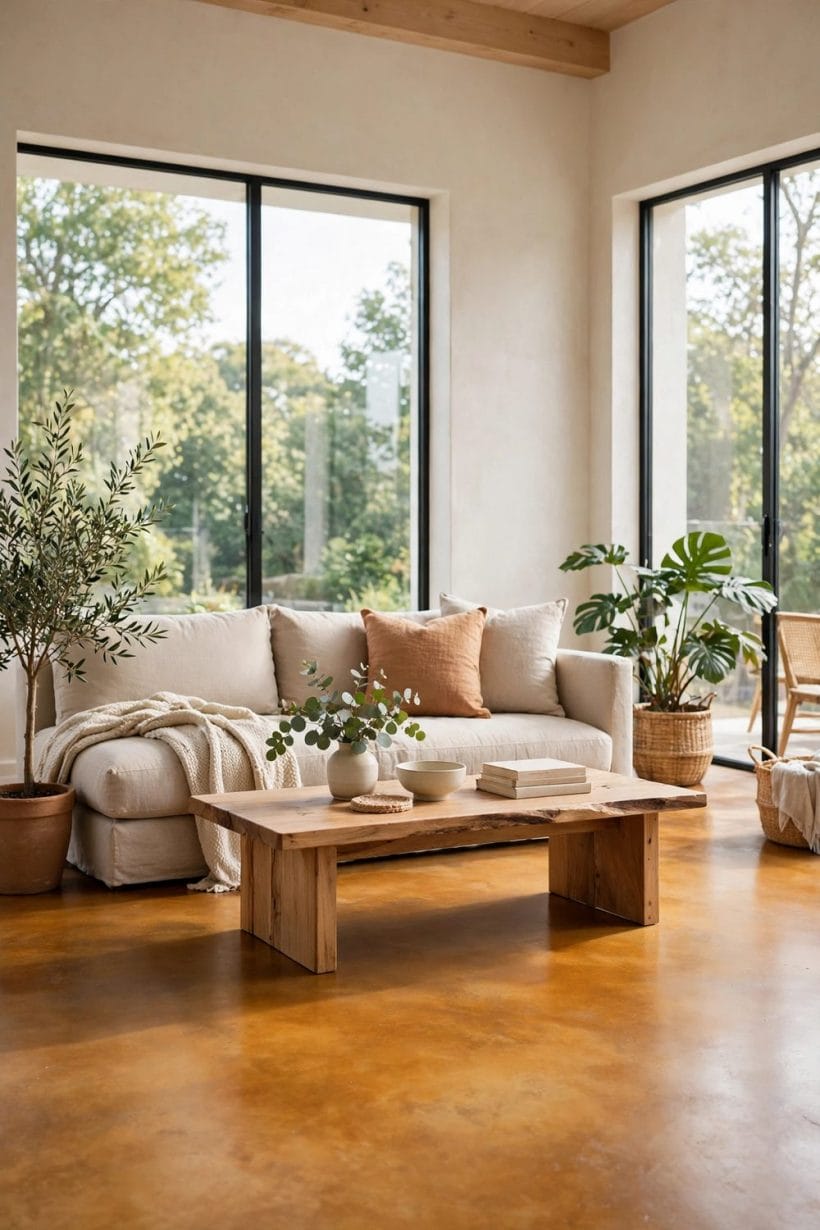
The colour range of stained concrete leans earthy by nature. Warm sands, honey tones, soft terracottas, muted olives and deep browns sit most comfortably on the material, and they pair naturally with timber, stone, linen and leather. Paler tones open up a small room and bounce light around it, while deeper tones ground a large space and make furniture feel settled. Neither end of the range is better in itself; the right choice is the one that suits the room’s light, its size and the colours already living in it.
Blending tones is where the material shows its most interesting side. A single colour applied unevenly by the slab’s own texture already gives variation, and a second tone layered softly over the first can add depth without looking painted. The effect should stay subtle: the floor reads best when it looks like stone that has always been that colour, rather than a surface that has been decorated. Bold, flat, single-note colour tends to fight the slab’s natural variation, and it can make a room feel harder than it needs to.
It is worth remembering that colour on concrete is never quite repeatable from one slab to another. Two rooms given the same treatment will differ in small ways, because the concrete beneath differs. For most owners that variation is a pleasure, like the grain in timber, and it is one reason the floor suits homes that value natural materials. If a perfectly even colour matters more than character, another flooring material will probably be a happier choice.
4. Sheen and Finish: Matte Calm or Soft Glow
Sheen changes the mood of a stained floor as much as colour does. A matte finish keeps the room calm and quiet, softening reflections and letting furniture and textiles take the lead. A soft sheen, by contrast, lifts the colour, adds a gentle glow under daylight, and makes the floor feel a little more polished without turning it into a mirror. Very high gloss is a different proposition: it shows every mark and demands more upkeep, so it suits showpiece spaces better than busy family rooms.
The finish also affects how the floor feels underfoot and how it handles daily life. A matte surface tends to hide dust and small scuffs, while a shinier surface shows them sooner but wipes clean readily. In kitchens and entries, where spills and grit arrive daily, that balance matters more than the look alone. Texture can be part of the finish too: a very slight grip underfoot is welcome outdoors and in wet-prone areas, while indoors a smoother finish feels kinder to bare feet and to furniture legs.
Sealing is what protects the colour and sets the sheen, and it is work for professionals, who will match the sealer to the room’s use and to the finish wanted. A sealer that suits a quiet bedroom will not necessarily suit a patio that faces weather, and the wrong match can dull the colour or wear unevenly. The choice should be made with the whole life of the floor in mind, not just the day it is finished, and it should be revisited over time as the floor ages.
5. Living Rooms and Open-Plan Spaces
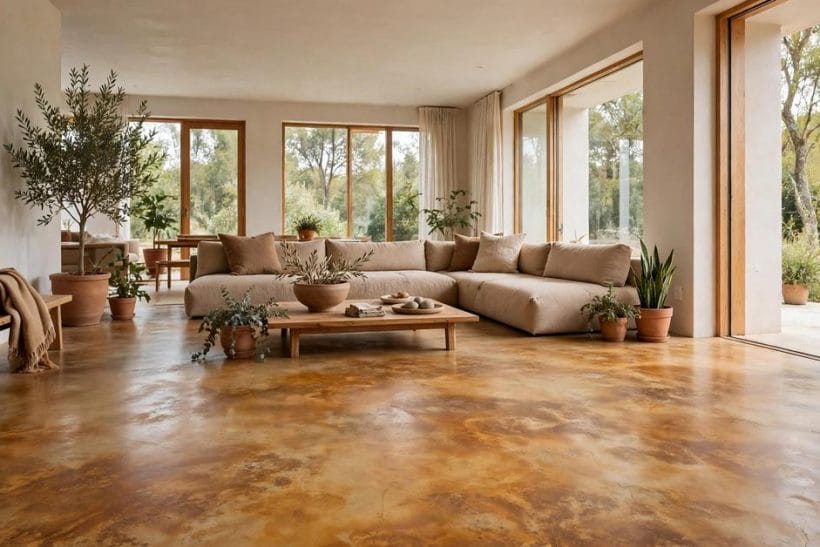
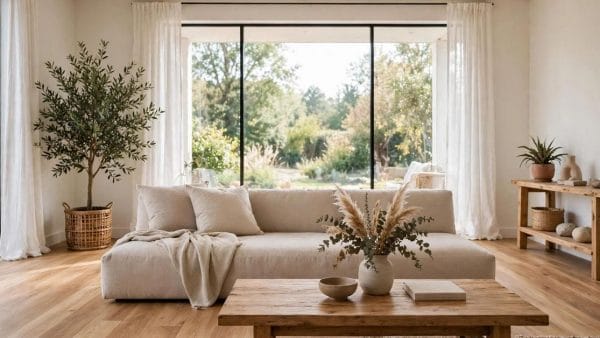
Open-plan rooms are where stained concrete earns its reputation. A single floor running beneath kitchen, dining and sitting areas ties the whole space together, and its earthy tones give large rooms a warmth that bare concrete never manages. Rugs can then be used as islands of softness rather than as cover-ups, and furniture can sit directly on the floor without worrying about damage. The continuity is the luxury: nothing interrupts the eye as it travels from one zone to the next.
Colour choice in an open plan should favour the middle of the range. Very pale tones can feel washed out across a large area, and very dark tones can make the same area feel heavy, especially under artificial light in the evening. A warm mid-tone, with its natural variation, holds the room together through the day’s changing light and flatters both timber and upholstery. It also forgives the traffic patterns that open plans create, since wear shows less on a variegated surface than on a flat one.
Furniture placement deserves a thought before the colour is settled. Heavy pieces that rarely move will shade the floor beneath them, and if they are moved years later, a faint outline may remain where the exposed floor has aged differently. That is not a flaw so much as a fact of a living floor, and it is worth planning around: keep the main seating arrangement stable, and accept that the floor will record the life of the room in small, honest ways. Compared with a hard stone floor, the same logic applies to a marble floor living room, where pattern and veining also shape every furniture decision.
6. Kitchens, Hallways and Hard-Working Rooms
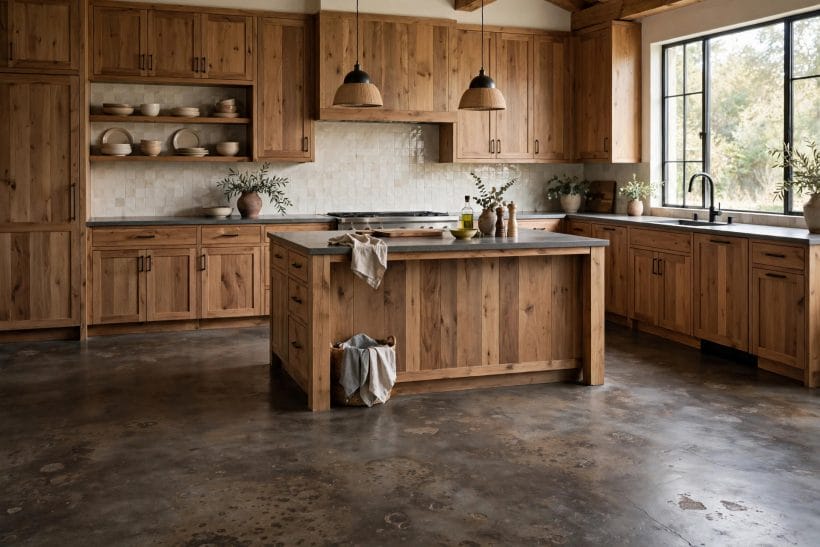
Kitchens ask more of a floor than almost any other room, and stained concrete answers with a surface that does not mind spills, dropped utensils or chair legs. Its seamless nature means there are no grout lines to stain and no boards to warp, and a quick sweep and wash keeps it presentable. Colour in a kitchen can go a little deeper than elsewhere, since cabinets and worktops break up the expanse, and a darker tone will hide the marks of daily cooking better than a pale one.
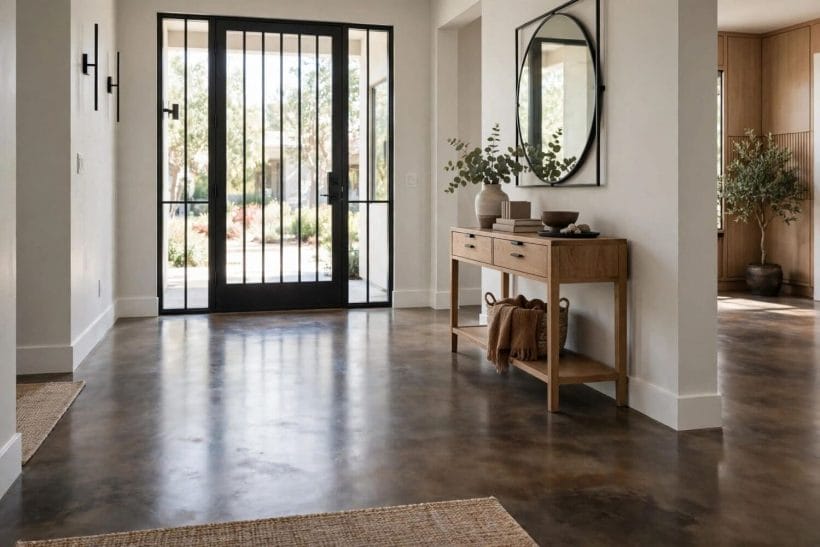
Hallways and entries are the other hard-working spaces, and they reward the same thinking. These are the rooms where grit arrives on shoes, where bags are set down and where light is often limited. A mid-to-dark tone with a soft sheen copes well here, and a border or band can give a narrow hall a sense of direction rather than letting it feel like a corridor. Good mats at the door, used consistently, do more for the floor’s long life than any other single habit.
One caution belongs in every hard-working room: concrete is unforgiving to anything dropped on it, and it is hard underfoot for long periods of standing. A cushioned mat at the sink or the workbench, and rugs in the places where people stand longest, make the floor far kinder without hiding it. Those soft layers are also the easiest way to refresh the room’s colour from season to season, since the floor itself stays put while everything on it changes.
7. Bedrooms, Bathrooms and Quiet Corners
Bedrooms are a quieter case for stained concrete. The floor’s coolness suits warm climates and summer nights, while in cooler rooms it asks for rugs beside the bed and soft textiles to balance it. Pale, sandy tones work best here, keeping the room light and restful, and a matte finish suits the mood better than a glow. The result is a bedroom that feels grounded and uncluttered, provided the soft layers are generous.
Bathrooms need more care in the choice. Water is a constant presence, and a floor that stays damp underfoot is neither comfortable nor sensible. Where stained concrete is used in a bathroom, it belongs in the drier zones, with proper falls and drainage handled by professionals, and with rugs or mats where feet land after bathing. In genuinely wet zones, a tiled surface is usually the wiser partner, and the survey of porcelain tile bathroom ideas shows how tile handles those rooms with a different kind of beauty. Mixing the two materials, concrete in the dry areas and tile where water lives, often gives the best of both.
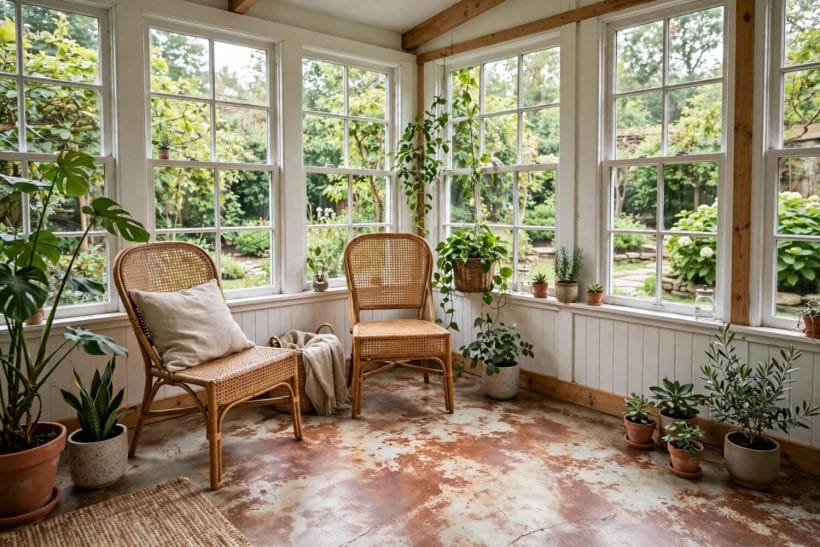
Small rooms and quiet corners, such as reading nooks and sunrooms, suit stained concrete when the colour is kept pale and the pattern simple. A fine grid or no visible pattern at all lets a small floor feel larger, and the eye is free to rest on plants, books and light instead. In a sunroom, where daylight is strong and plants gather, the floor’s earthy tones sit naturally, and its cool surface is welcome on warm days.
8. Patios, Verandas and Garden Floors
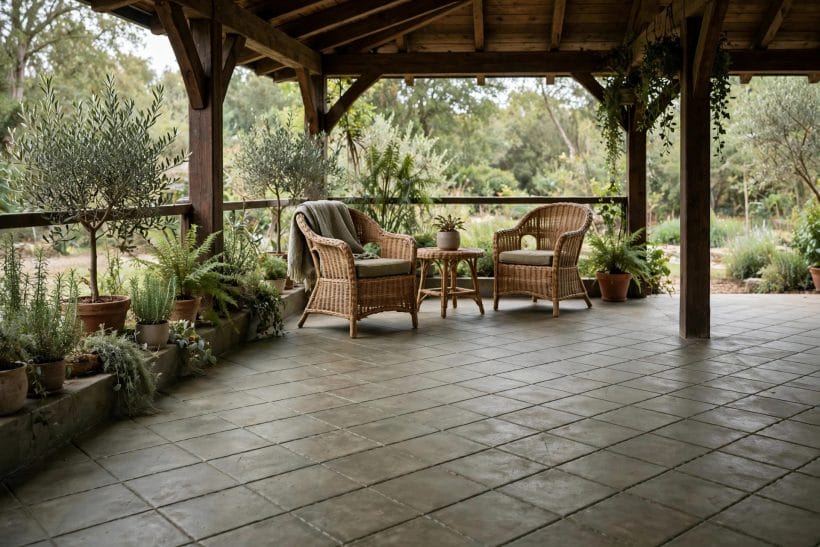
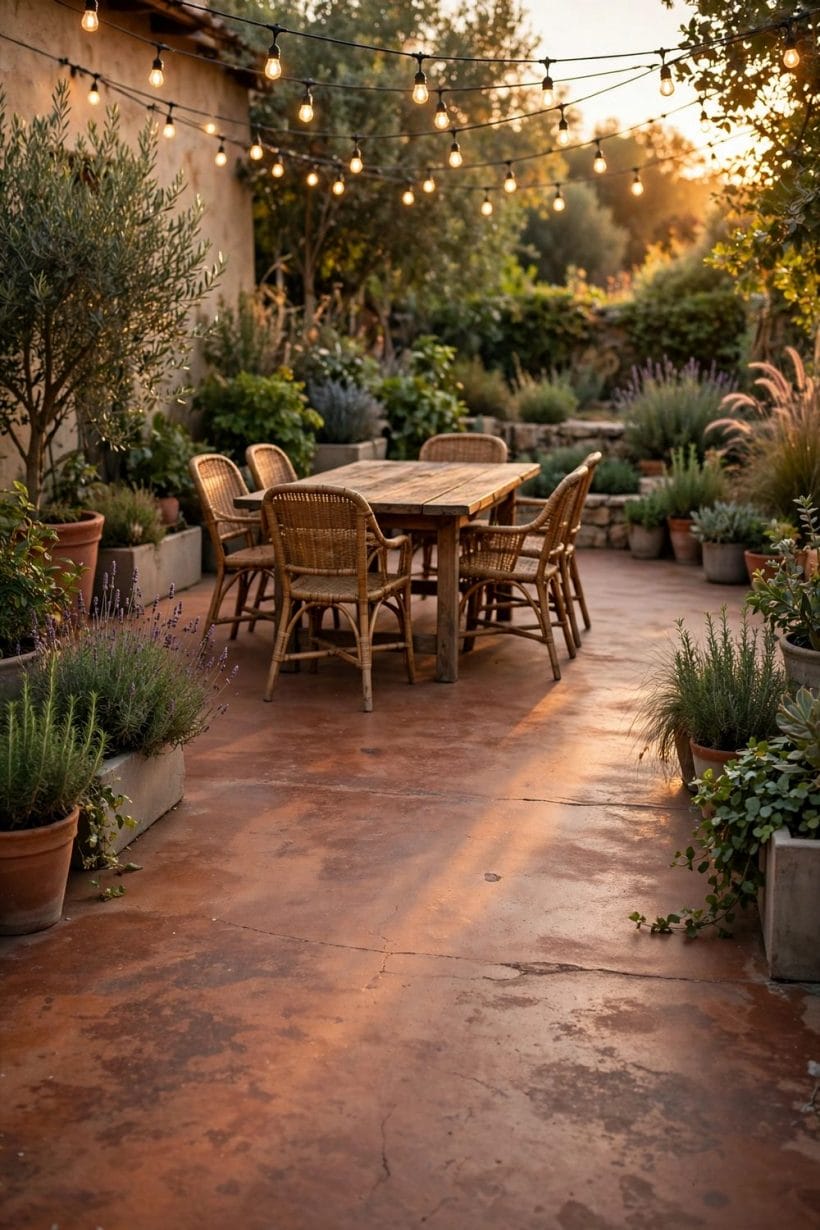
Outdoors is where stained concrete feels most at home. A patio in warm terracotta or sand tones extends the living room into the garden, and its hard surface handles chairs, tables, plant pots and foot traffic without complaint. Colour outdoors should be chosen in the garden’s own light, which is stronger and warmer than indoor light, and it should sit comfortably beside planting rather than competing with it. Muted tones almost always win outdoors, because the garden itself supplies the colour.
Drainage is the practical detail that decides whether an outdoor stained floor succeeds. Water must have somewhere sensible to go, and the falls that carry it there are set when the slab is laid or altered by professionals, never as an afterthought. A floor that holds puddles will stain unevenly and feel unpleasant underfoot, while one that drains cleanly stays handsome with little more than sweeping. The same professional care applies to any steps or edges that join the patio to the garden, and the garden steps ideas survey shows how those joins are handled as part of the landscape rather than as an afterthought.
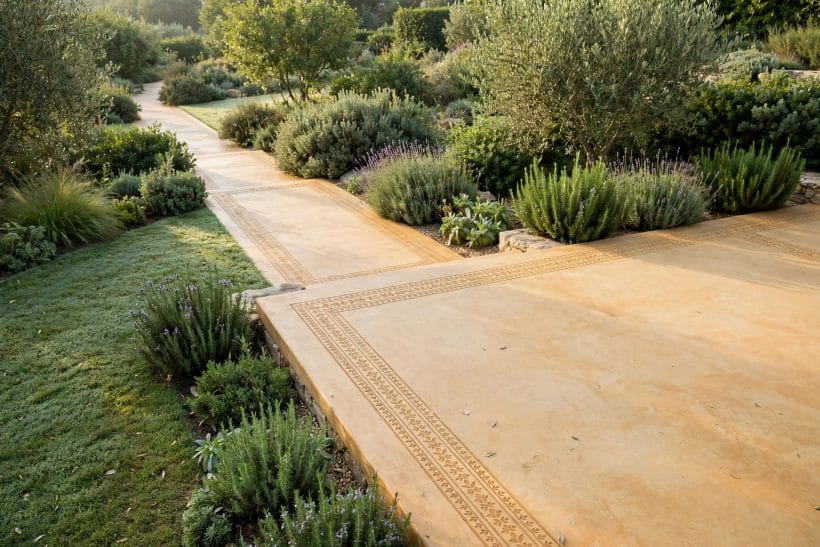
Paths and terraces are the smaller outdoor cousins of the patio, and stained concrete suits them for the same reasons: it is continuous, it can be banded or bordered to mark its edges, and it weathers with character. A path in a pale tone reads as a ribbon through planting, while a terrace in a deeper tone anchors a seating area. In both cases, the pattern should be simple and the colour restrained, so the garden remains the star and the floor plays its supporting part well.
9. Patterns, Borders and Decorative Scoring
Scoring turns a plain slab into a designed floor without adding any other material. Lines cut into the surface can form grids, diamonds, borders or bands, and colour can then be varied between the sections to sharpen the pattern. The effect ranges from a quiet grid that simply organises the floor to a bold border that frames a room like a rug made of stone. The key is restraint: one clear idea, carried consistently, beats several competing patterns every time.
Borders deserve special attention because they are the easiest pattern to overdo. A border that is too wide or too dark can shrink a room visually, while a narrow, tonal border adds finish without fuss. Bands that run across a walkway or along a veranda edge work in the same way, marking movement and giving the eye a line to follow. Where a floor meets a different material, such as timber or tile, a scored band can act as a threshold, making the change feel deliberate rather than accidental.
Pattern also interacts with the way light moves across the floor. A diamond layout catches daylight differently from a square grid, and a border near a window will glow at certain hours in a way that a plain floor never does. It is worth sketching the pattern on the floor itself, in chalk or tape, and living with it for a few days before it is cut. That small delay costs nothing and prevents the most common regret, which is a pattern that looked good on paper and feels restless underfoot. The related survey of stamped concrete patio ideas shows a different way of patterning concrete outdoors, and comparing the two approaches helps settle which kind of pattern suits a particular garden.
10. Living With the Floor: Cleaning and Ageing
Daily care for stained concrete is refreshingly simple. Sweeping or dry mopping removes grit before it can dull the surface, and washing with a gentle cleaner keeps the colour clear. Harsh chemicals and abrasive pads are best avoided, since they can wear the sealer unevenly and leave the floor patchy. Spills should be wiped up promptly, not because the floor is fragile, but because anything left standing will eventually mark even a well-sealed surface.
Over time, the sealer will wear, most noticeably in traffic lanes and at doorways, and resealing restores both protection and sheen. How often that is needed depends on use, on weather for outdoor floors, and on the sealer chosen at the start, so it is best discussed with the professional who applied it rather than guessed at. Resealing is also the moment to reconsider the finish: a floor that began with a soft sheen can be returned to matte, or the reverse, without changing the colour beneath.
Ageing, honestly faced, is part of the appeal. Small marks, a softening of sheen in busy places, and a deepening of tone where sunlight falls all give the floor a lived-in quality that suits homes rather than showrooms. A floor that is expected to stay perfect will disappoint, while one that is expected to gather character will please for years. That attitude, more than any product, is what separates owners who love stained concrete from those who fall out with it.
Final Considerations
Choosing stained concrete floors is, at heart, a choice about character over perfection. The material offers warm, earthy colour, a variegated surface that hides daily wear, and a continuity between indoors and outdoors that few other floors can match. It asks in return for a realistic eye: an acceptance of variation, a professional hand for installation and sealing, and a simple routine of sweeping, washing and resealing in time. Homes that value natural materials and a floor that ages with them will find it a rewarding choice.
Before committing, test colour in the room’s own light, settle the joint pattern on paper, and talk through drainage, falls and wet zones with a professional, especially outdoors and in bathrooms. Think about how the floor will meet its neighbours, from the unit-built surfaces of a patio to the single-unit patterns of a concrete paver patio, so the whole ground plane reads as one considered design rather than a collection of separate decisions. The overall outlay varies with scope and finish, and is best discussed with a professional once the design is settled; no figure quoted in advance can capture a particular slab, pattern and room. With those decisions made calmly, a stained concrete floor becomes a quiet, durable backdrop to daily life, handsome on the day it is finished and more interesting with every year that passes.



0 Comments