

A poured patio is a single decision you live with; a paver patio is thousands of small ones you can revisit — lift a unit, level it, lay it back, and the surface is whole again.
These concrete paver patio ideas work through the system in order: the unit itself, its patterns, the rooms it makes, its colour, the ground beneath it, its finished edges, and the keeping that lets it age well.
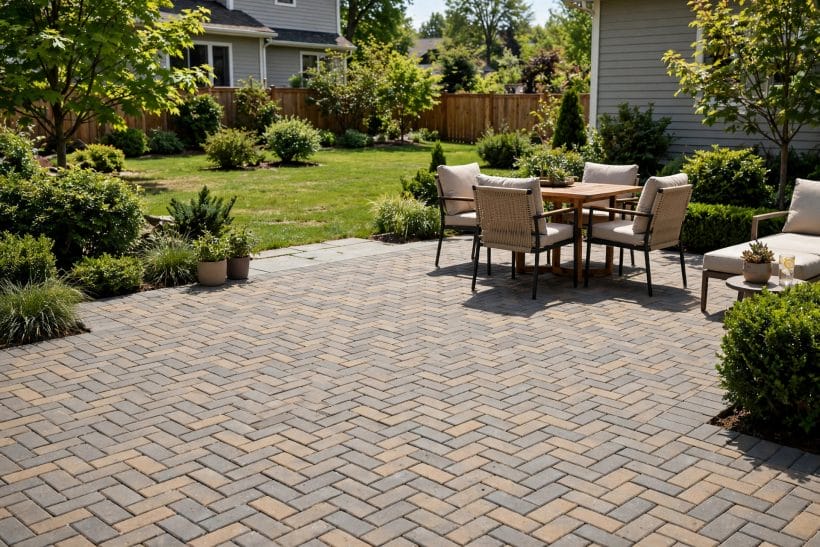
1. Concrete Paver Patio Ideas at a Glance
The central entity is the concrete paver patio: a surface assembled from manufactured concrete pavers laid over a prepared base, jointed, bordered and restrained at its edges. Its attributes are the unit (shape, size and finish), the bond or pattern those units form, the zones the field is divided into, the colours blended through it, the base and drainage beneath it, and a unique mercy — any part of it can be lifted and relaid. It is a child of the patio pillar and the unit-built sibling of the poured concrete patio, and it stays strictly on that unit-built ground throughout.
| Question | Short answer |
|---|---|
| How is a paver patio different from a poured one? | A poured patio is one continuous slab; a paver patio is a field of separate units — so it can be repaired, re-levelled and extended piece by piece. |
| What matters most in the build? | The invisible base: honest excavation, a compacted foundation and restrained edges decide the patio’s life long before pattern or colour does. |
| Which pattern is strongest? | Herringbone interlocks hardest, but pattern is mostly character — choose the bond whose pace suits the house, and lay it true. |
| How does it age? | Softly: tones weather together, joints are topped up, and dipped units are lifted and relaid — a well-built field looks better settled than new. |
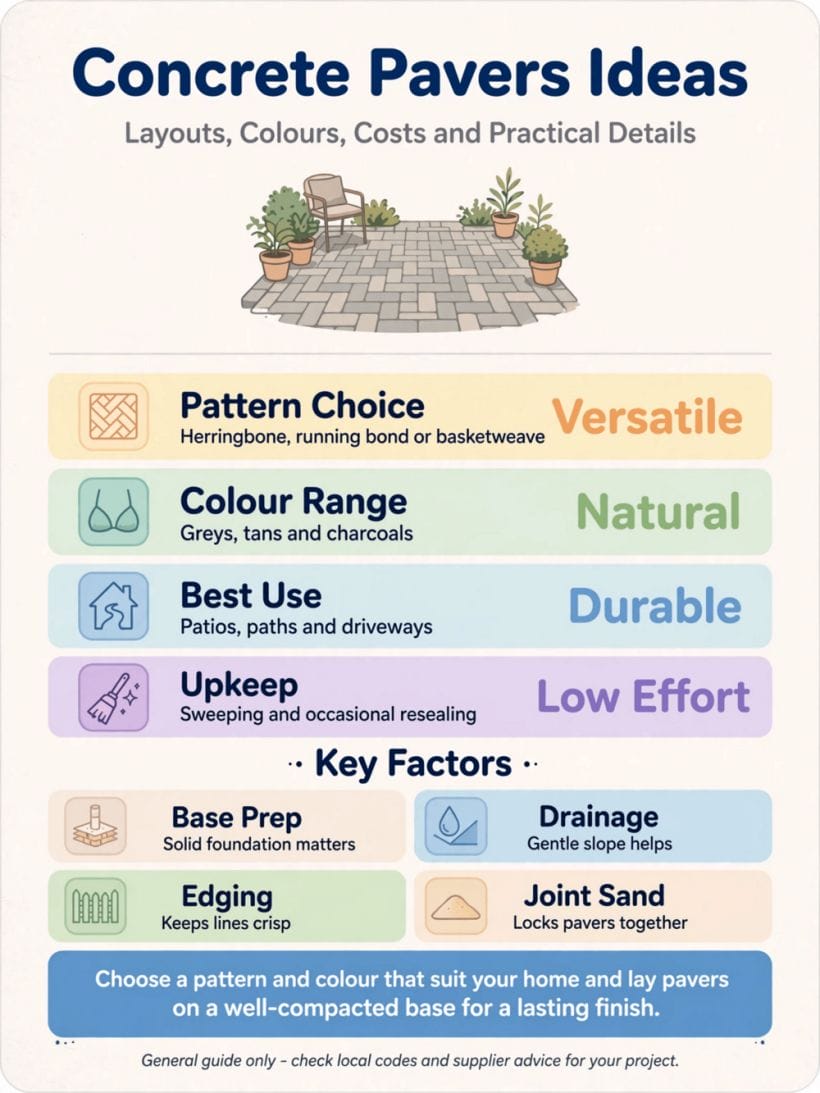
2. The Paver Itself: Units, Shapes and Finishes
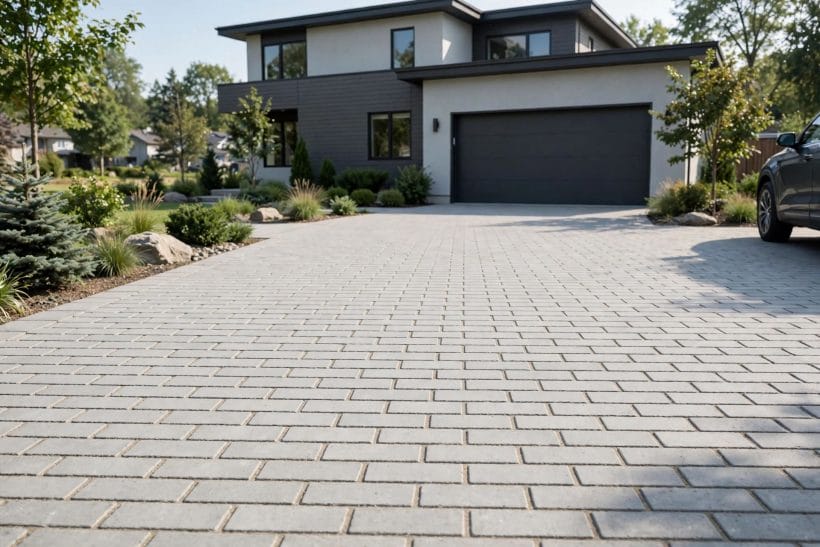
A paver patio is not poured; it is assembled, one manufactured unit at a time, and that single fact governs everything in this post. The wider family it belongs to is surveyed in the patio ideas pillar, and its closest sibling is the concrete patio ideas post, which stays on poured slabs throughout: there the surface is one continuous casting, here it is a field of separate pieces that can be lifted, relayed and repaired individually. Keep that distinction in mind at every step — the ideas below are the paver angle only.
1. Start With the Standard Rectangular Unit
The plain rectangular paver is the workhorse of the whole system: cheap to make, easy to lay in almost any bond, and forgiving to cut at the edges.
2. Use Square Units for a Calm, Gridded Field
Square pavers lay out in a quiet grid that suits modern houses and small patios, where the pattern should recede and let furniture and planting speak. Keep the joints tight and true, because a grid shows every wandering line.
3. Choose Large-Format Units for a Contemporary Terrace
Oversized pavers give a terrace a calm, architectural pace and fewer joints to maintain.
4. Let Tumbled Units Carry the Cottage Character
Tumbled pavers, softened at the edges by the maker, read as old stone without the stone price or the stone lottery. They suit cottage gardens, brick houses and any patio that should look settled rather than newly installed.
5. Pick Smooth Units Where Bare Feet Rule
Around pools, play corners and the doorstep route, a smooth fine finish is kind to bare feet and easy to sweep. Save the heavily textured units for the field’s quieter corners, where grip matters more than comfort.
6. Use Textured Units Where Grip Matters
A riven or dimpled face sheds water and grips shoes on slopes, steps and shaded corners that stay damp.
7. Mix Two Unit Sizes to Break a Large Field
A big patio in one small unit can buzz; alternating a large unit with a small one in a planned ratio calms the field and gives the eye a rhythm.
8. Keep a Few Spares From the Same Batch, Always
Colours vary slightly between production batches, and a repair made years later with a different batch shows as a patch.
9. Judge Units by Their Edges as Much as Their Faces
Clean, consistent edges lay tight and even; chipped or uneven units make wandering joints no skill can hide.
10. Match the Unit’s Manners to the House’s Age
Crisp modern units flatter a crisp modern house and quarrel with an old brick cottage, where tumbled or mixed tones sit naturally.
11. Let One Shape Do the Work, and No More
Patios that mix three shapes, two textures and four colours rarely settle into beauty.
3. Patterns and Laying Designs: The Field’s Quiet Music
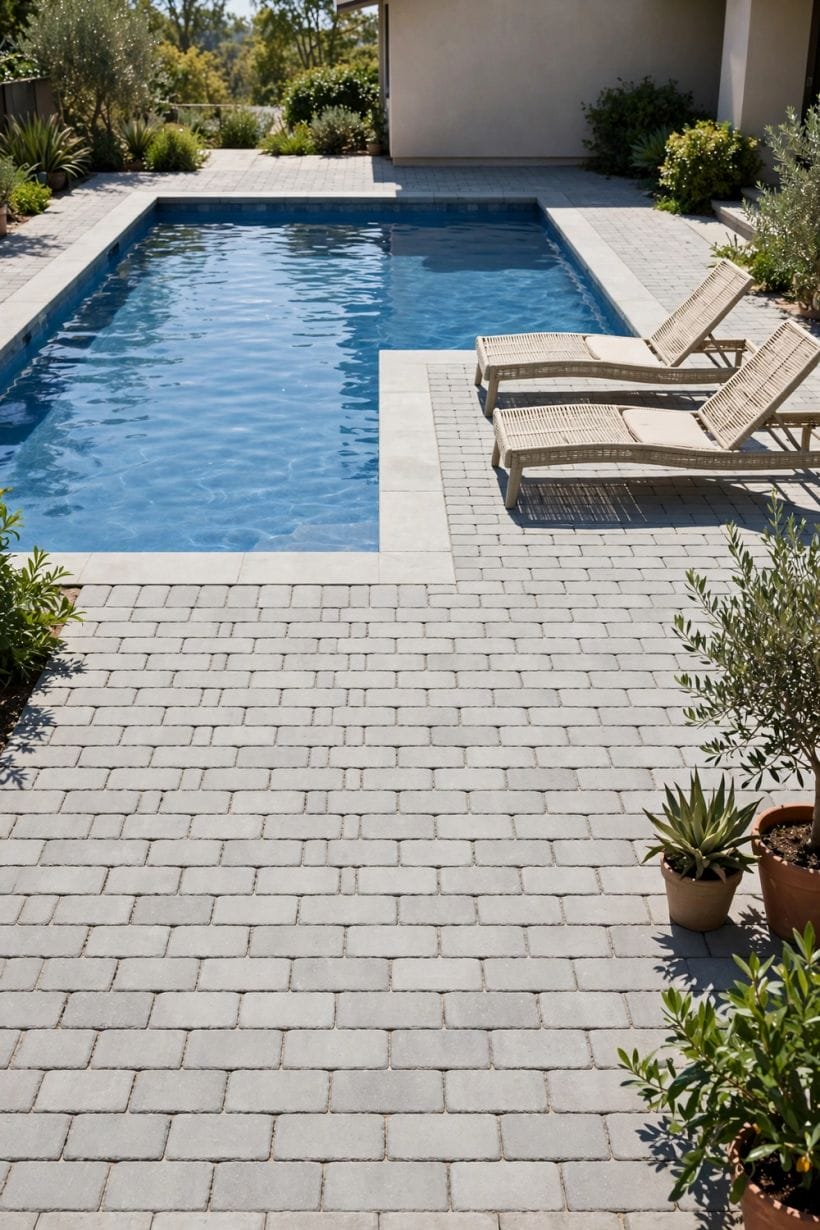
Pattern is what a field of identical units does with repetition, and it costs nothing but thought. The same movement at garden scale — units carrying a route rather than a room — is walked in full in the driveway post linked from a later section; here the bonds are judged as patio floors, under chairs and tables, where their direction and scale are felt daily.
12. Lay Herringbone Where Strength and Movement Are Wanted
The interlocking zigzag of herringbone is the strongest of the common bonds and the liveliest to look at, which is why it carries driveways and busy patios alike.
13. Use Running Bond for a Calm, Lengthening Field
Stretcher courses running the patio’s long way stretch a short plot visually and lay quickly with few cuts. It is the quietest bond in this post, and often the right one where planting, not paving, is the garden’s event.
14. Turn to Basketweave for a Soft Traditional Note
Pairs of units alternating direction make a woven, textile-like field that suits traditional houses and cottage gardens. Basketweave reads gently at sitting distance, which is exactly the distance a patio is mostly seen from.
15. Stack the Grid for a Modern, Architectural Field
Units aligned joint over joint make a strict modern grid that pairs with large-format pavers and minimal furniture.
16. Set a Fan or Radial Pattern at a Focal Point
A fan of units radiating from a doorway, a fire bowl or a garden gate gives a patio a centre and a ceremony.
17. Frame the Field With a Soldier-Course Border
A single row of units stood on edge along the patio’s rim is the classic finish: it restrains the field, neaten the cut edges, and draws the patio’s true shape for the eye.
18. Double the Border Where the Patio Meets Lawn
Two border courses where paving meets grass give the mower a clean line, the eye a finished edge, and the field a breathing margin.
19. Change Pattern, Not Material, to Zone the Field
Herringbone under the dining table, running bond on the walkway strip, one grid at the grill: pattern alone can divide a patio into rooms without a single step or wall.
20. Run the Pattern Toward the View
Bond direction leads the eye. Courses that run toward the garden’s best view pull guests outward; courses that run across the plot widen a narrow patio.
21. Keep Patterns Honest at the Cuts
Every bond ends in cuts at the border, and the cuts are where amateur work announces itself. Plan the layout so cuts fall in full, even pieces where possible, and let the border course hide the arithmetic that remains.
22. Sample the Pattern at Full Scale Before Committing
A bond that charms in a brochure can overwhelm a small patio or vanish on a large one.
4. Layouts and Zones: Rooms Made of Units
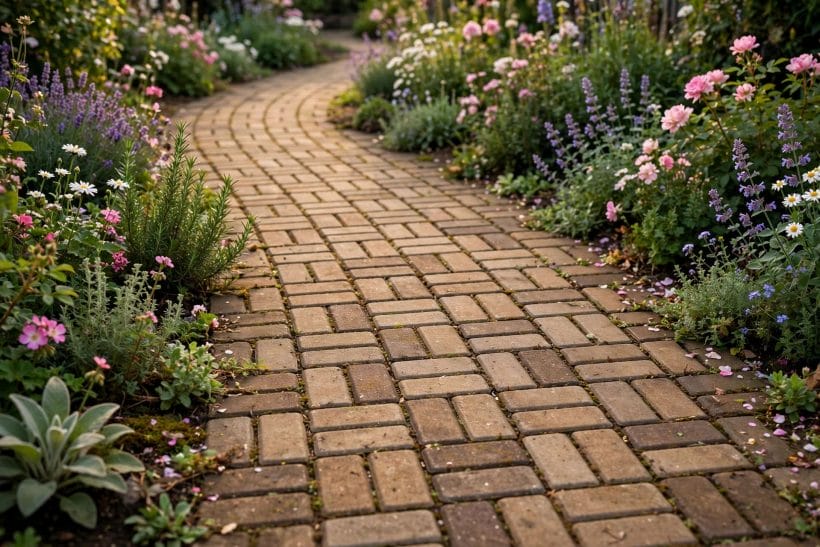
A paver field earns its size when it is planned as rooms: somewhere to eat, somewhere to sit, somewhere the grill and the gardener can work. The raised alternative to a paved room — boards on a frame — is compared throughout the deck ideas post; this section stays on the ground, zoning one paved surface into a small outdoor house.
23. Give Dining the Flattest, Calmest Corner
Chairs scrape, tip and settle; the dining zone wants the patio’s most level ground and its calmest pattern.
24. Build a Sitting Circle Around a Fire Bowl
A round or squared sitting zone centred on a fire bowl gives the patio its evening heart.
25. Keep a Working Strip for Grill and Tools
Every patio needs its backstage: a plain, heat-tolerant strip for the grill, a store box and the watering can.
26. Make the Doorstep Landing Generous
The first paved moment outside the door is used in all weathers, with shopping, dogs and guests. Make the landing deeper than feels necessary, in the grippiest units on the patio, and every arrival home will feel considered.
27. Step the Patio Down a Gentle Slope in Broad Treads
Where the garden falls, a paver patio can step with it in wide, shallow paved treads rather than fighting for one level platform.
28. Leave a Planting Pocket in the Field’s Middle
A square of soil left unpaved inside the field, planted with a small tree or a herb mound, breaks the paving’s dominance and gives the patio a living centre.
29. Carve a Sun Trap and a Shade Corner Deliberately
One zone baked by afternoon sun for spring mornings, one zone shaded for high summer: a patio planned for both weathers is used for twice the year.
30. Widen the Route, Narrow the Destination
Paths across the patio to the gate or the shed should be comfortably wide and plainly bonded; the sitting zones they serve can then be as patterned as taste allows.
31. Give Children a Smooth, Enclosed Corner
A smooth-bonded corner within sight of the sitting zone, fenced by planters rather than walls, becomes the children’s parish of the patio. Small wheels and bare knees vote for the fine finish here, and the vote should be respected.
32. Plan the Furniture Before the Pattern
Table, chairs, loungers and the grill each claim real ground, and zones drawn without them shrink on delivery day. Chalk the furniture’s true footprints on the ground, walk between them, and only then fix the pattern’s borders.
33. Let One Zone Stay Empty on Purpose
A paved court with every square filled reads as a car park.
5. Colour, Blending and Borders: The Field’s Complexion
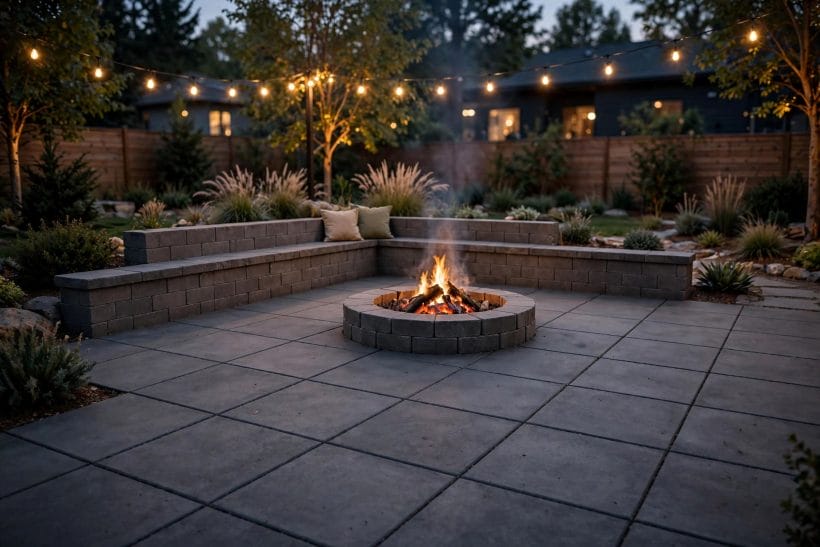
Concrete units take colour from their making, in a palette of earth, stone and charcoal tones that weather softly together. The same units at arrival scale — carrying cars as well as chairs — are worked through in the driveway ideas post; this section keeps to the patio’s complexion: how colours are blended, bordered and matched to brick, render and planting.
34. Blend Three Tones Rather Than Choosing One
Single-colour fields can look flat and show every stain; a maker’s blend of two or three near tones hides dust, breaks glare and reads as natural stone.
35. Match the Patio to the House Brick, Not the Catalogue
Hold units against the house wall in daylight before ordering. A blend that echoes the brick’s warm or cool family ties patio to house; a fashionable grey against warm brick will quarrel with it every sunny day.
36. Use Charcoal Units as the Field’s Punctuation
A charcoal border, a charcoal medallion or a single charcoal course through a pale field gives the design its grammar. Punctuation everywhere is shouting; punctuation once, placed deliberately, is style.
37. Keep Pale Fields Where Heat and Glare Bite
Pale units stay cooler underfoot and kinder to eyes in strong sun, at the price of showing marks sooner. On a sun-beaten south patio that trade is usually right; in damp shade, mid tones hide the green film better.
38. Let Weathering Be Part of the Colour Plan
Paver colour softens and evens over its first seasons as the surface settles and the joints fill. Judge a new patio’s colour kindly and late — the complexion it keeps is the weathered one, not the delivery-day one.
39. Border in a Darker Tone to Draw the Shape
A border one or two tones darker than the field outlines the patio the way a frame outlines a picture, and hides the cut edges’ paler faces. It is the single most reliable upgrade in this section.
40. Echo the Roof or the Door in One Course
A border course that picks up the roof tile’s tone or the front door’s colour ties the back garden to the house’s public face. Small echoes, honestly placed, are how separate projects become one designed home.
41. Avoid Matching Planting Too Closely
Green-grey units under green planting can melt into mush; a warm field makes foliage look richer by contrast. Choose the patio’s tone against the garden’s greens, not beside them, and both will look more deliberate.
42. Test Colour Wet as Well as Dry
Units darken markedly when wet, and patios spend much of their life damp. Hose the sample patch before deciding: the wet colour is the honest one for most of the year, and surprises here cannot be returned.
43. Keep the Jointing Colour Quiet
Pale jointing sand lightens the whole field and shows every joint; a jointing tone near the units’ own colour calms the pattern and forgives small unevenness.
44. Change Colour Only at a Border, Never Mid-Field
Colour changes that wander across a field look like repairs. Confine every change to a bordered zone — dining field one blend, sitting circle another — and the patio reads as planned rooms rather than patched ground.
6. Base, Drainage and Ground Truths
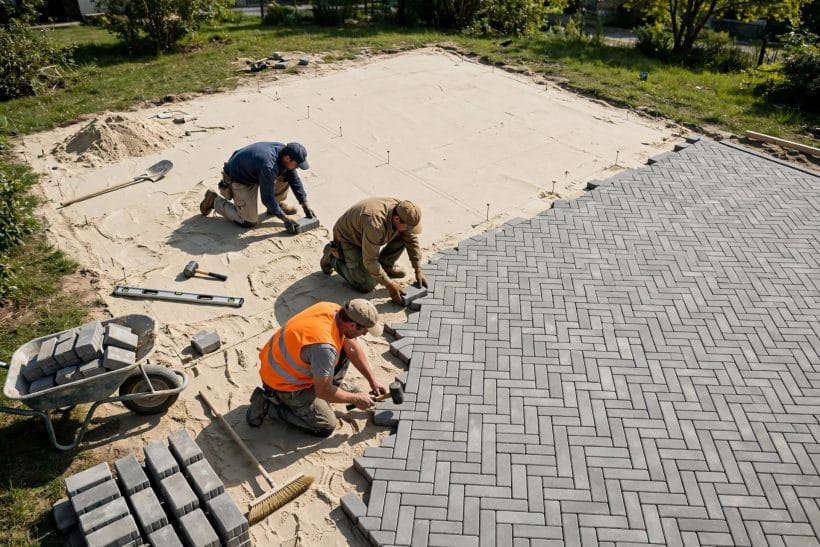
Everything beautiful in this post stands on work nobody sees: an excavated, compacted base that carries the field and sheds its water. How permeable build-ups handle rain where they stand is explored in the permeable rock pavers eco driveway patio post; this section keeps to the general truths — stated generally, because depths and falls belong to the maker’s guidance and local practice for each soil, never to a list like this one.
45. Excavate Honestly, However Tempting the Shortcut
Units laid on topsoil or a skim of sand will move, dip and grow weeds at the joints within seasons.
46. Compact the Base in Layers, Not in One Pass
A base compacted a layer at a time locks together into a single working slab of stone; the same material tipped in at once stays loose in its depths.
47. Screed the Bedding Even and Leave It Undisturbed
The thin bedding layer is the units’ mattress: screeded true, then never walked on, trodden in or rained into ruts before laying. Every footprint in the bedding returns as a dip in the finished field.
48. Give the Field a Gentle Fall Away From the House
A patio should shed its rain away from the walls and toward the garden, at a fall too gentle to feel underfoot.
49. Restrain Every Edge as if the Field Will Push — It Will
Traffic and weather work a paver field outward at its rims.
50. Keep Weeds Out by the Build, Not by Poison
A sound base, full joints and a restrained edge starve weeds of the soil and light they need; the few that seed into joints are pulled in minutes.
51. Plan Drainage for the Storm, Not the Shower
Decide where a downpour’s water goes before it arrives: across the field to a planted border, a gravel margin or a proper drain. A patio designed only for gentle rain will flood its doorstep in the first real storm.
52. Respect Old Ground: Roots, Drains and Services
Tree roots lift fields, and buried services hide under gardens. Check what lies beneath before excavating, keep heavy compaction away from valued roots, and never pave blindly over a drain you may need to reach.
53. Let New Work Settle Before Judging It
A fresh field firms as its joints fill and its bedding beds in. Small early unevenness often settles; persistent dips are lifted and corrected unit by unit — the paver system’s great mercy, unavailable to any poured surface.
54. Choose Permeable Thinking Where the Plot Allows
Joints and build-ups that let rain soak away where it falls ease the garden’s drainage and the street’s.
55. Photograph the Base Before It Is Covered
The invisible work is also the warranty. Photograph the excavation, the compacted layers and the edge restraints before the units hide them, and any future argument about the patio’s foundations is settled by evidence.
7. Edges, Steps, Planting and Light: The Finishing Trades
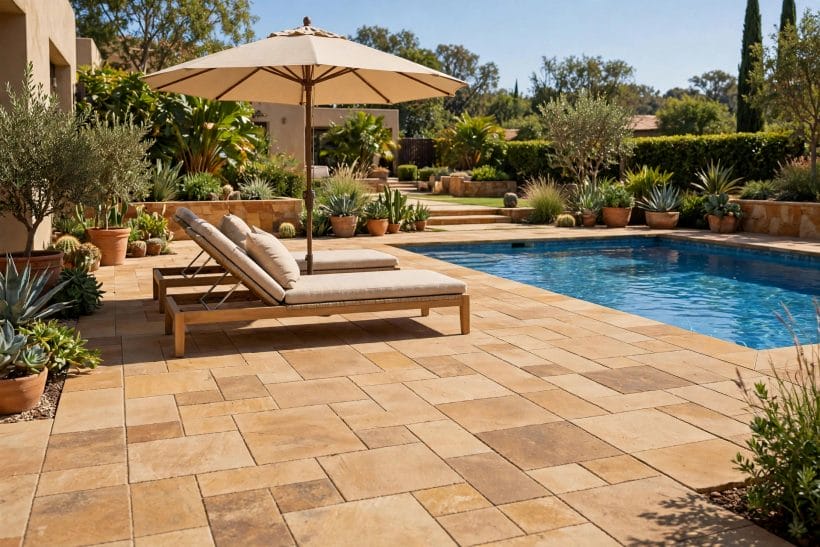
A field becomes a patio at its edges: where it meets lawn, wall and planting, and how it is lit after dark. The structure that often shares those edges is surveyed in the pergola ideas post; this section finishes the paved work itself — thresholds, steps, green joints and the low lights that make a paver patio usable into the evening.
56. Finish the Threshold Flush and Friendly
Where the patio meets the door, the surface should arrive level, grippy and free of trip lips, so the step from house to garden disappears.
57. Build Paved Steps Wide, Shallow and Uniform
Garden steps in pavers should be generous in tread, gentle in rise and absolutely uniform — the body’s memory climbs them in the dark.
58. Edge the Lawn With a Mowing Course
A flat course of units at lawn level along the field’s edge lets the mower run clean and keeps grass out of the joints.
59. Soften One Edge With Planting, Keep One Edge Crisp
A patio softened everywhere looks lost; a patio crisp everywhere looks hard. Let planting spill over one long edge — gravel-margin herbs, low grasses — and keep the working edges sharp, and the design gains both kindness and intent.
60. Plant the Wide Joints Where Feet Rarely Go
In a permeable corner or a little-used margin, wide joints planted with creeping thyme or moss turn paving into a living chequer. Keep planted joints off the main routes, where feet and chair legs would punish the planting daily.
61. Set Low Lights Into the Border, and Light the Steps First
Small lights recessed into the border course wash the field with a low glow and mark its edges after dark, while lights in the walking field itself only glare upward.
62. Give the Grill Its Own Slab of Manners
Fat and heat mark pavers near a grill. Dedicate the cooking corner’s units to the work — darker tones here hide the evidence — and keep a spare handful of units to swap in if a spill ever defeats cleaning.
63. Carry the Border Around Pots and Planters
Large planters standing on the field should sit within the border’s logic: grouped on a defined paved bay, not scattered across the pattern.
64. End the Field Deliberately at the Garden Gate
Where the patio meets the path or gate, a threshold course across the route marks the change from room to journey.
65. Keep One Unbroken Run for Wheeled Life
Bins, bikes, wheelbarrows and wheelchairs all use the patio as a road. Keep one smooth, step-free run from gate to door across the field, in the calmest bond, and the patio serves the household’s whole life, not just its evenings.
8. Keeping, Repair and the Long Life of a Unit Field
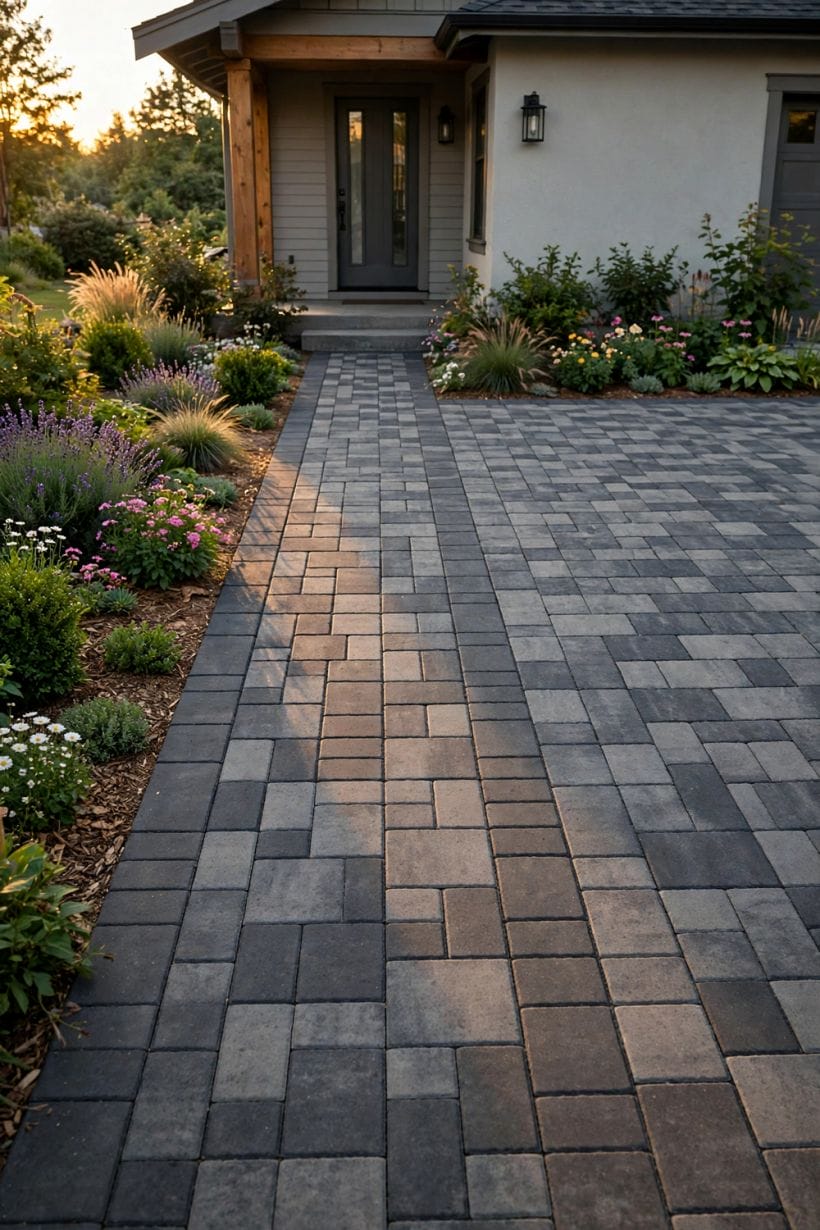
The paver patio’s closing argument is its old age: cleaned gently, repaired unit by unit, and re-levelled without demolition. How the paved rooms sit inside the whole plot’s planting and upkeep is taken up in the backyard landscaping ideas post; this final set of ideas keeps to the field itself, and to the habits that let it look settled rather than tired.
66. Sweep Little and Often, Wash Gently When Needed
Regular sweeping keeps jointing material in place and grit out of the house. When washing is needed, a gentle wash respects the joints; aggressive jetting blasts out the jointing and starts the weeds it was meant to cure.
67. Top Up the Joints Before They Empty
Jointing material lost to weather and sweeping is replaced in minutes while the joints are still mostly full. Left empty, joints invite soil, weeds and movement — the whole decline of a paver field begins in an empty joint.
68. Lift, Level and Relay: The Repair No Slab Can Offer
A dipped or damaged patch is lifted unit by unit, the bedding corrected, and the same units relaid — no saw, no skip, no patch of mismatched concrete. This repairability is the system’s deepest advantage; use it without hesitation.
69. Treat Stains Early and Gently
Oil, rust and leaf stains yield to prompt, gentle treatment and resist heroic late scrubbing. Test any cleaner on a spare unit or a hidden corner first, and let patience do the work that pressure would do badly.
70. Keep Iron Furniture’s Feet Padded
Chair and table feet concentrate a patio’s whole social life onto small points. Simple pads spread the load, stop the scrape, and prevent the small rocking dips that appear under a favourite chair’s usual place.
71. Watch the Edges After Hard Winters
Frost and storm test the restraints first. A spring walk around the field, pressing suspect border units and noting any spread, catches movement while it is still a one-afternoon repair.
72. Rotate the Furniture’s Stations Yearly
Sun fades and feet wear the field unevenly where furniture never moves. Shifting the dining set and the loungers a little each year evens the weathering and rests the ground beneath them.
73. Keep Climbing Roots and Ivy Under Review
Vigorous climbers and nearby trees work quietly at edges and joints. Prune and monitor them as part of the patio’s keeping, and the field will not be lifted by a root nobody watched.
74. Record the Maker, Blend and Batch Somewhere Safe
A note of the unit’s maker, colour blend and purchase date, kept with the house papers, makes every future repair and extension a matching exercise instead of a guessing game. Add the installer’s name; good ones are worth rehiring.
75. Let the Patio Age With the Garden, Not Against It
A paver field softens as planting matures over its edges and its tones weather toward the soil’s.
9. Checks and Mistakes: Before the First Purchase or the First Stone
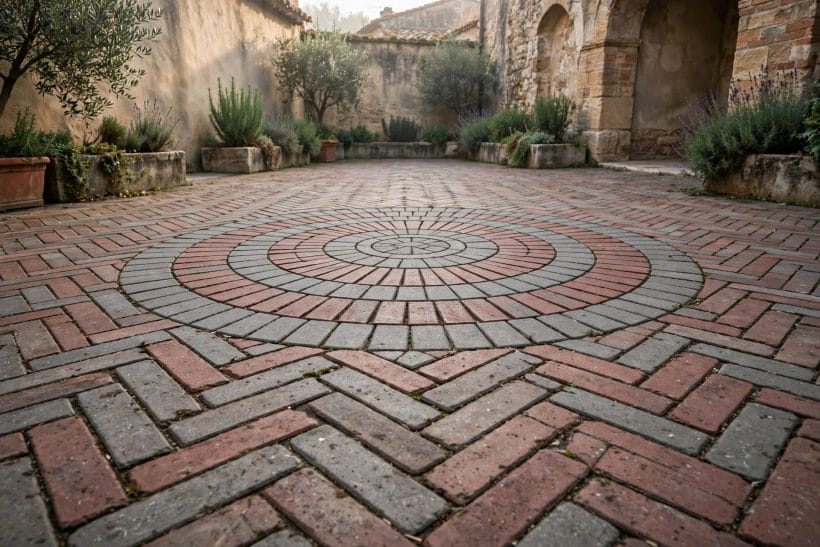
Check a paver patio the way this post checked its subjects: units opened and inspected in daylight, blends tested wet as well as dry, furniture chalked at full size on the ground, and the drainage route walked in imagination through a storm. Most paver failures are decided before laying begins — in the unopened pack, the untested colour and the unplanned fall of the ground.
The common mistakes are all haste: a skimpy base under a beautiful pattern, edges left unrestrained, joints left empty, colours chosen from a screen. Each is avoided by this post’s order — unit, pattern, rooms, colour, ground, edges, keeping — and by finishing one stage honestly before funding the next.
10. Costs and Pulling It Together
Costs stay qualitative, as honest building advice must: the economical end of the paver patio is the plain rectangular unit in a simple bond, laid by patient hands; the expensive end is large-format units, complex patterns with many cuts, and the groundworks difficult plots demand. What never varies is where the money earns its keep — the base and the edges, which outlast every fashion in pattern.
Pull it together in the sequence kept here: choose the unit, set the pattern, zone the rooms, blend the colour, build the ground, finish the edges, and keep the joints full. Followed in that order, these seventy-five ideas stop being a catalogue and become a patio that can be mended forever — which is the whole point of building with concrete pavers in the first place.
Final Considerations
A paver patio asks to be judged the way it will be lived with: not on delivery day, but in its tenth year, when its tones have weathered together, its planting has spilled over one soft edge, and its one dipped corner has been lifted, levelled and laid back without a trace. Build the ground honestly, restrain the edges, and keep the spares — and the field of small units will out-serve any surface that cannot be forgiven.


0 Comments