

A study is the room where a house thinks. It asks for less than almost any other room — a desk that fits the work, a chair that respects the spine, light that lasts as long as the evening does — and it repays those modest requests with the rarest domestic commodity: a place where concentration feels like the room’s own idea.
This page is the study’s own survey: placing it, furnishing it, shelving it, lighting it and keeping it the calmest room in the house. For the household’s shared reading corner, the reading nook ideas page is the close cousin; for compact working corners in small homes, home office ideas carries the tiny-house wisdom. This one is about the dedicated room, however small, that a household sets aside for work and books.
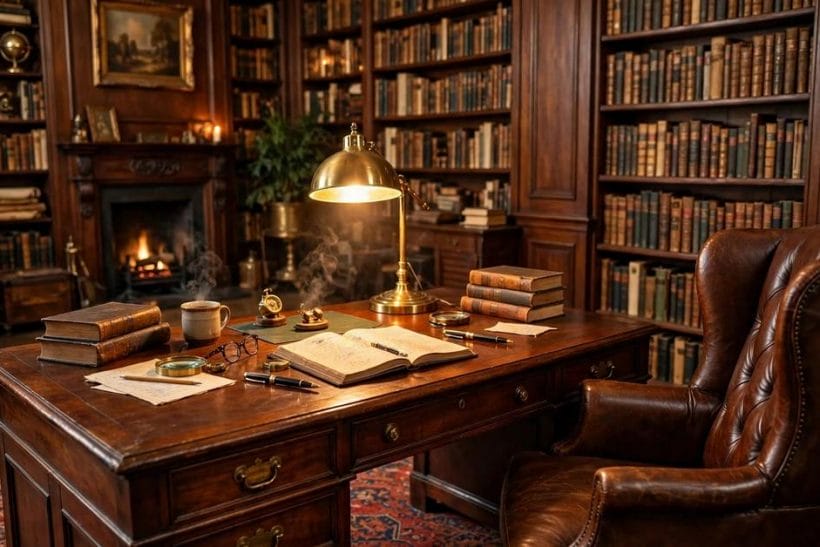
1. Study Room Ideas at a Glance
A study room is a dedicated room for desk work, reading, writing and study — the home’s quiet office and private library in one. Its working parts are the desk and its position, the chair, the shelves and storage that keep the desk clear, layered light for page and screen, a colour temper that settles the mind, and the door that closes. It is the thinking member of the house’s room family, related to the home library office tradition and scaled from the spare bedroom down to the generous landing.
| Question | Short answer |
|---|---|
| What is the difference between a study and a home office? | Temperament more than furniture. A home office is equipped for a job; a study is arranged for thought — books, papers, a reading chair, and work that includes reading, writing and mending the household’s affairs as well as earning. |
| How small can a study be? | As small as a desk, a chair, a shelf and a door that closes — the box room studies of old houses are legendary. What it cannot be is a corridor: the seat must be somewhere the household’s traffic agrees to leave alone. |
| What is the single best study investment? | The chair, then the light. Hours are spent in both, and both are felt in the body by evening. The desk, by comparison, can be almost anything flat and honest. |
| Should a study have a computer at its centre? | Only if the household’s work says so. Many studies serve best with the screen present but not enthroned — a laptop that closes, a desk that also holds paper, books and a lamp without apologising. |
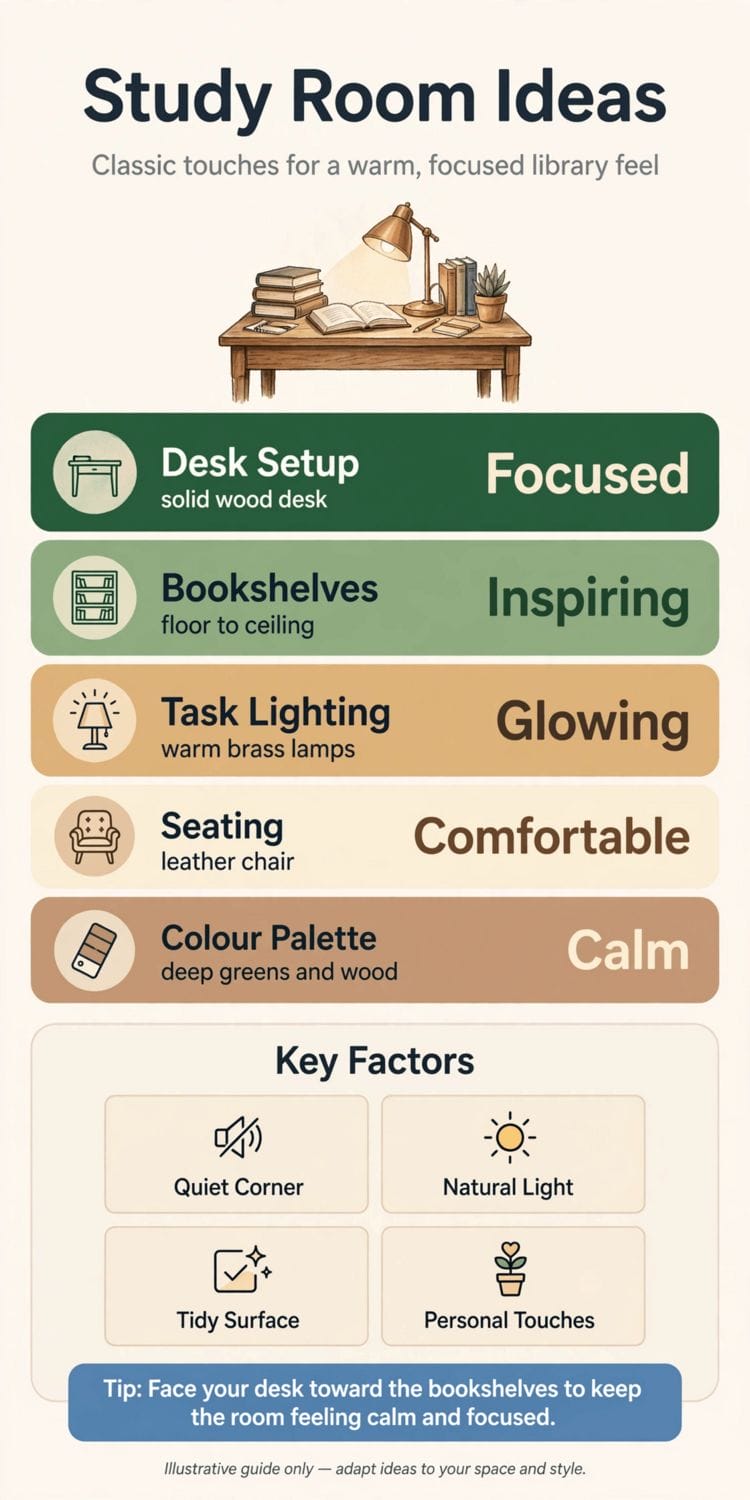
2. Placing the Study: Room Choice, Desk Position and the Door
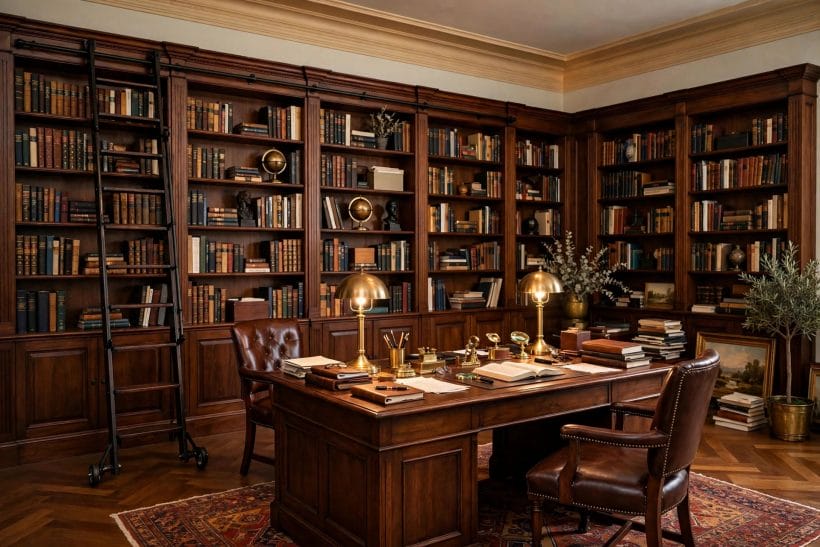
Where the study sits decides whether it works. The room wants quiet more than size, a door more than a view, and a desk position that puts the sitter’s back to the room’s distractions and their face to the light’s kindness. This section settles the geography before a single shelf is hung.
1. Give the study the quietest room, not the largest
The spare room away from the kitchen’s radio and the street’s buskers is worth two larger, louder rooms — which is why so many studies begin life in the house’s quietest bedroom, whatever the estate agent called it. A study’s currency is uninterrupted hours, and quiet is the only furnishing that buys them wholesale.
2. Face the desk to the room, the door in view
The classic position — desk with its back to the wall, the sitter facing the room and its door — rests the eyes on space rather than plaster and settles the ancient unease of a back exposed.
3. Or set the desk under the window for the view-worker
Some minds feed on the outlook: the garden, the street’s theatre, the weather.
4. Keep the desk out of the draught and the through-route
A desk chair parked in the room’s walking line is bumped, borrowed and resented.
5. Insist on a door that closes, and use it
The closing door is the study’s whole constitution: work inside, household outside, both happier. A household signal everyone respects — shut means thinking, ajar means interruptible — is worth more than any lock.
6. Let a small room be a virtue
The box-room study’s walls are close enough to hold everything within reach and its scale discourages the clutter colonies of larger rooms. Many great books were written in studies that were cupboards with ambitions.
7. Share a study by timetable, not by sprawl
Two workers, one study: the room serves both when each keeps a defined territory — a shelf, a drawer, a desk end — and a shared calendar on the door.
8. Put the study near the household’s books, not its noise
A study beside the living room borrows its shelves and its armchair conversations; a study beside the kitchen borrows its kettle queues and its radio. Neighbourhood is destiny for rooms as for houses.
9. Plan the power and the data before the furniture
Sockets where the desk will live, light where the chair will sit, the printer exiled to a cupboard: the study’s invisible services are settled while the room is still empty, or they are trailed across it forever.
10. Keep the study out of the guest room if you can
The study-guest-room hybrid taxes both functions: the worker tidies for every visitor, the guest sleeps among someone else’s deadlines.
11. Walk the room at working hours before deciding
Spend a Saturday morning in the candidate room doing nothing but noticing: the light’s path, the house’s sounds, the sun’s arrival on the desk’s likely spot.
3. The Desk and Chair: Working Furniture That Earns Its Place
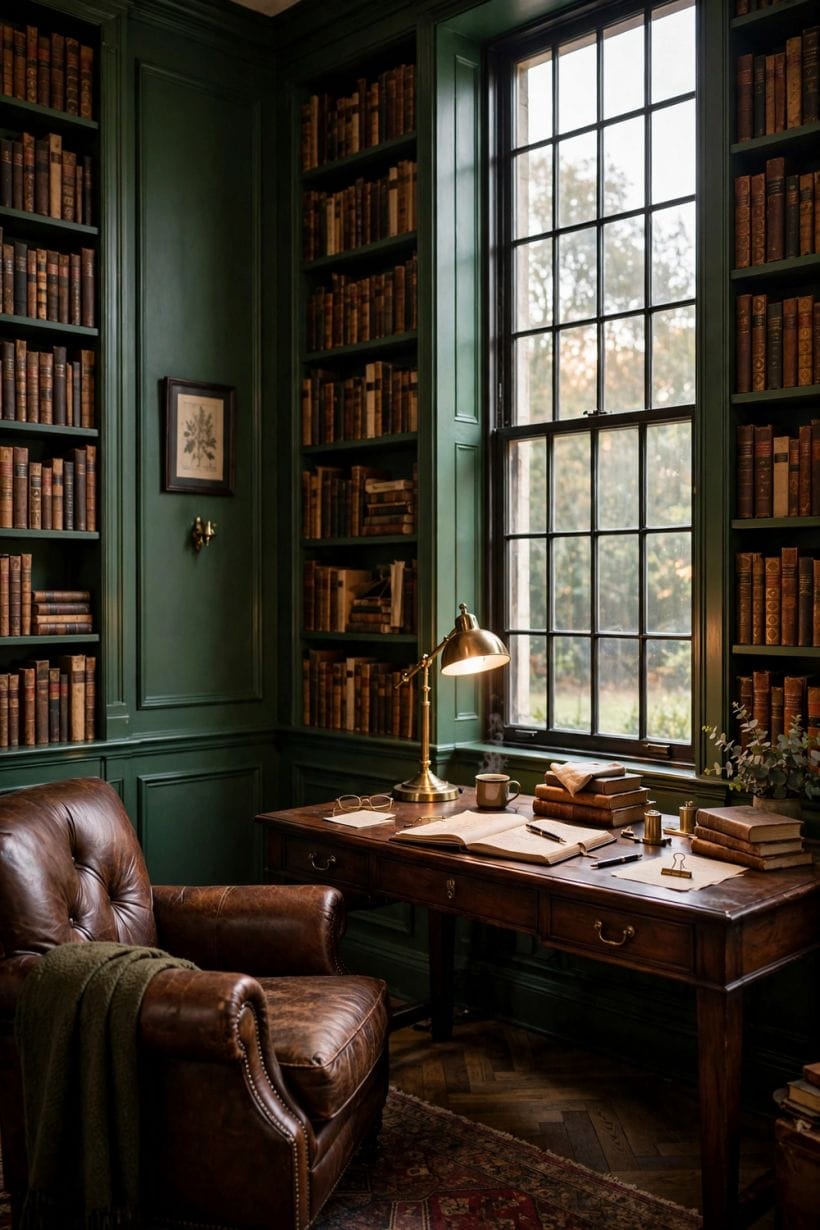
The study’s two working pieces are a table and a seat, and both are judged by the body at 6 p.m. The desk wants the right height, honest depth and a surface that welcomes paper as warmly as a laptop; the chair wants to be forgotten — the highest praise working furniture can earn.
12. Size the desk to the work, not the room’s vanity
The writer wants a modest top and clear space; the spreader of drawings, the dual-screen worker, the crafter-scholar each want honest width and depth.
13. Choose the chair like an eight-hour decision
Because it is one.
14. Prefer a real desk to a beautiful table when work is daily
Dining tables enchant and betray: wrong height, drawers where knees live, a surface too precious for the work’s honest mess. A purpose-made or honestly adapted desk respects the knees and the workflow alike.
15. Give the desk drawers for the work’s weather
Pens, paper, chargers, the letter in progress: the desk’s own small storage swallows the daily clutter that otherwise colonises the top. A desk without drawers exports its mess to the room’s every other surface.
16. Set the screen at the body’s terms
Whatever screen the work uses should meet the eyes without the neck’s negotiation — raised on books or a stand if the desk’s geometry says so.
17. Keep a second surface for the overflow
A small side table, a trolley, a shelf at elbow height: the overflow surface keeps the desk’s top sacred to the current task.
18. Let the desk’s materials be warm to the forearm
Hours of forearms on cold stone, glass or metal laminate tax the worker invisibly.
19. Manage the cables once, properly
A cable tray under the desk, one power run, chargers homed: an hour’s work that removes the study’s permanent visual static.
20. Keep the visitor’s chair honest
The study that receives — tutor, client, spouse with a question — wants a second chair that is comfortable for an hour and does not invite the day.
21. Choose a desk lamp’s partner: the desk’s own clear zone
However the desk is furnished, defend a clear working rectangle at its centre — the page, the laptop, the hands — against the migration of ornaments.
22. Buy the chair and desk as a marriage, at one sitting
Heights are relative: desk, chair and sitter are one geometry.
4. Shelves, Books and Storage That Keeps the Desk Clear

The study’s shelves are its memory and its temptation: they hold the books the work feeds on and the papers the household generates, and they expand to fill every inch offered. The arrangement that works keeps the current work near, the archive honest, and the desk’s clear zone defended by storage that actually closes.
23. Shelve by use, not by beauty alone
The working shelf at the desk’s shoulder holds the current project’s books and files; the room’s other shelves hold the library’s long memory.
24. Keep the reference shelf within the chair’s reach
The dictionary, the atlas, the household file, the manual: the dozen volumes consulted weekly belong where the seated worker’s hand falls.
25. Give papers a landing strip and a rule
Post, forms and the household’s paper weather need one tray, one folder, one weekly appointment.
26. Use closed storage for the archive, open for the library
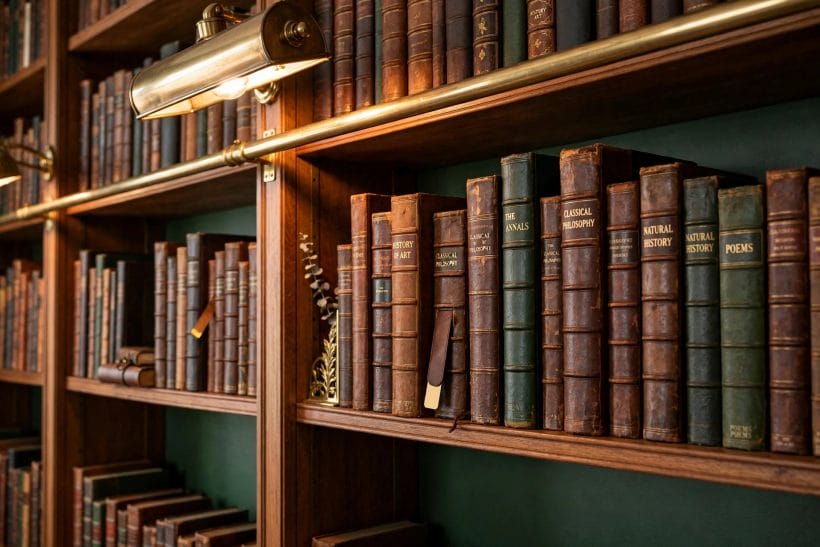
Boxes, files and the years of statements live honestly behind cupboard doors; the open shelves are for books and objects that repay looking at. The division keeps the room’s face calm and its memory complete.
27. Leave breathing room on every shelf
Shelves packed to pressure read as storage; shelves with air — a stack lying flat, an object resting, an honest gap — read as a library.
28. Arrange books in families the finder understands
By subject, by author, by the household’s own logic — any system the finder can hold in their head beats the perfect system nobody remembers. The study’s regulars should be able to fetch blindfolded.
29. Face a few books outward like a bookshop’s kindness
One or two covers displayed on the shelf ends — the current fascination, the beautiful binding — give the room its changing exhibit. It is the reading nook trick, and it makes the whole library feel awake.
30. House the printer and its paper out of the sightline
The printer is the study’s necessary ugly: cupboarded, on a side shelf, anywhere but the desk’s altar. Its paper, ink and output tray deserve the same exile, planned rather than improvised.
31. Label the archive like a stranger will inherit it
Because one day a stranger — or a tired spouse at midnight — will search it.
32. Give objects a shelf quota
The study’s treasures — the stone, the photograph, the small sculpture — deserve their place and their limit.
33. Build shelves to the ceiling only where the ladder lives honestly
High shelves are glorious libraries and useless storage if reaching them is a performance.
5. Light for Reading and Working
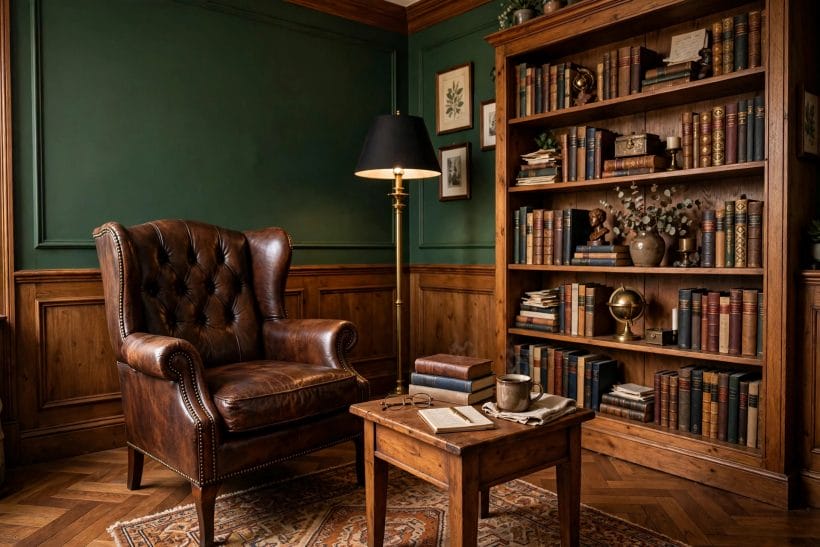
A study’s light must last as long as its evenings: kind to eyes at the page, honest at the screen, warm enough for thought and bright enough for proofreading. The layered scheme — daylight governed, a lamp at the desk, a lamp at the reading chair, the room’s own gentle fill — is set once and then serves for decades.
34. Put the desk lamp on the shadow’s correct side
The lamp belongs opposite the writing hand, throwing light on the page without the hand’s shadow or the screen’s glare. A small geometry, settled on the first evening, repaid at every working hour thereafter.
35. Layer the room’s light in three duties
Task light at the desk, reading light at the chair, and a low ambient fill so neither pool of brightness floats in darkness: three duties, each dimmable, none asked to do the others’ work.
36. Govern daylight before it governs you
Blinds or curtains that can cut the sun’s strike on screen and page — without banishing the day — are the study’s essential window dressing.
37. Choose bulbs for the long evening
Warm, high-quality light that renders paper kindly and faces honestly: the study’s bulbs are chosen for the eyes’ eight-hour verdict, not the shop’s thirty-second one. One temperature throughout keeps the room’s colour honest.
38. Give the reading chair its own lamp, always
The chair across the room is the study’s second workplace and deserves second light of the same quality.
39. Keep a low light for the thinking hours
Some work is done best at the room’s dim edge: planning, memorising, the letter composed in the head before the hand.
40. Light the shelves a little, if at all
A gentle wash on the book spines makes the room’s library glow like a bookshop at dusk.
41. Protect the worker from the window’s silhouette trap
A desk facing a bright window sets the screen and the worker’s face against the glare; a desk with its back to it invites the room’s entrances unseen.
42. Set the lights once, on a winter evening
Arrange and dim everything at the year’s darkest working hour, lamps lit, fire of concentration lit, and judge. Settings chosen in June’s abundance are discovered wanting in November, which is when the study earns its keep.
43. Keep a candle or its electric cousin for ceremony
The study’s rituals — the evening’s first page, the finished letter — are marked by the room’s small ceremonies.
44. Let the door’s opening spill a welcome, not a searchlight
The landing’s light crashing in at every opening breaks the worker’s spell and the room’s composure. A soft landing light and a door mostly closed keep the study’s weather its own.
6. Colour, Walls and the Temper of the Room
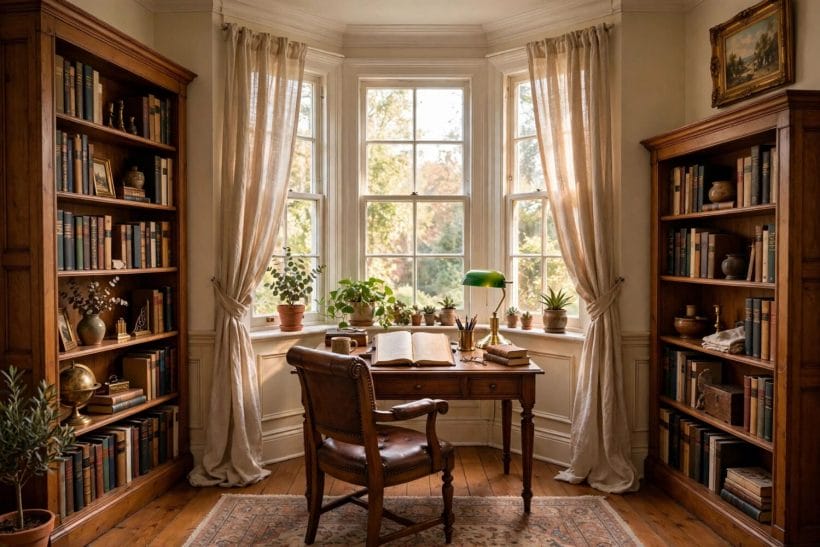
A study’s colour is a working condition. The traditional answers — deep greens, oxbloods, ink blues, warm woods — earned their place by settling the eye and flattering lamplight; the modern pale study earns its by air and calm. Either way, the palette is chosen for the mind’s long hours, not the photograph’s first second.
45. Let deep colours make the small study a cocoon
In a small room, dark walls do not shrink the study — they dismiss the walls entirely, and the lamplight, books and desk become the whole world.
46. Let pale colours make the working study breathe
Where the study is also a daytime office under hard use, pale walls and a calm ceiling keep the light bouncing kindly and the room’s temper even.
47. Pull the palette from the books themselves
Cloth bindings, old leather, gilt and marbled paper: a working library already owns a palette of madder, ochre, forest and ink.
48. Give the desk’s wall the room’s one decision
The wall the seated worker faces for eight hours deserves the palette’s best thought — the deep colour, the hung map, the shelves’ best stretch.
49. Use timber as the study’s warm constant
Desk, shelves, floor or panelling: one honest timber carried through the room gives the study its traditional warmth and forgives every era of book and chair around it.
50. Keep the ceiling quiet and the floor grounded
A pale, calm ceiling returns the lamplight kindly; a floor in timber, wool or cork underfoot grounds the room and swallows the chair’s castors’ noise.
51. Hang the maps, prints and photographs that feed the work
The study’s walls are its external memory: the map of the project, the print that starts the mind, the photograph of the people the work is for.
52. Let one chair carry the room’s colour courage
The reading chair in a brave colour — the oxblood leather, the green velvet — gives the study its signature without asking the walls to shout.
53. Test colours by lamplight, in winter, seated
The study’s palette lives by artificial light more than any room’s. Samples are judged from the desk chair, lamps lit, evening fallen — or the room will be decorated for a daylight it rarely sees.
54. Keep pattern low where eyes rest
Busy pattern at the seated eye’s resting places taxes the mind the study exists to free.
55. Let the room smell of its materials
Books, timber, leather, paper: the study’s true perfume is its own contents, kept dry and aired. Scented additions are guests; the room’s own smell is family, and workers return to it like a language.
7. The Reading Corner and the Second Chair
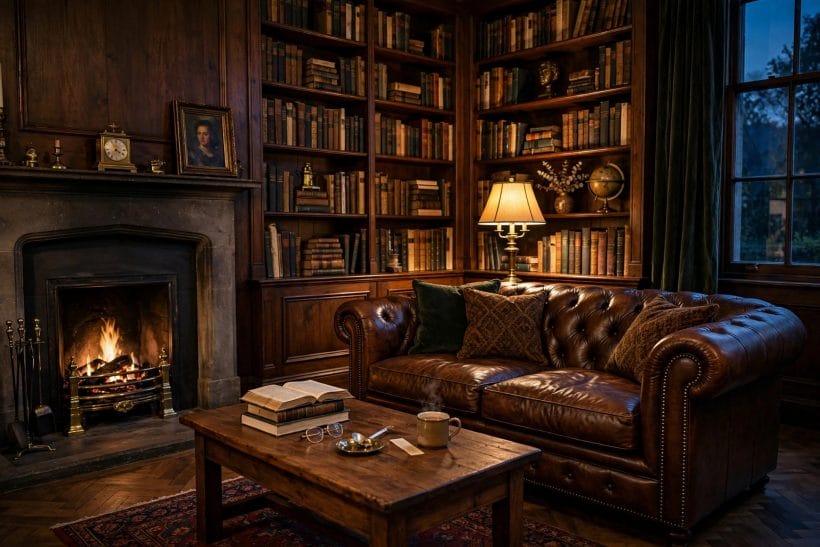
Every study that deserves the name hides a second workplace: the reading chair, set apart from the desk, where books are read rather than consulted and the day’s second wind is found. Furnishing this corner — chair, light, table, and the room’s permission to sit in it — is what separates the study from the mere office.
56. Place the reading chair at the room’s other light
The window’s second-best seat, the corner by the shelves, the fireside if the study is blessed: the reading chair claims the room’s other pool of light and keeps it.
57. Choose the reading chair for the whole book
Depth for the curled reader, support for the straight one, arms at the height the book’s weight demands: the reading chair is tested with a real book and a real hour, ideally in the shop’s patience or the house’s own trial.
58. Set a table at the chair’s elbow for the cup and the pile
Tea, spectacles, the current three books and the pencil: the side table is the reading corner’s working surface.
59. Keep the current reading in a pile with a spine limit
The chair’s parish holds the books in active service — a pile with a humane limit that rotates back to the shelves as books finish. The limit keeps the corner a workplace rather than a landslip.
60. Give the reader a footstool and a throw
Feet up is reading’s natural posture and winter’s natural demand. The footstool and the throw live at the chair permanently, not fetched per occasion — comfort that requires an expedition happens rarely.
61. Let the reading corner receive the visitor
The reading chair doubles as the study’s guest seat — for the spouse’s consultation, the child’s homework question, the friend’s confidence. Its comfort is the room’s hospitality, at the exact distance conversation wants from a desk.
62. Shelve the poetry and the bedtime books at the chair
The chair’s own small shelf — poetry, essays, the book read in chapters — keeps a different library from the desk’s working shelves.
63. Protect the reading hour in the household’s calendar
The corner fails if it is only furniture. The household that treats the evening reading hour as an appointment — the study’s and the reader’s — finds the room quietly becoming the house’s most envied institution.
64. Let the dog have its bed in the reading corner
Where the household includes a dog, its bed in the reading corner is the room’s oldest furnishing arrangement. The reader reads, the dog supervises, and the study’s calm is complete.
65. End the day by setting the corner for tomorrow
Book marked, cushion plumped, lamp off last: the reading corner left ready is the study’s promise to its future self. Rooms, like people, are kinder when they are expected.
8. Small Studies, Shared Studies and Finishing Touches
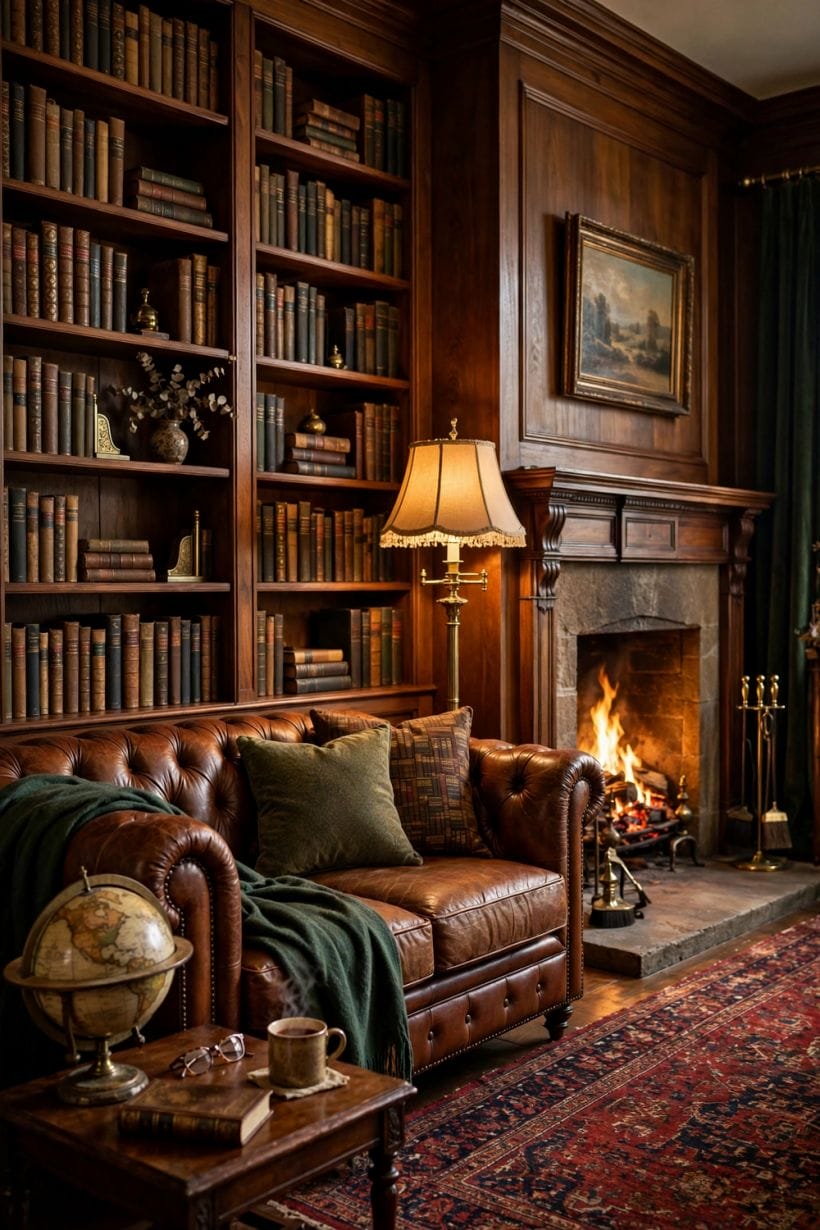
The study’s final questions are practical poetry: how it works at half the ideal size, how two people share its quiet, and which small finishes — the plant, the clock, the door’s sign — turn a furnished room into an institution. Scale changes the furniture; it never changes the principles this page has kept circling.
66. Shrink the study, keep the constitution
The landing desk, the under-stairs study, the cupboard office: all work when the constitution holds — a seat the traffic respects, light for the page, a surface that stays clear, storage that closes.
67. Fold, slide and wall-mount the small study’s furniture
A desk that folds to the wall, shelves that climb, a chair that tucks wholly under: the small study’s furniture earns its footprint hourly. The room then returns to the household between sessions, unresentful.
68. Share the study by shifts and shelves
The shared study’s peace treaty: each worker’s shelf and drawer inviolate, the desk’s clear zone common and kept, a door sign that means the same to both.
69. Give the home’s admin its own hour and box
Bills, forms and the household’s bureaucracy colonise studies silently. A named box and a weekly admin hour keep the governance in its parish, and the desk returns to the work it was furnished for.
70. Add the plant that forgives the study’s light
One green thing, chosen for the room’s actual light and the worker’s actual watering habits, softens the study’s paper world. The forgiving species exist; choose among them rather than mourning the dramatic ones.
71. Hang a clock that ticks the room’s pace, quietly
The study’s clock is seen in glances, not stared at: plain, legible, and if it ticks, ticking at conversation’s volume or below. It marks sessions, ends drift, and gives the room its heartbeat.
72. Frame the one picture that starts your thinking
Every worker knows the image — a place, a face, a master’s work — that starts their mind like a key.
73. Decide the study’s music rule
Silence for some work, low music for other, the radio for the admin hour: the rule is personal and should be deliberate.
74. Let the study hold one beautiful useless thing
The shell, the brass instrument, the stone from the beach: a study with nothing useless in it has filed its soul with its papers.
75. Close the study’s day as deliberately as it opened
Desk cleared to its rectangle, chair in, lamp off, door shut on a room in order: the closing ritual takes three minutes and buys tomorrow’s clean start.
9. Checks and Mistakes: Before the First Purchase or the First Stone
Before furnishing, walk the checks in order: the room’s quiet at working hours; the door that closes and the household’s agreement to respect it; the desk position’s light across the day; power and data where the work will sit; and the chair tested by the body that will live in it. A study chosen and furnished on this evidence rarely needs its owner’s forgiveness later.
The faithful mistakes: the beautiful table that betrays the knees; the chair bought by photograph; shelves arranged for the camera while the worker stands for every fact; the desk colonised by the household’s paper because no tray, box or hour was assigned to it; the single ceiling light asked to do three duties; and the study surrendered to guests, storage and good intentions until it is a room where work is described rather than done.
One check is about people, not furniture: agree the study’s constitution while everyone still likes each other — what the closed door means, whose shelves are whose, when the reader may not be interrupted and when the worker must emerge. Rooms with constitutions keep households peaceful; rooms governed by daily negotiation teach everyone to dread the door.
10. Costs and Pulling It Together
Costs follow the constitution, not the catalogue: the chair and the light ask for the serious money; the desk can be humble for years; shelves are joinery or flat-pack according to the house’s patience, and the room’s true luxuries — quiet, order, the door’s respect — are free and priceless in the usual proportion. Spend first where the body spends its hours.
Pulling it together: place the study in the quiet; face the worker to the room and the light; marry desk and chair as one geometry; shelve by use with the desk’s rectangle defended; layer the light in three duties; colour for the mind’s long hours; give reading its own chair and corner; and close the day by setting the room in order. The study then does what the best rooms in the tiny home office tradition have always done at any size — it makes thinking feel like the house’s own habit.
Final Considerations
A study asks little and gives back the thing modern households run out of first: a place where one person’s attention is the room’s whole purpose. Furnished on the body’s evidence and governed by a kind constitution, it becomes less a room than a daily appointment with one’s own mind — the quietest entry in the whole catalogue of home design ideas, and for its worker the most valuable.
Begin with the chair and the door. The desk, the shelves and the decades of books will arrange themselves around those two decisions more willingly than around any other pair.


0 Comments