

One small room, two callings: the books you love and the work you do. A tiny house library office folds shelves, desk and reading chair into a single sanctuary — and this guide builds it piece by piece, from the first shelf to the last page, in the order the room itself comes together.
Home Library Office Design Ideas: At a Glance
The strongest home library office design ideas treat the tiny library office as one room with one job: to inspire. The books are shelved floor-to-ceiling, the desk nestles among them facing the light, and the one deep reading chair becomes the sanctuary. Around those three anchors this guide arranges the light and the organization, the curation and the ladder, the ten commandments, the e-reader balance and the focused work zone, the mistakes and the treasured volumes, the rituals of reading and writing — and the shared, lent, lived-in life of the finished library.
| Topic | What It Covers | Key Fact or Figure |
|---|---|---|
| 1. The Concept and the Shelves | One room for books and work; shelves that climb | Floor-to-ceiling shelving |
| 2. The Desk and the Reading Chair | A desk nestled among the books; one deep chair | The chair is the sanctuary |
| 3. Light and Organization | Window first, lamps warm; books sorted and shown | Three layers of light |
| 4. Curation and the Ladder | Keep the loved, release the rest; reach the top | One-in-one-out for new books |
| 5. The 10 Commandments | The rules that keep the tiny library working | 10 commandments |
| 6. The E-Reader Balance and the Work Zone | Digital thousands, physical loved; a focused desk | The door is the boundary |
| 7. Mistakes and Treasured Volumes | What to avoid; the signed and inherited books | The shelves are the art |
| 8. Reading Rituals and the Writing Desk | Morning pages, night chapters; a cleared surface | Tall shelves make it grand |
| 9. Book Club, Lending and the Payoff | Gather the few, lend the loved; the daily payoff | A daybed adds a guest room |
| 10. The Reading Life | Rainy days, rereads and the beloved library | The last word is the book |
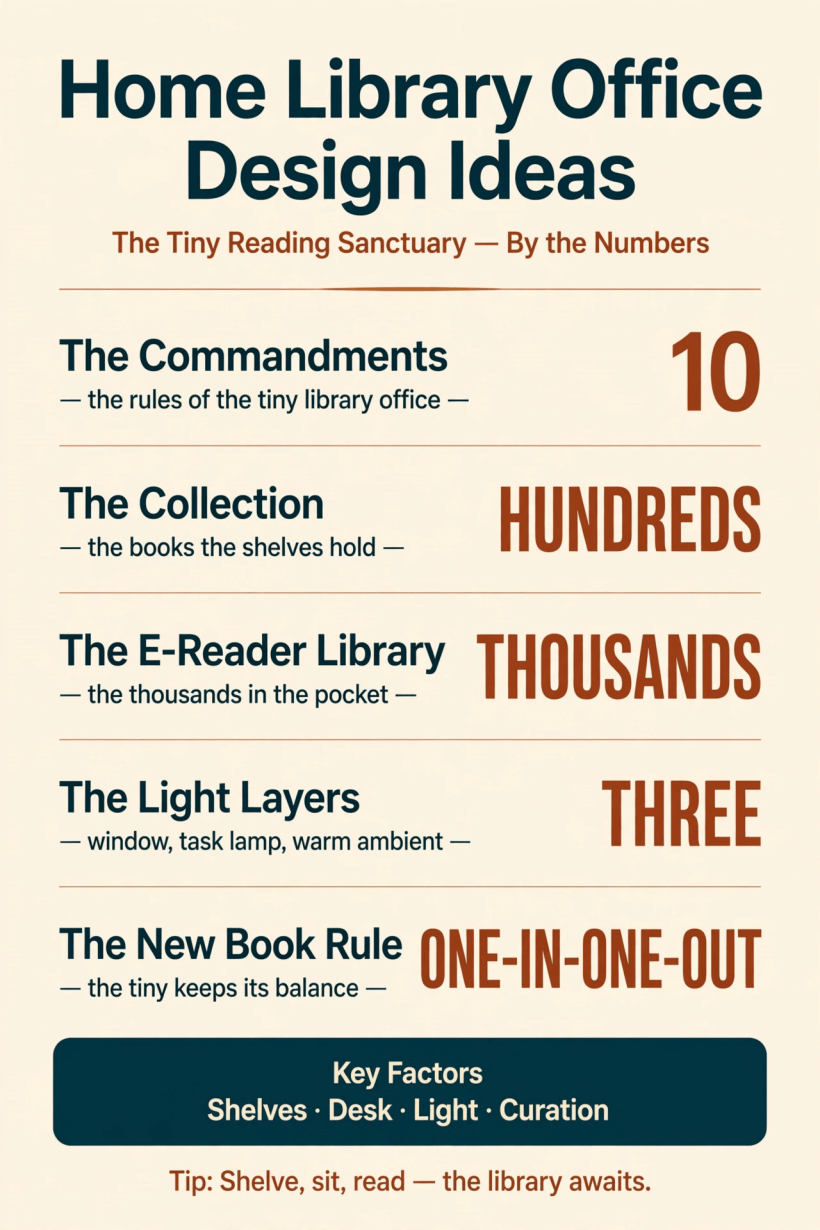
The tiny reading sanctuary by the numbers: 10 commandments, hundreds of shelved books, thousands carried on the e-reader, three layers of light — and one-in-one-out for every new arrival.
1. The Library Office Concept and the Shelves
The concept is a marriage, not a compromise. The books are the loved — the shelved: the collection that makes the room a library. The work is the done — the desk: the labour that makes it an office. The rule holds the two together: the library office inspires — the small. The design-first version of this same room, built around one wall of shelves and a centred desk, is laid out in our home library office design guide — this guide takes the lived-in road instead: the rituals, the curation and the reading life the room makes possible.
The shelves are where the concept becomes architecture. The floor-to-ceiling is the maximized — the vertical: in a tiny house the walls are the only direction with room to spare, so the books climb. The curated is the loved — the displayed: what stands on those shelves is chosen, not merely stored. The rule: the shelves hold — the world. Which answers the first question every tiny dweller asks: how do you fit a library office in a tiny house at all? The vertical shelves, the nook desk, the reading chair. The library fits — the books climb, the work nestles.
2. The Desk and the Reading Chair

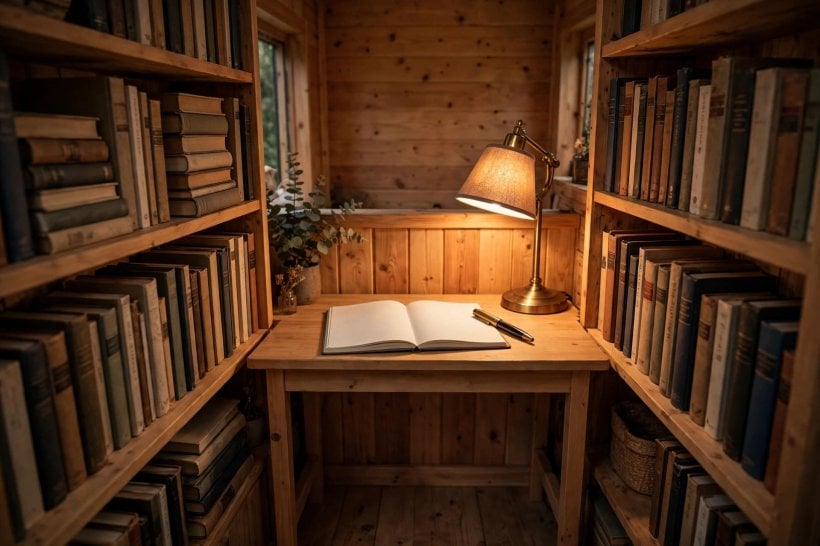
The desk earns its place by disappearing into the collection. The nestled is the among — the books: the desk sits inside the shelving wall, surrounded on three sides by spines. The facing is the window — the light: turned toward the glass, so the work surface borrows the best light in the house. The rule: the desk works — the inspired. A desk among books is never just a desk; every glance up from the screen lands on a shelf of reasons to keep going. The dedicated desk setups that pair with this room are worked through in our guide to tiny house office design ideas.
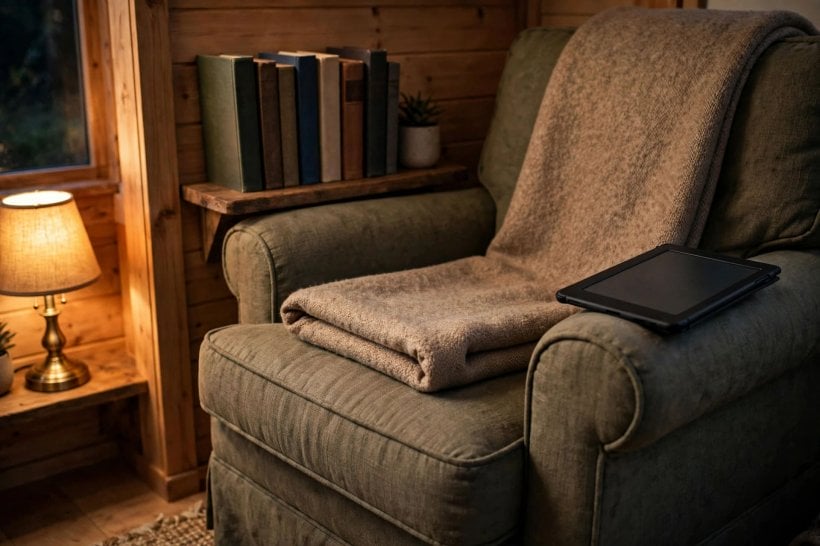
The reading chair is the room’s second anchor and its true throne. The one is the perfect — the deep: not a set, not a pair, one chair chosen like a companion. The light is the pool — the lamp: a reading lamp close enough to gild the page. The truth: the chair is the sanctuary — the library. So what is the best chair for a tiny library? The deep, the supportive, the sized-right. The best is the sat-in: the hours of reading, the comfort tested — a chair is not bought from a photograph, it is auditioned.
3. Light and Organization
The light comes in three layers, and the order matters. The natural is the window — the first: daylight is the library’s first lamp, and the shelves and chair are placed to honour it. The warm is the lamps — the evening: when the window darkens, warm lamplight takes over and the room begins to glow. The rule: the lit library glows — the home. Asked how to light a tiny library office, the answer repeats the order: the window first, the task lamp second, the warm ambient third. The lit library invites: the reading glows.
Organization is what keeps the glow from becoming clutter. The sorted is the genre — the author: a system on the shelves, so any book can be found by feel. The displayed is the loved — the spines: the beautiful bindings turned outward, the shelves doubling as the room’s art. The rule: the organized library breathes — the small. How do you organize books in a tiny library? The system that serves you: the genre, the author, the color — the chosen. The organized is the found: the book you want, the shelf you know. Keeping it that way takes one habit: the closed cabinets for some, the regular dusting, the air purifier — the clean is the maintained, and the small library rewards the care. Library deeper: our DIY-friendly tiny house plans and super-affordable tiny homes.
4. Curation and the Ladder
Curation is the discipline that lets a tiny library hold a lifetime of reading. The loved is the kept — the reread: books that earn their shelf space by being returned to. The edited is the released — the donated: books that served their season and move on to another reader. The rule: the curated library fits — the small. So how many books can a tiny house library hold? The hundreds — the floor-to-ceiling, the curated. The held is the loved: the edited collection fits the small. Hundreds, honestly kept, outweigh thousands merely stored.
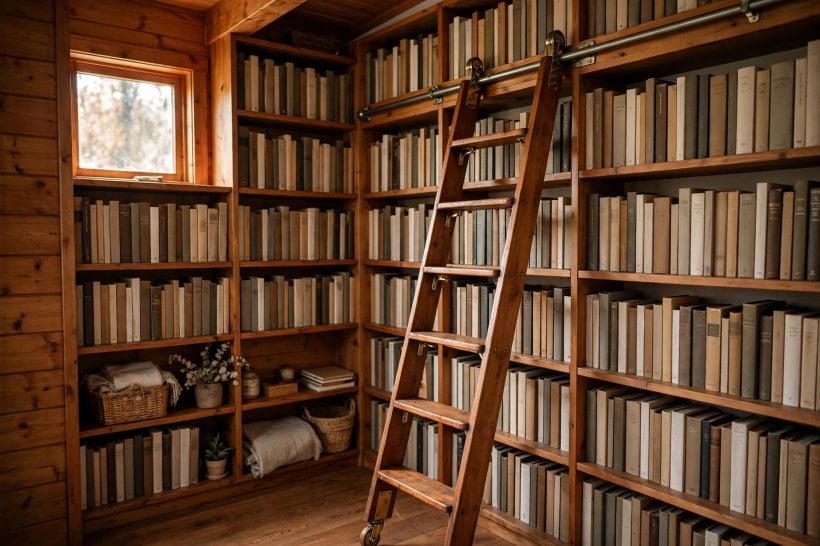
And what the shelves gain in height, the ladder gives back in reach. The rolling is the classic — the reached: the ladder on its rail, gliding the length of the wall. The step is the stool — the tucked: for lower shelves, a step stool that tucks away. The truth: the ladder is the romance — the library. The top shelf is not an archive; it is part of the working collection.
5. The 10 Commandments of Tiny Library Offices
Ten rules hold the room together, and they are written as imperatives because each one is a habit, not a hope. Shelve the vertical. Curate the loved. Light the warm. Seat the deep. Desk the nestled. Organize the sorted. Display the beautiful. Dust the regular. Read the daily. Love the always. Read them in sequence and they describe the whole method of this guide: build upward, edit without mercy, light for the evening, sit deeply, work among the books, keep a system, show what is beautiful, maintain it lightly, and read every single day — the commandment the other nine exist to serve.
The commandments also explain why the tiny library office so often outperforms the big one: a large library can afford drift — shelves nobody curates, chairs nobody sits in. The tiny room cannot. Every rule is enforced by the size of the space itself, which is why the small library stays loved instead of merely owned.
6. The E-Reader Balance and the Work Zone
The e-reader is the tiny library’s quiet ally, not its rival. The digital is the thousands — the pocket: an entire second library carried in a coat pocket, the overflow the shelves could never hold. The physical is the loved — the shelved: the books kept in paper because the paper is part of the love. The rule: the balance is the personal — the both. Neither format wins; the reader decides title by title, and the shelves stay reserved for the books that deserve a wall.
Against that balance, the work zone keeps its own boundary. The separated is the desk — the chair: work happens in its place, reading in its own, even when the two places are a step apart. The focused is the surrounded — the books: concentration borrowed from the company of the collection. The truth: the work thrives — the library. Should the library office have a door? The pocket or the curtain — the closed when needed. The door is the boundary: the focus kept, the home respected. A curtain that closes for a call and opens for the evening is boundary enough. For the wider working-from-home picture, our home office design ideas guide covers the desk-first version of the room.
7. Mistakes to Avoid and the Treasured Volumes
Three mistakes undo the tiny library, and each is the breaking of a commandment. The uncurated is the hoarded — the edited: books kept from guilt until the shelves sag and the room resents them. The dark is the cave — the lit: a library without its layers of light becomes a storeroom with chairs. The uncomfortable is the chair — the invested: the beautiful chair nobody can read in for an hour. The rule allows no appeals: the library forgives — the nothing. Every mistake here is visible daily, which is its own mercy — each one can be fixed the day it is noticed.
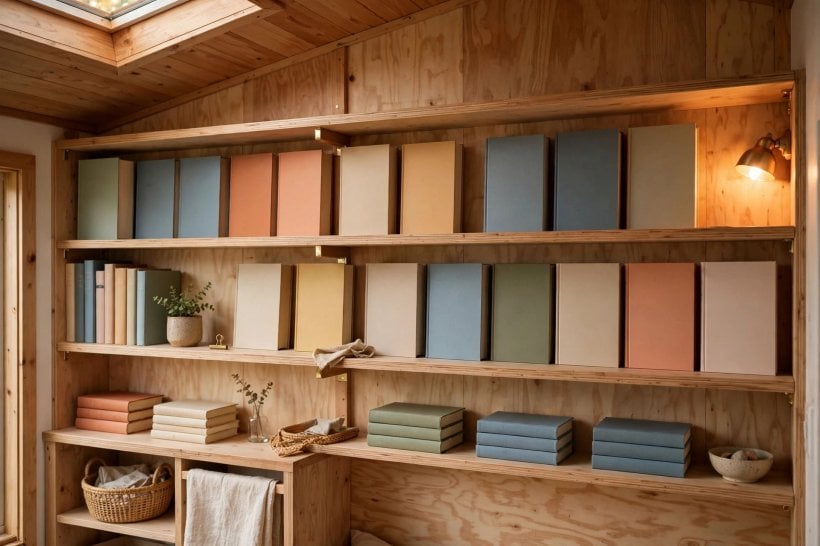
What survives the editing is the treasure. The firsts are the signed — the displayed: first editions and signed copies given the face-out places of honour. The inherited are the loved — the kept: the books that arrived carrying someone else’s reading life inside them. The truth: the treasured are the soul — the shelves. How do you display books beautifully in a tiny space? The faced-out favorites, the color stories, the styled shelves. The beautiful is the curated: the shelves are the art — and the treasured volumes are the gallery’s permanent collection.
8. Reading Rituals and the Writing Desk
A library is kept alive by its rituals. The morning is the pages — the coffee: the day opened with reading before it is opened with messages. The night is the chapters — the lamp: the day closed the same way, under the pool of lamplight. The truth: the rituals read — the library. Rituals are what separate a room with books from a reading life — and the tiny room makes them effortless to keep: the chair is always right there.

The writing desk is the rituals’ working twin. The cleared is the surface — the thoughts: a desk kept empty enough for a page to begin. The inspired is the surrounded — the words: writing done inside the company of every book that taught the writer how. The truth: the writing flows — the library. And it is here, at the desk, that the room’s favourite question gets its answer: how do you make a tiny library feel grand? The tall shelves, the rich colors, the warm light, the ladder. The grand is the vertical: the small room, the big library.
9. The Book Club, the Lending and the Payoff
The library was never meant to be a solitary cell. The gathered is the few — the discussed: a book club sized to the room, a handful of readers close enough to talk properly. The tiny is the hosted — the intimate: what the small room takes in capacity it returns in atmosphere. The truth: the club is the best — the small. And the lending extends the room beyond its walls: the shared is the loved — the returned; the neighbors are the borrowed — the community. The truth: the lending spreads — the reading.

The payoff is the sum of all of it. The read is the daily — the deeply. The worked is the inspired — the surrounded. The sanctuary is the kept — the home. The truth: the payoff is the mind — the fed. Two of the room’s party tricks belong here too. Can the library office be a guest room? Yes — the daybed, the convertible, the dual: the books by day, the guest by night, a trick our home office and guest room guide works through in full. And can it have a fireplace? The electric, the ventless — the cozy, the safe: the fireplace warms, and the library glows the winter. The invitation stands over both: shelve, sit, read — the library awaits.
10. The Reading Life
The rest of the original is a closing cadence, and it deserves to be kept as one — the small ceremonies of a life lived among books. The rainy day: the pitter — the roof, the pages; the hours — the lost, the books; the truth: the rainy day is the gift — the library. The tea: the brewed — the pot, the chapters; the sipped — the slowly, the savored; the truth: the tea pairs — the reading. The bookmark: the placed — the nightly, the promise; the returned — the morning, the continued; the truth: the bookmark holds — the place.
The reread is the beloved — the again, the deeper; the familiar — the comfort, the pages; the truth: the reread is the homecoming — the books. The new acquisition is the chosen — the one, the earned; the shelved — the placed, the welcomed; and the rule that keeps the shelves honest: the one-in-one-out — the tiny. The library forever is the grown — the years, the curated; the read — the lifetime, the shelves; the truth: the forever is the library — the loved. Around these the cadence gathers its endings: the last page (the turned — the final, the satisfied; the closed — the gently, the kept; the truth: the last page is the reward — the reading), the closed book (the shelved — the back, the loved; the remembered — the story, the kept), the next book (the chosen — the shelf, the pulled; the opened — the first, the promise; the truth: the next book is the adventure — the always) and the always reading (the carried — the current, the everywhere; the lived — the between, the pages).
And the room itself gets the final lines. The library story: the told — the spines, the years; the lived — the between, the pages; the truth: the story is the library — the always. The last word: the said — the shelve, the sit; the done — the read, the loved; the truth: the last word is the book — the always. The quiet shelves: the stood — the rows, the waiting; the whispered — the stories, the kept. The open book: the left — the chair, the inviting; the returned — the reader, the always; the truth: the open book waits — the reader. The reader’s home: the found — the belonging, the shelves; the kept — the reading, the years; the truth: the reader’s home is the library — the always. The endless shelves: the filled — the years, the loved; the waiting — the unread, the promise. The final chapter: the written — the life, the books; the shelved — the story, the home. The beloved library: the loved — the daily, the deeply; the kept — the always, the home; the truth: the beloved is the library — the forever. The calm that runs under all of it is the same calm our zen interior design ideas for tiny houses chase room by room — here it arrives carrying books.
Final Considerations
The best home library office design ideas end where this one began: one small room where the books are loved, the work is inspired and the chair is always waiting. Home library office design for the tiny house is the mind made room — the shelves, the desk, the reading. Design it rich, live it deeply.




0 Comments