

Every house has one corner where the light falls kindly, the noise arrives softened, and an hour with a book disappears like a minute — the only question is whether anyone has put a chair there.
This guide gathers fifteen reading nook ideas — built, found, shared and borrowed — and the seat, light and shelving decisions that make any of them work.
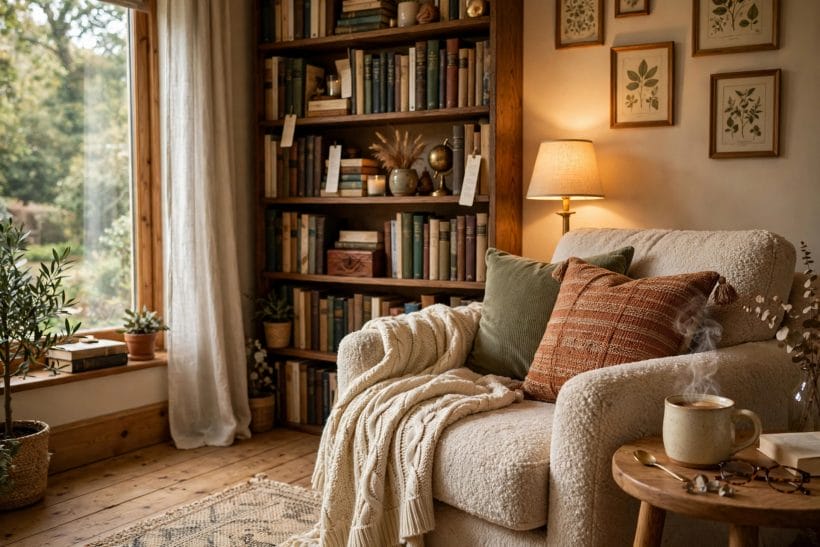
1. Reading Nook Ideas at a Glance
The central entity is the reading nook: a one-person place for books, made of a seat that supports a long stay, a sense of shelter from walls, curtains or alcoves, light fitted to the page, and books kept within the sitter’s reach. Its attributes are its placement (by a window, in a found space, or borrowed from another room’s hour), its seat, its lamp, and its small library. The sheet’s count is honest: fifteen nooks are named and judged below, in three families — and no sixteenth was invented to fill a frame.
| Question | Short answer |
|---|---|
| What does a nook actually need? | A sittable seat, shelter at the back, light on the page and books within reach — everything else is elaboration. |
| Which nook is best? | The one whose light suits your reading hour: daylight seats for morning readers, lamp-fitted alcoves for night readers. |
| Must a nook be built? | No. Two of the three families here are found or arranged — an angled chair, a converted closet, a curtained daybed — with no building at all. |
| What ruins a nook? | A seat chosen by photograph, a lamp placed for symmetry, and books stored anywhere but at the reader’s elbow. |
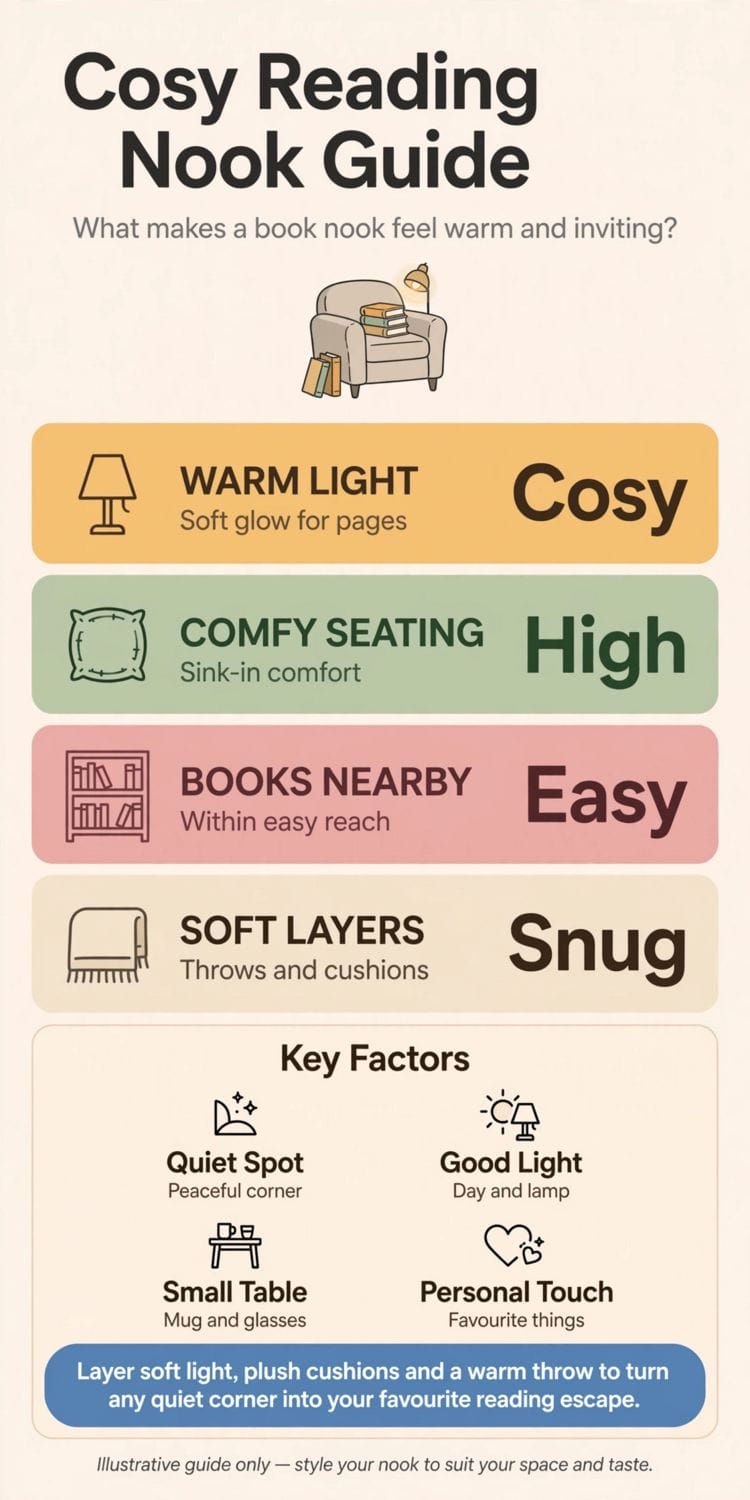
2. What Makes a Nook a Nook: Seat, Shelter and Light
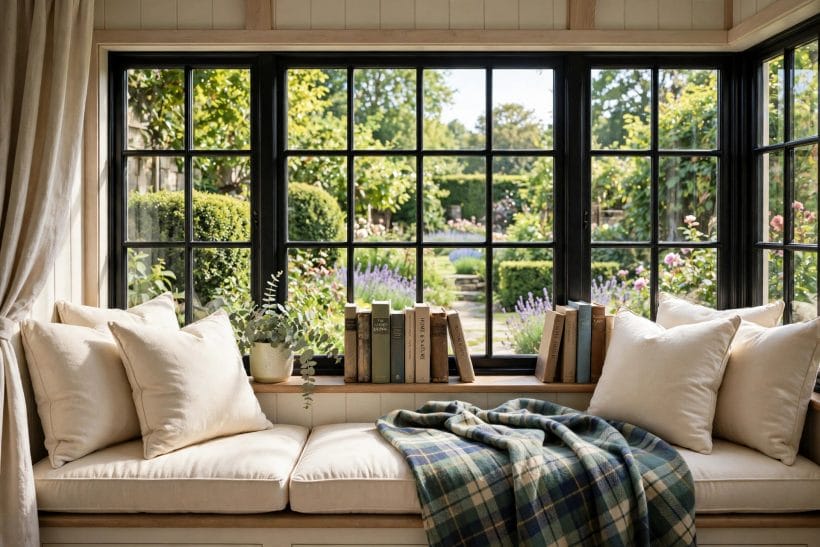
Strip a reading nook to its bones and three things remain: a seat the body can stay in, a sense of shelter — a wall at the back, a curtain, a corner’s two sides — and light that falls on the page without glare or strain. Everything else in this guide is elaboration. A chair alone in a room’s middle is furniture; the same chair backed into an alcove, lit from the side and given a shelf within reach, becomes a destination the household navigates by. That transformation — from chair to place — is the nook’s whole craft, and it is mostly arrangement, not purchase.
The nook also belongs to a family: it is the smallest room in the house, a one-person parish carved from a larger one. The rooms it is carved from are surveyed whole in the living room ideas pillar, and this guide’s discipline is the opposite of that survey’s breadth — it takes a single chair’s worth of ground and finishes it completely: seat, light, books, quiet. A nook finished completely in a corner of an ordinary room will be used more than a whole library left half-planned, which is why this small subject earns a full guide.
3. The Fifteen Nooks, First Five: Seats by the Light
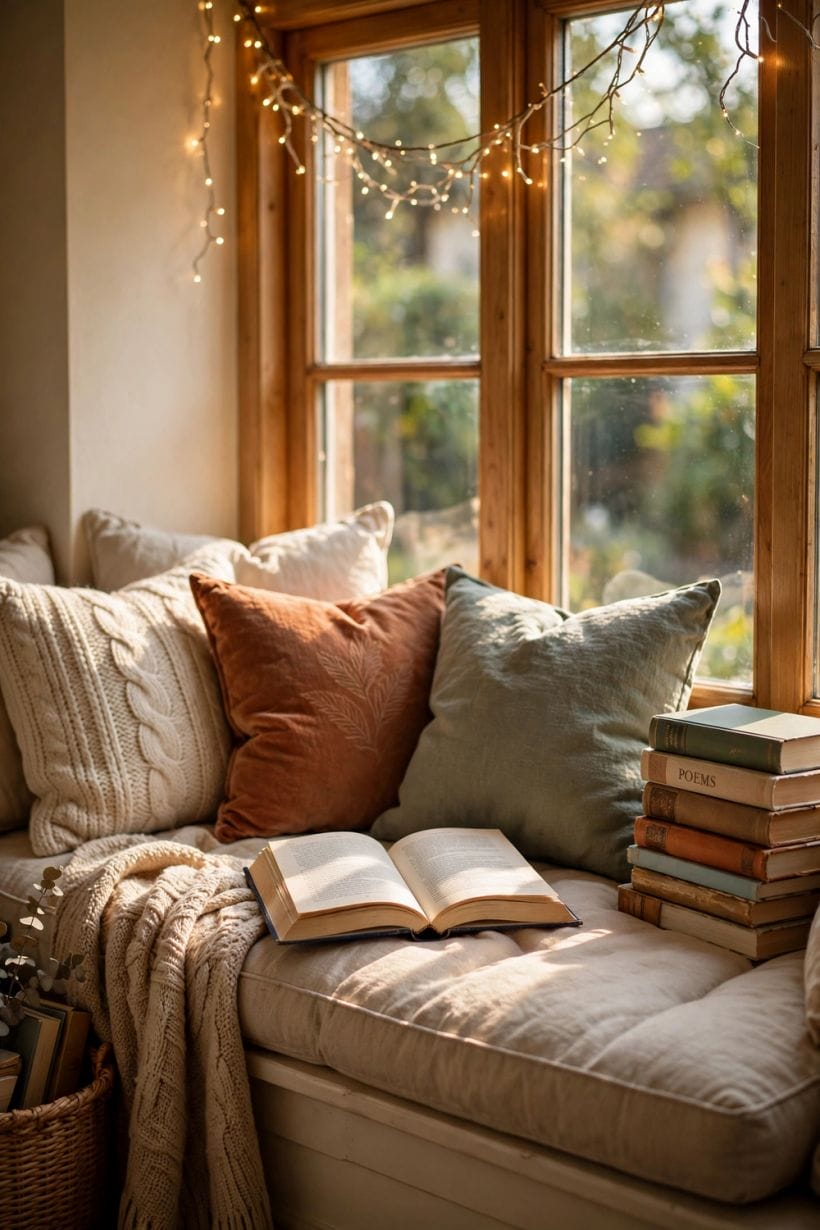
The first family of nooks is placed by daylight, because reading was a daylight art for most of its history and the eye still prefers it. Each of the five below is a seat married to a window in a different way; the differences are orientation, depth and how the light is tamed.
1. The Window Seat, Built Into the Bay
The classic nook: a bench built across a bay or under a wide window, cushioned deep, with the book resting in the light it was written for. Storage drawers beneath the bench hold the library, and a blind tames the midday glare. Of all fifteen, this is the one households photograph — and, honestly built, the one they also use.
2. The Single Chair Angled to the Glass
No building required: one deep armchair turned at an angle to a window, a small table at its elbow and a lamp behind the shoulder for dusk. The angle matters — light should fall over the shoulder onto the page, never straight into the reader’s eyes.
3. The Conservatory Corner
A garden room’s corner seat, surrounded by glass and green, reads like reading outdoors with a roof’s protection. Choose the corner shaded at midday, keep a throw for the glasshouse’s cool mornings, and let the planting be the nook’s wallpaper.
4. The Dormer Nook in the Roof
The low pocket under a dormer window is a nook the house built by accident: a mattress pad or a low bench, cushions against the slope, and light at exactly reading height. It suits a child’s chapter book and an adult’s escape equally, and it costs the house no other room’s ground.
5. The Balcony or Porch Reader’s Chair
A sheltered porch chair with a cushion that lives indoors and travels out is the seasonal nook — spring mornings and autumn afternoons at their best. Pair it with the discipline of bringing the book and cushion in at night, and it serves for years.
4. The Fifteen Nooks, Next Five: Found Spaces
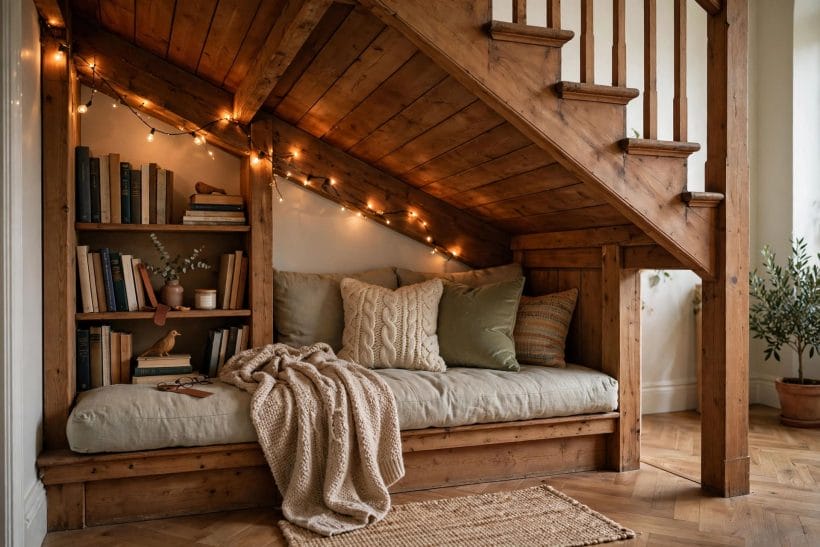
The second family is found rather than built: the alcove, the landing, the space under the stairs — ground the house already owns and rarely uses well. Found nooks are the cheapest in this guide and often the most loved, because their shelter is architectural rather than arranged.
6. The Alcove Nook, Shelved on Three Sides
A chimney alcove or a recessed niche fitted with shelves above and beside a fitted seat is the nook as architecture: enclosed, book-lined and hushed. Add a curtain on a simple rod and the alcove gains a door it never had, closing the reader into the book’s own weather.
7. Under the Stairs, Where the House Hides
The under-stair void, lined, lit and cushioned, is the children’s headquarters and the adult’s confession — everyone who tries it understands it. Keep its light warm and its entrance low and unimportant; the secrecy is the furnishing.
8. The Landing Nook at the Stair’s Turn
A wide landing with a chair, a lamp and a small shelf claims the house’s most wasted ground for its quietest hour. It borrows the stair’s drama, sits between the floors’ two lives, and asks only that the chair be slim enough to keep the route kind.
9. The Converted Closet Nook
A closet with its door removed, its interior painted deep, a bench fitted across and shelves above becomes a book-lined cell of perfect shelter. It is the smallest conversion in this guide and the most complete: a room, for one reader, inside another room’s wall.
10. The Fireplace-Side Nook
A chair drawn to the hearth’s side — not facing the fire like an audience, but angled beside it like a companion — reads in warmth through the cold months. Keep a fireguard’s discipline where real flame is used, follow the maker’s guidance for any stove, and let the nook’s season be winter.
5. The Fifteen Nooks, Last Five: Shared, Small and Borrowed
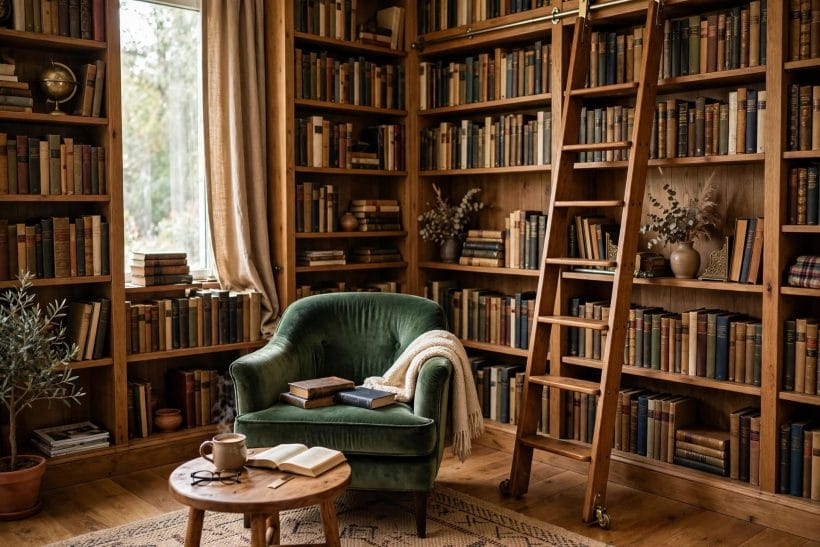
The last family shares, shrinks or borrows its ground: nooks for two readers, nooks in bedrooms and tiny homes, and the nook that exists only at certain hours. The bedroom versions below are the large end of a discipline whose small end — a chair, a shelf and calm in a compact sleeping room — is worked through under the bedroom ideas pillar, and every one of the five stays inside the space it honestly has.
11. The Two-Chair Companion Nook
Two chairs angled toward each other across one lamp and one shared table make reading a companionship instead of a solitude. It suits couples who read different books in the same silence, and its only rule is that the lamp serves both pages fairly.
12. The Bedside Nook That Is Not the Bed
A chair in the bedroom, distinct from the bed, with its own small lamp: for the reader who wants the room’s quiet without the bed’s invitation to sleep. It keeps bedtime reading honest and gives insomniacs a parish that is not the pillow.
13. The Tiny-House Nook, Folded Into the Plan
In the smallest homes the nook must be designed, not found: a window bench that is also storage, a loft corner with a cushion and a rail of books. Its lesson travels to every home — a nook planned at the drawing stage costs almost nothing and gives daily.
14. The Curtained Daybed Nook
A daybed backed against a wall, hung with a curtain that can be drawn, is a nook, a guest bed and a sick-day refuge in one piece of furniture. By day the curtain stays open and the seat reads; drawn, it is the most private seat in the house.
15. The Borrowed Nook: Library, Garden and Hour
The final nook is borrowed: the library’s deep chair, the garden bench at the quiet hour, the kitchen chair while the bread rises. Naming them as nooks — with a book kept ready for each — turns the whole week’s geography into reading places, which is this guide’s real ambition.
6. The Seat Itself: Depth, Support and the Long Chapter
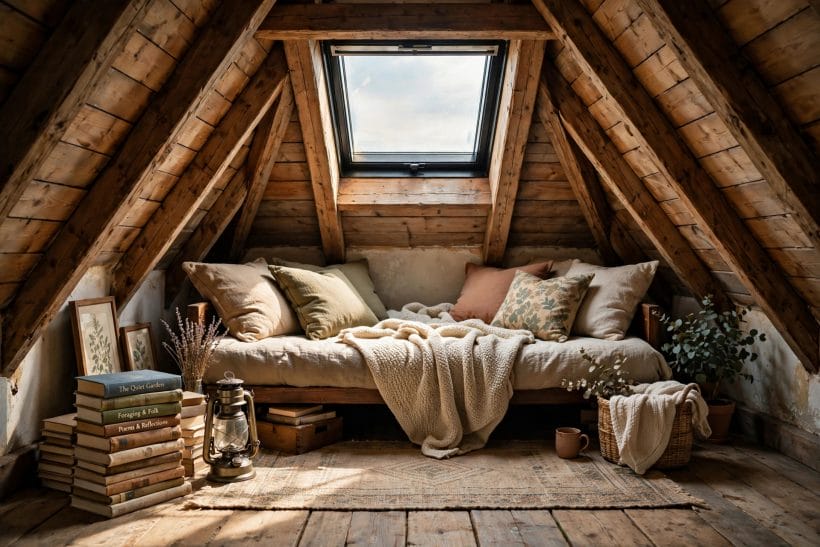
Every nook in the fifteen stands or falls by its seat, because reading is measured in chapters, not minutes. The seat wants depth enough for a curled leg or a cushion at the back, a backrest angled for leaning rather than sitting to attention, and arms or a wall at the height an elbow actually rests. Test any nook seat with the longest book you own: discomfort at page fifty is a design fault, not a discipline failure, and it is fixed with cushions, a footstool or a different chair — in that order of expense.
The seat’s supporting cast decides the long chapters: a footstool or a low pouffe that lets the legs change their mind, a cushion that fills the small of the back exactly, and a throw within reach for the hour when the room cools. None of these is decoration. Each removes one small reason to get up, and a nook’s success is measured precisely in reasons to get up removed — the drink at the elbow, the book at the hand, the feet at rest. Fit them once, in the nook’s first week, by the evidence of your own restlessness.
Small rooms make the test stricter, because the nook’s chair is often the room’s only chair and must serve guests and dressing as well as reading. The compact end of that double duty — a slim chair, a wall ledge for the book, light at the pillow’s scale — is fitted piece by piece in the small bedroom ideas post; the principle that travels is that the seat is chosen by the body first and by the photograph never. A nook whose seat is wrong will be admired and unused, which is the saddest fate in this guide.
7. Light for Reading: Daylight’s Manners and the Lamp’s
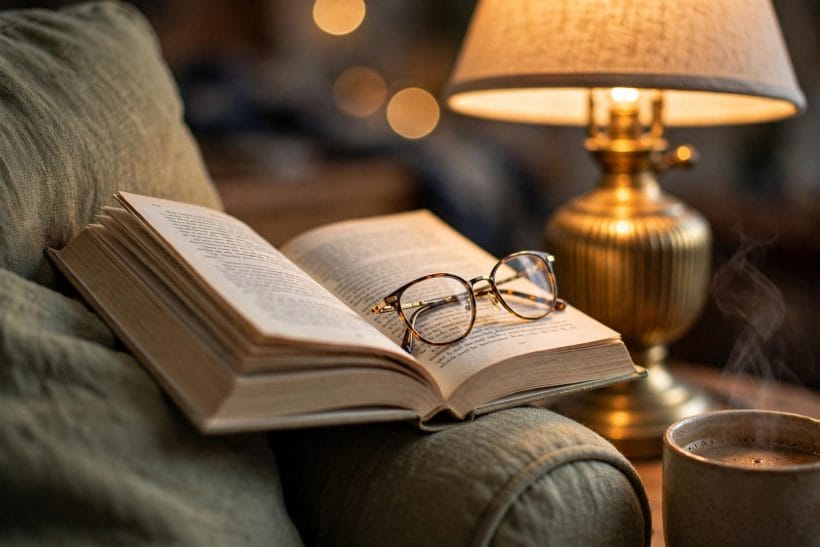
Reading light has one job — to make the page the brightest calm surface in the reader’s view — and two servants, the window and the lamp. Daylight should arrive from the side or over the shoulder; a reader facing a bright window squints at a dark page, and a reader backlit by one reads their own shadow. Blinds, sheers and the chair’s angle are the daylight tools, and they cost almost nothing compared with the years of reading they protect.
The lamp takes over at dusk, and its rules are placement and warmth: behind or beside the shoulder, aimed at the page, warm in tone, and steady. The sunniest version of the lamp’s work — a seat placed for all-day natural light among glass and planting — is surveyed in the sunroom ideas post; in ordinary rooms, one good lamp per nook, positioned once with a book in hand at night, outperforms any number of decorative fittings. Fit the light to the reading, never the reading to the light.
8. Books Within Reach: Shelves, Stacks and the Current Pile
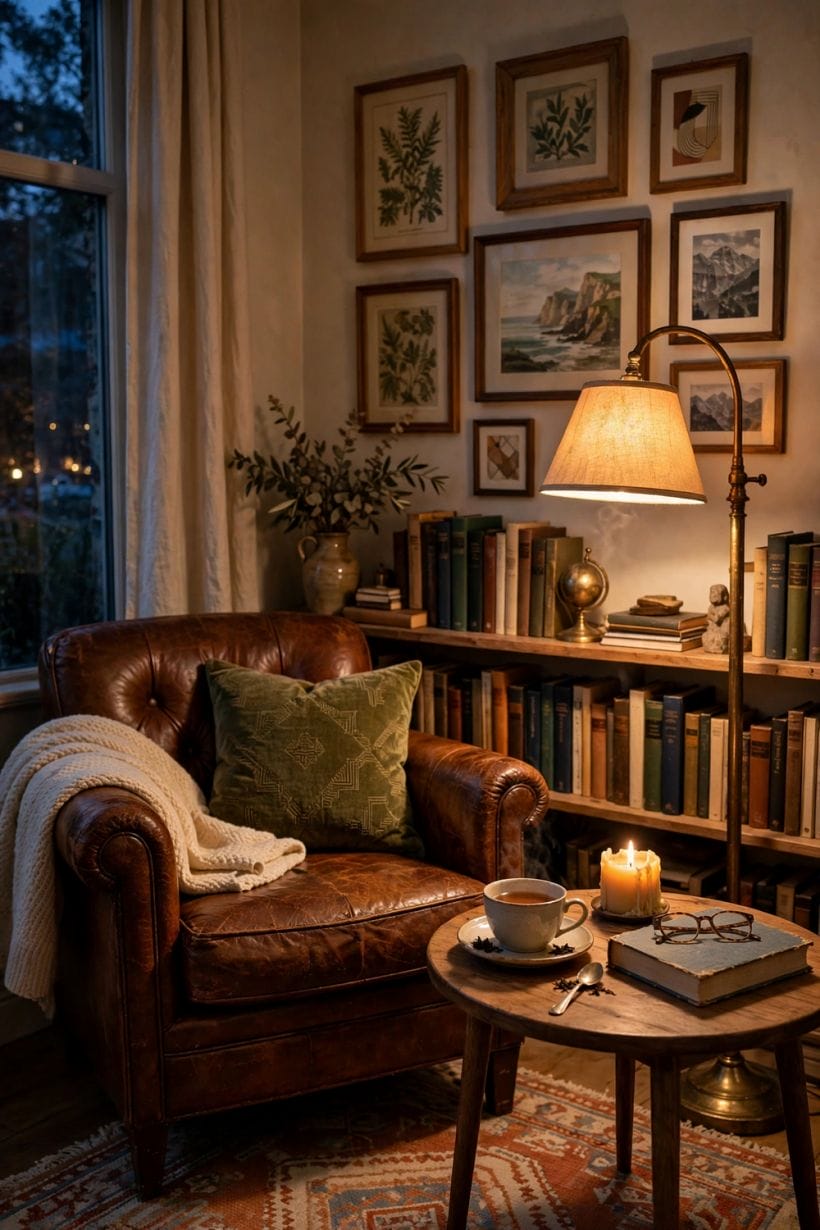
A nook without books is a chair waiting for a purpose. The provision need not be a library: one shelf, a crate, a window-ledge stack — enough for the current book, the next book and a small reserve of returns and rereads. Keep the current pile at the seat’s elbow and the reserve within the room, and the nook never sends its reader on an expedition that ends, book forgotten, in another room’s distractions. The same at-elbow logic, applied to a whole small living room’s storage and seating, is arranged in the tiny house living room ideas post.
Shelving near a nook should be honest about its scale. A tall bookcase beside a deep chair is a library’s promise; a single shelf is a nook’s sufficiency, and both are respectable. What fails is the middle muddle — books stacked on the floor in the route, on the seat itself, or in piles that must be moved before sitting. The styling discipline that keeps small living spaces composed around their books and seats is the same one taught in the how to decorate a tiny living room guide: every surface given a parish, every pile given a home. Give the nook’s books their home first.
9. Checks and Mistakes: Before You Build the Window Seat
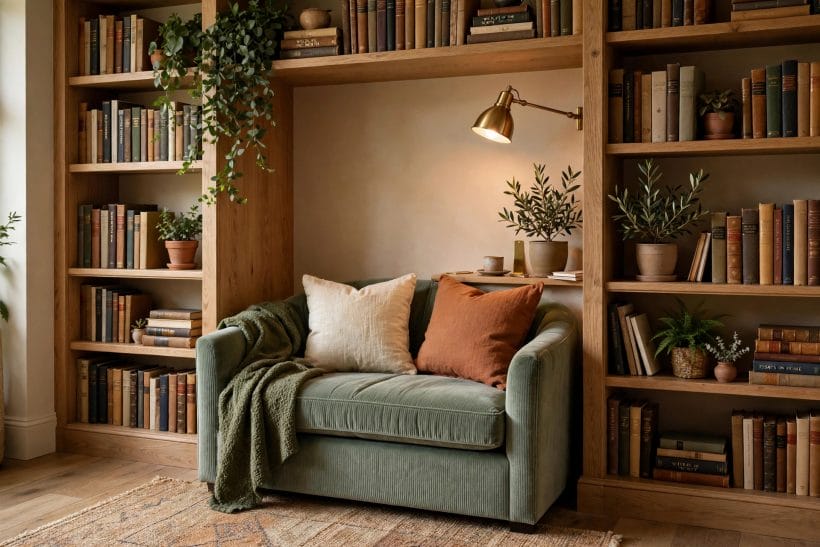
Check a nook as this guide checked its fifteen: sit in the proposed place with a book at the hour you will actually read, and stay for a full chapter. Note the light at that hour, the draught, the noise from the kitchen and the street, and where the book will live when you stand up. Most nook failures are location failures discovered in that single honest chapter — the beautiful bay that glares at reading time, the alcove that hears every pipe in the house.
The common mistakes are furniture-shaped: the chair bought for its looks that punishes the back, the lamp placed for symmetry that lights the wall instead of the page, the window seat built before its cushions were priced. Each is avoided by this guide’s order — place, seat, light, books — and by testing with the body before spending on the building. The whole subject sits inside the wider survey of the home’s rooms in the home design ideas pillar; the nook is that survey’s smallest citizen, and its most used.
10. Costs and Pulling It Together
Costs stay qualitative, as honest furnishing advice must: the economical end of the nook is arrangement — a chair angled to a window, a lamp moved to the shoulder, a crate of books at the elbow; the expensive end is joinery — a built window seat with drawers, a converted closet, fitted alcove shelves. The order in this guide spends the free money first, and many households will find their favourite among the fifteen costs them a cushion and an afternoon.
Pull it together in the sequence kept here: choose the family that fits your house, test the place with a full chapter, fit the seat to the body, place the light on the page, and home the books within reach. Then read — the nook is finished not when it photographs well, but when the household starts disappearing into it.
Final Considerations
A reading nook is the smallest room a house can gain and, hour for hour, often its most used. Give one corner the seat, the shelter, the light and the books it asks for, and the house changes character: there is now a place where reading happens, visibly, invitingly, every day. Start with the chapter test in the place you already suspect — the right corner has usually been waiting, patiently, with the light falling kindly on an empty floor.

0 Comments