

A teenager’s bedroom must be four rooms at once: somewhere to sleep, study, relax and be private. This guide plans it properly, with layouts that divide the jobs, colours that can grow up, honest costs and the practical details families forget.
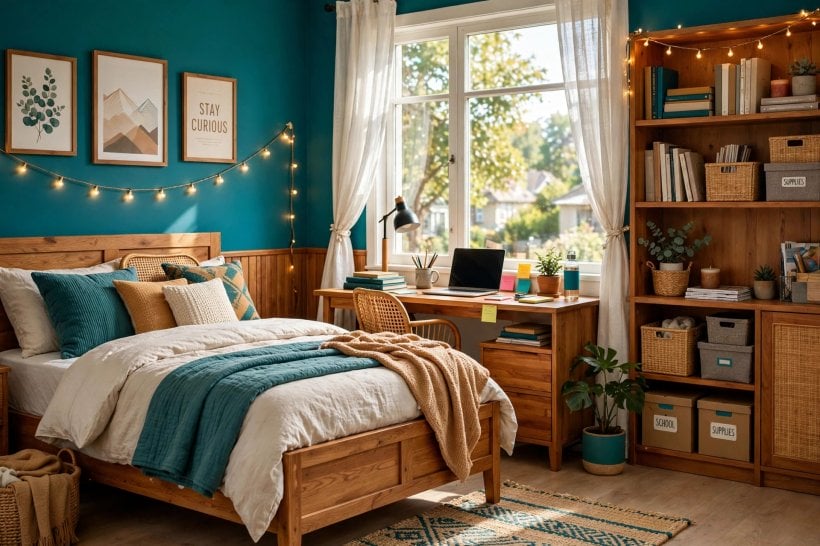
1. Teen Room Ideas at a Glance
The rooms that work best share a simple secret: they are planned in zones, decorated in layers that can change cheaply, and agreed with the teenager rather than imposed on them. The summary below sets out the decisions that matter before the sections explore each one.
| Zone or decision | What works | What to avoid |
|---|---|---|
| Sleep zone | A real bed, blackout-friendly curtains and a calm corner | A novelty bed that will embarrass at sixteen |
| Study zone | A proper desk, task light and charging within reach | Homework on the bed with a laptop and no plug nearby |
| Social zone | Floor cushions, a spare seat and room for two friends | Furniture so precious friends cannot relax on it |
| Colours | A grown-up base with changeable accents and textiles | A themed scheme that ages out within two years |
| Costs | Money on bed, desk, chair and storage; savings on decor | An expensive theme built around one passing interest |
| Agreement | Teen chooses colours and display; parents set budget and rules | A surprise makeover the teenager never asked for |
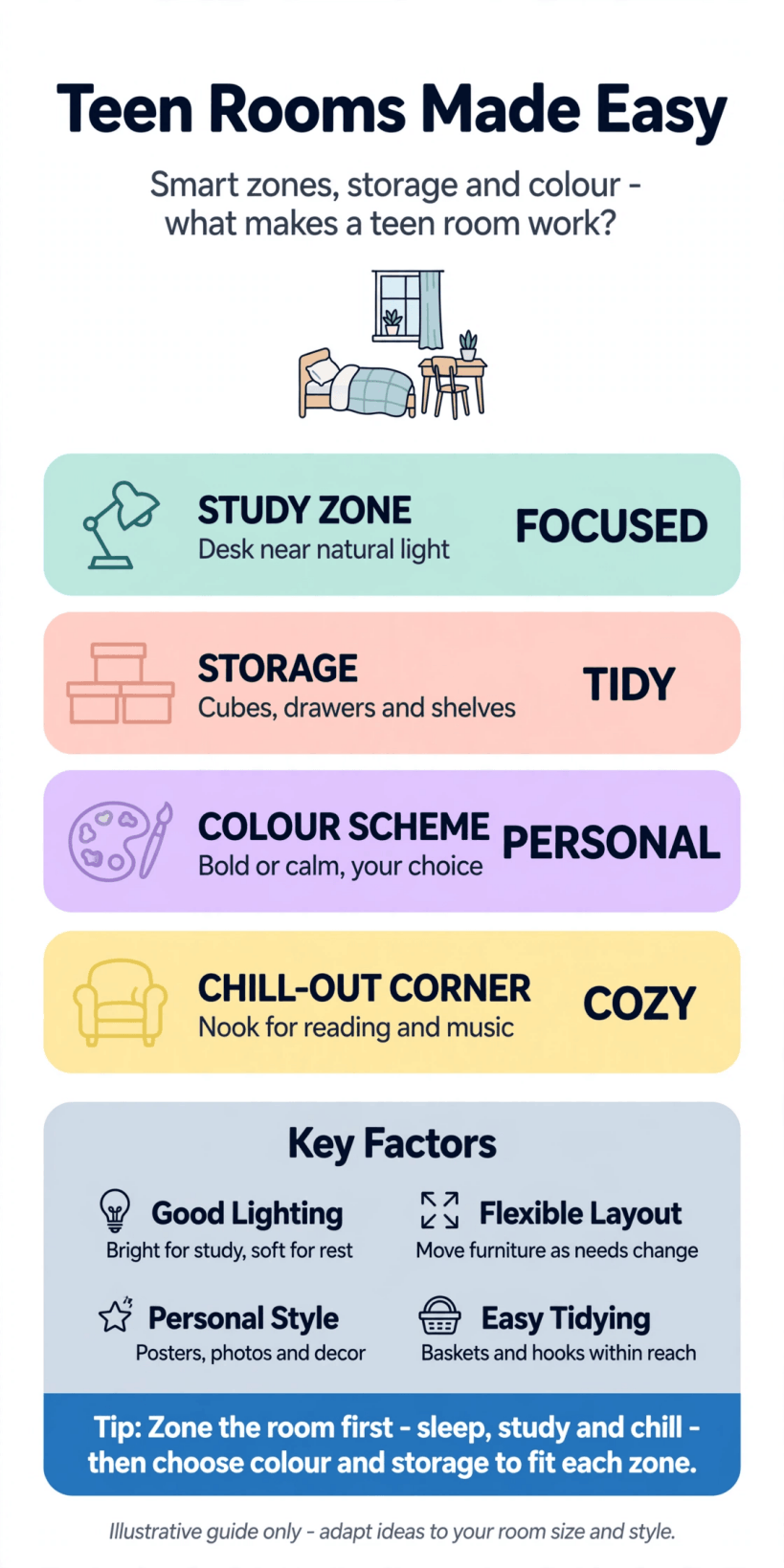
A teen room at a glance: plan four zones — sleep, study, social and storage — keep the base grown-up, and let textiles and posters carry the personality.
2. Start With the Teen, Not the Theme
The most common mistake with teen rooms is designing for the child you remember instead of the young adult in front of you. Tastes at thirteen change monthly, and a room locked into one theme — one band, one game, one colour at full saturation — will feel wrong before the paint is fully cured. Start instead with a conversation about how the room is actually used: gaming or reading, friends staying over or solitude, homework at a desk or art on the floor.
Give the teenager real choices inside a frame you control. They choose the accent colours, the posters, the bedding and the layout of the display shelves; you keep hold of the budget, the big furniture and anything involving drills and wiring. That division respects their growing independence while protecting the household from a neon ceiling neither of you can undo cheaply.
Agree, too, on what success looks like in a year. A room designed to evolve — a pinboard that changes, shelves that rotate, textiles that swap — will still feel personal at seventeen, which is exactly the thinking behind small bedroom interior design ideas that must serve changing lives in fixed footprints.
3. Layouts: Sleep, Study, Social, Storage
Draw the room as four zones before you buy anything. The sleep zone wants the quietest corner, away from the door’s swing and the radiator’s glare. The study zone wants the best natural light, ideally a desk near the window but not facing it, so screens stay readable. The social zone can be as simple as a rug, two floor cushions and permission to sit on the bed, and the storage zone should run along one wall so it never fragments the room.
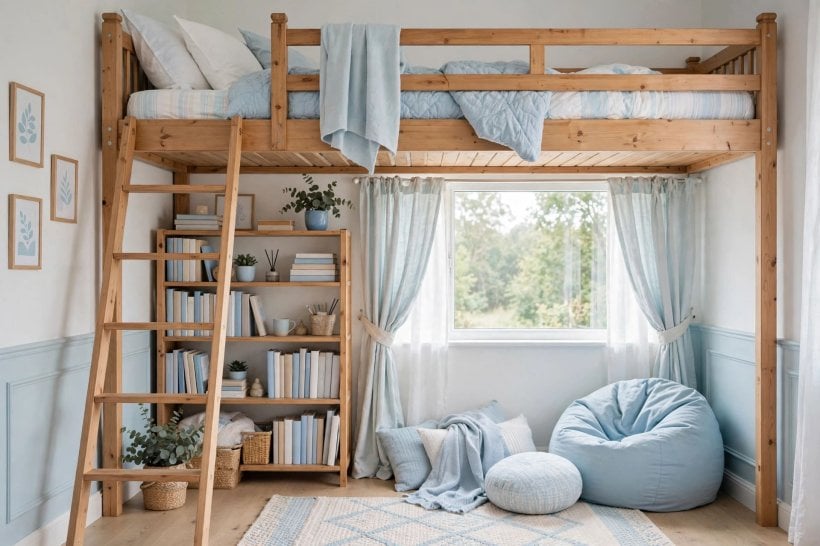
In small rooms, furniture that stacks jobs wins: a mid-sleeper or loft bed with a desk or den beneath, a storage ottoman that is also a seat for a friend, a wardrobe with the mirror inside the door. In larger rooms the same zoning stops the space feeling like a corridor with a bed in it, which matters more than square metres, as anyone who has worked through designing their own tiny house plans and layouts will recognise instantly.
Keep one patch of floor genuinely empty. Teenagers rehearse dances, dump bags, spread projects and pace while thinking on that patch, and a room with no unassigned floor will feel cramped however clever the storage is.

4. The Study Zone: A Desk That Gets Used
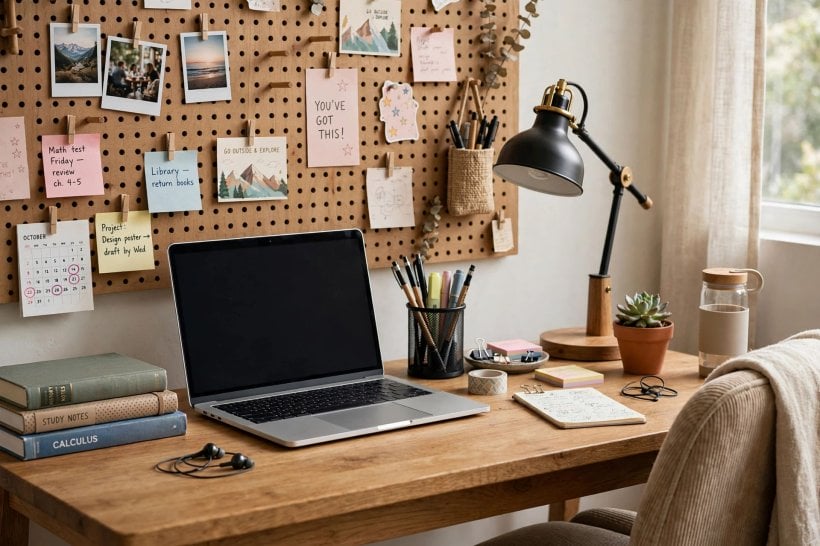
Exams are not passed on sofas, so the study zone deserves grown-up seriousness. A desk wide enough for a laptop, an open book and a drink, a chair that supports a real sitting posture, and a task light that aims at the page rather than the eyes: these three things decide whether homework happens at the desk or migrates sadly to the bed. Position matters as well; a desk facing a wall with a pinboard above it gives focus, while a view of the television gives the opposite.
Power is the practical detail everyone forgets. Modern school life runs on charged devices, so sockets or a safe charging station at the desk end the nightly trail of cables across the floor. A small shelf or drawer for chargers, pens and the mysterious cables every teenager accumulates keeps the work surface clear enough to invite work.
Make the zone slightly separate in feel: a rug under the desk, a different light temperature, a board for timetables and ambitions. The psychology of a place that means work is a real study aid, and it costs almost nothing compared with the furniture inside it.
5. Colours That Can Grow Up
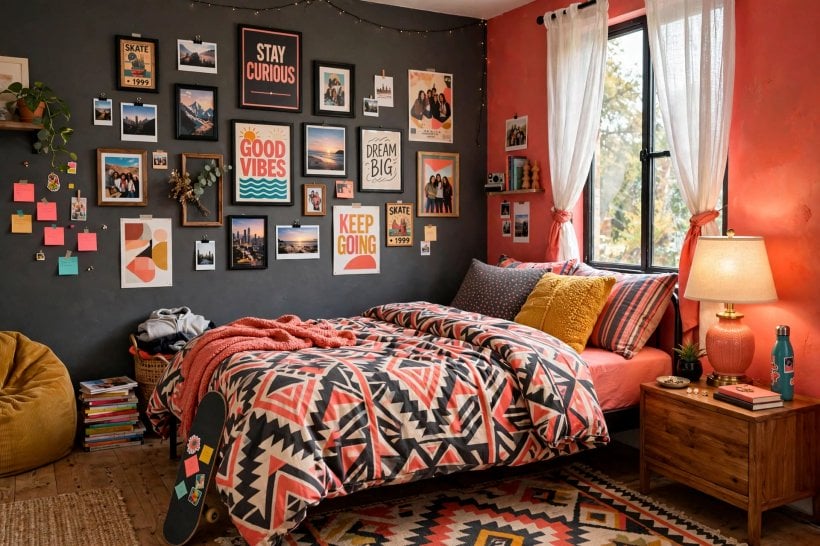
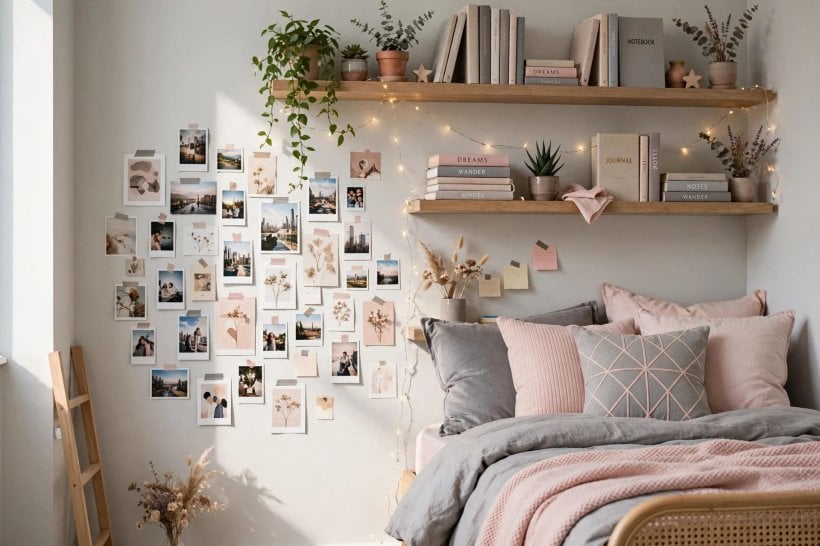
The safest teen palette is a grown-up base with rebellious accessories. Walls in a soft neutral, warm white or muted version of a favourite colour will still look right in three years; the personality arrives through bedding, cushions, posters, a rug and lighting, all of which can change for the price of a pizza night when tastes move on, as they certainly will.
Strong colour is welcome — in the right dose and the right place. One deeper wall behind the bed, a painted desk, coloured storage boxes or a bold headboard give the drama teenagers crave without repainting the whole room at every birthday. Test bold shades in the room’s real light and live with a tester patch for a week; north-facing rooms cool colours down and small rooms amplify them.
For palettes that layer personality over a calm base, the approach in modern interior design ideas is a helpful model: few colours, repeated with confidence, texture doing the work that clutter tries to do.
6. The Bed and Getting Real Sleep
Teenagers are biologically wired to sleep late and wake late, which makes the quality of the sleep they do get even more important. The bed is therefore the last place to economise: a proper mattress, blackout-friendly curtains or a blind that actually darkens the room, and bedding that can be washed easily and often. A bed that is comfortable only for sitting on is a failed bed, however photogenic it looks at noon.
Size the bed for the teenager who is coming, not the child who is here. A fast-growing fourteen-year-old in a short bed will be uncomfortable within the year, so measure honestly and choose the largest bed the zones allow, even if it means the social zone borrows floor cushions instead of a chair. Under-bed storage drawers reclaim the footprint for out-of-season clothes and the archive of school projects nobody may throw away.
Sleep hygiene has a design side too: a small bedside surface, a warm low light for reading, and a home for the phone that is not the pillow. The restful-room principles in tiny house interior design ideas — calm colours, clear surfaces, layered light — apply perfectly to the sleep corner of a teen room.
7. Storage and the Floor-First Rule
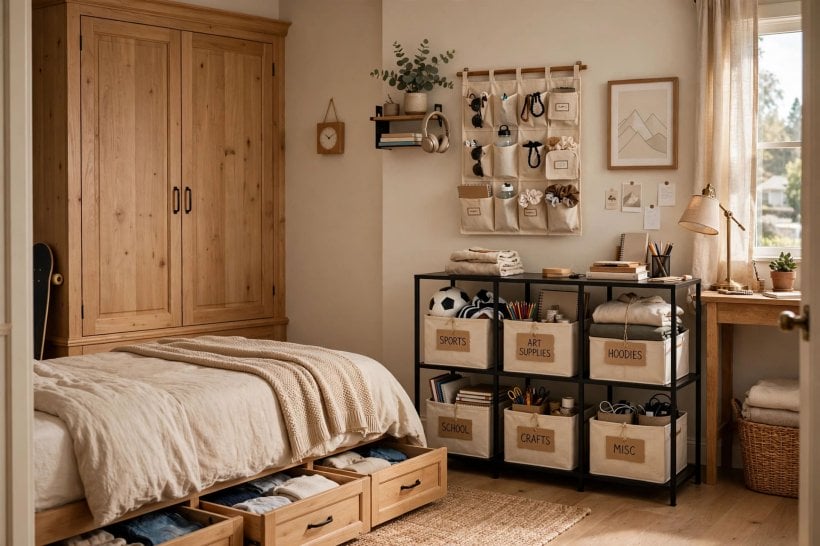
Every teen room argument is, at heart, a storage failure wearing a disguise. Clothes live on the floor when the wardrobe is awkward, school kit explodes when there is no landing zone by the door, and collections colonise the desk when display shelves run out. Design the storage from the teenager’s real inventory: hanging space that fits actual clothes, drawers that open fully, a shelf run for books and trophies, and hooks by the door for the bag, hoodie and instrument of the term.
Adopt the floor-first rule together: if it has a home it is not mess, and everything must have a home. Open storage where tidying must be fast, closed storage where visual calm matters, and a regular, agreed clear-out rhythm before birthdays and holidays when new things arrive. Labels are uncool for exactly one week and useful forever.
The small-space storage discipline in small home interior design ideas translates directly: vertical space counts, dead corners are opportunities, and the best storage is the kind a tired teenager will actually use at midnight.
8. Lighting, Screens and Sound
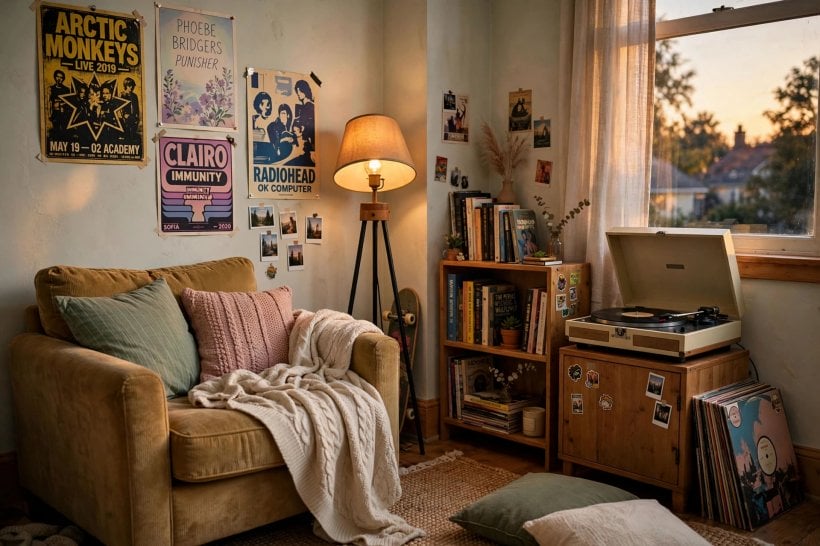
One ceiling light is why most teen bedrooms feel like waiting rooms. Layer the light instead: a decent main light for finding things, a focused task light at the desk, a warm lamp by the bed for reading and winding down, and, if the teenager wishes, decorative string or strip lighting for the social hours. Lighting on separate switches lets the room change mood as fast as its occupant does, for very little money.
Screens need a plan rather than a battle. A sensible charging spot outside the sleep zone, a stand or small shelf that gives a tablet or console a home, and cable management that keeps the floor safe all reduce friction. Gaming in the room is easier to live with when screens face away from the bed and sound is considered — a rug, soft furnishings and a door that closes properly absorb more teenage volume than any house rule.
Headphones, agreed quiet hours and a household understanding about late-night calls are social solutions; design simply sets the stage by making the room comfortable enough that the teenager wants to be there with the door open at least some of the time.
9. Costs: Spend, Save and Phase It
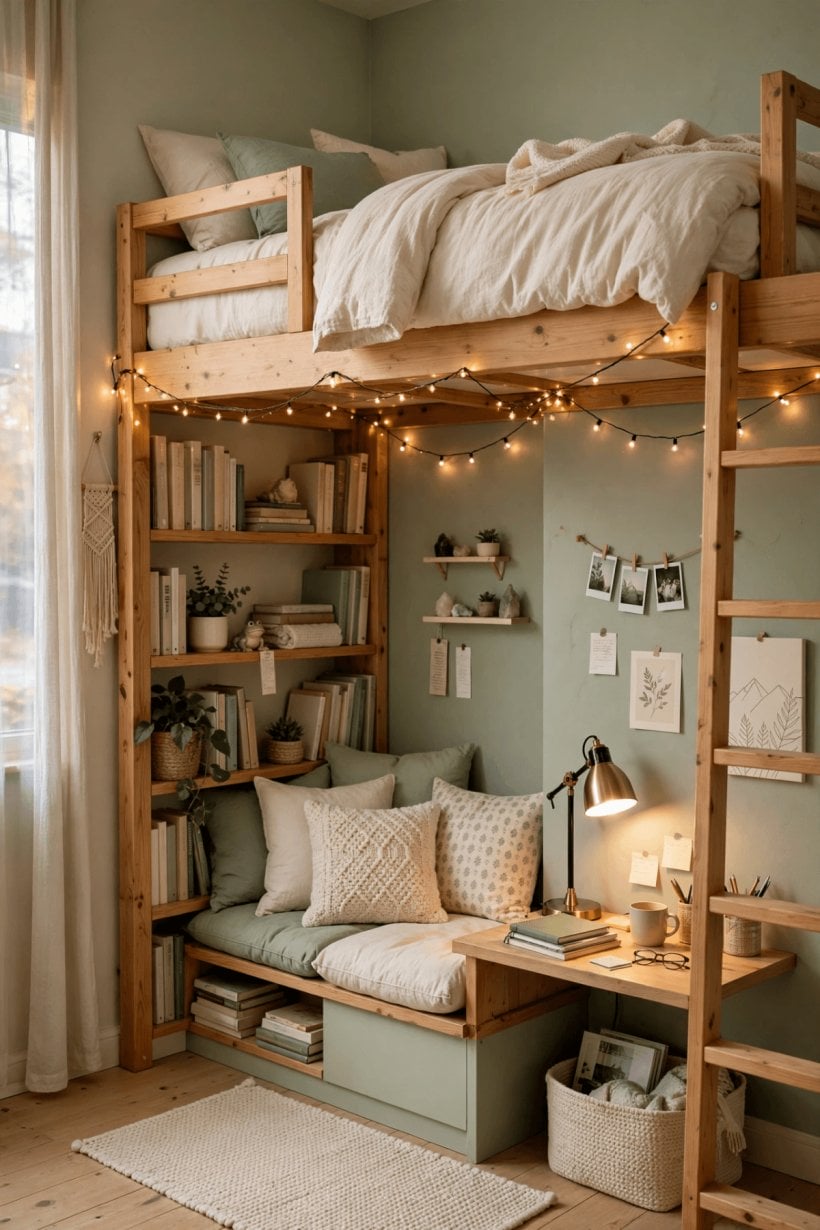
A teen room makeover can be done in one weekend splurge or in calm phases, and the phased route usually wins. Costs vary with room size, furniture quality and how much is done by professionals, so think in priorities rather than a single hoped-for figure. The durable spend is the bed and mattress, the desk and a proper chair, and storage that fits the room; these serve daily for years and are false economies when bought too cheaply.
The savings live in the decorative layer, and they are genuinely fun: posters and prints in inexpensive frames, bedding and cushions, a rug, paint on one wall, upcycled furniture and the teenager’s own artwork and collections as the display. The budget creativity in how to make a tiny house for cheap is the right spirit — resourcefulness first, shopping second.
Phasing also manages changing taste: zones and furniture now, a decor refresh at the next birthday, a study upgrade when exams approach. Each phase is small, affordable and agreed, and the room never becomes a monument to one expensive argument.
10. Privacy, Safety and House Rules
A teenager’s room is the one place in the house that is theirs, and privacy is a feature, not a problem: a door that closes, a knock that is respected, and space to display, dream and be untidy within agreed limits. In return, house rules are fair and clear — no candles or unsafe heaters, safe charging habits, windows and any loft or high beds used sensibly, and friends welcomed under the same expectations as anywhere else in the home.
Safety details are unglamorous and essential. Tall furniture in a room where teenagers climb, swing and pile in with friends should be fixed securely to the wall, shelving should not be overloaded, and any raised bed needs its guard rails used as intended and checked regularly. Trailing cables across a dark floor are a trip hazard in any bedroom and an easy one to design out.
Treat the room agreement like any other family contract: written in conversation, fair to both sides and revisited as the teenager grows. The room that teaches a young person to care for their own space is quietly teaching them to run a home of their own one day — the long game behind guides like how to build your own tiny house.
Final Considerations
The teen rooms that families remember fondly were never the most expensive ones. They were the rooms planned in zones, coloured to evolve, and negotiated with respect on both sides of the bedroom door — rooms that worked for homework at eight and for dreaming at midnight.
Start with the conversation, zone the layout, spend on sleep and study, save on the changeable layer, and let the teenager’s personality do the decorating. Do that, and a few square metres become a small, complete world — which is exactly what a teenager needs.

0 Comments