

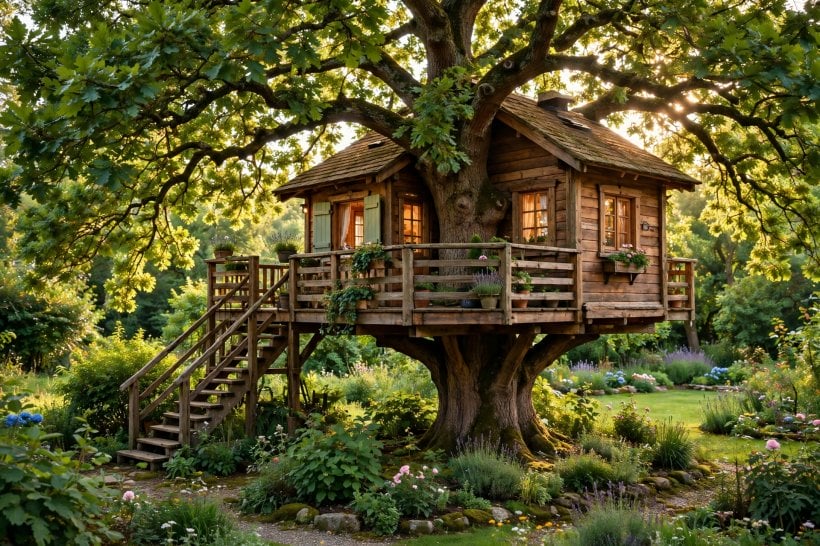
Everyone remembers the idea of a house in the trees: a ladder, a platform, a view through leaves. This guide turns that daydream into a buildable plan, covering layouts, colours, honest costs and the practical details that keep a treehouse safe and loved.
1. Treehouse Ideas at a Glance
A treehouse succeeds or fails long before the first board is cut. The tree, the access, the structure and the rules in your area decide what is sensible, and the summary below gathers those decisions in one place before the detailed sections explore each.
| Decision | Sensible approach | Common mistake |
|---|---|---|
| The tree | One or two healthy, mature trees checked for condition | Building around a young, weak or diseased tree |
| Layout | A simple platform first, rooms and levels added with care | A complicated design the structure cannot support simply |
| Access | Proper stairs for regular use, ladders for adventure | A ladder as the only route for small children or guests |
| Colours | Natural stains and greens that settle into the canopy | Bright finishes that shout across the garden |
| Costs | Budget weighted to structure, fixings and safe access | Spending on decoration before the platform is sound |
| Rules | Local rules and neighbours checked before building | Assuming a garden structure needs no permission anywhere |
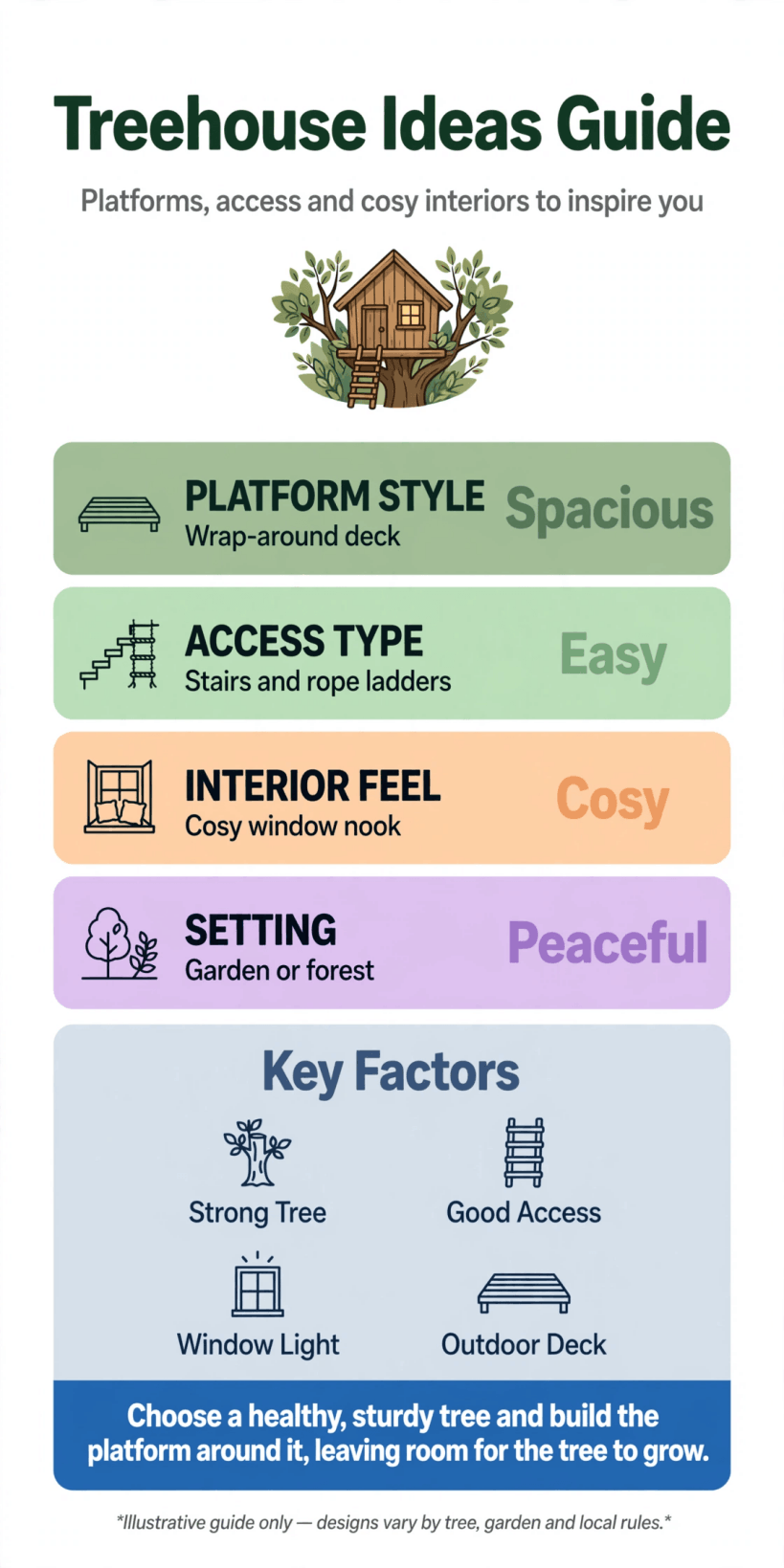
Treehouse essentials at a glance: start with a healthy tree, keep the layout simple, build safe access, choose canopy colours and check the local rules first.
2. Choosing the Right Tree Comes First
Every beautiful photograph of a treehouse is really a photograph of a tree doing quiet, heavy work. The best treehouse pictures share one thing the camera cannot show: a healthy, mature tree underneath, with a strong trunk, sound roots and branches that can share their strength with a platform. Species with deep roots and durable timber are traditional favourites, but condition matters more than species, and an experienced tree professional can tell you more in one visit than weeks of guessing.
Look at the setting with the same care. A tree near a boundary may grow a treehouse that overlooks a neighbour’s garden, which creates problems no design can charm away. Slope, drainage and the direction of the strongest winds all shape where the platform should sit and how it should be reached, and a tree that floods at the roots in winter is a poor foundation however fine it looks in June.
Plan for growth, too. A living tree moves, swells and leans a little more every year, so good designs allow the structure room to move with it rather than gripping it rigidly. Builders who work with trees, much like those behind how to build your own tiny house, will tell you the same thing: respect the structure you are given, and build to suit it.
3. Layouts: Platforms, Cabins and Multi-Level Designs
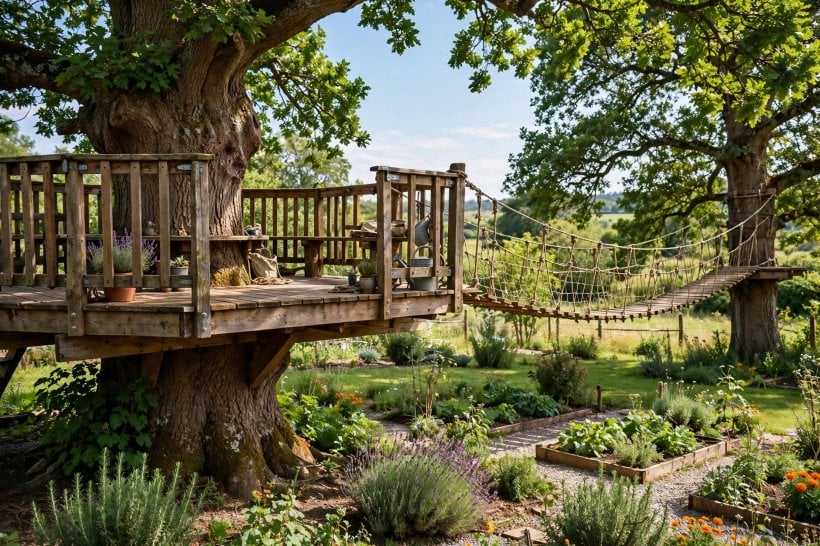
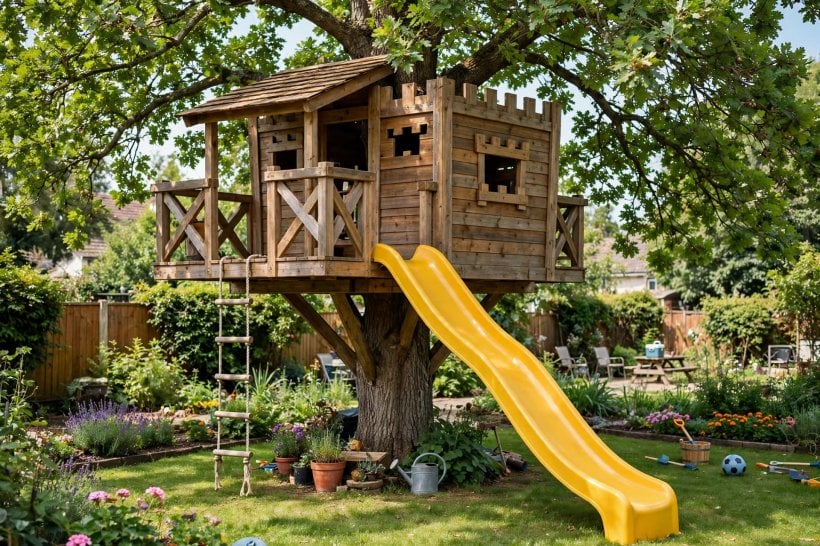
The simplest treehouse is a platform with a railing, and for many families it is also the best: a deck in the leaves for picnics, books and telescopes, cheap to build, easy to maintain and endlessly adaptable. Add a small cabin on that platform and you gain shelter, storage and the feeling of a real little house, with a door to close against the weather and a window framing the best view in the garden.
Multi-level designs link platforms at different heights with steps, bridges or a slide, and they are wonderful where the trees and the budget allow. Each added level, however, multiplies the structural questions, the cost and the supervision needed for younger children, so grow the design in stages: platform this year, cabin next, bridge when the family and the funds are ready.
Whatever the layout, keep the heaviest elements — the cabin, water storage, a crowd of teenagers — close to the trunk and the main supports, and let the platform edges stay light. Sketching the plan at real scale first, as you would when you design your own tiny house plans and layouts, keeps ambition and structure in honest proportion.
4. Access: Stairs, Ladders and Bridges
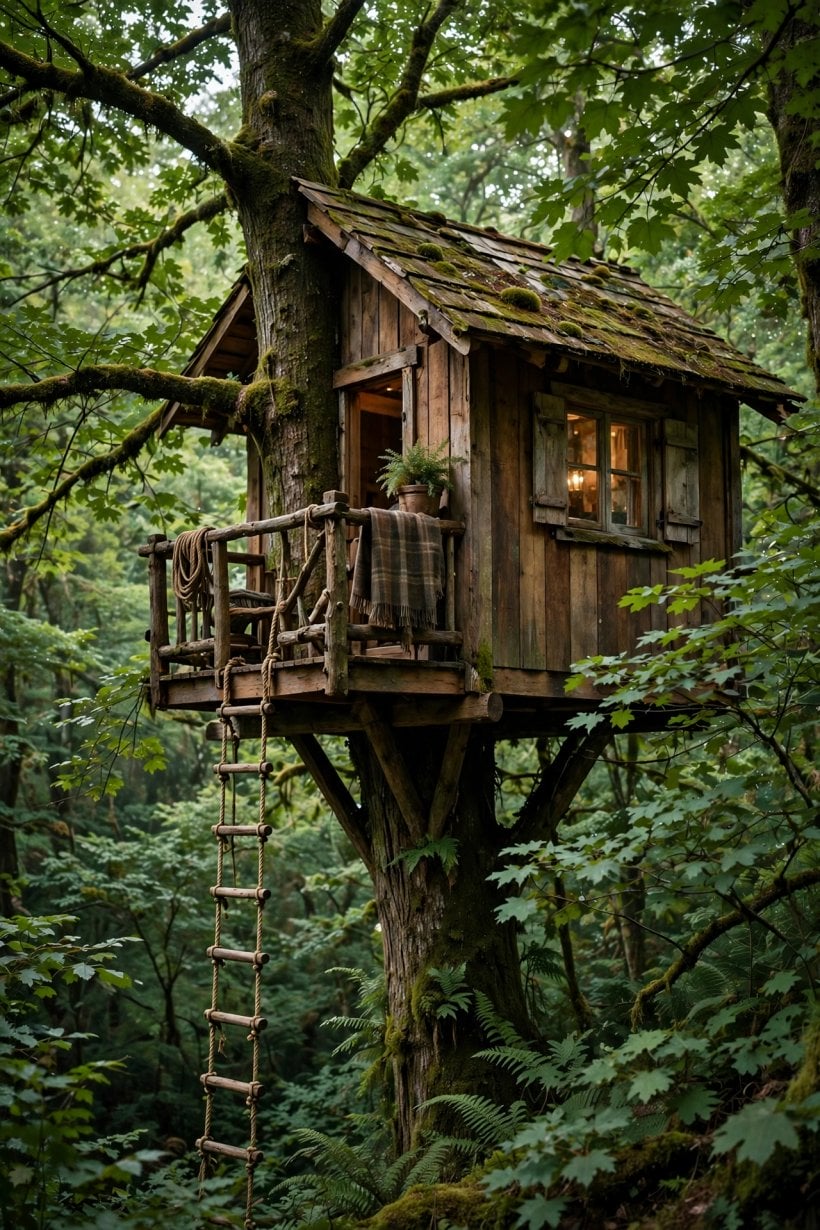
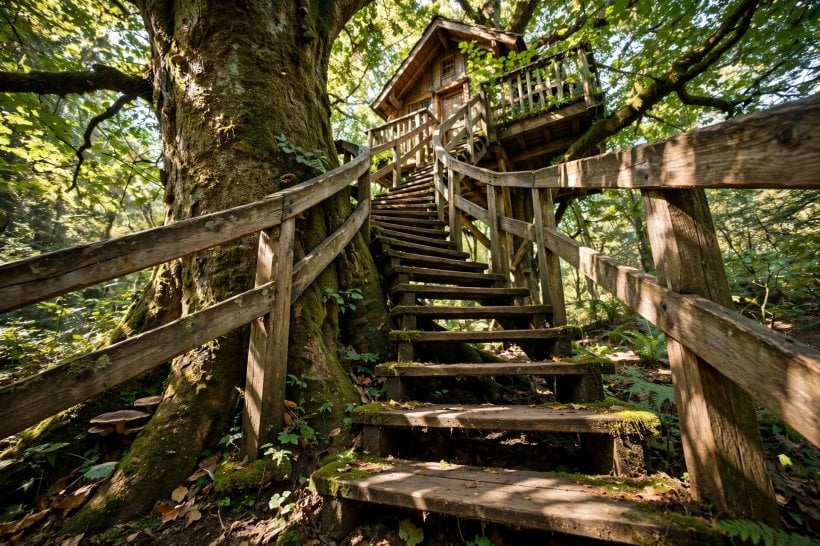
How you reach a treehouse decides who can enjoy it. A ladder is compact, cheap and full of adventure, and confident older children love it, but it excludes grandparents, smaller children carrying anything, and anyone with a tray of lemonade. Proper stairs with a handrail cost more and take more room, yet they turn the treehouse into a place the whole household can use casually, every single day.
Compromises work well: a ship’s ladder or alternating-tread stair saves space while still offering a handrail and a steadier climb than rungs, and a ground-level platform reached by a short flight suits younger children beautifully. Whatever you choose, treads should shed water, grip in wet weather and be lit or easy to find at dusk if the treehouse will host evening readers.
Railings deserve the same seriousness as the access itself. Platforms need secure rails at a sensible height, with gaps small enough to be safe for the youngest expected visitor, and gates or chains across stair openings for toddlers. Adventure is the point of a treehouse; an avoidable fall is not, and the two are easy to separate with a little honest carpentry.
5. Colours and Materials That Belong in the Trees
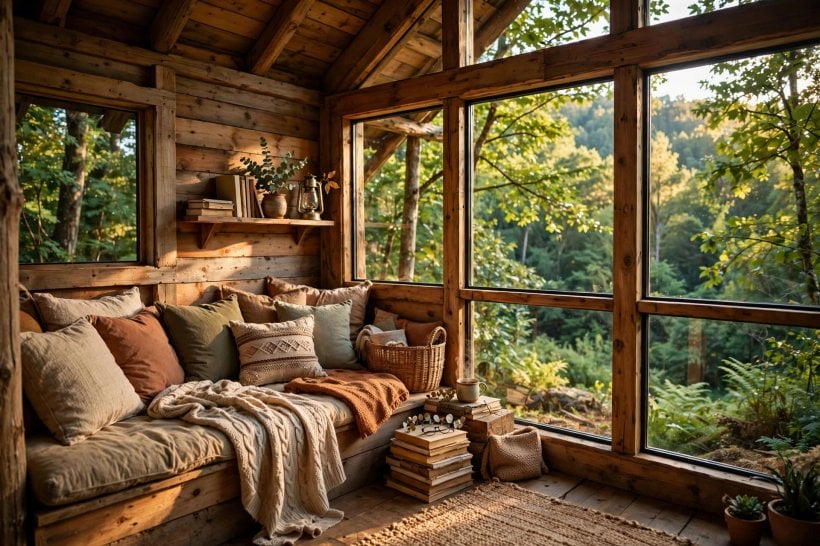
A treehouse should look discovered, not delivered. Natural timber, weathered boards and stains in bark, moss and leaf tones let the structure settle into the canopy within a season, while a roof in a muted green, brown or soft grey disappears against the foliage from the house and the street. Painted details can carry the fun instead: a coloured door, painted shutters or a name board in a cheerful contrasting shade.
Materials must earn their place in the weather. Timber suited to outdoor use, properly fixed and finished, will outlast indoor-grade boards many times over, and metal fixings chosen for exterior conditions will not stain or fail quietly out of sight. Roofs deserve special care, because a treehouse roof takes the full force of rain dripping through leaves long after a shower has ended.
Inside, pale colours and simple finishes borrow light from the leaves and make a small cabin feel airy, a trick borrowed happily from small home interior design ideas, where every shade is asked to work for its place.
6. Interiors: Sleep, Sit and Store in a Small Space
Inside a treehouse cabin, every centimetre behaves like a tiny home. A fold-down bed or a loft platform under the roof gives sleepovers their magic without eating the floor, built-in benches with storage inside them seat friends and swallow board games, and a small table under the window becomes the headquarters for drawings, dens and secret plans. Keep furniture light enough to move, because the room will reinvent itself weekly.
Light and air make the difference between a charming cabin and a damp box. Windows on two sides give a through-breeze and a view of leaves from any seat, and simple curtains or shutters give sleepers a lie-in. Battery lanterns and solar lights suit most treehouses better than fixed wiring, which belongs in professional hands and local rules, not in a weekend improvisation.
The compact-living tricks in tiny house interior design ideas translate perfectly up a ladder: hooks instead of wardrobes, baskets instead of cupboards, and nothing stored that is not loved, useful or part of the game.
7. Safety, Structure and Permissions
A treehouse is a structure before it is a fantasy, and it should be treated with the same respect as any building work. Loads travel through the platform into the tree and any ground supports, and fixings into a living tree are a specialist subject: use guidance from experienced treehouse builders, follow the instructions that come with proper fixings, and have the tree’s condition checked by a professional. This guide deliberately keeps structural advice general, because the right answer depends on your tree, your soil and your design.
Permissions vary widely. Some areas treat a small garden treehouse as a minor structure; others apply height, boundary or planning rules, and homes in protected areas can face extra checks. A short conversation with your local planning or building office before you build is far cheaper than rebuilding afterwards, and a friendly word with neighbours prevents most disputes before they start.
Build safety into the routine, not just the structure: an annual check of fixings, rails, steps and the tree itself, ideally in spring, catches weather damage and growth pressure while both are still small problems with small solutions.
8. Costs: Where the Money Really Goes
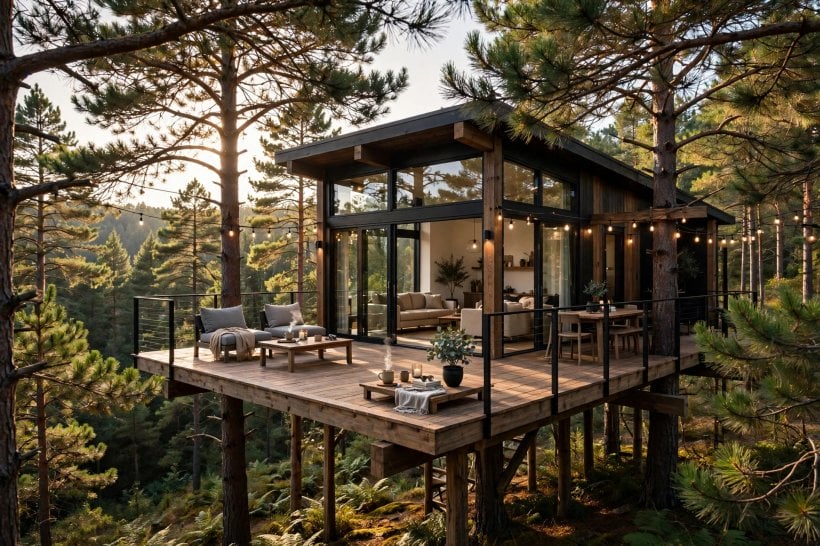
Treehouse costs stretch across a very wide range, from a modest platform built with family labour and reclaimed timber to a fully insulated guest cabin with professional design, and any honest guide discusses the drivers rather than promising a figure that cannot fit your garden. The main drivers are consistent: the size and height of the platform, the quality of the structural fixings, the access you choose, and whether a cabin, roof and interior joinery are part of the plan.
Spend in the right order. Structure and safe access come first, because they are difficult and expensive to improve later; the cabin shell and roof come next; decoration, furniture and fairy lights come last and can grow over years of birthdays. Reclaimed materials can trim the finishing costs considerably, as budget builders prove in how to make a tiny house for cheap, but structural timber and fixings are the wrong places to economise.
Remember the running costs, too: finishes need renewing outdoors, ropes and nets age in sunlight, and a growing tree may need professional attention. A small yearly maintenance allowance keeps a treehouse an asset instead of a slow-motion repair bill.
9. Weather, Wildlife and Day-to-Day Care
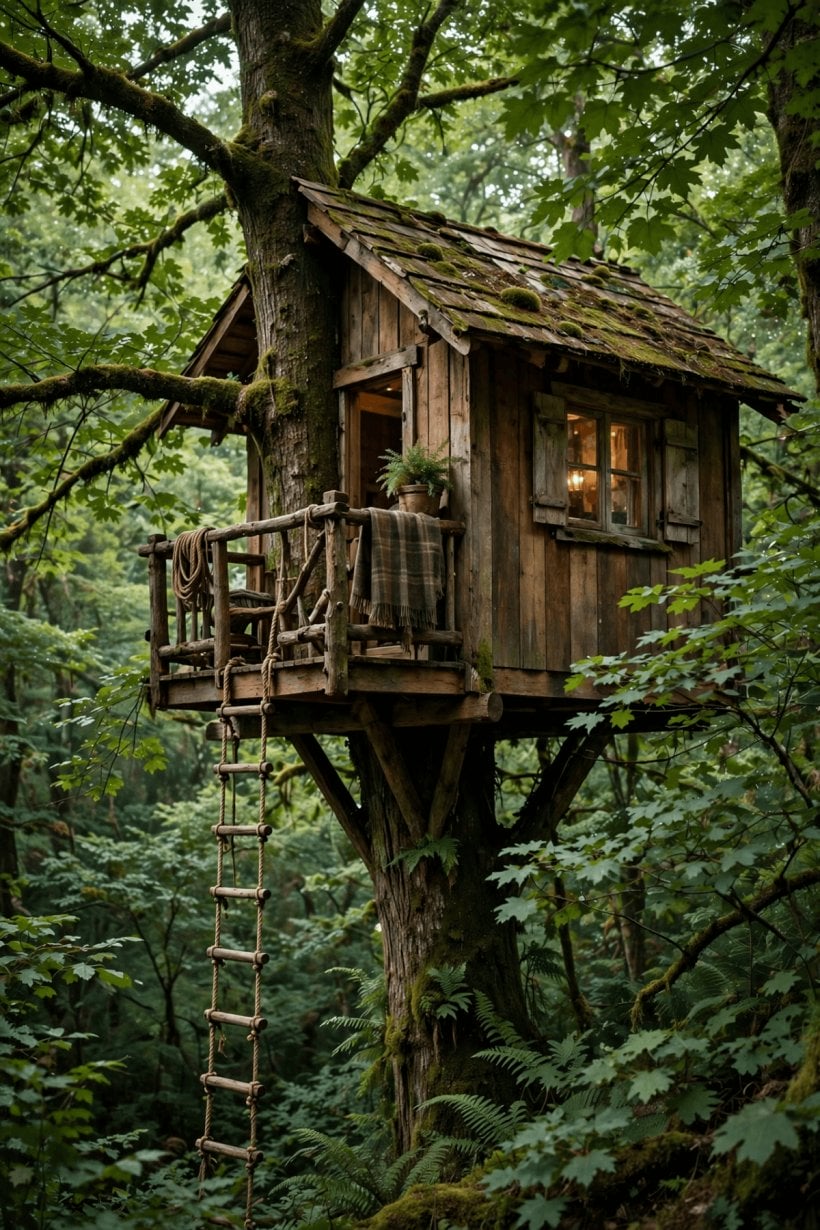
A treehouse lives outdoors in every sense. Rain finds every badly lapped board, autumn leaves fill every corner, and winter tests every fixing, so design the housekeeping in from the start: a roof overhang that throws water clear, boards laid so water escapes rather than pools, and a brush and a bucket kept up there permanently for the five-minute tidy that prevents the weekend rescue.
Wildlife will visit, and mostly that is the joy of the place: birds at eye level, squirrels using the roof as a motorway, leaves and seeds drifting through open windows. Discourage the less welcome tenants by storing no food up there, sealing gaps where wasps might found a colony, and checking in spring before the season’s first sleepover for nests in the eaves that deserve a respectful delay.
Power and light, if you want them, should stay simple and safe: solar lanterns, battery lights and perhaps a small solar panel for charging, the world explored in how much are solar panels for a tiny house, rather than improvised mains electricity in a damp, leafy structure.
10. For Children, for Guests, for Grown-Ups
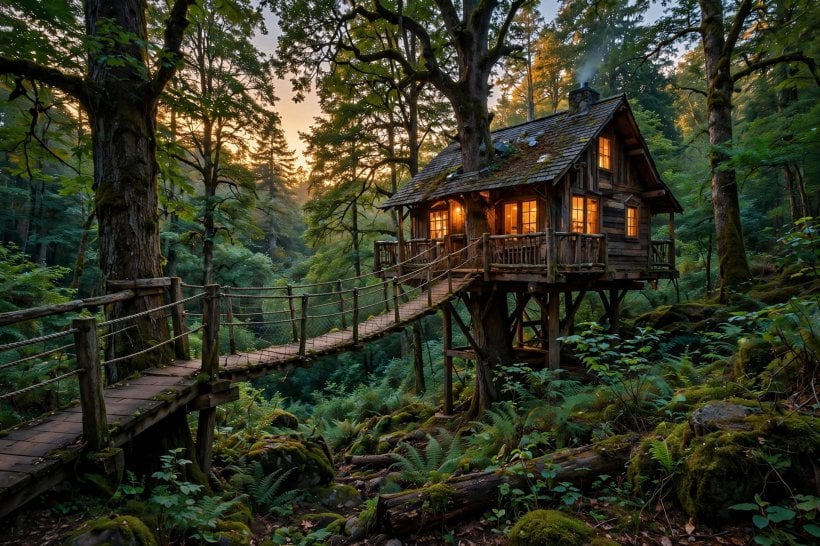
The classic treehouse belongs to children, and designed for them it should be: lower platforms, stairs they can manage, a pulley bucket for treasures, a chalkboard wall and room for a den to change weekly. Build with their growth in mind, though — the platform that thrills a six-year-old should still host a teenager’s reading chair, which argues for generous size and adult-grade structure from the beginning.
Guest treehouses and garden retreats are the grown-up branch of the family: a proper bed, a kettle’s worth of comfort, blackout blinds and a view composed like a painting. Here the interior lessons of modern interior design ideas help a rustic shell feel like a boutique stay, and a night in the leaves will do more for your guests than any spare room.
And do not overlook the simplest use of all: a quiet platform of one’s own, for coffee at dawn, work among the leaves or an hour with a book while the garden goes on below. A treehouse does not need a grand purpose; it needs a sound tree, a safe stair and a reason to climb, and it will invent the rest itself.
Final Considerations
Great treehouses are not really built from timber; they are built from a healthy tree, a simple plan, safe access and the patience to check the rules before the saw comes out. Get those four right and the rest — colours, cabins, bridges and fairy lights — is pleasure rather than risk.
Start with the platform, live with it for a season, and let the family’s real habits design the next stage. Years from now, the treehouse pictures you take in your own garden, with your own people in them, will be worth more than any in this guide — and they start with one honest look up into the leaves.

0 Comments