

Tennessee looks, at first glance, like tiny-house easy mode: no state income tax on wages, affordable land in much of the state, a building culture comfortable with small rural homes, and whole counties with no zoning at all. Look closer and the map splits three ways. The Smokies run a tourism economy that competes with residents for every cabin and lot; Nashville and the fast-growing suburbs are rewriting their housing rules under real pressure; and the unzoned countryside asks almost nothing up front while expecting you to solve septic, water and access yourself. Tiny house laws tennessee is the art of knowing which Tennessee your parcel is in.
This guide maps the split: how wheeled and foundation houses are classified, the building code and the small-house provisions Tennessee builders talk about, minimum sizes, zoning in zoned and unzoned counties, accessory dwellings from Nashville outward, the places you can legally live full-time, permits and inspections, examples from the Smokies to Memphis, and the practical steps that keep a Volunteer State project on the right side of its county. The summary up front: a code-built foundation tiny house is broadly achievable here — the traps are tourist-rental assumptions, septic failures and city minimums hiding inside otherwise welcoming ordinances.
1. Tiny House Laws in Tennessee at a Glance
The table below answers the questions Tennessee readers ask first. Notice the pattern: the state supplies a code framework and a famous appendix, counties decide whether zoning exists at all, and cities decide most of the questions that affect ordinary residential lots.
| Question | Tennessee in brief |
|---|---|
| Are tiny houses legal in Tennessee? | Generally yes. A small house on a foundation, built to the applicable code on land where a dwelling is allowed, is a legal full-time home in most of the state. |
| Is a tiny house on wheels a house or an RV? | An RV or vehicle in the eyes of most officials. Living in one full-time belongs in campgrounds, RV parks and other expressly allowed settings, not automatically on a residential lot. |
| Which building code applies? | Tennessee adopts a state residential code based on the international model code for jurisdictions that have not opted out or adopted their own; local adoption and enforcement vary, so confirm which code and edition your address follows. |
| What is Appendix Q and why do builders cite it? | Appendix Q of the international residential code is the model code’s tiny-house appendix — it relaxes specific rules for houses under 400 square feet, such as loft access and ceiling provisions. It helps only where the local code has adopted it, so verify adoption for your jurisdiction rather than assuming it. |
| How small can a house be? | Code room minimums apply rather than a state whole-house minimum. Some city zoning ordinances set minimum dwelling sizes; many counties set none. Check the local number before designing. |
| Are backyard cottages and ADUs allowed? | City by city. Nashville has been the state’s ADU leader with detached units allowed under conditions in defined areas; other cities vary from welcoming to silent to restrictive. |
| Where can I live in one full-time? | In a foundation house on suitable land, an allowed accessory unit, a manufactured-home community, or a park or campground placement for wheeled units within its stay rules. |
| What surprises buyers most? | Septic. Much of rural Tennessee runs on site sewage systems, and a failed soil evaluation can end a cheap-land plan faster than any zoning rule. |
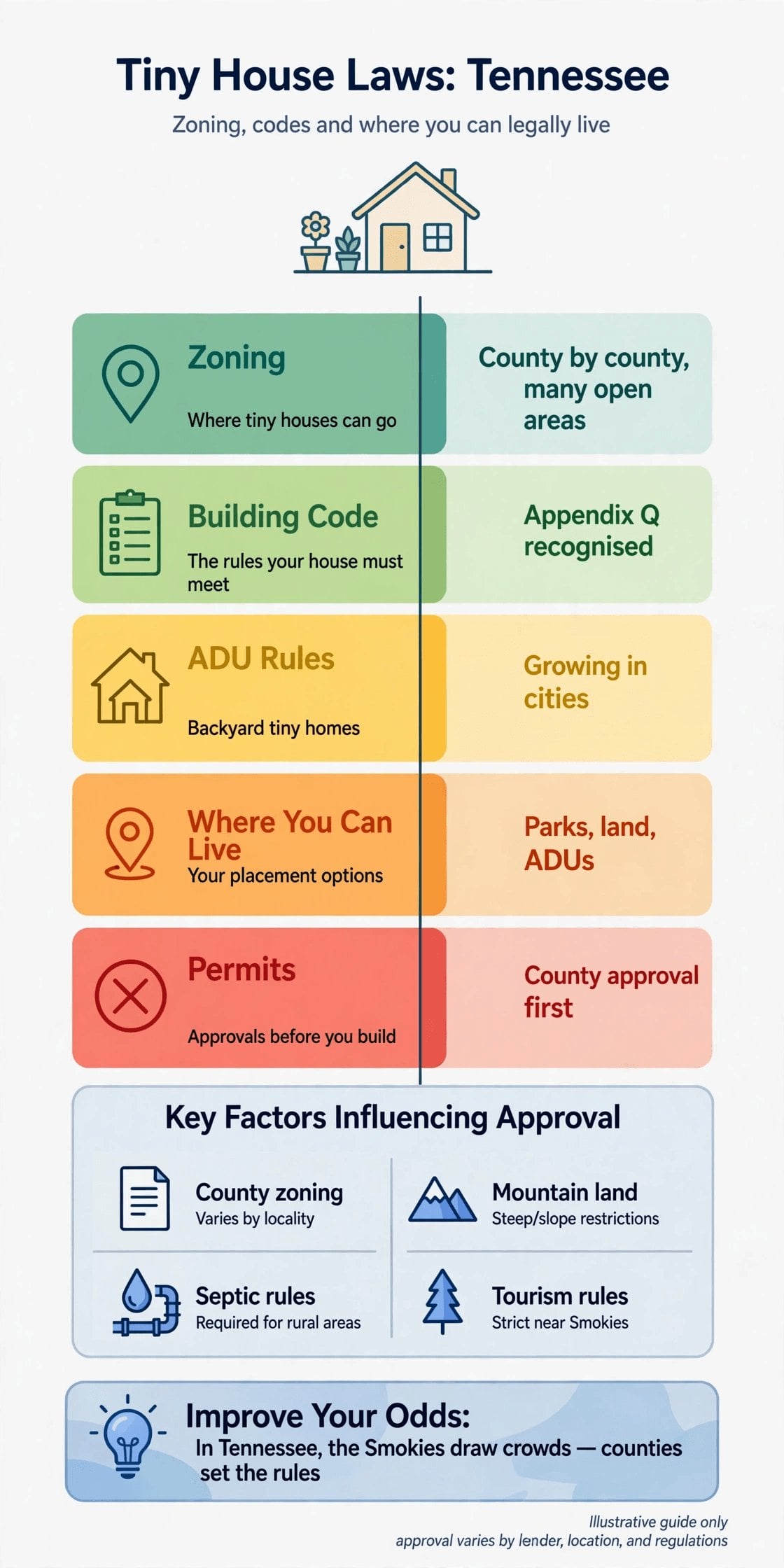
Tiny house laws in Tennessee at a glance — always confirm details with your county or city before you buy.
Read the table alongside a second map — the tourist map. Parcels within sight of the Smokies, the lakes or Nashville’s event economy are priced and regulated as income assets as much as homesites, and that single fact explains most of the friction tiny-house buyers meet in an otherwise permissive state.
2. Legal Status: What Counts as a Dwelling in Tennessee?
Tennessee classifies small homes the familiar way. A site-built or modular house on a permanent foundation is a dwelling, built under the residential code. A manufactured home follows the federal HUD code and its own rules. A tiny house on wheels is generally treated as a recreational vehicle or vehicle, which confines legal full-time occupancy to places that accept RV living — and makes RVIA certification for tiny houses relevant for parks, lenders and insurers.
As in every state in this series, classification quietly decides the rest: placement, financing, taxation and tiny house insurance for wheels vs foundation. Get the classification answer for your exact unit and address in writing before money moves, because the same 24-foot house is a home, a vehicle or a code violation depending entirely on which box an official puts it in.
3. Building Codes for Tiny Houses in Tennessee
Tennessee’s framework starts with a state-adopted residential code modelled on the international code, applied through a patchwork: larger cities and counties run their own codes and permitting, some jurisdictions operate under the state framework, and some rural areas have historically opted out of residential enforcement altogether. The practical meaning is simple — the first code question is not what does the code say, but whose code, if anyone’s, is enforced at your address, and the answer belongs in your project file.
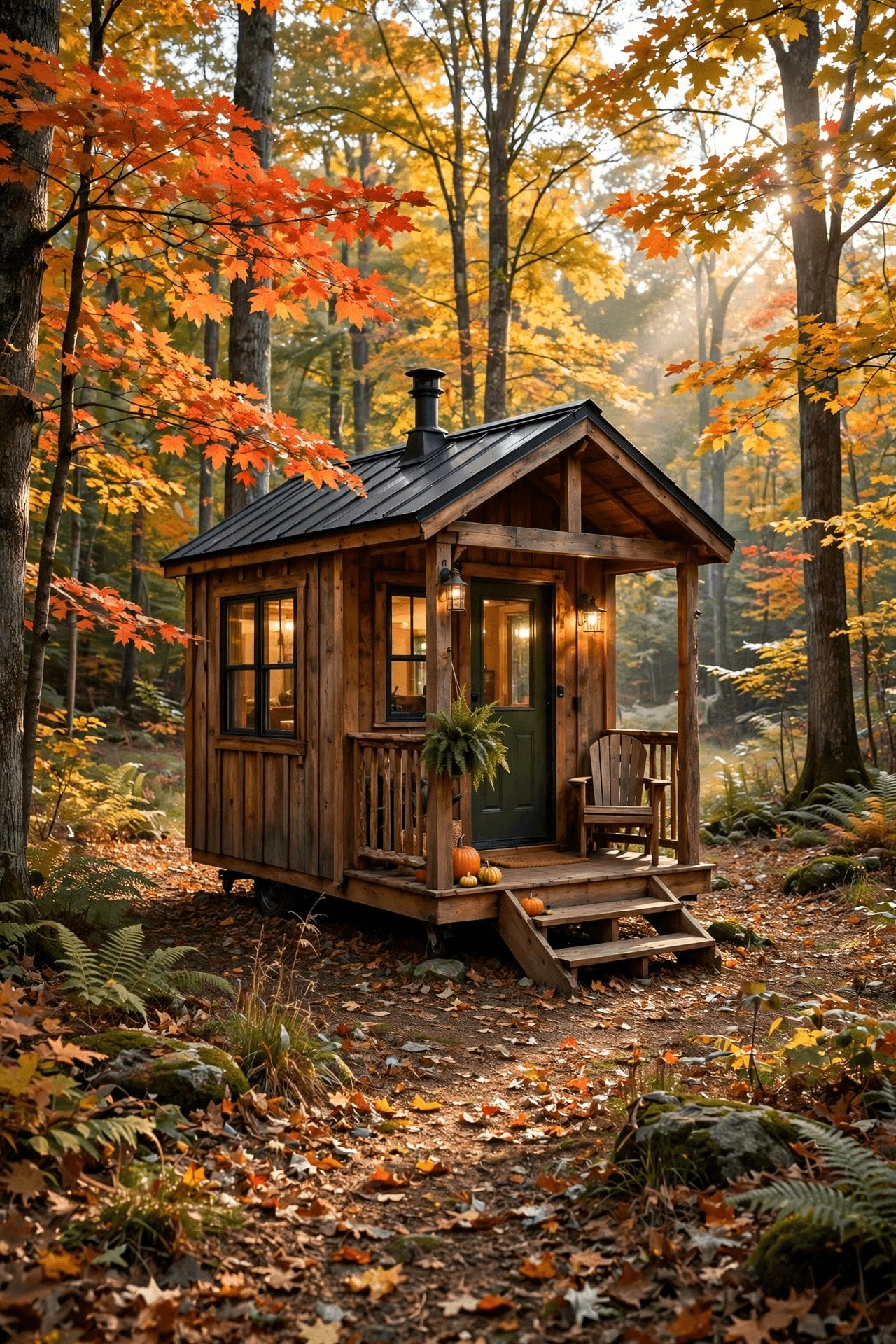
Within that patchwork, Appendix Q is Tennessee’s celebrity provision: the model code’s tiny-house appendix, written for dwellings of 400 square feet or less, with tailored rules for loft stairs and ladders, ceiling heights and emergency escape. Tennessee builders cite it constantly, sometimes for editions or jurisdictions where it does not govern. Treat it as a question, not an answer — has this jurisdiction adopted the appendix for this code edition — and design lofts and stairs to satisfy an inspector reading the actual local text.
4. Minimum Size and Occupancy Rules
There is no Tennessee whole-house minimum size. The residential code sets room-level minimums — habitable room areas, ceiling heights with the small-house relief Appendix Q can add, sanitation and exits — and a competent tiny design meets them. Whole-house minimums live in city zoning: a number of Tennessee municipalities have required minimum dwelling floor areas in some districts, and they exclude small houses from precisely the serviced, walkable neighbourhoods where demand is highest. Unzoned counties, by contrast, typically ask no size question at all.
Occupancy rules do quiet work too. Definitions of household, limits on unrelated residents and, above all, short-term-rental rules shape who may live in a tiny house and on what terms. A house that is a legal home can still be an illegal rental, and in Tennessee’s tourist counties that distinction is enforced with unusual energy, because it is where the money is.
5. Zoning and Placement: The Unzoned Counties and the Zoned Cities
Tennessee’s zoning map is a genuine split. Many counties — especially rural ones — have no countywide zoning, so a dwelling on your own land needs no use permission, only the building, septic and access approvals that apply. Cities and metro governments zone conventionally, with districts, setbacks and the minimum sizes noted above. Our primer on zoning laws for tiny houses covers the official conversations that sort out which regime governs a given parcel.
Two overlays cut across both regimes. Recorded covenants in subdivisions frequently impose minimum sizes and use bans that bind regardless of zoning, and they are common in exactly the newer developments around the growing metros. And everywhere, the land itself imposes its terms — slope in the east, karst and sinkholes in the middle, floodplain along the rivers — all of which belong to the work in preparing your land for a tiny house before a purchase hardens.
6. Accessory Dwelling Units (ADUs) in Tennessee
Nashville is the state’s ADU story. Metro Nashville-Davidson County has spent years building a framework for detached accessory dwelling units — backyard cottages allowed under conditions that typically address lot eligibility, size relative to the main house, owner occupancy, design and whether the unit may be used as a short-term rental, an area of active local regulation. The precise conditions and eligible areas change as Metro amends its code, so treat Nashville’s framework as a live document to verify, and as the template other Tennessee cities watch.
Outside Nashville the picture thins: Chattanooga, Knoxville, Memphis and smaller cities each run their own accessory-unit rules, from defined allowances to silence that leaves the question to interpretation, and unzoned counties usually treat a second small dwelling as a septic-and-placement question instead. Wherever you are, ask about size caps, owner-occupancy, parking and rental limits together — and get the answer tied to your zoning district, not the city in general.
7. Where You Can Legally Live in a Tiny House in Tennessee
The dependable full-time menu: a foundation tiny house on suitable land in a zoned district that allows it or an unzoned county, an accessory unit built under a city’s ADU rules, a manufactured-home community, or a park or campground placement for a wheeled unit — the trade-offs between those settings are compared in tiny house communities vs RV parks. Tennessee also has a genuine stock of rural land where a small house is simply a house, which remains the state’s quiet advantage.
The Smokies require their own honesty. Sevier County’s cabin economy means wheeled and small units are everywhere — as rentals. Living full-time in a unit, neighbourhood or park configured for tourists is a different legal proposition from renting it nightly, and county and city rules, park licences and HOA documents all police the boundary. If a listing’s numbers assume nightly rental income, verify that use for that address before you verify anything else.
8. Permits, Inspections and Utilities in Tennessee
Expect permits to scale with the jurisdiction: full plan review and inspections in the metros and code-adopting counties, a lighter load — often a state electrical permit and a septic permit — in opt-out rural areas. The constant is sewage: most rural Tennessee homes use subsurface sewage systems permitted through the state’s environmental programmes after a soil evaluation, and the result governs where, and whether, a house can sit. No zoning does not mean no septic, and septic is not a formality.
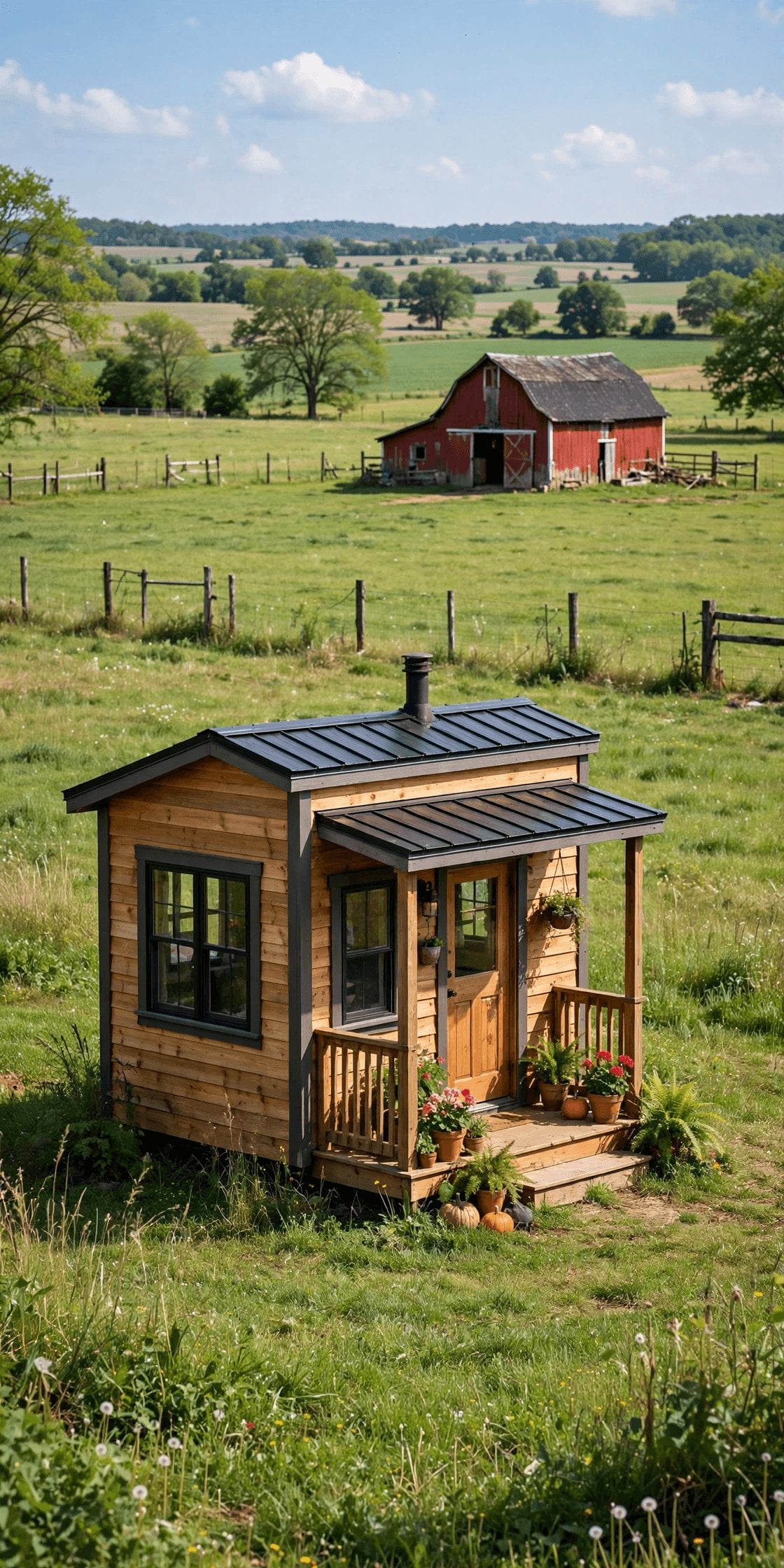
Utilities follow the same pattern — available and priced at the road in town, a project of their own in the country. Wells, springs, power extension and driveway access up a ridge can dominate a rural budget, so plan with tiny house utilities: power, water and sewage and make rural offers conditional on the soil evaluation and utility quotes the project cannot survive without.
9. Notable City and County Examples
Nashville-Davidson County is the urban case: an ADU framework, active short-term-rental regulation and suburban districts where minimum sizes and covenants still filter small homes out. Knoxville and Chattanooga sit a tier down in intensity — real zoning and permitting, pockets of cottage-friendly policy, and terrain that prices serviced flat land honestly. Memphis brings low land costs, full city permitting and the usual urban questions about districts, rentals and infrastructure capacity.
Sevier County — Gatlinburg, Pigeon Forge and the Smokies gateways — is the tourism extreme, where rental cabins are an industry and residential use of small units is read through that lens; surrounding counties absorb the overflow of buyers seeking the mountains without the resort rules. The unzoned rural counties of the Cumberland Plateau and the western plains offer the opposite profile: minimal permission friction, maximal self-reliance on septic, water and access. Every example is a lead to verify with the current local ordinance, not a substitute for it.
10. Practical Steps and Common Pitfalls
Step 1: Classify the build. Foundation, manufactured or wheeled decides the rules, the finance and the map of legal places to live.
Step 2: Name the jurisdiction. Metro, zoned city, zoned county or unzoned county — and read the covenants before assuming the public answer is the final one.
Step 3: Test the soil before the dream. Commission the septic soil evaluation early on any unsewered land; it is the cheapest project-killer to buy.
Step 4: Verify the code appendix, don’t cite it. If your design relies on Appendix Q, confirm in writing that your jurisdiction has adopted it for your code edition — and read how to finance a tiny house alongside, since lenders ask their own version of the same question.
Step 5: Separate living from renting. Confirm long-term residential legality and short-term rental legality as two different approvals, especially anywhere tourists go.
The recurring pitfalls are buying unzoned land and discovering the septic answer, assuming Appendix Q applies because a forum said Tennessee loves tiny houses, counting Smokies rental income the rules do not allow, missing a subdivision minimum-size covenant, and treating a wheeled cabin as a dwelling because it has a kitchen. Tennessee is welcoming, and every one of its welcomes has a footnote — read the footnotes first.
Final Considerations
Tennessee offers two good tiny-house states in one: a metro state learning to legalise backyard cottages under housing pressure, and a rural state where unzoned counties and attainable land still let a small foundation house be an ordinary project. Between them sits a tourism economy that inflates, regulates and occasionally swallows residential plans. Buyers who identify which Tennessee they are in, verify the appendix instead of citing it, and test the soil before the closing, will find the state lives up to its friendly reputation.
Begin with the two decisive papers: a written classification-and-permitting answer for your build from the jurisdiction that governs your parcel, and a passing soil evaluation for any land without sewer. With those in hand, Tennessee’s much-discussed tiny-house friendliness stops being a slogan and becomes a schedule you can build to.