

A traditional room does not shout. It balances — two lamps, two chairs, a fire at the centre — and invites you to sit down properly and stay.
These 75 traditional living room ideas stay inside the traditional lane: symmetry and proportion first, then classic furniture, rich wood, layered cloth and deep colour, and the daily care that keeps formality comfortable.
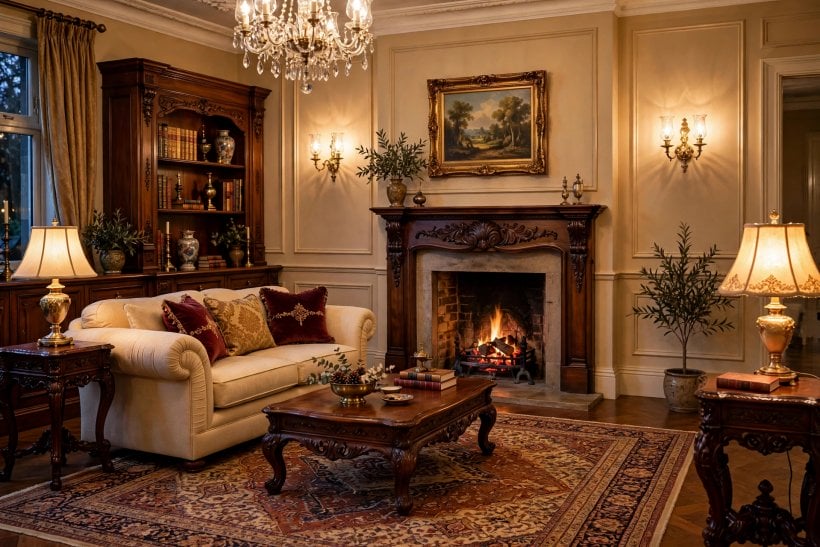
1. Traditional Living Room Ideas at a Glance
The central entity is the traditional living room: the formal, balanced sitting room defined by its attributes — a symmetrical layout around a focal point, classic furniture forms, dark warm wood, layered and ranked pattern, a deep traditional palette, full window dressings and lamplight in layers. It is judged by one test above all: whether ceremony and comfort arrive in the same chair.
| Question | Short answer |
|---|---|
| What defines a traditional living room? | Balance around a centre: paired chairs and lamps, a fireplace focal point, classic forms, rich wood and layered cloth in ranked patterns. |
| Which colours belong? | Deep, warm tones — bottle green, oxblood, navy, ochre — tested at lamplight, with one lead colour and accents repeated until the room coheres. |
| Can it suit a small room? | Yes, with the grammar kept and the census cut: symmetry, a focal point, layered cloth and one dark wood note, in fewer, fuller pieces. |
| Where does the money matter most? | Frames, curtains and upholstery cloth are the decade purchases; lamps, cushions and pictures refresh the room for years afterwards. |
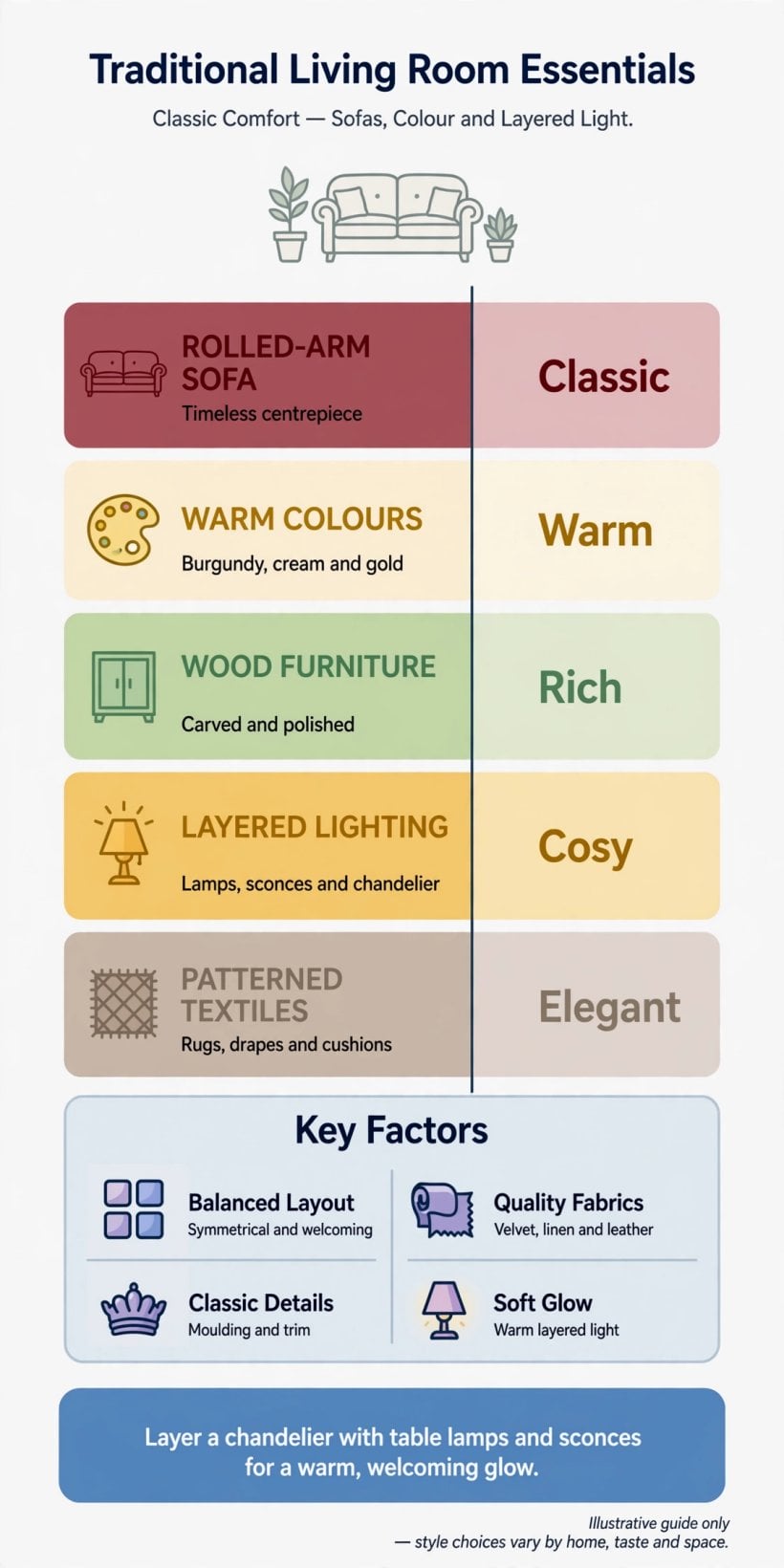
2. The Traditional Room Defined: Balance, Proportion and Welcome
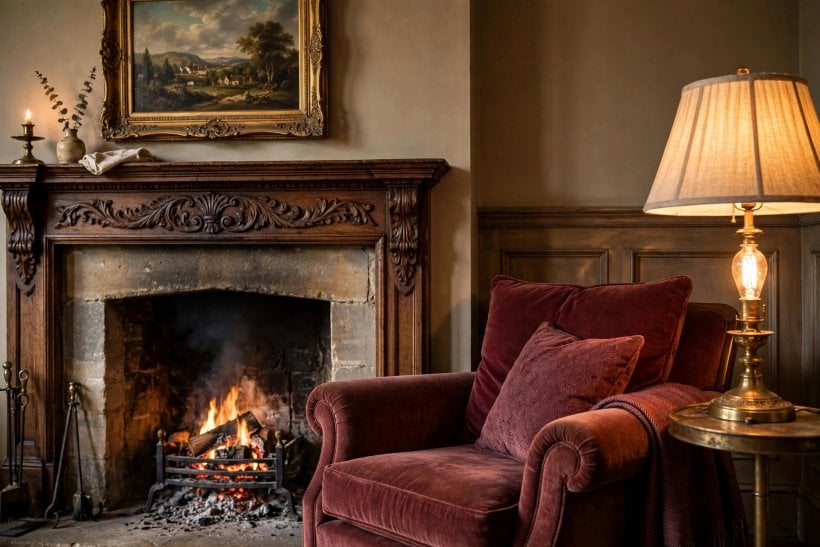
The traditional room is the formal end of the family surveyed in the living room ideas pillar: a room arranged on purpose, balanced left to right, and furnished to be sat in properly. Its attributes are symmetry, a clear focal point, classic furniture forms, rich wood, layered cloth and colour with depth — ceremony that still passes the Sunday-afternoon test.
1. Start With Symmetry, the Traditional Room’s Grammar
Pairs are the traditional room’s mother tongue: two chairs, two lamps, two pictures balanced across a centre.
2. Give the Room One Clear Focal Point
A fireplace, a great window or a single important picture: the traditional room organises itself around one centre and lets everything else take rank from it.
3. Let Proportion Outrank Fashion
High backs where ceilings are high, generous seats where rooms are generous, everything scaled to the architecture.
4. Choose Classic Forms That Have Already Proved Themselves
Rolled arms, wing backs, camelbacks, turned legs and skirted bases earned their places over generations of sitting. A traditional room borrows that proof instead of beta-testing every new silhouette on its own comfort.
5. Treat Formality as Hospitality, Not Display
The formal room’s real purpose is to make guests feel the occasion was worth dressing the room for.
6. Build the Room in Layers, Not in One Purchase
Traditional rooms grow: the rug this year, the curtains the next, art as it is found.
7. Keep a Clear Centre and an Honest Edge
Furniture arranged around a composed centre, with the walls carrying bookcases, consoles and pictures in order. The traditional plan resists the drift of pieces into the middle that turns formal rooms into obstacle courses.
8. Let Wood Set the Room’s Temperature
Dark, warm wood tones are the traditional room’s bass note: mahogany moods, walnut, stained oak. Wood is chosen here for gravity and glow, and everything lighter — cloth, paper, paint — is tuned against it.
9. Use Pattern the Way the Style Intends: More Than One, in Rank
Stripe with floral, plaid with plain, a bold rug under quieter chairs: traditional rooms layer pattern deliberately, in a clear hierarchy, rather than fearing it.
10. Plan for Conversation Before Screens
Seats face each other first and the fire second; the screen, if present, is a guest in the room rather than its altar.
11. Remember the Room Must Also Work at Breakfast
A traditional room that only performs for visitors is a museum with sofas. Test every arrangement against the ordinary morning: a chair for the paper, a table for the cup, light where reading actually happens.
3. Layout and Symmetry: Arranging the Room Around the Fire
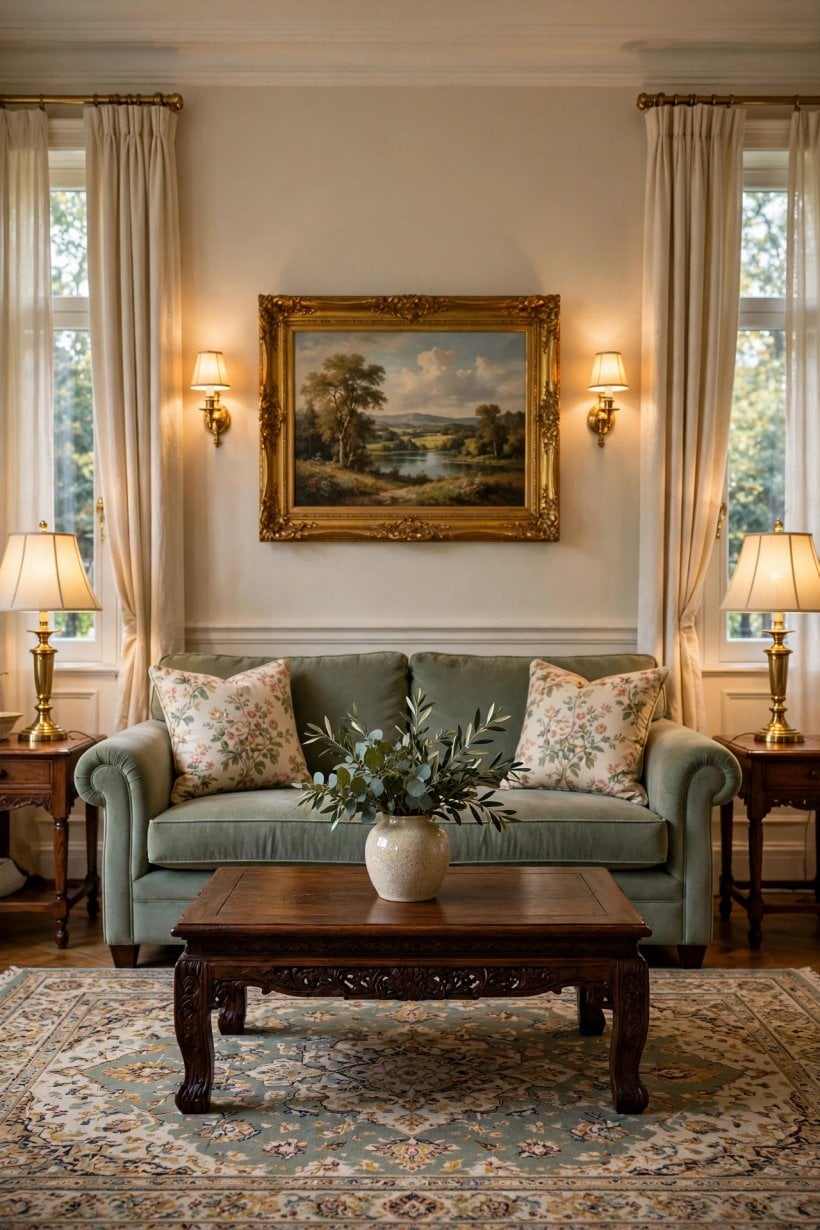
Layout is where tradition becomes physical: the hearth as centre, seating grouped in balance around it, and circulation that never cuts the conversation in half. The same discipline at small scale is the subject of the tiny house living room ideas post; here the canvas is the full-sized formal room.
12. Centre the Seating Group on the Fireplace
The chimney breast is the room’s given axis — build the group on it.
13. Face Two Sofas Across a Table for the Grandest Balance
Sofa to sofa across a low table is the traditional room at full ceremony: perfectly balanced, endlessly conversational.
14. Flank the Fire With a Matched Pair of Wing Chairs
Wing chairs were built for hearths: their wings cut the draught and frame the sitter. A matched pair flanking the fire gives the room its portrait composition and its two best seats in one decision.
15. Use a Single Sofa and Two Different Chairs Where Pairs Are Impossible
Balance is about visual weight, not identical twins. A substantial chair and a lighter one can balance across a centre if their heights and presence are judged honestly — asymmetry in detail, symmetry in effect.
16. Anchor the Group With a Rug Sized to Hold It
The rug should take the front legs of every seat in the group, binding them into one island. A rug floating small in the middle reads as a doormat that lost its way, however beautiful its pattern.
17. Keep the Through-Route Behind the Seating, Never Through It
Doors, halls and kitchens pull traffic; the traditional plan routes it behind the sofa’s back, along the room’s edge. Conversation groups that are walked through hourly never settle, and neither do their occupants.
18. Give Every Seat a Table Within Reach
A cup, a book, a lamp: each seat deserves a surface at its elbow. The traditional room’s small tables — drum, tripod, nest — exist precisely for this, and their absence is felt within one evening.
19. Place the Piano, Desk or Games Table as a Second, Quieter Centre
Large traditional rooms hold a secondary station gracefully: a writing desk by the window, a card table in the bay. One subordinate centre enriches the room; two rivals divide it, so choose with restraint.
20. Use Screens and Consoles to Square an Awkward Room
A console behind a sofa, a screen across a stray corner: traditional furniture includes the tools for correcting architecture politely. Fix the room’s geometry with furniture before blaming the walls.
21. Leave Breathing Room at the Walls
Traditional does not mean crowded. Space between pieces lets each be seen and lets the room feel generous; the style’s confidence shows in what it leaves empty as much as in what it displays.
22. Test the Layout in Tape Before Moving Anything Heavy
Mark the group on the floor, walk the routes, sit in the imagined chairs. Traditional furniture is heavy and floors are unforgiving — an hour with tape saves a weekend of dragging and regret.
4. Classic Furniture: Sofas, Wing Chairs and Honest Wood
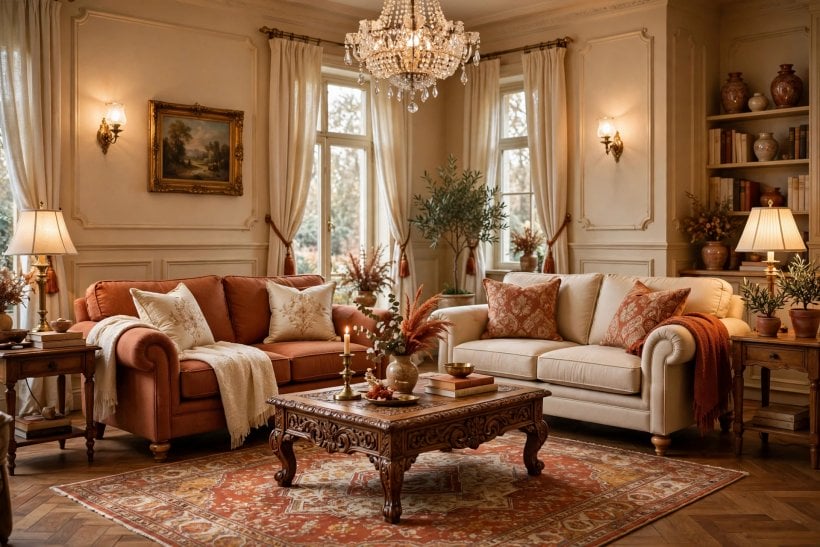
The furniture itself carries the style: upholstered forms with lineage, case goods in real wood, and nothing that apologises for being furniture. The contrast is instructive — the modern living room ideas post builds its calm from low lines and bare frames; the traditional room builds its comfort from full, dressed forms.
23. Choose a Rolled-Arm Sofa as the Room’s Anchor
The rolled-arm sofa is the traditional room’s flagship: generous, upright enough for posture, deep enough for a doze. In a plain, durable cloth it will out-style and outlast a decade of novelty silhouettes.
24. Add a Camelback or Tight-Back Sofa Where Formality Leads
An exposed shaped top rail and firmer seat give the second sofa its ceremony. Tight backs keep their line without daily plumping — formality with a practical streak, which is the style at its best.
25. Let Wing Chairs Do the Fire’s Honours
Beyond their draught-cutting wings, wing chairs give height and presence at the hearth’s flanks. Upholster them in the room’s lead pattern or its richest plain, and let them be the seats everyone quietly competes for.
26. Use a Pair of Bergère or Library Chairs for Reading Corners
Open-armed, cushioned and made for long chapters, these are the traditional room’s reading chairs. Placed with a lamp and a small table, they turn a corner into the house’s most used address.
27. Bring in a Chaise or Daybed Only Where the Room Is Truly Large
A chaise is a luxurious sentence that needs a long paragraph of room around it. In generous rooms it offers the traditional answer to lounging; in small ones it merely blocks the light and the route.
28. Choose Case Goods in Real Wood With Visible Craft
Bookcases, chests and consoles in honest timber, with mouldings, panelled doors and proper backs. Traditional case goods are architecture in miniature — buy the joinery, not the photograph, and check drawers and doors in person.
29. Let a Writing Desk Earn a Window Place
A pedestal or bureau desk gives the traditional room its working dignity and the household a beautiful place for letters, lists and laptops. The style never feared work; it furnished it properly.
30. Use a Low, Generous Coffee Table That Can Carry Real Life
Books, trays, feet at the day’s end — the traditional coffee table is sized and built for use, often with a shelf below. Choose substance over sculpture; the room’s centre should be its most obliging piece.
31. Add an Ottoman in Leather or Carpet Cloth as the Flexible Seat
An ottoman is extra seating, a footrest and a tray-table in one soft block, and the traditional room’s traditional solution to guests beyond the chair count. In leather it also rests the group’s palette.
32. Keep One Genuinely Old Piece in Every Traditional Room
An inherited chest, an auction chair, a clock with a past: age is the style’s native material and cannot be convincingly faked. One real antique dignifies everything newer arranged around it.
33. Judge Upholstery by Frame, Filling and Cloth — in That Order
Frames carry decades, fillings carry comfort, cloth carries the look. The traditional buyer asks about the frame first and the fabric last, exactly reversing the showroom’s preferred order of conversation.
5. Colour and Pattern: Deep Tones, Plaids and Layered Cloth
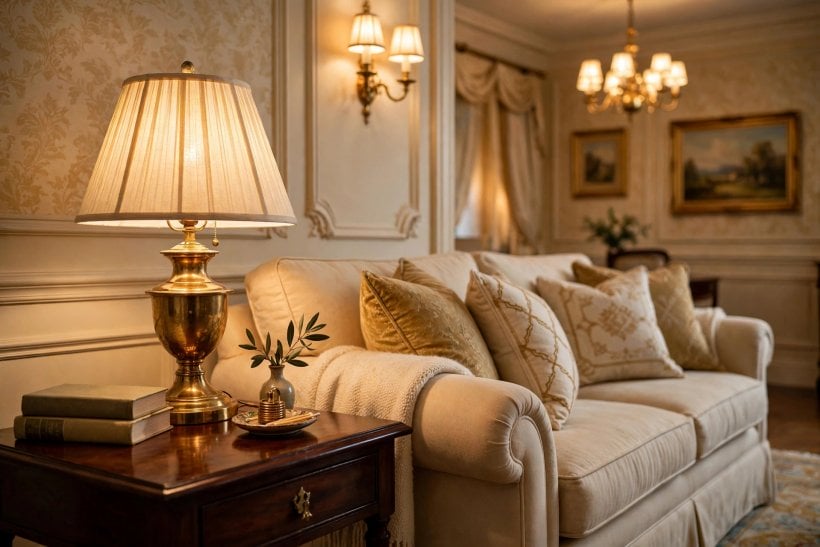
Traditional colour is depth with discipline: walls in rich or quiet tones, cloth in ranked patterns, and accents repeated until the room coheres. The testing discipline — big samples, real light, patience — is shared with the tiny house interior paint colours survey; here the palette itself is the traditional one.
34. Start From the Deep Traditional Palette
Bottle green, oxblood, navy, ochre and warm taupe are the style’s home colours: deep enough to flatter wood and lamplight, calm enough to live with daily.
35. Let Walls Be the Quiet Ground or the Bold Statement — Not Both at Once
Either the walls carry the deep colour and the cloth stays plainer, or the walls rest quiet and the curtains and chairs perform. Traditional rooms fail when every surface competes at full volume.
36. Rank the Patterns: One Lead, Two Supporting, the Rest Plain
A floral or plaid leads; a stripe and a small check support; plains give the eye rest between them. The hierarchy is the whole secret — pattern chaos is simply several leads shouting at once.
37. Use Plaid and Tartan Where Warmth Is Wanted
Plaid brings the library-and-fire mood instantly, on a chair, a throw or a pair of cushions. It pairs naturally with leather and dark wood, and one plaid element is usually the room’s whole requirement.
38. Let Florals Stay Grown-Up: Large Scale, Muted Ground
Traditional florals are garden rooms on cloth — generous blooms on a deep or faded ground. Kept to curtains or one chair, they soften the room’s formality without turning it into a pinafore.
39. Repeat Each Accent Colour at Least Three Times
An accent seen once is an accident; seen three times — cushion, picture, book cloth — it is a decision. The traditional room’s coherence is mostly this quiet bookkeeping of repeats across the space.
40. Dress the Windows Fully: Curtains That Reach the Floor
Long curtains, lined, hung high and wide, are the traditional window’s whole costume.
41. Add a Rug With a Real Pattern Underfoot
A patterned rug — Persian in spirit, whatever its origin — grounds the traditional group, hides a multitude of daily evidence, and supplies the palette the cloth can borrow from.
42. Keep Leather as the Palette’s Resting Place
A leather chair or ottoman among the patterns gives the eye a plain, rich surface to rest on, and ages into the room rather than out of it. Leather is the traditional scheme’s full stop.
43. Test Colour at Lamplight, Not Only at Noon
Traditional rooms live much of their lives by lamplight, when deep colours glow and cool ones can die. Judge every sample in the evening, in the room, before committing the walls or the sofa.
44. Let Books Be Part of the Colour Scheme
Full bookcases are bands of muted, varied colour no stylist can fake.
6. Walls, Woodwork and the Fireplace: The Room’s Architecture
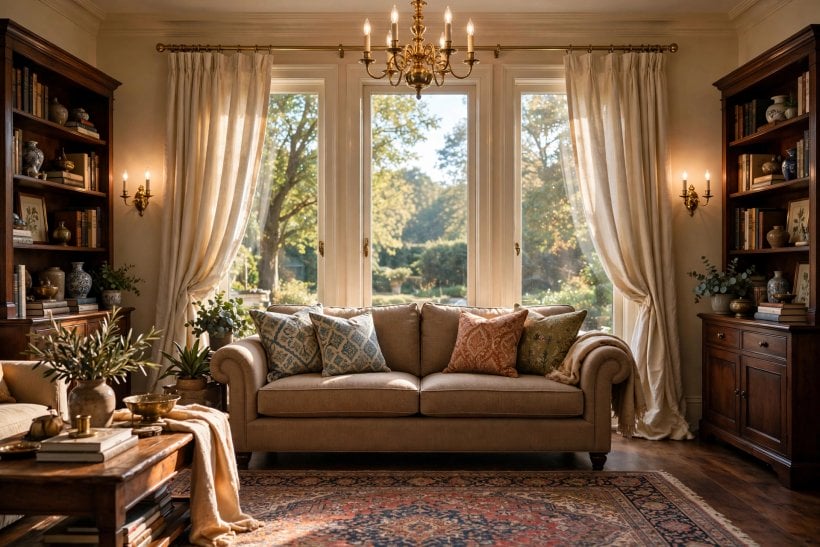
Before any furniture arrives, the traditional room is made by its architecture: panelled or papered walls, a proper chimney breast, and woodwork painted or polished with intent. The neighbouring farmhouse living room ideas post works the same bones more simply; the traditional treatment adds ceremony layer by layer.
45. Give the Fireplace the Room’s Best Craft
The mantel is the traditional room’s altar and signature: proportioned to the breast, faced in marble, stone or carved wood, and kept clear enough to read as architecture.
46. Hang One Important Picture or Mirror Over the Mantel
A single, well-scaled piece above the fire completes the room’s portrait.
47. Use Panelling or a Dado Line to Give Walls Their Rank
A dado rail with deeper colour or paper below and quieter above is the traditional wall’s classic division. It protects the wall where chairs meet it and gives tall rooms a human horizon line.
48. Paper the Walls Where Pattern Belongs at Architecture Scale
A traditional wallpaper — stripe, damask mood, or botanical — turns the walls themselves into the room’s lead pattern, freeing the cloth to rest plainer. Paper one room properly rather than apologising with a single feature wall.
49. Paint Woodwork to Work: Gloss, Satin and the Colour of Bone
Traditional woodwork is rarely stark white: warm off-whites and deep colours on doors and skirting give the room its finished, tailored edge. The woodwork is the room’s tailoring — its quality shows at every seam.
50. Frame Doors and Openings With Real Architrave
Generous architraves give traditional openings their gravity and make modern thin trims look like apologies. Where the architecture is plain, well-chosen trim is the cheapest formality a room can buy.
51. Let Bookcases Become Architecture Where the Collection Allows
A wall of bookcases, built in or honestly freestanding, converts storage into the room’s finest wall. Add a library ladder only where height genuinely demands it — and then enjoy it without embarrassment.
52. Keep the Ceiling Quiet and the Cornice Honest
Traditional ceilings rest plain, their interest at the cornice and the ceiling rose where a pendant hangs. The room’s drama belongs at eye level and below; a busy ceiling taxes every conversation beneath it.
53. Choose Flooring That Grounds the Ceremony
Boards with age, parquet moods, or stone at the hearth — traditional floors are the rug’s dignified partner, mostly covered and never competing. What shows at the room’s edges should flatter the rug, not fight it.
54. Style the Mantel Shelf With Restraint: a Clock, a Pair, One Green Thing
Clocks, candlesticks in balance and a single plant or bowl of green are the classic mantel sentence. The shelf is the room’s most-seen still life; edit it like one, and let symmetry do the talking.
55. Respect Old Architecture by Repairing Before Replacing
Original mantels, rails and mouldings carry the house’s own history, and the traditional style values exactly that. Restoration costs patience; replacement costs character — and character is the entire point of the room.
7. Lighting, Curtains and the Soft Layers
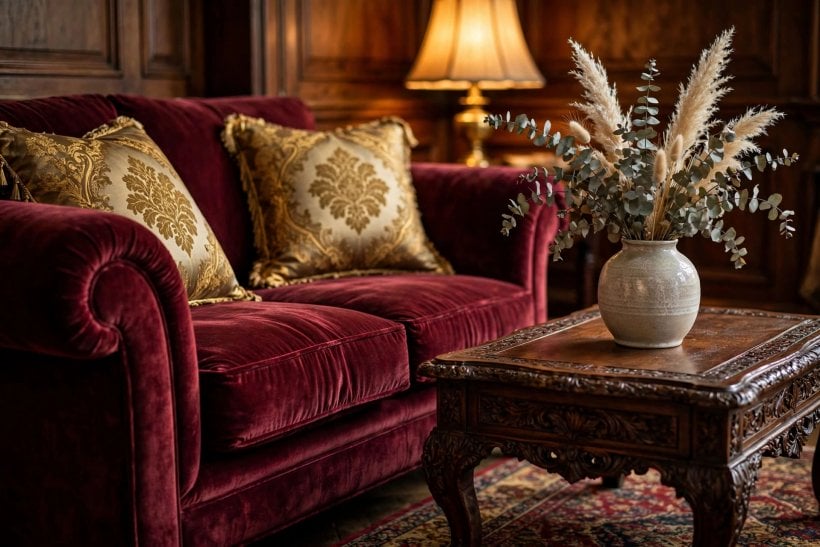
A traditional room is finished in softness: lamplight at sitting height, curtains with body, cushions and throws in ranked cloth. The airy opposite — bare windows and sea light — belongs to the coastal living room ideas post; the traditional room deliberately chooses the shaded lamp and the lined curtain.
56. Light the Room in Layers: Ceiling, Lamps and Fire
One central light for housekeeping, table lamps for company, and the fire or candles for soul. Traditional rooms are designed for the lamp-lit hours; a room lit only from above is a room half furnished.
57. Place Table Lamps in Balanced Pairs at Sitting Height
Lamps on matched tables flanking the sofa give the group its evening symmetry and its reading light in one move. Shades should sit at the seated eye’s level, glowing warm, never glaring.
58. Add a Standard Lamp Where a Reading Chair Stands Alone
The unpaired reading chair deserves its own tall lamp, arched or straight, in the room’s metal family. Traditional lighting follows the seats, not the ceiling grid — light is placed where life happens.
59. Choose Shades That Flatter: Lined, Warm and Generous
Fabric shades, softly lined, turn lamplight golden and kind. Skimpy shades and cold bulbs are the fastest way to make good furniture look tired — the shade is half the lamp, so buy it like it matters.
60. Hang Curtains High, Wide and Fully Lined
Lining gives curtains their fall, their warmth and their protection from sun. Hung above the frame and clear of it, they make windows taller and the room grander — the traditional window treatment is mostly this generosity.
61. Layer Sheers or Blinds Beneath for Daytime Privacy
A soft sheer or a simple blind handles the street’s gaze by day while the great curtains rest open. Layers let the window dress change its mood between morning glare and evening ceremony.
62. Use Cushions as the Scheme’s Adjustable Accents
Cushions carry the lead pattern small, pick up the accents, and change with the seasons at trivial cost.
63. Keep One Good Throw Within Reach of the Best Chair
Wool for winter, lighter weaves for summer: the throw is the traditional room’s admission that comfort outranks display at the day’s end. Folded over the chair’s arm, it also rests the palette.
64. Let a Fire Screen, Fender and Tools Dress the Hearth
Brass or iron at the fire’s edge is functional jewellery: a fender to mark the hearth, a screen for sparks, tools that work. Kept in one metal and polished occasionally, they make the focal point feel kept.
65. Finish With Scent and Sound, the Invisible Layers
Beeswax, woodsmoke, a ticking clock: traditional rooms are remembered by senses the camera misses. These layers cost little and are maintained by habit — they are why some rooms feel loved and others merely arranged.
8. Living Traditionally Every Day: Comfort, Care and Small Rooms
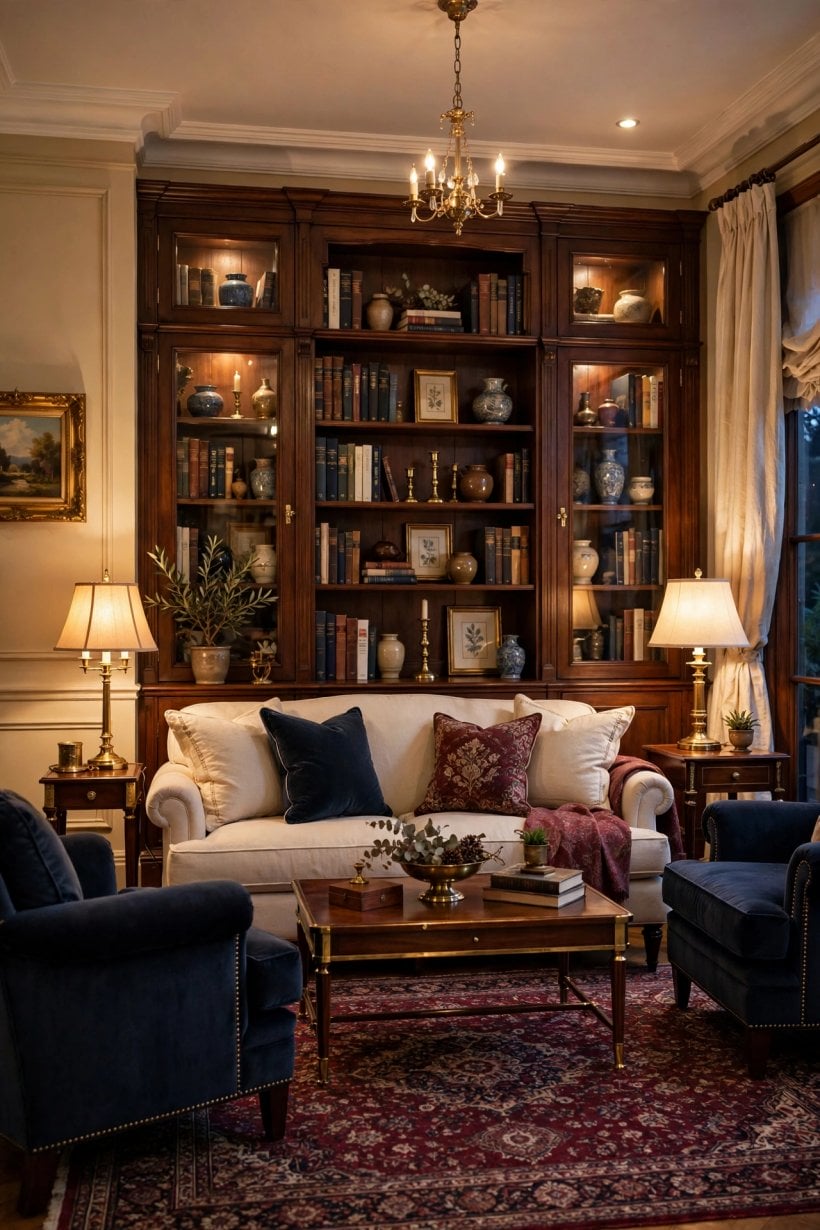
The style survives because it serves: durable cloth, repairable furniture and arrangements that welcome muddy dogs and grandchildren alike. For the same welcome at tiny scale, the discipline of how to decorate a tiny living room applies unchanged — every piece earning its place, only with fuller forms.
66. Choose Cloth That Forgives: Tight Weaves, Patterns and Washable Covers
Busy households and pattern are old allies — a ranked pattern hides the week’s evidence far better than a pale plain. Where life is messiest, loose covers that wash are the traditional room’s honest modern concession.
67. Keep a Clear Path for the Room’s Real Traffic
Formality collapses if reaching the door means an obstacle course. Walk the room’s daily routes with a tray in hand before finalising any arrangement, and let no beautiful chair tax every journey.
68. Make One Chair Unambiguously the Best Seat in the House
Every traditional room has a throne: the wing chair by the fire with its lamp and table. Households run on such small certainties — protect the best seat’s light, view and quiet as fiercely as its upholstery.
69. Store the Modern Machinery With Traditional Manners
Screens on desks that close, chargers in drawers, remotes in a box with a lid: the style’s answer to technology is furniture that shuts.
70. Care for Wood With Feeding, Not Fear
Polish occasionally, coaster habitually, and let small marks join the patina. Traditional wood improves under honest use and suffers mainly under anxiety — a room children are scolded in is neither traditional nor comfortable.
71. Refresh by Rotating, Not Replacing
Move pictures between rooms, swap the throws, bring the garden in. Traditional rooms stay interesting by circulation, the way libraries do — the collection is constant, the arrangement alive.
72. Scale the Style Down Honestly for Small Rooms
A small traditional room keeps the grammar — symmetry, a focal point, layered cloth, one dark wood note — and drops only the census of pieces.
73. Let Children and Dogs Belong in the Design
The style comes from houses that held both for centuries: washable lower cloth, sturdy legs, nothing precious at tail height. A traditional room that excludes the household’s smallest members has kept the costume and lost the play.
74. Budget for Upholstery and Curtains as the Decade Purchases
Frames, curtains and good cloth are the long money; lamps, cushions and pictures are the short money that refreshes them. Spend in that order and the room can be renewed for years without starting again.
75. End With the Room’s Evening Test
Lamps on, fire lit, seats taken: if the room at that hour feels balanced, warm and easy to talk in, the tradition is alive in it.
9. Checks and Mistakes: Before the First Pour or Purchase
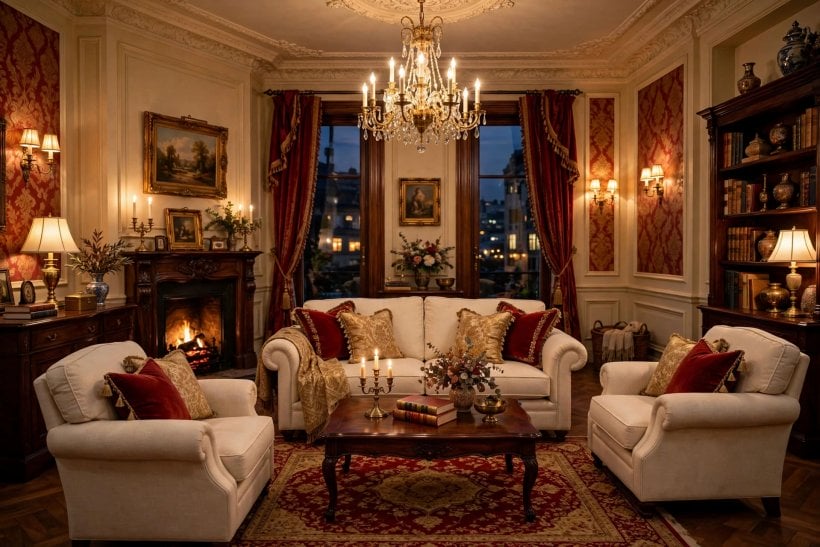
Check the architecture before the furniture: the fireplace’s condition, the chimney breast’s proportions, the woodwork and the floor. Traditional rooms are built on their bones, and no sofa, however grand, repairs a focal point that was never established — have any fire and flue checked under local rules and the maker’s guidance before it is used.
Check symmetry with a tape and a photograph, not by eye alone: centre lines drift, pairs mismatch in height, and rugs creep off axis. Photograph the group from the doorway and judge the balance cold — the camera catches the lopsided lamp the fond eye keeps forgiving.
The common mistakes are all refusals of rank: three focal points, five lead patterns, curtains that stop short, and formality so complete the household perches elsewhere. Each is avoided by the post’s order — centre, balance, furniture, colour, layers — applied before anything is bought.
10. Costs and Pulling It Together
Costs stay qualitative, as honest furnishing must: the economical end of the traditional room is the second-hand end — solid old furniture, re-covered well, costs less than new mediocrity and carries the age the style prizes. The expensive end is bespoke upholstery, lined curtains made to measure, and built bookcases — worth it at the room’s centre, wasted at its edges.
Pull it together in the order this post kept: define the centre, arrange in balance, furnish with classic forms, layer colour and cloth, then light it for the evening. Followed in that sequence, these seventy-five ideas become one room that receives guests like an occasion and its own household like a habit.
Final Considerations
The traditional living room is not a period costume but a way of arranging welcome: balanced, layered and built to be sat in for decades. Keep its grammar, feed its wood, test it after dark — and the room will keep the household’s ceremonies, large and small, with equal grace.

0 Comments