

A garden reveals itself one step at a time, and the walkway holds the pen: it decides what is seen first, what is saved for the turn, and how every arrival feels underfoot.
These 75 walkway ideas walk the path in order: the route defined, stone, brick and the soft surfaces laid, the front walk separated from the garden path, and the edges, light and drainage that finish the job.
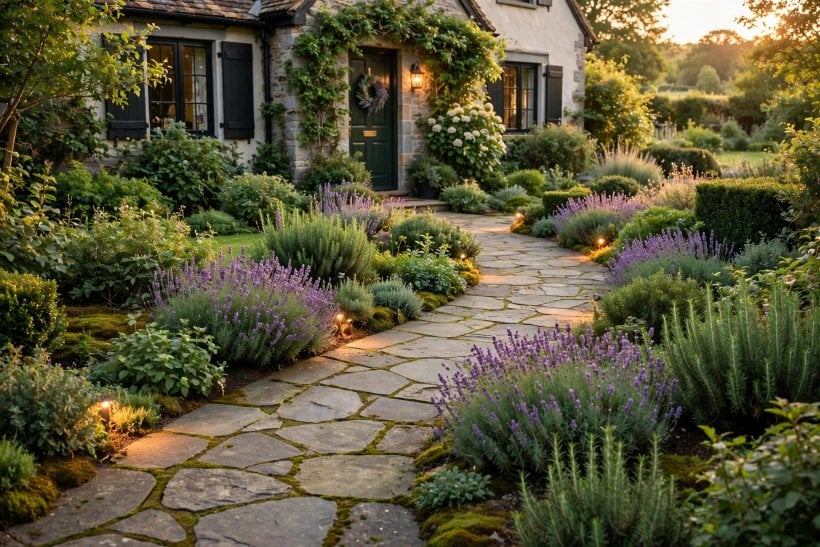
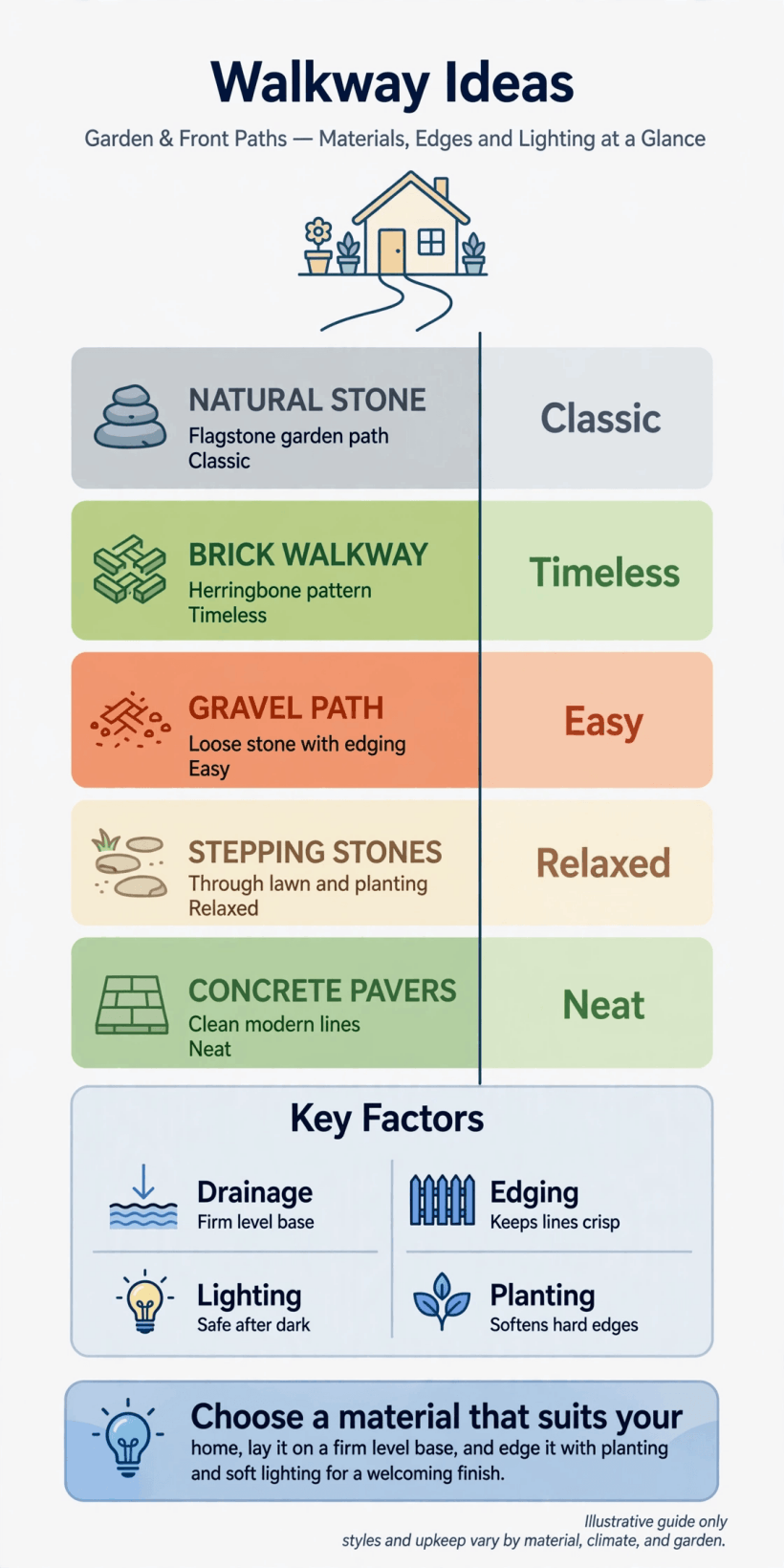
1. Walkway Ideas at a Glance
The central entity is the walkway: the garden’s built route, defined by its attributes — its route and desire line, its territory (front walkway, garden path or service route), its surface material (stone, brick and pavers, gravel, timber or green), its edges, and its light and drainage. A walkway is judged underfoot, in February, carrying something: every idea in this post is tested against that walk, not the photograph.
| Question | Short answer |
|---|---|
| Front walkway or garden path first? | The front walk is public and formal — straight, wide, lit. The garden path is private — it may curve, narrow and wander, provided every curve reveals something. |
| Stone, brick or gravel? | Stone for permanence and place, brick and pavers for pattern and order, gravel and the soft surfaces for economy, sound and informal gardens — each with its own upkeep rhythm. |
| What decides whether a path lasts? | The base and the drainage, not the surface: sound foundations and water given somewhere to go outlast every beautiful material laid carelessly. |
| How wide should a walkway be? | By its traffic: the front walk for two people and deliveries, garden paths for a single file and a slower mood, working routes for the barrow that actually travels them. |
2. The Walkway Defined: Route, Rhythm and the Ground’s Handwriting
The walkway is the garden’s sentence: it says where to go, how fast, and in what mood. Where the front yard landscaping ideas post designs the whole front garden, this post stays on the path itself — its route, its material, its edges and its light — from the gate the walkway usually begins at to the door it serves.
1. Start With the Walkway as a Route Before It Is a Surface
A path is first a decision about movement: who walks it, carrying what, in which seasons, at what hour.
2. Walk the Desire Line Before Drawing Anything
Households and visitors vote with their feet, wearing the true route into lawns within a season.
3. Give the Main Walkway a Generosity the Side Paths Need Not Copy
The front walkway carries pairs, prams, deliveries and furniture: it earns the plot’s widest, firmest construction.
4. Let Rhythm Be the Path’s Music: Step, Pattern, Repeat
Stepping stones set a pace, brick patterns set a tempo, gravel crunches a slow countermelody.
5. Curve the Path Only Where the Garden Gives a Reason
Curves earn their keep by revealing views in sequence, avoiding trees and slopes, or serving the garden’s design.
6. Keep the Walkway’s Destination Visible or Promised
A path should always suggest where it leads — the door in view, the gate framed, the bench glimpsed through planting. Paths that vanish without promise feel unfinished even when beautifully built.
7. Build the Base Like the Path Matters, Because It Does
Every path material fails from beneath: soft spots, poor drainage and thin foundations write their story on the surface within winters.
8. Let the Path Belong to the House’s Material Family
Brick houses take brick kindly; stone cottages take stone; modern houses take large slabs and gravel.
9. Plan Drainage as Part of the Path, Not as Its Rescue
Water crosses, sits on or runs along every path eventually.
10. Think of Winter, Mud and Darkness at the Drawing Stage
The path is used most honestly in February: wet, dark, muddy at its edges. Materials, widths and lighting chosen for that month will delight in June automatically; the reverse has never once been true.
11. Remember a Walkway Is Walked Ten Thousand Times
School runs, dog walks, bin nights, arrivals with suitcases: the path is the plot’s most-used construction. Its comfort underfoot, in ordinary shoes, in ordinary weather, outranks its portrait in every month except the photograph’s.
3. Stone Walkways: Flagstone, Stepping Stones and Slate
Stone is the walkway’s oldest material and still its most various. These ideas keep to stone in its path forms; the dry-laid technique in its purest form is built in full in the corpus’s dry-stack stone path guide, and stone’s wider landscaping family is surveyed in the rock landscaping ideas post.
12. Lay Large Flagstones Where the Walkway Should Feel Generous
Big flags make a path feel like a terrace on the move: calm, formal, kind to heels, prams and barrows. Their weight is their stability and their cost — the honest trade of all generous stone.
13. Use Stepping Stones Where the Path Should Whisper
Single stones across lawn or gravel set the slowest, most gardenly pace. Their spacing is their craft: set for the household’s actual stride, tested by walking, or every guest performs the stepping-stone hop forever.
14. Crazy-Pave With Fitted Offcuts Where Craft Should Show
Irregular stone fitted closely is the mason’s jigsaw: thrifty with material, rich in pattern, demanding in the laying. It suits cottage gardens and patient makers in equal measure.
15. Run Slate Where the Garden Wants Dark, Fine Lines
Dark slate paths cool a sunny garden’s palette and sharpen modern planting. Slate’s smoothness asks for honest assessment in wet shade, where any smooth stone trades grip for elegance.
16. Set Stone on a True Bed, Never on Hope and Soil
Flags laid on prepared, compacted beds stay level for decades; flags laid on soil perform a slow wave within winters. The dry-stack guide linked above teaches the bedding in full, and it is the whole secret.
17. Joint Stone With Gravel, Creepers or Mortar — by Intention
Open joints planted with creeping herbs soften stone into garden; gravel joints keep the dry, crisp register; mortar makes the formal highway. Each is right somewhere and wrong where its intention is absent.
18. Let a Stone Path Climb a Slope in Shallow, Honest Steps
Slopes turn paths into staircases whether designed or not. Shallow stone steps, cheeked with planting or stone, make the climb deliberate — the alternative is an erosion gully with pretensions.
19. Frame a Stone Walkway With a Single Row of Setts or Brick
A disciplined edge course gives loose-laid stone its tailored finish and keeps lawn and path in their own territories. Edging is the path’s hem: invisible when good, the whole impression when absent.
20. Borrow the Garden’s Own Stone Where Geology Offers
Local stone ties a path to its place with an authority imported materials imitate expensively.
21. Keep a Few Spare Flags From Every Stone Path Ever Built
Stone paths are repaired across decades, and matching material vanishes from merchants. A small stack of spares behind the shed is the path’s insurance policy, bought once at the laying’s end.
22. Age Stone Gracefully: Moss Is a Finish, Not a Failure
In shade, stone paths grow moss and character together.
4. Brick and Paver Walkways: Pattern, Order and the Formal Route
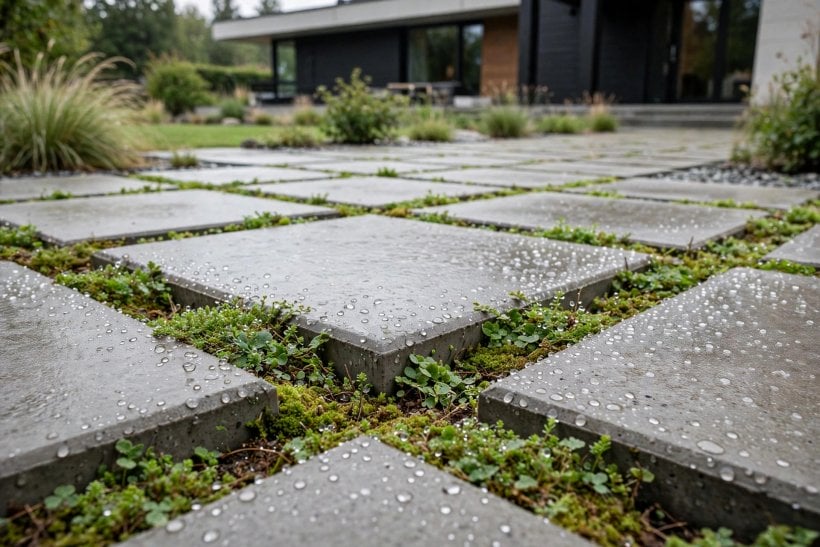
Brick and manufactured pavers give the walkway its tailored register: pattern, rhythm and crisp edges. The drive’s heavier-duty version of the same craft belongs to the driveway ideas post; this section keeps to the pedestrian scale.
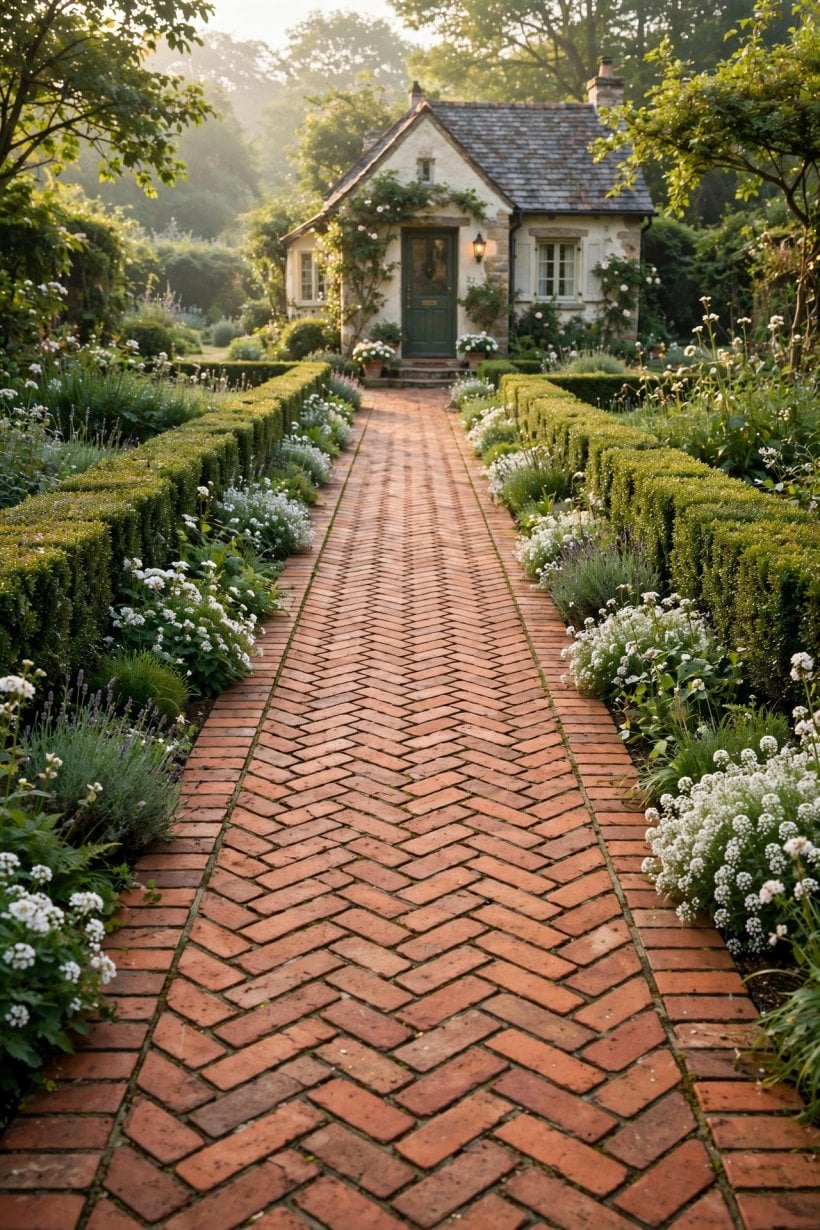
23. Lay Herringbone Where the Walkway Wants Energy and Interlock
The zigzag herringbone is brick’s strongest and liveliest pattern, its interlock resisting creep on slopes and busy routes. It suits front walks particularly, where the pattern’s welcome is half the door’s.
24. Run a Simple Stretcher Bond Where Calm Is the Brief
Bricks laid lengthwise in running bond make the quiet path: cottage gardens, side routes, anywhere the planting should speak louder than the ground. Calm is a design achievement, not a default.
25. Use Basket Weave for the Garden’s Traditional Rooms
Pairs of bricks woven at right angles give paths a textile warmth that suits kitchen gardens and cottage plots. It uses its bricks generously and repays them in pattern for decades.
26. Choose Clay Pavers Where Colour Must Live Outdoors Forever
Clay’s colour is fired through its body: it fades gently and evenly, never peels, and suits brick houses like a relative. Its hardness underfoot and its honest price are the counterweights in the decision.
27. Use Concrete Pavers Where Precision and Range Lead
Manufactured pavers offer exact sizes, wide colour range and interlocking shapes for crisp modern patterns. Chosen in quality grades and laid on true bases, they serve contemporary houses with tailored discipline.
28. Edge Every Brick Path, or Watch It Spread
Brick and paver paths are systems held by their edges: soldier courses, steel or stone restraints keep the pattern’s geometry for decades. The unedged brick path is a slow landslide in a pretty pattern.
29. Match Brick Paths to the House’s Brick With a Cousin’s Respect
Exact matches are rare and near-matches are arguments. Choose a path brick that is clearly a relative — same family, different member — or a deliberate stone contrast, and the facade and path will coexist peacefully.
30. Sweep Sand, Top Up Joints, and Keep the System a System
Jointing sand is part of the paver system’s structure, renewed when it washes low. Ten minutes with a brush after hard winters keeps patterns tight, weeds homeless and the path’s tailored finish intact.
31. Let a Brick Walkway Widen at the Door Into a Small Apron
A widened apron of brick at the door or gate gives arrivals room to gather, turn and wipe feet — the path’s natural full stop.
32. Keep Patterns Quiet Where the House Is the Pattern
Ornate facades, busy planting and patterned paths in one view is a crowd shouting. Where the house performs, the path assists in plain bond; where the house is plain, the path may take its herringbone solo.
33. Test Brick and Paver Grip in the Wet Before Committing the Route
Smooth pavers in wet shade are the front walk’s one recurring regret. Samples walked on wet, in the route’s own shade, settle the question that brochures photograph only in sunshine.
5. Gravel, Timber and Green Walkways: The Soft Registers
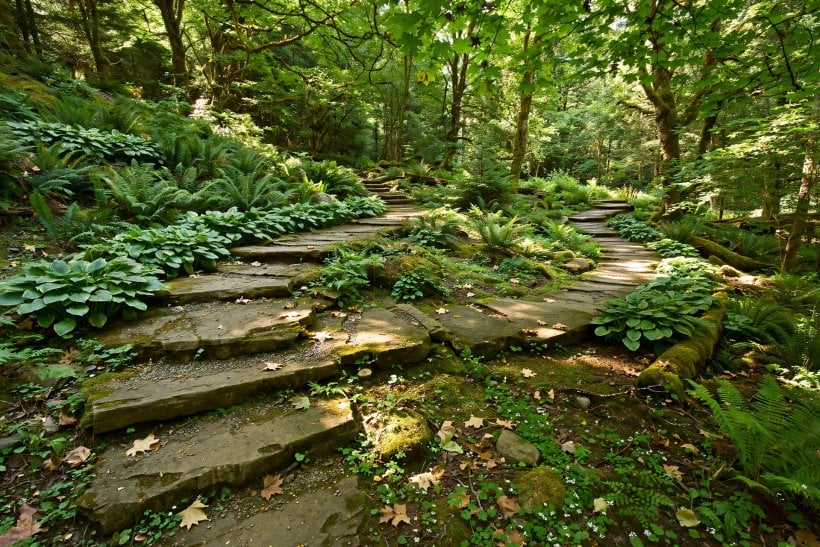
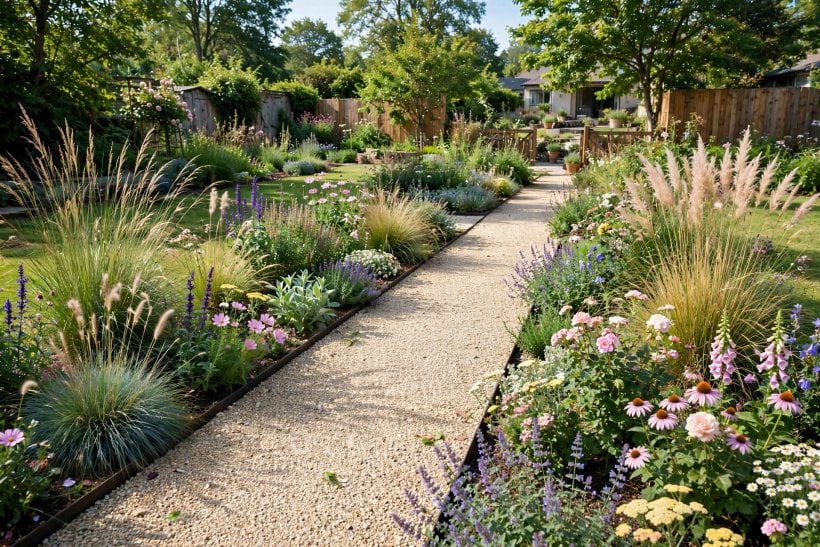
Not every walkway is hard. Gravel crunches, timber boardwalks float over wet ground, and grass paths mow the garden’s structure into lawn — the soft registers, whose gravel technique in detail is taught in the corpus’s gravel path and DIY walkway guide.
34. Lay Gravel Where the Garden Wants Sound, Softness and Economy
The gravel path announces arrivals, drains freely and costs kindly. Its honesty is its upkeep: gravel travels, thins and wants raking and topping — the soft path’s rent, paid in pleasant minutes.
35. Edge Gravel Firmly or It Will Visit Every Border It Passes
Steel, stone, brick or timber edging keeps gravel a path instead of a rumour across the lawn. Contained gravel looks designed; escaped gravel looks like a spill, and the difference is entirely the edge.
36. Choose Angular Gravel That Locks, Not Round Pebbles That Roll
Crushed, angular stone knits into a walking surface; round pebbles roll underfoot like slow marbles. The distinction is invisible in the merchant’s photograph and unforgettable on the first walk with a tray.
37. Build a Boardwalk Where Ground Is Wet, Sloped or Precious
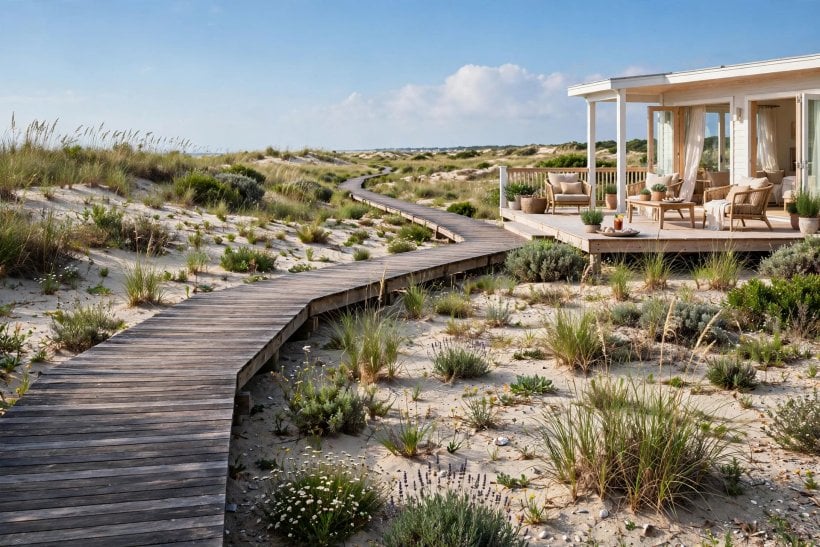
Timber decking paths float over boggy ground, protect roots and give gardens their resort register. Sound, grippy boards on honest foundations, with the wet-weather test applied, are the whole specification.
38. Use Sleepers and Timber Rounds for the Woodland Register
Sleeper paths and sawn timber rounds suit woodland gardens and rustic plots, aging silver among the ferns. Their slipperiness in wet shade is the known tax, managed by texture, mesh or honest route choice.
39. Mow a Grass Path Where the Garden’s Structure Is Its Planting
A mown strip through longer grass or meadow is the softest path of all — pure route, no material. It suits large, informal gardens where the path’s job is direction, not all-weather service.
40. Lay Bark and Woodchip for the Working and Woodland Routes
Bark paths serve vegetable plots and woodland corners kindly: cheap, soft, renewable, and content to be topped up yearly. They are the path as compost-to-be, and informal gardens love them for it.
41. Combine Registers Along One Route: Hard at the House, Soft in the Garden
Front walks in brick, garden paths in gravel, woodland in bark: one route, three registers, each matched to its territory’s traffic and mood. The transitions, handled deliberately, become the garden’s punctuation.
42. Keep Soft Paths Off the Wheelie-Bin and Barrow Highways
Gravel and bark punish wheels and reward feet. Routes that carry bins, barrows and bikes weekly deserve hard surfaces, or the soft path becomes a rutted argument renewed every collection day.
43. Refresh Soft Paths Little and Often, as Their Design Intends
A rake, a top-up bag, edges redefined each spring: soft paths are maintained like planting, not like building. Households who enjoy that rhythm find them the cheapest paths; households who don’t, find them the scruffiest.
44. Let the Soft Path Be the Children’s and Dogs’ Favourite, Planned
Feet prefer soft paths, and traffic will vote accordingly whatever the plan says. Routing the beloved shortcut in gravel from the start saves the lawn it would otherwise wear into evidence.
6. Front Walkways and Garden Paths: Two Territories, Two Moods
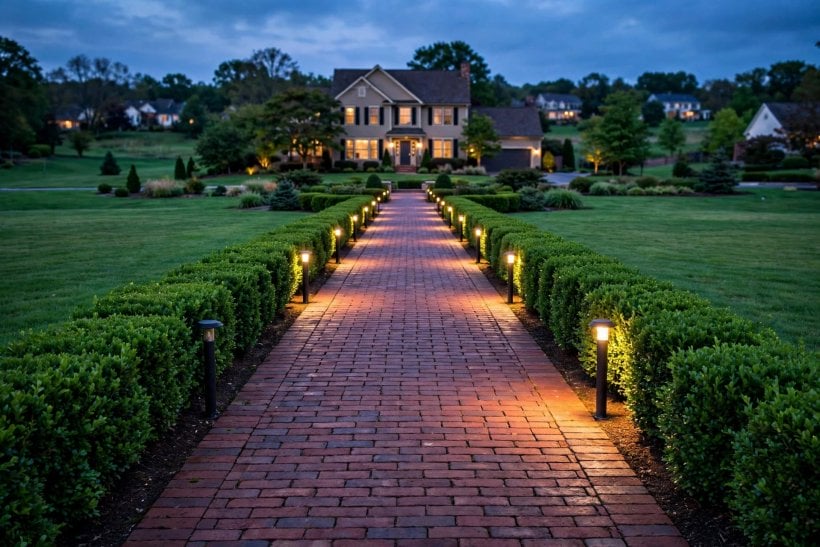
The walkway serves two territories with two different briefs: the front walk, public and formal, and the garden path, private and wandering. The front territory’s frame is the patio ideas pillar’s outdoor-room logic applied at the garden’s far end; here the path itself keeps the attention.
45. Make the Front Walkway Straight, Wide and Unmistakable
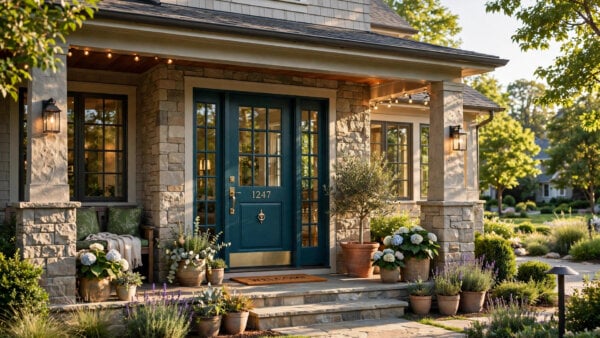
Visitors should never audition routes at the gate. The front walk leads from gate or pavement to door in one confident line, lit, edged and wide enough for two — the house’s manners expressed in paving.
46. Land the Front Walk on an Apron at the Porch, Not a Ledge at the Door
The arrival needs ground to stand on while the door opens, parcels are gathered and umbrellas are shaken. A proper apron or the porch’s own floor is the front walk’s full stop, sized for real arrivals.
47. Curve the Garden Path to Reveal the Garden in Chapters
In the private garden the path may wander with purpose: a bench revealed, a vista opened, a corner turned into scent. Each curve must pay its rent in revelation, or the route is merely long.
48. Run a Working Path to the Shed, Compost and Bins Without Apology
The garden’s service route deserves the same honest construction as its promenade: firm, direct, barrow-friendly. Gardens fail practically where the working path was left as a muddy intention.
49. Use the Side Path as the Plot’s Diplomatic Corridor
The narrow passage beside the house carries bins, bikes and meter readers: it wants the most durable, grippy, easily swept surface on the plot, lit without fuss, and no planting ambitions it cannot support.
50. Give Sloped Gardens a Path That Switchbacks or Steps Deliberately
Hillside paths choose their method early: gentle switchbacks for barrows and knees, honest steps for directness. The worn diagonal shortcut is the slope’s verdict on paths that ignored it.
51. Thread a Path Through Planting With Passing Places in Mind
Garden paths between deep borders are walked with secateurs, watering cans and company. Occasional widened bays let two people, or a person and a barrow, pass without the planting paying the toll.
52. Let the Path End Somewhere Worth Arriving At
A bench, a gate, a view, a door, a tree in a circle of gravel: every garden path deserves a destination, however small.
53. Keep Children’ Routes in the Path Plan From the Start
Bikes, scooters and the direct line to the trampoline are real traffic with real desire lines. Paths that acknowledge them survive; lawns that deny them wear the evidence within a half-term.
54. Light the Front Walk for Arrivals, the Garden Path for Atmosphere
Front lighting is wayfinding: even, kind, aimed at step edges and the latch. Garden lighting is theatre: low, warm, sparing. Swapping the two registers produces a runway in the garden and a mystery at the gate.
55. Sweep, Edge and Inspect Both Territories on One Seasonal Round
Front and garden paths maintained together — edges cut, joints topped, surfaces checked after winter — keep the whole plot’s circulation handsome. The seasonal round is short; the neglect it prevents is long.
7. Edges, Light, Drainage and Upkeep: The Walkway’s Finishing Trades
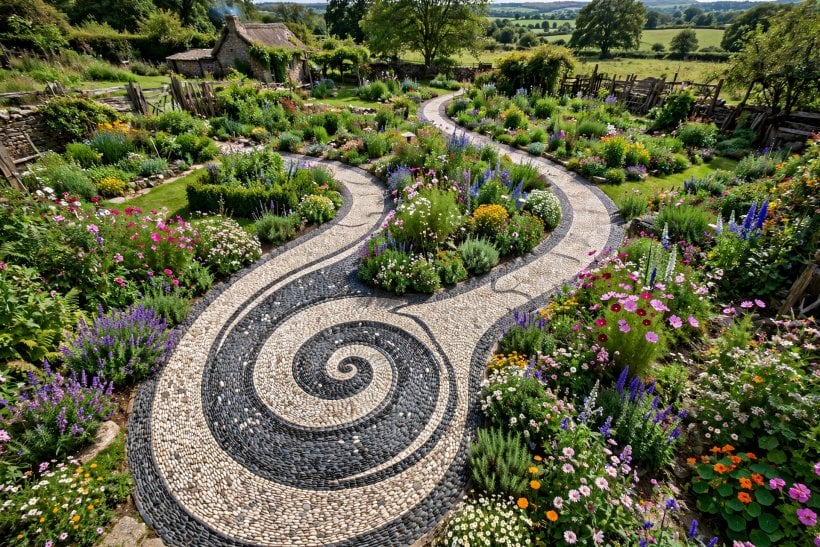
A walkway is finished by its details: the edges that tailor it, the light that extends it, the drainage that saves it. The wider garden these details serve is composed in the backyard landscaping ideas post; here the path’s finishing trades get their own survey.
56. Edge in Steel Where the Line Must Be Crisp and Nearly Invisible
Steel edging draws the path’s line with a draughtsman’s precision and disappears into the design. It suits modern gardens and lawns particularly, holding gravel and soil apart with millimetres of authority.
57. Edge in Brick or Stone Where the Path’s Material Wants a Hem
A soldier course of the path’s own brick, or a row of setts, gives traditional paths their tailored finish and their mowing edge in one course.
58. Use a Mowing Edge Wherever the Path Meets Lawn
A flush, firm edge course at lawn level lets the mower run its wheel along the path and abolishes the strimming hour. It is the single most time-generous detail in all walkway design.
59. Light Step Edges and Level Changes Before Scenery
Path lighting’s first duty is the trip hazard: steps, edges, the gate’s threshold. Decorative uplighting of trees comes second, funded after every change of level is safely legible at night.
60. Choose Low, Warm, Shielded Lights Along Garden Paths
Glare blinds more than darkness. Low fittings, warm colour and light thrown at the ground keep the path visible and the garden’s night intact — the walker sees the way, not the lamps.
61. Fall the Path Gently So Water Leaves Without Drama
A slight, consistent fall sheds rain to an edge, a drain or a border. Paths that pond become ice rinks and algae farms in their first winter; paths that fall stay paths in every month.
62. Give Water Somewhere Designed to Go at the Path’s Low Points
A gravel soak strip, a planted swale or a simple drain at the low corner: water managed by design is invisible; water managed by accident is a puddle with a mailing address at the gate.
63. Weed the Joints Little and Often, Never Heroically and Late
Path weeds are a minutes-weekly problem or a weekend-quarterly disaster, and the household chooses which by rhythm alone. Small, regular attention keeps every material in this post looking built rather than found.
64. Repair the First Loose Stone, Sand Joint or Board at First Notice
Paths announce decay early and locally: one rocking flag, one spreading edge, one soft board. Repaired promptly, these are errands; ignored, they are the path’s reconstruction working its way along the route.
65. Remember the Path Is the Garden’s Welcome and Its Workhorse Together
Every idea in this post serves both duties at once: the arrival’s pleasure and the bin run’s practicality, the vista and the barrow.
8. Steps, Bridges and Special Passages: Where the Path Changes Level or Mood
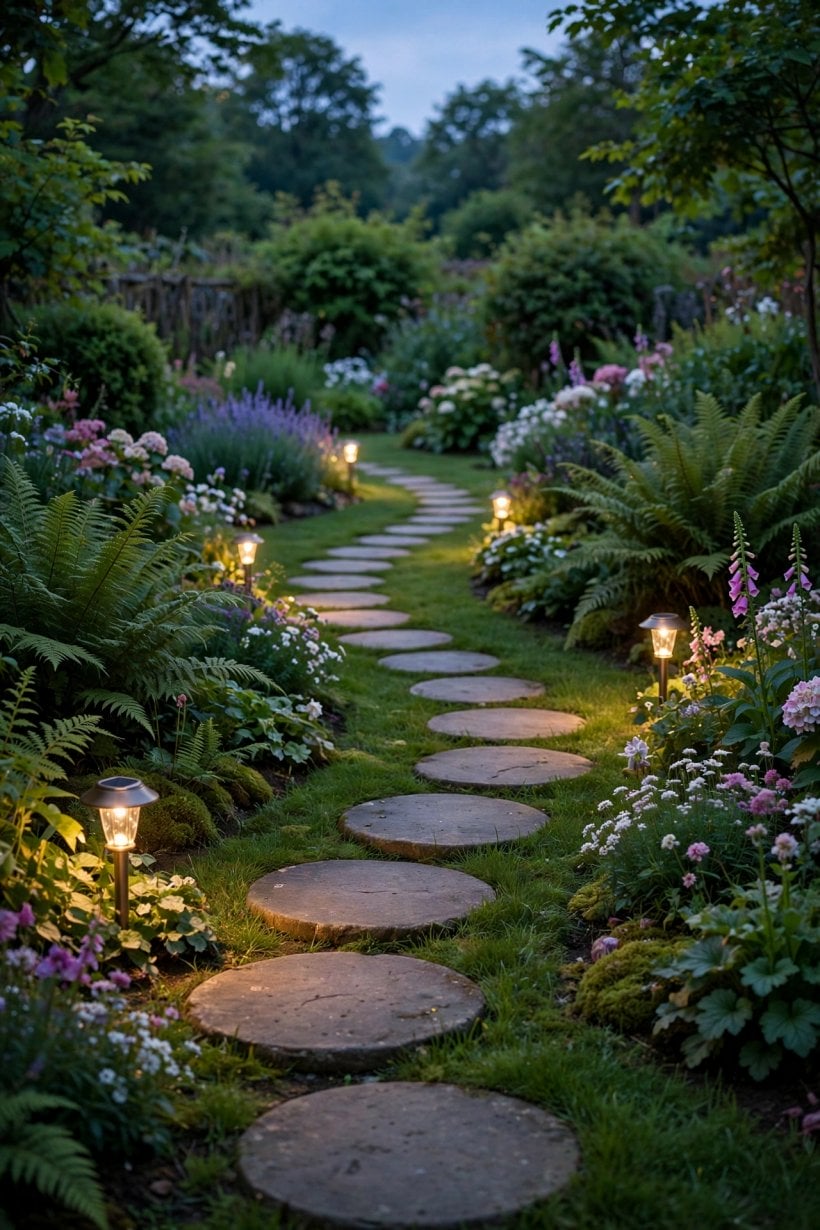
Some routes cannot stay flat or plain: they climb, cross water, or pass through the garden’s architecture. These special passages are the walkway’s set pieces, built with the same discipline small plots demand everywhere, where every level change must earn its ground twice over.
66. Build Garden Steps Wide, Shallow and in the Path’s Own Material
Steps are the path standing up: same material, same edges, a rhythm of treads the feet learn in two journeys.
67. Light Every Flight of Garden Steps From the Side, Low and Even
Step lighting belongs at ankle height, washing each tread, never shining up into the walker’s eyes. A flight lit for the photograph but blinding on the descent is decoration impersonating safety.
68. Bridge a Stream or Pond With the Path’s Own Grammar Extended
A small bridge is a walkway that flies: its material, width and edges should continue the path it serves, with a rail where height or ice asks for one.
69. Use Stepping Stones Across Water Where the Crossing Should Feel Like an Adventure
Stones across a pond or stream slow the walker to a delightful care, each step a small decision. They suit ornamental crossings, never the route to the bins in February rain.
70. Pass the Path Through an Arch, Pergola or Gate as a Designed Pause
A covered moment on the route — an arch with a rose, a pergola’s shade, a gate between garden rooms — punctuates the walk like a comma.
71. Terrace a Steep Route Into Level Chapters With Landings
Long slopes tire walkers and erode paths. Broken into stepped chapters with small landings, the climb becomes a sequence of rests and views — the hillside garden’s oldest and kindest construction.
72. Give Wheelbarrows, Bikes and Mobility Their Own Honest Geometry
Ramps beside steps, gradients a loaded barrow can climb, surfaces a wheelchair or pram can trust: the special route is special only when it excludes.
73. Plant the Banks Beside Steps and Bridges to Hold and Soften Them
Earth banks beside built passages move until planting holds them. Ground cover and shrubs at the path’s engineered moments are structure wearing green, chosen for roots as much as for flowers.
74. Keep Handrails Where Ice, Height or Age Ask, in the Path’s Own Material Family
A rail in the walkway’s timber, iron or stone extends the design’s hand to the walker who needs it.
75. End Special Passages by Returning to the Ordinary Path Gracefully
The step flight lands back on the path, the bridge rejoins the route, the arch releases the walker: the transitions, level and unhurried, decide whether the set piece feels like part of the garden or
9. Checks and Mistakes: Before the First Pour or Purchase
Check the route, the ground and the water before any material is ordered, because walkways fail from beneath: the desire line walked honestly, levels and slopes measured, soft ground and drainage dealt with in the base. The finest surface in this post cannot rescue a path laid on hope over a spring line.
Check widths and grip against the route’s real traffic — barrows, bins, heels, wet shade — and the edges against the material’s known habits: brick spreads without restraint, gravel escapes without containment, stone rocks without bedding. Each material’s failure is known in advance, which makes it a choice, not a surprise.
The common mistakes are all refusals of this post’s order: surface chosen before route, curves without reasons, patterns louder than their houses, lighting spent on scenery before step edges. Each is avoided by deciding route, territory and base before the first beautiful sample arrives.
10. Costs and Pulling It Together
Costs stay qualitative, as path-keeping honestly must: grass, bark and gravel routes are the economical end, their price mostly edges and labour, while large flagstones, clay pavers and boardwalks are the expensive end, where material and base work are the true cost. Spend first on the base, the edges and the drainage; they are walked on at every passage, long after the surface’s first shine has weathered into the garden.
Pull it together in the order this post kept: route, stone, brick, softness, territory, then the finishing trades. Followed in that sequence, these seventy-five ideas become one garden that walks as beautifully as it looks.
Final Considerations
The walkway is the garden’s handwriting, read by feet. Lay its route honestly, build its base like it matters, finish its edges and light with care, and every journey across the plot — the grand arrival and the midnight bin run alike — becomes a small pleasure the garden gives daily.


0 Comments