

Look up. The stepped ceiling above your favourite room is quietly offering you a fifth wall, and most of us leave it plain white out of habit. These twelve ways to dress it up range from a single weekend of paint to simple trim, light and texture projects, so you can choose the one that suits your room, your tools and your patience.
1. Know Your Tray Before You Dress It: At a Glance
| Idea Group | Best For | Effort Level |
|---|---|---|
| Paint and colour | Fast, reversible change | One weekend |
| Cove and feature lighting | Evening rooms and bedrooms | Weekend plus an electrician |
| Trim, moulding and beams | Traditional and farmhouse styles | Basic carpentry |
| Wallpaper and pattern | Bold, personal rooms | Careful hanging |
| Wood and warm finishes | Cosy, rustic schemes | Planks or panels |
| Metallic and fabric touches | Glamour and softness | Detail work |
A tray ceiling is simply a ceiling with a raised central recess, and that step between the two levels is what makes every idea in this article possible. The recess can hold colour without darkening the whole room, hide lighting you never see directly, and carry trim that gives a plain box of a room some architecture. Measure the depth of the step and the size of the recess before choosing anything, because a shallow tray suits paint and light, while a deep one can carry beams, planks and pattern as well.
Work through the ideas in any order, but pick one main treatment and let everything else support it. Rooms feel restful when the ceiling makes a single clear statement, whether that is colour, glow or texture. If you are renovating a whole small home at the same time, the measuring-first habit in this guide pairs well with broader planning, and many readers start by sketching the room from above and marking where furniture, lamps and sight lines already sit.
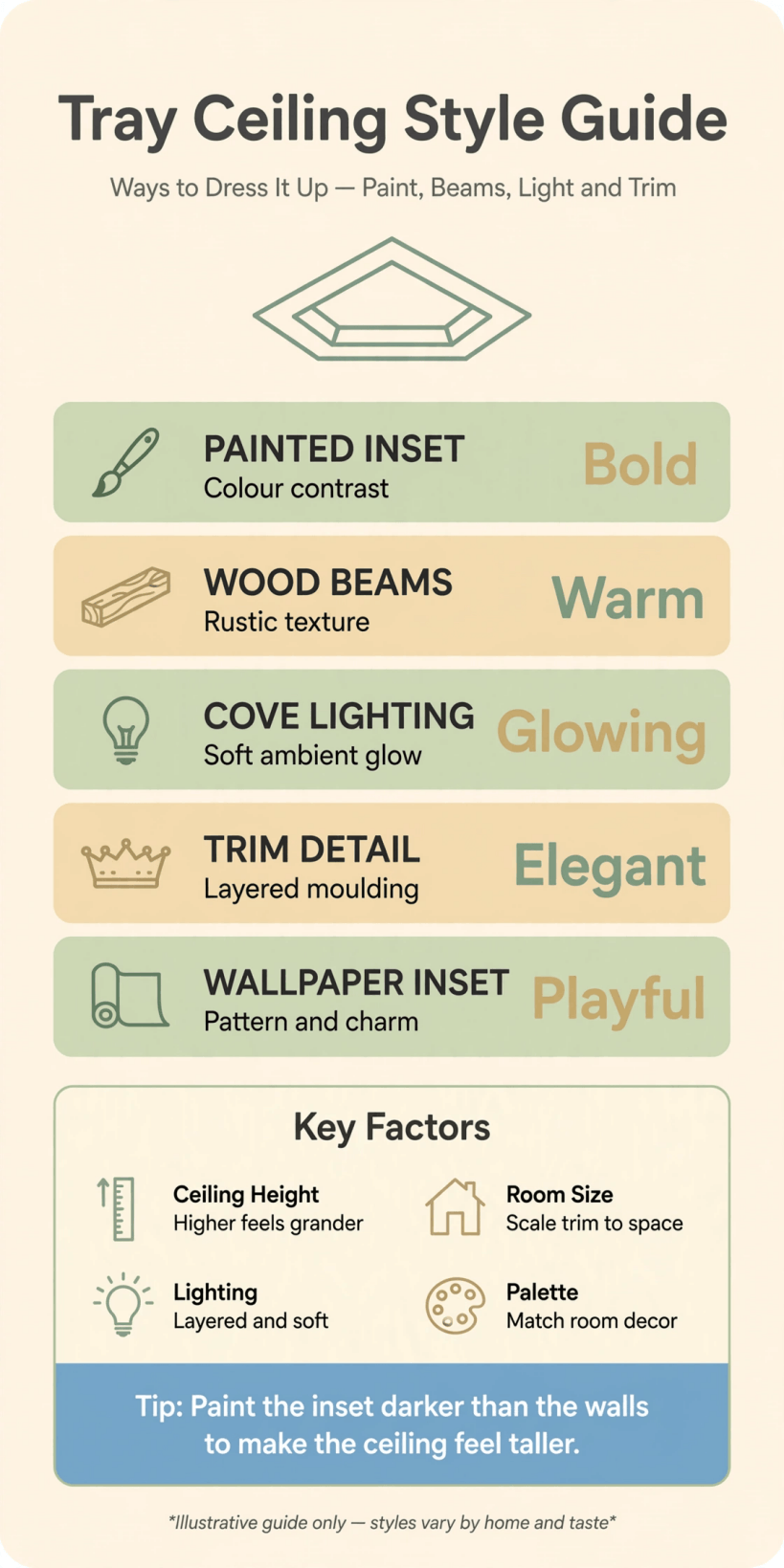
The twelve ideas in this article, grouped from the simplest paint changes to the most decorative finishes.
2. Paint That Gives the Recess Depth
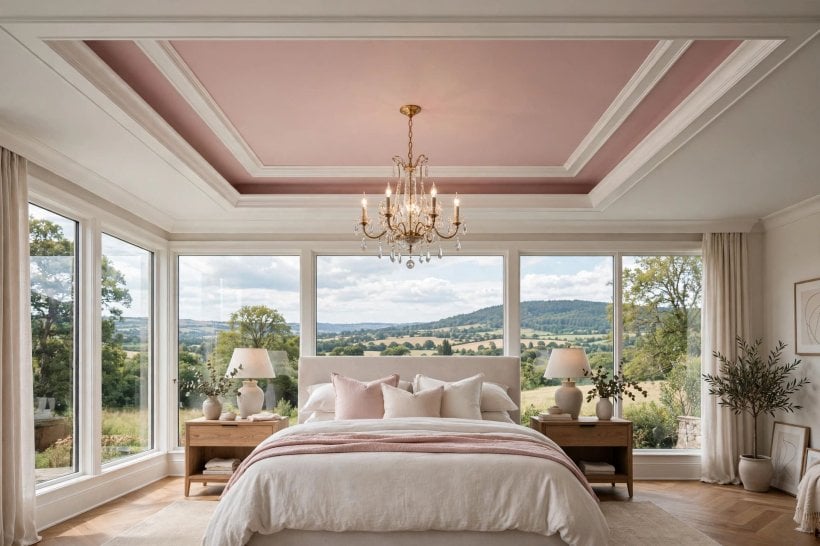
Idea 1: a deeper tone inside the recess. Painting the raised centre a few shades darker than the walls is the fastest transformation on this list. The eye reads the darker panel as height and shadow, so the room feels taller and more deliberate at once. Deep greens, inky blues and warm charcoals all work in the evening light, and because the area is contained, a brave colour overhead feels far less risky than the same colour on four walls.
Idea 2: soft tonal layering in one colour family. If contrast feels too strong, keep walls, step and recess within a single colour family, moving one shade deeper at each level. The result is calm, tailored and very forgiving of imperfect edges, and it suits bedrooms especially well. Confidence with colour grows quickly once you start small, and the adventurous schemes in colorful tiny house interior galleries show how much personality a compact room can carry overhead as well as at eye level.
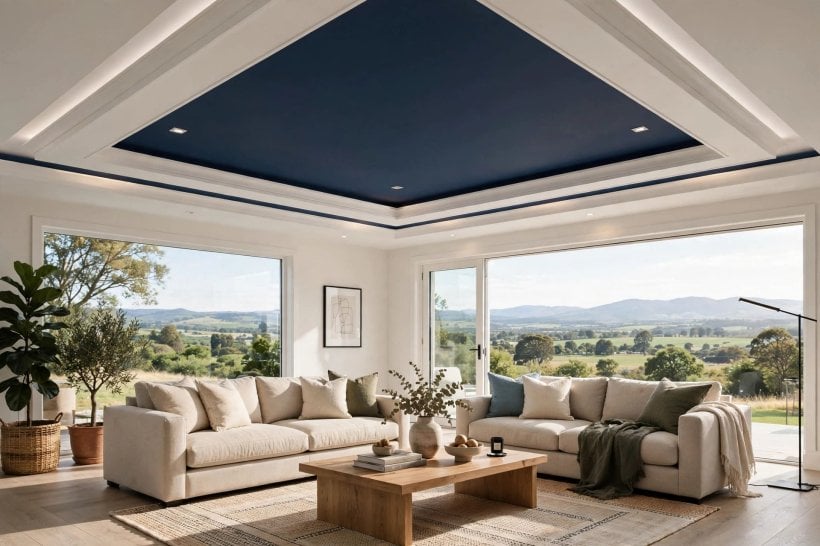
Whichever paint route you choose, prepare properly. Sugar-soap the surface, fill hairline cracks at the step, and use a small roller for the recess and an angled brush for the corners where the two levels meet. Two thin coats always beat one thick one overhead, and painting the step itself in the wall colour, rather than the recess colour, keeps the architecture crisp and makes the raised centre appear to float.
3. Light From Within: Cove and Feature Lighting
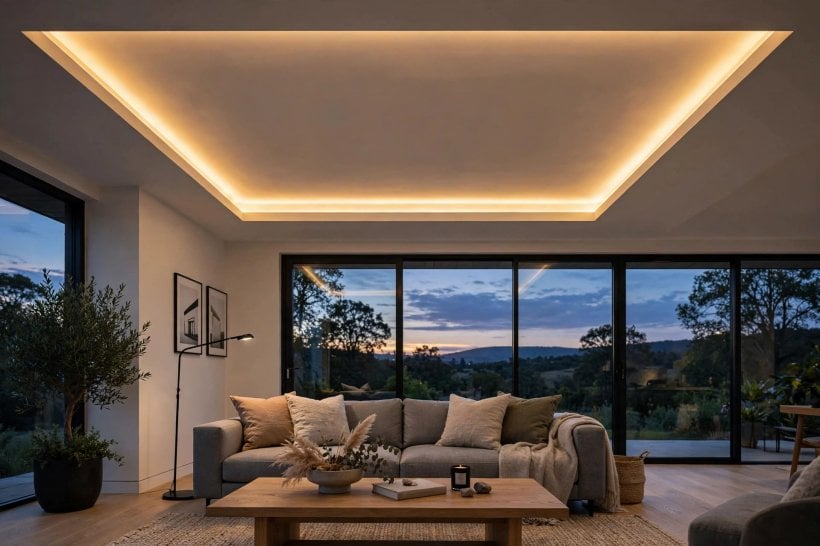
Idea 3: hidden cove lighting around the step. A simple LED strip tucked into the step, facing upward into the recess, washes the centre with a soft glow and removes the need for a harsh central light in the evening. Choose a warm colour temperature, put the strip on a dimmer, and the whole room softens in seconds. Because the source is hidden, the light feels like dusk rather than equipment, which is why this idea transforms bedrooms and living rooms more than any other on the list.
Idea 4: one statement light in the exact centre. A pendant, chandelier or sculptural flush fitting hung in the middle of the recess gives the geometry a full stop. Centre it carefully, because a tray makes misalignment obvious, and choose a size that fills the recess without crowding its edges. In a dining room the fitting can hang lower over the table; in a bedroom keep it higher and softer. Any new wiring or fitting work belongs to a qualified electrician, and planning the centre point before painting saves patching later.
4. Trim, Moulding and Beams
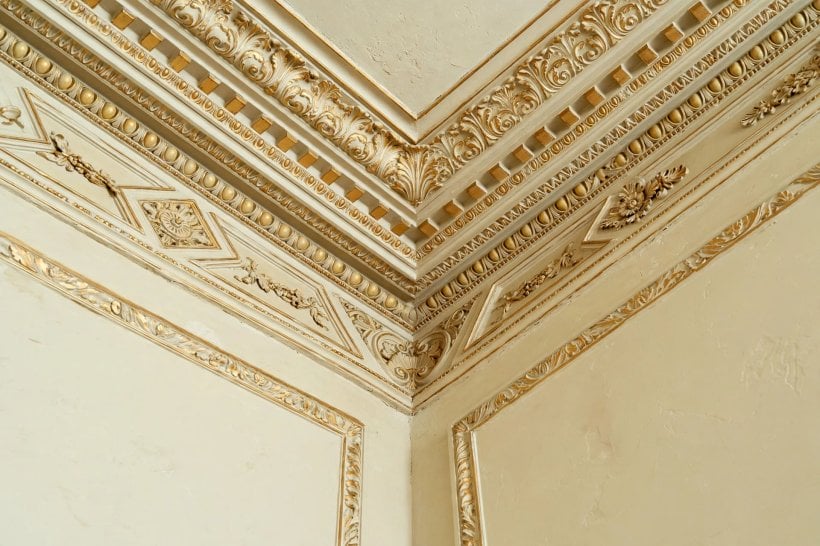
Idea 5: trim that draws the step. A slim moulding run along the inside edge of the step, or a full crown where the recess meets its border, turns a plain plaster transition into deliberate architecture. Paint the trim the same colour as the recess for a quiet effect, or in the wall colour to frame the centre like a picture. This is the classic treatment for traditional rooms, hallways and dining spaces, and it hides the slightly uneven lines that many older trays have.

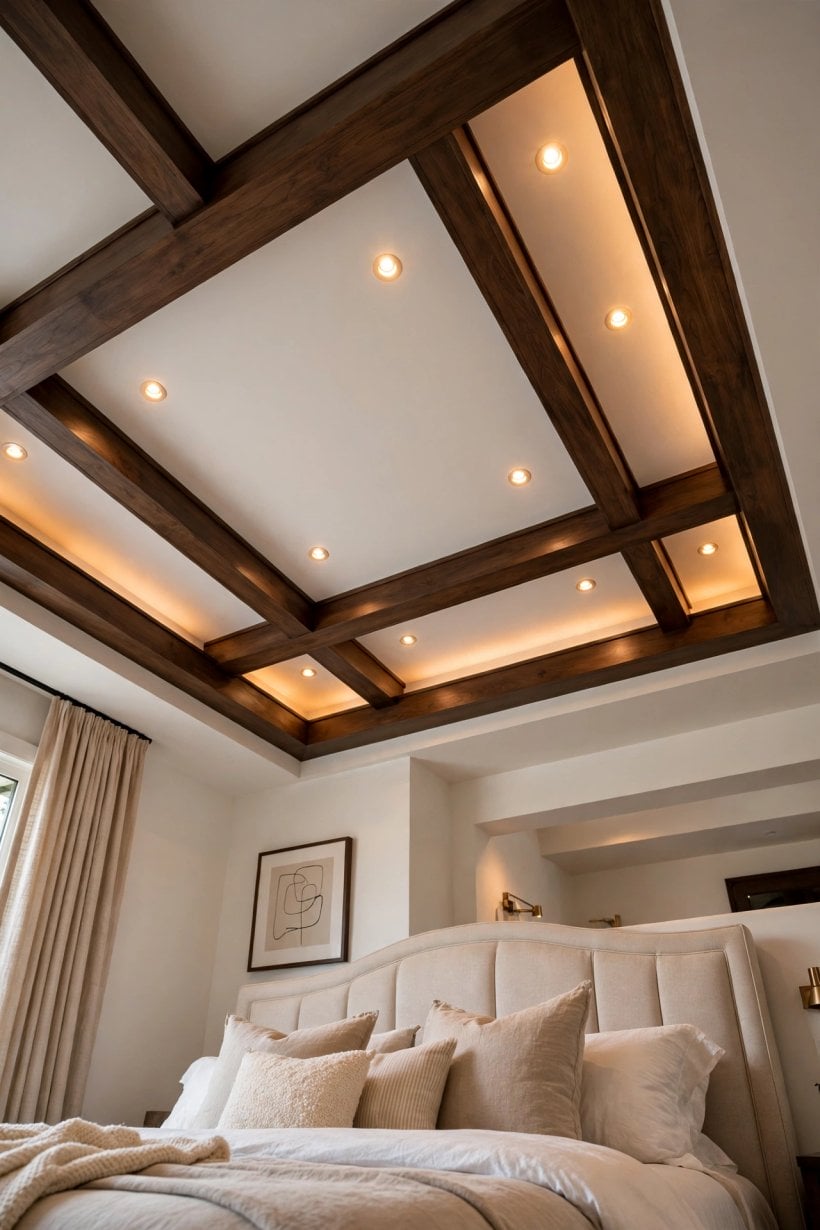
Idea 6: faux beams across the recess. Lightweight faux beams, or simple boxed timber, laid across the raised centre add rhythm and warmth, especially in farmhouse and rustic schemes. Space them evenly, keep their depth modest in a shallow tray, and stain or paint them to relate to floors or furniture below. If you enjoy this kind of project, the hands-on confidence behind how to build your own tiny house guides applies here too: measure twice, pre-finish pieces on the ground, and fix into structure rather than plaster alone.
5. Wallpaper and Pattern Overhead
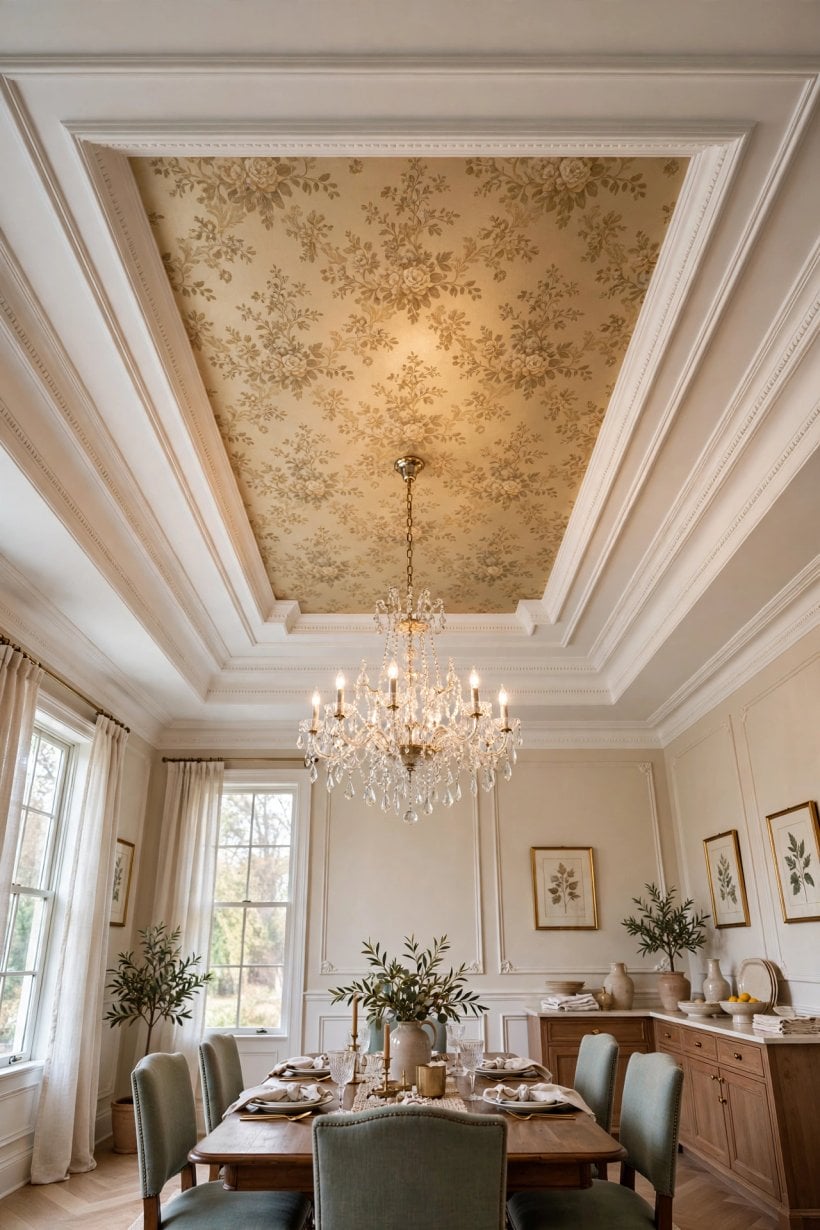
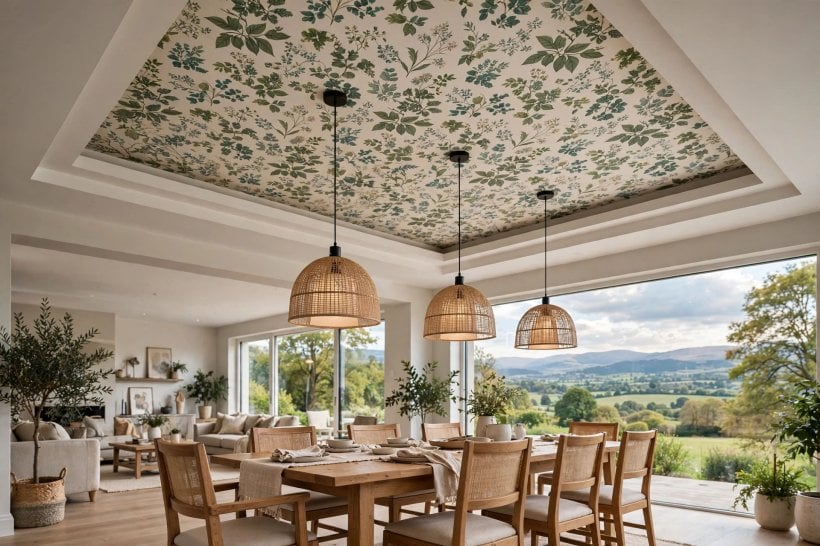
Idea 7: wallpaper inside the recess only. Papering just the raised centre contains both the cost and the courage needed for pattern. A soft botanical, a small geometric or a grasscloth texture overhead draws the eye up and makes the furniture below feel anchored, while the border and walls stay plain. Because the recess is flat and usually free of pipes and corners, it is one of the easiest places in a house to hang paper well.
Choose a pattern scale that suits the room size. Large motifs need a large recess to breathe, while small repeats read as texture from below and are kinder to beginners. Paste-the-wall papers make overhead work far less messy, and a second pair of hands is worth more than any tool. Order a sample first and tape it inside the recess for a full day, checking it in morning light, lamplight and everything between, because colours shift noticeably when they live above you.
6. Wood, Planks and Warm Finishes
Idea 8: planking the recess in wood. Tongue-and-groove boards, simple planks or wood-look panels fitted inside the tray bring instant warmth and a crafted feel, especially over a living room or a bed. Run the boards along the longer direction of the room to stretch it visually, and leave a small shadow gap at the edges rather than fighting for a perfect fit against the step. Natural timber, whitewashed boards and warm mid-tone stains each give a very different room from the same simple idea.
The relaxed, timber-rich rooms in tiny barn house interior features prove how well wood overhead suits everyday living rather than only show homes. Keep practicalities in view: acclimatise boards in the room before fitting, use fixings suited to the ceiling structure, and think about weight honestly on older plaster. A painted plank finish is the forgiving middle path, giving you the lines and shadow play of boards with a lighter, brighter result that still feels made by hand.
7. Metallic Shine and Reflective Finishes
Idea 9: a metallic wash in the recess. A soft metallic paint, in champagne, pewter or a muted bronze, catches lamplight and candlelight and makes evening rooms glow without any wiring at all. Apply it over a base coat in a similar tone, work in small sections, and expect a gentle shimmer rather than a mirror. This treatment loves dining rooms, where light is low and the table sits directly beneath the recess.
Idea 10: gloss and sheen for light bounce. Even without metal, a satin or soft-gloss finish in the recess reflects more light than the usual flat ceiling paint, lifting a north-facing room in a subtle way. Keep the border matte so the contrast between the two sheens does the decorating. High-gloss drama suits very confident schemes and flawless plaster only, because sheen shows every ripple, so most homes are happiest somewhere in the gentle middle of the scale.
8. Fabric, Softness and the Bedroom Tray
Idea 11: fabric panels for softness and sound. Stretching fabric over lightweight panels inside the recess is the least expected idea here, and in a bedroom it can be the loveliest. Linen-look weaves and soft, plain colours quieten a room visually and take a small edge off echo in hard-surfaced spaces. Panels made on the floor and fixed neatly are removable for cleaning or a future change of mind, which makes the idea friendlier than it first sounds.
Bedrooms ask for the calmest versions of every idea in this article, and the restful layouts in bedroom interior design for tiny houses show how little a sleep space really needs when each surface earns its place. Pair a fabric or tonal-paint tray with blackout curtains, low warm lighting and uncluttered surfaces, and the ceiling becomes part of the wind-down routine. Avoid busy pattern directly over a bed unless you genuinely love looking at it last thing at night and first thing every morning.
9. Medallions, Art and the Fifth Wall
Idea 12: treat the recess like a framed picture. A ceiling medallion around a central light, a ring of small trim squares, or even a painted border line an inch inside the step all turn the recess into a deliberate composition. In a period home, a medallion suits the architecture; in a modern one, a simple painted frame line in a contrasting tone achieves the same focus with nothing to buy but tape and paint. This is the idea to choose when you want the ceiling noticed, but quietly.
Think of the recess as the fifth wall of the room and decorate it with the same restraint you would use on the other four. One treatment, well centred and well finished, always beats three treatments competing overhead. If the room already has strong art, patterned rugs or bold furniture, let the ceiling be the calm member of the family. If the room is plain, the ceiling can carry the personality for the whole space, which is a gen
Choosing between the twelve ideas is mostly a matter of matching the treatment to the life of the room. Ask what the room feels like at the hour you use it most. A living room that seems flat at night usually needs light more than decoration, so cove lighting or a sheen finish will change it more than pattern would. A dining room that already glows may need focus instead, and a medallion or a deeper paint tone can supply it. A bedroom that feels stark often needs softness, which is why tonal paint and fabric answer so many sleep-space briefs. Writing the room’s single biggest weakness in one short sentence, before looking at any product or colour chart, is a surprisingly reliable way to pick the right idea first time.
Sequence matters as much as selection, because ceiling work is disruptive in a way that wall work is not. Everything in the room needs covering or moving, so group all overhead jobs together: electrics first, then any carpentry such as trim, beams or planks, then filling and preparation, and painting or papering last. If new lighting is part of the plan, its exact centre should be marked before any decorative finish goes on, so nothing needs patching afterwards. Allow real drying and curing time between coats overhead, since warm air rises and a ceiling that feels dry to the touch may still be soft underneath, and keep the room ventilated while you work, taking proper breaks if you are spending hours looking upward from a ladder or platform.
Cost is best thought of in honest bands rather than exact figures, because every home, region and tradesperson differs. Paint is at the modest end and asks mostly for your own time, while wallpaper, planks and quality trim sit in the middle, rewarding careful measuring and a little patience. New lighting circuits, extensive carpentry and specialist finishes belong at the top, and quotes from local professionals who have seen your ceiling will always beat general guesses. Whichever band you choose, spend first on the parts that are hardest to change later: sound structure, safe electrics and good preparation. Decorative layers can evolve over the years, and a tray that has been properly prepared will accept each future idea gracefully, which is the real secret behind ceilings that still look good a decade after the ladder was put away.
uinely useful trick in rented or newly built homes.
10. Room by Room: Where Each Idea Works Hardest
In living rooms, cove lighting and tonal paint win most often, because the room works from morning coffee to evening films and needs the ceiling to flex with it. The seating-first planning in tiny house living room ideas translates directly: arrange the room, find its true centre, and let the tray treatment sit over the conversation area rather than the mathematical middle of the ceiling, which is not always the same place.
Dining rooms love drama at close range, so metallic washes, statement pendants and wallpaper all shine there, while hallways suit trim and paint because pattern and beams can feel heavy in a narrow run. For bedrooms, borrow the sleep-first thinking in tiny house bedroom ideas and keep everything soft, dimmable and quiet. Small rooms and compact homes benefit most of all from a dressed tray, because the height is already there, waiting to be noticed, and using it costs no floor space at all.
Final Considerations
Start with the idea that solves something, not only the one that photographs best: glow for a dark room, colour for a plain one, trim for a tray with untidy lines. Do the preparation properly, centre everything with care, and use a qualified electrician for lighting work. A well-dressed tray ceiling rarely shouts, but it changes how a whole room feels every single day, lifting eyes, light and mood together. Choose one of the twelve, finish it completely, and live with it a while before adding anything more, because the best ceilings, like the best rooms, are edited rather than crowded.


0 Comments