
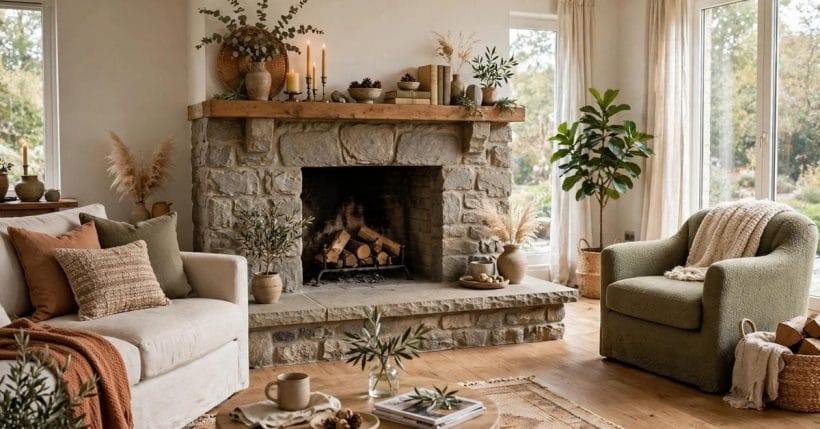
A raised hearth changes a fireplace from a hole in the wall into a piece of furniture. Lifted to seat height, it gives the fire a stage, the room an extra perch, and the whole wall a finished base.
This guide looks at the raised hearth on its own terms: its height, its materials, its finishes, its mantel pairings and its styling — with the structural and fire-safety work left, as it should be, to qualified professionals.
1. What Makes A Hearth Raised
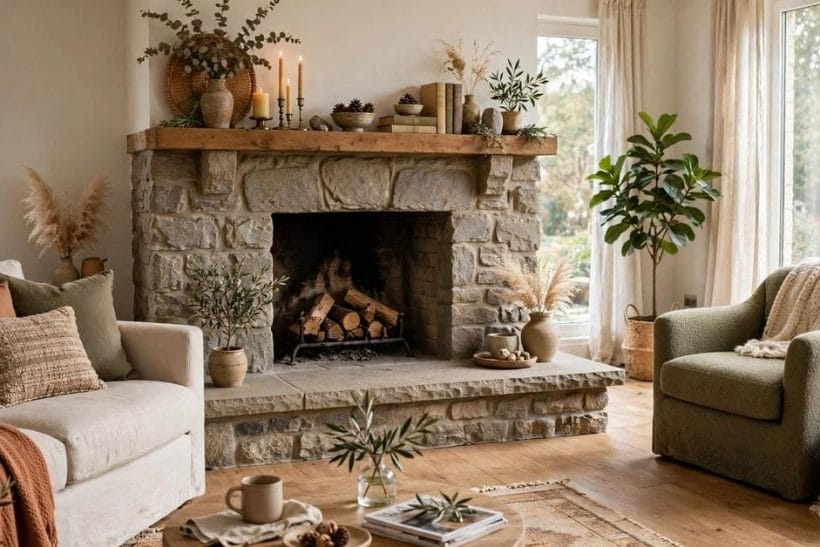
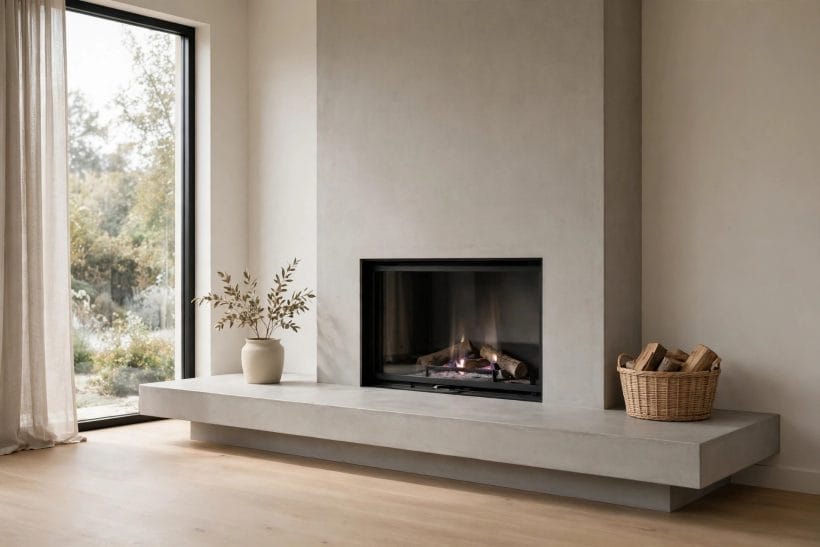
A hearth is the floor area in front of and beneath a fireplace opening, built to catch sparks and heat. A raised hearth lifts that area onto a platform, usually to around seat height, so the firebox sits higher in the wall and the hearth itself becomes a ledge.
The effect is immediate: the fire reads at eye level from a seated position, the hearth offers a place to sit, set a drink or display objects, and the fireplace wall gains a strong horizontal line that anchors the room. Rooms with low ceilings benefit in particular, because the raised line draws the eye across rather than up.
Any change to a hearth’s height or structure is work for a qualified fireplace professional and, where rules apply, for local approval. This guide covers the design choices; the structural and safety decisions belong to the people qualified to make them.
2. Height: The Seat-Level Sweet Spot
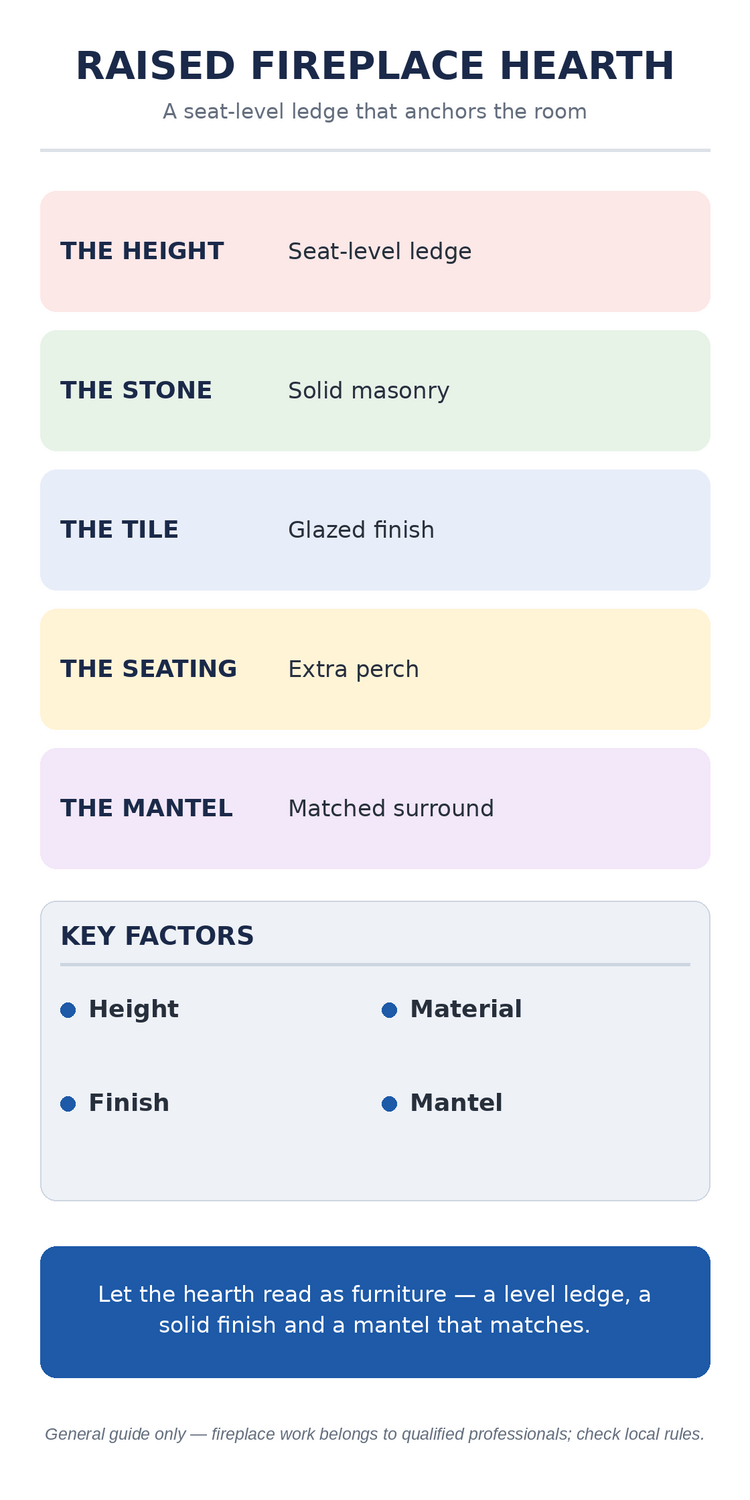
The most useful raised hearths sit at a height that works as informal seating — high enough to perch on comfortably, low enough to step onto without thinking about it. That seat-level band is what makes a raised hearth feel like furniture rather than a step.
Height also changes how the fire reads. A higher hearth lifts the firebox, which suits rooms where seating sits low or far back; a lower lift keeps the fire closer to the floor line, which suits rooms with a strong horizontal feel. The right choice depends on the room’s seating, the firebox position and the chimney arrangement, all of which a fireplace professional will assess together.
Depth matters as much as height: a hearth deep enough to sit on, set things on and catch the fire’s front zone is doing three jobs at once, while a shallow ledge does only one. Plan depth with the room’s traffic in mind, so the hearth never becomes an obstacle in a walkway.
Depth deserves as much thought as height, because a raised hearth lives in a room’s circulation as well as its composition. A deep ledge that juts into a main walkway will be bumped into daily, while a ledge too shallow to sit on loses half its purpose. Measure the room’s traffic paths before finalising depth, and consider how furniture sits around the fire: a sofa facing the hearth wants a different depth from a room where the hearth is passed beside. The hearth should feel generous where people linger and restrained where they move.
3. Stone: The Classic Raised Hearth
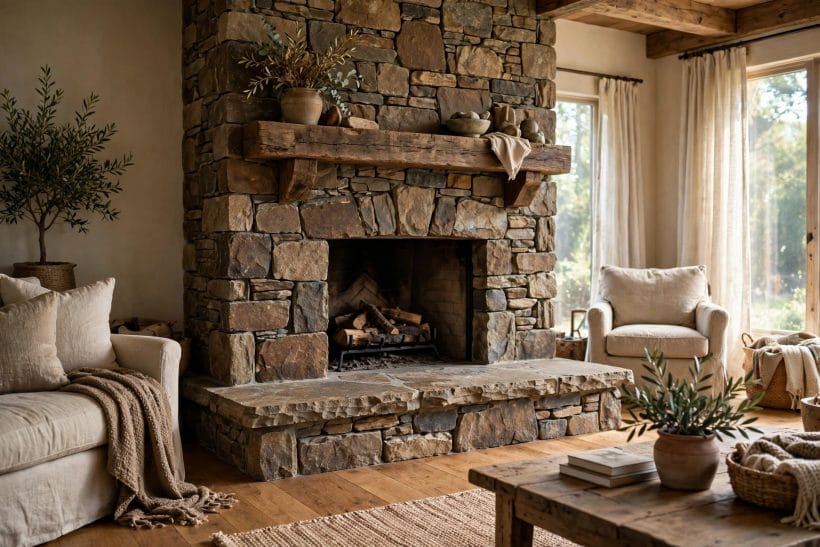
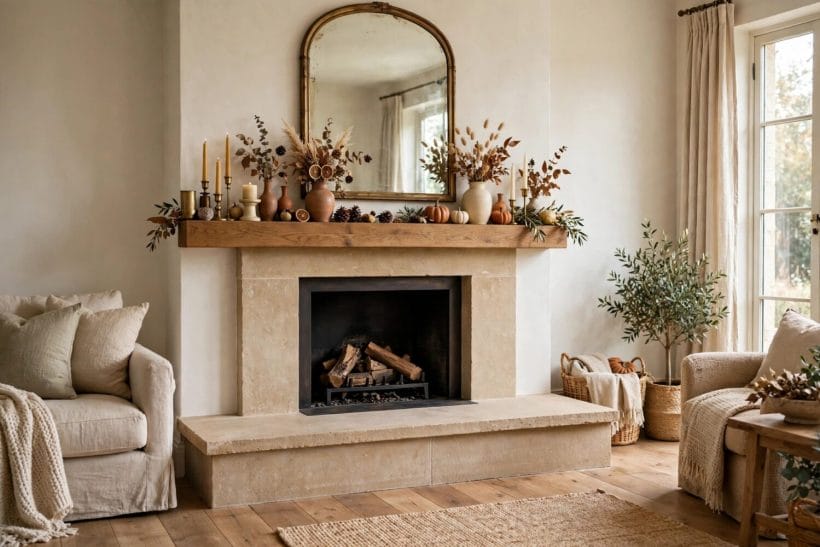
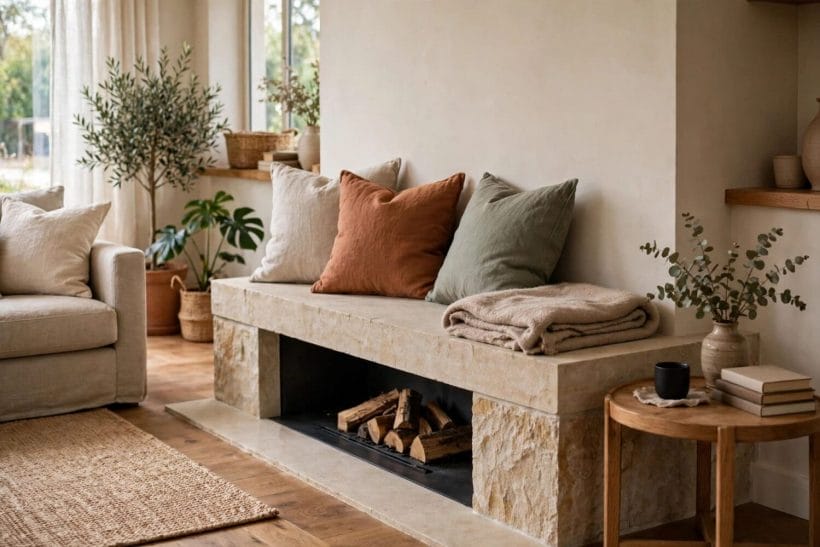
Stone is the traditional raised-hearth material, and it suits the form: solid, heat-tolerant in appearance, and available in textures from rough fieldstone to smooth cut slabs. A stone hearth reads as permanent, which is exactly what a fireplace wall wants.
Stone’s colour sets the room’s temperature. Warm sandstone and limestone soften a room, dark slate and basalt sharpen it, and a mix of tones can tie the hearth to flooring or wall finishes elsewhere in the space. The mortar joints matter too: wide, rough joints feel rustic, while tight, fine joints feel refined.
Check stone samples in the room’s own light before committing, because stone changes dramatically between a showroom and a living room. A sample board carried home for a few days tells the truth that a catalogue cannot.
4. Brick: Warmth And Pattern
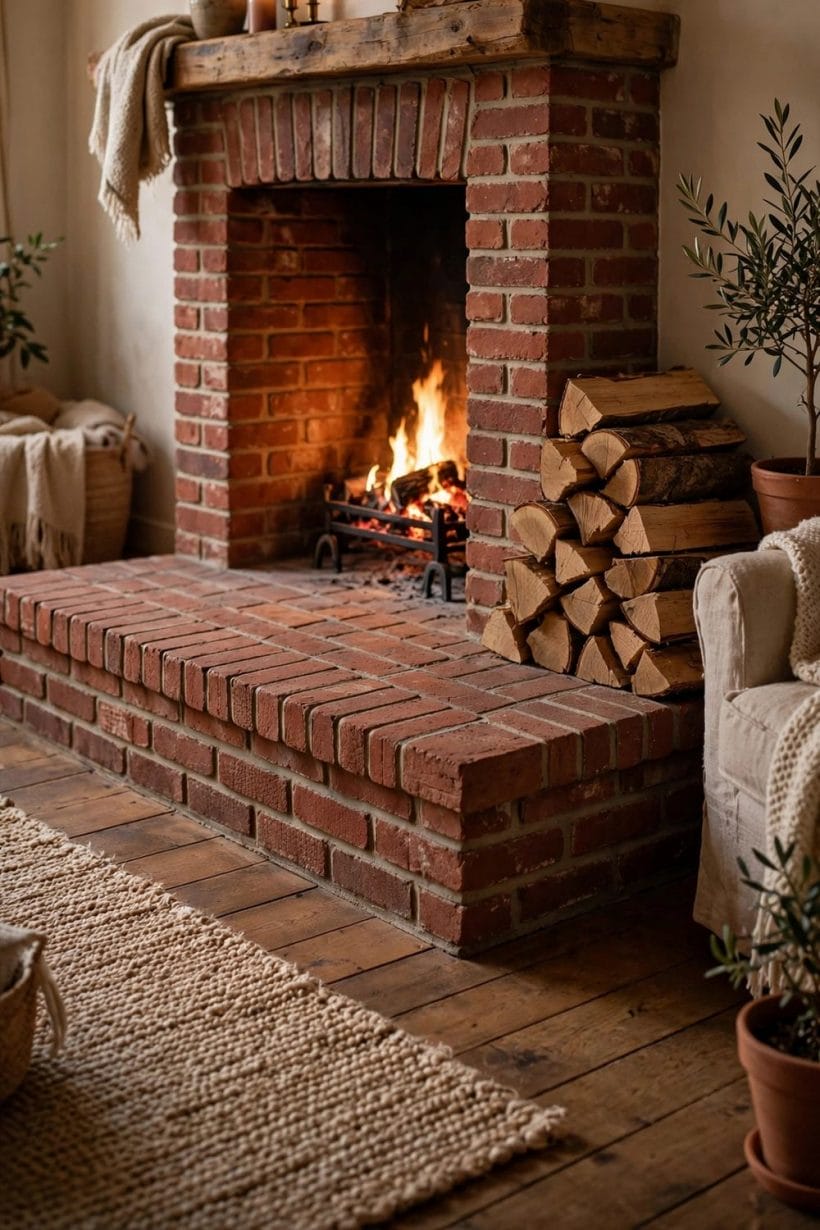
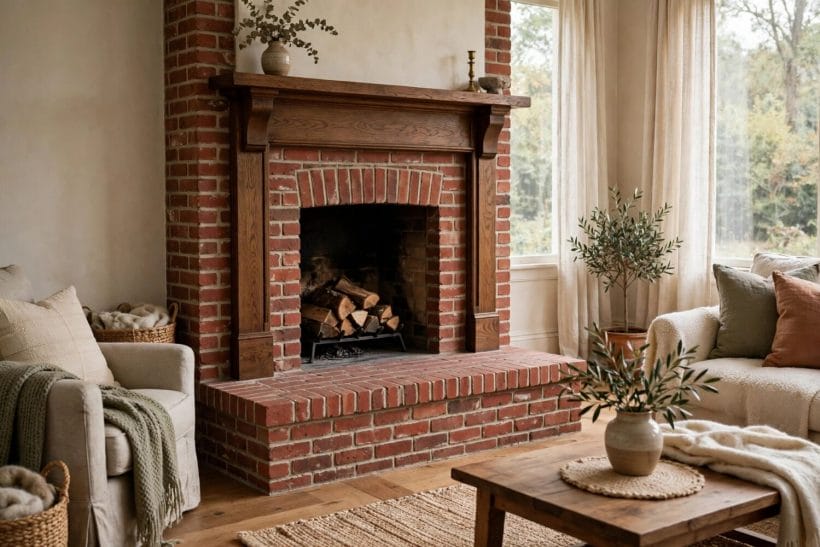
Brick gives a raised hearth warmth and rhythm. Its small unit size creates pattern naturally — running courses, herringbone caps, soldier-course edges — and its colour range runs from pale cream through classic red to dark, almost-black tones.
A brick hearth pairs naturally with timber, leather and warm textiles, which is why it suits cottage, farmhouse and traditional rooms so well. Painted brick is another route: a painted hearth can lighten a dark room or tie a busy brick wall into a calmer scheme, though paint near a firebox needs a product suited to the location, chosen on professional advice.
Keep brick’s texture in mind for seating: a heavily textured face is beautiful to look at and less comfortable to sit on, so a smooth cap stone or timber seat board over a brick base often gives the best of both.
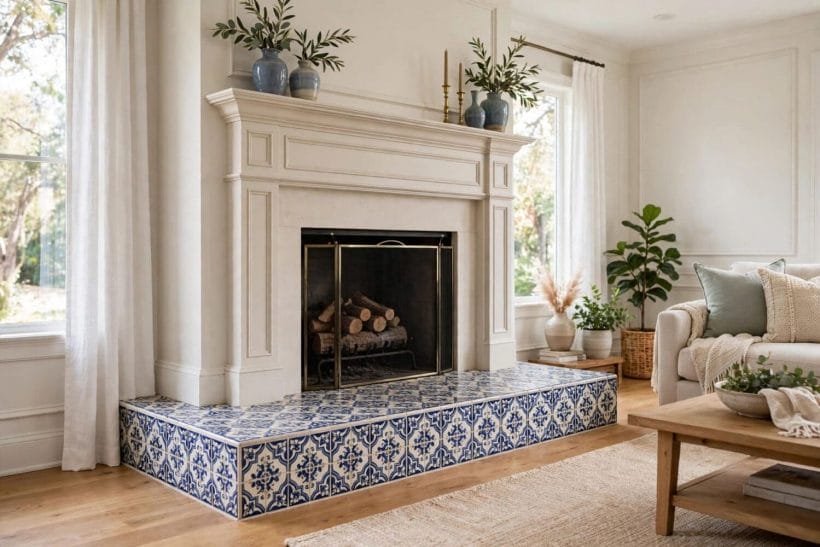
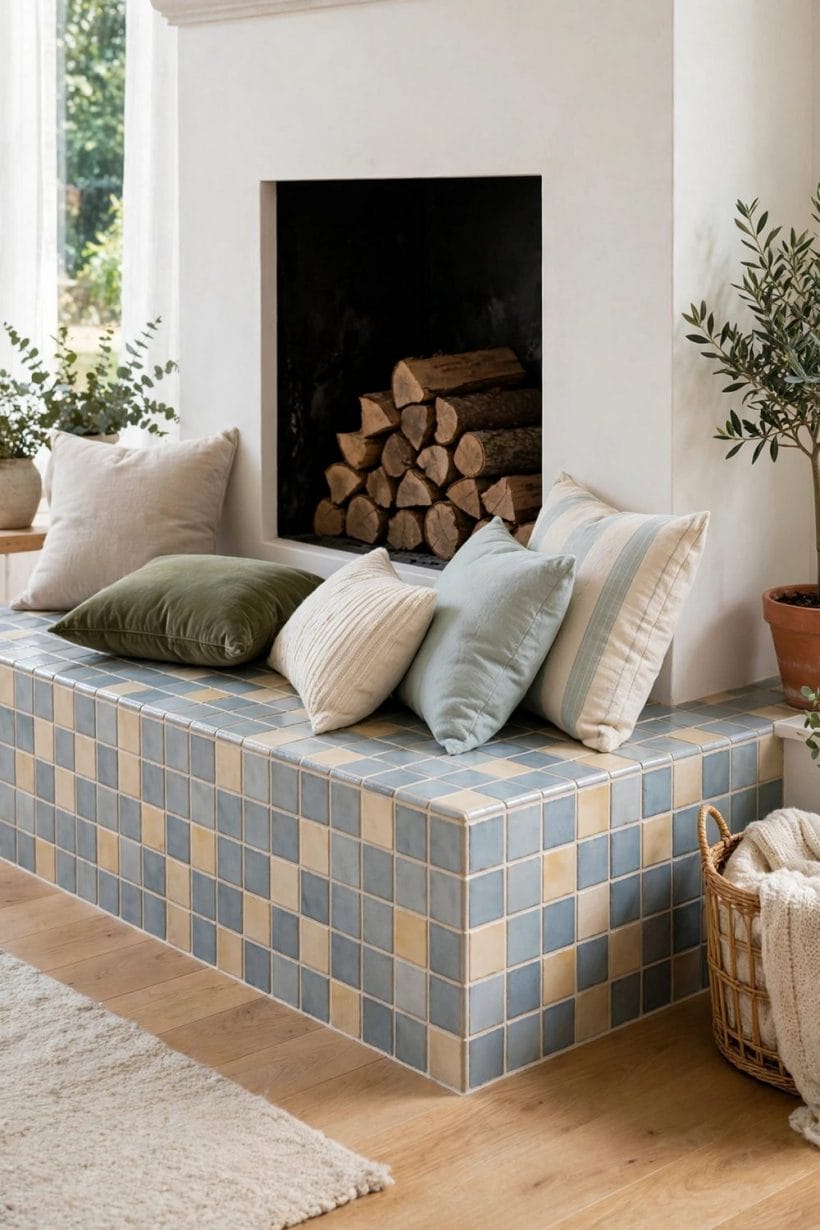
For tiled hearths, the joints matter as much as the tiles. Grout colour can either disappear into the design or draw a grid across it, and the choice should be made with samples in the room, not from a chart. Dark grout hides the ash dust and scuffs that hearths collect, while pale grout keeps a light design airy but shows every mark. Sealing and cleaning follow the tile maker’s guidance, and a spare box of tiles kept aside covers future chips without a hunt for a discontinued batch.
5. Tile: Colour, Glaze And Easy Cleaning
Tile brings colour and finish options that stone and brick cannot match: glazed surfaces in almost any hue, patterned encaustic-look tiles, large-format slabs with minimal joints, and hand-made-look tiles with gentle variation.
A tiled hearth is easy to wipe clean, which matters for a surface that collects ash dust and the occasional scuff. Gloss tiles reflect firelight beautifully but show marks readily; matt and textured tiles hide wear better and feel softer underfoot and under hand.
Tile choice should be made with heat and location in mind, on professional advice about suitability for the specific fireplace. The visual choice — colour, size, pattern — is yours; the suitability check belongs to the professional who knows the appliance and the installation.
6. The Hearth As Seating
A raised hearth’s second job, after serving the fire, is seating. It is the room’s extra perch: a place for one more guest, a child watching the flames, or someone warming their back on a cold evening.
Seating comfort comes from three things: a level top, a comfortable height, and a surface that is pleasant to sit on. A timber seat board, a row of cushions or a thick, well-fitted pad can all soften a stone or tile top without hiding it, and they can be removed when the hearth needs to be just a hearth.
Keep the seating zone clear of clutter. A hearth piled with logs, baskets and ornaments stops being a seat, and the room loses the extra place it gained. Choose a few objects for display and give the rest of the ledge room to breathe.
What hangs above the mantel sets the tone for the whole wall. A mirror doubles light and makes a small room feel larger, while art gives the fireplace a personal voice; either should be sized to the mantel rather than the wall, so the composition feels anchored. Hangings above a working fireplace need fixings suited to the wall and the weight, fitted with care, and anything hung there should tolerate gentle warmth without damage. When in doubt, a leaning mirror or a picture rail avoids fixings into the chimney breast altogether.
7. Mantels That Match The Hearth
A raised hearth and its mantel should read as one composition, not two separate ideas. A chunky timber mantel suits a stone hearth; a slim, painted mantel suits a tiled one; a stone mantel over a stone hearth can feel monolithic in the best sense, provided the tones do not fight.
Match by weight and by finish rather than by identical material: a heavy hearth wants a mantel with presence, while a light, tiled hearth suits something slimmer. The mantel shelf’s depth should relate to the hearth’s depth, so the whole assembly feels balanced from across the room.
Style the mantel lightly. A mirror, a piece of art or a small group of objects gives the eye a resting point above the fire, while a crowded shelf competes with the flames. Leave space around each object so the composition breathes.
8. Surrounds, Walls And The Whole Composition
The hearth does not stand alone: the surround, the wall finish and the flooring around it all shape how it reads. A plastered wall in a warm white lets a stone hearth star; a panelled wall gives a brick hearth a traditional frame; a dark wall makes a pale tiled hearth glow.
Flooring transitions deserve attention. Where the hearth meets timber, tile or stone flooring, a clean junction — a threshold strip, a flush joint, a deliberate step — keeps the composition tidy and the traffic safe. A ragged junction trips feet and eyes alike.
Think about the room as a whole before finalising the hearth: the rug position, the sofa distance, the traffic path past the fire. A hearth that works with the room’s layout feels inevitable; one that fights it feels like an afterthought.
Homes with children or pets need one more hearth check: corners and edges. A raised hearth at toddler height has corners at exactly the wrong level, and a padded corner guard or a rounded cap profile softens the risk without hiding the design. Pets, meanwhile, claim hearths as warm sleeping spots, so a washable cushion or blanket in the hearth’s corner keeps both pet and hearth happy. These are small, reversible choices, and they let a beautiful hearth stay beautiful in a busy household.
9. Safety And Professional Work, Stated Plainly
Fireplaces involve heat, combustion, chimneys and structure, and every one of those is a professional’s domain. Building, altering or repairing a hearth, firebox or chimney is not a weekend project, and the consequences of getting it wrong are serious.
Before any hearth work begins, a qualified fireplace professional should assess the appliance, the chimney, the hearth’s support and the room’s ventilation, and confirm what local rules require. Clearances, materials and construction details are decided by those assessments and by the appliance maker’s instructions — never by a general guide, including this one.
Ongoing care is simpler: keep the hearth clear of combustible clutter, have the chimney and appliance serviced on the maker’s schedule, and treat any change in how the fire draws, smells or sounds as a reason to call a professional, not to investigate the firebox yourself.
10. Styling A Raised Hearth Through The Seasons
A raised hearth earns its place year-round, not just in fire season. In winter it carries logs, candles and the glow of the fire; in summer it holds plants, books and a bowl of seasonal objects, with the firebox dressed rather than empty.
Seasonal styling works best when it is light: a few objects that can be swapped in minutes, rather than a display that takes an afternoon to change. A pair of lanterns, a stack of books, a trailing plant at one end — each gives the hearth a summer identity without hiding its form.
Let the hearth’s material lead the styling. Stone suits natural textures and greenery; tile suits ceramics and colour; brick suits timber, leather and warm textiles. When styling follows material, the whole fireplace wall feels coherent in every season.
Rugs and hearths need a sensible relationship. A rug that runs up to the hearth softens the room and frames the fire, but it must be kept well clear of the firebox itself, on professional advice about the specific installation, and it should be a rug that tolerates ash dust and the occasional spark mark without complaint. Natural fibres and flat weaves suit hearth-side use better than deep piles, which trap dust and show wear quickly. Choose the rug after the hearth, not before, so its colours answer the hearth’s material rather than competing with it.
Final Considerations
A raised hearth is one of the most rewarding fireplace choices: it lifts the fire to eye level, gives the room an extra seat, and anchors the whole wall with a strong horizontal line. Stone, brick and tile each bring a different character, and the mantel, surround and styling should be chosen to complete the composition rather than compete with it.
Choose the design with your eye, and leave the structure, clearances and installation to qualified professionals. A hearth built right and styled lightly will serve the room for decades — as a fire’s stage in winter and as the room’s favourite perch all year.
For more fireplace ideas, see fireplace hearth ideas, fireplace wall designs, fireplace photos, linear electric fireplace ideas, tiny house designs and interior design ideas.



0 Comments