
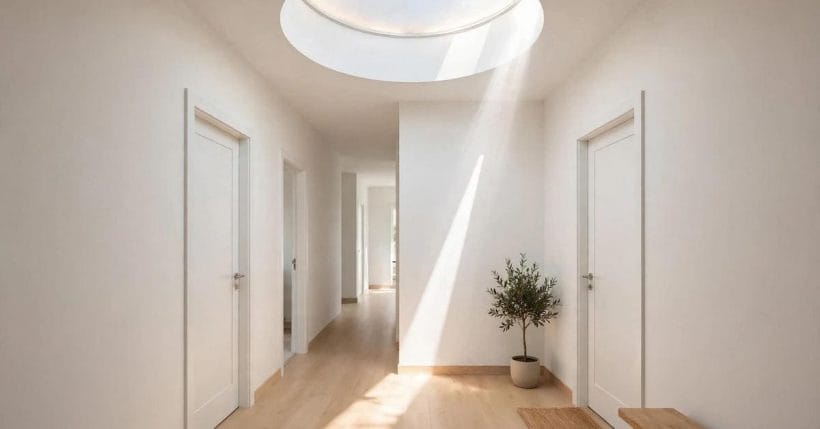
Some rooms never get a window where one is needed. A hallway, a bathroom, a dressing area or the middle of a deep plan can sit in permanent gloom while the roof above basks in daylight. A tubular skylight answers that exact problem: a small roof dome gathers daylight, a lined tube carries it down through the roof space, and a ceiling diffuser spreads it into the room below. No wiring, no bulb, no running cost — just daylight, borrowed from the roof and delivered where a window cannot reach.
Like any roof opening, though, a tubular skylight rewards careful choosing and punishes casual fitting. The tube run, the roof flashing, the diffuser position and the room itself all affect whether the result feels like natural daylight or a dim, disappointing disc. The checks below work through each decision in order, in general terms, so you can judge a proposal on its merits and ask the right questions before anyone cuts into your roof.
1. Start With the Room, Not the Roof
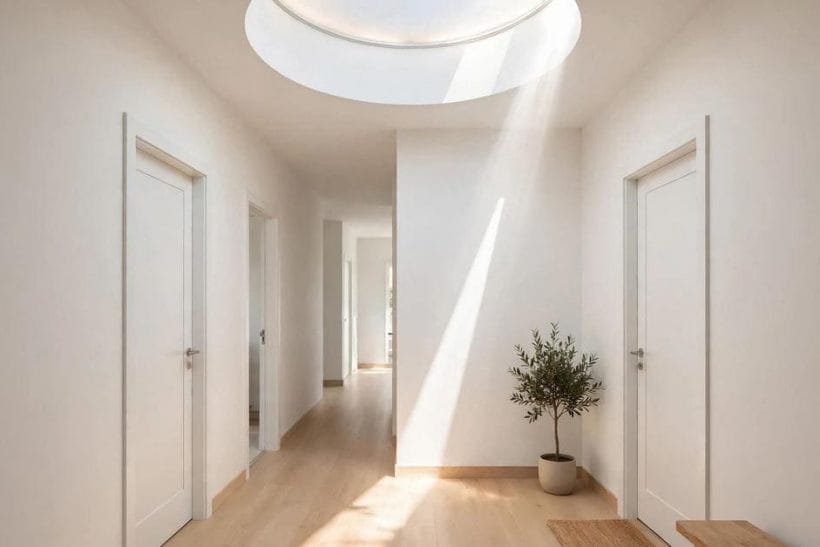
The best tubular skylight starts from the room it will serve. Walk the room at different times of day and notice where light is actually wanted: over a hallway that feels like a tunnel, above a bathroom mirror that needs honest daylight, in a kitchen corner where food preparation happens. A diffuser placed where people look and work earns its keep; one placed where it merely centres on the ceiling can feel decorative rather than useful.
Consider the room’s existing light too. A room with one small window gains enormously from a tube that adds a second, soft source; a room that is already bright may gain little. Sketch the room’s plan, mark where daylight falls now, and put the diffuser where the gap is. That single exercise prevents the most common regret — a tube that lights a corner nobody uses.
2. The Dome on the Roof
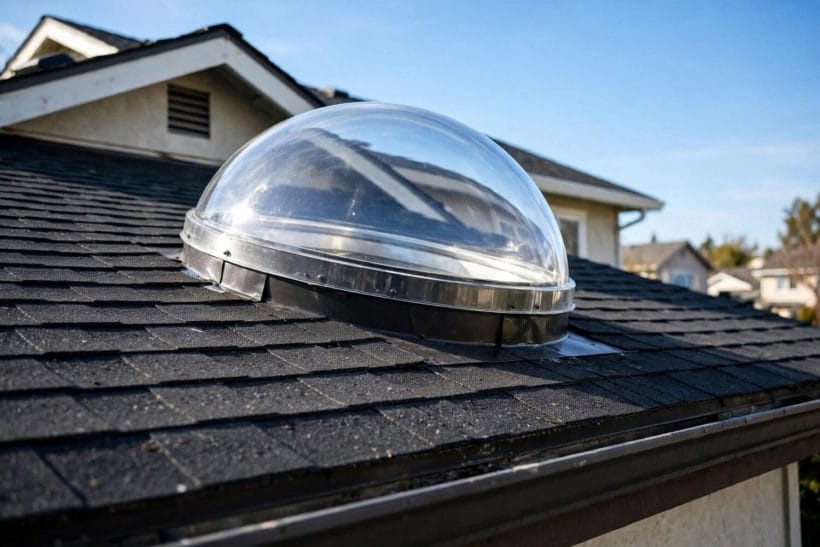
One more dome detail deserves a question: how the dome handles driving rain and wind-blown debris. A well-designed dome sheds water and resists lifting in storms, and its fixing should suit the local exposure — a sheltered suburban roof and a coastal, wind-beaten one are different jobs. Ask the installer how the dome is fixed and what wind and weather rating the system carries, and be wary of any proposal that treats the dome as an afterthought. It is the only part of the system exposed to the weather, so it should be specified as carefully as the flashing beneath it.
Everything begins at the dome, the small clear cap that sits on the roof and gathers light. Its position matters: a south-facing slope gathers more light across the day than a shaded one, and a dome clear of overhanging branches and neighbouring walls performs far better than one tucked into shadow. Ask where the dome will sit and what shades it through the seasons, not just on the day of the survey.
The dome’s flashing — the weatherproof junction between dome and roof covering — is the detail that decides whether the installation stays dry. It should suit the roof material, whether tile, slate or flat membrane, and it should be fitted by someone who works on roofs regularly. A dome fitted well disappears into the roofline; one fitted badly announces itself with every heavy rain. Roof work belongs to qualified professionals, and this junction is exactly why.

3. The Tube Run: Short and Straight Wins
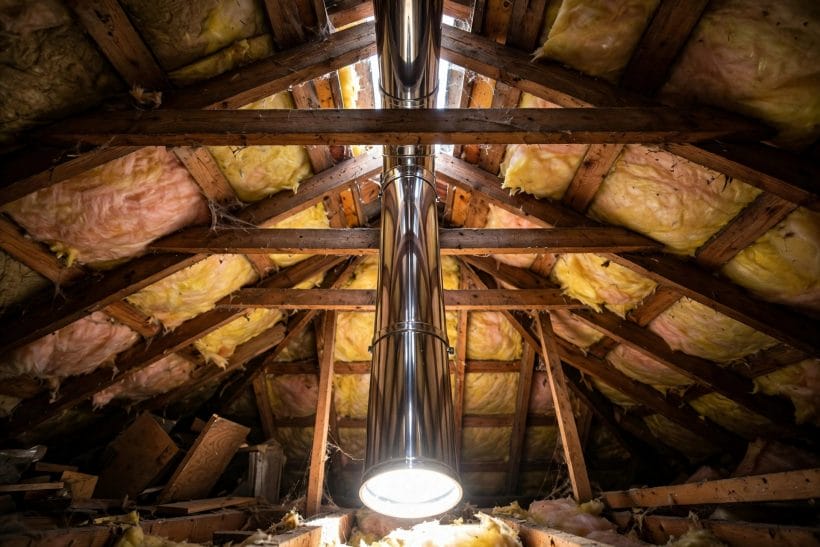
Between dome and diffuser runs the tube, and its geometry governs brightness. A short, straight run loses little light; a long run with bends loses more at every turn. When the roof space allows, the straightest route from dome to diffuser is almost always the best one, even if it means the diffuser sits slightly off-centre in the room below.
The tube’s lining matters as well: a bright, smooth reflective lining carries light further than a dull one, and a tube kept clean and undamaged keeps performing. If a proposed route winds around joists and services, ask whether a different dome position could straighten it. A small change on the roof can make a large difference in the room.
4. The Diffuser in the Room
Diffuser placement also interacts with the room’s other ceiling features. A diffuser crowded against a light fitting or a smoke alarm looks cramped and can complicate future maintenance of both. Leave breathing room around the diffuser so it reads as a deliberate feature, and so any of the ceiling’s services can be reached without disturbing it. A little planning on the ceiling plan prevents a lifetime of visual clutter overhead.
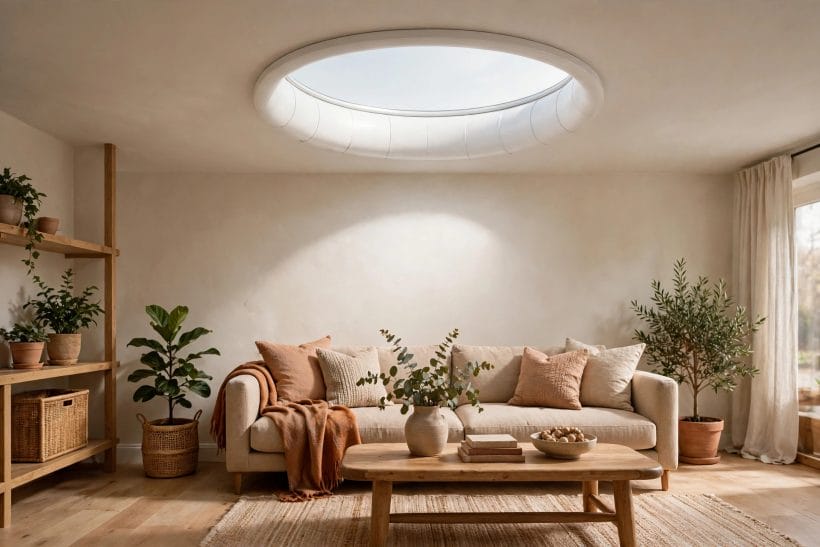
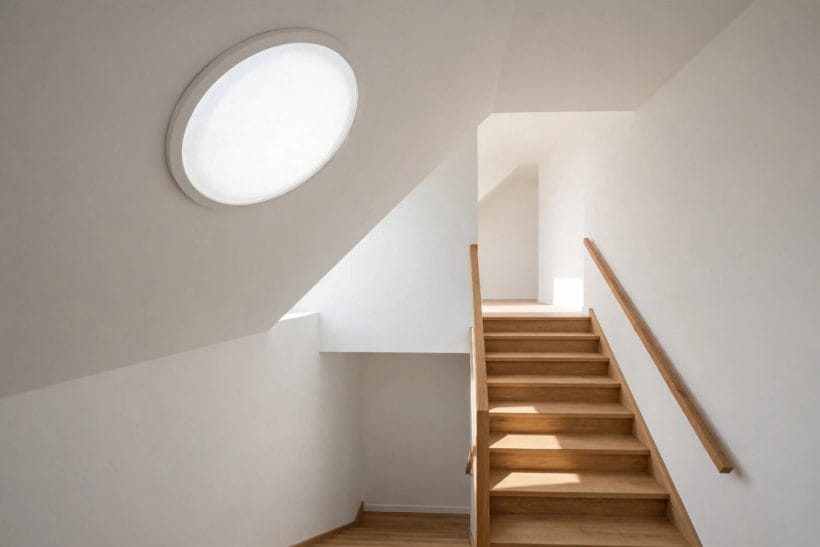
The diffuser is the part you actually live with: a flush ceiling disc that spreads daylight evenly. A good diffuser glows softly without glare, so the room feels daylit rather than spotlit. Frosted or prismatic diffusers spread light more gently than clear ones, and a diffuser with a dimming or night-time option suits bedrooms where total darkness matters.
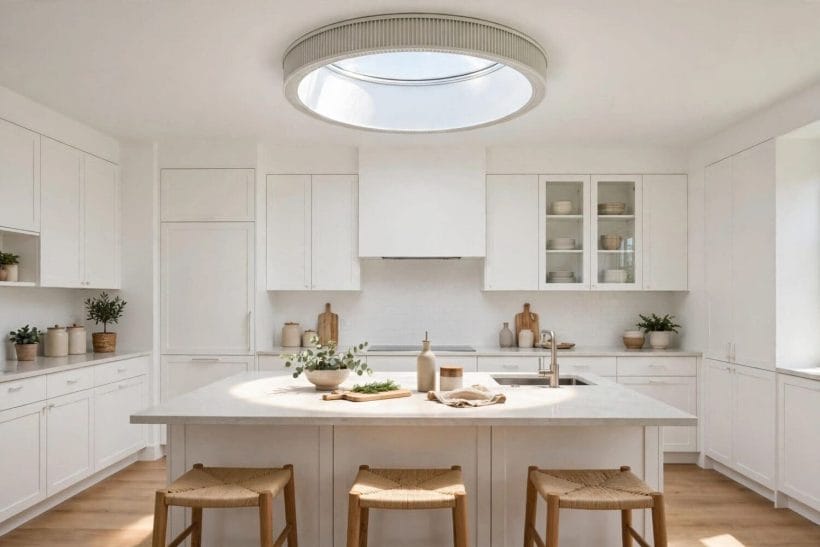
Size the diffuser to the room, not to ambition. A large diffuser in a small hallway can glare; a small one in a large kitchen can feel lost. Look at installed examples in rooms of similar size before choosing, and check the diffuser’s position against furniture below — a diffuser directly above a mirror or a worktop serves better than one above a doorway. The false ceiling guide covers the ceiling side of this decision, including how a diffuser sits within a dropped ceiling layer.
5. What a Tube Can and Cannot Do
A tubular skylight gives daylight, not a view, and not ventilation unless the model specifically includes it. That honesty is part of its charm: it suits rooms where a view is impossible and a window is impractical. But it will not replace a window in a living room where outlook matters, and it will not light a large open-plan space alone — one tube serves one room well, and large spaces may need more than one.
Night-time is the other honest limit: a tube gives nothing after dark, so the room still needs its ordinary lighting for evenings. Judge a tubular skylight as a daylight supplement that transforms daytime gloom, not as a replacement for the room’s whole lighting scheme. Rooms that are used mostly by day — hallways, bathrooms, kitchens, dressing areas — are where tubes shine.
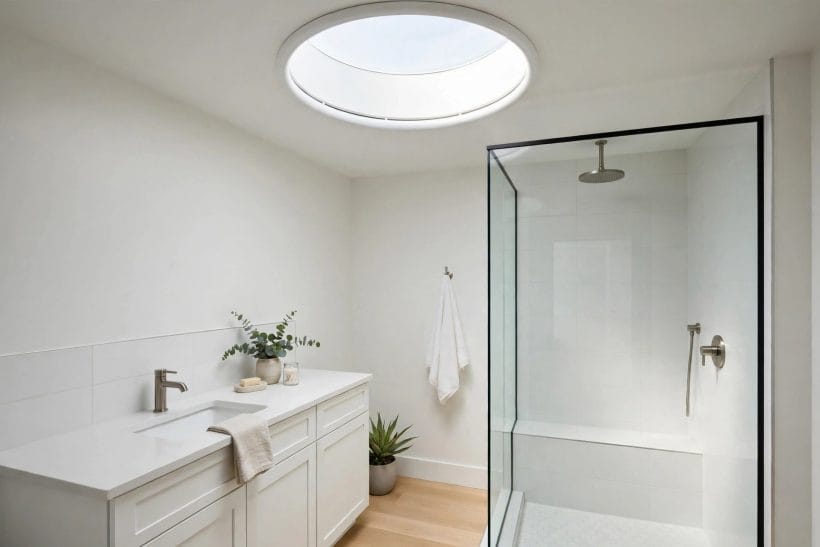
It is worth being clear about one more limit: a tubular skylight does not open, in most models, and so it does not ventilate the room. If the room also needs fresh air — a bathroom without a window, for instance — plan ventilation separately, whether a fan or an opening window elsewhere. Daylight and air are different needs, and a tube answers only the first. Rooms that need both should have both planned, rather than expecting the tube to do two jobs it was designed to do one of.
6. Roof Type and Structure
Insulation is the quiet part of the job that is easy to skip and costly to regret. The tube passes from a cold roof space into a warm room, and insulation around the tube keeps that junction from becoming a cold bridge or a condensation point. Check that the proposal includes making good the insulation after the tube is fitted, not merely cutting through it. A tube that arrives without its insulation properly restored can cost more in heat and damp than it ever saves in lighting.
Most pitched roofs accept a tubular skylight readily, since the dome needs only a modest opening and the tube threads between joists. Flat roofs need a different approach, usually with a kerb or upstand that lifts the dome clear of standing water, and the flashing detail changes accordingly. Tell any installer your roof type and covering before accepting a price, and be wary of a one-size proposal that ignores it.
Structure matters too: the tube passes through joists and ceilings, and any cutting or notching should follow the maker’s guidance and, where needed, a professional’s judgement. Never let a tube run compromise a structural member, and never let a ceiling be opened without checking what services run through it. The roof space hides wiring, pipes and insulation, and a careful survey before cutting prevents expensive surprises.
7. Light Quality Through the Day
Tubular daylight changes with the sky, which is precisely its appeal: the room’s light feels alive, shifting from bright midday to soft evening. That variation also means the room will never be as evenly lit as under electric light, and north-facing or shaded domes give a softer, cooler light than sun-facing ones. Visit an installed example at different times if you can, and notice how the diffuser’s glow changes.
Colour rendering is another quiet strength: daylight shows colours truly, which is why tubes suit bathrooms and dressing areas where makeup and clothing choices happen. A diffuser that tints the light warm or cool changes that benefit, so check the diffuser’s character in person rather than trusting a brochure description. What looks neutral on paper can read warm or cold in your own room.

8. Condensation, Leaks and Upkeep
It is also worth asking who to call if something does go wrong. A tubular skylight sits between trades — roofer, electrician, general builder — and responsibility can blur when a leak appears. A single installer who guarantees the whole system, flashing included, is worth more than a cheaper split job where each trade points at the other. Get the guarantee in writing, with the flashing and the tube named, before work starts, and keep the paperwork with the house records for the next owner.
Two worries dominate tubular skylights: leaks and condensation. Leaks almost always trace back to flashing, which is why the roof junction deserves the most attention at installation and the first check after heavy rain. Condensation can form inside a tube where warm room air meets a cold tube, and good installations manage it with seals and insulation around the tube in the roof space.
Upkeep is light but not zero: the dome needs occasional cleaning, since dirt and leaves dim the light, and seals deserve a look every year or two. Ask the installer what maintenance the system needs and how the dome is reached safely — a dome that cannot be cleaned without scaffolding will slowly dim. A groin vault ceiling shows the opposite approach to bringing light down, but the maintenance moral is the same: daylight features reward a little attention.
9. Cost, Value and Honest Expectations
A tubular skylight costs far less than a conventional skylight or a new window, and it uses no electricity, which makes it easy to justify on running costs alone. But the honest value is in the room: a dark hallway that becomes welcoming, a bathroom that no longer needs lights on at noon, a kitchen corner that feels connected to the day. Those daily gains, not payback arithmetic, are the real return.
Get more than one view on the route and the dome position before committing, and compare proposals on the tube run and flashing detail, not just on price. The cheapest proposal that takes a long, bent route to a shaded dome will disappoint for years, while a slightly dearer straight run to a sunny slope will delight every day. Judge the daylight, not the discount.
10. Fitting Day and the Checks After
One final check is worth making a month after fitting: live with the diffuser through a full cycle of bright days, dull days and one storm, then judge it. Daylight features reveal their character slowly — a diffuser that glares at noon in midsummer may glow perfectly in winter, and a tube that seems dim on a grey morning may surprise you on a bright afternoon. Judge the system across the cycle, not on a single viewing, and raise any concern while the installer’s guarantee is fresh and the job is still recent in their diary.
On fitting day, the work should be tidy and quick: a roof opening, a flashing, a tube, a diffuser, and careful making-good of ceiling and insulation. Dust and disruption should be modest compared with a full skylight installation. Before the installer leaves, check the diffuser’s glow in daylight, look at the roof junction from outside if safely possible, and confirm what guarantee covers the flashing and the tube.
After the first heavy rain, check the ceiling around the diffuser for any sign of damp, and after the first winter, check for condensation. Early checks catch small issues while they are still small, and a reputable installer will want to know. A tube that stays dry and bright through its first seasons will generally stay that way, giving the room daylight for years with little more than an occasional dome clean. For the ceiling around the diffuser, the exposed beam living room ideas show how a ceiling feature can anchor a room, and ceiling fan checks covers the other common ceiling fitting worth planning alongside.

Final Considerations
A tubular skylight is a modest intervention with an outsized effect: daylight where no window can reach, no running cost, and a room that feels larger and more welcoming by day. Choose it by the room first, keep the tube run short and straight, insist on a proper roof flashing fitted by a professional, and place the diffuser where people actually look and work. Check the roof type, the dome’s sunlight, the diffuser’s glare and the maintenance route before committing, and judge proposals on daylight delivered rather than price alone.
Done well, the tube disappears and only the light remains — which is exactly the point. For the rest of the home’s daylight and ceiling decisions, see kitchen ideas for rooms that work hard by day, interior design ideas for light used well throughout the home, and tiny house designs for small rooms where borrowed daylight matters most.



0 Comments