

A ceiling fan is one of the few fittings that is felt more than seen — chosen well, it disappears into comfort; chosen badly, it wobbles, hums and hangs over the room like a pending complaint.
This guide gives the checks that actually decide a good ceiling fan: room fit, blades, mounts, motors, controls and professional fitting. It names no brands and crowns no winners — just the questions to ask of any fan, in any shop, at any price.
1. Ceiling Fans at a Glance
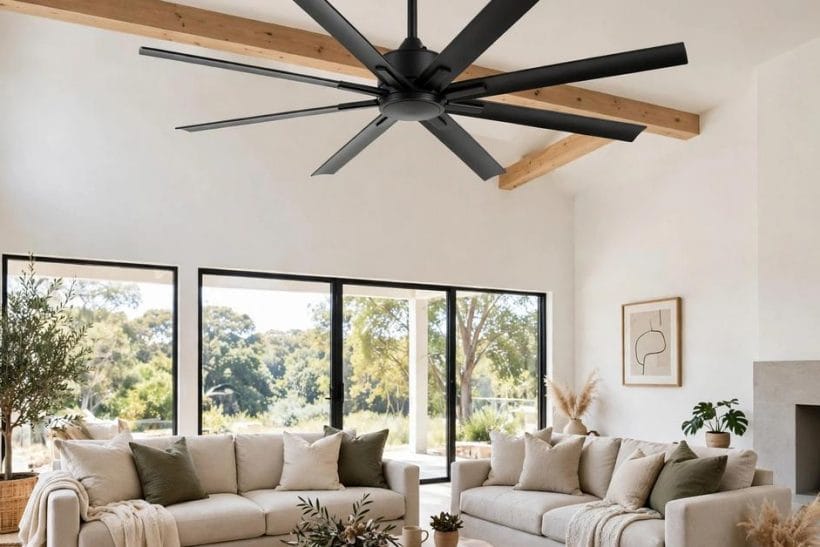
Ask a room of homeowners what to check in a ceiling fan and most will start with how it looks. Decorators start elsewhere — with the room. A fan is a machine for moving air in a specific space, and the fittings that frame the ceiling design ideas cluster treat it as such: size it to the room, hang it at the right height, and the style question answers itself inside those limits.
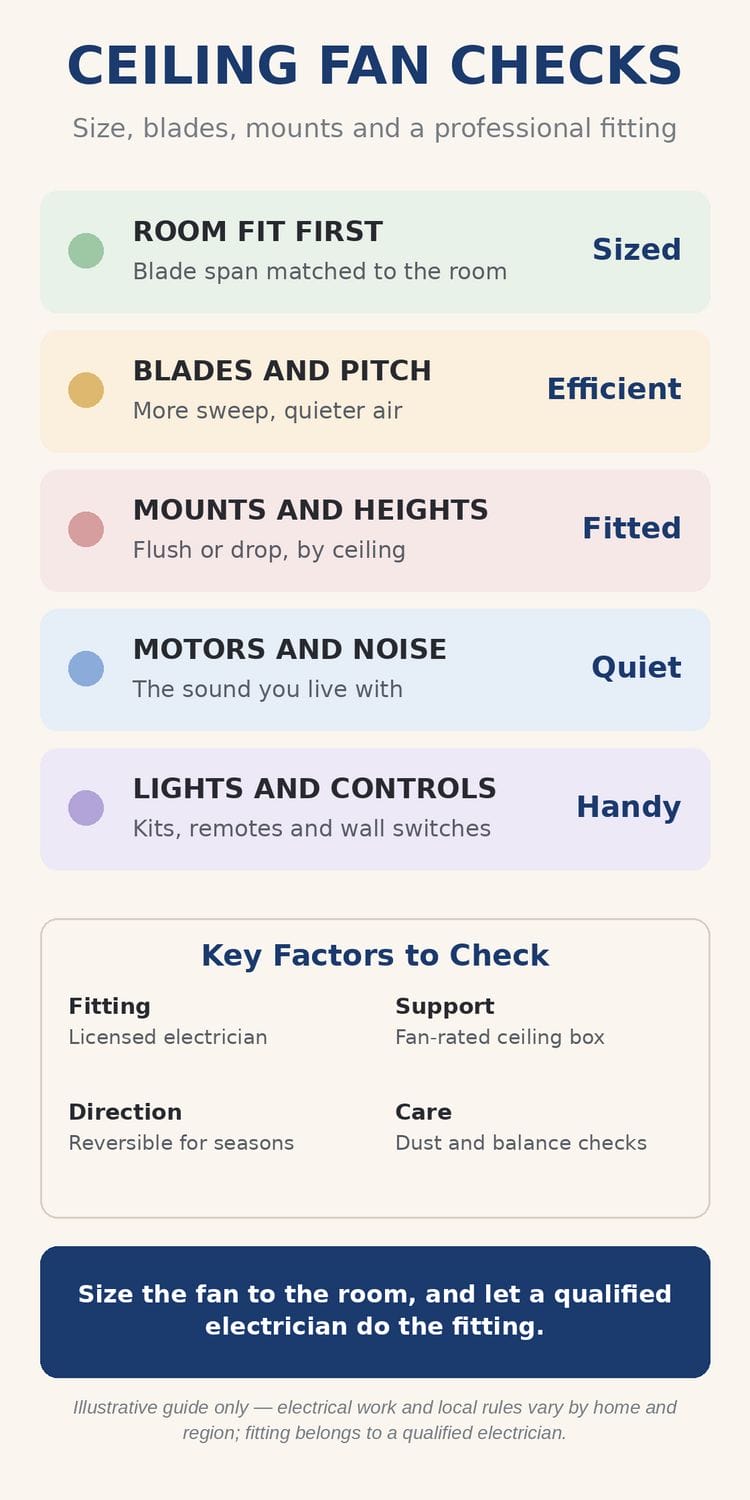
The five checks in the table below are the whole method in miniature. Work through them in order and you will reject most unsuitable fans on paper, before style has a chance to talk you into one.
| Family | Character | What it means |
|---|---|---|
| Room Fit First | Blade span matched to the room | Sized |
| Blades and Pitch | More sweep, quieter air | Efficient |
| Mounts and Heights | Flush or drop, by ceiling | Fitted |
| Motors and Noise | The sound you live with | Quiet |
| Lights and Controls | Kits, remotes and wall switches | Handy |
One honest note before the checks: people often ask who makes which fan brand, and the truthful answer is that ranges, factories and retail arrangements change constantly, and no guide can verify them for you. What can be verified — specifications, ratings and build — is on the box and in the manual. Buy by the checks below and the maker’s name becomes what it should be: the least important line on the box.
2. Who Makes It — and Why the Label Matters Less Than the Checks

Ceiling fans reach shops through long supply chains: brands design and commission, factories produce, retailers stock under ranges that change with the seasons. Tracing one model’s true parentage is a research project, and the answer would not tell you whether the fan suits your room.
What the Label Cannot Tell You
A familiar name guarantees neither quiet nor longevity in a specific model, and an unfamiliar one condemns neither. Within every range sit strong models and weak ones. The checks that separate them — motor type, blade pitch, rated airflow, the support it needs — are published specifications, and they are the same for every badge on the box.
What You Can Verify Instead
Read the specification panel: the fan’s stated airflow, its energy rating where published, its suitability for damp locations, its warranty terms. Check the manual’s requirements for the ceiling box and structure. Those are facts you can hold a retailer to — parentage is not.
Warranty and Spares Are the Real Pedigree
A maker or retailer who stands behind a fan shows it in the warranty length and in spares you can actually buy — replacement blades, light kits, remote handsets. Ask about those before purchase. A fan with available spares is a fan you can keep; a fan without them is a fan you will replace whole at the first small failure.
3. Size the Fan to the Room

Blade span — the full sweep of the blades, tip to tip — is the fan’s first specification, and it is chosen by the room, not by taste. Too small and the fan stirs a column of air in the middle while the corners stay still; too large and it dominates the ceiling and can feel oppressive at full speed.
Span Follows Floor Area
Manufacturers publish guidance matching spans to room sizes, and it is printed on the box — use their chart for the model in front of you rather than any rule of thumb from memory. The pattern is universal: small rooms take compact spans, family rooms take the broad middle sizes, and large open spaces take the widest spans or a pair of fans sharing the work.
Open Plans Want a Plan
In an open-plan space, one fan serves the zone beneath it, not the whole floor. Two moderate fans — one over the seating, one over the dining area — move air more evenly than a single giant, and they echo the zoned thinking of the vaulted ceiling ideas cluster, where each volume gets its own treatment.
Small Rooms and Low Spans
Compact fans are not failed big fans; a small span at the right speed in a small room gives the gentlest, most even breeze of all. Judge the combination — room, span, speed range — as one decision.
4. Blades: Count, Shape and Pitch

More blades does not mean more air. What moves air is the blade’s pitch — the angle at which it meets the air — working with the motor’s power and the speed it can sustain. Blade count is mostly a styling decision wearing a technical costume.
Pitch Does the Work
A steeper pitch bites more air per revolution, so a well-pitched fan moves generous air at modest speed — and modest speed is where quiet lives. Manufacturers publish airflow figures for their fans; compare those, not blade counts, when two models compete.
Blade Material by Location
Timber and composite blades suit dry interiors; for porches, bathrooms and other damp locations the fan — blades, housing and rating together — must be specified for damp or wet use, as the outdoor examples in gable roof front porch ideas are. A dry-rated fan outdoors is a short-lived fan, whatever its blades are made of.
Balance Is Fitted, Not Lucky
Wobble usually begins in small imbalances — a blade a fraction out of line, a bracket not seated. Good fans ship with balancing provisions, and careful fitting prevents most of it. Judge a fan partly by how seriously its manual takes balance and alignment; that seriousness is a quality signal in itself.
5. Mounts and Ceiling Height

A fan must hang where its blades can work and where people can walk beneath it safely. Mounting is how that height is achieved, and the right mount is decided by the ceiling you have.
Flush Mounts for Low Ceilings
Where headroom is tight, flush or hugger mounts hold the fan close to the ceiling, keeping the blades as high as the room allows. The blades still need air space above and around them to work well, so a flush mount is a compromise struck knowingly — right for low rooms, wrong where a drop is possible and needed.
Downrods for High and Sloped Ceilings
Tall and vaulted ceilings — the soaring spaces of the cathedral ceiling ideas post — take a downrod, bringing the fan down into the room’s living zone where its air is felt. Sloped ceilings need a mount that allows the angle, with clearance for the blade tips at their lowest point of travel. The rod’s length follows the ceiling, per the maker’s guidance for the model.
The Support Above Matters Most
A fan is heavy, rotating and vibrating gently for decades; it must hang from a fan-rated ceiling box fixed to structure, not from a light-fitting box meant for a pendant’s still weight. Whether your existing box is fan-rated is a check for the fitting stage — and it belongs to the professional in section 8, not to optimism.
6. Motors, Noise and Wobble
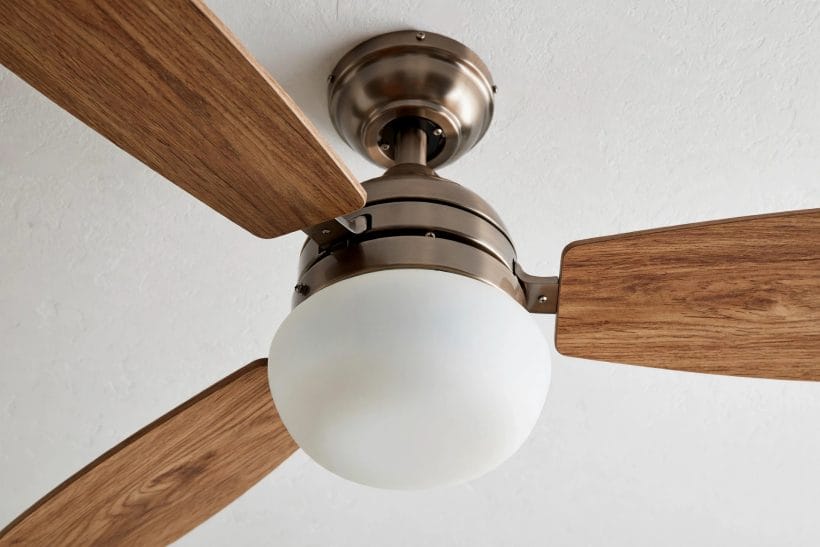
You will hear a ceiling fan far more often than you look at it. The motor decides the soundtrack — a faint hum at most in a good installation, a drone in a bad one — and bedrooms are where the difference is judged at 3 a.m.
Motor Types in General Terms
Fans are sold with conventional and with newer electronically controlled motor designs; the latter are generally promoted as quieter and thriftier with electricity, and the former as simpler and well-proven. Either can be quiet or noisy in a specific model — which is why the published figures and the demonstration matter more than the category.
Listen Before You Commit
Where a showroom runs its fans, stand under the ones you are considering at their lowest and highest speeds. The lowest speed is the telling one — it is where hums and ticks live, and it is the speed a bedroom fan spends its life at. A fan that is silent at full roar and ticky at a whisper has failed the only test that matters.
Wobble Is a Symptom
A fan that wobbles is announcing something: loose fixings, a bent bracket, a warped blade, an unrated box flexing above it. None of those is cured by ignoring it, and a wobbling fan should be switched off and its cause found — by the fitter if the cause sits above the ceiling line, as it usually does.
7. Lights, Controls and Reversing

Many fans carry a light, most carry a remote, and the good ones reverse. Each feature earns its place by use, not by specification count.
The Light Kit Question
A fan light can serve as a room’s ambient layer, but a single central source is rarely the best light a room can have — the layering argument of the lighting cluster applies. Choose a fan light when the room’s plan wants a central fitting; choose a fan without one when lamps and sconces already do the job, as in the arrangements among coffered ceiling ideas, and never let the kit’s looks talk you out of the fan that fits the room.
Controls You Will Actually Use
Wall controls are findable in the dark and cannot be lost down a sofa; remotes are effortless and losable; pull cords are simple and honest. Pick for the room’s users — and if the fan serves a bedroom, a control reachable from the bed is the difference between a feature and a nightly irritation.
Reverse for the Cold Months
Most fans reverse: in warm weather they blow air down onto the room; reversed, they draw air up and push the warm layer pooled at the ceiling back down the walls, gently, without a draught. In rooms with heating, that second direction is worth real comfort — check for it, especially in tall rooms where warm air escapes upward out of reach.
8. The Electrical Fitting: A Professional’s Job
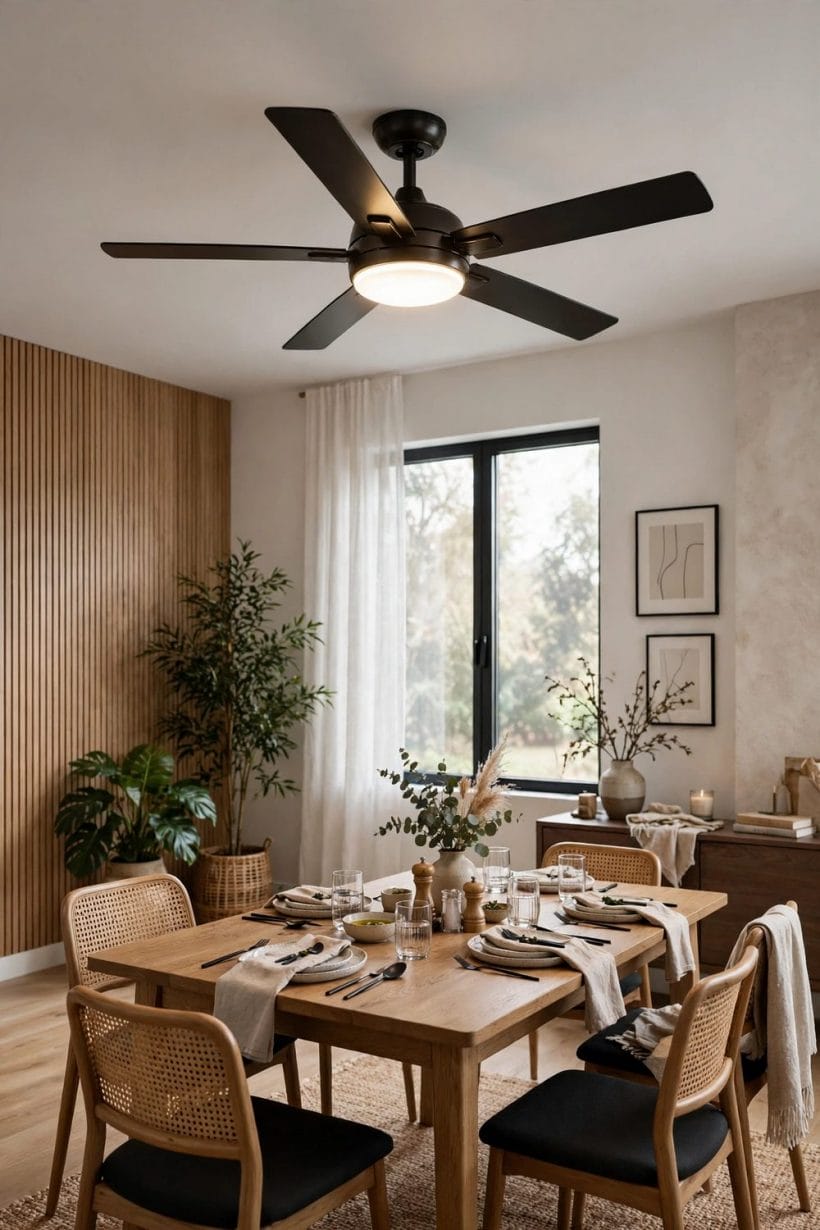
A ceiling fan is an electrical appliance fixed to structure, worked on above head height, and expected to run safely for decades. Its fitting is a qualified electrician’s work, and this guide treats it as such throughout.
What the Professional Brings
The electrician verifies the ceiling box is fan-rated and properly supported, makes the wiring connections to code, fits the mount true, and tests the fan through its speeds and its light. Where the existing box is a light-only fitting, replacing it with a rated one is part of the same visit — the unglamorous half-hour on which decades of quiet service depend.
What You Can Do Beforehand
Your part is preparation: choose the fan by these checks, confirm the ceiling can take it, know where the control should sit, and have the maker’s manual ready. A fitter given a suitable fan, a sound ceiling and a clear brief will leave you a fan you forget about — the highest compliment the trade pays.
Never a Ladder-and-Guess Job
The combination at a ceiling — mains electricity, structural support, a heavy rotating machine — is precisely the combination that should not be improvised. If a fan must be moved, upgraded or investigated for wobble beyond a loose blade screw, it goes back to the professional. Local rules govern electrical work in most places; in many, they require it.
9. Outdoor and Damp Locations

A fan over a porch or in a steamy bathroom lives a harder life than one over a sofa, and the market divides fans accordingly. The rating is the check.
Match the Rating to the Exposure
Fans are rated for dry, damp or wet locations, in rising order of exposure. A covered porch generally wants at least a damp rating; a position open to driven rain wants wet; a bathroom wants damp and the agreement of the electrician who fits it, since bathrooms carry their own electrical rules. The rating is printed in the specifications — read it before the style pages.
Materials That Survive the Air
Outdoor air warps timber blades and frets at finishes. Fans made for damp service use blades and hardware chosen to resist both. The porch arrangements in porch ideas assume exactly this class of fitting — a dry-rated fan in the same spot would sag, stain and complain within a few seasons.
Height and Clearance Outdoors
Porch ceilings are often lower than indoor ones, and porch life happens standing — serving drinks, carrying trays. Recheck head clearance with the mount you choose, and keep blades clear of door swings and hanging plants. Outdoors, the fan shares its ceiling with more of life than it does indoors.
10. Checks at the Shelf and After Fitting
Bring the decision together in the shop: span matched to your room from the maker’s own chart; published airflow compared between finalists; pitch and motor considered; the mount your ceiling needs in the box; the rating matching the location; spares and warranty confirmed; controls chosen for the room’s users.
After fitting, run the fan through every speed before the electrician leaves: silent at low, steady at high, no wobble at any speed, light and controls working, reverse functioning. A fan that passes that ten-minute test, hung at the right height from a rated box, will give decades of the most unobtrusive comfort a home can buy.
And keep the manual. Blade replacements, balancing and control batteries all begin there — the small archive that turns a good purchase into a long one.
Final Considerations
A ceiling fan is a long decision: it will hang over birthdays, illnesses, heatwaves and quiet evenings for twenty years. The checks in this guide — room fit, blades and pitch, mount and support, motor and noise, controls, rating, professional fitting — take an hour to apply and repay it every day of those twenty years.
Ask them of every fan, ignore the badge on the box, and choose the machine that fits your room. Comfort that nobody notices is the whole point — and it is achieved entirely by checking, before the ladder ever comes out.




0 Comments