
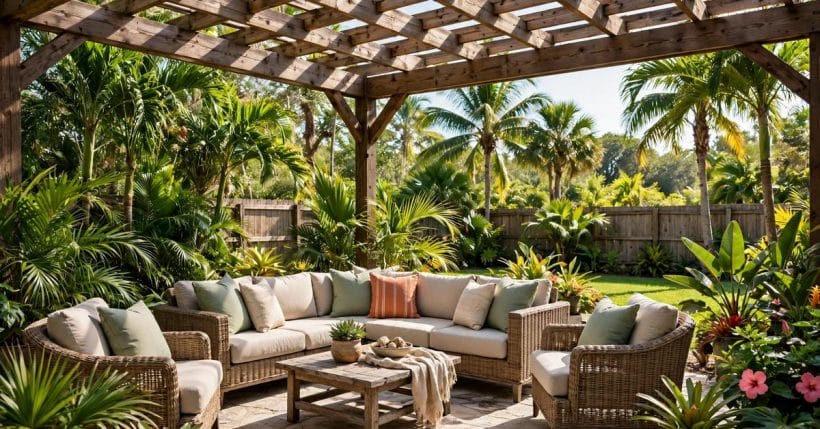
A Florida backyard patio lives a different life from a patio anywhere else. The sun is stronger, the rain is heavier and faster, the evenings stay warm late, and the planting grows with an enthusiasm that can swallow a patio in a season. A patio that works here is therefore designed around shade first, drainage second and furniture last — the reverse of the order most people shop in, and the reason so many Florida patios look good in a photograph and disappoint by August.
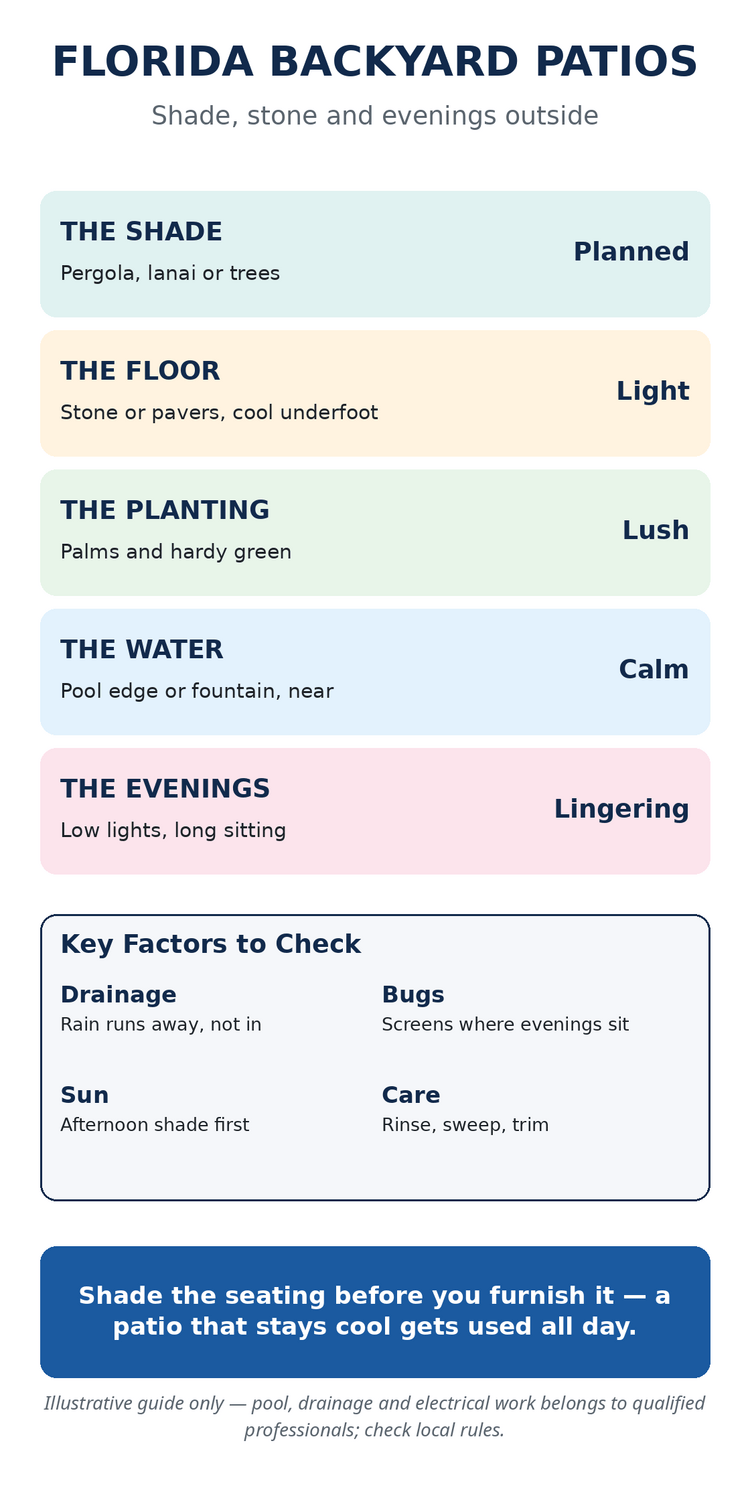
The ideas below work through a Florida patio as a complete outdoor room: shade, floor, planting, water, seating, light and the upkeep that keeps it all welcoming. Nothing here needs an unusual product or a specialist contractor for the ideas themselves, though pool, drainage and electrical work should always go to qualified professionals. Judge every idea against the Florida realities — afternoon sun, sudden rain, humidity and insects — and the patio will reward you daily rather than seasonally.
1. Shade Before Anything Else
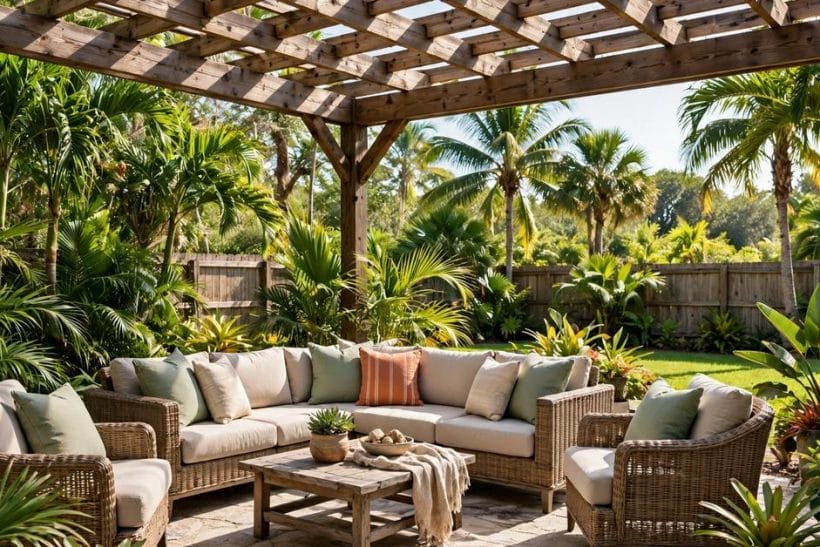
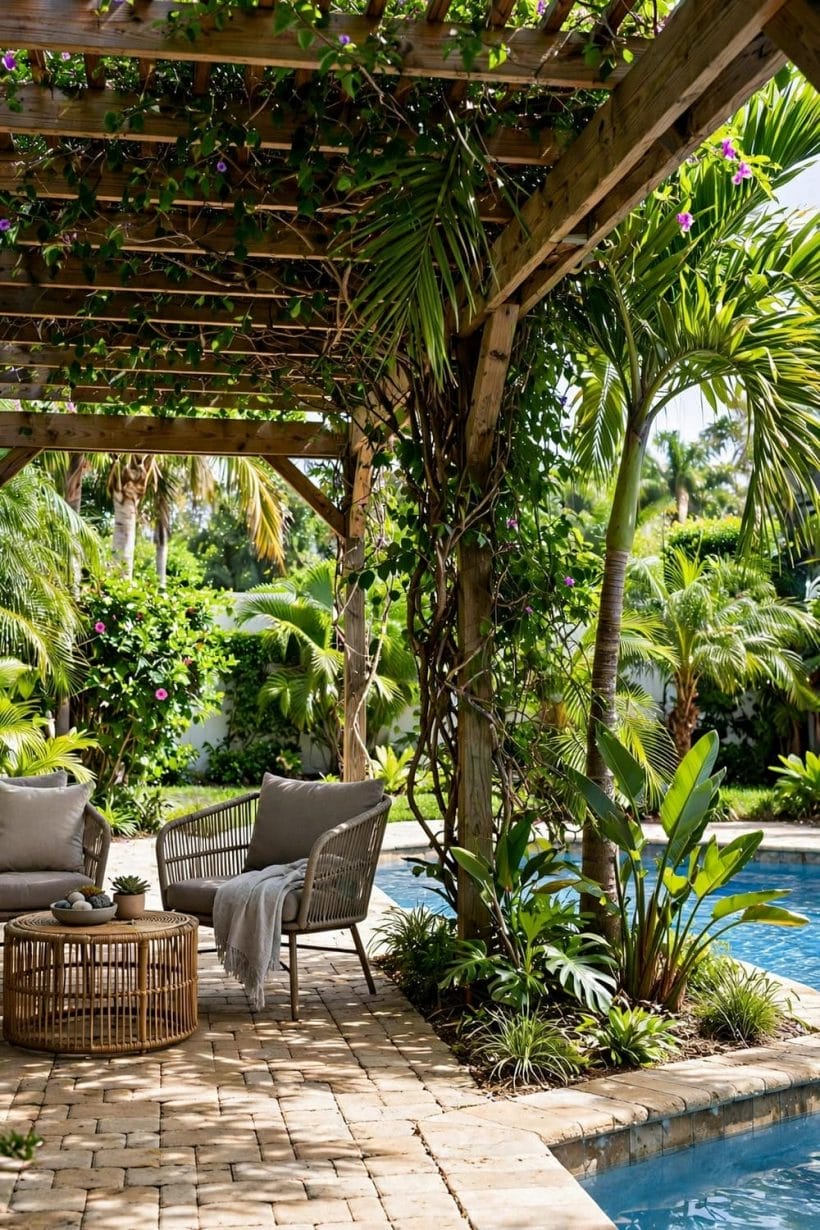
In Florida, shade is not a luxury; it is what makes the patio usable. A patio without shade is a patio used only at dawn and dusk, and even then reluctantly. The shade can come from a pergola, a lanai roof, a shade sail or mature trees, and the best patios often combine two: a built structure for reliable cover and planting for dappled, living shade that cools the air itself.
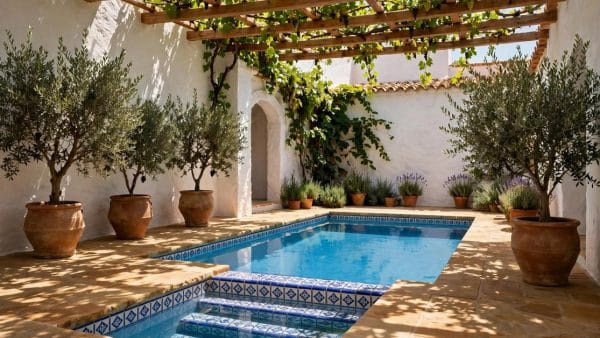
Plan shade for the afternoon, when the sun is at its fiercest and the patio is most wanted. A pergola that shades beautifully at noon but leaves seating exposed at four o’clock has missed its job. Watch the sun across your own backyard for a day, mark where shadows fall in the afternoon, and put the seating where the shade will be — not where the catalogue photograph puts it. A Mediterranean pool patio shows the same discipline: shade planned first, furniture second.
2. A Floor That Stays Cool and Drains Fast
Florida rain arrives suddenly and heavily, and a patio floor that holds water becomes a hazard and a mosquito nursery. Stone and pavers with proper falls and drainage dry quickly after a storm, while a flat, sealed surface can pond for hours. Light-coloured stone also stays cooler underfoot than dark pavers, which matters when bare feet are the norm from March to November.
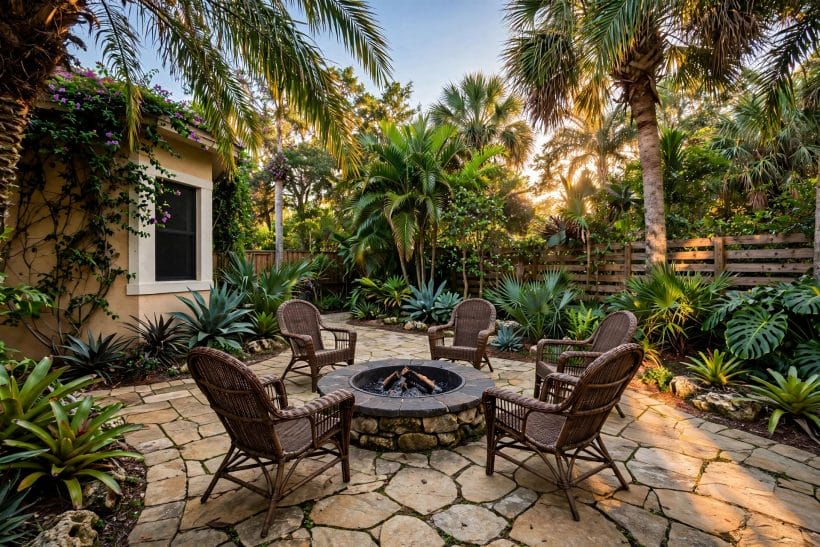
Choose a floor that can be hosed clean and that does not turn slippery when wet. Textured stone, brushed concrete and rough pavers all grip better than polished surfaces, and a floor with joints that drain — rather than a single sealed sheet — handles the daily downpour gracefully. Check the drainage route before laying anything: water should run away from the house and off the patio, never toward either.
3. Planting That Loves the Climate
Fragrance is an underrated part of patio planting in Florida. Night-blooming jasmine, gardenia and frangipani perfume the evening air when the patio is actually in use, while daytime-only scent is wasted on an empty garden. Plant fragrant shrubs near seating and paths, where evening breezes carry the scent across the chairs, and keep thorny or heavily shedding plants away from walkways and pool edges. A patio that smells as good as it looks is one people return to without thinking about why.
Florida planting should work with the heat, not against it. Palms, hardy shrubs and grasses that thrive in sun and humidity give the patio its lush, tropical feel without constant rescue watering, while delicate temperate plants struggle and demand attention. Plant for the patio’s microclimate — the sunny edge, the shaded corner, the strip beside the pool — rather than buying one favourite plant in bulk.
Planting also does real work: a well-placed palm shades the patio, a hedge screens neighbours, and ground cover cools the soil and suppresses dust. Keep planting clear of the patio’s drainage paths and away from pool equipment, and leave room for growth — a palm planted too close to the patio will lift pavers within a few years. The patio and the planting are one design, not two competing ones.
4. Water Nearby, Managed Carefully
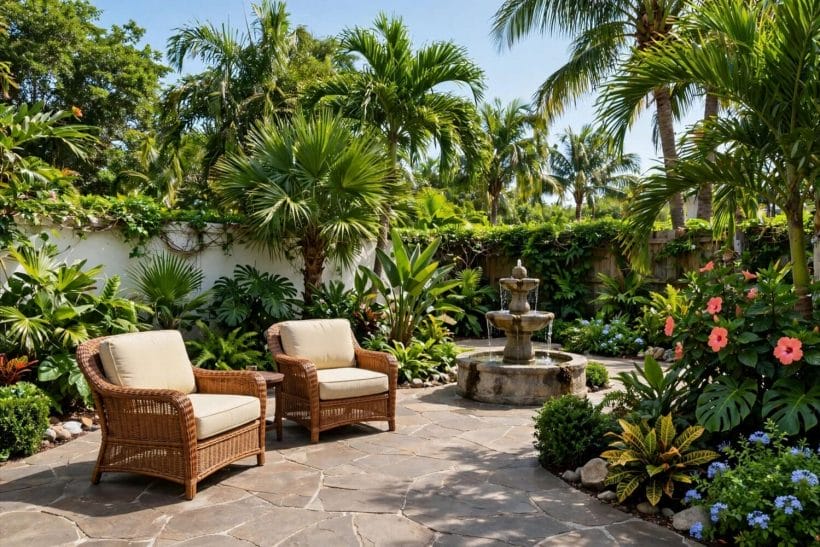
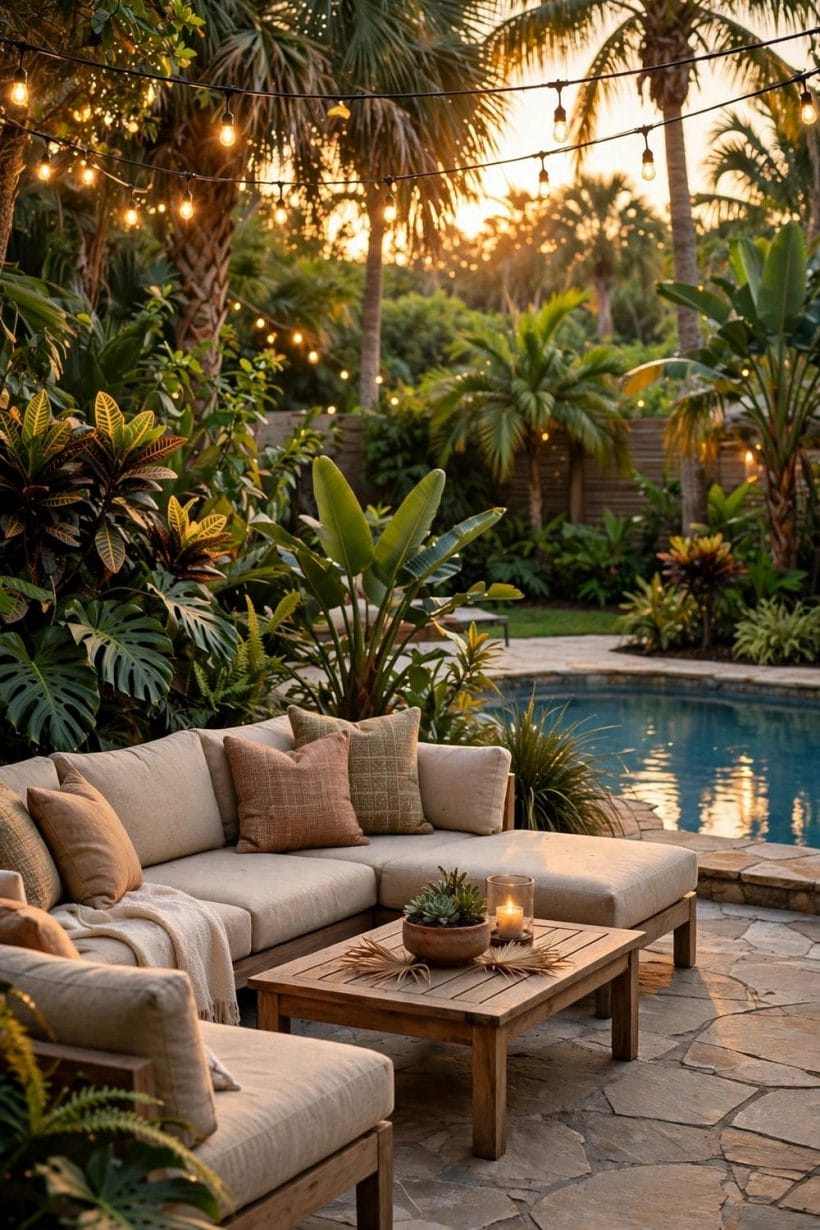
Water defines the Florida backyard, whether a pool, a fountain or simply the rain that visits daily. A pool beside the patio turns it into the home’s summer living room, but it also brings humidity, splash and safety responsibilities: fencing, gates and supervision are not optional, and pool electrics and drainage belong to qualified professionals. A small fountain gives much of the sound and movement with far less responsibility.
Whatever water you have, manage its edges. Pool surround materials should stay cool and grippy when wet, fountain splash should not soak seating, and rainwater should have a planned route off the patio and away from the house. Water is the patio’s best friend and its worst enemy, and the difference is entirely in the detailing.
5. Seating for Long Evenings
Think about who actually uses the patio before buying the set. A household that entertains needs flexible seating that rearranges for groups; a couple that reads outside needs two deep chairs and good light; a family with children needs wipe-clean surfaces and room for play without tripping over furniture. Buy for the life you live, not the photograph you admired, and leave one part of the patio deliberately empty — an unclaimed patch of floor is what makes a patio feel generous rather than furnished to the edges.
Florida evenings are the patio’s golden hours: warm, soft-lit, and long. Seating should suit lingering — deep chairs, a table at conversation height, room to put feet up — rather than the upright, perched furniture that suits a brief coffee. Cushions should be quick-drying and easy to store, since a sudden storm can arrive mid-evening and soak anything left out.
Arrange seating in conversation, not in a row facing the garden like an audience. A curved or L-shaped arrangement around a low table invites people to stay, and a fire feature or a few lanterns give the group a centre after dark. Leave circulation clear around the group so nobody climbs over furniture to reach the house, and keep the seating out of the main drainage path so a storm does not turn the gathering into a wade.
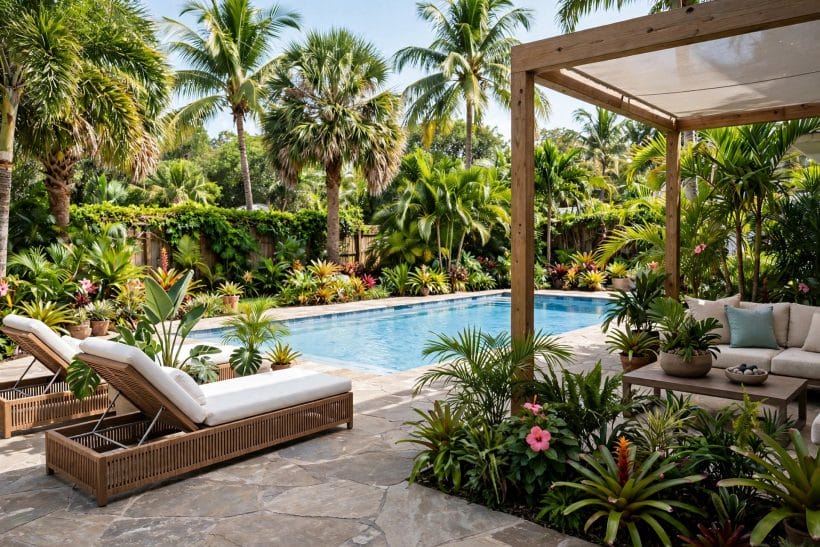
One more shade idea deserves mention for Florida specifically: the shade of the house itself. A patio on the east side of the house catches gentle morning sun and sits in the house’s own shadow through the fiercest afternoon, while a west-facing patio takes the full brunt of the setting sun. When choosing where the patio goes — or which part of an existing patio to furnish first — favour the side the house already shades in the afternoon. Free shade from your own walls is the best shade there is, and it costs nothing at all.
6. Screens, Fans and the Bug Question
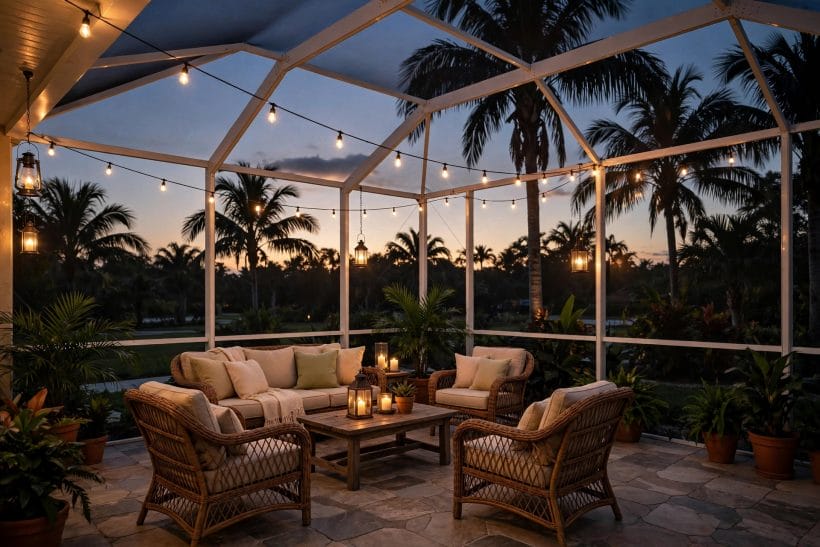
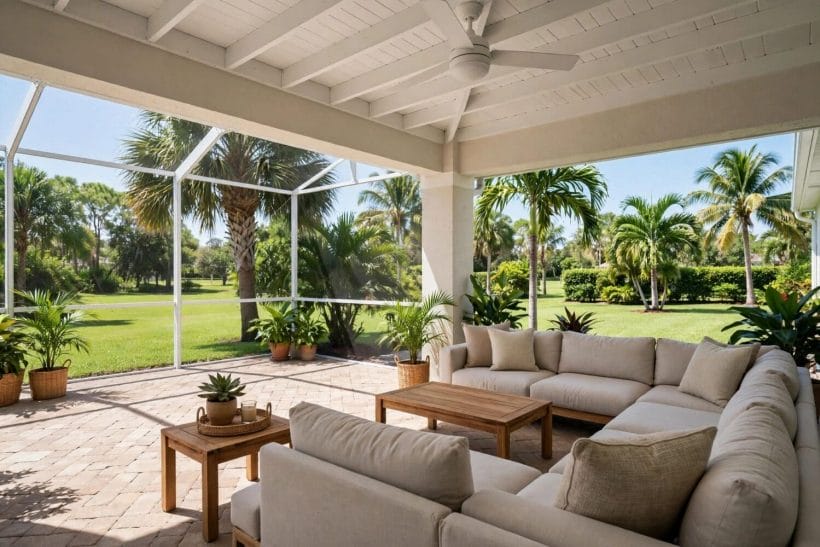
No honest Florida patio guide skips insects. Screens — a screened lanai, a screened porch section, or even a screened seating nook — transform summer evenings from a battle into a pleasure, and they are the single most popular upgrade for exactly that reason. If a full screen is out of reach, ceiling fans over the seating area move air and discourage insects, and they make humid evenings feel several degrees cooler.
Planting choices help at the margins: avoid standing water anywhere near seating, since it breeds mosquitoes, and keep dense, damp planting away from the chairs. But the honest answer is structural — screens and moving air — not citronella and wishful thinking. Budget for the screen or the fan before the furniture, and the furniture will actually get used.
7. Light That Extends the Day
One lighting mistake is worth naming: lighting the patio from the house alone. A bright porch light behind the seating turns everyone at the table into silhouettes and kills the garden view, while light placed out in the garden, shining back toward the house, flatters faces and reveals planting. Put the main light sources away from the house — in trees, along paths, beside the seating — and keep the porch light low or off during gatherings. The patio should glow from within, not be interrogated from behind.
Florida patios earn their keep after dark, when the heat softens and the garden glows. Low, warm lights — path lights, step lights, lanterns, a few well-placed uplights in trees — extend the patio’s hours without turning it into a floodlit stage. Light the paths and the steps first for safety, then the seating for atmosphere, and leave the planting to a few accents rather than lighting everything.
Keep electrical work to qualified professionals, especially anywhere near water, and choose fittings rated for wet locations. Solar path lights suit the edges, but the seating area deserves proper wired light on a dimmer, so the evening can shift from supper brightness to late-night calm. A patio lit well feels twice its size after dark; one lit harshly feels smaller than it is.
8. Outdoor Cooking and Dining
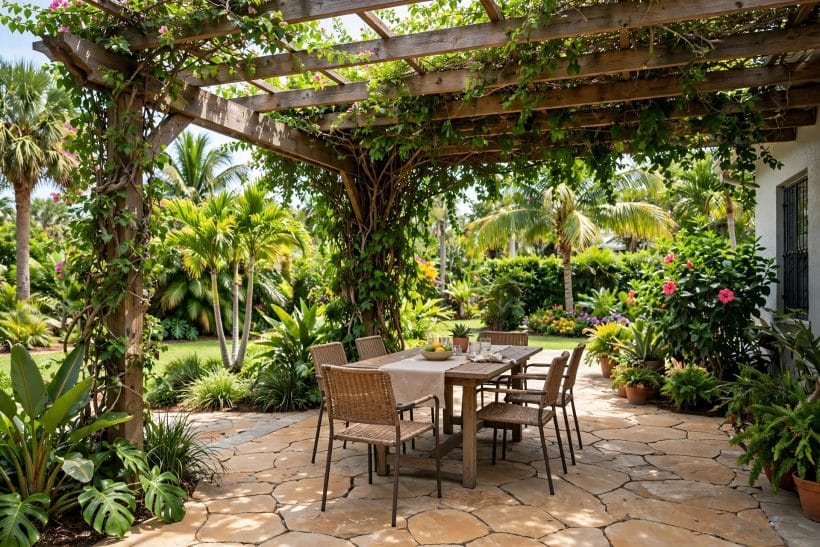
One more dining detail makes Florida outdoor eating far pleasanter: a serving surface in the shade. Food left in direct sun spoils quickly and drinks warm within minutes, so a shaded sideboard or a covered trolley near the grill keeps a meal safe and enjoyable. It need not be elaborate — a sturdy table under the pergola, a cooler tucked in shade, a tray that carries dishes from kitchen to table without sitting in the sun. Shade the food as carefully as the guests, and outdoor dining stays a pleasure rather than a race against the heat.
A grill or an outdoor kitchen turns the patio from a sitting room into the home’s summer dining room, and Florida’s climate supports it for most of the year. Site cooking downwind of seating so smoke drifts away, not across the table, and give the cook shade and a work surface at a sensible height. A grill tucked in a hot, airless corner will be used twice and abandoned.
Dining furniture should survive rain and sun: quick-drying cushions, a table that wipes clean, chairs that stack or cover easily when a storm arrives. Keep the dining area close to the kitchen door for carrying food, but far enough from the house that smoke and heat do not drift inside. The best Florida outdoor kitchens are modest and well-sited, not grand and awkward.
9. Storage That Survives the Weather
Storage also deserves a place in the patio’s look, not just its function. A handsome storage bench doubles as extra seating, a lidded chest in a matching finish reads as furniture rather than a box, and a small shed painted to match the house trims disappears into the garden. Ugly storage gets avoided, and avoided storage means cushions left out in the rain. Spend a little on how storage looks and it will actually be used, which is the whole point of having it.
Florida weather punishes anything left out: cushions mildew, metal rusts, wood greys and warps. A patio without storage becomes a patio full of faded, damp furniture by the second summer. A weatherproof deck box, a storage bench or a small garden shed near the patio keeps cushions, throws and pool accessories dry and ready, and it keeps the patio itself looking intentional rather than cluttered.
Choose storage that breathes slightly, so trapped humidity does not mildew what is inside, and site it where it is easy to reach in a hurry when rain arrives. The test of good patio storage is simple: can one person, in two minutes, get every cushion under cover before the storm hits? If not, the storage is too far away or too small.
10. Upkeep Through the Seasons
Finally, keep a simple patio kit in one place: a stiff broom, a hose nozzle, a cloth for wiping furniture, and a spare bulb or two for the path lights. When everything needed for a ten-minute tidy lives together by the back door, the tidy actually happens; when tools are scattered across garage and shed, it does not. A Florida patio rewards the household that tends it little and often, and the kit by the door is what makes little-and-often possible.
Florida patios do not have a dormant season; they have a growing season and a wetter growing season. A simple rhythm keeps the patio welcoming: sweep and rinse the floor regularly, trim planting before it swallows the edges, clean screens and fans, and check drainage paths after heavy rain. Small, frequent attention beats an annual heroic clean, and it keeps problems — blocked drains, lifting pavers, mildewed cushions — from becoming expensive.
Check the patio after the first big storm of the season: where did water sit, which cushions got wet, where did debris collect? Those answers are the next improvement list. A patio that is adjusted each season to its own weather gets better every year, while one left to itself slowly surrenders to the climate. The exterior entryway shows the same principle at the front of the house: shade, drainage and a clear route, planned before decoration.
Final Considerations
A Florida backyard patio succeeds when it respects its climate: shade planned for the afternoon, a floor that drains and stays cool, planting that loves the heat, water managed carefully, seating made for long evenings, screens and fans for comfort, light for after dark, storage for storms, and upkeep little and often. Get those right and the patio becomes the home’s most-used room for most of the year.
The order matters more than any single purchase. Shade, drainage and comfort first; furniture and decoration last. For the outdoor rooms around the patio, see patio furniture checks for seating that survives the weather, fence gates for the boundaries of the garden, Asian landscaping ideas for planting used with discipline, she shed ideas for the garden room beyond the patio, tiny house porch ideas for small outdoor spaces done well.

0 Comments