
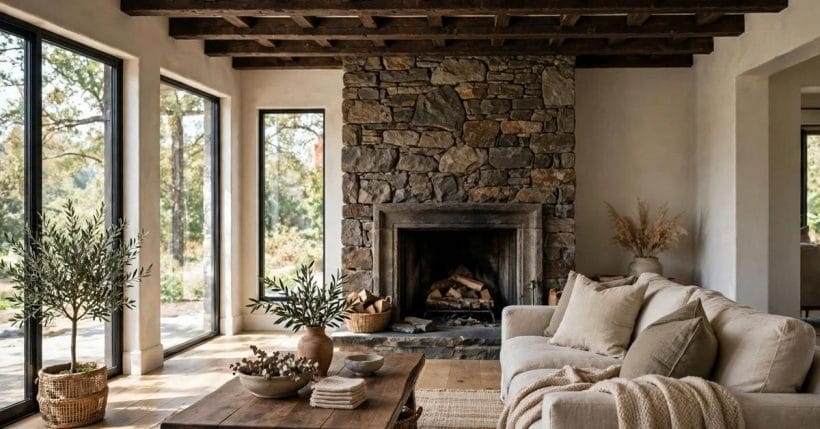
Exposed beams give a living room something no flat ceiling can: a rhythm overhead, a sense of structure made visible, and a warmth that comes from real timber rather than applied decoration. Whether dark and rustic or pale and washed, beams turn the ceiling into the room’s architecture, and the living room beneath them feels grounded, crafted and calm. What follows is seventy-five ways to use exposed beams in a living room, grouped by approach, each one a complete idea in itself.
One caution runs through the whole list: beams are structural elements, and anything that touches structure — adding, moving, cutting or loading beams — belongs to qualified professionals, not to weekend improvisation. These ideas are about styling, finishing and furnishing around beams, and about choosing beams honestly in the first place, never about installing structure yourself.
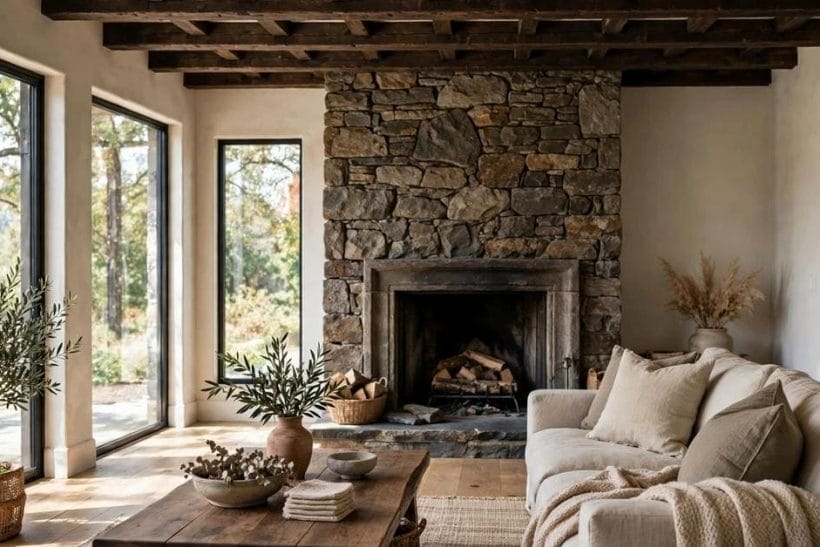
1. Dark Timber Beams: Warmth and Weight
Dark beams are the classic exposed-beam look: deep brown or near-black timber against a pale ceiling, giving a room instant gravity and a sense of age. They suit rooms with stone, leather and warm textiles, and they anchor large spaces that might otherwise feel empty overhead.
1. The Dark Box Beam
Box beams in dark stained timber give the look of solid beams with less weight, and they suit living rooms where the ceiling cannot carry heavy timber. Paint the ceiling between them pale so the dark rhythm reads clearly from every seat in the room.
2. The Reclaimed Look
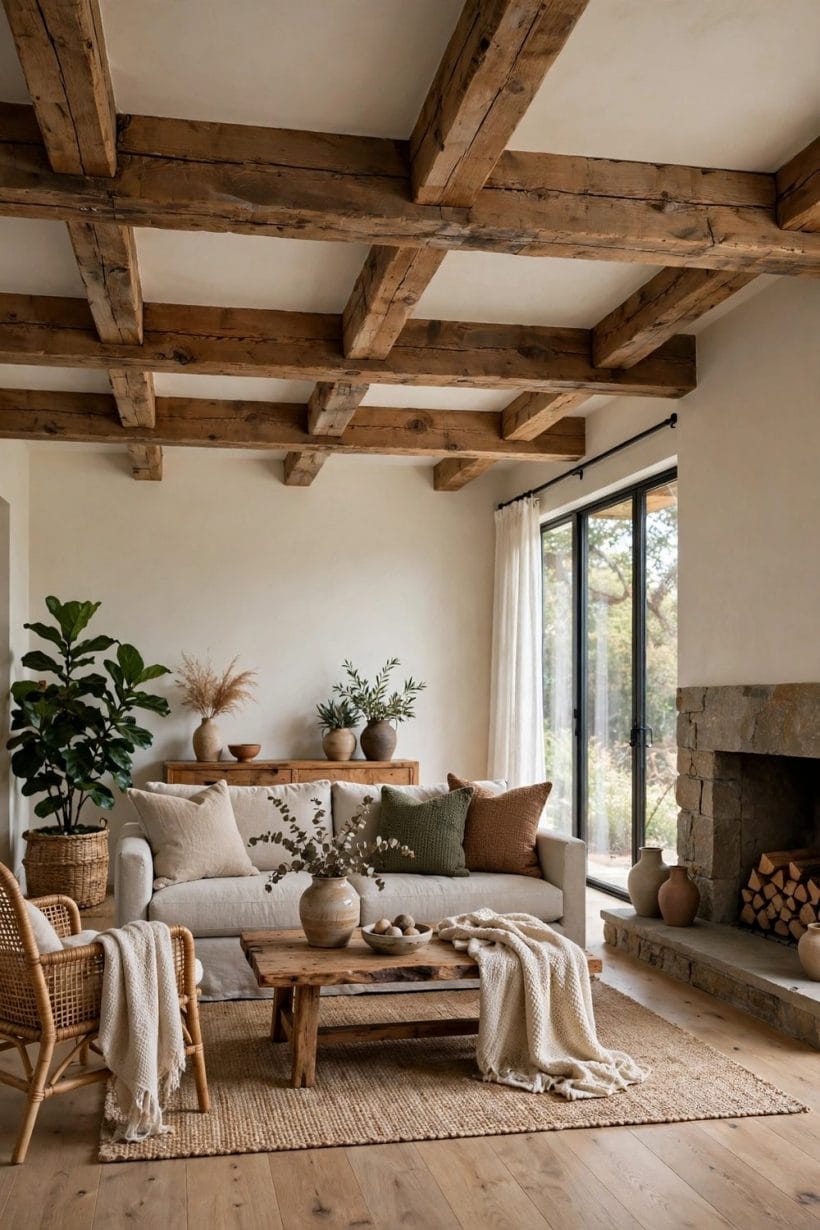
Beams with a weathered, reclaimed appearance bring texture and history to a living room, pairing beautifully with linen sofas, wool throws and natural stone. Keep the rest of the room calm so the beams’ character leads without competing.
3. The Beam and Stone Fireplace
Run dark beams toward a stone fireplace wall so ceiling and hearth speak the same language of weight and permanence. The fireplace becomes the room’s anchor, and the beams draw the eye toward it naturally.
4. The Dark Beam Grid
A full grid of dark beams across the ceiling turns a large living room into a series of calm bays, each one framing the seating or dining area beneath it. The grid suits square rooms best, where its regularity feels composed rather than busy.
5. The Single Dark Statement Beam
One substantial dark beam across a living room ceiling can be enough, especially in smaller rooms where a full set would crowd the space. Let it carry a row of pendant lights or stand alone as the room’s single strong line.
6. The Dark Beam and White Walls
Dark beams against crisp white walls create the strongest contrast in the beam repertoire, and the pairing suits modern rustic rooms where clean walls meet honest timber. Add black window frames or iron hardware to echo the beams at floor level.
7. The Walnut Tone Beam
Walnut-toned beams, rich brown without blackness, warm a living room without darkening it, and they pair elegantly with mid-tone woods in furniture and flooring. This is the dark-beam look at its most refined.
8. The Beam Over the Seating Area
Concentrate dark beams over the main seating area rather than the whole ceiling, creating a zone of warmth above sofas and chairs while the rest of the room stays light. The effect is a room within a room, defined overhead.
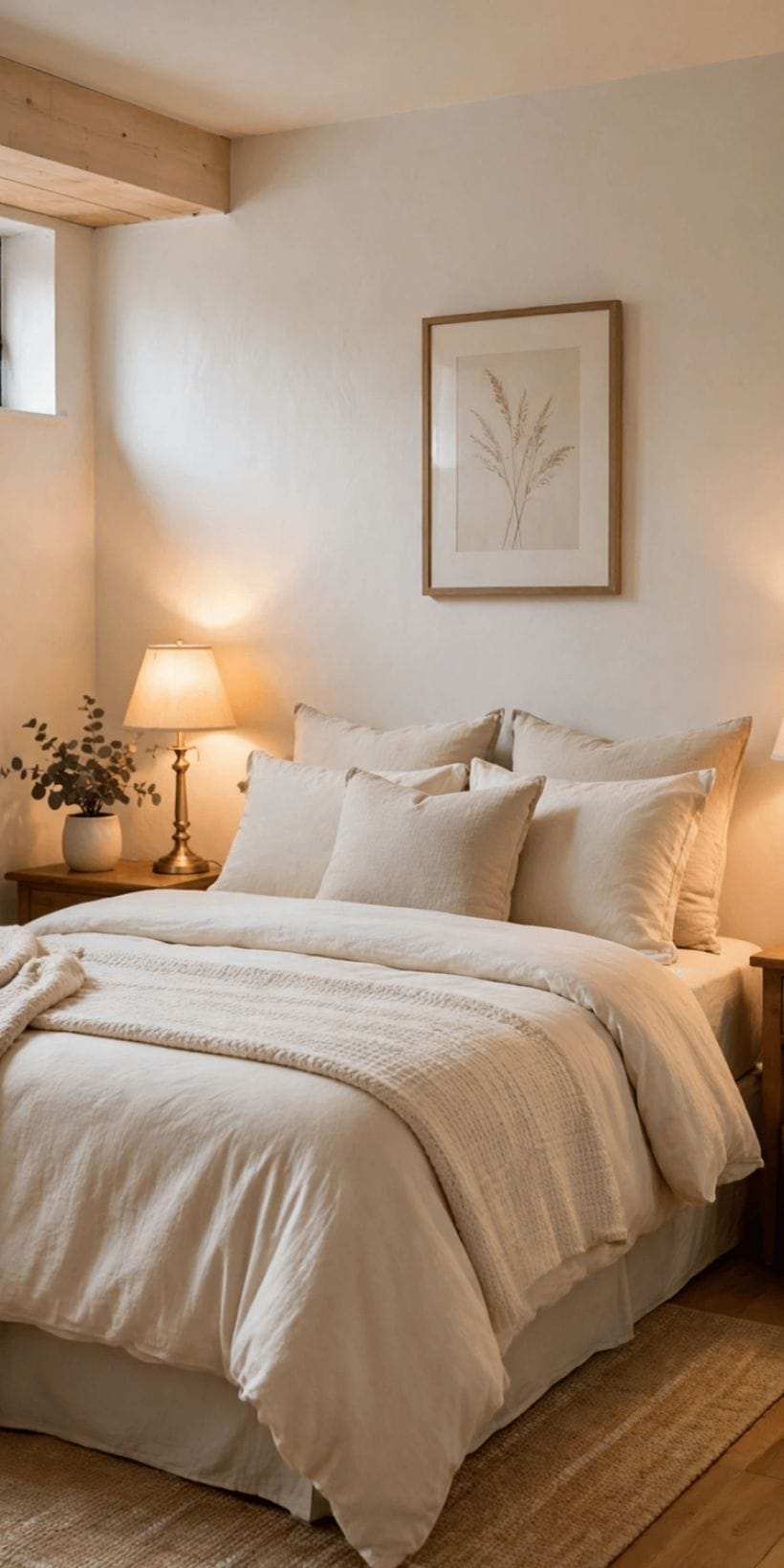
The infographic above summarises the five things that carry a beamed living room: the timber itself, the light it gathers, the colour around it, the scale it needs, and the care it repays.
2. Pale and Whitewashed Beams: Light Overhead
Pale beams suit rooms that want the rhythm of timber without the weight of dark wood. Whitewashed, limed or naturally pale beams keep ceilings feeling high and rooms feeling bright, and they are the right choice for smaller living rooms and for Scandinavian or coastal schemes.
9. The Whitewashed Beam
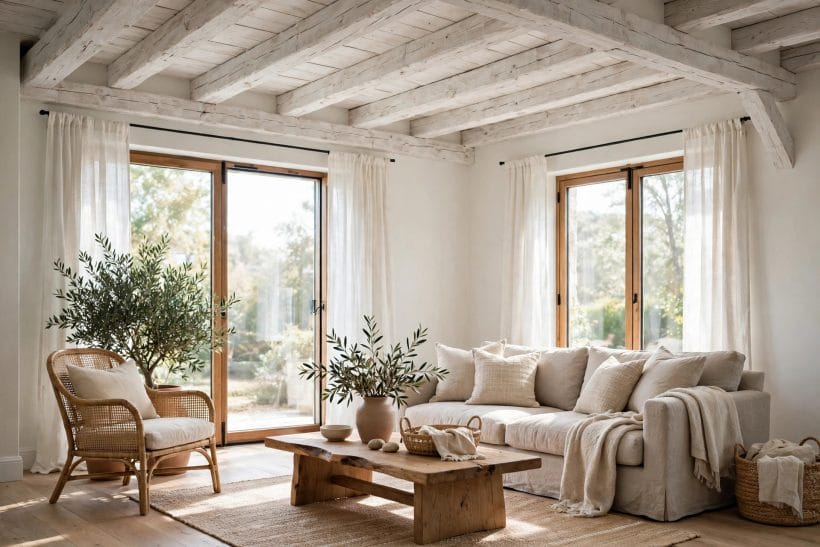
Whitewashed beams keep the grain visible while lifting the timber to near-white, so a beamed ceiling reads as texture rather than mass. They suit pale walls, linen upholstery and light oak floors beautifully.
10. The Pale Oak Beam
Naturally pale oak beams bring warmth without darkness, and their honey tones flatter both white walls and soft grey ones. Pale oak is the most versatile beam timber, at home in traditional and contemporary rooms alike.
11. The Painted White Beam
Beams painted the same white as the ceiling keep the rhythm while removing the contrast, giving a living room subtle architectural interest that reveals itself slowly rather than announcing itself. This suits minimal rooms where texture matters more than drama.
12. The Limed Pine Beam
Limed pine beams, pale with grain showing through a chalky finish, suit coastal and cottage living rooms where brightness matters most. Pair them with rattan, pale linen and washed woods for a room that feels like a long summer.
13. The Pale Beam and Colourful Walls
Pale beams let wall colour lead, so a living room can carry sage, dusty blue or warm plaster walls while the ceiling stays calm overhead. The beams add structure without competing with the colour story below.
14. The Two-Tone Beam Ceiling
Alternate pale beams with a white ceiling and darker beams as accents, or vice versa, to create a ceiling with depth and rhythm. Two tones suit larger rooms where a single beam colour might feel monotonous across a wide span.
15. The Pale Beam and Skylight
Pale beams beside a skylight catch daylight and scatter it softly, so the ceiling glows rather than shadows. This pairing suits living rooms that need every bit of light they can gather.
16. The Scandinavian Beam
Scandinavian beamed living rooms use pale timber, white walls, simple furniture and plenty of daylight, and the beams are part of a calm, uncluttered whole rather than a feature fighting for attention. Less is more, overhead as elsewhere.
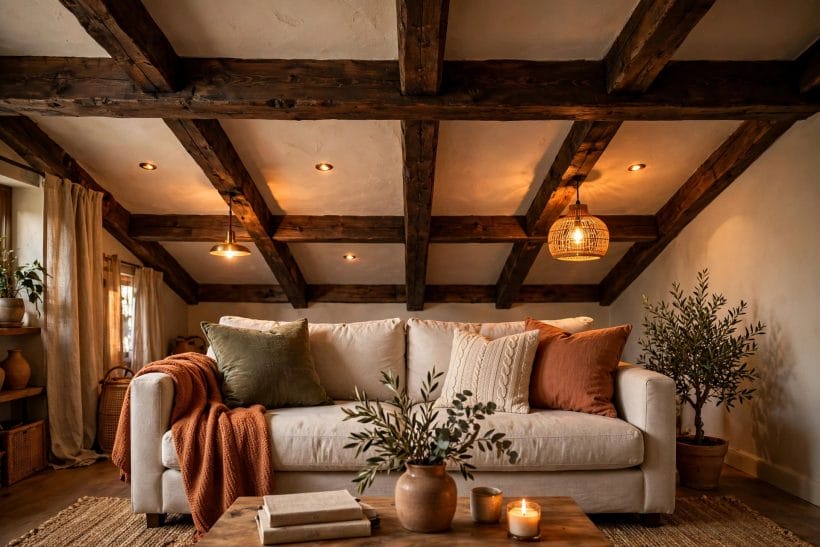
3. Rustic and Cabin Beams: Rough-Hewn Character
Rustic beams celebrate imperfection: rough surfaces, visible knots, hand-hewn edges and the marks of the tools that shaped them. They suit cabins, lodges and country living rooms where authenticity matters more than polish.
17. The Rough-Hewn Beam
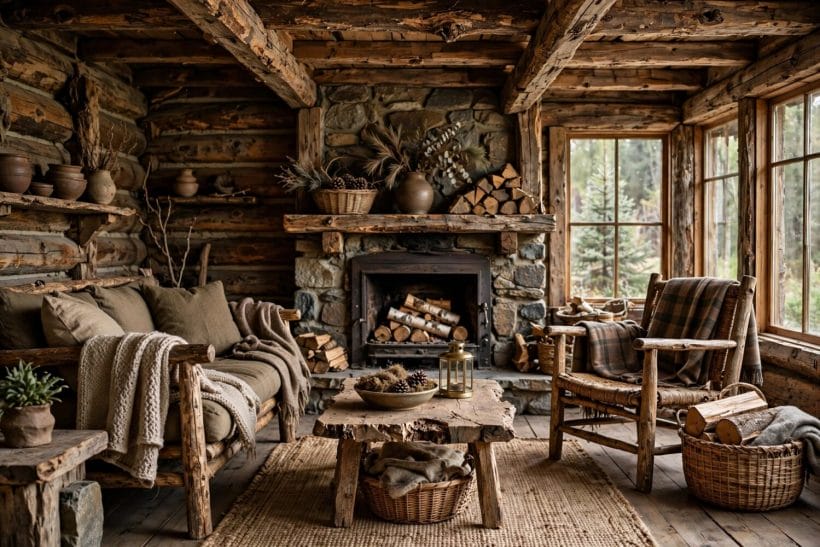
Rough-hewn beams, with adze marks and uneven surfaces intact, bring a cabin’s honesty into the living room, and they pair with stone fireplaces, wool rugs and leather seating. Let the beams be the roughest texture in the room.
18. The Log Beam
Rounded log beams suit log homes and mountain cabins, where the ceiling continues the language of the walls. Keep furniture low and solid so the room reads as one timber composition.
19. The Barn Beam
Barn-style beams, salvaged or salvaged-look, carry nail holes, weathering and a grey-brown patina that suits farmhouse living rooms. Pair them with shiplap walls and simple, sturdy furniture.
20. The Knotty Pine Beam
Knotty pine beams, warm with visible knots, bring a friendly, informal character to a living room, and they suit family rooms where comfort matters more than formality. Their honey colour flatters both white and coloured walls.
21. The Beam and Antler-Free Rustic
Rustic does not need clichés: skip the antlers and wagon wheels, and let the beams themselves carry the rustic character alongside stone, wool and timber furniture. Restraint makes rustic feel grown-up rather than themed.
22. The Stone and Beam Room
Stone walls and rough beams are natural partners, each making the other look more honest, and a living room with both feels sheltered and permanent. Keep the palette to stone greys, timber browns and linen whites.
23. The Beam and Leather Room
Leather seating beneath rough beams creates a lodge-like living room that invites long evenings, and the combination suits rooms with a fireplace as their heart. Add wool throws for softness against all that texture.
4. Modern Beams: Clean Lines Overhead
Modern beamed living rooms treat timber as geometry: straight lines, even spacing, smooth finishes and restrained colour. The beams read as architecture rather than decoration, and they suit contemporary rooms that want warmth without rusticity.
24. The Slim Modern Beam
Slim, evenly spaced beams in a pale or mid-tone timber give a contemporary living room rhythm without weight, and they suit rooms with flat roofs and large windows. Regularity is the point: let the spacing be exact.
25. The Black Steel-Look Beam
Dark, slim beams with a steel-like finish suit industrial-modern living rooms, pairing with concrete, glass and leather. The look is architectural and precise, and it needs clean walls to work.
26. The Beam and Glass Room
Beams above a glass wall or large windows frame the view without blocking it, and the timber warms what glass alone would leave cold. This pairing suits living rooms that open to gardens or landscapes.
27. The Cantilevered Beam Shelf
Let a beam continue past its support as a shelf for plants or objects, where structure allows and a professional approves, turning architecture into display. Keep the display sparse so the beam stays the subject.
28. The Beam-Lit Modern Room
Recessed lights between modern beams wash the ceiling evenly, so the beams read as shadow lines rather than obstacles. Lighting design matters more than beam size in a modern beamed room.
29. The Concrete and Beam Room
Timber beams soften concrete walls beautifully, and the pairing suits loft-style living rooms where raw materials are the decoration. Warm the combination with rugs and timber furniture.
30. The Minimal Beam Room
Three or four well-placed beams in a minimal living room give just enough architecture to prevent sterility, and no more. In minimal rooms, beam restraint is a virtue, not a compromise.
5. Beams and Light: Pendant, Track and Glow
Beams and lighting belong together, because beams shape how light moves through a room. Hung, tracked or washed, light turns beams from structure into atmosphere, and the right lighting makes a beamed ceiling glow rather than loom.
31. The Pendant Row
Pendants hung from a beam in a straight row light a table or seating area beautifully, and the beam itself becomes the lighting track. Keep pendant cords short and shades simple so the beam stays visible.
32. The Beam Uplight
Uplights aimed at beams from below wash the timber with warm light, making the ceiling glow in the evening. This suits living rooms used mostly after dark, where atmosphere matters most.
33. The Track Along the Beam
Track lighting mounted along a beam follows its line and lights art, shelves or seating beneath it, turning structure into a lighting system. Keep the track discreet so the beam leads.
34. The Lantern Beam
Lanterns hung from beams at different heights create a layered, intimate light over a seating area, and they suit rustic and cottage living rooms where soft light matters more than bright light.
35. The Beam and Chandelier
A chandelier hung from a beam’s centre gives a living room a focal point that joins ceiling and floor, and it suits formal rooms where one strong light suits the occasion. Size the chandelier to the beam, not to the room alone.
36. The Fairy Light Beam
Festoon or fairy lights draped along beams suit celebrations and cosy winter evenings, and they turn a beamed ceiling into a canopy of light. Keep them temporary and safe, never stapled into structural timber carelessly.
37. The Beam Shadow Play
Directional lights that cast beam shadows across the ceiling turn structure into pattern, especially in the evening. Experiment with one movable light before fixing anything, and enjoy the drama shadows add for free.
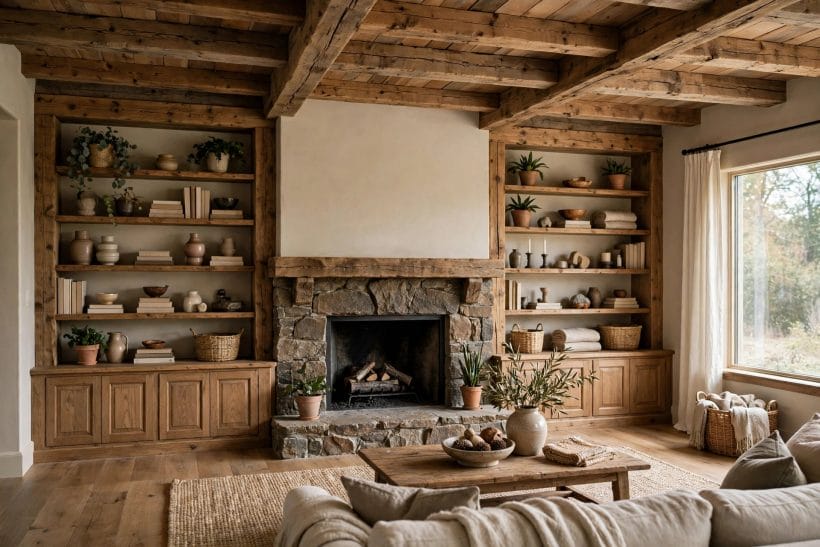
Beam lighting changes through the day, and a living room that works at noon may fail at nine in the evening. Daylight flatters beams from above and sideways, revealing grain and casting soft shadows, while evening light must be supplied deliberately or the beams vanish into darkness overhead. Test your beam lighting after dark before finalising it: switch on the lamps you actually use, sit in the seats you actually sit in, and look up. If the beams glow warmly, the lighting is right; if they disappear or glare, adjust the lamps, not the beams. A beamed room earns its keep in the evening more than at any other hour.
6. Beams and Colour: Walls That Work With Timber
Wall colour decides whether beams dominate or harmonise, and the right pairing makes timber feel inevitable rather than imposed. The rule is simple: let one element lead — beams or walls — and let the other support.
38. The White Wall Beam Room
White walls let any beam timber lead, from dark walnut to pale oak, and they suit rooms where the beams are the main event. White also bounces light up into the beams, revealing their grain.
39. The Sage Wall Beam Room
Sage green walls with mid-tone beams create a calm, natural living room that feels connected to a garden, and the pairing suits rooms with plants and natural textiles.
40. The Navy Accent Beam Room
A navy accent wall beneath pale or mid-tone beams gives a living room depth without darkness, and the beams keep the navy from feeling heavy. Use navy on one wall only, ideally the fireplace or media wall.
41. The Terracotta Beam Room
Terracotta or warm plaster walls with dark beams create a Mediterranean warmth that suits sunlit living rooms, and the combination flatters timber, leather and woven textiles alike.
42. The Grey Wall Beam Room
Warm grey walls with dark or mid-tone beams suit contemporary living rooms, provided the grey leans warm enough to sit beside timber. Cool greys can make timber look orange, so test undertones together.
43. The Two-Tone Wall Beam Room
Paint walls in two tones — a deeper colour below a chair rail or dado, paler above — so beams sit against the paler upper wall and the room feels taller. The horizontal break echoes the beams’ own rhythm.
44. The Wallpaper and Beam Room
Subtle wallpaper — grasscloth, linen-look or quiet pattern — beneath beams adds texture without competing, and it suits traditional living rooms where walls deserve as much attention as ceilings.
7. Beams and Furniture: Seating, Storage and Scale
Furniture beneath beams should respect their scale: low, horizontal pieces that let the ceiling own the vertical dimension, and arrangements that sit comfortably within the bays the beams create.
45. The Low Sofa Beam Room
Low sofas beneath beams keep sightlines open and let the ceiling dominate pleasantly, and they suit rooms where the beams are the main architecture. Keep sofa backs below window-sill height where possible.
46. The Beam Bay Seating
Arrange seating within a single beam bay — between two beams — so the ceiling frames the conversation area like a room within a room. The effect is subtle and deeply comfortable.
47. The Beam and Bookshelf Wall
Built-in bookshelves rising toward beams connect wall and ceiling beautifully, and the vertical lines of shelves echo the beams’ rhythm. Keep shelf tops below the beams so the ceiling stays clear.
48. The Beam and Sectional
A large sectional beneath beams anchors a family living room, and its horizontal mass balances the ceiling’s vertical rhythm. Choose a sectional in a calm fabric so the beams stay the room’s texture.
49. The Beam and Coffee Table
A substantial coffee table — timber, stone or iron — grounds a beamed living room at floor level, answering the ceiling’s weight with weight below. Without it, a beamed room can feel top-heavy.
50. The Beam and Rug Zone
A large rug beneath the seating area defines the living zone within a beamed room, and its pattern can echo the beams’ rhythm or calm it. Size the rug to the seating group, not to the room alone.
51. The Beam and Fireplace Seating
Seating arranged around a fireplace beneath beams creates the classic beamed living room — fire below, timber above, conversation between — and it remains the most satisfying arrangement beams can host.
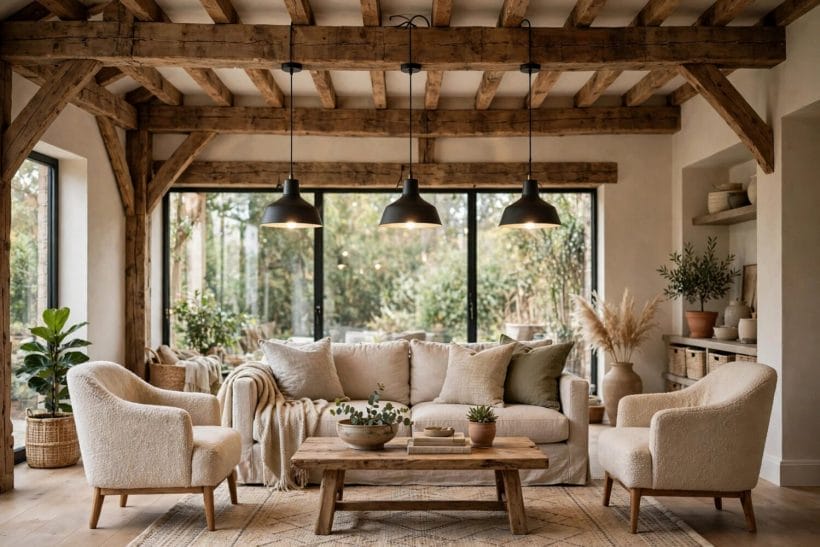
8. Beams and Texture: Stone, Iron and Textiles
Beams love company: stone, iron, wool, leather and linen all sit happily beside timber, and the richest beamed rooms layer textures so the ceiling is part of a tactile whole rather than an isolated feature.
52. The Stone Fireplace Beam Room
Stone fireplaces and timber beams are the oldest pairing in the book, and a living room with both feels sheltered whatever its size. Let stone and timber share the palette and keep other materials quiet.
53. The Iron Hardware Beam Room
Black iron hardware — hinges, brackets, light fittings, fireplace tools — echoes dark beams at floor level and ties a room together from ceiling to floor. Use iron sparingly so it accents rather than dominates.
54. The Wool and Beam Room
Wool rugs, throws and cushions soften a beamed room’s hard surfaces, and the contrast between rough timber and soft wool is one of the most comfortable pairings in interior design.
55. The Leather and Beam Room
Leather seating beneath beams creates a room that ages gracefully, as both materials develop patina together. Choose leather in warm browns or tans that echo the timber tones.
56. The Linen and Beam Room
Pale linen upholstery beneath dark beams lightens a rustic room without weakening it, and the contrast keeps the room feeling fresh rather than heavy. Linen slipcovers also make beam rooms practical for families.
57. The Brick and Beam Room
Exposed brick walls with timber beams suit lofts and converted spaces, where two honest materials meet without apology. Keep furnishings simple so brick and beam carry the room.
58. The Plaster and Beam Room
Smooth plaster walls with rough beams create a beautiful tension between refined and rustic, and the pairing suits Mediterranean and modern farmhouse living rooms alike.
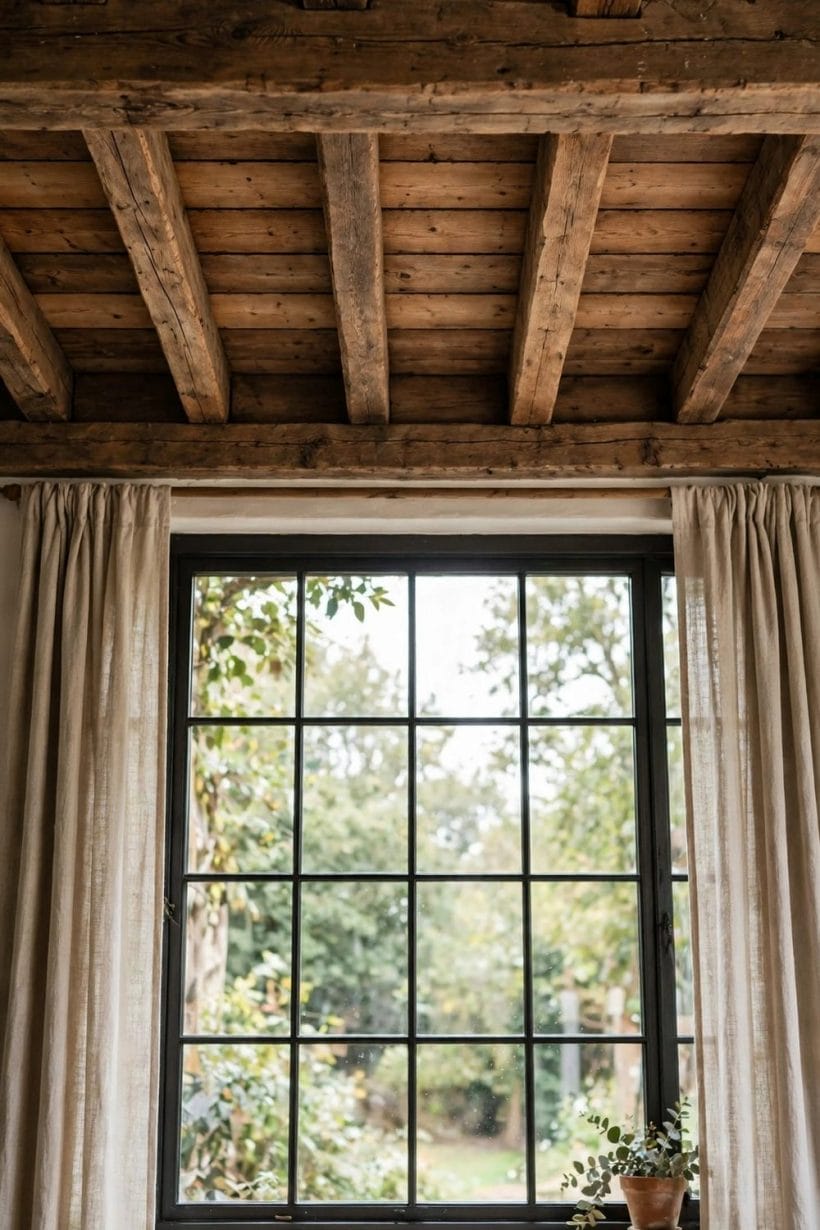
9. Small Rooms and Low Ceilings: Beams Without Bulk
Small living rooms can carry beams too, provided the beams are chosen for the scale: slimmer, paler, fewer, and spaced to give rhythm without crowding. The goal is architecture, not oppression.
59. The Slim Beam Small Room
Slim beams in a small living room give ceiling interest without lowering the perceived height, especially when painted the same pale tone as the ceiling. Slimness is the small room’s best friend.
60. The Single Beam Small Room
One beam across a small living room ceiling adds character without commitment, and it can carry a pendant or define a seating zone. One strong line beats five crowded ones in a small space.
61. The Perimeter Beam Room
Beams around a small room’s perimeter — a timber frame at the ceiling’s edge — give structure without crossing the ceiling, keeping the centre open and the room feeling taller.
62. The Painted Beam Small Room
Beams painted to match the ceiling in a small room add shadow lines and rhythm while disappearing as objects, so the room gains architecture without losing an inch of perceived height.
63. The Beam and Mirror Room
Mirrors opposite windows in a small beamed room double the light and the sense of space, preventing beams from feeling enclosing. Place mirrors to reflect windows, not beams themselves.
64. The Beam and Light Floor Room
Light floors beneath beams lift a small living room, balancing the ceiling’s weight with brightness below. Pale oak or light stone floors suit small beamed rooms best.
65. The Vaulted Small Room
Where a small living room has a vaulted or raised ceiling, beams following the vault’s line make the height feel intentional rather than accidental, and the room gains drama without gaining bulk.
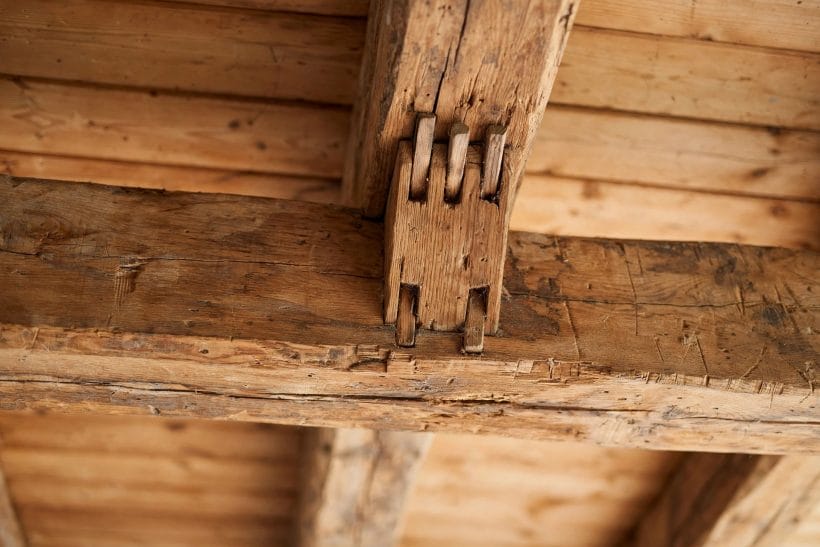
Open-plan living rooms ask more of their beams than separate rooms do, because the beams must define zones without walls to help them. In an open plan, a change in beam direction, spacing or colour can mark the boundary between living, dining and kitchen areas more gracefully than any rug or screen, and the ceiling becomes the floor plan’s quiet map. Use that power deliberately: let the beams over the seating area differ subtly from those over the dining area, and the open plan will feel organised rather than merely large. Beams are the open plan’s best walls, precisely because they are not walls at all.
10. Caring for Beams: Finish, Cleaning and Long Life
Beams repay care with decades of beauty, and their care is simple: keep them clean, keep them dry, refresh finishes when they tire, and leave structural questions to professionals. A beamed ceiling looked after properly outlasts every other surface in the room.
66. The Dusting Routine
Beam tops collect dust, so a long-handled duster or a vacuum brush every few months keeps them clean. Dusting is also the moment to notice anything new — cracks, stains or insect signs — early, when action is cheapest.
67. The Finish Refresh
Oiled beams need re-oiling every few years, and waxed beams need re-waxing, while painted beams need touch-ups where life has scuffed them. Refresh finishes in the same product family, and test on a hidden section first.
68. The Moisture Watch
Beams suffer most from moisture: roof leaks, condensation and plumbing drips all stain and weaken timber over time. Any stain on a beam deserves prompt investigation of its source, by a professional where structure is involved.
69. The Pest Check
Timber beams can attract wood-boring insects, especially in older houses, and early signs — fine dust, small holes, weakened surfaces — deserve a specialist’s assessment rather than a hopeful coat of paint. Prevention beats cure, and dry timber is the best prevention.
70. The Fireplace Soot Beam
Beams near fireplaces collect soot, which dulls their colour and, in quantity, raises fire-safety questions. Clean soot gently, keep beams clear of open flames by the distances professionals advise, and never let decoration touch a hot surface.
71. The Beam and Plant Room
Trailing plants hung from beams suit living rooms with strong light, and they soften timber beautifully, but keep plants clear of light fittings and never hang heavy planters from beams without professional advice on fixings.
72. The Seasonal Beam Check
Check beams seasonally — after winter storms, after summer humidity, before the heating season — so small issues stay small. A five-minute look twice a year is the cheapest maintenance a beamed room can have.
73. The Beam Colour Change
Repainting or re-staining beams transforms a living room more cheaply than any other single change, and it lets a room’s character evolve without structural work. Always test the new finish on a hidden beam section first.
74. The Beam and Art Room
Art hung beneath beams should sit comfortably within a bay, sized to the wall section it occupies rather than to the whole wall. Beams frame art naturally when art respects their rhythm.
75. The Beam Room That Grows
The best beamed living rooms grow with their households: beams stay, while furniture, textiles and art change around them, and the ceiling’s quiet rhythm outlasts every trend. Choose beams you will love in twenty years, not just this season, and the room will repay the patience.
Craftsman living room ideas, Scandinavian bedroom ideas, Linear electric fireplace ideas, interior design ideas, kitchen ideas, tiny house designs and whitewash knotty pine walls all show how ceiling and room design belong together, and exposed beams are at their best when chosen as part of that larger whole.
One last thought for anyone choosing beams for a living room: live with the decision before making it, if you can. Visit beamed rooms at different times of day, sit beneath dark beams and pale beams, notice how each makes you feel after an hour rather than a minute, and pay attention to the rooms you remember weeks later. The beams you remember are the beams you want, and the rooms you forget were probably lit or furnished against their ceilings rather than with them. A beamed ceiling is a long companion, and choosing it slowly is the surest way to choose it well.
Final Considerations
Exposed beams give a living room rhythm, warmth and a sense of structure made visible, whether dark and rustic, pale and Scandinavian, slim and modern, or rough and cabin-like. The seventy-five ideas above share one discipline: respect the beams’ scale, let light and texture support them, furnish low and calm beneath them, and leave anything structural to professionals. Chosen that way, beams are not a trend but a permanent gift to a room — a ceiling that will still delight when everything beneath it has changed twice over.


0 Comments