
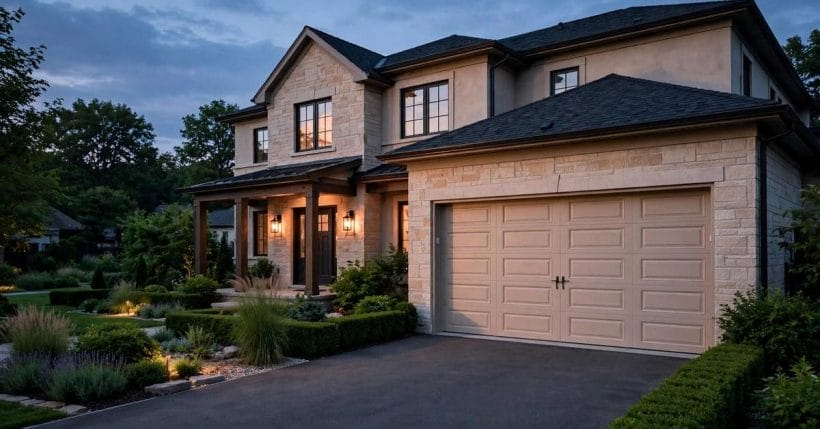
An upscale garage door does far more than close a garage. It fills a large part of the front of a house, so its style, colour and material shape how the whole home is seen from the street. A door that matches the house can make the frontage feel settled and well planned, while a door that clashes can pull attention away from everything else around it.
This guide looks at garage doors themselves: the styles on offer, the materials they are made from, the colours that work, the glazing and hardware that finish them, and the care that keeps them working safely. It stays with the door as a design feature, so you can compare looks and think about what suits your own home before speaking to a professional.
Garage door fitting and spring work carry real risk, and that work belongs to trained professionals throughout this guide. Nothing here asks you to fit, adjust or repair a door yourself. The ideas below are for choosing and caring for a door, not for working on its mechanism.
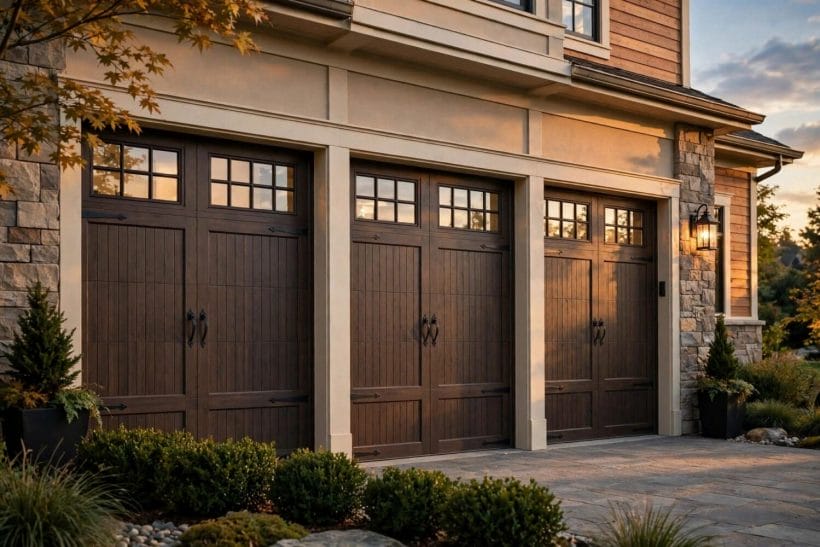
1. Panelled Doors That Suit Traditional Frontages
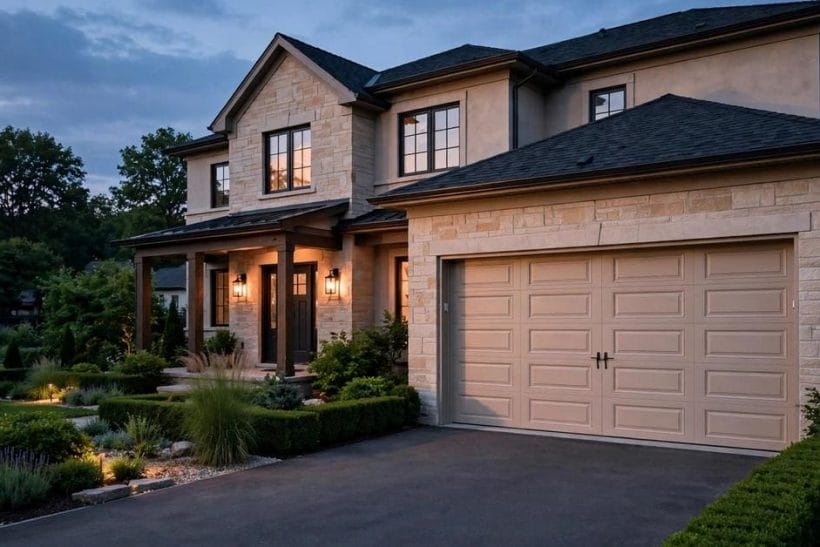
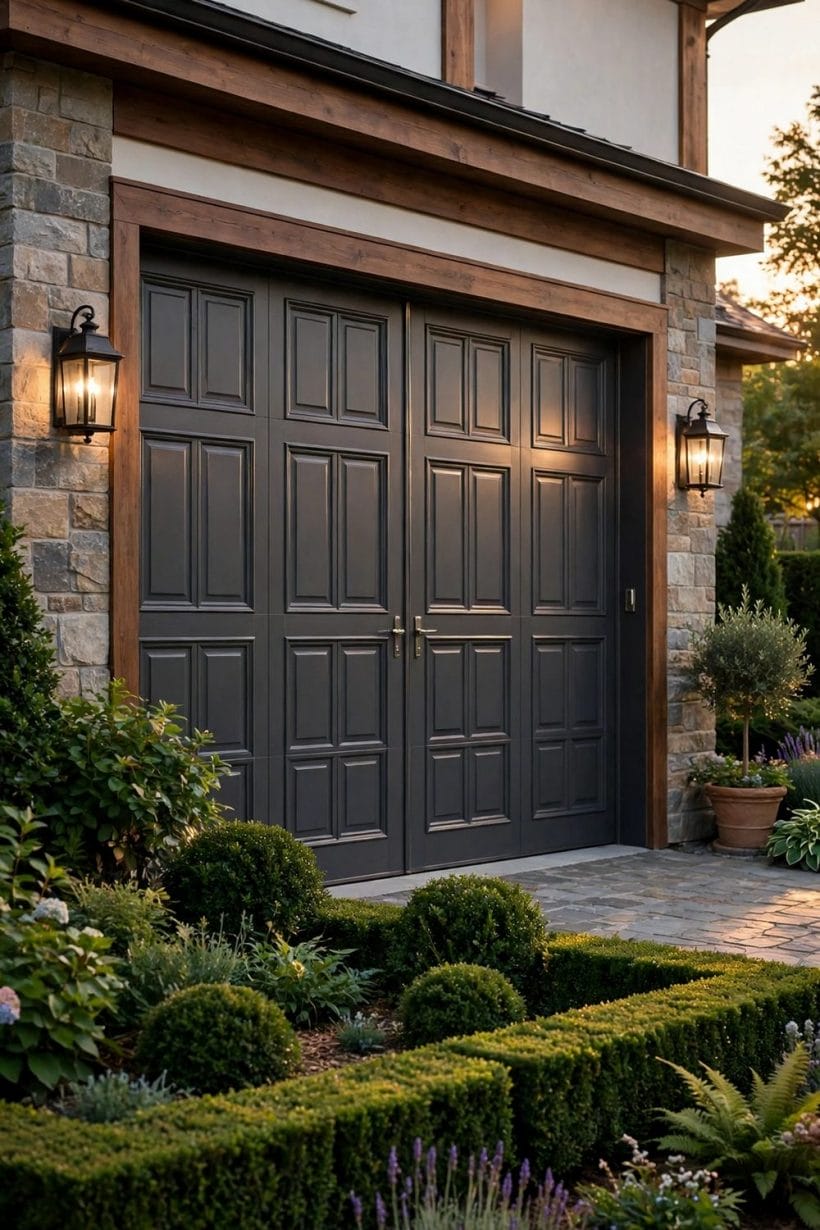
Panelled doors are the familiar face of the traditional garage. Raised or recessed panels break the surface into a calm rhythm, and that rhythm sits easily beside brick, stone and timber-clad homes. The panels catch light and shade through the day, so the door gains depth without any fussy detail.
On a traditional frontage, the panel pattern should echo the house rather than compete with it. A simple rectangular panel suits a plain facade, while a more detailed panel can suit a home with richer trim. When the door and the house share the same design language, the frontage reads as one piece. For the garage form itself, our attached garage ideas guide looks at how the garage sits against the house.
Colour matters as much as pattern here. A panelled door painted to match the trim or the main wall colour settles quietly into the facade. A strongly contrasting colour can work, but it turns the door into the main feature of the frontage, which suits only some homes.
Panelled doors also give a frontage a sense of order. Because the panels repeat evenly across the door, the eye settles on the whole house rather than hunting for a focal point. That order is why panelled doors suit streets where the houses share a traditional character, and why they rarely look out of place even when the neighbouring homes differ in detail.
2. Clean Flat Panels for a Modern Frontage
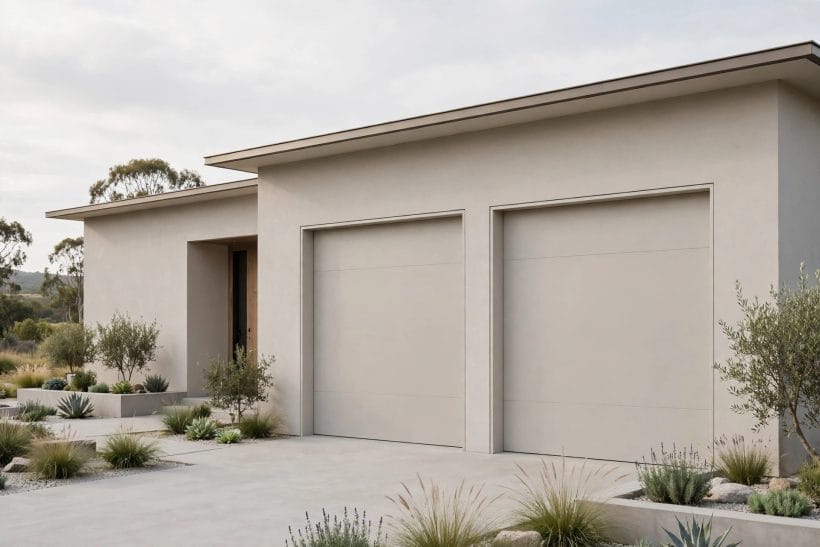
Modern homes often call for a quieter door. Flat panels with no raised detail give a smooth, calm surface that suits clean lines, large windows and simple materials. The door becomes part of the wall rather than a feature pasted onto it, an approach that sits well with contemporary home design ideas.
The appeal of a flat-panel door lies in its restraint. Without panels to catch the eye, the colour and material do the work. A soft neutral tone can let the architecture speak, while a deeper tone can anchor a pale facade and give it weight.
Flat doors also pair well with modern details such as slim house numbers, plain lighting and simple planting. When every element stays quiet, the frontage feels considered rather than empty. The door should be chosen with the whole frontage in mind, not on its own, and modern house plans show how that restraint runs through the rest of the home.
With a flat-panel door, the surrounding materials deserve as much thought as the door itself. Render, timber cladding and stone each meet the door differently, and the junction between door frame and wall shows more on a plain door than on a panelled one. A tidy, well-finished surround keeps the modern look crisp rather than bare.
3. Timber Doors and Their Warm Character
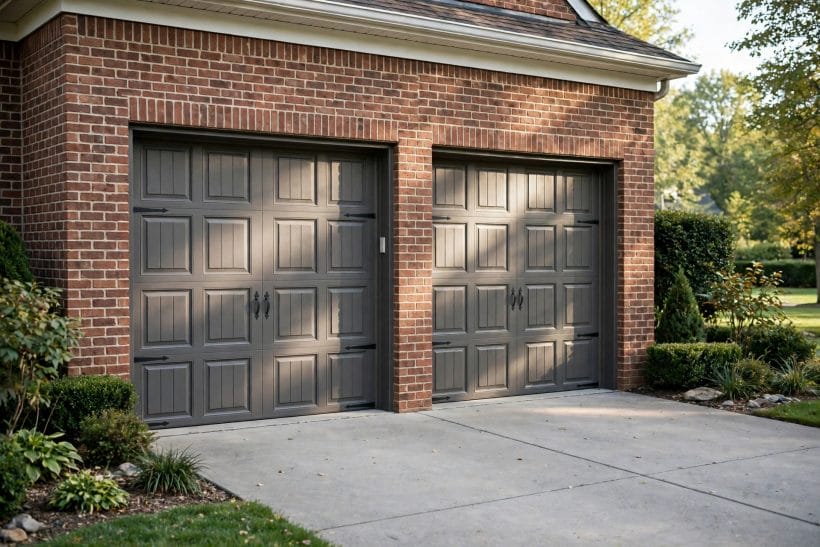
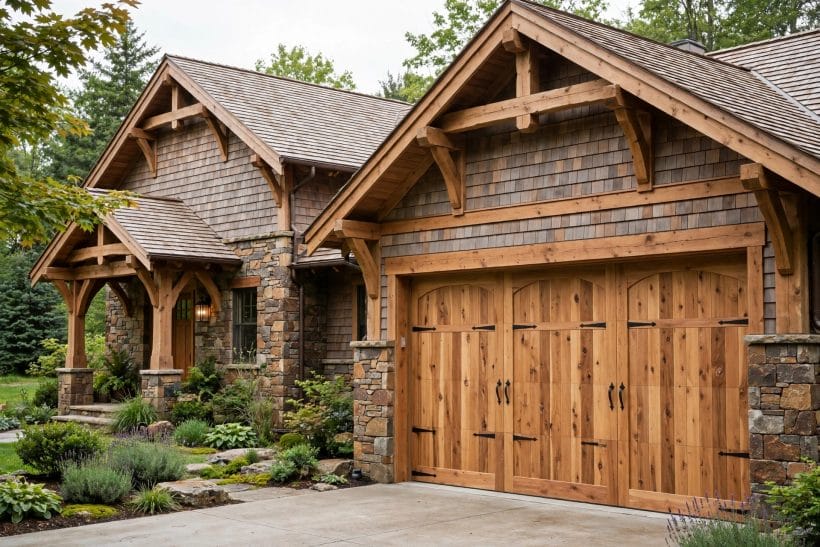
Timber brings warmth that few other materials match. Its grain gives the door a natural pattern, and its colour deepens the look of a frontage in a way that painted surfaces cannot quite copy. Timber suits cottages, craftsman-style homes and houses with plenty of natural materials elsewhere.
A timber door needs honest care. It should be finished and maintained as its maker advises, and it should be protected from standing damp and harsh sun where possible. A well-kept timber door ages gracefully, while a neglected one shows wear quickly.
Timber also suits a range of styles, from simple vertical boards to richer panelled designs. The choice of board direction and finish changes the feel of the door a great deal, so it is worth looking at examples in person before deciding.
The finish chosen for timber changes its character as much as the timber itself. A clear finish shows the grain and warms the frontage, while a painted finish gives a quieter, more uniform look that suits homes where the door should blend in. Either way, the finish should be renewed as its maker advises so the timber stays protected.
4. Steel Doors Built for Daily Use
Steel doors are the workhorses of the garage door world. They cope well with daily opening and closing, they resist dents better than many lighter materials, and they can be finished in a wide range of colours and panel styles. For a busy household, that toughness matters.
A steel door can also be insulated, which helps keep the garage more even in temperature through the year. That matters most when the garage joins the house or is used as a workspace, since a steadier garage puts less strain on the rooms beside it. Our interior design home ideas offer a sense of how those adjoining rooms can be finished.
Steel does not suit every frontage on looks alone, but modern finishes have closed much of the gap. Wood-grain finishes and quiet colours let a steel door sit comfortably beside traditional homes, while smooth finishes suit modern ones.
Steel doors also offer a practical advantage for households that use the garage often. Their surface wipes clean easily, and marks from daily use show less than on softer materials. That easy care makes steel a sensible choice where the garage is a working space as well as a parking place.
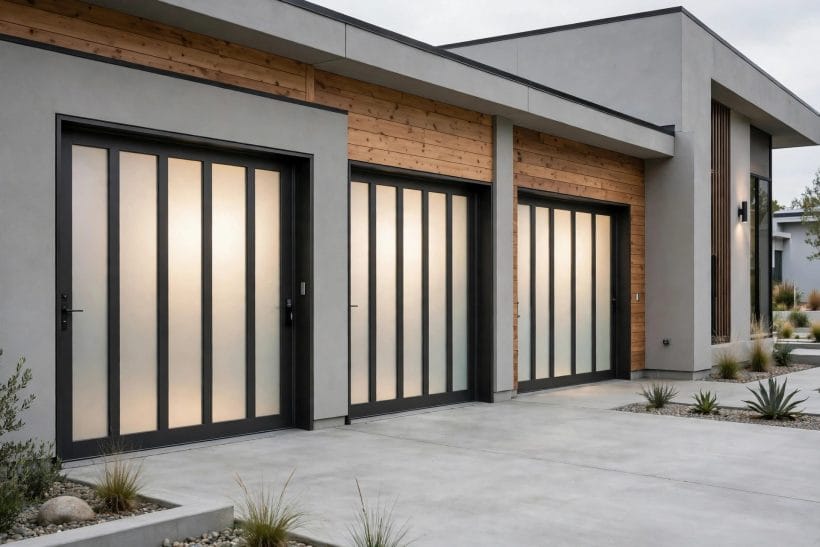
5. Glass Panels That Let in Soft Daylight
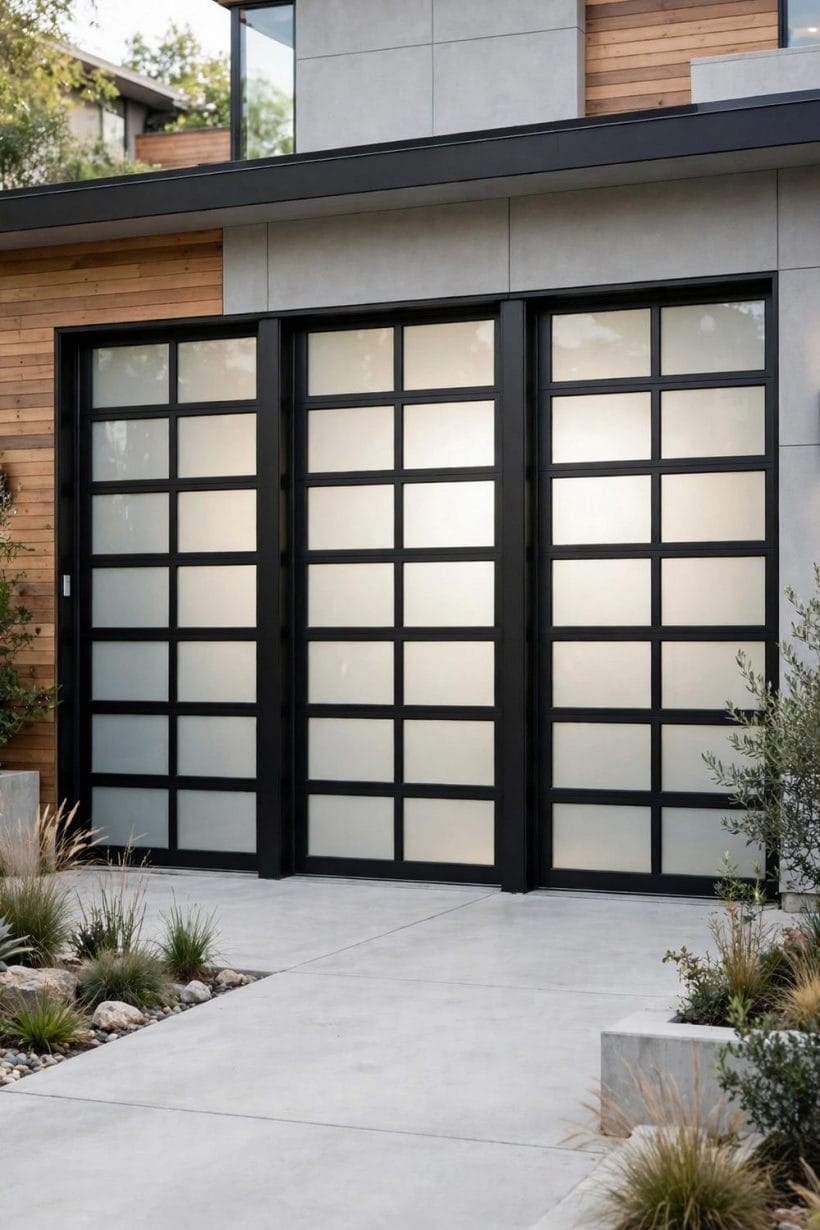
Glazed doors, or doors with glazed upper sections, bring daylight into the garage without opening it. That light makes the space pleasanter to use and easier to move around in, and from outside the glass adds a refined, contemporary touch.
Frosted or textured glass keeps privacy while still passing light, which suits street-facing garages. Clear glass suits a garage that opens onto a private drive or courtyard, where the view in is not a concern. The choice depends on where the garage sits and who passes it.
Glass also changes how the door looks at night. With the garage lit, a glazed door glows gently, which can be a pleasant part of the frontage after dark. That effect should be planned with the home’s other lighting so the whole frontage feels balanced.
When choosing glazed sections, think about what the glass reveals as well as what it admits. A garage that is kept tidy reads well through clear glass, while a working garage full of tools and stores looks better behind frosted glass. The glazing should suit the real garage, not an imagined one.
6. Colours That Match the House, Not Fight It
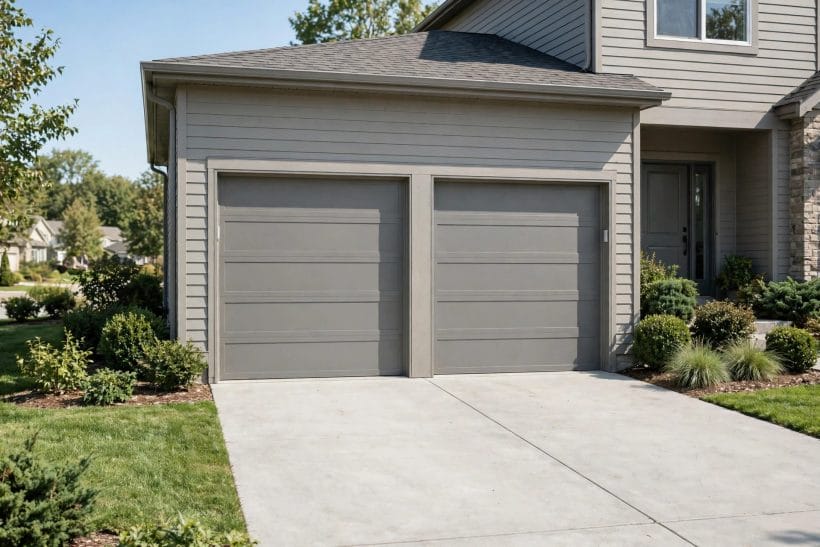
Colour is the quickest way to lift or spoil a garage door. The safest approach is to match the door to something already on the house: the trim, the front door, the roof tone or the main wall colour. That link ties the door into the design instead of leaving it to float.
Neutral colours are the most forgiving. Soft whites, warm greys and muted earth tones sit well with most materials and age gracefully. Strong colours can be striking, but they demand confidence and a frontage that can carry them.
It helps to test a colour in daylight on the actual frontage before committing. A shade that looks calm in a showroom can read very differently beside brick or stone in afternoon sun. Take time with samples, and view them at different times of day.
Seasonal light also plays a part in colour. A colour that looks gentle in soft winter light can look much stronger in bright summer sun, and a dark colour can make a north-facing frontage feel heavier. Viewing samples across seasons, or at least at different times of day, avoids a colour that only suits one light.
7. Windows in the Door: Shape and Placement
Windows set into a garage door soften its mass and give it a more domestic feel. A row of small windows across the top of the door is the classic arrangement, and it suits most styles. Arched windows suit traditional homes, while long horizontal windows suit modern ones.
Placement matters. Windows at the top of the door keep privacy while still passing light, and they keep the lower part of the door solid and calm. Windows spread across the whole door make a bolder statement and suit contemporary frontages best.
The window frames should match the door and the house. Dark frames can sharpen a modern look, while frames matched to the door colour keep a traditional look quiet. Small details like this decide whether the door feels designed or merely assembled.
Window glass in a garage door deserves the same privacy thought as the glazing in the door itself. Small high windows admit light while keeping the interior private, which is why they remain the most popular arrangement. Larger glazed areas suit homes where the garage opens onto private ground and the interior is kept presentable.
8. Hardware and Details That Lift the Whole Door
Handles, hinges and decorative straps are small, but they change how a door reads. On a traditional door, dark iron-style hardware adds character and a handcrafted feel. On a modern door, slim flush handles keep the surface clean and quiet.
Hardware should be chosen for the door’s style, not added as an afterthought. A heavily decorated handle on a plain modern door looks out of place, just as a bare flush pull looks thin on a richly panelled timber door. The details should agree with the door.
Good hardware also needs to last outdoors. Finishes that resist weather keep their look longer and need less attention, which matters on a surface that faces rain, sun and road dust every day.
Hardware finishes should also agree with the other metalwork on the frontage. Door handles, house numbers, lighting and letterboxes in a shared finish make the frontage feel coordinated, while a mix of finishes can look accidental. One metal tone carried through the small details ties the whole entrance together.
9. Keeping the Door Safe and Working Well
A garage door is heavy and under tension, so safety comes before looks. The door should open and close smoothly, sit evenly when closed, and reverse if it meets an obstruction, where such a safety feature is fitted. Any grinding, jerking or uneven movement is a sign to call a professional.
Routine care is simple and safe for a homeowner: keep the door clean, keep the area around it clear, and listen for changes in how it sounds and moves. Anything beyond that, especially springs, cables and the opener mechanism, belongs to a trained fitter.
Children and pets should be kept clear of a moving door, and the controls should be sited where they cannot be reached by small hands. A door that is respected as a heavy moving object stays a safe part of the home for years.
It is also worth knowing how the door behaves when the power fails, if it has an electric opener. A reputable fitter can explain the manual release and show how it works, so nobody is left puzzled in an outage. That short explanation is part of a safe handover and is worth asking for at fitting time.
10. Choosing a Door That Fits Your Street
The best upscale door is not the grandest one, but the one that fits its house and its street. A quiet, well-matched door often lifts a home more than a showy one, because it lets the whole frontage work together. Walk the street, notice which doors sit well, and ask why. Our tiny house exterior ideas and tiny house porch ideas show how frontage elements combine.
Think about the whole frontage at once: the door, the driveway, the planting, the lighting and the front door. When those elements share colours and materials, the home feels planned. When they pull in different directions, even a fine door can look lost. Backyard landscaping ideas and tiny house designs can help with the planting and overall look around the door.
Finally, talk to a professional fitter before ordering. They can advise on what suits the opening, the local weather and the way the garage is used, and they carry out the fitting safely. For the companion read on that topic, our four-car garage ideas guide stands alongside this door survey. A good door, well fitted, is a long-term part of the home.
Photographs help at this stage. Pictures of doors you admire, taken on real streets rather than in showrooms, show how a style behaves in daylight and beside other materials. Collecting a few such pictures before speaking to a fitter makes the conversation clearer and the choice easier.
Final Considerations
An upscale garage door earns its place by matching its house: the right style, a sympathetic colour, a material that suits the climate and the household, and details that agree with the whole frontage. Take time to compare styles in person, test colours in daylight, and weigh daylight, privacy and daily use before deciding.
Keep safety at the centre of the decision. Choose a door from a reputable supplier, have it fitted by a trained professional, and keep up the simple care that keeps it working smoothly. A door chosen with care and fitted properly will serve the home quietly for years.

0 Comments