
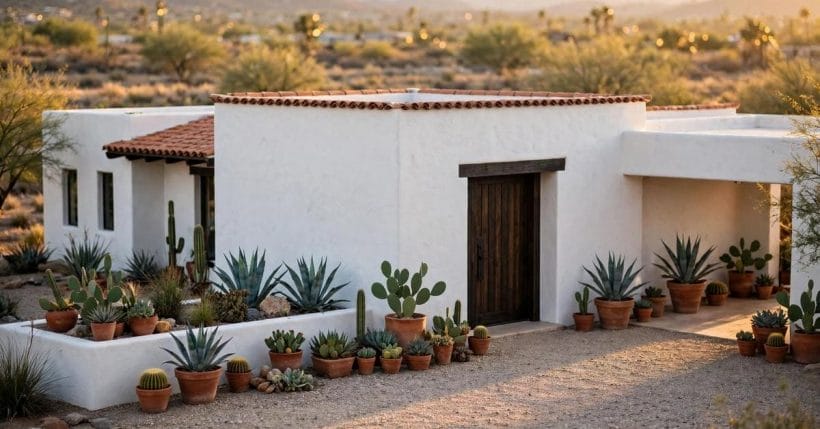
Modern Mexican homes pair clean, contemporary lines with the warmth of traditional Mexican design. Pale plaster walls, terracotta floors, dark timber and bold colour accents come together in houses that feel bright, grounded and welcoming, and the style works just as well in a compact home as in a larger one. This guide looks at the modern Mexican house itself: its layout, its materials, its colours and its rooms, in general terms, so you can recognise the style and borrow its ideas with confidence.
What makes the style modern is restraint. Older Mexican houses often layered ornament on every surface, while the modern version keeps the same soul and edits it down: smooth walls with little decoration, simple rooflines, generous openings and a calm palette that lets one or two strong accents do the talking. The result feels current without losing the character that makes the style so appealing, and it adapts gracefully to different climates and settings when the structure and detailing are handled by qualified professionals.
| Item | What it is |
|---|---|
| What Defines a Modern Mexican Home | A modern Mexican home is recognised first by its silhouette and its surfaces. |
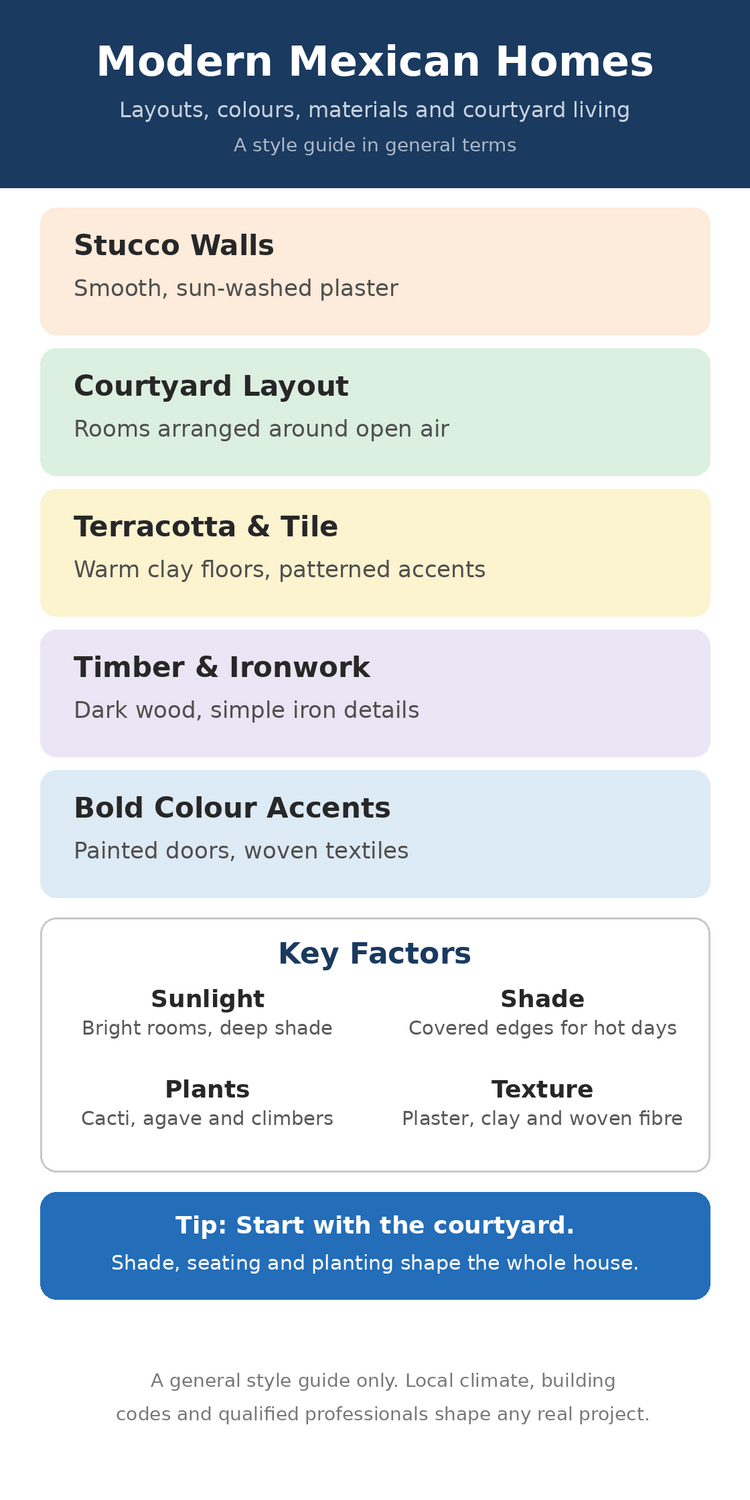
| The Courtyard as the Heart of the Home | If one feature defines the Mexican house, it is the courtyard. |
| Stucco Walls and Clean, Modern Lines | Smooth plaster walls are the canvas of the modern Mexican home. |
| Living Rooms That Gather Around Warmth | The modern Mexican living room is arranged for gathering. |
| Kitchens With Tile, Clay and Open Shelving | The Mexican kitchen is a working room first and a showpiece second, and its charm comes from honest materials used well. |
| Bedrooms in Earth Tones and Woven Texture | Bedrooms in the modern Mexican style are calm retreats built from earth tones and texture. |
| Outdoor Living: Terraces, Shade and Planting | Outdoor living is where the modern Mexican house truly comes into its own. |
| Colour: Bold Accents Against Pale Walls | Colour in the modern Mexican home works by contrast. |
| Warm Timber, Ironwork and Handmade Detail | Dark timber gives the modern Mexican home its weight and warmth. |
| Terracotta Floors and Patterned Tiles | Terracotta floors are the warm foundation of the Mexican interior. |
1. What Defines a Modern Mexican Home
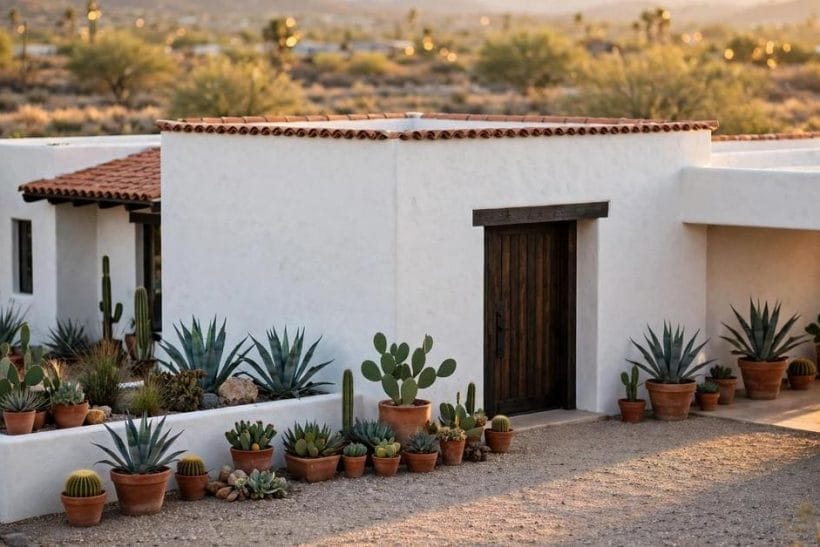
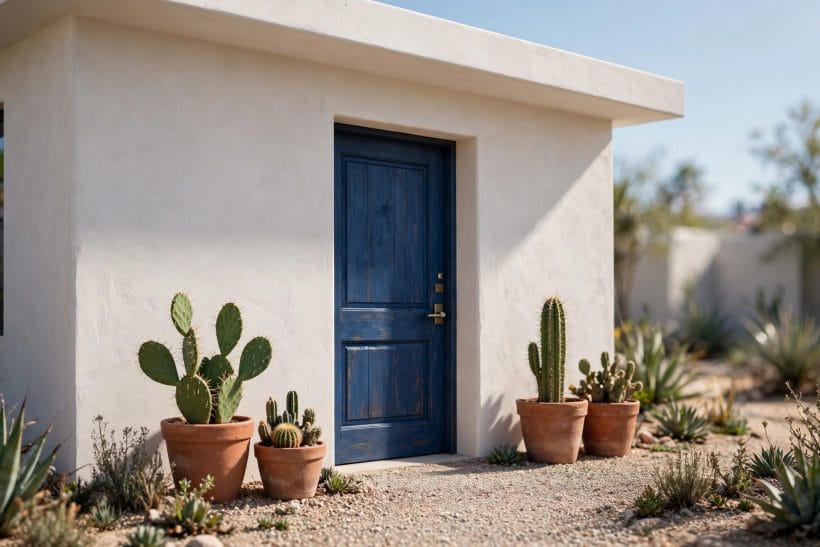
A modern Mexican home is recognised first by its silhouette and its surfaces. Walls are usually smooth plaster, finished in white or a pale warm tone, and rooflines stay low and simple, often flat or gently pitched with a terracotta edge. Openings are generous but shaded, doors are solid and characterful, and the whole composition favours horizontal calm over vertical fuss. Nothing shouts, yet the house has a clear identity from the street.
The second defining quality is the relationship between inside and outside. Rooms open onto courtyards, terraces and covered edges rather than turning inward, so daily life flows between sheltered rooms and open air. This indoor-outdoor habit is the heart of the style, and it shapes everything from the floor plan to the choice of materials, which are picked to look good in both settings and to age gracefully under sun and weather.
The third quality is material honesty. Plaster, clay, timber, stone and woven fibre are shown for what they are, not hidden behind imitation finishes. A clay floor is valued for its warmth underfoot, a timber beam for its grain and weight, a woven blanket for its texture and colour. When these materials are combined with restraint, the house feels rich without feeling busy, which is exactly the modern Mexican balance.
2. The Courtyard as the Heart of the Home
If one feature defines the Mexican house, it is the courtyard. Traditionally the courtyard sits at the centre of the plan, with rooms arranged around it, so that every part of the house enjoys daylight, air and a view of planting and sky. The modern version keeps this idea but interprets it freely: a courtyard may be central, tucked to one side, or formed by an L-shaped plan that wraps a sheltered garden.
A successful courtyard balances openness with shelter. Part of it stays open to the sky, part is covered by a deep overhang, a pergola or a loggia, so the space can be used through the heat of the day as well as in the cooler evening. Seating, a small water feature and generous planting make it a room in its own right, and the rooms around it borrow its light and greenery. Even a small courtyard can transform a compact home, because it gives every adjoining room a second, outdoor aspect.
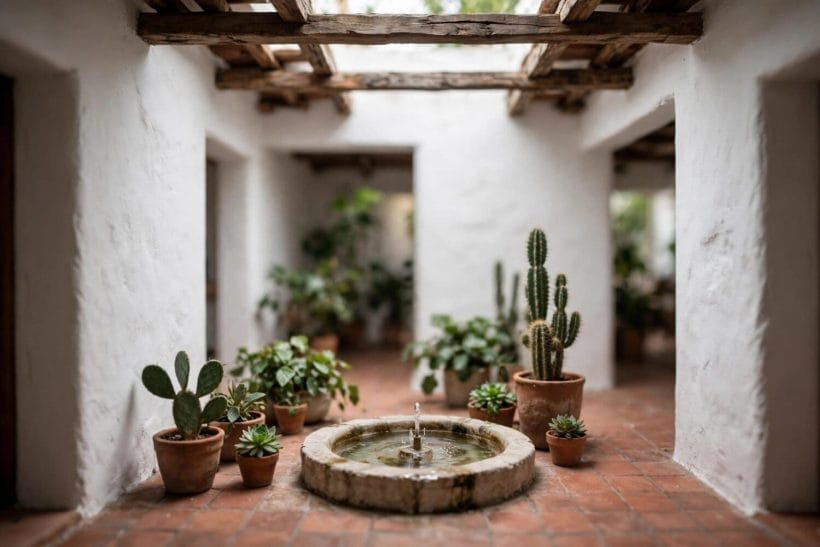
When planning a courtyard, think about privacy, drainage and shade before decoration. High walls or planting can screen the space from neighbours, surfaces should shed rain sensibly, and shade should fall where people actually sit. These are practical matters best settled with a qualified professional, since they touch on structure, waterproofing and the way the house meets the ground. Done well, the courtyard becomes the part of the home everyone gravitates toward.
3. Stucco Walls and Clean, Modern Lines
Smooth plaster walls are the canvas of the modern Mexican home. Their soft, hand-finished texture catches light beautifully through the day, turning from bright white at noon to warm honey tones in the evening, and they give the house a calm backdrop against which timber, tile and planting can stand out. Keeping the walls plain is a deliberate choice: it is what lets the modern version of the style feel spacious rather than ornate.
Clean lines come from editing the details. Window and door openings are simply framed, parapets are kept crisp, and decorative mouldings are used sparingly or left out altogether. If you are drawn to this look, study how few elements each elevation actually needs: a well-proportioned wall, a handsome door, a shaded opening and some planting will often carry the whole composition. For inspiration on how exteriors are composed in general, see these exterior ideas, which show how simple forms and planting work together.
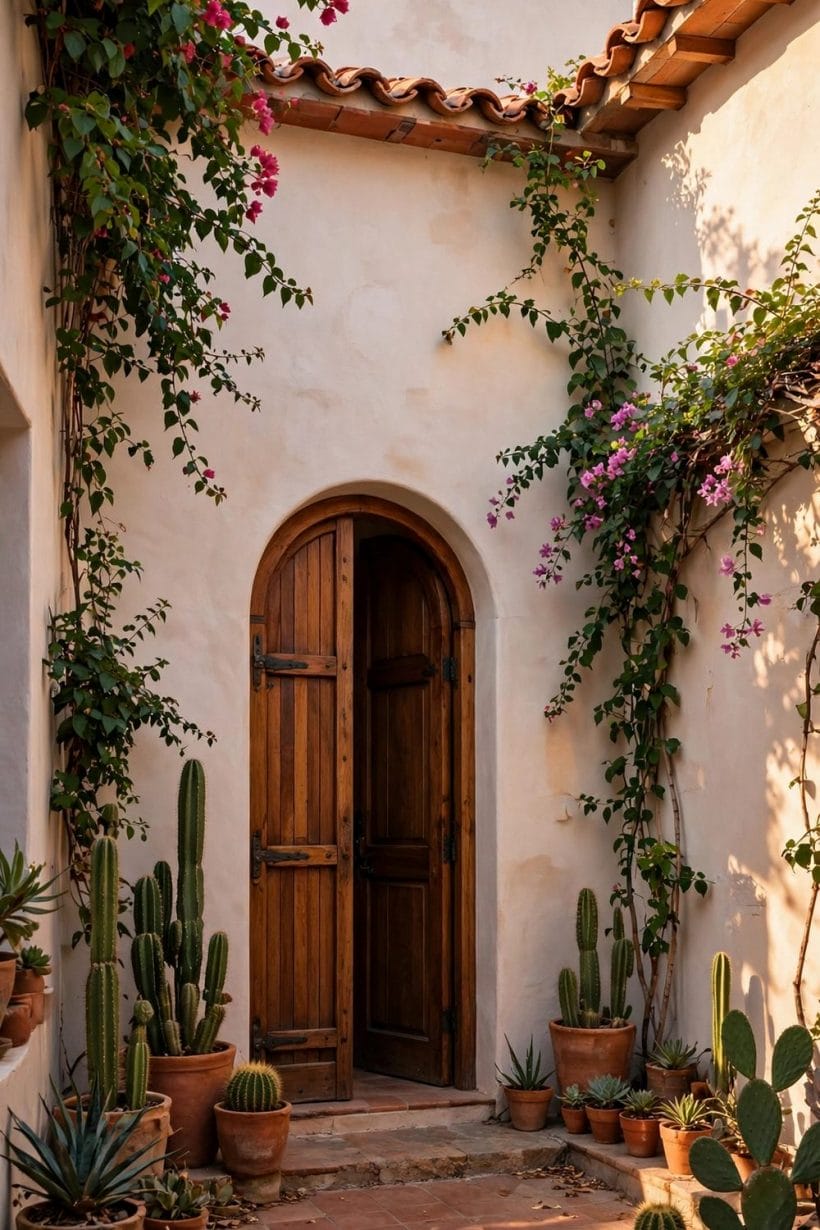
Colour on the walls stays pale in the modern version, which helps rooms feel bright and keeps the house looking cool and calm. Pale plaster also makes an excellent partner for the strong accents elsewhere in the design, from a painted door to a patterned tile panel. Structural changes to walls, openings or rooflines should always be planned and carried out by qualified professionals, who can confirm what the existing structure allows.
4. Living Rooms That Gather Around Warmth
The modern Mexican living room is arranged for gathering. Seating faces inward, toward a hearth, a low table or simply toward one another, and the room is dressed with the materials already established elsewhere in the house: a clay-tiled hearth, dark timber furniture, woven textiles and clay pottery. The effect is welcoming rather than formal, and the room invites long evenings and easy conversation.
Light shapes the living room as much as furniture does. Large openings bring in daylight and views of the courtyard or garden, while deep overhangs and shutters temper glare, so the room stays comfortable through the brightest part of the day. In the evening, warm lamps and candles take over, and the plaster walls glow softly. Layered lighting of this kind suits the style well, and any electrical work involved should be carried out by a qualified professional.
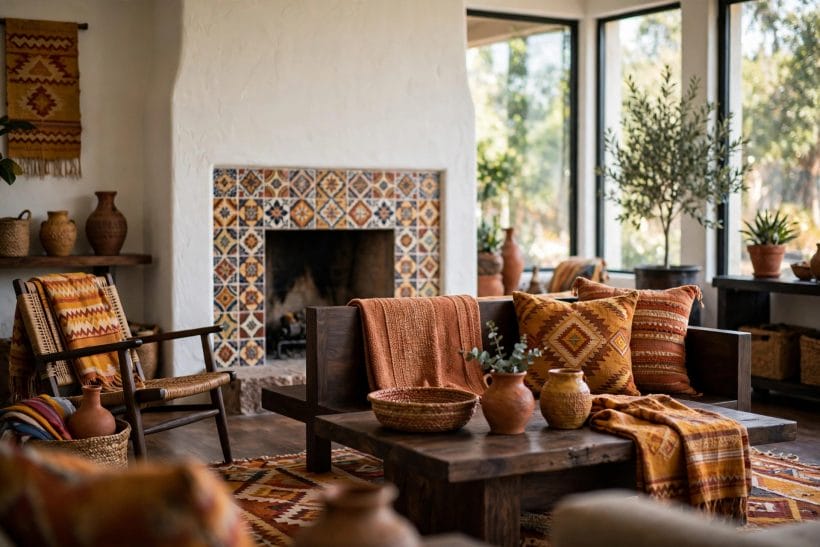
Textiles do much of the decorative work in this room. Woven blankets, patterned cushions and a hand-knotted rug add colour and texture without any structural change, and they can be layered generously because the background stays pale and calm. For broader ideas on arranging interiors around warmth and texture, see these interior design ideas, which show how simple rooms gain character through materials and light.
5. Kitchens With Tile, Clay and Open Shelving
The Mexican kitchen is a working room first and a showpiece second, and its charm comes from honest materials used well. Patterned tiles protect the walls behind the cooker and sink, open timber shelves display clay pottery and everyday dishes, and terracotta floors tie the room to the rest of the house. The layout stays practical, with clear work zones and generous surfaces, while the materials give it warmth.
Open shelving suits this style because it turns everyday objects into decoration. Rows of clay bowls, wooden boards and woven baskets look beautiful against a tiled wall, and they keep the tools of cooking close at hand. The trade-off is dust and the need for order, so open shelves work best for items used often, with closed storage elsewhere for the rest. A mix of open and closed storage usually gives the best of both worlds.
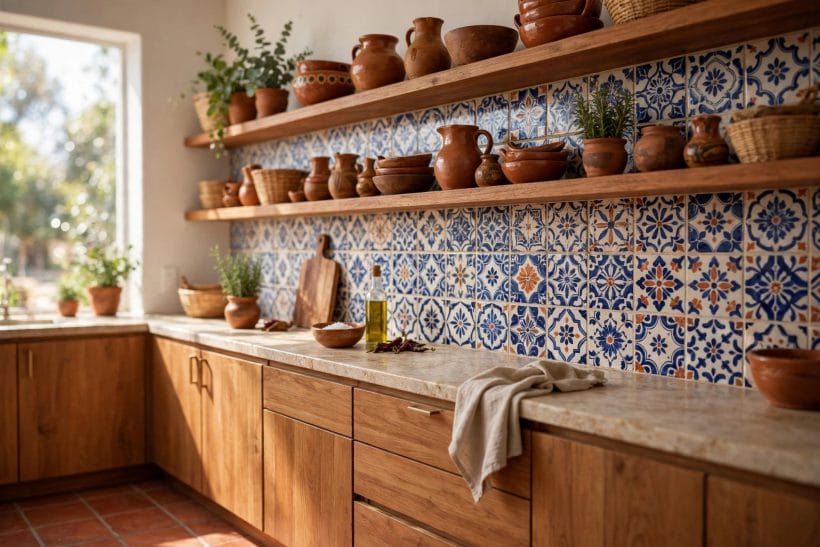
Kitchen planning also involves services that must be handled properly. Plumbing, gas and electrical work should always be entrusted to qualified professionals, who can confirm safe layouts and suitable materials around heat and water. With those foundations settled, the visible layer of tile, timber and clay can be chosen freely, and the kitchen will look as good as it works.
6. Bedrooms in Earth Tones and Woven Texture
Bedrooms in the modern Mexican style are calm retreats built from earth tones and texture. Pale walls, a dark timber bed frame, bedding in warm stripes and a terracotta floor create a room that feels restful without feeling plain, and a single patterned accent, such as a woven wall hanging or a tiled detail, gives the room its personality. The palette stays close to nature, which helps the room feel settled at any hour.
Texture matters more than ornament in the bedroom. A woven blanket, a clay lamp, a timber bench and a basket or two give the senses plenty to enjoy without visual clutter, and natural fibres suit the style particularly well. Keep the floor clear, the surfaces simple and the lighting soft, and the room will feel larger and more peaceful than its size might suggest.
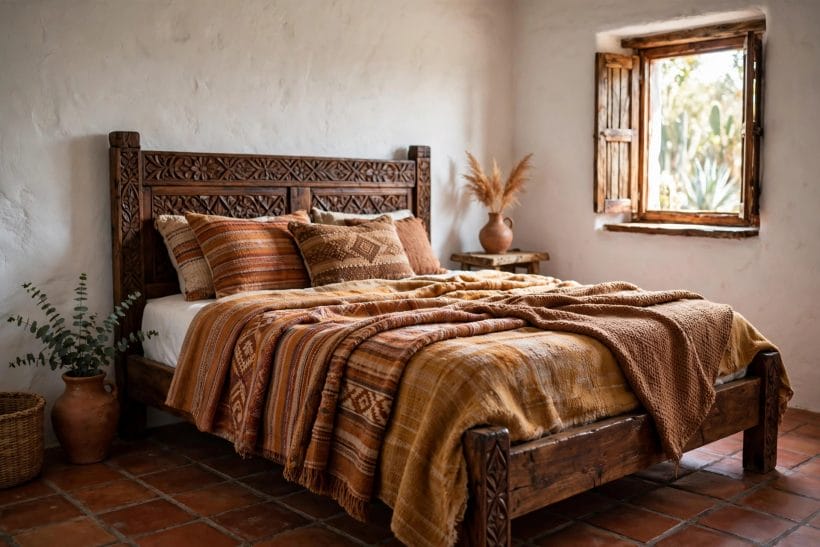
Storage in a Mexican bedroom often comes from furniture rather than fitted joinery: a timber chest, an open shelf, a simple wardrobe. This approach keeps the room flexible and lets the beautiful materials stay visible. For ideas on fitting storage gracefully into smaller rooms, see these tiny house designs, which show how compact rooms stay calm and useful.
7. Outdoor Living: Terraces, Shade and Planting
Outdoor living is where the modern Mexican house truly comes into its own. Terraces, loggias and covered edges extend the rooms of the house into the open air, giving every household a place to eat, rest and gather outside. A long table, comfortable seating, shade overhead and planting at the edges are all that is needed, and the space will quickly become the most used room of the house.
Shade is the key design problem outdoors, and it deserves careful thought. Deep overhangs, pergolas with climbing plants, shade cloth and well-placed trees all temper the sun, while still letting breeze and light through. The best shade follows the sun through the day and shelters the places where people sit, eat and cook, rather than shading empty corners. Structural shade elements should be designed and fixed by qualified professionals, since they must stand up to wind and weather.
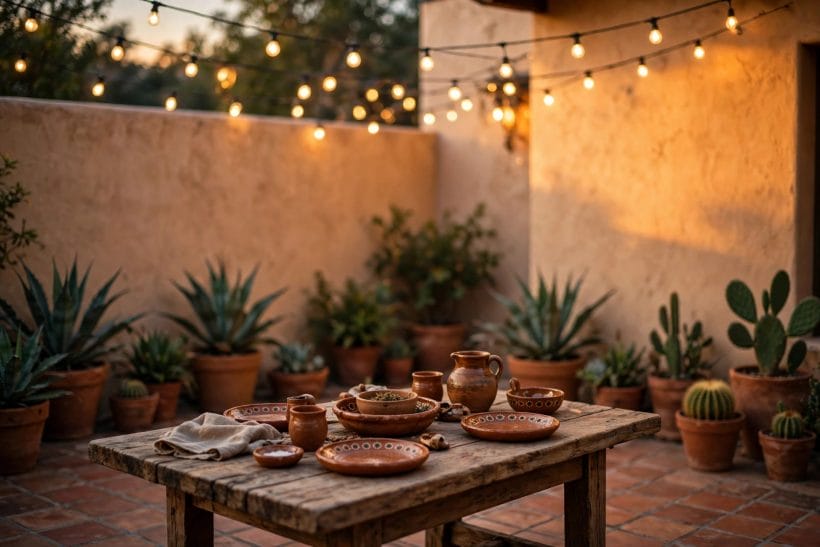
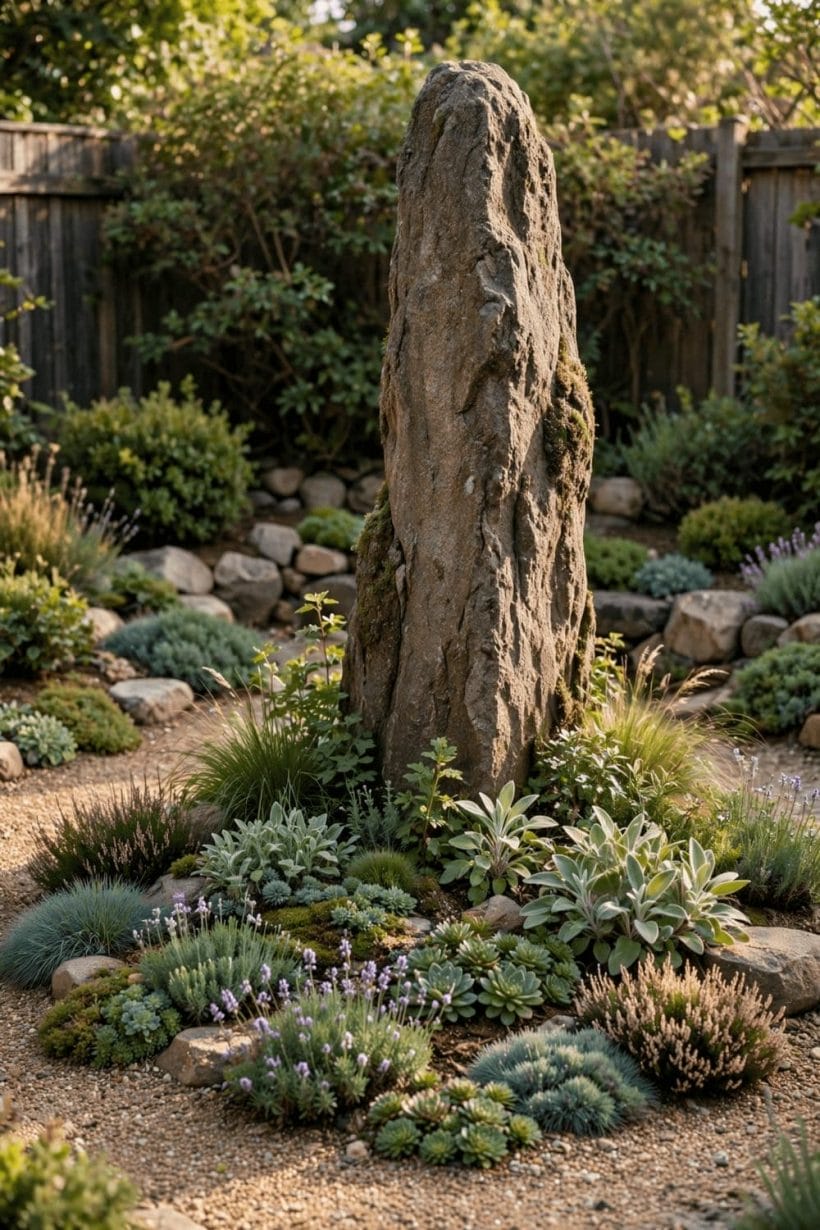
Planting completes the outdoor rooms. Cacti, agave, succulents and climbing plants suit the style and the dry conditions it evokes, and they look handsome in clay pots as well as in the ground. Choose plants suited to your own climate and aspect rather than copying a planting list from elsewhere, and give them the drainage and sun they need. For general ideas on shaping outdoor spaces, see these backyard landscaping ideas, which cover planting, paths and outdoor rooms in general terms.
8. Colour: Bold Accents Against Pale Walls
Colour in the modern Mexican home works by contrast. Pale plaster walls set the stage, and then strong accents step forward: a door painted in a deep blue or rich green, cushions in terracotta and ochre, a patterned tile panel, a woven blanket in warm stripes. Because the background stays calm, even a small amount of strong colour has real impact, and the house never feels loud.
The palette draws on sun, earth and planting: terracotta, ochre, deep blue, warm green and the dusty tones of desert planting. These colours appear in textiles, pottery and painted woodwork rather than across whole walls, which keeps rooms feeling bright and makes it easy to change the mood by swapping textiles or repainting a single door. If you love bold colour but fear commitment, start with the accents and live with them for a while before going further.
Balance is the skill to practise. One strong colour repeated in a few places will unify a room, while too many competing brights will fragment it. Try limiting each room to a pale background, a warm earth tone and one bold accent, then add pattern through textiles rather than paint. There is no invented formula behind this advice, only the general principle that restraint lets strong colour shine, and it is a principle that holds across rooms of every size.
9. Warm Timber, Ironwork and Handmade Detail
Dark timber gives the modern Mexican home its weight and warmth. Exposed beams, solid doors, chunky tables and carved bed frames all bring a handcrafted feeling that softens the clean plaster walls, and the contrast between rough timber and smooth plaster is one of the style’s most pleasing tensions. Timber is best used in solid, simple forms: a thick lintel, a plank door, a sturdy table, each allowed to show its grain.
Ironwork adds a quieter counterpoint. Simple black iron hinges, handles, lanterns and railings introduce fine dark lines that echo the timber without competing with it, and their handmade quality suits the style far better than anything polished or fussy. Used sparingly, ironwork draws the eye to doors, windows and stairways, giving the house its jewellery at exactly the points where hands and eyes naturally land.
Handmade detail is the thread that ties these materials together. Clay pottery, woven baskets, hand-loomed textiles and hammered metal all carry small irregularities that make a room feel lived in rather than staged. The modern approach is to choose a few such pieces and give them room to breathe, rather than filling every shelf. Quality matters more than quantity here, and a single well-made piece will do more for a room than a collection of imitations.
10. Terracotta Floors and Patterned Tiles
Terracotta floors are the warm foundation of the Mexican interior. Their earthy, sun-baked tone runs through living rooms, kitchens and courtyards alike, tying inside and outside together, and their natural variation gives every floor a slightly different character. They pair beautifully with pale walls and dark timber, and they feel pleasantly cool underfoot in warm weather while still looking inviting when the light turns low.
Patterned tiles play a different role: they are the jewellery of the house, used in focused places rather than everywhere. A tiled fireplace surround, a kitchen splashback, a stair riser or a bathroom panel can carry a bold pattern without overwhelming the room, and the modern approach keeps these moments contained so each one can be appreciated. Look for patterns that echo the colours already in the room, and let plain surfaces do most of the work around them.
Choosing tiles and clay floors is also a practical decision. Surfaces in kitchens, bathrooms and outdoor areas need to suit wet conditions and regular cleaning, and fixing methods differ between interior floors and exposed courtyards. A qualified tiler or builder can advise on suitable materials and finishes for each location, and on how to protect grout and sealers over time, so the floors keep their warmth for years.
Final Considerations
Modern Mexican homes succeed through a simple recipe: pale plaster, warm clay, dark timber, bold accents and a close relationship between rooms and outdoor spaces. Keep the background calm, choose materials honestly, let the courtyard or terrace lead the plan, and use colour and pattern in focused moments rather than everywhere at once. The style is forgiving, because its materials age well and its palette stays close to nature.
Before making structural changes, changing rooflines or openings, or altering services such as plumbing, gas or electrics, consult qualified professionals and check the rules that apply in your area. A professional can confirm what your structure allows, which materials suit your climate, and how to detail junctions so the house stays weather-tight and safe. With that advice in hand, the decorative layer of tile, textile and planting can be enjoyed freely, and the house will reward you for years.
For further reading on modern house forms and outdoor transitions, see these contemporary home design ideas, these porch ideas for entries and covered edges, and these modern house plans for layout inspiration in general terms.


0 Comments