
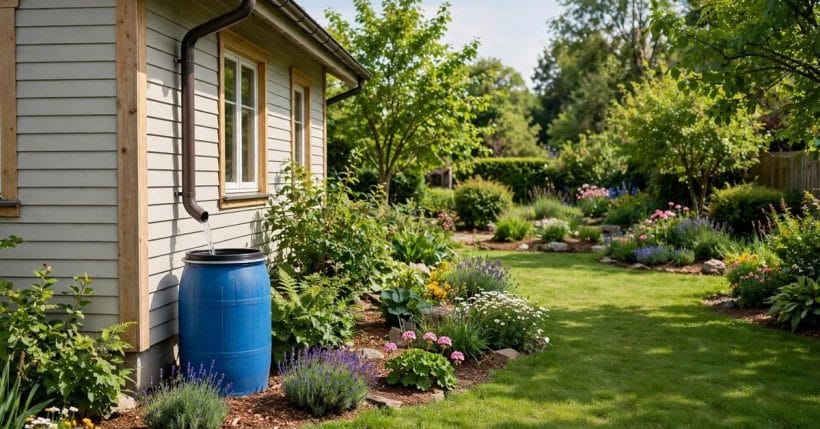
The big blue plastic barrel is the workhorse of the self-reliant garden: rain storage, compost tea, irrigation header tank, animal water, feed storage, a floating dock’s best friend. Used ones change hands constantly — which is why the search “free 55 gallon plastic drums near me” is typed so often. This guide answers the honest version of that question: where used barrels genuinely come from, and how to take one home safely.
One rule stands above everything else in these pages, and it is not negotiable: only a food-grade barrel with known previous contents may ever hold food, drinking water or garden water. A barrel that once held chemicals is disqualified from anything edible or potable, permanently, whatever anyone tells you. The rest of the guide is how to source, check, clean and use a barrel within that rule.
1. Used Plastic Barrels at a Glance
The standard drum is the fifty-five-gallon plastic barrel, usually blue, made of food-safe-grade plastic when it was made for the food industry — and made for industry generally when it was not. Those two families look identical on a trailer and are entirely different objects. Everything in sourcing is about telling them apart: where the barrel came from, what it last held, and whether the person handing it over actually knows. Barrels with a traceable food history are worth seeking out; barrels with no history are worth avoiding for anything that touches food or water, however clean they smell.
| Question | Short answer |
|---|---|
| Where do used barrels come from? | Food and drink producers, farms, and businesses that receive ingredients in them — plus resellers who gather them |
| Which barrels are safe for food and water? | Only food-grade barrels whose previous contents are known and were food — nothing else, ever |
| Can a chemical barrel be cleaned into safety? | No — treat it as permanently disqualified from food, drink and garden-water use |
| Are free barrels real? | Sometimes — businesses that pay for removal may give surplus barrels away; condition and history still decide |
| What is the best first use to plan? | A rain barrel for the garden — useful, forgiving, and covered in the garden sections below |
2. What Counts as Food-Grade
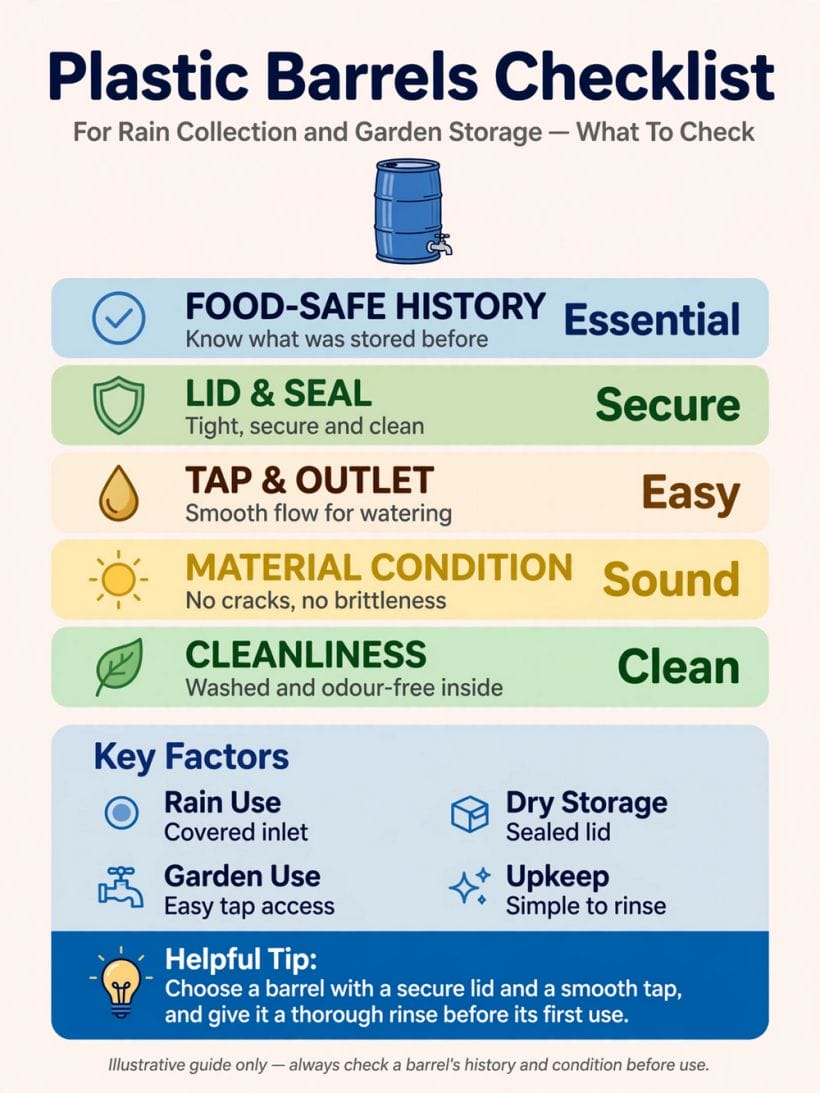
Food-grade is a history, not a colour. Blue barrels are common in the food industry, but blue plastic alone proves nothing — industrial barrels wear the same colour. A barrel counts as food-grade for your purposes when two things are both true: it was manufactured for food contact, and its life since has held only food. The evidence is the chain of custody: a label naming a food product, a seller who received it from a food business with its contents named, markings consistent with that story. Syrups, juices, pickles, oils, flavourings and food ingredients are the typical previous contents of genuine food barrels — many still carry a faint, honest smell of what they held, which is reassuring rather than off-putting. When the story has a gap — a barrel from a mixed yard, a seller who shrugs — the barrel may still serve for storage of tools or a compost bin, but it has left the food-and-water family. Treat the distinction as the whole game, because it is.
3. Where Used Barrels Come From
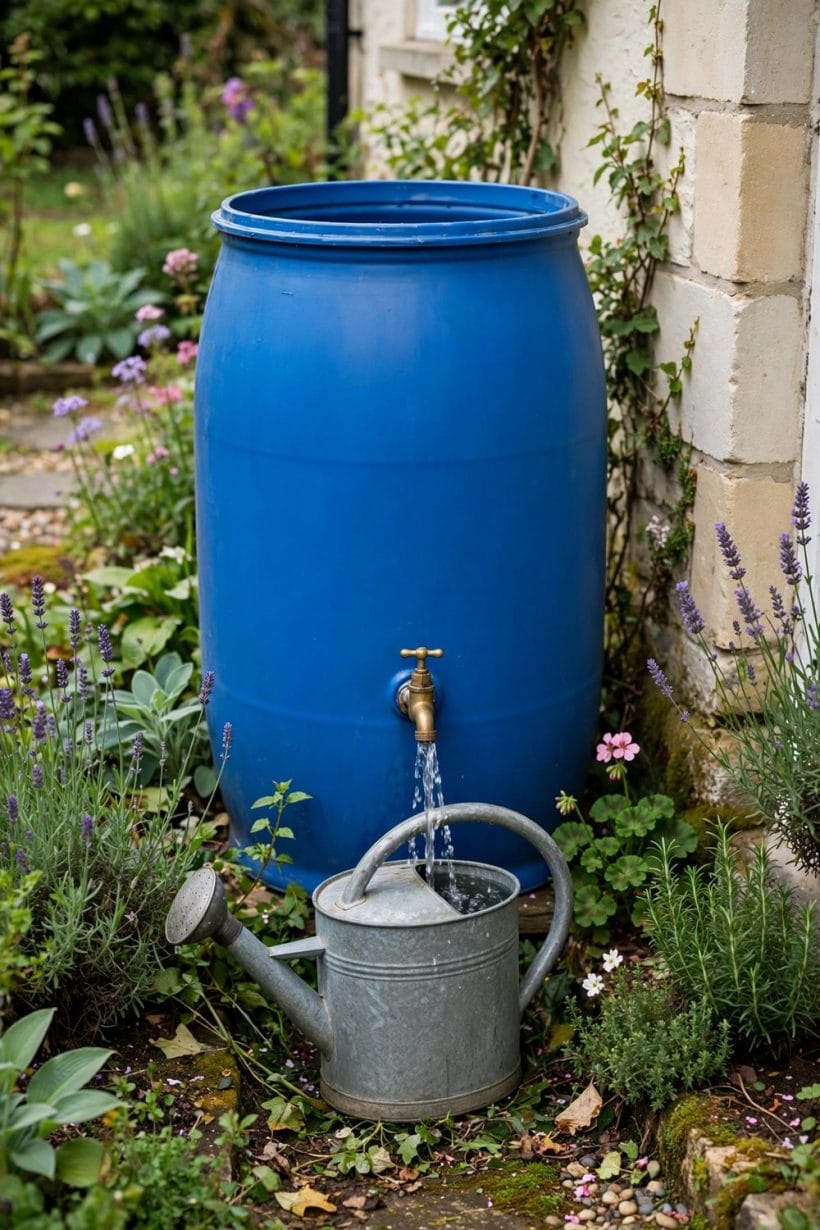
Think in terms of sources, not shops, and the supply makes sense. Food and drink producers — bottlers, sauce and pickle makers, bakeries’ suppliers, juice and syrup handlers — receive ingredients in barrels and accumulate empties they must move on; some sell them cheaply, some give them to whoever collects, because removal otherwise costs them money. Farms are the second great source: feed, supplements and farm-food ingredients arrive the same way, and farm sales and yard clearances pass barrels on. Car washes and detailers receive detergents in identical-looking drums — a useful source for workshop and non-food uses, and a trap for the food-and-water buyer, which is why the previous section’s rule matters more than the source’s friendliness. Finally there are resellers — barrel dealers and marketplace sellers who gather, rinse and grade drums. A good dealer is a shortcut to a known history; ask the questions in section six and a dealer’s answers will tell you quickly which kind you have found. Local listings, farm auctions and community exchanges are where all of these surface — search them by the barrel, not by promises, and never by “near me” shortcuts that skip the history.
Community routes deserve their own mention. Allotment groups, gardening clubs, mutual-aid circles and neighbourhood exchanges pass barrels hand to hand constantly, because gardeners accumulate them and gardeners need them; a barrel from a fellow gardener usually comes with its story attached, which is the most valuable part of the transaction. Seasonal clearances — a farm re-equipping, a producer changing suppliers, a community project winding down — release small batches of matched barrels at once, and a matched batch from one food source is the finest sourcing outcome there is. Timing helps everywhere: ask before you need, and a source that has nothing today will often remember you when the next empties are stacked by the gate.
4. The Previous-Contents Rule
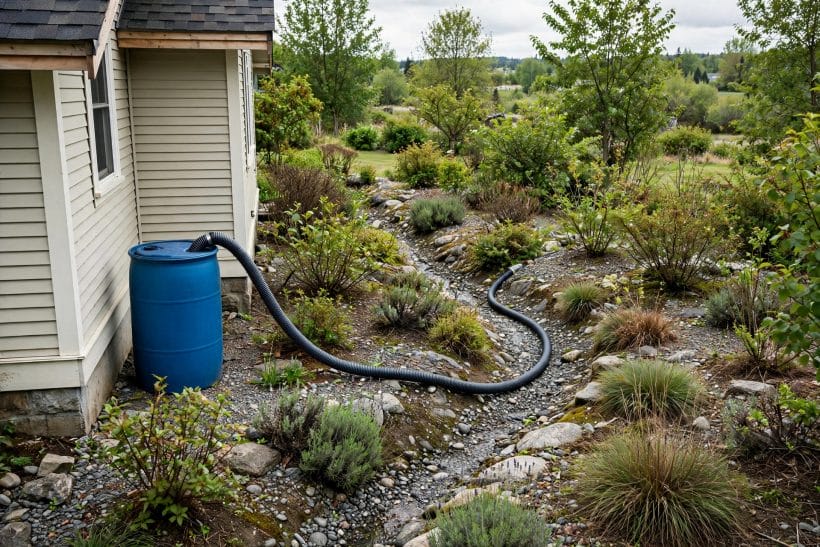
Here is the rule in its full form, because everything depends on it. A barrel that held chemicals — solvents, pesticides, industrial cleaners, fuels, anything with a hazard label in its past — must never be used for food, drinking water, livestock water, or water that will touch food crops, no matter how it has been washed. Plastic is not glass; residues can lodge in the material and in scratches and seams beyond the reach of household cleaning, and “it smells fine now” is not evidence of safety. The same caution extends to barrels whose history is simply unknown: unknown means unproven, and unproven means not for the edible chain. This is not a counsel of perfection — chemical and unknown barrels still have honest work available: tool and timber storage, a workshop bin, flotation for a dock where local rules allow, a compost or leaf bin well away from food growing. The rule only draws the line where it belongs: nothing that held chemicals, and nothing whose past you cannot name, ever feeds or waters anything you eat or drink.
Expect to hear the counter-argument, usually from a seller: that a thorough wash makes any barrel fine. It is offered kindly and it is wrong in the way that matters — household cleaning deals with surfaces, and the doubt about a chemical barrel was never only on its surface. The polite answer is also the practical one: barrels with clean histories are common enough that no garden needs to gamble on a doubtful one. Decline, keep looking, and let the doubtful drum go to the storage and workshop work it is genuinely suited for.
5. Reading Labels and Markings
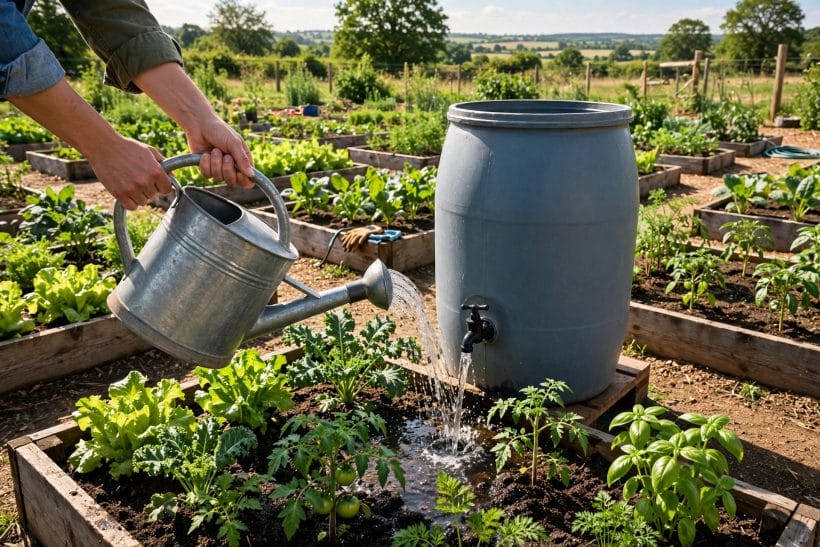
A barrel carries its biography on its skin, and reading it takes a minute. Start with any paper or printed label: the product name, the maker, and the words that say whether it was food. A food name you recognise is the strongest single piece of evidence a used barrel can offer. Then the moulded markings: recycling and material codes identify the plastic type, and manufacturer marks can confirm the drum was made for food-industry service. Check the bungs and the rim — food barrels are usually closed-head drums with standard fittings, and their seals should be intact rather than chewed or perished. Smell is a supporting witness, never the verdict: sweet, vinegary or oily food smells agree with a food story, while sharp chemical or fuel notes end the conversation regardless of what the label claims. Finally inspect the inside with a torch: staining that matches the story is fine; residue that contradicts it — gritty, rainbowed, or smelling of a workshop — means the barrel’s real history is not the one you were told.
6. Questions to Ask Before You Take One
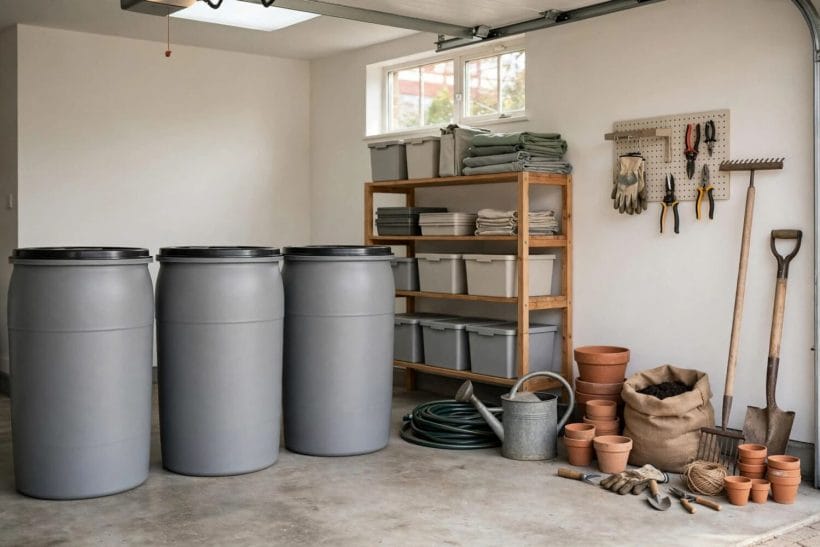
Five questions, asked of any source — producer, farmer, dealer or neighbour — will sort a good barrel from a liability. What did it hold last, and what did it hold before that? Where has it been stored since it was emptied — indoors, or open under a tree filling with rain and leaves? Was it rinsed, and with what? Why is it being moved on — surplus, damaged, or end of a contract? And can you open it, look inside and smell it before deciding? Honest sources answer all five without blinking, and food businesses in particular are used to them. Vague answers are information too: they move the barrel into the unknown category and out of food and water service. If you are collecting several — for a row of rain barrels along a shed, say — ask whether they share one history; a matched set from a single food source is worth more than a cheaper mixture from everywhere.
Inspect in person whenever the barrel is destined for water. Photographs cannot carry a smell, show the state of the bung threads, or reveal the chalky bloom of sun-rotted plastic; your hands and nose are the inspection tools, with a torch for the interior. Go equipped — gloves for handling, and room in the vehicle, because a full-size drum is bulkier than it looks in a listing and will not forgive a small boot. If a barrel arrives by delivery instead, do the same inspection on your own ground before it is filled or cut, and be ready to refuse it: the moment to discover a wrong history is before the barrel joins your water system, not after.
7. Cleaning a Barrel, in General Terms
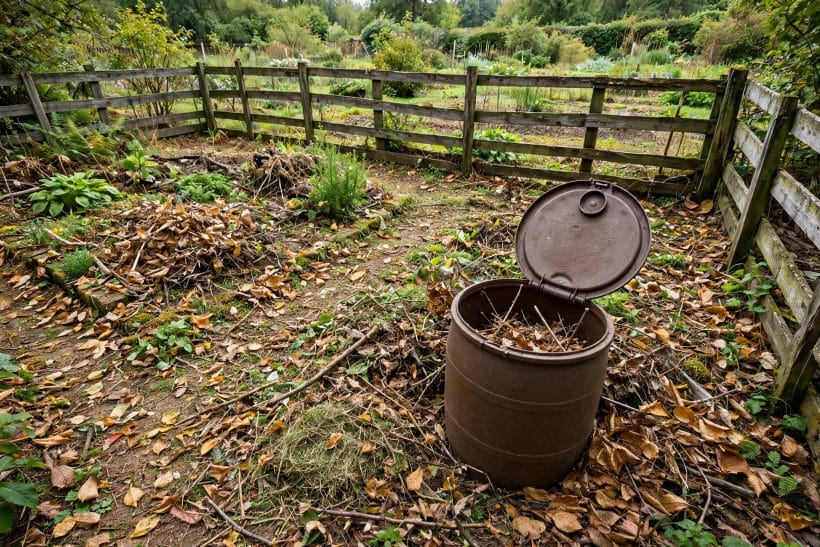
For a verified food-grade barrel, cleaning is ordinary work stated plainly: rinse out the remaining traces of its previous contents, wash with hot water and a mild detergent, scrub what can be reached through the bung or the cut top, rinse again until the water runs clean and neutral, and let the barrel dry fully in the open air before use. Stubborn food residues — syrup and oil are the usual ones — yield to time, hot water and repetition rather than to aggressive chemistry; anything you would not want in the water yourself does not belong in the wash. Barrels destined to become rain barrels are often cut at the top, which makes this one thorough clean easy — do it before the cut, while the drum can still be rolled and shaken. Note the boundary once more: this cleaning is what makes a known food barrel pleasant to use. It is not a process that rehabilitates a chemical or unknown barrel into food service, and it should never be represented as one.
8. Rain Barrels and Garden Use
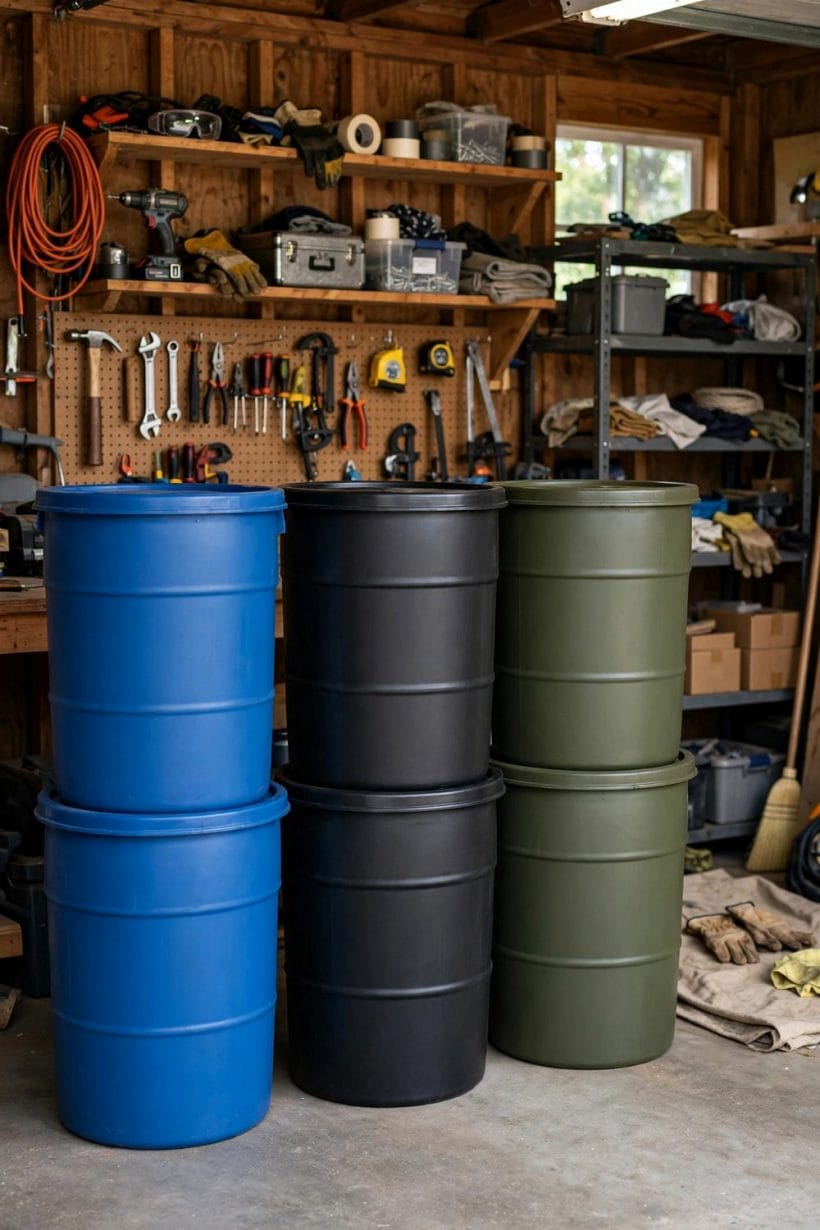
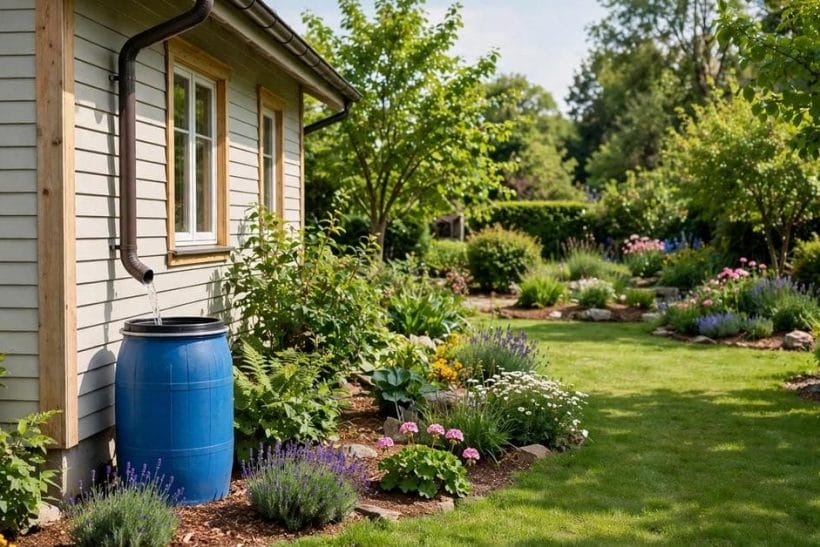
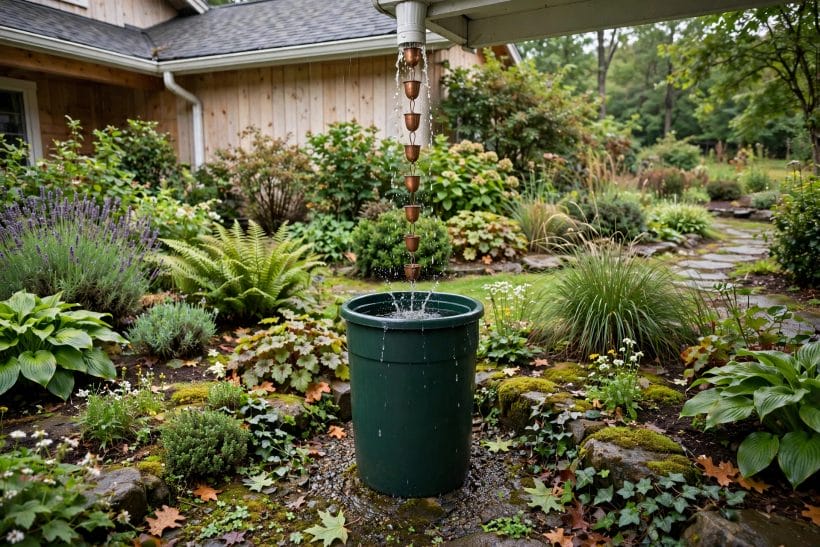
The rain barrel is where most used barrels earn their second life, beside the raised beds and under the shed gutter. A food-grade barrel, cleaned as above, fitted with a tap near the base and an overflow that directs surplus water away from foundations, serves a garden faithfully for years. Screen the inlet against leaves and insects, raise the barrel on blocks so a can fits under the tap, and site it where its water is wanted — the courtyard and vegetable plot are the classic spots. Roof water is garden water, not drinking water: keep the distinction, label the tap if children use the garden, and check any local rules that apply to rainwater collection where you live — the published rainwater harvesting guidance covers the wider system honestly. Garden uses multiply from there: a header barrel for drip lines by gravity, a soaking tank for pots and tools, a reservoir beside the container garden — all within the same rule, food-history barrels for anything that waters what you eat.
Winter asks two small favours of a rain barrel. Water expands as it freezes, so leave headroom in cold months or drain the barrel down if hard frosts are forecast — a barrel split by ice is the one failure entirely in the owner’s gift to prevent. And route the overflow with the season in mind: surplus winter rain should travel away from paths that freeze and foundations that resent it, along the line you chose in summer. A barrel checked twice a year — screen clear, tap sound, overflow free — otherwise asks nothing, which is why the design has outlived every cleverer alternative.
9. Ponds, Storage and the Other Honest Work
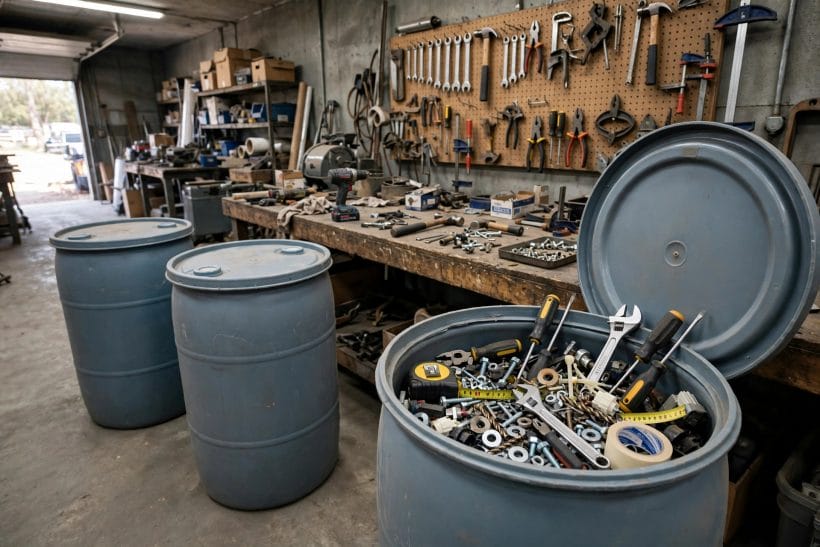
Beyond the rain barrel, the drum’s talents are mostly structural. Buried or half-buried, a barrel becomes a pond filter chamber or a sump beside the pond and the garden waterfall — pump housings and filter media live happily in a drum that never touches drinking water. Cut down, barrels become compost bins, leaf stores, planters for deep-rooted crops, and protection cloches of serious size. Whole, they store what the shed cannot: timber offcuts, canes, netting, tools with the handles up. This is also where the non-food barrels earn their keep without any safety shadow — storage, flotation where permitted, workshop duty. Matching the barrel to the work, with the food line uncrossed, is the whole craft of the thing; a household that keeps two classes clearly — food-history barrels marked, the rest unmarked — will never make the one mistake this guide exists to prevent.
Add the one-way rule that keeps the classes clean forever: a barrel may be demoted, never promoted. If a food-history barrel is ever borrowed for something doubtful — mixing, storing a treatment, holding anything you would not drink — it leaves the food class permanently and gets marked as such on the spot, with paint rather than memory. Households change, helpers help, memories fade; the painted mark is the only member of the system that never forgets. Most barrel accidents are not sourcing failures but class failures years later, and the demotion rule is the cheap insurance against every one of them.
10. Red Flags and When to Walk Away
End with the refusals, because they protect everything above. Walk away from any barrel with a hazard label the seller cannot explain, any barrel smelling of fuel, solvent or strong chemical sweetness, and any barrel whose story changes between the listing and the yard. Refuse barrels with cracked rims, perished seals or sun-rotted, chalky plastic for any water-holding duty — a split rain barrel is a flood with a schedule. Be wary of the too-perfect bargain: a barrel offered far below the going rate usually has a history priced into it. And keep the perspective the guide began with — used barrels are plentiful, sources are everywhere, and another one is always coming. No single drum is worth bending the one rule that keeps a garden’s water and a household’s food safe.
Final Considerations
The free barrel is real — food businesses genuinely do give away what costs them money to remove — but “free” is the least important word in the search. History is the word that matters: a food-grade barrel with a known past is a bargain at almost any small price and a hazard at none. Source from the food chain, ask the five questions, clean plainly, mark your food barrels, and keep chemical and unknown drums at their own honest work. Do that, and the big blue barrel will serve your garden for a decade without ever giving you a reason to think twice.



0 Comments