

A bathroom niche is the shelf the wall itself gives you — a recessed pocket that holds bottles, soap and towels exactly where your hand expects them, without a single plastic caddy hanging from the shower head. Done well, it is the hardest-working detail in the room.
These eighteen bathroom niche ideas cover placement, shape and finish — long low shower ledges, tall divided towers, bath-side pockets and shallow vanity recesses — plus the waterproofing and planning checks that decide whether a niche stays beautiful or becomes a damp, grimy slot.
Related Guide: Recessed Medicine Cabinets: Styles, Depths and Installation Checks

1. Bathroom Niche Ideas at a Glance
A niche is a framed, lined and waterproofed recess built into a stud or masonry wall and finished flush with the surrounding surface. In a shower it replaces racks and corner shelves; beside a bath it keeps the soak uncluttered; near a vanity it swallows the everyday bottles that otherwise colonise the basin edge. It belongs to the wider bathroom ideas family as a storage detail, not a style of its own — which is why this post covers the niche itself and nothing else: where it goes, how it is shaped, and how it is kept sound.
| Question | Short answer |
|---|---|
| Where does a niche work best? | In the shower wall you face, beside the bath, and in the wall space flanking a vanity mirror |
| What decides a good niche? | Placement at hand height, a base that sheds water, and waterproofing that runs behind the tiles |
| Can a niche be added later? | Yes — between existing studs, or with a preformed insert when a wall is re-tiled anyway |
| What should be avoided? | Flat bases that pool water, unsealed joints, and niches placed where spray soaks them all day |
| How is it cleaned? | Like the wall around it — smooth linings, sloped bases and few ledges keep it wipe-clean |
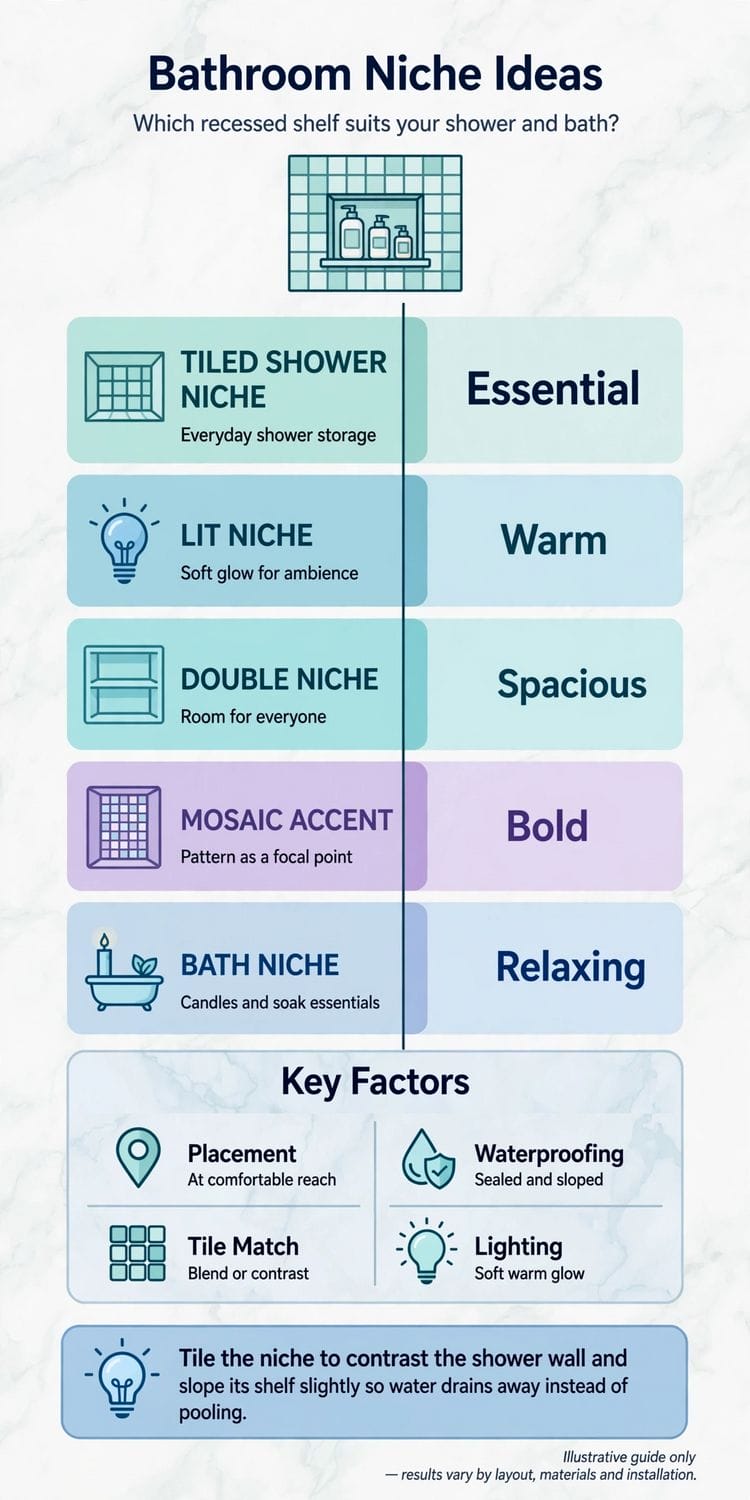
2. Planning a Niche That Works

Start with your own routine. Stand in the shower and note where your hand naturally reaches for the bottle — the niche belongs there, on the wall you face, clear of the direct spray line where it can be. In most homes the recess is framed between two studs, which fixes its width; going wider means reframing the wall, so long niches are cheapest when they run horizontally inside one stud bay pattern rather than cutting across it. Height matters as much as width: tall bottles set the minimum, and a shelf placed for the tallest thing you own saves the daily annoyance of bottles living on the floor.
Two construction details decide whether the niche ages well. The first is the base: it must slope very slightly toward the room so water runs out instead of pooling in the back corners — a dead-flat base is the single most common niche failure. The second is waterproofing: the membrane or sealed board system that lines the shower must run continuously into and through the recess, with every joint sealed, because a niche concentrates water exactly where the wall is thinnest. If lighting is wanted inside the niche, the cable route and a suitably rated fitting are planned at this stage, not drilled for afterwards.
Size the recess from the bottles, not from the tile module. Gather the tallest and widest things the niche must hold — the family shampoo, the pump bottle, the shaving gel — and let them set the height and the shelf positions before anything is framed. Then decide the edge treatment: a slim metal trim gives a crisp modern outline and protects the tile edge where bottles knock it daily, while a bullnose or mitred tile edge keeps the recess quiet and traditional. Neither is merely decoration; the edge is the part of the niche that takes the knocks, and choosing it now is cheaper than repairing it later.
3. Long, Low Shower Niches
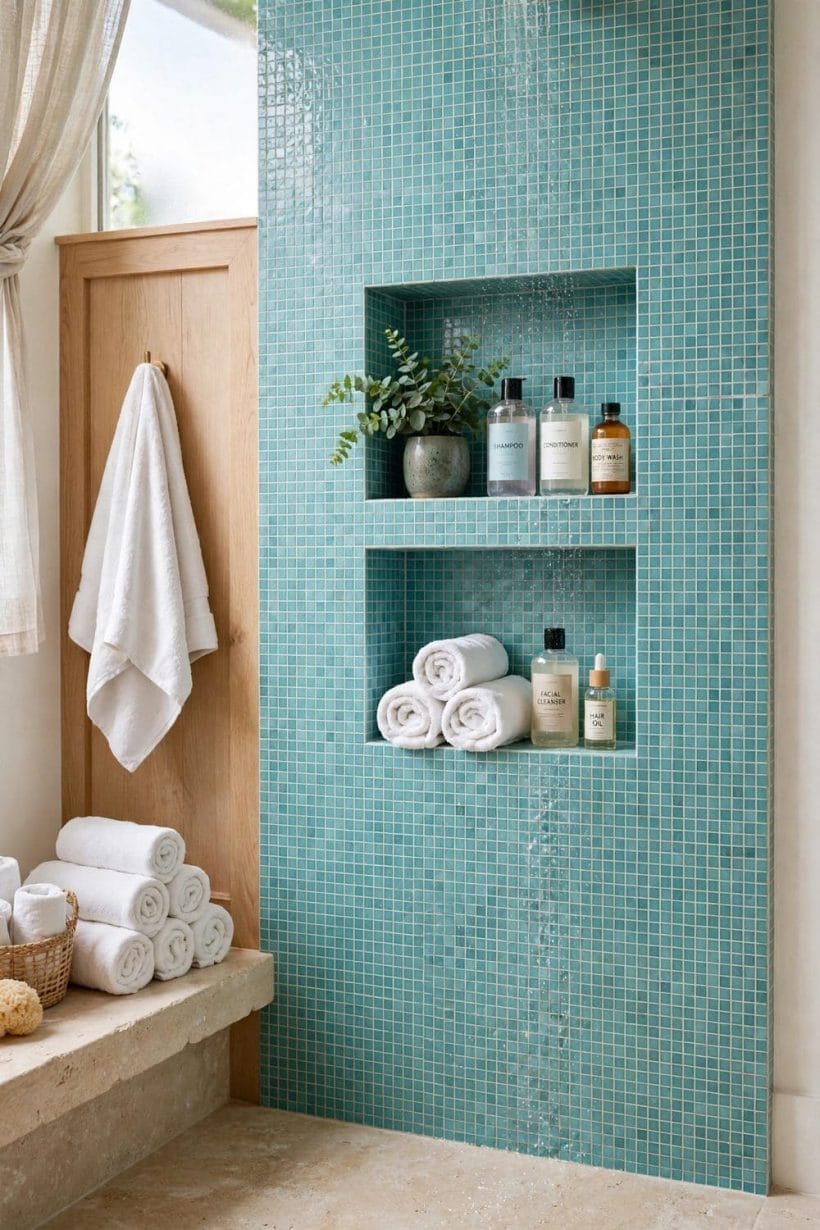
The horizontal niche is the hardest-working shape in a modern shower: one generous ledge instead of a stack of small shelves, with room for everything in a row.
1. A long low niche running the length of the shower wall
One continuous recess at hand height gives every bottle a place in a single line, so nothing hides behind anything else. It suits wide showers and reads calm and architectural, especially when the back panel repeats the wall tile and the frame edge is kept crisp.
2. A bench-height niche that doubles as a footrest
Set low on the wall opposite the shower seat, a sturdy niche shelf gives a secure place to rest a foot while shaving legs, and holds the razor and gel at the same height. The base finish needs grip and the waterproofing needs care, because this niche lives in the wettest zone of all.
3. Twin low niches, one at each end of a double shower
Two matching recesses end the territorial dispute in a shared shower: each person gets a ledge, each ledge stays uncrowded. Mirrored placement keeps the wall balanced and makes the tiling pattern simple to repeat at both ends.
4. Tall and Divided Shower Niches
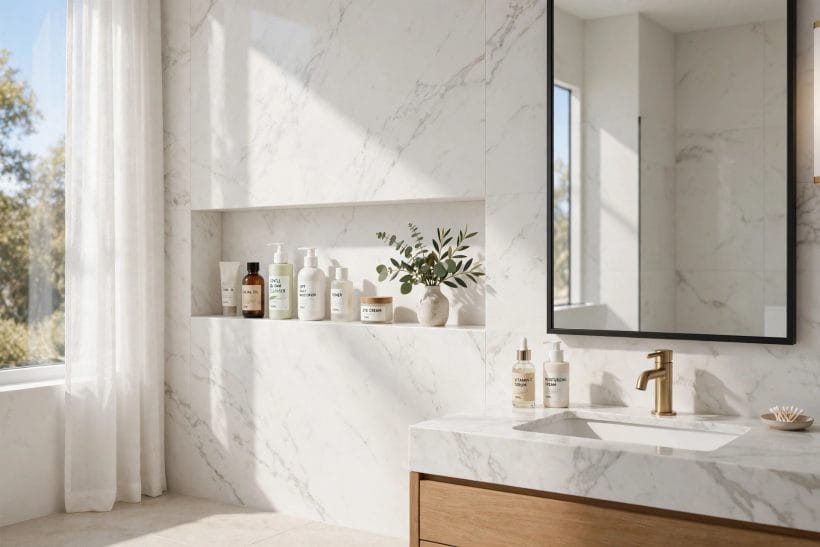
Vertical niches suit narrow walls and tall bottles, and a divided interior turns one recess into a small cabinet with distinct jobs.
4. A tall tower niche with a shelf set for tall bottles
Family-size shampoo and pump bottles defeat standard shelves. A tall recess with one high shelf swallows them upright with room to pump, and the slim vertical shape fits the narrow wall beside a shower door where a wide niche cannot go — a natural partner to the layouts in the corner shower ideas post.
5. A divided niche with a separate half for each person
A slim vertical divider turns one recess into two columns, so products stop migrating. It works for couples, for siblings sharing a family bathroom, and for anyone who keeps guest toiletries apart from their own; the divider can be the same tile, or glass for a lighter look.
6. A niche with a small high shelf for razors and soap
The small things are the ones that end up on the shower floor. A shallow upper shelf inside the main niche keeps razors, soap dishes and face cloths out of the pooling zone at the base and out of the spray, so they dry between uses instead of dissolving.
5. Niches Beside the Bath

Around the bath the niche changes job: less about daily bottles in the spray, more about an uncluttered soak and a place for the things a bather reaches for slowly.
7. A wide niche behind a freestanding bath
A broad recess in the wall behind the tub holds folded towels, bath salts and a book at arm’s length, and gives a freestanding bath the finished backdrop it often lacks. Keep anything flame-based well away from the towels, and let the styling stay sparse — the width is the luxury.
8. A low niche at hand height for bottles used in the soak
Set into the wall beside the taps, a low niche keeps bubble bath, oils and a water glass off the bath rim, where they otherwise slide in. Because splashes here are gentle rather than direct spray, this is the most forgiving niche to build and the easiest to keep clean.
9. A bath niche finished with a contrasting shelf
Lining the recess in the wall tile but cutting the shelf from a contrasting stone-look slab or a darker tile gives the niche definition and a hard, stain-resistant base where bottles stand. The contrast makes a plain white bathroom feel designed rather than merely fitted, in the same spirit as the mood-led rooms in the spa bathroom ideas collection.
6. Vanity and Mirror Niches

At the basin, the niche is a tidiness device: it clears the worktop of the daily dozen bottles and puts them in the wall, at the mirror, where they are used.
10. A shallow niche beside the mirror for everyday bottles
A slim recess at the side of the mirror holds cleanser, moisturiser and toothbrushes upright and visible, so the basin edge stays clear for washing. Shallow is right here — deep shelves hide small bottles behind each other; the check is simply that everything stands in one row, a principle the mirror over vanity ideas post applies to the mirror itself.
11. A recessed medicine niche with a mirrored door
The classic bathroom cabinet, sunk into the wall instead of sitting on it. The recess takes the depth, the mirrored door closes flat, and the room gains storage without losing a centimetre of floor or visual space — the oldest niche idea in the bathroom, and still one of the best.
12. A pair of small niches flanking a double vanity
Two modest recesses, one over each basin, keep two people’s routines apart and give a double vanity its symmetry. They pair naturally with the cabinetry in the bathroom with gray cabinets ideas post, where the storage is planned as one composition rather than added piece by piece.
7. Water-Closet and Towel Niches
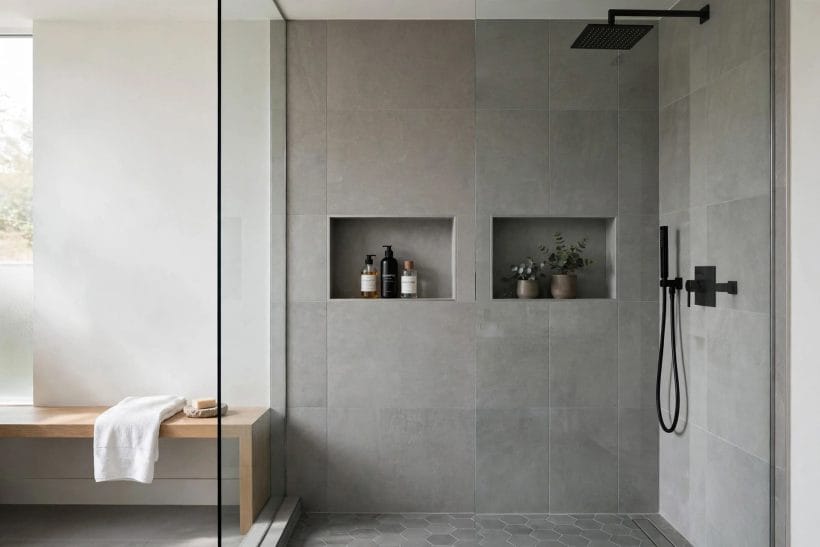
The small walls of a bathroom — above the cistern, beside the door, in the return wall of a separate toilet — are dead space until a niche gives them a job.
13. A slim niche above the cistern for spare rolls
The wall over a concealed or close-coupled cistern is usually bare. A shallow recess there stores spare rolls visibly and gracefully, holds a small plant or a scented diffuser, and turns the least-loved corner of the room into a finished one.
14. A tall wall niche for folded towels
A vertical recess lined like the room and stacked with folded towels works as open linen storage in bathrooms with no airing cupboard. Keep the towels in the dry zone away from the shower’s steam path, and the niche reads as a hotel-style display that also happens to be the towel cupboard.
Both of these small-wall niches share one rule: they belong in the room’s dry territory. A niche is an open shelf, not a sealed cupboard, so what it holds should be what steam cannot harm — cotton, ceramic, a hardy plant — and its position should be settled while the walls are open, because the studs, pipes and cables inside a bathroom wall decide where a recess can honestly go. A niche planned around those hidden facts costs little; one forced against them costs the wall.
8. Finished, Lit and Styled Niches
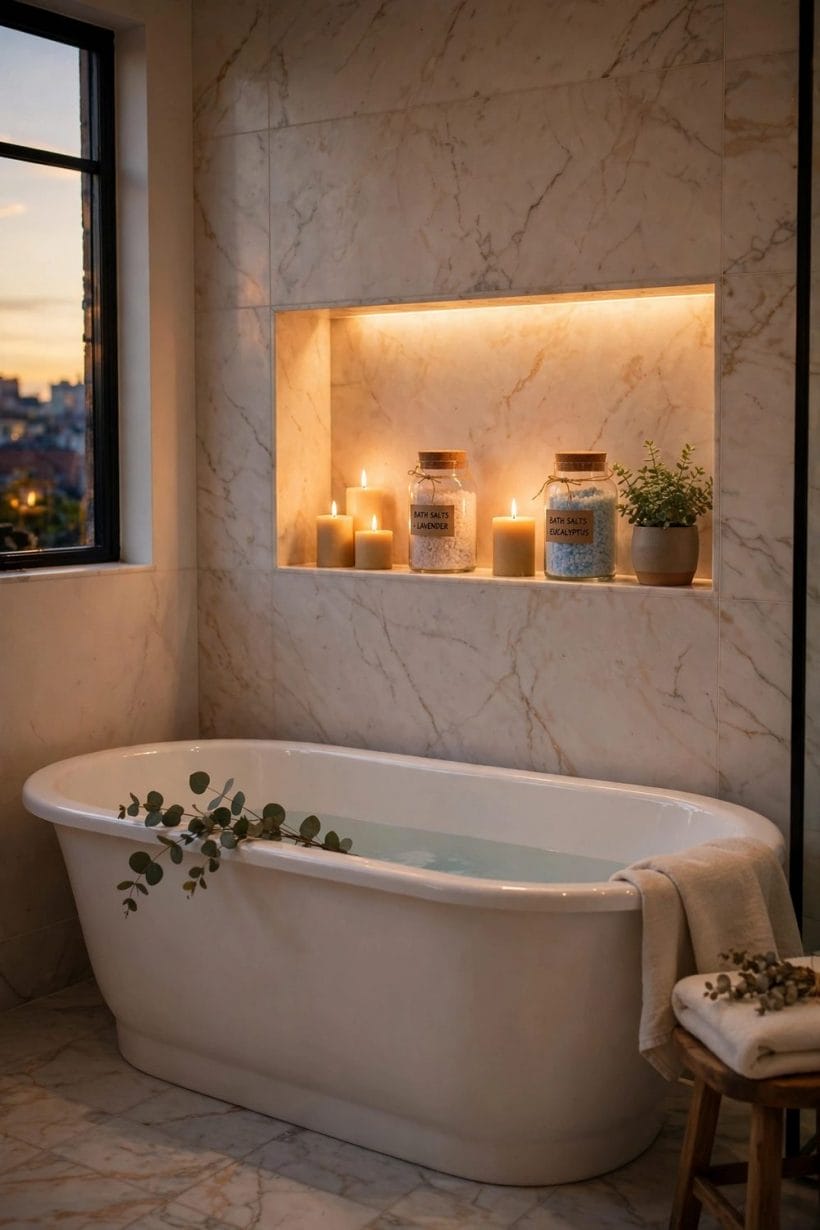
Once the shape is settled, the finish decides whether the niche looks built-in or added-on — and a little light turns storage into a feature.
15. A niche lined in a contrasting tile
Running a different tile inside the recess — a smaller mosaic, a bolder colour, a handmade-look finish — frames the niche as a deliberate picture in the wall. It is the easiest way to give a plain scheme one strong moment, and the industrial schemes in the industrial bathroom ideas post use the same contrast logic at room scale.
16. A niche with a soft light washing the back panel
A concealed strip along the top of the recess washes light down the back panel, so bottles read clearly at night and the niche glows like a display case. Use a fitting rated for wet zones, wire it with the main lighting circuit, and keep the light warm — stark white light in a shower niche feels clinical.
9. Small Bathrooms and Retrofit Niches

A niche is one of the few storage upgrades that takes no floor space at all, which makes it disproportionately valuable in a small bathroom — and it does not always need a full rebuild.
17. A stud-bay niche fitted between existing timbers
Where a wall is being re-boarded or re-tiled, a recess framed neatly between two existing studs adds storage without touching plumbing or structure. The width is set by the bays, so measure your tallest and widest bottles first and let them choose which bay becomes the niche.
18. A preformed niche insert tiled in during a re-tile
Ready-made waterproof inserts come as a sealed box that is fixed into the opened wall and tiled over, edges lapped into the wall’s own waterproofing. They shorten the fiddly part of the job — forming and sealing the recess by hand — and are the practical route when only the shower wall is being renewed.
10. Waterproofing, Cleaning and Care Checks
Every niche problem you will ever hear about is one of three: water pooling on a flat base, a failed seal at a corner, or a finish that stains. The defences are all in the build. The base slopes gently out; the corners are sealed with sanitary sealant over a properly lapped membrane, not sealant alone; and the lining materials are chosen for a wet life — porcelain and glazed ceramic shrug off toiletries, while natural stone inside a niche needs sealing and more careful cleaning, exactly as it does elsewhere in the room.
Day to day, a niche asks for little: a wipe when you clean the shower, a check that the sealant line is intact, and bottles lifted rather than dragged across the base. If a recess ever smells musty, treat it as an early warning of water getting behind the lining and have it looked at while the repair is still small. A niche built with its slope and seals right should need nothing more than that for the life of the bathroom.
The grout and sealant inside a niche work harder than anywhere else in the room, because they are wet daily and hold standing bottles. Expect the sealant at the base corners to be the first maintenance item in the whole bathroom — renewed when it lifts, cracks or blackens — and treat that as routine upkeep, not failure. Stone-lined niches want their sealer renewed on the stone’s own schedule, and metal trims want a non-abrasive cleaner so the finish survives. Keep one habit above all: never let a niche become the place where empties gather. A recess that is cleared as bottles finish stays a pleasure; a crowded one hides mould behind the back row and turns the room’s best detail into its grubbiest.
Final Considerations
A niche succeeds quietly: bottles where the hand expects them, a bath rim with nothing on it, a basin edge you can wipe in one pass. Choose the placement from your own routine, insist on the sloped base and the continuous waterproofing, and let the finish — matching, contrasting or softly lit — make the recess feel like it was always part of the wall. Eighteen ideas is plenty; the right two or three, built properly, will serve the room every single day.




0 Comments