

Victorian bathrooms pair deep baths and graceful fittings with tiles that reward a second look. The good news is that the look scales down beautifully, so even the smallest room can borrow its charm.
This collection gathers 75 ideas for a victorian bathroom that feels generous rather than cramped, from layout tricks and statement vanities to space-saving fixtures with proper period manners.
1. Victorian Style at a Glance: What Makes the Look
Victorian design is really a handful of repeatable ingredients used with confidence: a sculptural bath, furniture-like washstands, patterned or glossy tiles, fittings with crosshead handles and a rich, layered colour palette. Master those levers and you can dial the drama up or down to suit the size of your room.
| Design lever | What it brings | Small-room tip |
|---|---|---|
| The bath | A freestanding silhouette that acts as the room’s centrepiece and sets the period tone instantly. | Choose a compact roll-top or a back-to-wall shape so the drama survives in a small footprint. |
| The vanity | Furniture-style washstands and basins that feel crafted rather than fitted. | A narrow washstand keeps floor visible, which makes the whole room breathe. |
| The tiles | Glossy metro tiles, mosaics and patterned floors full of geometry and shine. | Run one tile family up the walls to simplify the scheme and stretch the space. |
| The fittings | Crosshead taps, exposed shower fittings and high-level cisterns with real presence. | Pick one metal finish and repeat it everywhere for a calm, deliberate look. |
| The colour | Deep greens, inky blues, warm creams and classic black-and-white contrasts. | Use dark colour below a picture rail and something lighter above to lift the ceiling. |
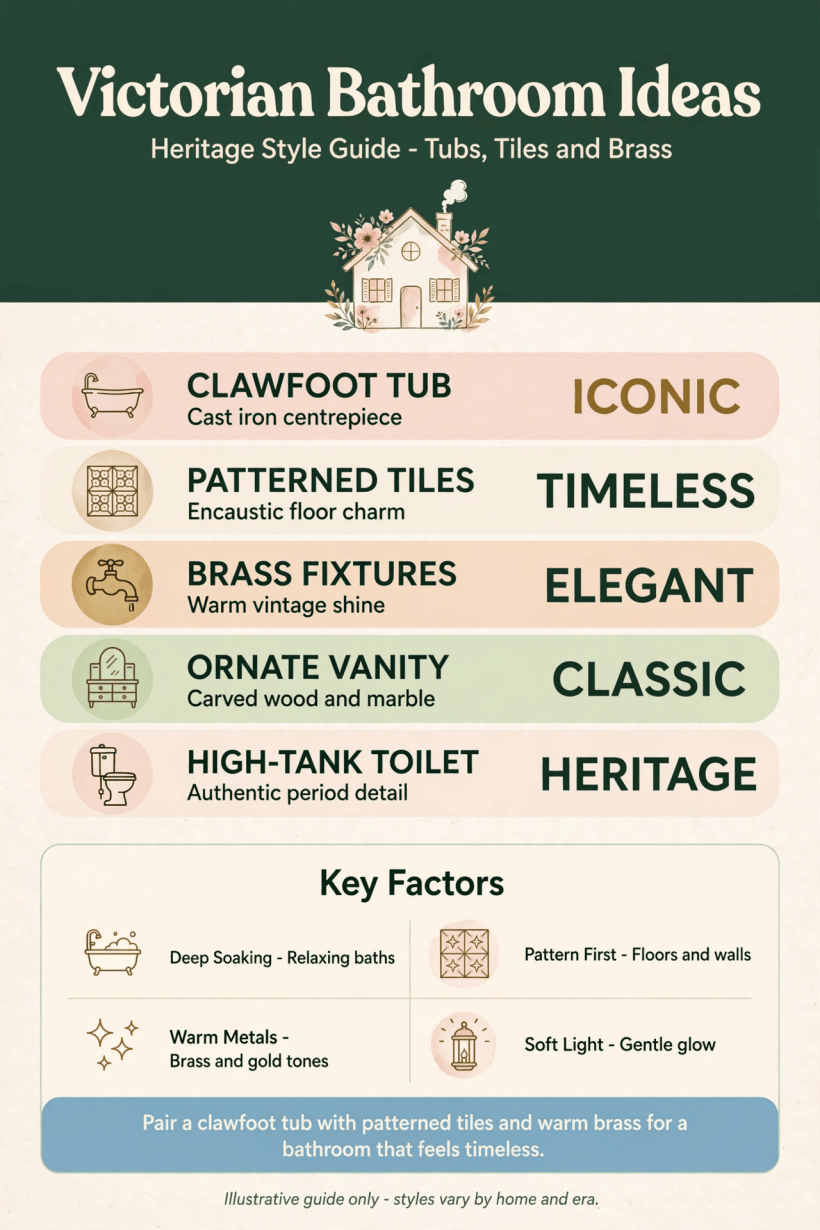
A visual summary of the baths, vanities, tiles and fittings explored in this collection.
Everything in this guide follows one rule: borrow the shapes and finishes of the period, then size them honestly for modern rooms. That same thinking runs through our guide to tiny house small-space interior design ideas, where every centimetre is planned rather than wished for.
2. Layouts That Borrow Period Charm Without Wasting Space
Layout decides whether a victorian bathroom feels like a graceful retreat or a furniture shop. Start with the bath position, because it is the largest piece, then let the basin and loo settle around it. The planning habits in our roundup of tiny house interior design ideas translate directly: keep walkways clear and let each fixture keep a little elbow room.
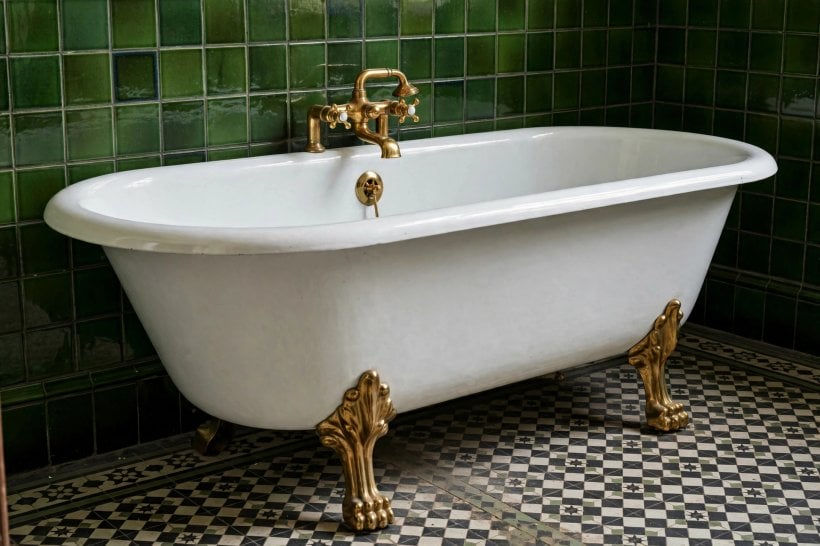
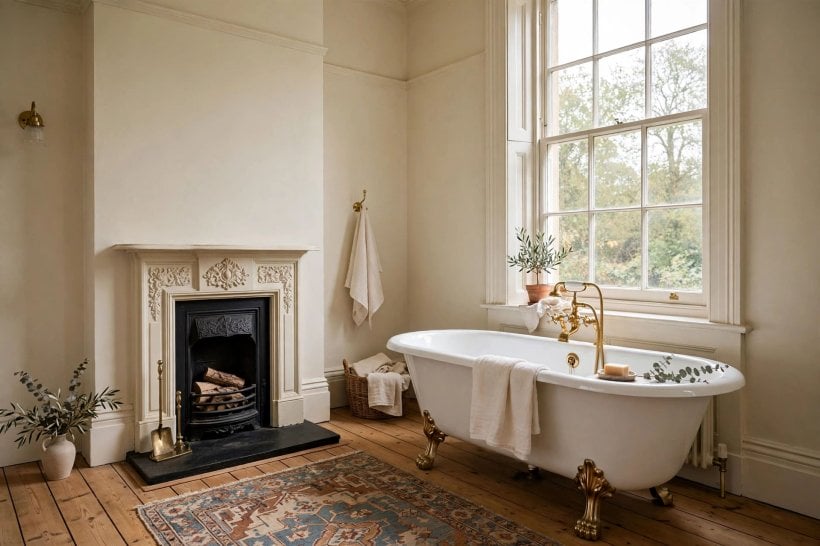
1. Bath under the window. Centring a roll-top beneath the window gives the room a classic postcard view and frees both side walls for the basin and storage.
2. Bath along the longest wall. A straight, honest arrangement suits long thin rooms and leaves a clear, uncluttered path from door to window.
3. Corner basin pairing. Tucking a pedestal basin into the corner opposite the bath balances the room visually and keeps the middle of the floor open.
4. Back-to-wall bath compromise. One flat side against the wall keeps the freestanding look while saving the cleaning gap and the extra floor a full island bath needs.
5. Wet-room end for the shower. Placing a shower at the far end behind a simple screen keeps period pieces dry and makes a small room do double duty.
6. Loo tucked behind a half wall. A low partition or a tall cabinet gives the WC a little privacy without chopping the room into dark boxes.
7. Door-swing planning first. Mark the door’s arc on the floor before choosing anything, because Victorian pieces are generous and deserve a graceful entrance.
8. Symmetrical twin basins. In a wider room, a pair of matching pedestals either side of a central bath delivers the grand hotel symmetry the style loves.
3. Freestanding Baths and Roll-Top Drama
The bath is the headline act of the whole style, so choose it with care. Feet, rim shape and the position of the taps all change the personality of the piece, and a smaller bath with beautiful proportions will always beat a big one that bullies the room.
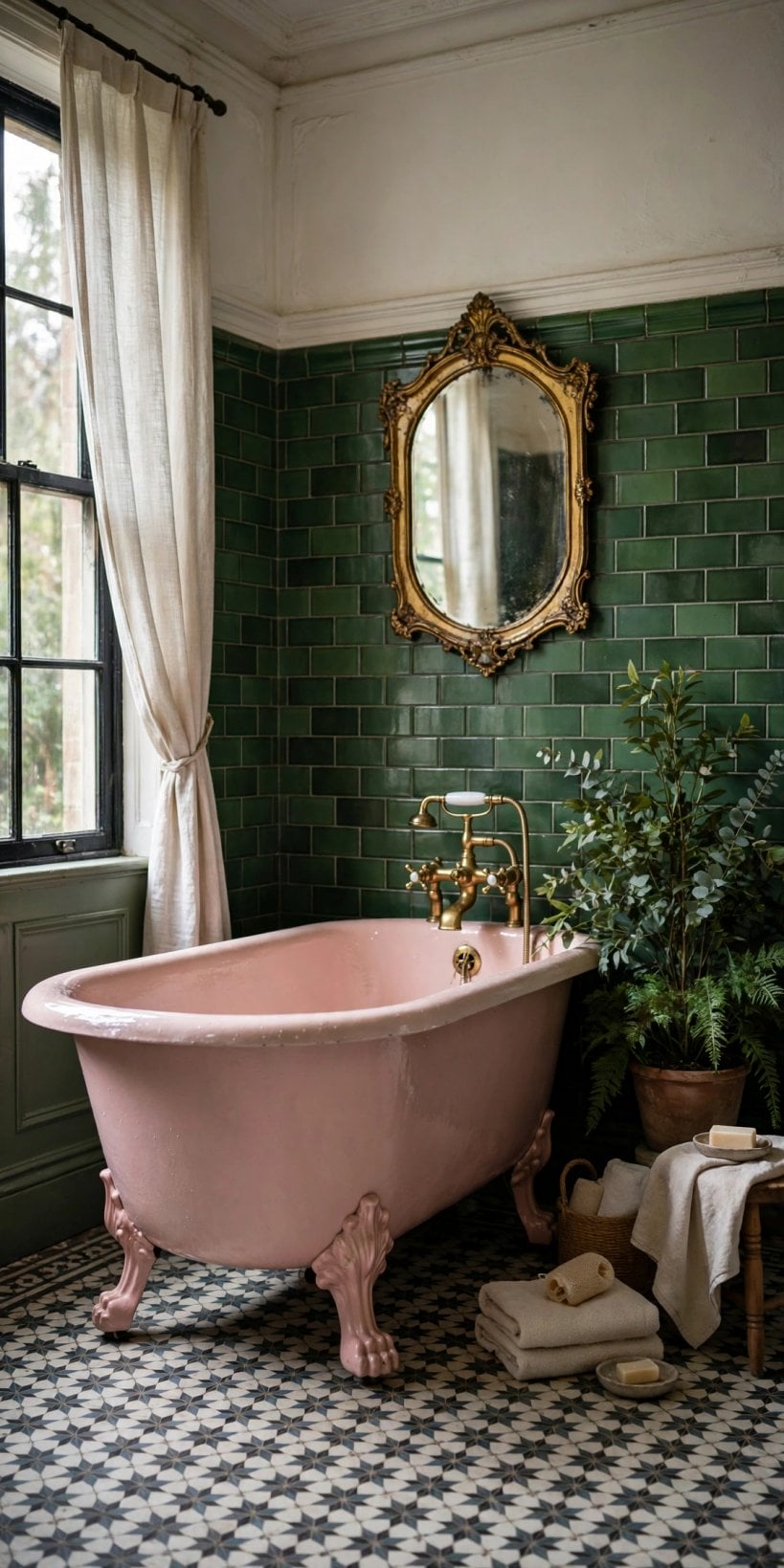
9. Classic roll-top on ball feet. The rolled rim and little claw or ball feet are pure period theatre, and they lift the body of the bath so the floor shows beneath.
10. Slipper bath for long soaks. One raised end supports shoulders beautifully and looks sculptural from the doorway, which is where most guests will admire it.
11. Double-ended symmetry. Taps in the middle mean both ends are comfortable, a practical luxury that suits shared bathrooms and looks balanced in photos.
12. Painted bath exterior. A deep green, inky blue or warm black painted shell turns the bath into the room’s colour anchor and hides scuffs gracefully.
13. Copper-look statement bath. A metallic finish brings warmth and old-world glow, especially against dark tiles and low evening lighting.
14. Compact bateau shape. The boat-like silhouette gives high, supportive sides in a shorter footprint, a kind answer for modest rooms.
15. Freestanding bath filler. A floor-standing or wall-mounted filler with a hand shower keeps the rim clean and adds a satisfying piece of visible engineering.
16. Wooden bath caddy. A simple timber tray across the rim holds a book and a cup, because Victorian bathing was always meant to be unhurried.
4. Vanities, Washstands and Statement Basins
Victorian washstands were furniture first and plumbing second, and that is exactly why they suit small bathrooms: legs and open shelves keep the floor visible, so the room feels larger than a boxed-in unit would ever allow.
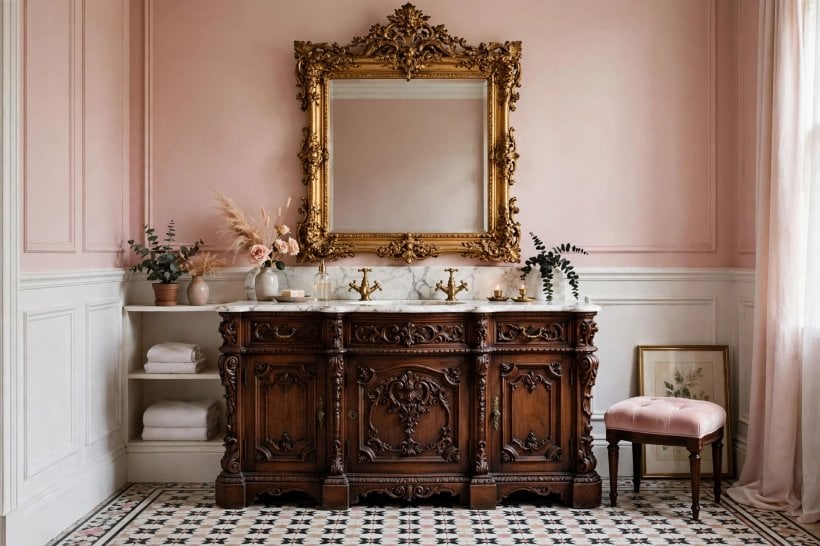
17. Marble-topped washstand. A timber stand with a pale stone top is the era’s signature pairing, and the veining makes every example feel one of a kind.
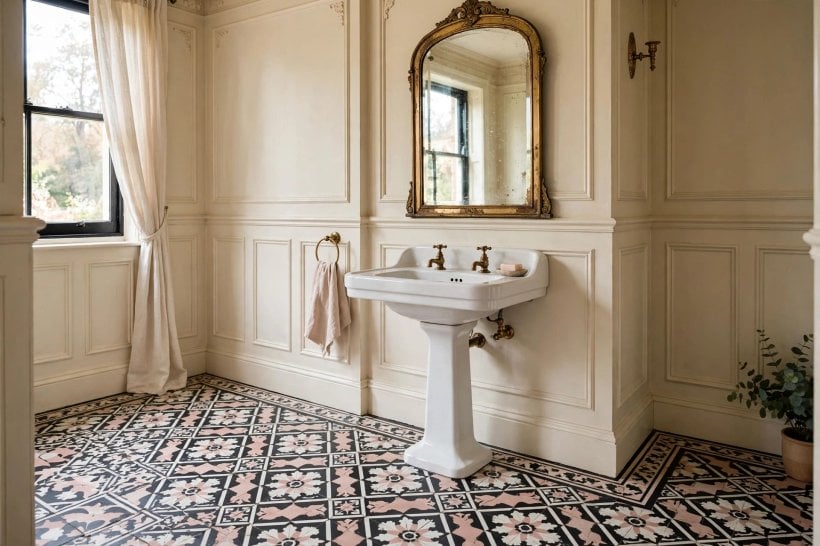
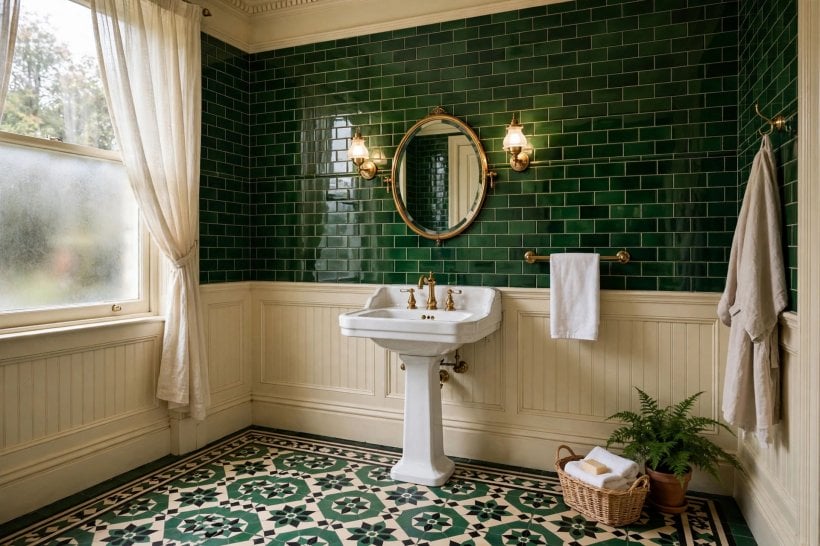
18. Pedestal basin classic. A shapely pedestal hides pipework elegantly and takes up so little floor that even a cloakroom can feel grand.
19. Console basin on metal legs. Slim legs in chrome or black give the lightness of a pedestal with a shelf-like top for daily essentials.
20. Twin taps, period style. Separate hot and cold pillar taps with crosshead or lever handles are a small detail that instantly dates the room in the right way.
21. Countertop bowl on a dresser. A simple ceramic bowl on an old chest of drawers delivers storage, surface and character in one rescued piece of furniture.
22. Wall-hung basin with a towel rail. A basin fixed to the wall with an integrated rail beneath keeps towels warm, dry and off the floor entirely.
23. Cloakroom corner basin. A neat quarter-circle basin makes the tiniest under-stairs room feel designed rather than squeezed in as an afterthought.
24. Basin with a high splashback. An upstand back protects painted walls and gives the basin the finished, architectural outline period rooms always had.
5. Tiles: Metro, Mosaic and Patterned Floors
Tiles do the decorative heavy lifting in this style. Glossy surfaces bounce light around small rooms, while patterned floors carry the ornament so walls can stay calm. If colour confidence wavers, our guide to tiny house interior paint colors shows how to build a palette of deep and pale tones that sit happily together.
25. Glossy white metro tiles. The bevelled brick tile is the style’s wallpaper, and its shine makes modest rooms feel washed in light.
26. Bottle-green metro tiles. Deep green gloss tiles bring the library mood into the bathroom and flatter brass fittings beautifully.
27. Black-and-white checkerboard floor. The most recognisable period floor of all, and it somehow makes every other colour in the room look richer.
28. Encaustic-look patterned floor. Star and floral motifs underfoot carry the whole decorative scheme, so walls and towels can stay plain.
29. Hexagon mosaic floor. Small hexagonal tiles with the odd dark flower worked in are pure Victorian geometry and wonderfully grippy underfoot.
30. Brick-bond with dark grout. Contrasting grout turns plain metro tiles into a graphic pattern and politely disguises everyday splashes between cleans.
31. Half-tiled walls with a border row. Tiling to dado height with a patterned border strip gives the period look while leaving the upper walls free for paint.
32. Herringbone splash zones. A small herringbone panel behind the basin adds craft and movement exactly where the eye lands first.
6. Showers and Space-Saving Fixtures
Victorian style and a good shower are not enemies. Exposed fittings were born in this era, and modern walk-in arrangements let you combine a generous shower with period pieces in rooms that could never fit both a bath suite and a separate cubicle.
33. Exposed riser shower. Visible pipework with a generous round head is authentically period and saves the cost and mess of chasing pipes into walls.
34. Shower over the roll-top. A ceiling-fed riser and a circular curtain rail turn the bath into a shower without surrendering an inch of floor.
35. Walk-in with a crittall-style screen. Black-framed glazing reads as industrial heritage, keeps water in and lets light travel through the whole room.
36. Corner entry enclosure. A curved or angled corner cubicle keeps the middle of a small floor clear for the bath to perform its starring role.
37. Thermostatic period valves. Modern safety inside a traditional body means crosshead handles that control temperature properly, the best of both centuries.
38. Hand shower on a slider. A small handset alongside the main head handles hair washing, bath rinsing and cleaning day without visual clutter.
39. Low-profile stone tray. A slim tray in a stone finish grounds the shower zone and keeps the step in and out easy for everyone.
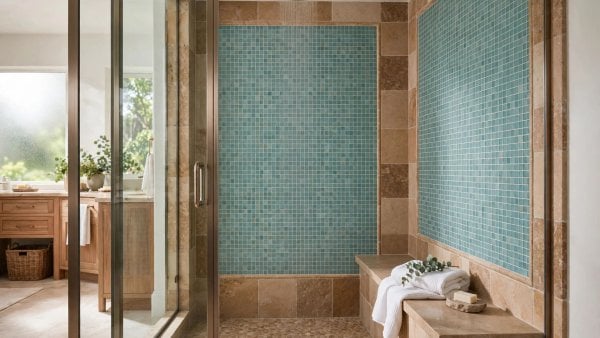
40. Tiled shower niche. A recess lined in the wall tiles keeps bottles off the floor and echoes the alcoves period houses did so well.
7. High-Tank Cisterns, Taps and Period Fittings
Fittings are where the period illusion either convinces or collapses. Choose handles, cisterns and rails with real silhouette to them, keep the metal finish consistent, and everyday objects start to look like part of the architecture. The blue and white tiny house interior shows how one disciplined palette can carry a whole home’s character.
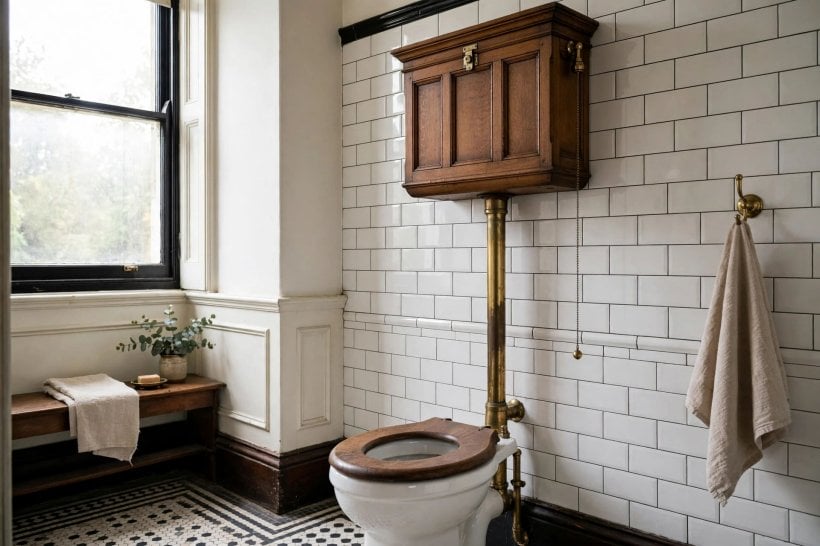
41. High-level cistern and chain. The elevated tank with a long pull is the era’s most theatrical fixture and frees the wall behind the loo for art or shelves.
42. Low-level cistern with a character pipe. A shorter exposed flush pipe keeps the traditional outline in rooms where ceiling height is precious.
43. Crosshead taps everywhere. Repeating the same crosshead handle on basin, bath and shower ties the room together more than any colour can.
44. Porcelain lever handles. White ceramic levers with little lettering details feel authentic and are easy to use with soapy hands.
45. Bridge mixer on the bath. Two pillars joined by a graceful bridge put the mixer at centre stage on a double-ended bath.
46. Traditional heated towel rail. A floor-and-wall rail in chrome or nickel warms the room, dries towels and looks like it has always been there.
47. Exposed bottle trap. A handsome metal trap under a pedestal basin turns necessary plumbing into a deliberate detail rather than an apology.
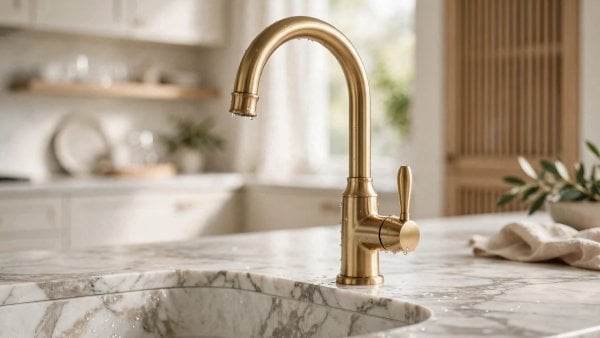
48. One metal finish, no exceptions. Chrome, nickel, brass or black — pick one and repeat it on every fitting, handle and hinge for instant coherence.
8. Colour, Panelling and Decorative Walls
Victorian rooms were not shy of colour, and walls are the cheapest place to recover that confidence. Deep paint below a rail, patterned paper above it or simple timber panelling all give the fixtures a worthy backdrop without touching the plumbing.
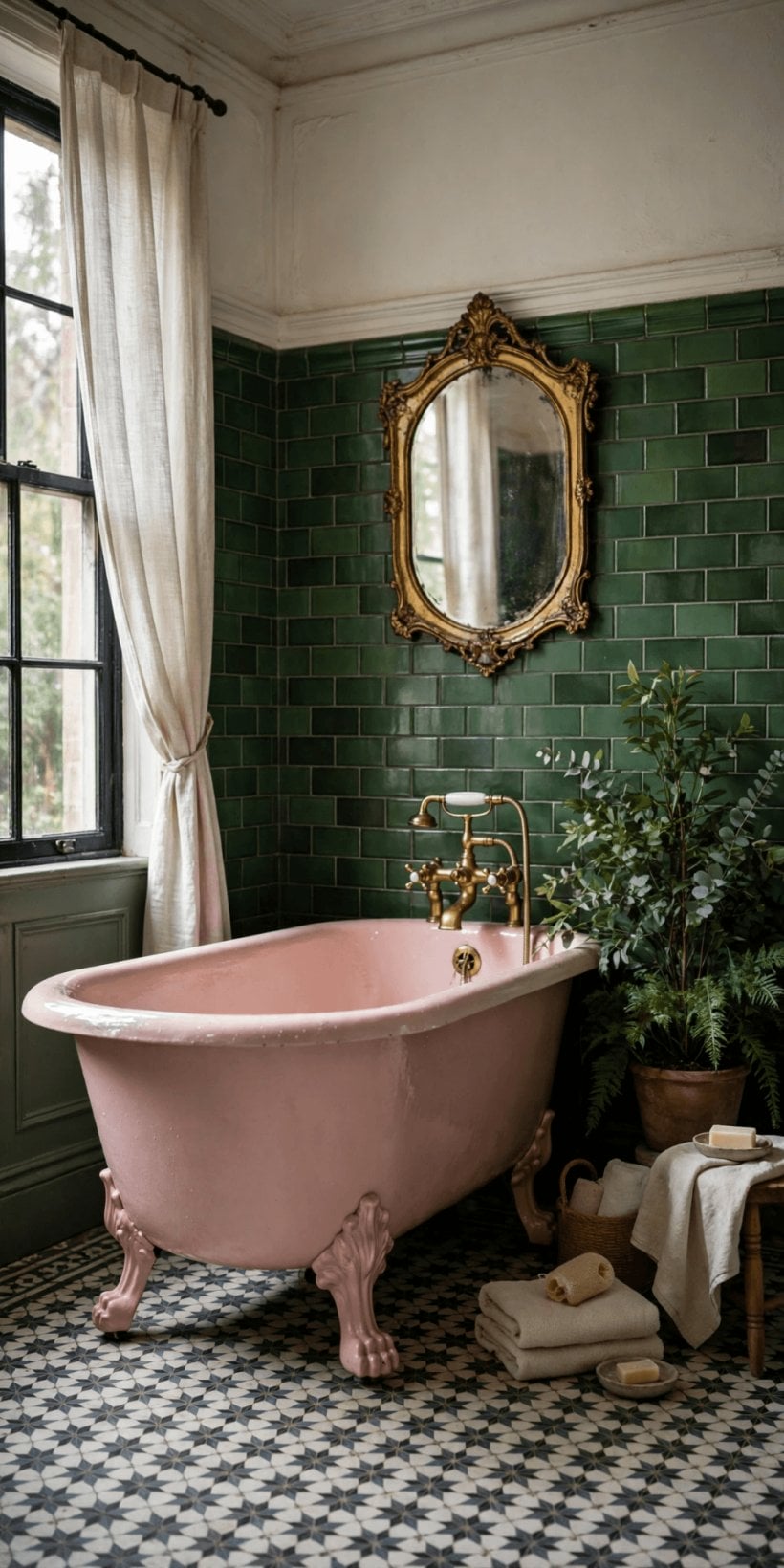
49. Deep green walls. A rich green above white tiles is the era’s signature combination and flatters warm metals and pale ceramics alike.
50. Inky blue drama. Dark blue makes chrome sparkle and white sanitaryware glow, and in a small room it feels cocooning rather than cold.
51. Warm cream timelessness. Soft cream walls keep things light while still feeling historical, especially beside black floor tiles and timber.
52. Tongue-and-groove panelling. Painted timber boards to dado height add architecture, hide tired plaster and shrug off splashes happily.
53. Picture rail colour split. Dark below the rail and pale above it lifts the ceiling while keeping the moody colour where it shows best.
54. Patterned wallpaper above tiles. A botanical or damask paper in the dry zone only brings true period exuberance without risking the splash zones.
55. Black skirting and architrave. Dark woodwork outlines the room like ink on a drawing and makes pale walls look deliberately chosen.
56. Ceiling in a tint, not white. A whisper of the wall colour on the ceiling wraps the room gently and suits low Victorian ceiling heights.
9. Mirrors, Lighting and Finishing Flourishes
The last layer is jewellery: mirrors that bounce the light, lamps with shades instead of bare bulbs and small objects that make the room feel collected over time. Borrow the layering instinct from our collection of tiny house living room ideas, where lighting at several heights makes compact rooms feel generous.
57. Arched pivot mirror. A tilting arch mirror above the basin is practical for all heights and unmistakably period in outline.
58. Gilt-framed statement mirror. One ornate frame does the decorative work of a whole shelf of ornaments and throws warm reflections around the room.
59. Twin wall lights. A lamp either side of the mirror lights faces kindly and gives the vanity wall a composed, symmetrical finish.
60. Opal glass shades. Milky shades soften the light in the flattering way gaslight once did, without a single flame involved.
61. A small stool or bath chair. Somewhere to sit, stack towels or rest clothes is the quiet luxury every period bathroom photograph quietly includes.
62. Framed prints and botanical art. Slim frames on the dry walls add the collected-over-time feeling that new rooms often lack.
63. Glass jars and ceramic pots. Cotton wool in a glass jar and soap in a ceramic dish turn storage into display the Victorian way.
64. A plant that loves steam. A fern on the windowsill or a trailing plant on a high shelf softens all that ceramic and chrome beautifully.
10. Small Victorian Bathrooms: Cloakrooms, Ensuites and Tiny Homes
The style’s final trick is how well it shrinks. Period fixtures were designed for modest rooms in the first place, so a cloakroom or tiny-home bathroom can carry the look with very few pieces, as households in tiny house communities in Dallas and other compact homes keep proving.
65. Cloakroom with a tiny pedestal. One shapely little basin, a mirror and patterned floor tiles make an under-stairs room feel like a jewel box.
66. Ensuite with a compact bateau. A short, high-sided bath delivers the full soak in a footprint many showers would envy.
67. Corner WC and basin pairing. Angled fixtures turn an awkward corner into a complete, working cloakroom corner suite.
68. Sliding or pocket door. Removing the door swing returns precious floor to the fixtures, which matters more in small rooms than anywhere.
69. Wall-hung everything. A floating basin and a wall-hung loo show maximum floor, which the eye reads as maximum space.
70. One hero piece only. In the smallest rooms, spend the drama budget on a single star — the bath or the floor — and keep the rest quiet.
71. Tall narrow storage tower. A slim cabinet in a painted period colour swallows towels and bottles without touching the floor plan.
72. Mirror the whole splashback. A full-width mirror behind the basin doubles light and view, the oldest small-room magic there is.
73. Continuous floor, no thresholds. Running one patterned floor through the whole room stretches it visually in every direction at once.
74. Radiator rail instead of a radiator. A traditional column-style rail heats the room and the towels while taking the wall space of neither.
75. Keep the palette to three colours. One dark, one light and one metal is all a small period room needs to feel rich instead of busy.
Final Considerations
Victorian style rewards commitment to a few good decisions: one beautiful bath or floor, one metal finish, one confident colour story. Everything else is editing. Measure honestly, choose pieces sized for the room you actually have and check local guidance before moving plumbing or electrics. If compact living is your wider theme, the households in our overview of tiny house communities in Connecticut show how much character small bathrooms can hold. Start with the piece you will love using every day, and let the rest of the room gather around it.

0 Comments