
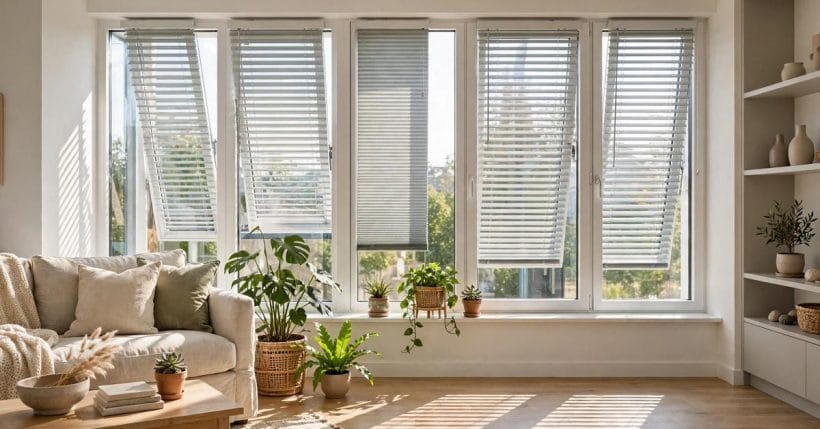
Some windows arrive with their shading already inside them. Instead of a blind hanging in the room — gathering dust, swinging when a door opens, trailing a cord — the slats sit sealed between the panes of glass, and the window looks finished from the day it is fitted. It is a tidy idea, and it asks a few honest questions in return.
This guide works through those questions in a balanced way: what windows with blinds between the glass are like to clean, to live with and to repair, how the sealed unit is built, and what to check before you buy. Construction, controls and warranty cover are described in general terms only — the checks below hold wherever you shop.

1. Windows With Built-In Blinds at a Glance
The idea is simple: a slim blind is fitted inside a sealed glazed unit, between two panes of glass, for the life of that unit. You adjust it from the room side, but never touch the slats. The wider family of window blinds ideas covers blinds that hang in the room; this post is only about the kind that live inside the glass.
| Family | Character | What it means |
|---|---|---|
| Cleaning | Easy | Blinds sealed inside glass |
| Dust & Allergens | Low | Protected from room dust |
| Light Control | Flexible | Tilt to adjust brightness |
| Repairs | Harder | Sealed unit service needed |
| Upfront Cost | Higher | More than standard windows |

Four further factors sit behind the table. Privacy is easy to adjust, because a small movement of the control tips the slats from open to screened. Child safety is helped by the absence of loose cords. The style range is more limited than the market for separate blinds, since the blind is chosen with the window. And the energy feel is of a sealed, snug unit — glass, blind and frame working as one.
None of those rows settles the question alone. A household that dreads dusting may weigh the first rows heavily; one that likes to change its window dressing may weigh the style row just as heavily. The sections that follow take each consideration in turn.
2. How the Sealed Unit Is Put Together
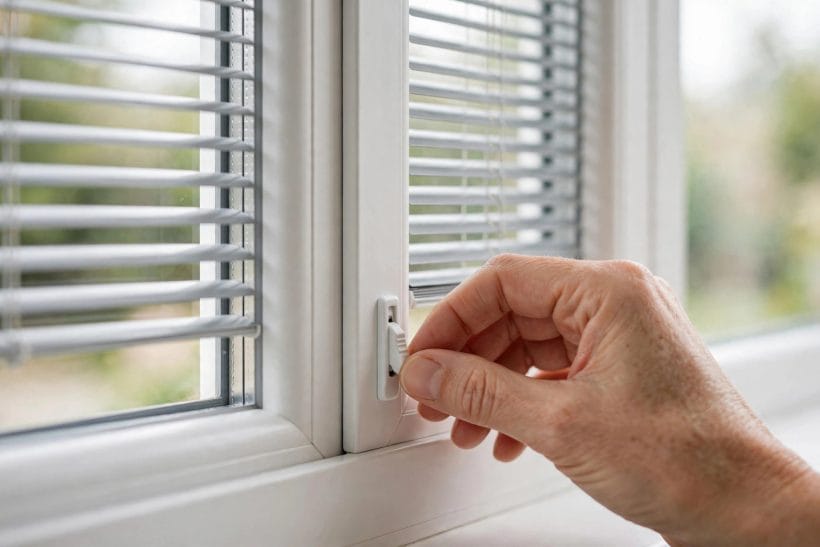
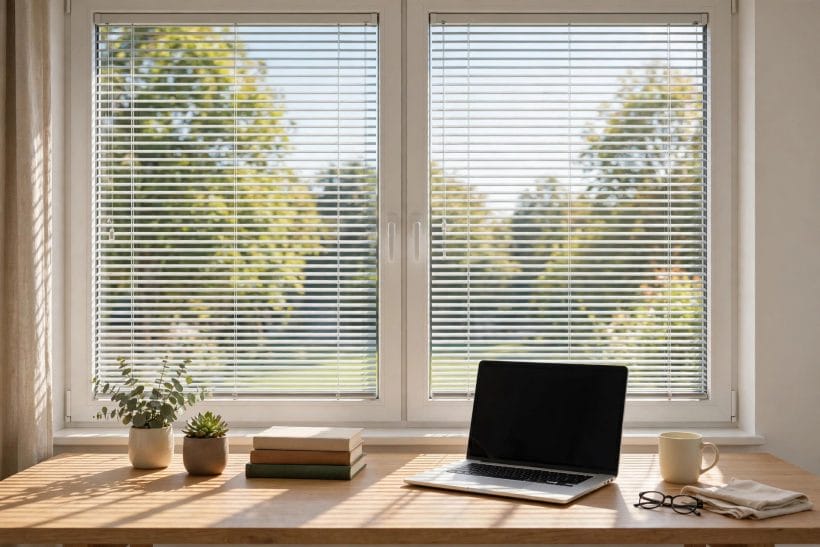
Almost everything about these windows follows from one decision: the blind is built into the glazed unit while it is being made, not added afterwards. The photograph shows how little of that is visible day to day — just slats, glass and a small control at the frame’s edge.
Two Panes and the Space Between
A sealed unit is two panes of glass held apart around their edges, with the gap between them closed and sealed. In a built-in-blind unit the blind occupies that gap: slats, ladder cords and the moving mechanism all live in the space that would otherwise be empty, protected on both sides by glass.
The Spacer and the Seal
The frame holding the panes apart is often called a spacer, and the seal around the unit’s edge keeps its inside separate from the room and the weather. That separation keeps room dust off the slats — and it is also why the unit is never opened at home, a theme section 6 returns to.
Controls in General Terms
The blind still needs instructions from the room, and makers answer in a few general ways: a small slider travelling along the frame, a dial or knob that turns the slats, or a motorised arrangement worked by switch or remote. The link between control and blind passes through the frame without breaking the seal, which is why the control’s feel matters so much.
3. The Case For: Cleaning and Dust
Ask owners what first drew them to the design and cleaning is usually the opening answer. An ordinary blind is a dust shelf arranged vertically, cleaned slat by slat. A blind sealed inside glass removes that chore almost entirely.

Glass to Wipe, Not Slats to Dust
With the blind inside the unit, the surfaces you clean are the faces of glass, wiped in the ordinary way you would clean any window. The slats stay as they were when the unit was sealed, untouched by cooking fumes or the film that settles on everything a room contains.
Protected from Room Dust
Because the unit is sealed, household dust cannot reach the blind, which is why the table records dust and allergens as low. For a household that notices dust — on a dark slat, in a shaft of sunlight — a shading layer that never collects it is a genuine change in upkeep.
Kitchens, Bathrooms and Busy Rooms
The cleaning case is strongest where ordinary blinds suffer most: kitchens, where slats pick up grease; bathrooms, where they meet steam daily; and busy family rooms, where small hands and passing pets bend what hangs within reach. A sealed blind meets none of that directly. The glass still needs its wipe, but glass forgives in a way thin slats do not.
4. The Case For: Safety, Privacy and a Tidy Look
The second half of the case is about the room. A window with nothing hanging in front of it behaves differently — visually, and in the daily negotiations over light and privacy — from one dressed with a separate blind, and for many households that is the real reason for choosing the design.
No Loose Cords in the Room
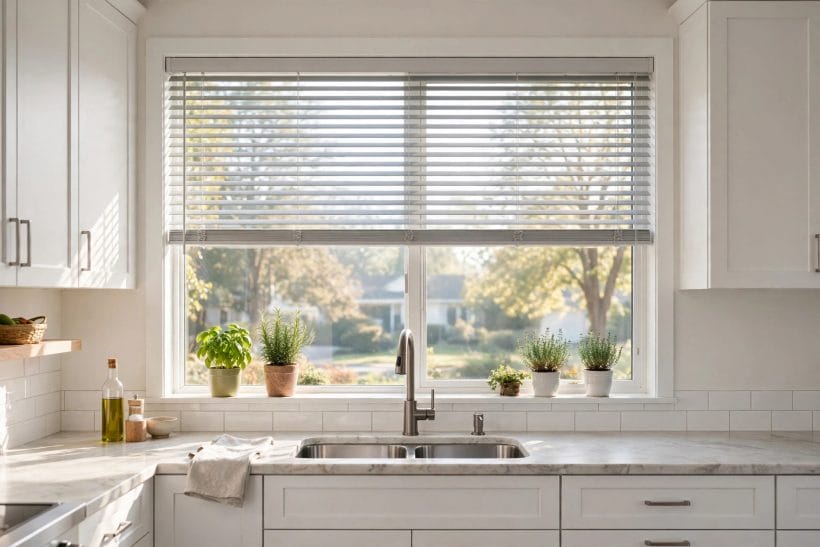
A blind inside the glass has no cord hanging in the room — no loop to tidy, catch or keep out of a child’s reach. The slats are moved by the frame-side control, so the room side stays clear. Households with young children or lively pets often put this point near the top of their list.
Privacy at a Small Movement
Tilting the slats changes a room’s privacy in seconds: open for daylight, angled against a passer-by’s glance, closed for the evening. Because the blind fills the glazed area exactly, there are no gaps at the sides and no billowing when a window stands open. The tiny house curtain ideas next door show the softer alternative; the built-in blind is the neater one.
A Tidy, Uncluttered Sill Line
Nothing hangs, pools or stacks at the window, so sills stay usable for plants and books, and the window reads as a single finished object. In small rooms that quiet counts double: no blind housing, cord or wand competes with the furniture beneath it.
5. The Honest Drawbacks
A balanced guide owes you the other side in the same plain terms. None of the drawbacks below is hidden — most follow from the construction in section 2 — but they land differently depending on how you live, and weighing them in advance prevents surprises later.
A Higher Upfront Cost
The table’s plainest row is the cost one: a window with a blind built into its sealed unit costs more upfront than a comparable standard window, because glass, blind and mechanism are bought together as one manufactured piece. Whether that sits comfortably in a project depends on the budget as a whole, and on what separate blinds would have involved.
A More Limited Style Range
A separate blind can be any colour, fabric or pattern the market offers, and can change when the room changes. A built-in blind is chosen from the range its maker offers for that unit — typically a restrained set of slat colours and finishes — and stays with the window. If you redecorate around your window dressing, that permanence is a real limitation.
Sizes and Shapes Come from a Range
Because the blind must be built into the unit, sizes and shapes come from what can be manufactured as a sealed unit with a working blind inside it. Unusual shapes or very wide spans may narrow the choice for a particular window. Checking your exact openings against the available range — in the window materials guide‘s spirit of matching window to opening — is an early job, not a last-minute one.
6. Repairs and What Happens When Something Fails
Every window covering eventually meets a failure: a blind that will not tilt, slats hanging unevenly, a control that no longer answers. With a separate blind, that is an inconvenience with a ladder. With a blind sealed inside a unit, it is a service matter — and knowing it in advance is part of buying with your eyes open.

Sealed-Unit Service by Professionals
The blind lives inside a sealed unit, so any fault within it belongs to professional service, not home repair. In general terms, the route runs through the supplier or installer who provided the window, and the usual outcome is work on the sealed unit itself. That is the trade the design makes: protected day to day, but not open to your toolbox.
No DIY Opening of Units
It is worth stating plainly: do not try to open a sealed unit. Breaking the seal destroys the thing that keeps the blind clean, and it will not give you useful access anyway. The checks you can make are at the room side — the control, its travel, anything the supplier’s care notes describe — and the rest is a phone call.
Asking About Failure Before It Happens
The time to learn a supplier’s service route is at the showroom, not on the morning a blind sticks. Ask who you would contact, whether service covers the mechanism as well as the glass, and what order details to keep. File the answers with the house paperwork.
7. Construction Checks
So much for the idea; this section is about the physical object in front of you. Construction quality decides how these windows feel after years of daily tilting, and most of what matters can be checked with eyes and hands when you see a full-size unit in person.
Seal Quality and Clean Glass
Look along the unit’s edges and across its faces in good light. The seal line should read neat and continuous, and the glass clean inside as well as out — anything sealed inside is there for good. The tiny house window condensation discussion is a useful companion: it explains, in general terms, why moisture belongs outside a sealed unit.
Glazing and Frame Fit
The glazed unit sits in a frame, and the fit should look and feel exact: even lines where glass meets frame, no rattling movement when gently pressed, opening sashes sitting square. Frame material is its own large subject, treated in the window materials guide linked in section 5; here, judge the sample’s fit and finish as a sign of the making.
The Tilt Action, in Person
Work the blind yourself, through its full range, more than once. The slats should answer evenly across the whole glazed area, tilting together rather than in patches. Try the control at the height the window will actually sit. A control that feels awkward in a showroom will feel awkward every morning for years.
8. Controls and Daily Use
A built-in blind is operated often — morning light, midday glare, evening privacy — so its control is the part of the window you will touch most. Daily use differs between the general control types, and the right match depends on whose hands, and how many windows, are involved.
Sliders and Dials
A slider worked along the frame suits a window you stand beside: one smooth travel tilts or moves the blind, and the hand learns it in a day. A dial or knob gives a slower, finer adjustment of the slat angle, which some people prefer where light is being tuned. Either way, the check from section 7 applies — smooth, even, comfortable under your fingers.
Motorised Arrangements
Motorised versions move the blind by switch or remote, which comes into its own on high windows, wide glazed doors or rooms where several units are adjusted together. They add questions of their own — how the motor is powered, what happens if the power fails, who services the motor side — for the same showroom conversation as section 10’s warranty questions.
One Routine for the Whole Room
Whatever the control type, consistency helps: the same action on every window quickly becomes habit, while a mixture of types keeps catching people out. Picture the room’s whole set being opened each morning and closed each night, including the window above the desk in the photograph. For rooms opening to the garden, the porch sunroom window guide shows how much traffic glazed walls can carry.
9. Sizes, Shapes and Doors
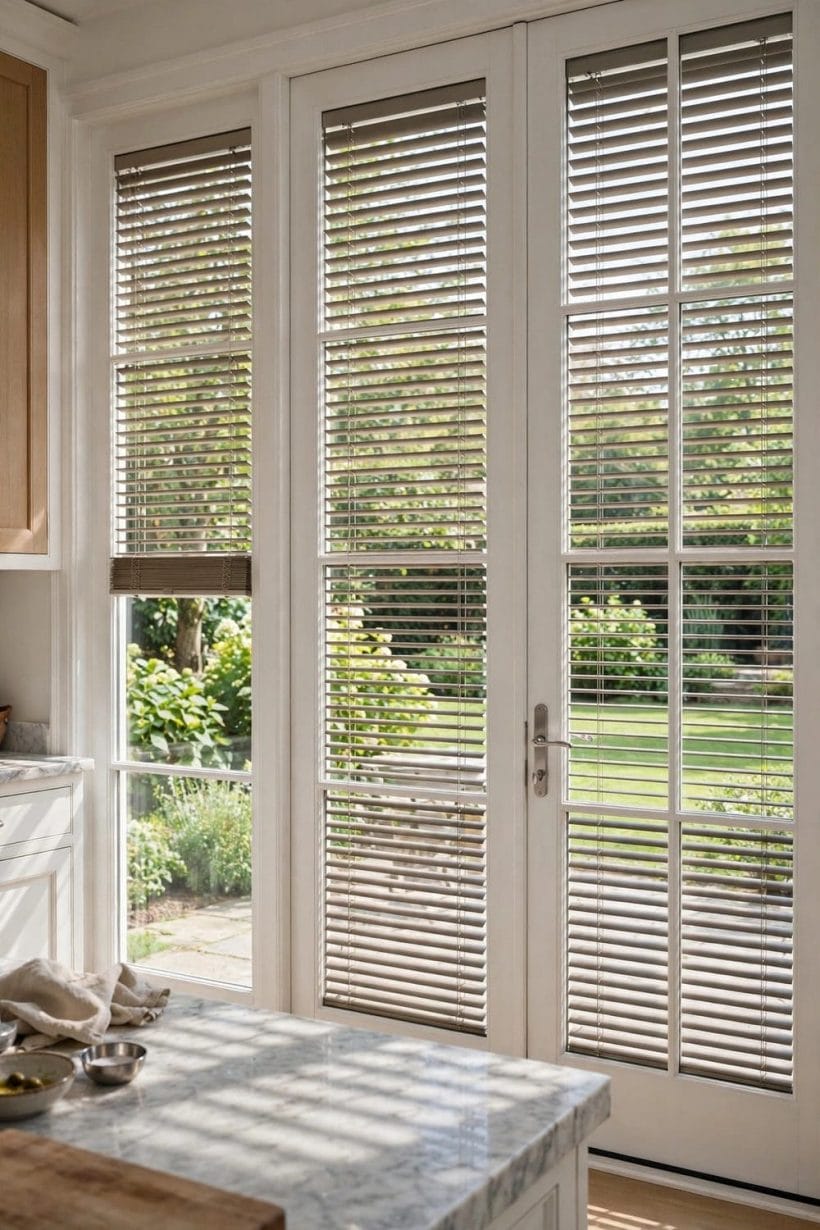
Built-in blinds are not only for straightforward rectangular windows. The same sealed-unit idea is offered, in general terms, across a range of glazed openings — but the range has edges, and this section walks around them.
Everyday Windows First
The common run of house windows — the sizes filling most walls — is where the choice is widest, in frame styles, slat colours and control types alike. If your project is a straightforward replacement of standard windows, expect the fewest compromises here, and spend your checking effort on construction and controls rather than availability.
Wider Spans and Shaped Units
As openings grow wider or leave the rectangle behind — arches, angles, picture windows — a blind that must travel evenly inside a sealed unit becomes harder to build, and availability thins. Bring your drawings to the conversation early, and let the maker’s range tell you what a shaped unit can do. High-level windows such as those in the clerestory window tiny house layouts raise the same availability question in miniature.
Door Panels with Integral Blinds
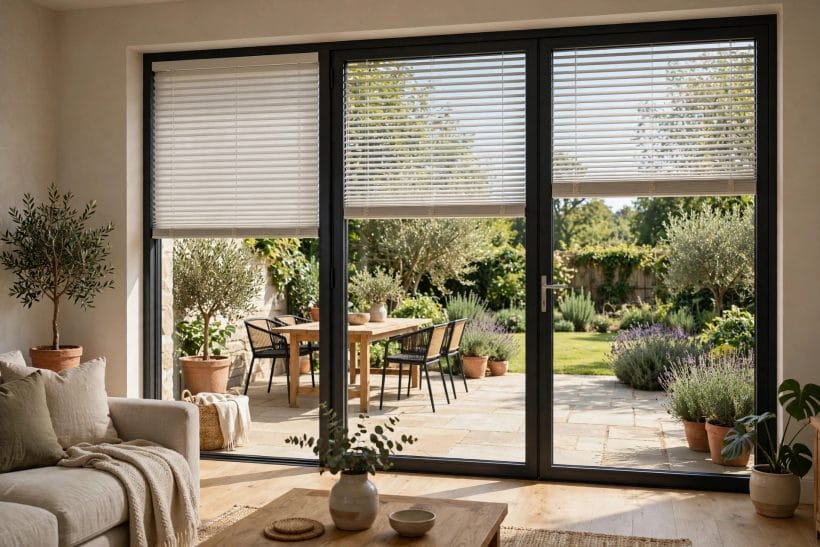
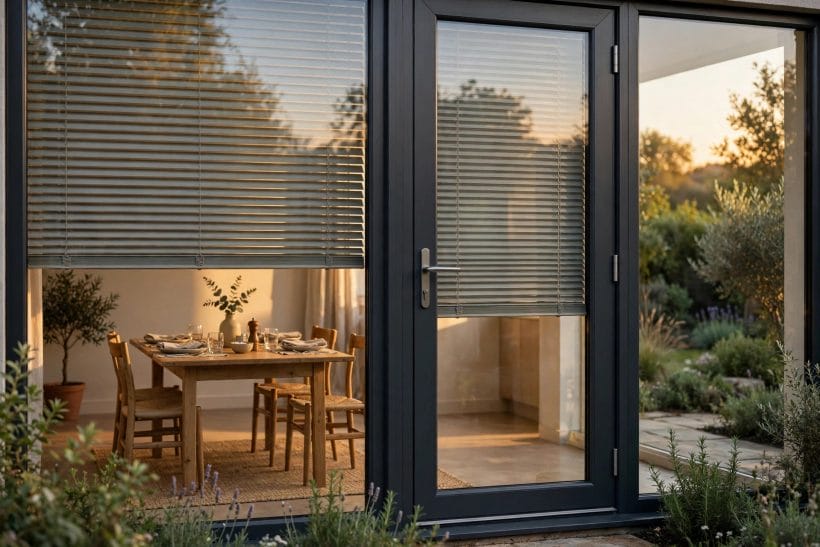
Glazed doors are a natural home for the idea: a blind inside a door panel cannot swing, snag or be caught by the door’s movement, and it gives a garden door privacy without anything hanging in its path. The photograph shows the arrangement. Check a door sample’s control position with the door open and closed.
10. Warranty Checks and Questions to Ask
The last checks are paperwork, and they matter because a built-in blind joins two things often covered separately: a sealed glazed unit and a moving mechanism. Your job is to read, in general terms, what the maker and supplier say about each — before the order.
Read the Sealed-Unit Cover
Ask what the sealed unit’s cover includes, how long it runs, and what would count as a fault in the unit as opposed to wear around it. Note who stands behind the cover — maker, supplier or installer — since that is who you would contact. Write down the route and the conditions.
Read the Mechanism Cover Separately
Then ask the same questions about the blind and its control, as their own subject. Is the mechanism covered on the same terms as the unit, or different ones? Does a motorised arrangement carry its own cover again? Makers organise these things differently — the check is that you have heard your particular supplier’s answer, in writing.
Questions to Ask Before You Order
Bring a short list and leave with it answered: who services a blind fault, and through what route; what the cover on unit and mechanism each includes; which parts of daily care are yours; and what records to keep. Set beside the alternative — separate windows and blinds, where a shading question might instead lead to the thermal curtain calculator — these are simply the built-in design’s version of due care.
Final Considerations
Windows with built-in blinds trade one set of qualities for another, openly: cleaning that shrinks to a wipe of glass, no cords in the room and a tidy look, set against a higher upfront cost, a narrower choice of styles and sizes, and repairs that belong to professionals. Neither side cancels the other. Check the construction in person, work the controls yourself, read the cover for unit and mechanism separately, and let those findings, rather than any general verdict, decide whether the design suits your windows.



0 Comments