

Small homes live or die by their first impression. The right siding colour and profile can stretch a compact facade, sharpen its lines and make the whole place feel cared for long before a visitor reaches the front door.
This collection gathers 75 vinyl siding ideas for small homes, from gentle neutrals to bold two-tone schemes, with trim tricks, porch details and easy upkeep notes along the way.
1. Siding Choices for Small Homes at a Glance
Before the ideas themselves, here is the whole game on one screen. Small facades reward simple decisions: one main colour, one clear profile direction and trim that quietly frames everything. Use this table to set your direction, then borrow the details from the sections that follow.
| Design lever | What it does | Small-home tip |
|---|---|---|
| Colour | Sets the mood and changes how large the house appears from the street. | Light colours stretch a facade, while one deep colour can make a tiny home feel jewel-like. |
| Profile | The shape and direction of the boards, from classic lap to vertical batten styles. | Keep one main profile and use a second only as an accent on gables or porches. |
| Trim | Frames windows, corners and rooflines so the eye reads the house as finished. | Slightly wider trim than standard gives small homes a sturdier, more generous look. |
| Accents | Shakes, scallops and panels that add texture in small, controlled doses. | Save textured accents for the gable or entry so the main walls stay calm. |
| Upkeep | Seasonal washing and inspections that keep colours true and joints tight. | Vinyl asks for little: a gentle wash and a yearly once-over is usually plenty. |
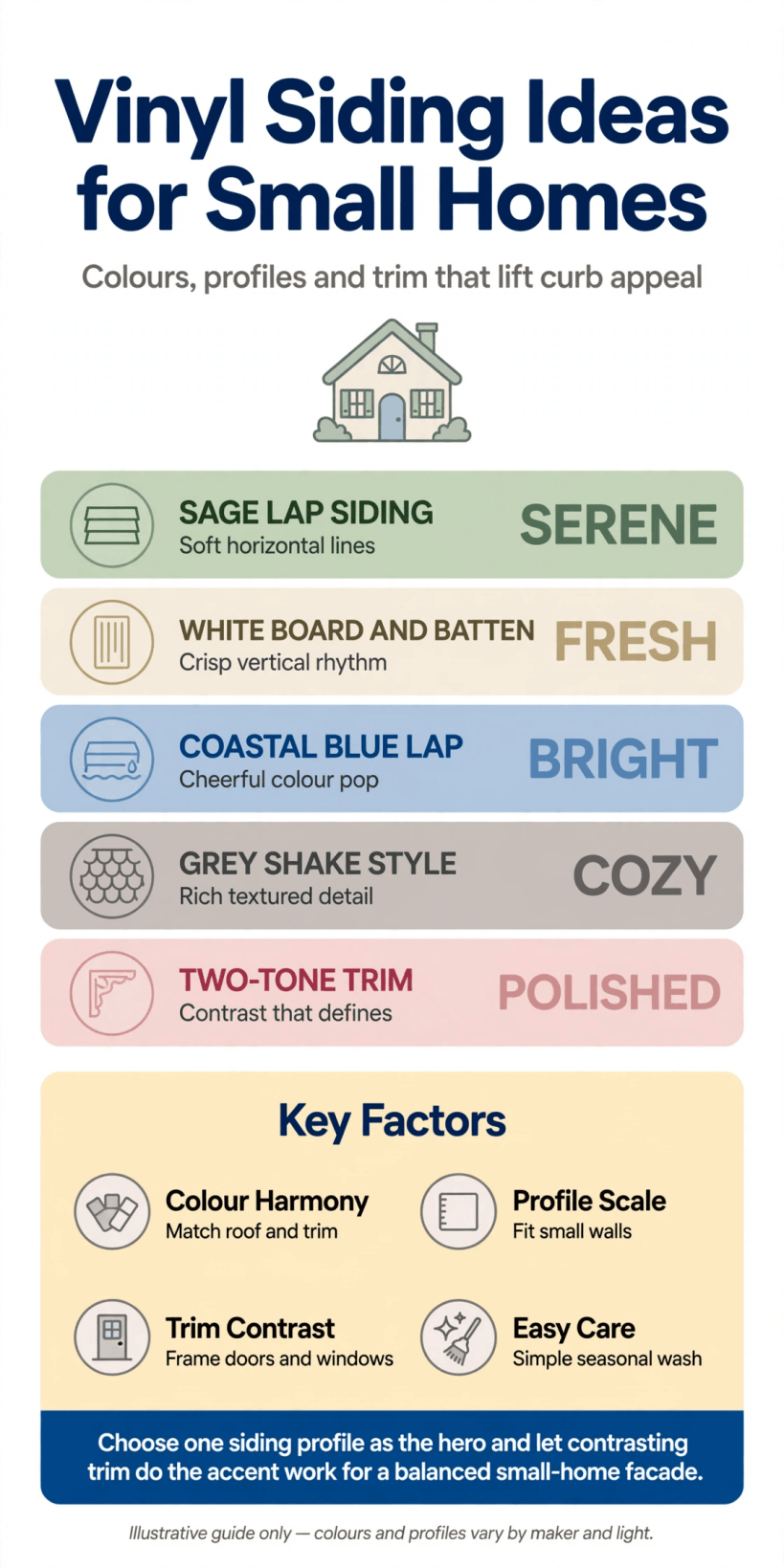
A visual summary of the colours, profiles, trim tricks and finishes in this collection.
One more partner matters as much as the siding itself: the planting in front of it. Low shrubs, a tidy edge and a clear path do half the curb-appeal work, and our guide to tiny house landscaping ideas shows how to plan beds that flatter a small facade instead of swallowing it whole.
2. Soft Neutrals That Make a Small Home Feel Bigger
Pale colours bounce light around a small facade and quietly blur its edges, which is why neutrals open this collection of vinyl siding ideas for small homes. They also forgive a busy street and let the roof, door and planting carry the personality. If you are torn between shades, the colour-balancing advice in our guide to tiny house interior paint colors works outdoors, too.
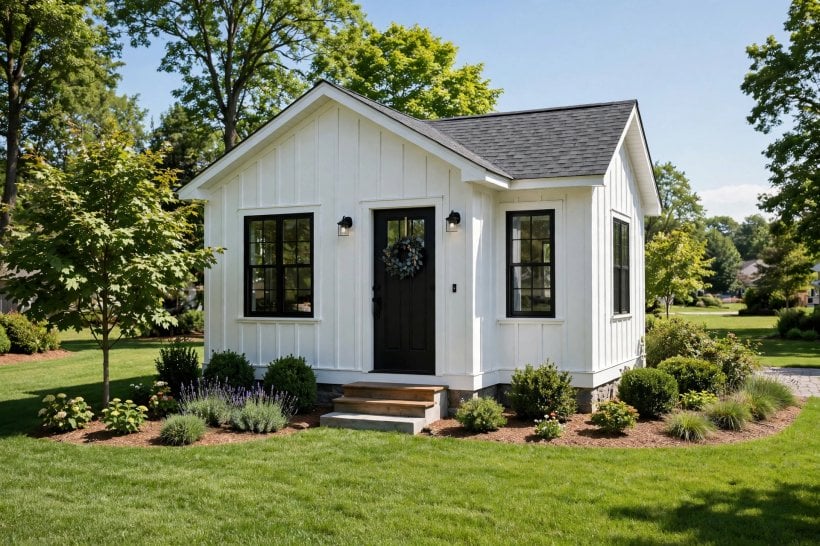
1. Warm white lap siding. A soft, warm white makes a compact house read as one calm shape, pairs with almost any roof colour and gives coloured doors and shutters room to shine.
2. Gentle greige all over. Halfway between grey and beige, greige hides dust gracefully, suits both modern and cottage styles and keeps a small facade feeling warm rather than stark.
3. Pale stone grey. This quiet grey adds a tailored feel to simple boxes and looks especially smart with white corner boards and a charcoal front door.
4. Creamy ivory with white trim. Layering ivory walls over crisper white trim gives a small home subtle depth, like sunlight and shadow painted onto the same gentle colour.
5. Whisper-light sage. The faintest green tint connects a small house to its garden, softens hard landscaping and changes beautifully from morning to evening light.
6. Sandy beige with deeper shutters. A sand-toned body feels sunny on grey days, and choosing shutters two shades deeper stops the scheme from looking washed out at noon.
7. Two greys, one house. Use the lighter grey on the main walls and a mid grey on the gable, so a plain facade gains structure without a single bold colour.
8. All-white texture play. Keep every board white but mix lap siding on the walls with shakes in the gable, proving that texture alone can carry an entire design.
3. Bold and Moody Colours That Still Suit Small Houses
Deep colours work on small homes for the opposite reason neutrals do: instead of stretching the house, they turn it into a deliberate little jewel in the street. The trick is commitment. One rich colour, crisp trim and tidy planting will always beat a cautious half-measure that ends up looking like an accident.
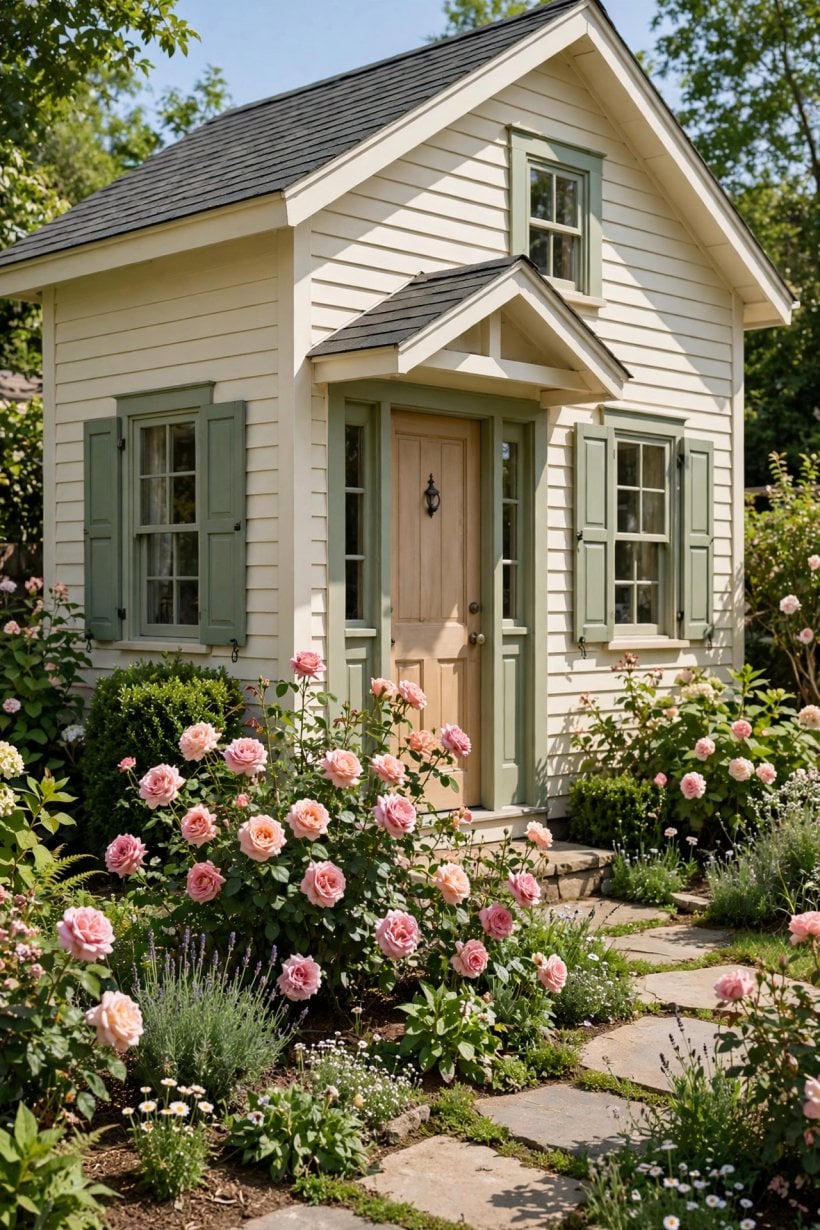
9. Deep navy with white trim. Navy reads as classic rather than daring, and white framing makes every window and corner pop with satisfying crispness on a small facade.
10. Charcoal body, bright door. A charcoal shell turns the front door into the star, so pick a confident colour for it and let callers find the entrance instantly.
11. Forest green retreat. Woodland green settles a small home into its planting, hides pollen dust well and feels especially right for cabins and garden-facing plots.
12. Soft black cottage. Near-black siding with warm window light creates the storybook effect, and a light-coloured roof keeps the scheme from feeling heavy.
13. Deep teal statement. Between blue and green, teal is the extrovert of the dark shades, pairing happily with copper-look lights and natural timber details.
14. Barn red homage. A muted red nods to classic farm buildings and makes a tiny home easy to spot, welcome guests and photograph in every season.
15. Midnight blue with pale stone base. Ground the darkest walls with a light stone-look base panel so the house sits visually on something solid and the colour floats less.
16. Slate blue-grey mood. This in-between shade changes with the weather, looks tailored with silvered wood and suits coastal streets as well as leafy suburbs.
4. Two-Tone Schemes and Gentle Colour Blocking
Two colours let a small house explain itself: here is the main volume, here is the gable, here is the porch. The much-loved blue and white tiny house interior shows the same pairing logic at work indoors, just separate the tones clearly, keep the split along a natural line of the building and let trim referee the join.
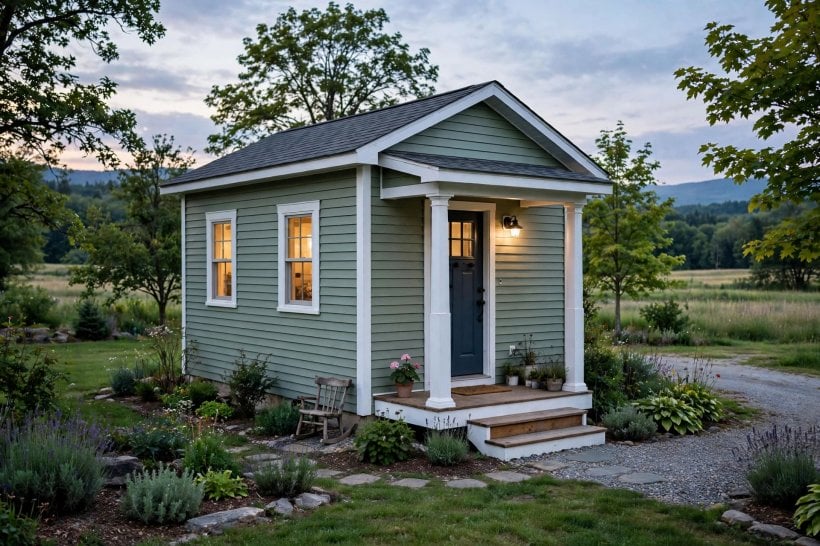
17. Darker gable, lighter body. Weight on top sounds wrong but works, because the eye reads the pale main floor as the house and the gable as a smart hat.
18. Lighter gable, deeper body. The classic arrangement grounds the building and lifts the roofline, especially effective when the gable is also a different profile.
19. Split at the porch line. Change colour where the porch roof meets the wall, and a flat facade gains a horizontal story that makes it feel wider.
20. Colour on the extension. Give an addition its own shade close to the main one, and the house looks intentionally grown over time rather than awkwardly extended.
21. White upper storey, colour below. Bright walls above a deeper ground floor make a small two-storey home feel taller and give the entrance level a cosy weight.
22. Two greys divided by white trim. A crisp white belt course between two greys is the safest two-tone of all, and it hides the join so neatly it looks architectural.
23. Bay window in an accent shade. Dress just the bay in a contrasting colour and a plain front gains a focal point that neighbours will copy within the year.
24. Garage in a quieter echo. Side the garage one shade lighter than the house so it supports the main building politely instead of competing with it.
5. Classic Horizontal Lap Profiles
Lap siding is the default for good reason: the horizontal lines calm the eye, suit almost every architectural style and tend to make a short house look longer. Exposure width is your main dial here. Narrower boards feel traditional and busy in a good way, while wider boards read calmer and more contemporary.
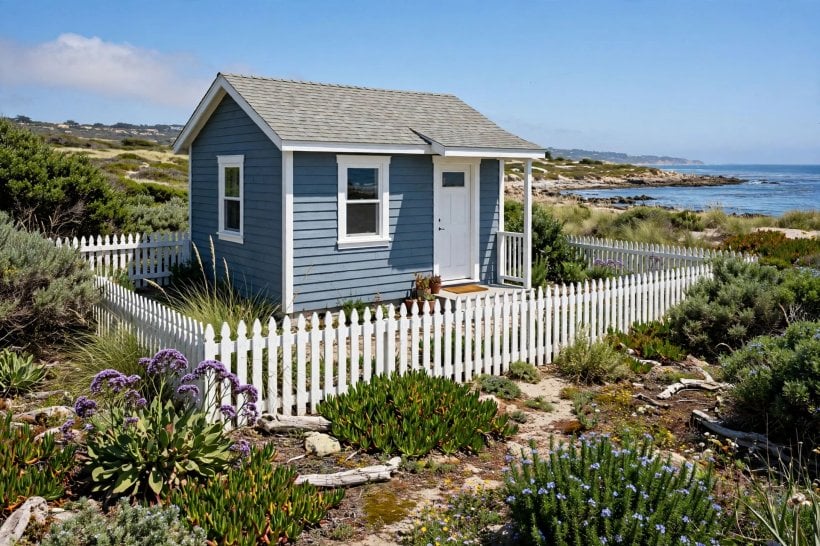
25. Traditional narrow lap. Closely spaced boards give a small cottage its storybook rhythm and make modest walls look carefully built rather than plain.
26. Wide-exposure modern lap. Broader boards with fewer shadow lines suit simple, boxy homes and reduce visual noise on streets full of detail.
27. Beaded lap for cottage charm. A small rounded bead along each board catches the light and adds craft to plain walls without changing the colour at all.
28. Dutch lap shadow play. The angled groove in Dutch lap throws a stronger shadow line, giving pale colours extra depth on bright, sun-washed fronts.
29. Smooth contemporary lap. A flat, woodgrain-free finish is the quietest backdrop of all and lets landscaping, lighting and the front door do the talking.
30. Lap over a stone-look base. A band of stone-effect panels at ground level protects the look of the walls and makes the whole house feel planted.
31. Lap with a vertical entry panel. Turn the boards upright just around the front door to mark the entrance, a tiny change that reads as deliberate design.
32. Lap wrapped around a corner bay. Running lap siding continuously around a bay stretches the facade visually, because the unbroken lines pull the eye sideways.
6. Vertical Lines and Board-and-Batten Looks
Vertical profiles pull a small house upward, which is exactly what a low, wide home needs. Use them all over for a modern farmhouse mood or in panels where the roofline needs help. The same vertical thinking appears indoors in our guide to tiny house small-space interior design ideas, where tall lines make compact rooms feel loftier.
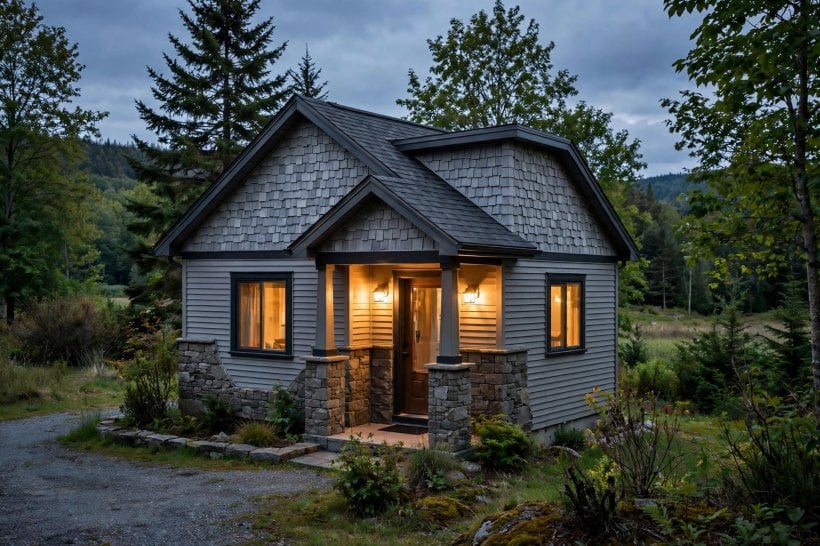
33. Full-height vertical siding. Boards running straight from ground to eaves add instant height, so even a single-storey home can look surprisingly grand.
34. Board-and-batten farmhouse. Wide boards with narrow raised battens give a small home rural confidence and a shadow pattern that changes all day long.
35. Vertical gables only. Keep lap siding on the walls and turn the gables vertical, and the roof suddenly looks like a designed feature, not an afterthought.
36. Vertical above, horizontal below. Split the profiles at a trim board between levels and a plain two-storey box gains the poise of a much grander house.
37. Slim vertical panels, modern mood. Narrow vertical panels with minimal trim suit minimalist homes and pair well with large windows and simple rooflines.
38. Vertical in a deep colour. Dark vertical boards feel architectural rather than heavy, especially with pale trim drawing a bright frame around the whole shape.
39. Vertical porch surround. Wrap just the porch walls in vertical boards and the entry becomes a distinct little room on the front of the house.
40. Tone-on-tone battens. Paint-free vinyl battens in the exact body colour give texture without contrast, the subtlest way to use this profile.
7. Shake, Shingle and Scallop Accents
Textured profiles are the seasoning of siding design: a little transforms, a lot overwhelms. On small homes the smartest place for shakes and scallops is high up in the gables or in one contained band, where they read as craft rather than clutter and stay easy to admire from the pavement.
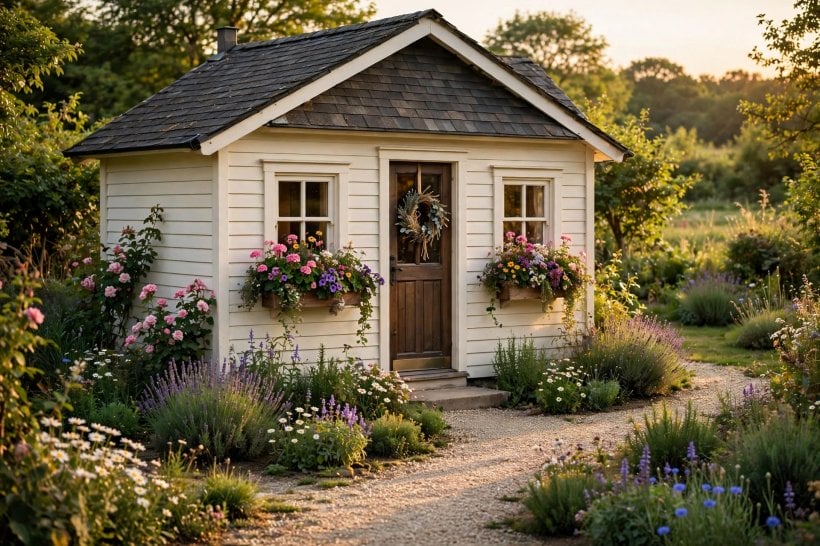
41. Cedar-look shakes in the gable. The rustic texture up high warms simple lap walls below and gives a small home its countryside accent without the upkeep of real cedar.
42. Staggered shingle courses. Slightly uneven shingle edges feel hand-made and friendly, softening boxy homes that otherwise read as plain rectangles.
43. Scalloped band under the eaves. A row of rounded fish-scale shingles along the top of the wall adds storybook detail exactly where the eye finishes reading the house.
44. Shakes on the dormers. Dressing dormer cheeks in shakes turns necessary roof furniture into a feature and ties awkward little volumes into the design.
45. Shingle skirt at the base. A short shingle band around the bottom of the walls grounds the house and hides the visual join with the foundation.
46. Half-round accents in twin gables. Matching scalloped panels in both gables give a small home symmetry, and symmetry always reads as care from the street.
47. Craftsman shake-and-lap mix. Pair straight lap below with shakes above and tapered porch details, and even a modest ranch gains bungalow character.
48. Weathered-grey coastal shakes. Silvered, driftwood-toned shakes bring seaside calm to any street and pair beautifully with white trim and navy doors.
8. Trim, Corners and Window Framing
Trim is the punctuation of a facade: it tells the eye where things begin and end. On small homes slightly generous trim pays for itself, because the house reads as sturdier and better finished. Our roundup of tiny house interior design ideas makes the same point indoors, where framed openings make compact rooms feel considered.
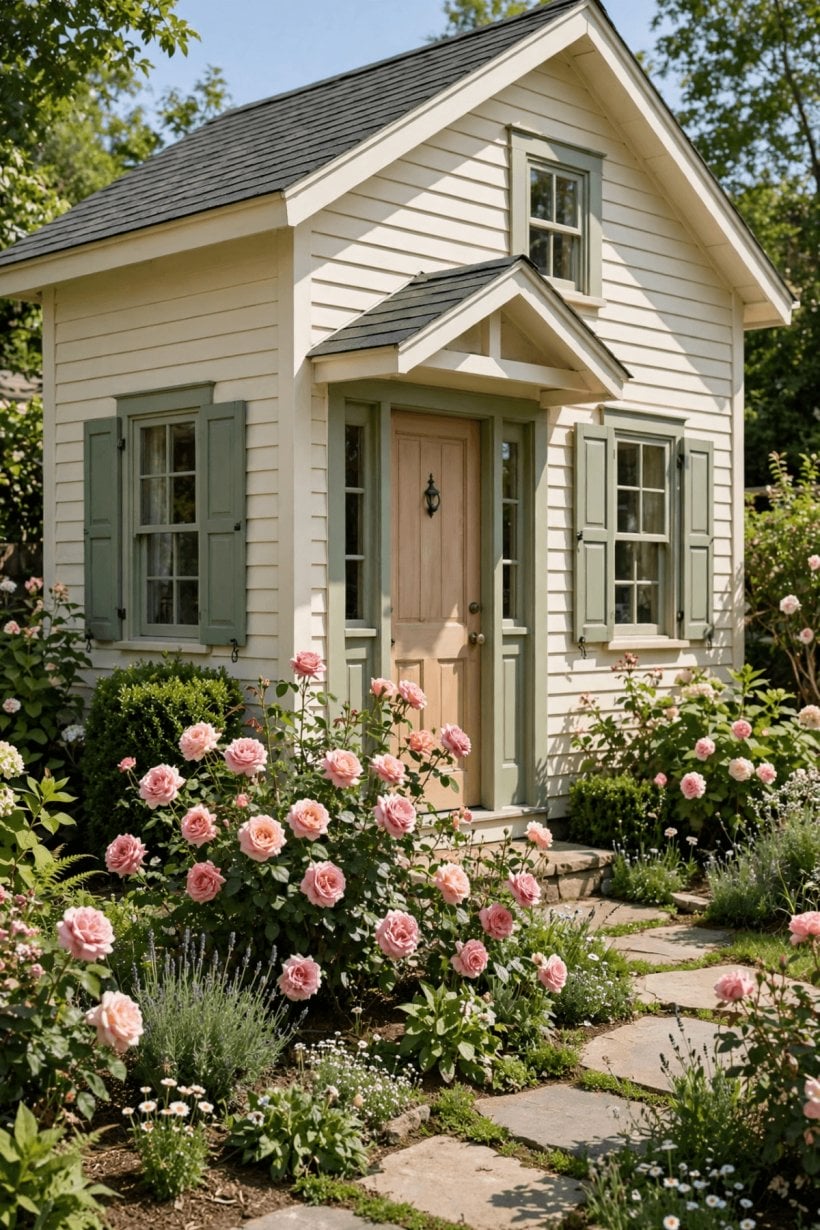
49. Wide white corner boards. Bold corners outline the whole house like a drawing, giving small facades a crisp, finished silhouette from every angle.
50. Chunky window casings. Deeper-than-usual window surrounds make modest windows look intentional and give the glass a shadow gap that reads as quality.
51. Shutters sized to the window. Shutters that look as if they could actually close over the glass feel honest and instantly lift plain walls on either side.
52. Monochrome trim. Trim in the exact body colour creates a calm, modern shell where the profile shadows, not contrast, provide the detail.
53. Dark trim on a light body. Charcoal or black framing on pale siding gives a small home graphic confidence and a tailored, almost architectural finish.
54. A frieze line under the roof. One flat trim board beneath the eaves finishes the top of the wall and gives gutters a tidier line to sit against.
55. Corner pilaster effect. Layered trim at the front corners borrows the language of classical porches and adds surprising grandeur to a simple box.
56. Contrasting water table. A deeper trim band where wall meets foundation anchors the design and visually protects the busiest splash zone of the house.
9. Porches, Gables and Entry Details
The front of a small home is a stage only a few metres wide, so every detail on it counts double. Gable decorations, porch panels and door surrounds are where siding design meets welcome. For wider inspiration on how compact households make entrances work, see our overview of tiny house communities in Connecticut.
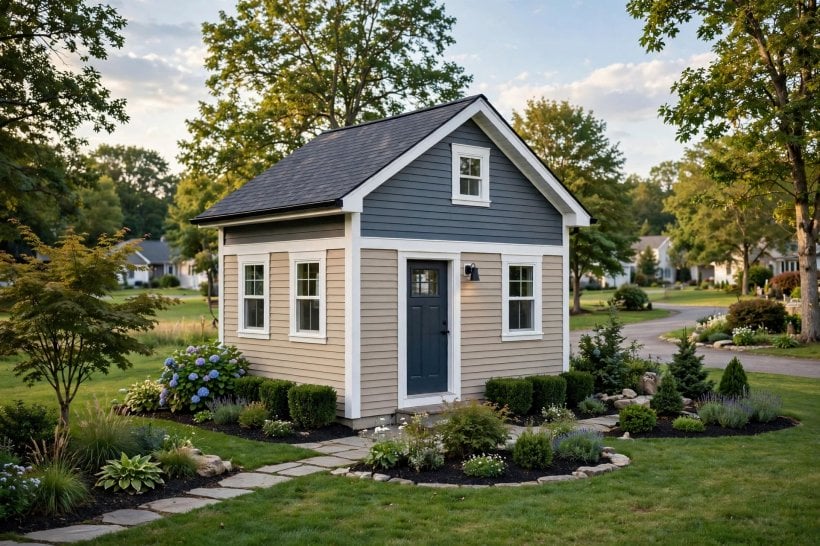
57. Porch walls in a second profile. Siding the porch recess in vertical boards turns a plain entry into a distinct welcome zone without touching the main walls.
58. Decorative gable vent. A round or louvred vent in a contrasting colour gives the highest part of the house a focal point that costs very little.
59. Simple gable brace detail. A modest timber-look brace under the gable peak adds craftsman flavour and draws the eye up, making the facade feel taller.
60. Entry alcove accent panel. One panel of shakes or vertical boards behind the door zone frames the entrance like a picture and photographs beautifully.
61. Dormer cheeks in body colour. Keeping dormers in the main siding colour makes them recede politely, which suits small roofs that already feel busy.
62. Porch columns wrapped to match trim. Cladding plain posts in the trim colour ties the porch into the facade so it reads as one designed piece.
63. House-number plaque panel. Mount numbers on a small contrasting siding panel beside the door and a practical detail becomes part of the design.
64. Half-round gable sunburst. A fan of scalloped shingles in the front gable is pure charm, and on a small home one gesture like this is quite enough.
10. Curb Appeal Finishing Touches and Easy Upkeep
The last ten ideas are about everything around and after the siding: the planting, lighting and small habits that keep a small home looking freshly sided for years. None of them is expensive, and together they are the difference between a house that was renovated once and a house that always looks loved.
65. Wash it gently once a year. A soft brush, mild soapy water and a garden hose keep vinyl colours true and stop grime settling into the profile grooves.
66. Soften the base with low shrubs. A neat row of compact planting hides the foundation line and makes pale siding glow against deep green foliage.
67. Window boxes in the trim colour. Boxes painted to match the trim tie flowers directly into the colour scheme and give small windows extra presence.
68. Light the facade at dusk. Two warm lights flanking the door make dark siding feel rich and pale siding feel creamy as evening falls.
69. Match the fence or gate. Repeating the siding or trim colour on the front gate pulls the whole plot into one composed picture.
70. Rotate the door colour seasonally. A small home can carry a door repaint as a weekend project, refreshing the entire facade for the price of one tin.
71. Keep your colour codes. Photograph the product labels and note the range names somewhere safe, so a future repair panel matches the first time.
72. Check corner seals yearly. A quick look at corner posts and window edges each spring catches small gaps before weather and insects find them.
73. Rinse away pollen in spring. A light hose-down after peak pollen stops yellow dust dulling pale colours and keeps grooves looking sharp.
74. Plan with the roof, not against it. Hold siding samples beside the actual roof on a bright day, because roof and walls share every photograph the house will ever be in.
75. Photograph the facade each season. Regular snapshots make slow fading or one grubby wall obvious early, when fixing it is still a small, satisfying job.
Final Considerations
A small home does not need many ideas; it needs a few good ones, finished properly. Pick one colour story, one main profile and one accent, then let trim quietly hold the whole scheme together. If you are also weighing up a move to a compact home of your own, browsing tiny houses for sale in Phoenix, AZ is a fun way to see these siding treatments working on real streets. Stand across the road, squint at your shortlisted scheme, and choose the version that still looks calm from there: distance is the oldest and best design test there is.


0 Comments