

The driveway is the largest floor most houses own and the one nobody designs. It arrives by default — a strip of whatever the builder poured — yet it is the first surface every visitor walks on, the frame of every photograph of the house, and the floor of the daily ceremony of coming home. Treating it as landscape rather than leftover is the cheapest curb appeal there is.
These 75 driveway ideas cover the whole arrival: honest materials compared without sales talk, layouts that make parking and turning easy, edges and aprons that marry drive to garden, drainage that behaves, and lighting that brings you home kindly. The ground the drive crosses is planned in front yard landscaping ideas; this post owns the drive itself.
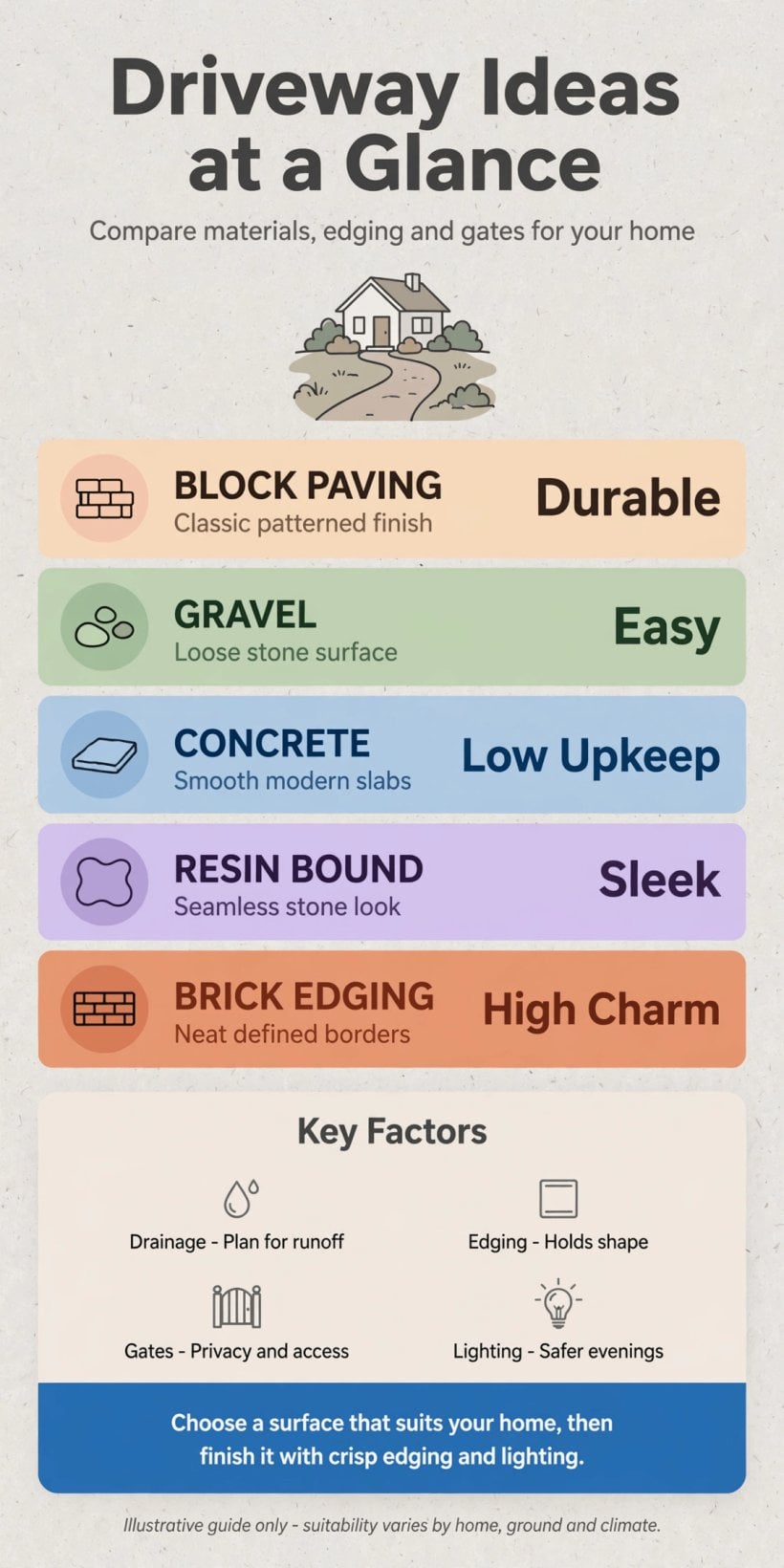
1. Driveway Ideas at a Glance
The central entity is the driveway: the surfaced route between street and house for vehicles and feet, whose attributes are its material, its layout and manoeuvring space, its edges and apron, its drainage, and its lighting. It is judged by three tests: does a car use it without gymnastics, does water leave it without drama, and does the house look better standing behind it?
| Question | Short answer |
|---|---|
| What is the best driveway material? | The one your climate, budget and maintenance appetite agree on — gravel forgives, block paving dresses, concrete endures. |
| What fails first on most driveways? | Drainage and edges: water underneath and crumbling margins undo good surfaces faster than traffic does. |
| What is the cheapest transformation? | Edges and planting: a defined border and softened margins make even plain tarmac look intended. |
| Do I need permission to change it? | Rules on dropped kerbs, drainage to the street and new access vary by place — check locally before building, always. |
2. Reading the Arrival: What the Drive Must Do
Before materials, choreography. A driveway is a daily dance of cars, bins, deliveries, bicycles and guests in good shoes in bad weather. Watch your own for a week and design for the dance you actually perform.
1. Watch a Week of Arrivals Before Designing
Where do guests actually park, turn, and walk? Where does the delivery van stop? The honest answers draw the layout better than any catalogue photograph.
2. Give the Driver a Door-Opening’s Worth of Grace
Cars need elbow room on both sides where people get out — onto grass in the rain is the classic design failure. Widen at the parking stretch, not the whole run.
3. Plan the Walk From Car to Door, Dry
The pedestrian route deserves its own surface logic: visible, lit, and not across the muddiest corner of the plot. Guests remember the walk more than the drive.
4. Decide Where Turning Happens — or Doesn’t
Reversing onto a busy road is the worst exit in domestic life. If the plot allows a turning space, it outranks almost every decorative upgrade.
5. Keep the Bins’ Journey Invisible and Short
Bin day is weekly and public. A drive design that hides the bins’ home and shortens their route quietly improves every single week of the year.
6. Let the Drive Frame the House, Not Cover It
From the street, the drive is the foreground of the house’s portrait. Its lines should lead the eye to the door, not spread the foreground into a car park.
7. Count the Vehicles the Household Truly Keeps
Design for the real fleet plus one guest, not for the hypothetical caravan, boat and third car. Over-paving is the most expensive mistake in this entire list.
8. Mark Where the Drive Ends and Garden Begins
The transition is a design moment: a change of material, a pair of planters, a low hedge. Drives that fade vaguely into lawn look unfinished from every angle.
9. Respect the Street’s Own Character
A drive wildly grander or meaner than its neighbours reads as a mistake from the pavement. Aim for the best-kept version of what the street already speaks.
10. Plan for the Vehicle You Will Own in Ten Years
Charging points, slightly wider cars, a future camper on the pad: one conduit laid now under the new surface saves a trench through it later.
11. Keep the Post and Parcels Landing Obvious
Deliveries land somewhere daily. A defined, sheltered spot near the door stops parcels becoming garden ornaments and drivers wandering the plot.
3. Materials Compared Honestly
Every material is a bargain between money, maintenance and manners. None is best; each is best somewhere. The greener options among them are gathered in eco-friendly driveway alternatives to asphalt and concrete, which this section’s comparisons lean on.
12. Choose Gravel for Forgiveness and Sound
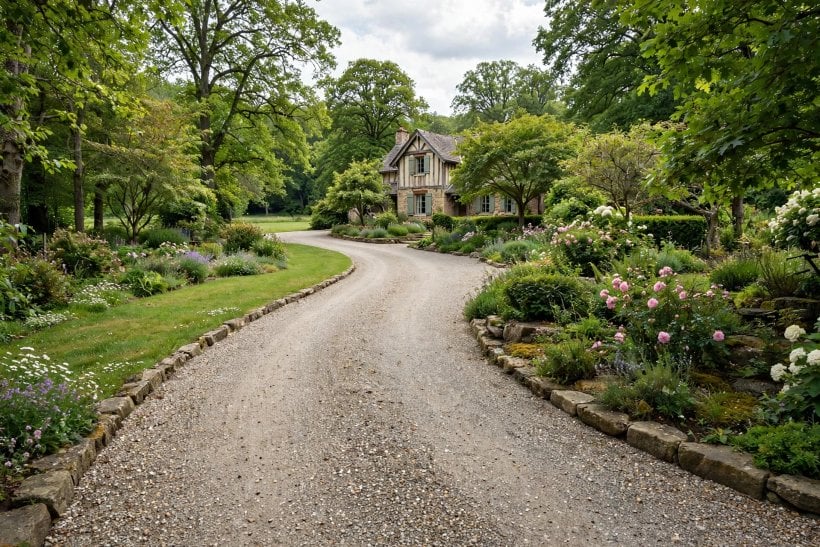
Gravel is cheap to lay, drains freely, announces arrivals with a crunch, and forgives every spill. Its costs are discipline: edges to keep it in, top-ups as it settles, and weeds to stay ahead of.
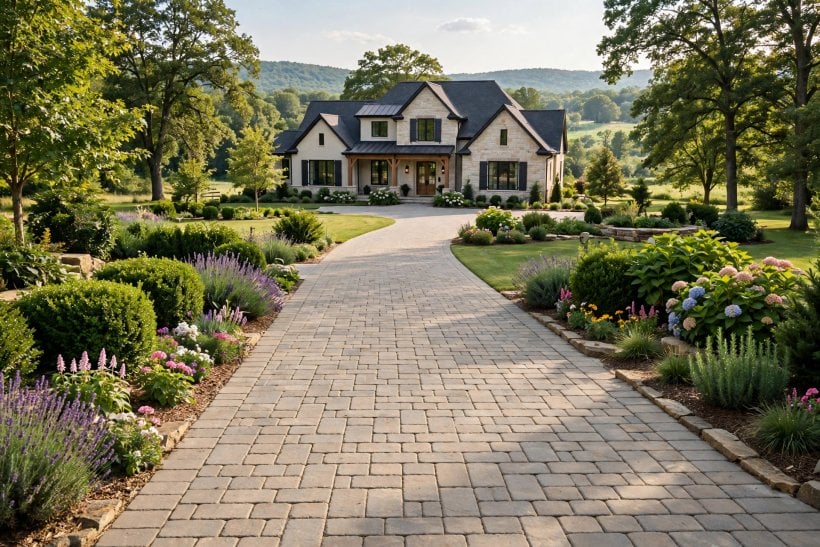
13. Lay Block Paving Where You Want Dress and Repair
Individual blocks give the smartest patterned finish and one great mercy: a damaged patch lifts and relays without a scar. Keep sanded joints maintained and it ages gracefully.
14. Pour Concrete for Plain Endurance
A well-laid concrete drive is the workhorse: decades of service, minimal fuss. Its enemies are cracks from poor bases and a plain face — both answered by good laying and honest edging.
15. Consider Tarmac for Large Areas on a Budget
Over big runs, tarmac’s economy is real, and black reads smart against planting. It softens in fierce heat and hates petrol spills, and its edges decide whether it looks kept or council.
16. Use Resin-Bound Gravel for a Smooth, Permeable Finish
Stone set in resin gives a smooth, wheelchair-kind, puddle-free surface in warm tones. It is only as good as its base and its installer — the material where workmanship matters most.
17. Build Grass or Gravel Grid Where Cars Are Guests
Reinforced grass and cellular grids keep overflow parking green and permeable. For the daily main drive they tire; for the second space they are the landscape-friendly answer.
18. Lay Setts or Cobbles Where Character Outranks Budget
Stone setts are the aristocrats: beautiful, eternal, and priced like it. A sett apron or border delivers most of the character at a fraction of a full sett drive.
19. Mix Two Materials to Zone the Drive
A paved parking pad with a gravel run, or tarmac married to a block border: mixing zones the space, cuts cost, and looks designed rather than merely surfaced.
20. Test the Colour Against the House in Daylight
Aggregate tones fight brick and render in ways samples hide. Wet and dry both matter — most drives are seen wet half the year in rainy climates.
21. Ask What the Material Does in Your Worst Weather
Ice on a slope, heat on tarmac, moss on north-facing block: every material has a season it misbehaves. Choose the misbehaviour you can live with.
22. Price the Whole Job, Not the Surface
Excavation, base, edging and drainage are most of a driveway’s real cost and nearly all of its lifespan. A cheap surface on a poor base is the dearest drive you can buy.
Workmanship deserves its own word here, because driveways are unusually honest about it: a good crew’s work is visible in the straightness of every line and invisible in the drainage you never think about again, while a poor crew’s shortcuts announce themselves in the first winter and are charged to you at relaying prices. Ask to see a drive the installer laid several years ago — not last month — and ask its owners about puddles in November. Get the specification in writing: excavation depth, base material, falls, edging, and who owns the drainage decisions. The material you choose matters less than the hands that lay it, and this paragraph is worth more than any single comparison above it.
4. Layout, Width and Turning
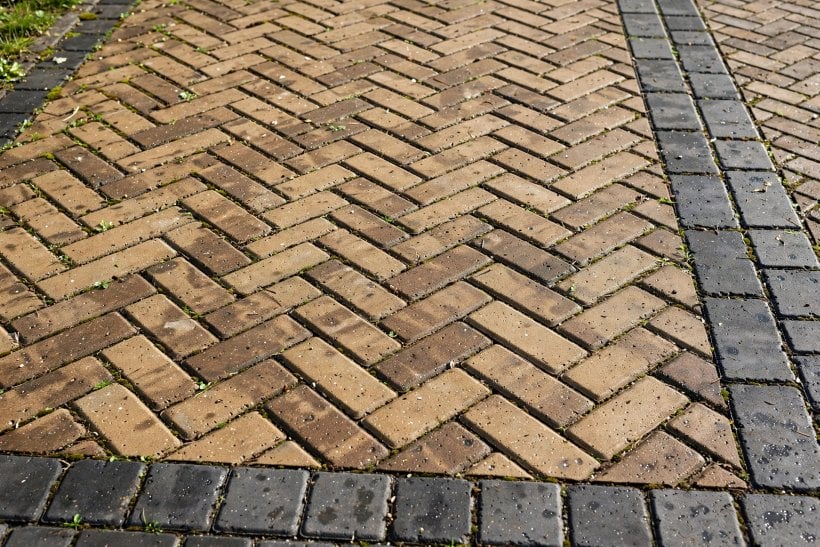
Layout is where driveways succeed daily or fail daily. A beautiful surface with a turning circle that needs a five-point shuffle will be cursed at every departure; geometry first, jewellery after.
23. Give a Single Drive a Passing Place if It Is Long
A long single-width drive traps cars in order of arrival. One widened bay halfway turns a queue into a system and saves the lawn’s edges weekly.
24. Shape Turning Areas Like Teardrops, Not Circles
Cars turn in teardrops. A hammerhead or teardrop of hard surface gives the swing room tyres actually travel, with less paving than the ceremonial full circle.
25. Keep Gradients Gentle Enough for Low Cars
Steep entries ground out bumpers and defeat winter tyres. Ease the apron’s angle where drive meets street and where it meets the flat — the two scrapes of domestic motoring.
26. Align the Drive With the Garage Honestly
A drive that meets its garage at an angle makes every parking a small negotiation. Where the angle is forced, widen the pad in front of the doors to absorb it.
27. Let a Circular Drive Serve Houses That Host
Where frontage allows, the in-and-out circle is the gracious classic: no reversing, guests flowing, the house presented like a country hotel in miniature.
28. Run the Drive Along the Boundary, Garden in the Middle
On wide plots, hugging one boundary keeps the centre of the front garden intact as lawn and planting rather than slicing it with tarmac.
29. Curve Only Where the Curve Earns
A gentle sweep suits informal houses and hides a multitude of alignment sins; on small formal plots, straight and true reads better and wastes nothing.
30. Protect Corners From the Tyre’s Honest Arc
Every drive has the corner everyone cuts. Pave it, plant it with the unkillable, or edge it with stone — but decide, because the tyre already has.
31. Keep Sight Lines at the Exit Wide and Low
Planting and walls near the exit must stay below sight height. This is the safety rule of the whole list; no shrub is worth the reversing guess.
32. Design the Overflow Before It Designs Itself
Parties and holidays will park somewhere. A reinforced grass margin or a gravel shoulder planned now beats ruts carved by Christmas.
33. Make the Disabled Visitor’s Route the Test Case
If a wheelchair or a walker can travel from car to door smoothly, the layout works for prams, trolleys and tired grandparents too. Design to the hardest journey and all journeys ease.
5. Edges, Aprons and Borders
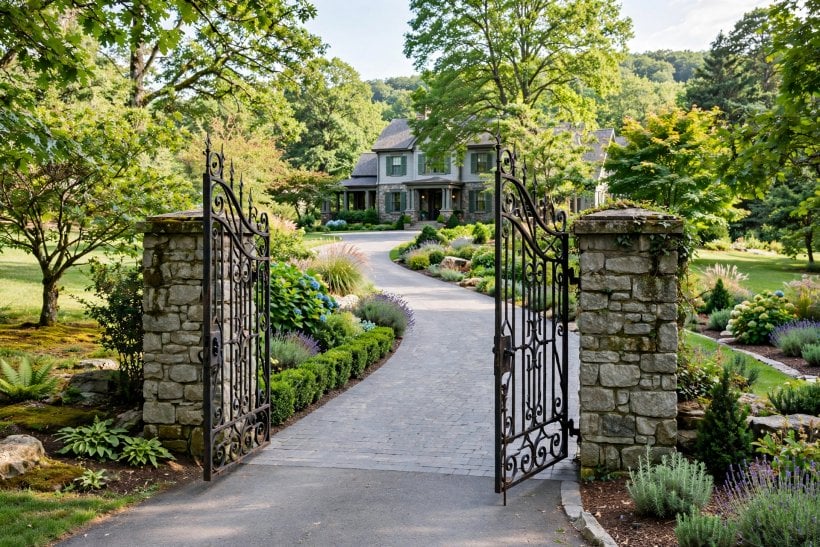
Edges are the driveway’s tailoring. They hold loose materials in, stop paved ones spreading, and draw the line the eye reads as “kept”. The gravel discipline in gravel path and rock border work applies to drive edges almost word for word.
34. Edge Gravel as if It Wants to Escape — It Does
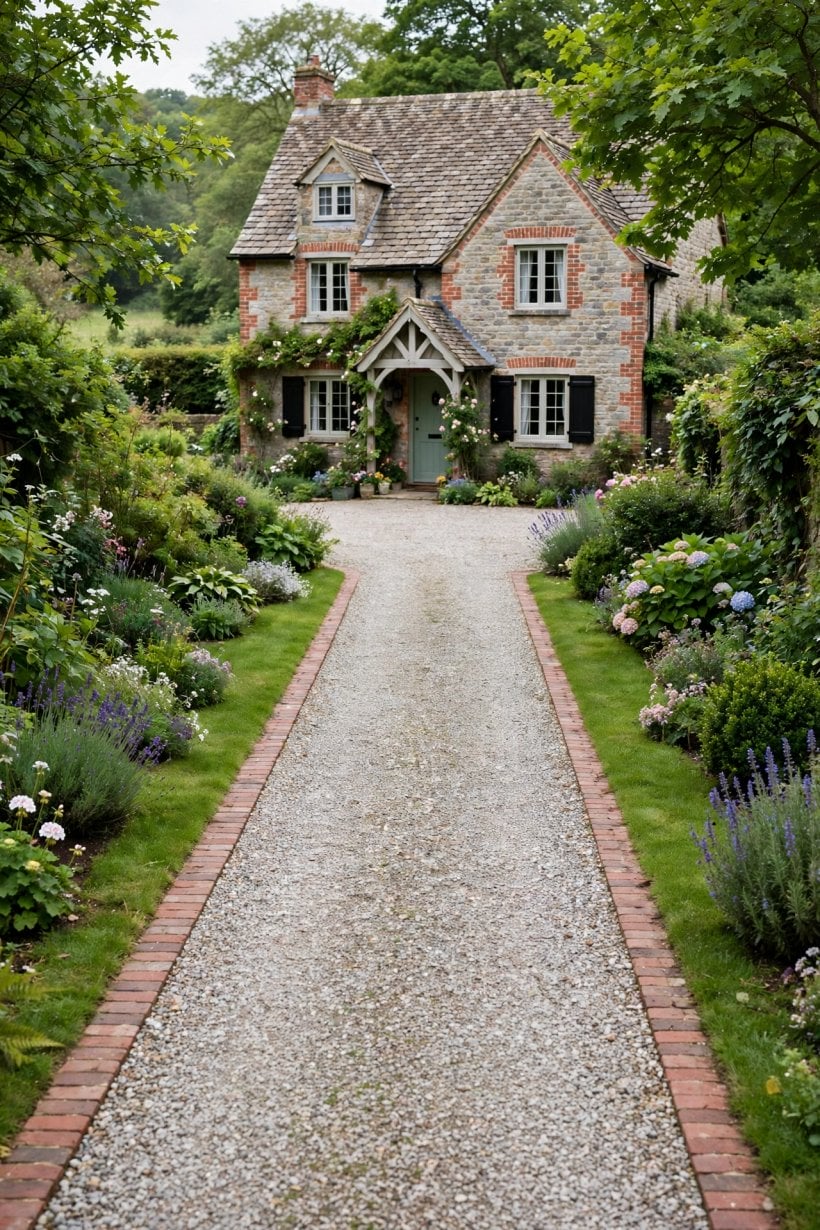
Stone setts, steel or brick on edge, set firm: a gravel drive without a real edge migrates into lawn, beds and the street within a season.
35. Give the Street Apron the Best Materials
The apron between drive and road is the public handshake and takes the worst wear. Spend the good blocks or setts here even on a gravel drive.
36. Run a Soldier Course Along Paved Drives
A single line of blocks laid upright along each edge stiffens the field visually and structurally — paving’s equivalent of a hem.
37. Let a Planted Margin Soften One Side
Where the drive passes the house or a bed, a planted strip instead of a hard edge lets the garden lean over the tarmac and civilise it.
38. Keep Edges Flush Where Wheels Cross
Raised edging where tyres mount or doors open is a trip and a tyre-wall hazard. Flush at crossings, proud only where wheels never go.
39. Use a Drainage Channel as a Border Honestly
Where a channel drain must cross or edge the drive, its neat grating line can double as the design’s border — function wearing the border’s clothes, openly.
40. Mark the Drive’s End With a Threshold Change
At the garage or front door end, a band of different material announces arrival and slows the car. Thresholds are how drives punctuate.
41. Repair Edge Failures the Season They Appear
Edges fail small, then all at once. A lifted sett re-bedded this month is a five-minute job; the spread it prevents is next year’s relaying.
42. Choose Metal Edging for the Modern Garden
Steel strip gives the thinnest, sharpest line between drive and lawn or gravel and bed — nearly invisible, which is exactly the modern point.
43. Let a Low Hedge Be the Edge Where Space Allows
A clipped low hedge along a drive is the grandest border of all: green, living, and centuries old as an idea. It asks trimming; it repays in presence.
44. Keep Weeds Out of the Edge Line Itself
Whatever the edge, a clean line reads as care and a weedy one reads as surrender. Ten minutes with a knife along the border outperforms an hour anywhere else.
Give the whole edging system a spring inspection and it will rarely surprise you: walk both lines with a bucket and a bedding tool, re-bed anything that rocks, top up jointing sand or gravel where winter has thinned it, and clear the drainage channel’s mouth before the season’s first storm does the inspection for you. Fifteen minutes a year, honestly spent, is the difference between edges that frame a drive for decades and edges that unravel into next decade’s relaying quote. Like the drains in §6, edges fail by neglect in small denominations and present the bill all at once.
6. Drainage and Weather
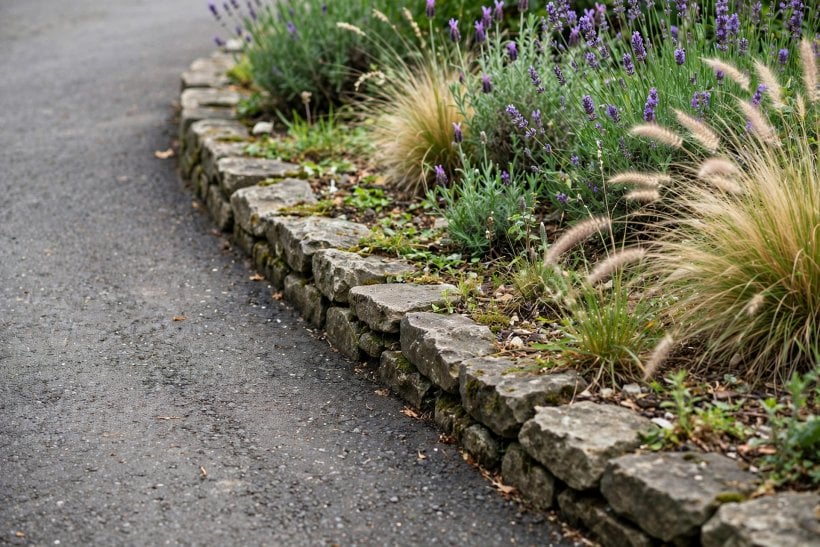
Water is the driveway’s lifelong opponent and its examiner. Every surface in this post is judged in the end by where its rain goes. Permeable thinking — the kind permeable rock pavers for eco driveways and patios builds on — is now the default expectation in many places, and good manners everywhere.
45. Fall the Surface Away From the House, Always
The first law. A drive that drains toward the house will eventually introduce itself to the house. Falls should be gentle, deliberate and checked before the final surface goes down.
46. Choose Permeable Where the Ground Allows
Gravel, permeable block and resin-bound surfaces let rain soak where it falls — kind to drains, gardens and the street after a storm, and required by rules in many areas now.
47. Give Runoff Somewhere Legal and Planted to Go
Where the surface cannot soak, water needs a destination: a channel to a planted soakaway or rain garden, never a slope aimed at the neighbour or the road.
48. Put a Channel Drain Across the Garage Threshold
On any drive that falls toward the garage, the channel across its mouth is cheap insurance that pays out in every storm for decades.
49. Keep Gullies and Drains Cleared Each Autumn
A blocked drain turns the best-laid falls into a pond. The autumn clear-out — leaves lifted, grating brushed — is the drive’s one essential annual appointment.
50. Fight Ice With Texture and Planning, Not Salt Alone
Gritted paths for feet, a slope that sheds meltwater before it freezes, and surfaces with grip designed in: winter is a design input, not a surprise.
51. Let a Rain Garden Take the Drive’s Water
The planted dip that drinks the drive’s runoff becomes the front garden’s lushest corner — drainage as a feature, already met in the water planting of the previous batch’s gardens.
52. Watch Where the Street’s Water Enters
Some drives flood from the road, not the sky. A raised apron line or a channel at the boundary keeps the street’s storm out of your plot.
53. Keep Tree Roots and Drainage in Conversation
Roots lift surfaces and invade drains with equal enthusiasm. Site new trees for their mature thirst, or choose the surface that can be lifted and relaid around them.
54. Design Snow Storage Into Cold Climates
Ploughed and shovelled snow goes somewhere: a gravel margin or lawn bay planned for it saves the planting beds from becoming the dump by default.
55. Test the Falls With a Hose Before Signing Off
Ten minutes of hose water shows every pond and wrong-way trickle while the builder is still there to answer for it. The cheapest inspection in the whole project.
7. Lighting, Gates and Arrival Manners
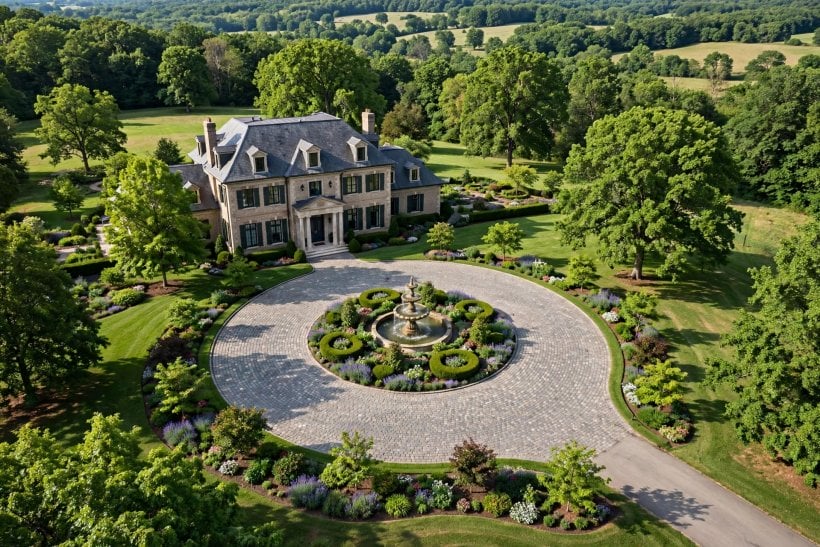
Half of all arrivals happen in the dark. Lighting, gates and the small manners of the threshold decide whether coming home feels safe and welcoming or like docking. The door end of this journey is dressed in front porch ideas; this section handles the drive’s own share.
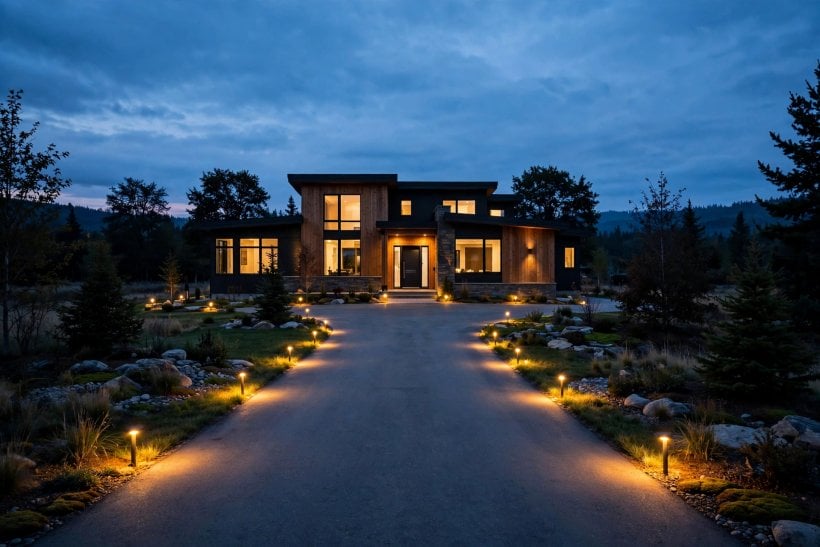
56. Light the Edges, Not the Middle
Low lights along the drive’s margins read as guidance; a floodlit centre reads as a forecourt. Drivers and walkers both navigate by edges.
57. Put the Brightest Welcome at the Door, Not the Street
Light should brighten as you approach home: dim at the road, kind at the parking, warm at the door. The gradient is the welcome.
58. Choose Motion Lights With Manners
Sensor lights that glow up gently and fade beat the prison-yard blast that blinds the driver and apologises to the street. Aim them down, always.
59. Light the House Number and the Gate Latch
The two things every visitor seeks in the dark. A lit number and a findable latch are hospitality at its most practical.
60. Give Gates a Reason Before Giving Them Motors
Gates earn their keep for dogs, children, privacy and presence. Decide which job yours does; the mechanism, material and manners all follow from the answer.
61. Keep Gate Planting From Eating the Swing
The gate’s arc is sacred geometry. Plant outside it, and check the swing against summer’s lush growth, not spring’s bare plan.
62. Let a Pair of Planters Mark the Entrance
Two generous planters where drive meets street frame the arrival and can be replanted seasonally — the drive’s only necessary ornament, and a kind one.
63. Reflect the House’s Character at the Boundary
Exterior home ideas set the house’s face; the gate, piers and apron should speak the same dialect, so the property reads as one thought from street to door.
64. Hide the Charging Point With Dignity
An electric car’s cable is now part of the arrival scene. A discreet mounted point and a cable that does not cross the walkway keep the future tidy rather than trailing.
65. Keep One Light on a Timer for the Household’s Rhythm
A single lamp that wakes before the first departure and sleeps after the last return makes the drive feel kept even when the house is empty — and tells burglars nothing useful either way.
8. Small Frontages, Slopes and Shared Drives
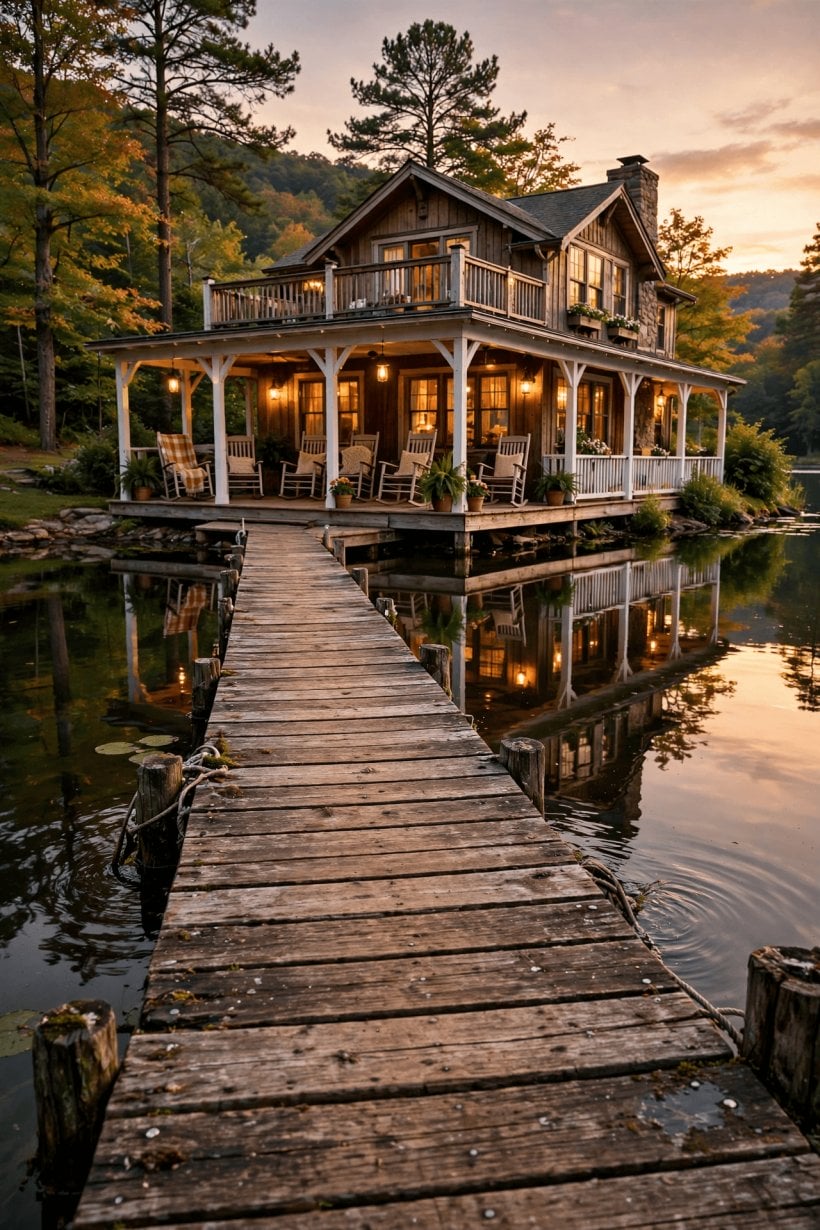
The difficult plots deserve their own section, because most real drives are difficult: too small, too steep, or shared with a neighbour whose standards differ. Each has an honest answer, and none of them is surrender.
66. On a Small Frontage, Pave Less Than You Fear
A single parking space, beautifully edged, with the rest kept as garden, beats a fully paved handkerchief that fits one car and no life. Small plots should stay gardens that park, not car parks that apologize.
67. Use Tandem Parking Without Apology
Two cars nose-to-tail suits households whose schedules nest. Designing honestly for tandem beats pretending both cars come and go freely.
68. Terrace a Steep Drive Into Two Gentler Falls
Where the plot climbs, a level parking platform and a gentler ramp — rather than one heroic slope — serves winter, low cars and deliveries alike.
69. Grip a Sloping Surface With Texture
Exposed aggregate, block and gravel all out-grip smooth concrete on a wet slope. On a gradient, choose the surface by its worst rainy day.
70. Share a Drive With Written Kindness
Shared drives run on goodwill and clarity: agree the maintenance split, the parking order and the hedge height before they are needed, and put it in writing while everyone is still friends.
71. Let a Shared Drive Be One Design, Not Two Halves
The drives that look best shared are designed as one surface with one edging, costs split — two half-styles meeting at the boundary line advertises the seam forever.
72. Keep Turning Sacrosanct on Shared Ground
The turning space is the shared drive’s constitution. Planters, trailers and projects that colonise it start the neighbour wars; guard it like the peace treaty it is.
73. Borrow Width From a Lawn Margin, Paved Lightly
A grass-grid strip along one edge gives door-opening and passing width without paving the view — the small plot’s width on loan, returned as green.
74. Light Shared Drives Together
One shared lighting scheme, split bill, no man’s land lit by neither household’s goodwill alone. Arrive at dark o’clock and the wisdom explains itself.
75. Spend Small Plots’ Money on the Apron and Edges
When the budget is one gesture, make it the threshold: apron and edging are what a small drive is mostly seen as. The middle can be humble if the frame is crisp — the curb-appeal logic of front yard rock landscaping and curb appeal applies to drives word for word.
9. Checks and Mistakes: Before the First Spadeful
Check your local rules before anything else: dropped kerbs usually need permission, new or enlarged paved areas often carry drainage conditions, and some streets protect their character formally — a conversation with the council now beats enforcement later. Measure the cars you own, doors open, not the brochure’s length. Walk the falls with a hose and a level before the final surface. Confirm where the bins, the charging cable and the oil delivery hose will actually travel. The common mistakes: paving the whole frontage and discovering the drainage bill — legal and literal — afterwards; choosing the surface before the layout; forgetting that edges and bases are most of the real cost; and the sleeper classic, a turning space drawn for the car you had in 2009. Get the geometry and the water right and almost any honest surface will serve you for decades.
10. Costs and Pulling It Together
Costs sort by what disappears underground. Excavation, base and drainage are the invisible majority of almost every driveway budget and effectively all of its lifespan; the visible surface — gravel’s modesty, block’s middle way, setts’ splendour — is the smaller, chooser’s part. Edging and aprons sit between: modest money, outsized effect. Maintenance then divides the field honestly — gravel asks little money and regular small efforts, paved surfaces ask rare larger ones. Pull the project together in order: rules checked, choreography watched for a week, layout drawn around turning and doors, falls and drainage settled, base built like a foundation, surface laid, edges finished crisp. Do it in that order and the drive stops being the house’s largest accident and becomes what it should have been all along: the first room of the home, roofless and welcoming.
Final Considerations
A driveway succeeds the way a good hallway does: nobody praises it, everybody feels it. Keep the geometry kind to cars and walkers, the water honestly managed, the edges crisp and the house framed rather than buried, and the daily arrival home becomes a small pleasure you stop noticing — which is the praise. For the ground around the drive, the front yard landscaping ideas post plans the garden it crosses; for the greener materials weighed in §3, the eco alternatives linked there carry the comparisons further.


0 Comments